REVIEW · PARIS
Paris Walking Tour , Historical Sites .
Book on Viator →Operated by Ned · Bookable on Viator
Paris makes sense on foot. This 3-hour route keeps things tight with a seven-person cap and five neighborhoods, so you leave with clear bearings instead of a random list of landmarks. I love the mix of Left Bank atmosphere, river views, and Marais streets—different Paris feels, in one afternoon.
I especially liked Saint-Sulpice and its famous fountain of the four cardinal directions, plus the way the tour lands at Place des Vosges and the Victor Hugo House area to wrap the day neatly. One consideration: it starts at Saint-Sulpice and ends at Place des Vosges, so line up your next tram/metro or dinner plan close to the Marais finish.
In This Review
- Key highlights before you go
- A Three-Hour Jump From Saint-Sulpice to Place des Vosges
- Starting at Saint-Sulpice: The Four Cardinal Directions Fountain
- Saint-Germain-des-Prés: Food Markets, Shops, and Museum Energy
- Pont Neuf to the Seine: How the Oldest Bridge Sets the Tone
- Île de la Cité Landmarks on Foot: Notre-Dame and Sainte-Chapelle From the Street
- Le Marais: Jewish Traditions Meet Fashion in 1 Hour
- Place des Vosges: Symmetry, Art Galleries, and Victor Hugo House
- Why Neda’s Small-Group Approach Makes the Difference
- Price and Value: What You’re Really Paying for
- Who This Walking Tour Fits Best (and Who Should Consider Another Option)
- Should You Book This Paris Walking Tour?
- FAQ
- How long is the Paris walking tour?
- What does the tour cost?
- Is the tour offered in English?
- How many people are in the group?
- Where do I meet and where does the tour end?
- What major stops and landmarks are included?
- Are there admission fees for the sights on this tour?
- Is a mobile ticket used, and are service animals allowed?
- What is the cancellation policy?
Key highlights before you go

- Seven travelers max for real back-and-forth with your guide
- Five distinct central Paris areas packed into about three hours
- Free admission stops for every major stop listed on the route
- River and Île de la Cité views that connect multiple famous sites on foot
- Le Marais Jewish life + fashion stories, not just shopping talk
- End at Place des Vosges with symmetry and the Victor Hugo House nearby
A Three-Hour Jump From Saint-Sulpice to Place des Vosges
This tour is built for people who want Paris to feel organized fast. In roughly three hours, you move from the Left Bank’s elegant church quarter to the Seine, then into the tight, story-heavy streets of Le Marais. It’s not about hitting everything that could possibly be seen in Paris. It’s about seeing enough to understand how neighborhoods connect.
The group size is the quiet secret. With a maximum of seven travelers, you can ask questions, get explanations that actually answer your curiosity, and keep the walk from turning into a commuter shuffle. Your guide, Neda, is a big part of why this works; she brings lots of energy and keeps the stories easy to follow, with humor and practical context.
At $96.79 per person, you’re paying mainly for interpretation and routing. The good news is that the listed stops are free to enter (at least for the time you’re scheduled there), so you’re not stacking surprise ticket costs on top of the price. If you’re in Paris for a short stay or this is your first afternoon, this is a very logical way to get oriented.
Also, the tour is in English, and you’ll use a mobile ticket. It runs near public transportation, which matters because you’ll finish in a different neighborhood than where you start.
You can also read our reviews of more walking tours in Paris



Starting at Saint-Sulpice: The Four Cardinal Directions Fountain
You meet at 1 Pl. Saint-Sulpice, 75006 Paris. From there, the first stop is Eglise Saint-Sulpice, a church that’s often overlooked compared to the big names, but has serious presence. It’s described as the second-largest church in Paris, and the feature you’ll likely remember is the fountain of the four cardinal directions.
This is a great way to start because the space is open and the setting feels classic: you’re near the St-Germain-des-Prés area and close to places like the Luxembourg Gardens. The stop is short—about 5 minutes—so you’re not going to do a slow, contemplative church marathon. Instead, you’re getting a key landmark and a story anchor, then moving on while the meaning is fresh.
What to watch for in your photos: the fountain details and the way the square/area frames the church. If you’re the type who likes to understand what you’re looking at, this opening moment helps the rest of the walk make more sense.
Saint-Germain-des-Prés: Food Markets, Shops, and Museum Energy

Next comes the Saint Germain des Pres Quarter for about 35 minutes. This is one of those parts of Paris that feels both polished and lived-in. The tour framing here leans into character: fine shops, and the sense of creative people who have worked and lived around here for years.
You’ll also spend time with the practical side: museums nearby, plus food options like shops and markets. That matters because St-Germain is not just postcard scenery. It’s a neighborhood where you’ll likely want to return for a meal or a museum visit later—so getting oriented early saves time.
If you’re hungry, this is the moment to notice where the food is. If you’re museum-focused, this is the moment to lock in at least one museum option for a different day. Even if you don’t go inside today, you’ll understand why people pick this neighborhood when they want “Paris with brains” and not only Paris with crowds.
Pont Neuf to the Seine: How the Oldest Bridge Sets the Tone
After St-Germain, the route brings you to Pont Neuf, the oldest standing bridge over the Seine. The history is part of the appeal: in 1577, King Henri decreed the building of a new bridge, and the project resumed in 1599 under Henri IV.
Again, the time at Pont Neuf is brief—about 5 minutes—but that’s enough to get the point: this bridge isn’t just a crossing. It’s a time marker. When you see the water and the bridge lines together, you start understanding why Paris grew the way it did along the river.
From there, the walk follows the river and circles around City Island. The tour route also includes the flower market and points out that City Island was the site of the fortress of a Roman governor. That’s a fun detail because it reminds you that the Seine isn’t just scenic; it’s layered.
Île de la Cité Landmarks on Foot: Notre-Dame and Sainte-Chapelle From the Street
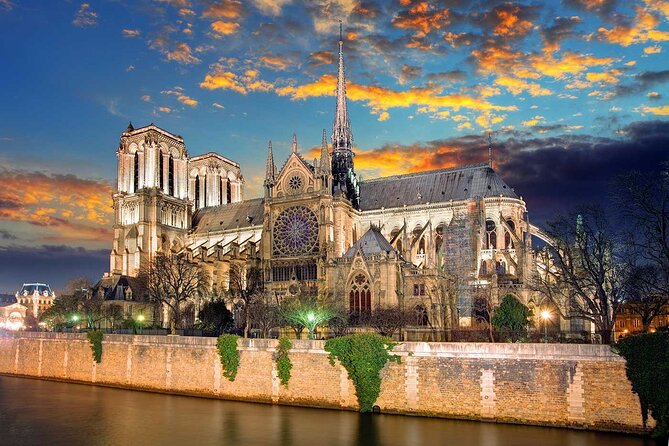
This part of the walk is where you connect a lot of “must-see” Paris in one sweep without treating the day like a checklist. You’ll walk by the Cathedral of Notre-Dame de Paris and Sainte-Chapelle, along with the city-island area’s landmarks.
Because the tour description emphasizes walking by these sites, expect more of an outdoor viewpoint than a full interior focus. That’s not a downside—it’s a strategy. You get the big visuals and the historical threads, then you can choose later if you want to spend extra time going inside something that grabbed you.
Two practical thoughts for this stretch:
- Wear shoes that can handle uneven spots and river-adjacent foot traffic.
- Keep your pace steady. This section ties together multiple famous sights, and it’s easy to stop for photos longer than you planned.
The payoff is that you end up with a clearer mental map. When you later look at Paris from another angle—metro station, museum approach, or a future walking day—you’ll understand how the pieces connect along the Seine.
You can also read our reviews of more historical tours in Paris






Le Marais: Jewish Traditions Meet Fashion in 1 Hour

Then you get to the neighborhood that feels like it’s made for wandering: Le Marais. You’ll spend about 1 hour here. The streets are described as small cobblestone lanes lined with restaurants, contemporary art galleries, and independent fashion boutiques. It’s the kind of setting where you can actually feel the difference between “seeing Paris” and experiencing it.
The tour story adds a smart layer: you’re not only looking at boutiques. You’re learning how Jewish traditions show up in the neighborhood’s everyday life—delis, bagel shops, and synagogues. That blend is a big part of why Le Marais is interesting. It’s not frozen in time, and it’s not only about today’s trends either.
If you like to eat while you walk, Le Marais is ideal. The tour route points you toward food stops you can come back to. If you like fashion or design, the independent boutiques are the contrast to the more traditional religious and community presence you’re hearing about.
If you’re planning purchases, remember that Le Marais makes it easy to browse longer than expected. Set a tiny goal for yourself—one snack, one photo stop, one specific shop you want to check—so you don’t lose the rest of the route’s ending.
Place des Vosges: Symmetry, Art Galleries, and Victor Hugo House

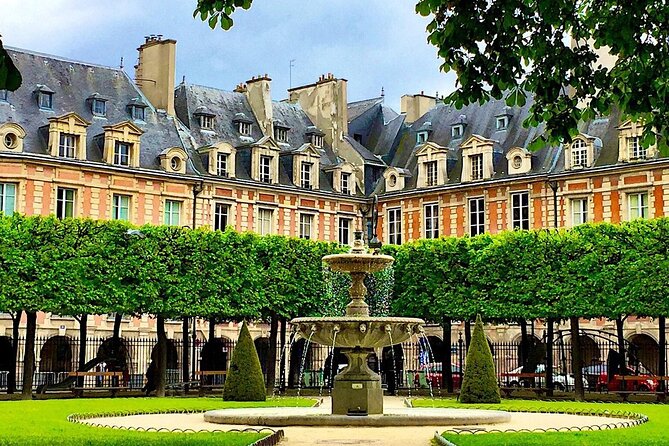
Your final stop is Place des Vosges, for about 1 hour. It’s described as one of the oldest squares in Paris and also one of the most beautiful. The shape is a big deal here: it’s perfectly symmetrical, bordered by 36 buildings.
This ending works because it’s a breathing space. After cobblestones and tight streets, Place des Vosges feels structured and calm. It also connects your tour’s themes of story and culture to a physical landmark you can linger at.
Along the square, you’ll find art galleries, and the Victor Hugo House is nearby—a museum dedicated to the French writer. The tour notes that Victor Hugo lived on the second floor from 1832 to 1848, which turns the square from pretty architecture into a place with personal human time.
When you finish here, you’re well-placed for more wandering. You’ve ended in a central, walk-friendly area where you can choose dinner, a museum add-on, or just another round of streets without feeling like you’re stranded at the edge of town.
Why Neda’s Small-Group Approach Makes the Difference
The star of this experience is the combination of route design and the way Neda tells it. The tour is capped at seven travelers, and that creates a different feel. You’re not shouting questions into the wind while the group shuffles along. You can ask for clarification, and you can follow up.
Another detail that shows up in the guide’s style: she’s good at practical help alongside history. For example, she’s described as offering metro orientation during the tour. That’s useful. Paris is complicated. Getting a quick transport mental model can save you later stress, especially when you’re jumping between neighborhoods like this.
This tour also seems to encourage interaction. You’re seeing major landmarks, but you’re also getting cultural angles—like the Le Marais discussion of Jewish life and how it intersects with fashion. That makes the walk feel less like facts on parade and more like understanding how people live in different parts of the city.
Price and Value: What You’re Really Paying for
The price is $96.79 per person for about 3 hours. At first glance, it sounds like you might be paying for sightseeing. In practice, you’re paying for three things:
- Routing efficiency: you cover multiple neighborhoods that would take planning to do well on your own.
- Interpretation: the tour connects places like Saint-Sulpice, Pont Neuf, the river/city island area, and Le Marais into one story line.
- Time savings: even the short stops (like about 5 minutes at Saint-Sulpice and Pont Neuf) are designed to give you the important takeaway fast.
Most of the specific stops are labeled with free admission tickets. That’s a meaningful part of the value because your money goes toward the guide and the route, not toward stacking paid entrances.
One more practical signal: the tour is often booked about 48 days in advance. That doesn’t mean you can’t book later, but it does suggest demand is steady. If you have a narrow window in Paris, plan ahead so you’re not stuck searching for a replacement on short notice.
Who This Walking Tour Fits Best (and Who Should Consider Another Option)
This is a great fit if:
- You want to get oriented fast on your first afternoon in Paris.
- You like walking and prefer neighborhoods with character over only big-ticket monuments.
- You’re curious about culture beyond the obvious, including how Le Marais reflects Jewish community life alongside modern fashion.
- You appreciate a small group where you can actually ask questions.
You might want something else if:
- You’re looking for a deep, hour-by-hour interior visit schedule inside major buildings.
- You want a tour that ends right where it starts. This one ends at Place des Vosges.
Still, even if you want more interior time, this tour can be a perfect opener. You’ll know what to prioritize later because you’ll have already seen the shape of the city in context.
Should You Book This Paris Walking Tour?
Yes, if you want a smart first step that feels personal. The seven-person cap, the mix of neighborhoods, and the guide’s energetic storytelling (especially Neda’s focus on both history and day-to-day Paris context) make this a strong choice for a short visit.
Book it if you like your sightseeing with explanations and you don’t mind walking for around three hours. I’d skip it only if you know you want a full interior heavy program, or if you absolutely need to finish back near your original start point without planning ahead.
FAQ
How long is the Paris walking tour?
The tour lasts about 3 hours.
What does the tour cost?
It costs $96.79 per person.
Is the tour offered in English?
Yes, it is offered in English.
How many people are in the group?
The tour has a maximum of 7 travelers.
Where do I meet and where does the tour end?
You meet at 1 Pl. Saint-Sulpice, 75006 Paris, France, and the tour ends at Place des Vosges, Pl. des Vosges, 75004 Paris, France.
What major stops and landmarks are included?
The tour includes Eglise Saint-Sulpice, Saint Germain des Pres quarter, Pont Neuf, a river and City Island walk that includes landmark views such as Notre-Dame de Paris and Sainte-Chapelle, Le Marais, and Place des Vosges.
Are there admission fees for the sights on this tour?
The listed stops include free admission tickets.
Is a mobile ticket used, and are service animals allowed?
Yes, the tour uses a mobile ticket, and service animals are allowed.
What is the cancellation policy?
Free cancellation is available up to 24 hours in advance for a full refund. Changes made less than 24 hours before the experience start time are not accepted.