Montmartre tells stories in every uphill turn. I love the poetic start at the I Love You Wall and the artist legends at Bateau-Lavoir, all packed into a 90-minute stroll. The one catch: the route is hilly and cobbled, so moderate fitness helps, even if there are no planned stair sections.
This is a small-group tour (up to 25) with English storytelling that stays relaxed. You also get a mobile ticket, so you’re not stuck hunting for paper tickets while you’re navigating Montmartre’s tight streets.
One thing to plan around: you’ll see Sacré-Cœur from the outside, and entry isn’t included. Your guide will still share tips for what to look for if you decide to go in on your own.
In This Review
- Key highlights you’ll feel on this Montmartre walk
- Montmartre in 90 Minutes: What This Tour Does Best
- Start at Rue des Abbesses: Timing, terrain, and how to enjoy it
- I Love You Wall to the first café-and-boutique street: a poetic opener
- Bateau-Lavoir: where modern art got its start (or at least its mythology)
- Moulin de la Galette outside views: painters’ Paris, not postcard Paris
- The wall-walker sculpture near Marcel Aymé: surreal Montmartre
- Dalida’s bronze bust and the peaceful square break
- The quaint pink house café: an easy photo op with real food energy
- Montmartre’s 1933 vineyard stop: the side of Paris you rarely see
- Sacré-Cœur outside views: best angles and what to do after
- The lively square and street-performer finish
- Price and value: is $38.70 a smart use of your time?
- Guides and reviews: what consistently lands well
- Who this tour suits best (and who might want a different plan)
- Should you book this Montmartre walking tour?
- FAQ
- FAQ
- How long is the Montmartre Hidden Gems and Scenic Highlights walking tour?
- Is entry to Sacré-Cœur included?
- Where does the tour start and end?
- Is the tour offered in English?
- Is this tour very difficult to walk?
- What’s included in the price?
Key highlights you’ll feel on this Montmartre walk
- Poetry at the I Love You Wall, written in over 300 languages
- Picasso-era art mythology at Bateau-Lavoir, plus stories of other modern-art legends
- Moulin de la Galette outside views, tied to famous painters like Renoir and Van Gogh
- Aymé’s wall-walker sculpture nearby, a surreal wink to Montmartre’s imagination
- Dalida’s bronze bust and a peaceful place to slow down for a tribute
- A short vineyard stop from 1933, connecting Montmartre to its old winemaking roots
Montmartre in 90 Minutes: What This Tour Does Best

If you’re spending limited time in Paris, this walking tour is built to get you oriented fast. You’ll move through a chunk of Montmartre where art, romance, and ordinary street life overlap, instead of only hitting one big landmark.
The pacing works because it’s short. At about 90 minutes, you get enough stops to understand what makes Montmartre distinct—without turning your day into a long endurance event. Guides also tend to keep the walk moving but not frantic, which matters when you’re on hills.
Value-wise, $38.70 is a fair price for an English-led guide plus multiple landmark stops across one neighborhood. You’re paying for interpretation: what these places mean, who was connected to them, and how to spot what you might otherwise miss.
You can also read our reviews of more walking tours in Paris



Start at Rue des Abbesses: Timing, terrain, and how to enjoy it
The tour starts at 19 Rue des Abbesses and ends at La Bonne Franquette (18 Rue Saint-Rustique). It’s near public transportation, which helps if you’re juggling other sights that day.
Arrive about 15 minutes early. Montmartre streets can be confusing, and the tour starts on time—if you’re late, it may be hard to catch up.
Plan on hills and narrow streets. The route is designed to avoid planned stair sections, but it’s still uphill and uneven (think cobblestones). One guest even noted that wheelchairs can struggle with the grade and cobblestones, so if mobility is a concern, you’ll want to judge your comfort level carefully.
Also dress for weather. The walk runs in rain or shine, so bring a light layer and shoes you can trust on uneven ground.
I Love You Wall to the first café-and-boutique street: a poetic opener

The walk starts with a small square and a big idea: the I Love You Wall. This is the poetic installation where the phrase I Love You appears in over 300 languages. It’s a great first stop because it sets the tone: Montmartre isn’t just monuments; it’s wordplay, art, and people watching.
From there, you head to one of Montmartre’s oldest streets. The vibe here is part historic, part everyday Paris. You’ll see cafés and boutiques packed along streets that feel like they’ve been absorbing artists and storytellers for ages.
What I like about this opening is how it trains your eye. Once you’ve seen the wall’s playful message, you start noticing the little details—doorways, street angles, and the way the neighborhood shifts from quiet moments to lively ones.
Bateau-Lavoir: where modern art got its start (or at least its mythology)
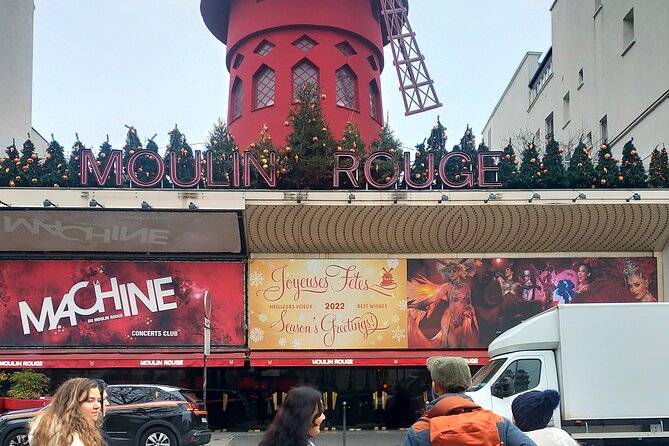
Next comes Bateau-Lavoir, once a humble artists’ residence tied to names you’ll recognize fast. Your guide connects this spot to artists like Picasso, Modigliani, and Braque, and explains how this environment helped fuel modern art.
Even if you don’t know all the details, you’ll get what matters: place shapes art. The building’s role as a creative home matters because it’s not just a museum story. It’s the feeling of a working artists’ world—messy, human, and collaborative.
This is also one of those stops where a good guide earns their fee. The best moments here are the ones that turn a building into a scene: who was there, why it mattered, and how Montmartre became an art magnet.
Moulin de la Galette outside views: painters’ Paris, not postcard Paris
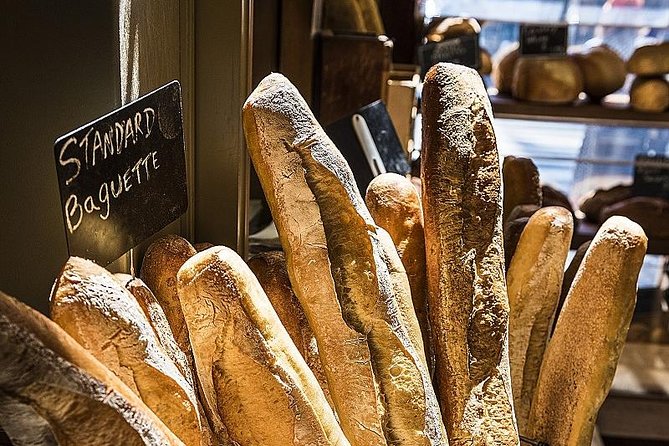
Then you’ll reach the iconic windmill: Moulin de la Galette. You’ll view it from the outside, and your guide ties it to famous paintings by Renoir and Van Gogh. That art connection is the point—Montmartre isn’t just a view; it’s a backdrop that artists kept returning to.
Historically, this windmill was tied to a dance hall, which adds a layer of energy when you look at it now. Today it’s more symbol than party venue, but the area still feels like it has rhythm. It’s the kind of stop where you can pause and look around without feeling like you’re stuck in a line.
If you like framing photos with context (not just a skyline snapshot), this is a good area for it. Look for the angles where the windmill anchors the background while the street scene carries the foreground.






The wall-walker sculpture near Marcel Aymé: surreal Montmartre
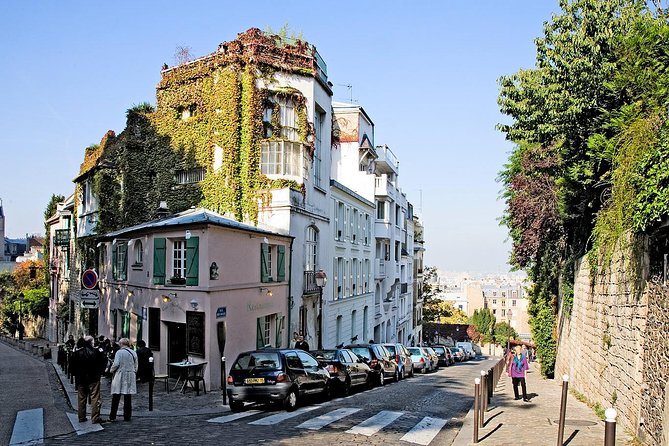
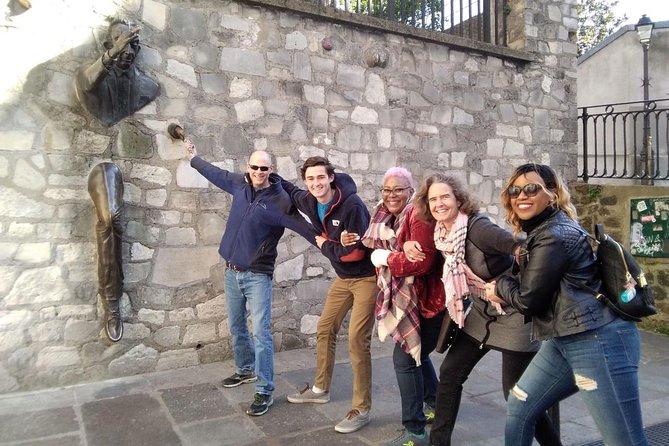
Montmartre leans into surrealism, and this stop gives you a taste. You’ll visit a whimsical sculpture inspired by a short story by Marcel Aymé, showing a man walking through a wall.
This kind of stop matters because it explains why Montmartre feels different. It’s not only grand architecture. It’s also weird ideas turned physical—playful reminders that reality can bend here.
I like that the tour places this near the author’s former home. Even without going inside anywhere, you get a sense of how literature and street-level life feed each other in Montmartre.
Dalida’s bronze bust and the peaceful square break
Next you’ll learn about Dalida, a long-time Montmartre resident. She’s commemorated with a bronze bust located in a peaceful square, and it’s become a place for fans to pay tribute.
This stop is a useful reset. The tour has plenty of motion and imagery, and then suddenly you’re in a quieter pocket where you can stand, read the mood, and take a breath. It’s also a reminder that famous people didn’t just visit Montmartre—they often lived there.
If your trip leans toward music and pop culture, you’ll probably find this moment surprisingly moving. It’s not a lecture; it’s a small monument with a human connection.
The quaint pink house café: an easy photo op with real food energy
You’ll also see a famous quaint pink house that’s been part of Montmartre for decades and now functions as a café. Your guide connects it to early artist visits, including Picasso and Utrillo, and it’s often a favorite photo stop on the walk.
This is one of those moments where the tour becomes practical. You’ll look around, notice where people sit, and start thinking about where you’d grab a lunch or snack after the guided portion ends.
When the day is moving fast, I appreciate stops like this that let you “check in” visually with the neighborhood. You’re not just passing through; you’re absorbing the setting you’ll return to on your own.
Montmartre’s 1933 vineyard stop: the side of Paris you rarely see
Then comes a stop that feels almost impossible in a city like Paris: a small vineyard in Montmartre. It produces wine and was established in 1933 to preserve Montmartre’s winemaking heritage.
This is a great stop for two reasons. First, it breaks the Montmartre story out of only art and crowds. Second, it shows that the neighborhood has practical roots, not just legend.
Even if you don’t taste anything (tasting isn’t described here), you’ll still walk away with a new lens. You’ll start noticing that Montmartre has always been shaped by land use—hills, exposure, and local traditions.
Sacré-Cœur outside views: best angles and what to do after
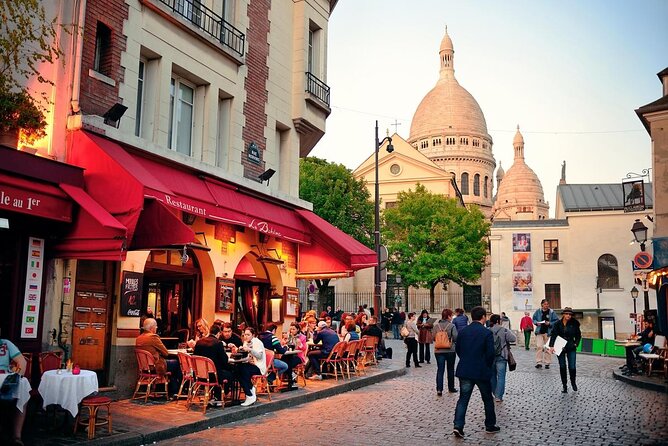
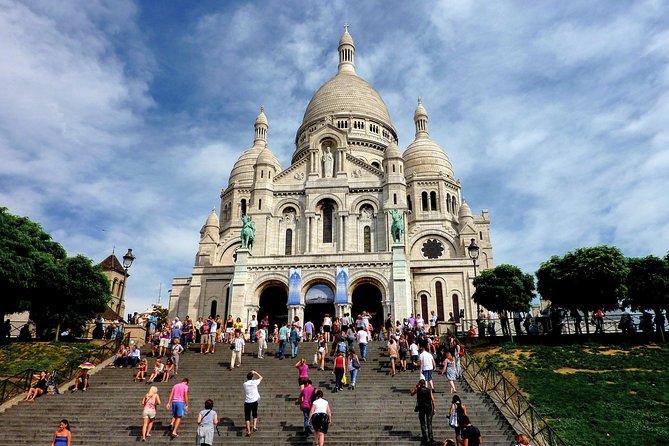
At the highest point in Paris sits Sacré-Cœur Basilica. Your guide shares what to look for, including the white domes and intricate mosaics, plus the view opportunities from the area.
Important: the tour does not include entry. You’ll pass by the exterior, and that’s it for the basilica during the tour. Still, your guide gives tips so you can decide to visit inside later, if it’s open and you feel like adding time.
This is also a good moment to manage your energy. Sacré-Cœur is a big emotional magnet, and it can feel like the neighborhood’s final curtain call. If you’re tired from hills, just enjoy the exterior view and save indoor time for another trip.
The lively square and street-performer finish
The walk ends by returning to one of Montmartre’s most active squares. This is where you’ll see the artistic spirit in real life—painters, caricaturists, and street performers—with cafés and restaurants nearby.
It’s a natural ending because it matches how Montmartre feels when it’s at its most “alive.” Instead of ending on an empty landmark, you finish where people actually hang out, which makes it easy to keep exploring afterward.
And with the tour ending at La Bonne Franquette, you have an obvious next step: food, a rest, and time to wander without the guide keeping you on a route.
Price and value: is $38.70 a smart use of your time?
For a neighborhood like Montmartre, $38.70 for about 90 minutes isn’t cheap-cheap, but it’s also not outrageous—especially in Paris. The price mainly buys you guide time and storytelling tied to multiple places in the same walking circuit.
You get paid interpretation at several stops: the multilingual message at the I Love You Wall, the artists connected to Bateau-Lavoir, the painter associations around Moulin de la Galette, and cultural context for things like Dalida’s bust and the Aymé-inspired sculpture.
You don’t get basilica entry, and the tour is not described as a ticketed “see everything” checklist. But for most visitors, the outside views and the practical tips are exactly what you need, especially if you’re trying to cover Montmartre without losing half your day in lines.
Guides and reviews: what consistently lands well
A big reason this tour keeps a high rating is that the guide style tends to work. Many guide names show up in positive feedback—Laura, Sylvia, David, Denise, Sonia, Linda, Ben, Anastasia, Sophie, and Katie—and the common thread is a friendly mix of history, art stories, and practical suggestions for what to do next.
You’ll also benefit from choosing timing. One review-style tip that keeps coming up is to do an early tour, because the neighborhood becomes busy fast. Going earlier helps your photos, your walking pace, and your ability to hear the guide on narrow streets.
One caution from less-perfect feedback: this is a Montmartre-focused walk with specific landmarks and stops. If you’re hunting for other, separate attractions not described as part of this route, you might feel shortchanged. If your priority list is very strict, check the match before you book.
Who this tour suits best (and who might want a different plan)
This is a great choice if you:
- want a first-time orientation to Montmartre without building a self-guided route from scratch
- like art and culture stories connected to real locations (Bateau-Lavoir is a highlight)
- want a manageable time commitment—about 90 minutes—so you can still enjoy the rest of your day
- enjoy a relaxed group walk instead of a marathon sprint
You might think twice if you:
- have limited tolerance for hills and cobblestones
- need fully step-free or wheelchair-friendly terrain (one guest specifically flagged challenges)
- only care about one single landmark and nothing else, since the tour spreads your time across multiple Montmartre corners
Should you book this Montmartre walking tour?
Yes—if you want the most useful version of Montmartre in a short visit. The strongest reason to book is the combination of stops that feel like they belong together: poetry (I Love You Wall), art origin stories (Bateau-Lavoir), iconic symbolism (Moulin de la Galette), and a finish in the square where the neighborhood still acts like itself.
If you’re sensitive to slopes or uneven paving, you should be honest with yourself and plan accordingly. Otherwise, this is a smart, efficient way to understand what makes Montmartre more than a view.
FAQ
FAQ
How long is the Montmartre Hidden Gems and Scenic Highlights walking tour?
It’s about 1 hour 30 minutes.
Is entry to Sacré-Cœur included?
No. The tour passes by Sacré-Cœur and shares tips on what to see inside, but entry is not included.
Where does the tour start and end?
It starts at 19 Rue des Abbesses, 75018 Paris and ends at La Bonne Franquette, 18 Rue Saint-Rustique, 75018 Paris.
Is the tour offered in English?
Yes. The guided visit is offered in English.
Is this tour very difficult to walk?
It’s for travelers with moderate physical fitness. There are hills and narrow, sometimes busy streets, and it avoids planned stair sections, but you should still wear comfortable shoes.
What’s included in the price?
The price includes a local entertaining guide and a guided visit of Montmartre in English during the 90-minute walking tour.