REVIEW · PARIS
Mona Lisa & Louvre Masterpieces Tour with Reserved Access
Book on GetYourGuide →Operated by City Wonders Ltd. · Bookable on GetYourGuide
Queue-free Louvre time is the whole point. This reserved-access tour gives you a guided path through the museum’s biggest hits, with an expert holding the group together. I also like that the tour includes personal headsets, so your guide’s explanations stay clear even when galleries get loud.
You’ll cover the Louvre’s most famous “stop-and-stare” artworks, including the Mona Lisa, plus major Renaissance and classical sculpture. The trade-off is real: this is a walking-heavy visit, and it isn’t suitable for wheelchair users or people with mobility impairments.
Key things that make this tour worth your time
- Reserved access that helps you avoid the worst of the ticket-line chaos
- Headsets so you can actually hear the guide in crowded rooms
- A tight route through Mona Lisa, Renaissance favorites, and standout antiquities
- Time built in for free exploration after the main guided circuit
- A strong group-focus on staying together, crowd flow, and seeing more with less stress
- Optional wine and cheese tasting at a central Paris wine bar after your visit
In This Review
- Reserved Access That Actually Changes Your Louvre Experience
- Where You Meet: Arc de Triomphe du Carrousel (Not the Louvre Door)
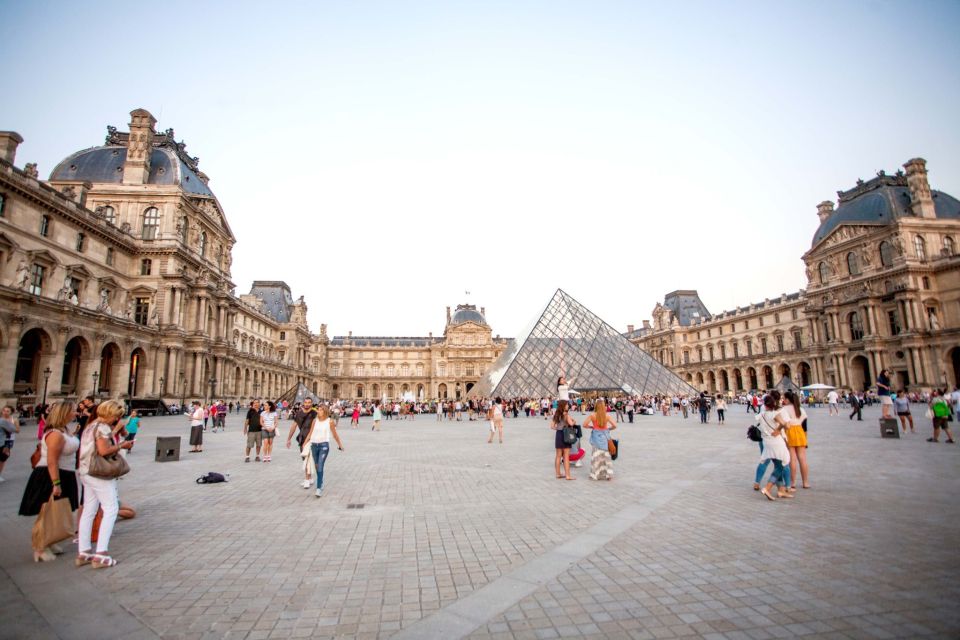
- Louvre Pyramid Photo Stop: A Quick Orientation Before the Art
- The 2.5-Hour Guided Circuit: Mona Lisa, Renaissance Hits, and Big Sculpture
- Mona Lisa up close: what to expect
- Renaissance and dramatic storytelling
- Classical anchors: Venus de Milo and Winged Victory
- Greek and Roman Antiquities: When the Louvre’s Oldest Pieces Steal the Show
- Apollo Gallery and Napoleon Apartments: Royal Rooms With Real Meaning
- The Free Time Slot: How to Use Your Remaining 2 Hours Wisely
- Optional Wine and Cheese: A Nice Paris Add-On After the Museum
- Price and Value: What $80 Covers (and When You Might Pass)
- Guides Matter: What the Best Ones Do for the Group
- Who This Tour Suits (and Who Should Rethink It)
- Should You Book This Mona Lisa and Louvre Masterpieces Tour?
- FAQ
- How long is the Mona Lisa and Louvre Masterpieces tour?
- Where do I meet the group?
- Does this tour include tickets and reserved access?
- Is the tour guided in English?
- How much time do I get to look on my own?
- Is security screening still required?
- Are strollers or large bags allowed?
- Is this tour wheelchair accessible?
Reserved Access That Actually Changes Your Louvre Experience
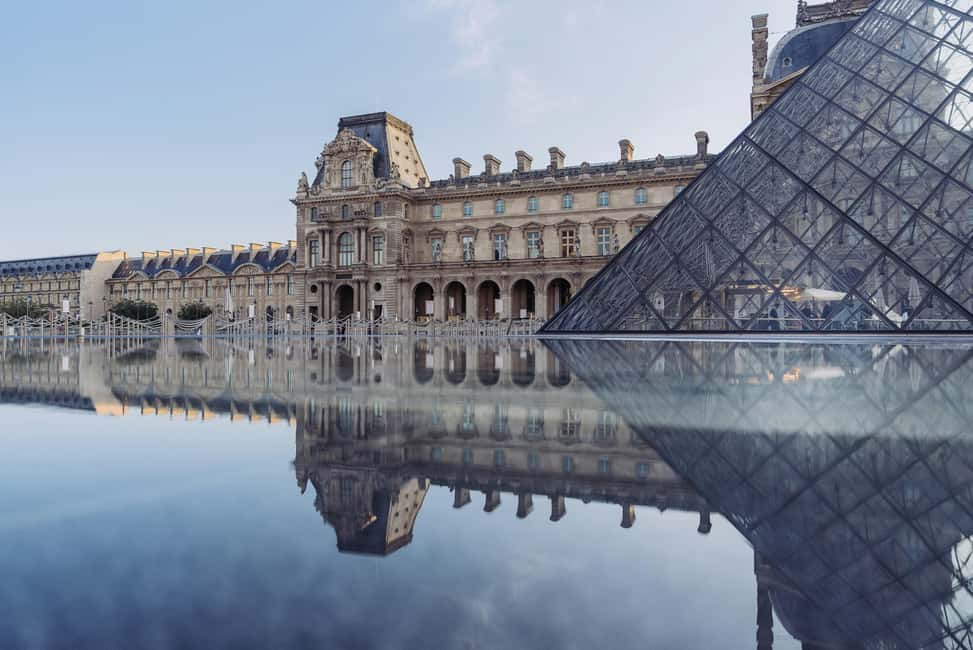
The Louvre is famous for two things: art on a heroic scale and lines that can eat your day. This tour’s main value is that you don’t start by wrestling the entrance process. With your reservation and entrance ticket handled, you can spend your energy where it matters—looking.
And here’s the detail that makes a big difference: you’re not just paying to get in. You’re paying for a guided highlights route that’s designed to keep you moving through the museum without feeling like you’re wandering in circles. That sounds basic, but in the Louvre, wandering is exactly what turns a “3-hour visit” into a “why am I lost” experience.
The included headset is also underrated. In the Louvre, even simple conversations can get swallowed by crowds. With personal headsets, you can listen closely and still keep your eyes on the artworks when your guide calls attention to specific details.
One more practical note: even with reserved entry, you still pass security inside the museum. So don’t plan to sprint in and out. Build in patience and comfortable pacing.
Where You Meet: Arc de Triomphe du Carrousel (Not the Louvre Door)
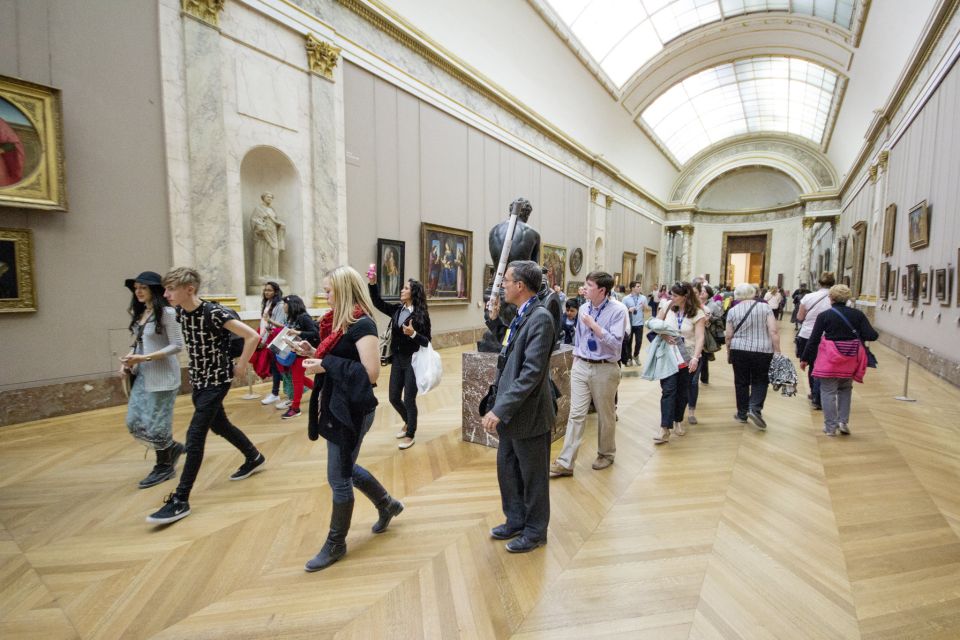
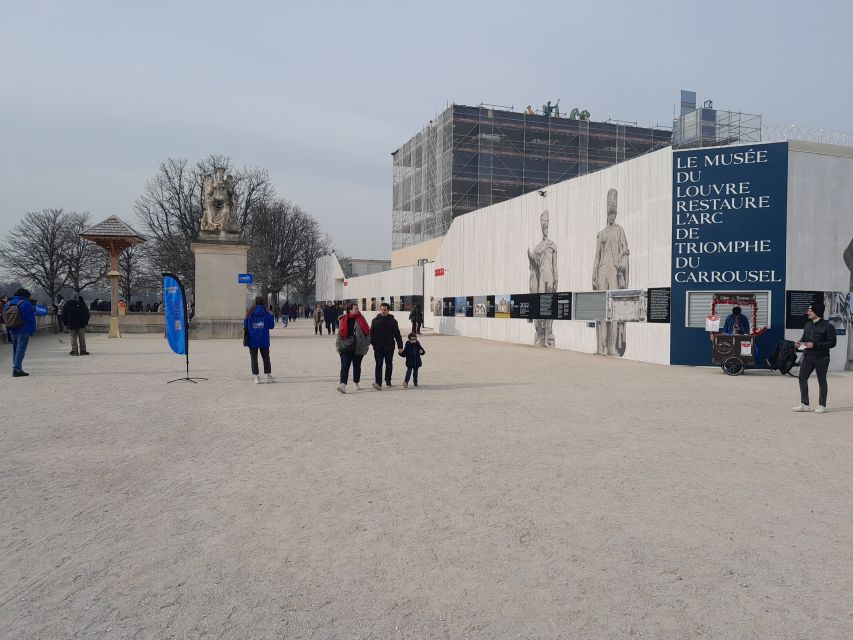
Most Louvre tours meet right near the museum entrance, but this one starts at Arc de Triomphe du Carrousel. That matters because it changes how you structure your morning. If you’re arriving by metro or walking through the Tuileries area, give yourself enough buffer to find your group calmly.
Meet your coordinators dressed in blue attire beside the arch, near the horse-drawn chariot on top. If you stand with your back to the Louvre Pyramid entrance, you should spot the arch across the road, just before the Tuileries Garden entrance. Coordinators stand along the wall railing to the left of the arch.
It’s also worth knowing that if you show up with a larger party (7+), you may be split into different groups on the day. That’s not unusual, but it does explain why your exact path can feel a bit different than your friend’s.
You can also read our reviews of more tours and experiences in Paris.



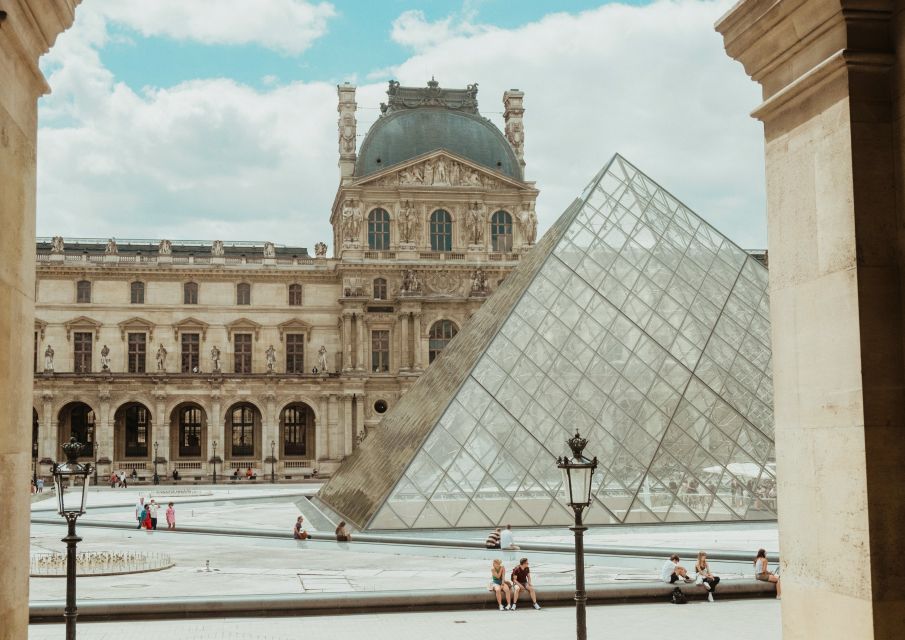
Louvre Pyramid Photo Stop: A Quick Orientation Before the Art
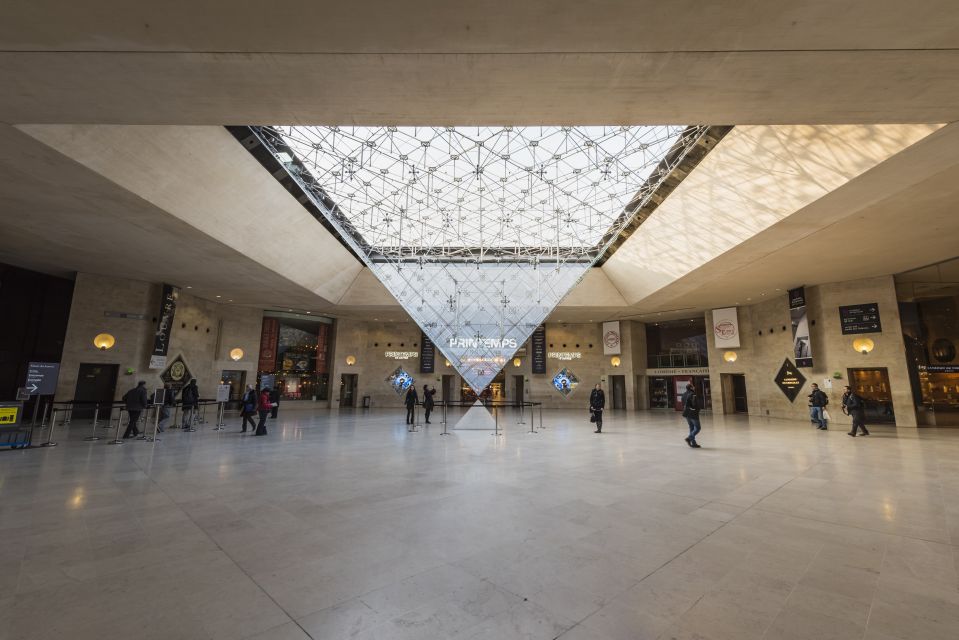
The tour begins with a photo stop at the Louvre Pyramid, plus a guided introduction period. This is only about 30 minutes, but it’s a smart “warm-up” because the museum can overwhelm your brain fast. Instead of trying to figure out where everything is on your own, you get a framework for what you’re about to see.
This part also sets the tone for how the rest of the tour runs. Your guide’s job here is to help you understand what to look for and how to make sense of the Louvre’s layout in a short amount of time. Even if you’re not an art expert, you’ll feel less lost once you’re inside.
The 2.5-Hour Guided Circuit: Mona Lisa, Renaissance Hits, and Big Sculpture
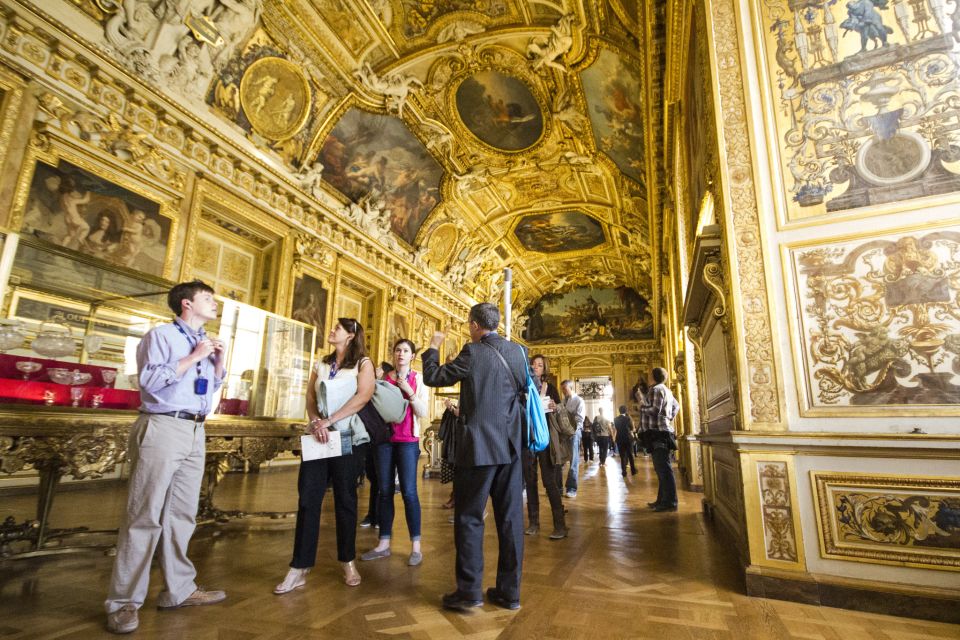
The guided portion inside the museum is where you earn the value. You get about 2.5 hours of structured viewing, focused on the Louvre’s best-known treasures and a few major works that help you connect the dots across time and style.
Mona Lisa up close: what to expect
The Louvre’s most famous painting is also one of its hardest experiences. Crowds gather fast, and the moment you finally arrive, it can feel like the painting is fighting for space with everyone else’s elbows.
A strong guide helps here by steering you through the flow and showing you how to actually look. The feedback you’ll see over and over is that getting there on a guided route makes a difference in how much time you get to see it and how smoothly you reach it.
Renaissance and dramatic storytelling
Beyond the Mona Lisa, the route includes major Renaissance and other standout names—especially Caravaggio and Michelangelo. You’ll also see Raphael as part of the tour’s broader Renaissance focus. If you’re the type who wants more than a checklist, this is where the explanations matter: the guide helps you understand why these works look the way they do, not just what they’re called.
You’ll also encounter the dramatic energy of the French Romantic period, plus a mix of paintings and sculptures that keeps the museum from becoming one long gallery blur.





Classical anchors: Venus de Milo and Winged Victory
The classical collection stops are some of the most satisfying moments of the day, because they’re “readable” even if you don’t know art history.
Two big examples on this tour:
- Venus de Milo, with its iconic presence that holds up in person
- Winged Victory of Samothrace, where you can really feel the movement in the pose
The group pacing here is important. In busy museums, people rush. Your guide tries to slow the experience down just enough so you can see the sculpture as more than a photo opportunity.
Greek and Roman Antiquities: When the Louvre’s Oldest Pieces Steal the Show
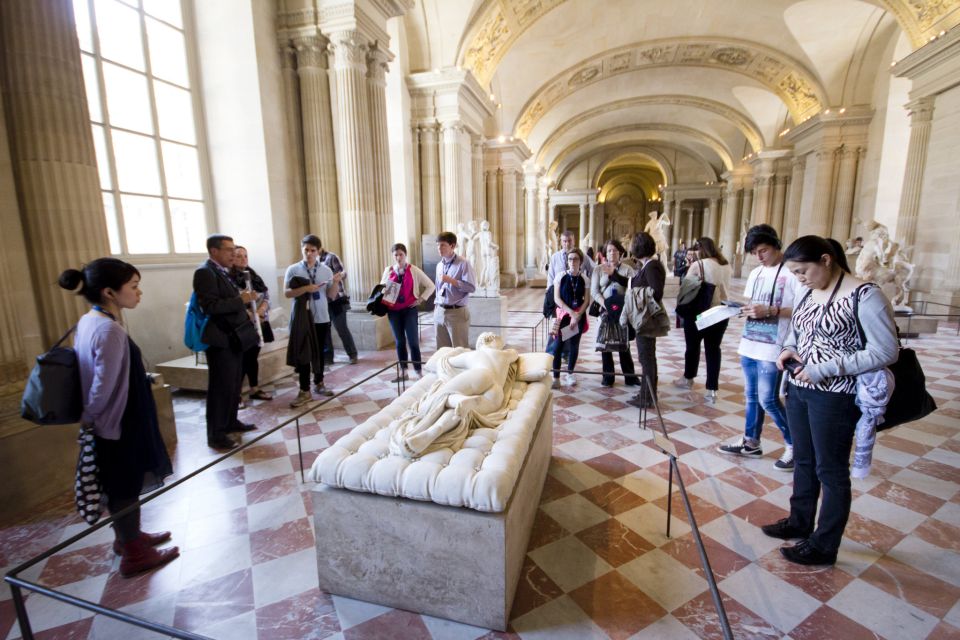
One reason this tour works well for first-timers is that it doesn’t treat the Louvre like it’s only about one era. You also spend time in the world of Greek and Roman antiquities, where the museum’s collections can feel like they’re traveling through time in a single building.
A standout mentioned in the tour highlights is the Great Sphinx of Tanis—over 4,000 years old. Seeing something that old in Paris is a jolt, and the guide’s job is to help you place it in context. When you can connect a sculpture or artifact to a bigger story, it stops being a random object in a room and starts feeling like a message from another civilization.
The tour also points you toward additional notable sculpture stops, including Michelangelo’s Dying Slave, and Canova’s Psyche Revived by Cupid’s Kiss. Those names matter because they represent different approaches to emotion, movement, and ideal form. With a guide, you’re more likely to notice those differences instead of just registering them as famous art.
Apollo Gallery and Napoleon Apartments: Royal Rooms With Real Meaning
The Louvre isn’t only an art warehouse; it’s also a palace with its own history. Part of the value of this tour is that it includes stops connected to the Louvre’s royal past.
You’ll visit:
- The Apollo Gallery, once part of the Louvre’s royal heritage
- The Napoleon Apartments, where the opulent décor reflects the Second Empire era
These moments matter because they remind you the Louvre is not just a museum of objects—it’s a museum inside a power center. When you’re standing in spaces like these, your brain starts to shift from art-as-picture to art-as-environment. Even if you’re not into interiors, these sections help you understand why the Louvre feels so grand.
The Free Time Slot: How to Use Your Remaining 2 Hours Wisely
After the main guided tour (about 2.5 hours), you get 2 hours of free time. This is where you decide what kind of visitor you want to be: rapid highlight collector or slower “pick a few and really see them” person.
A useful strategy is to:
1) revisit anything you didn’t have time to look at carefully during the guided part, and
2) pick one area to explore on purpose rather than drifting.
Why this helps: the Louvre is so big that random wandering can feel productive while actually missing everything you came for. Even if you’re not a museum person, you’ll likely leave wanting a second visit. Using the free time intelligently is how you reduce that regret.
Your guide also finishes in a way that sets you up to keep going. Many reviews mention the experience culminating around the Mona Lisa area, so you can continue your self-guided exploration from there.
Optional Wine and Cheese: A Nice Paris Add-On After the Museum
If you choose the upgrade, you’ll end with a wine and cheese tasting at a high-end Parisian wine bar in central Paris. The tasting includes fine wines paired with artisanal cheese and charcuterie.
This isn’t just a fun detour. It’s a practical way to decompress after hours of intense looking. It also gives you a more “adult Paris” ending—less souvenir shopping energy, more sit-down, talk, and relax.
If you don’t drink wine, you might find the experience a bit focused on alcohol, but the pairing format still makes it feel connected to the day rather than random.
Price and Value: What $80 Covers (and When You Might Pass)
At $80 per person for around 210 minutes, this tour is priced like a guided experience, not a cheap ticket. The best way to think about value here is what you’re buying:
- reserved access and entrance ticket
- an expert English-speaking guide
- a headset system
- a route that targets the Louvre’s biggest attractions and several key sculpture highlights
- time for free exploring afterward
- an optional food and drink upgrade
For most non-EU visitors, buying the tour ticket makes sense because you’re taking on the Louvre’s logistics problem along with the art. For EU visitors ages 18–26, note that museum entry is free. In that case, the decision becomes less about the admission and more about whether the guide, reserved entry process, and headsets are worth it to you.
Either way, the $80 price feels fair if you care about efficiency and explanation. If you’re the kind of person who loves planning your own museum route and doesn’t mind getting stuck in crowds, you might decide to skip a guided highlights format. But if you want to feel confident you saw the major pieces and you want help making sense of what you’re seeing, this is the safer bet.
Guides Matter: What the Best Ones Do for the Group

This tour stands or falls on the guide, and the pattern in the feedback is consistent: guides keep things moving, keep the group together, and turn famous artworks into something you can actually understand in a short visit.
You’ll see names like Saeed, Hugo, Juliette, Omar, and Summer appear again and again, along with other guides such as Crystal, Eric, and Mariam. People describe them as friendly, patient, and tuned into the group’s questions.
A few standout ways the stronger guides seem to work:
- they help you reach crowded artworks without losing time
- they adjust the pace so you’re not trapped in rooms without seeing anything
- they answer questions in plain language, not just dates and titles
- they use small storytelling moments to make the paintings and sculptures feel less distant
One practical example: guides often emphasize that the Mona Lisa can be tricky to view because of crowds, and they position the group so you can actually spend moments looking rather than just arriving.
Who This Tour Suits (and Who Should Rethink It)
This is a great fit if you:
- are short on time and want a focused Louvre overview
- want expert context for major paintings and classical sculpture
- feel overwhelmed by the Louvre’s size and want a plan
- like group energy but still want space to look closely during the free period
You should rethink it if you:
- use a wheelchair or have mobility limitations, because the tour involves a fair amount of walking
- travel with baby strollers or large luggage, since they are not allowed
- expect a low-effort museum stroll
Also, if you tend to get frustrated in crowds, go in with the right mindset. This tour is built to manage crowds, but it won’t turn the Louvre into a quiet gallery.
Should You Book This Mona Lisa and Louvre Masterpieces Tour?
Book it if you want a smart, guided highlights plan that gets you to the Louvre’s headline masterpieces with less confusion and more listening time. The combination of reserved access, headsets, and a route packed with Renaissance paintings and classical sculpture is the winning formula for first-timers and anyone who only has a few hours.
Skip it if you want maximum flexibility to roam at your own pace from room to room, or if your day is better spent elsewhere and you don’t need a guided explanation.
If you’re on the fence, here’s the simplest decision rule: if you’d rather pay to avoid the stress and get the big artworks explained, this tour is a strong yes.
FAQ
How long is the Mona Lisa and Louvre Masterpieces tour?
It runs about 3 hours, with the full experience listed as 3 hours to 210 minutes depending on the start time availability.
Where do I meet the group?
You meet beside the Arc de Triomphe du Carrousel, not at the entrance to the Louvre Pyramid. The coordinators stand to the left of the arch along the wall railing, dressed in blue.
Does this tour include tickets and reserved access?
Yes. It includes pre-reserved access and an entrance ticket to the Louvre Museum, and it also skips the ticket line.
Is the tour guided in English?
Yes. The tour guide is live and the tour language is English. You’ll also have personal headsets.
How much time do I get to look on my own?
After the guided portion, you get about 2 hours of free time inside the Louvre.
Is security screening still required?
Yes. All visitors to the Louvre must pass security before entering the museums.
Are strollers or large bags allowed?
No baby strollers are allowed, and luggage or large bags are not permitted. Items larger than 55 x 35 x 20 cm are not allowed in the museum.
Is this tour wheelchair accessible?
No. It is not suitable for people with mobility impairments and it is not for wheelchair users.