REVIEW · PARIS
Paris: Le Marais & Montmartre Jewish History Walking Tour
Book on GetYourGuide →Operated by Walks In Europe · Bookable on GetYourGuide
Jewish Paris works best on foot. This small-group walk links Le Marais and Montmartre with a local guide and you’ll see how centuries of Jewish life shaped what you’re standing on, from the Hector Guimard synagogue exterior to the wide-open views from Sacré-Cœur.
I especially love how the guide stitches together old stories and modern neighborhood life, so it doesn’t feel like museum text on a sidewalk. One thing to weigh: this is a walking tour with no indoor synagogue or monument entries, and it’s not suitable for wheelchair users, so comfortable shoes and realistic expectations matter.
In This Review
- Key highlights worth planning around
- Jewish Paris on Two Tracks: From Le Marais to Montmartre
- Where You Meet: BHV Marais or L’Elephant Du Nil
- Le Marais: Jewish Paris Starts Here (and Still Feels Alive)
- Agoudas Hakehilos and Hector Guimard’s Art Nouveau Exterior
- Everyday Jewish Life, Not Just Landmarks
- The Mémorial de la Shoah: A Serious Moment With Real Context
- Lunch Energy vs. Walking Reality: The Transport Break to Montmartre
- Montmartre: Artists, Writers, and Jewish Creative Circles
- 7 Rue Ravignan and the Bohemian Setting
- Le Bateau-Lavoir and Montmartre’s Artistic Pulse
- Musée de Montmartre Area and 16 Rue du Mont-Cenis
- Sacré-Cœur Views and the Square Louise-Michel Reflection
- Pace, Terrain, and Weather: What You Should Plan For
- Price and Value: Why $80 Can Be Worth It Here
- Guides Make the Difference: Benjamin, Pierre-Louis, Benoit, and Others
- Food Along the Way: Plan for Snacks and Local Picks
- Who This Tour Is Best For (and Who Might Want Another Option)
- Should You Book This Jewish History Walking Tour?
- FAQ
- How long is the Paris Le Marais & Montmartre Jewish History Walking Tour?
- What sites are included in the tour?
- Are we allowed to enter the synagogues or monuments?
- Is the tour in English and is it small-group?
- Do I need to use public transport during the tour?
- Is the tour suitable for wheelchair users or reduced mobility?
- What if I want to cancel?
Key highlights worth planning around
- Le Marais, with lived-in Jewish streets and a story that runs from the Middle Ages to today
- Agoudas Hakehilos synagogue exterior by Art Nouveau master Hector Guimard
- A solemn stop at the Mémorial de la Shoah, explained with care and context
- Montmartre’s artist world, where Jewish voices show up in cafés, studios, and creative circles
- Sacré-Cœur panoramic payoff, then a reflective ending around Square Louise-Michel
Jewish Paris on Two Tracks: From Le Marais to Montmartre
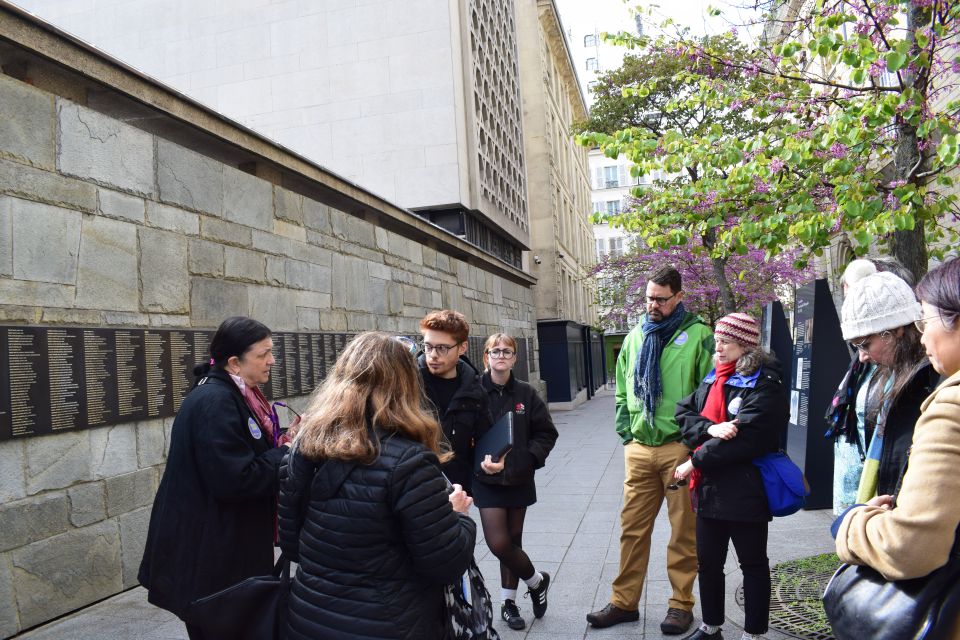
This tour is built around a simple idea: Jewish Paris isn’t one place. It changes with the city, with politics, and with artists and thinkers who kept pushing forward.
You’ll start in Le Marais, the classic historic core where the streets still carry old energy. Then you’ll head uphill to Montmartre, the bohemian side of Paris that later drew artists, writers, and dreamers. The whole point is seeing how identity and creativity can share the same street corners.
You can also read our reviews of more walking tours in Paris



Where You Meet: BHV Marais or L’Elephant Du Nil
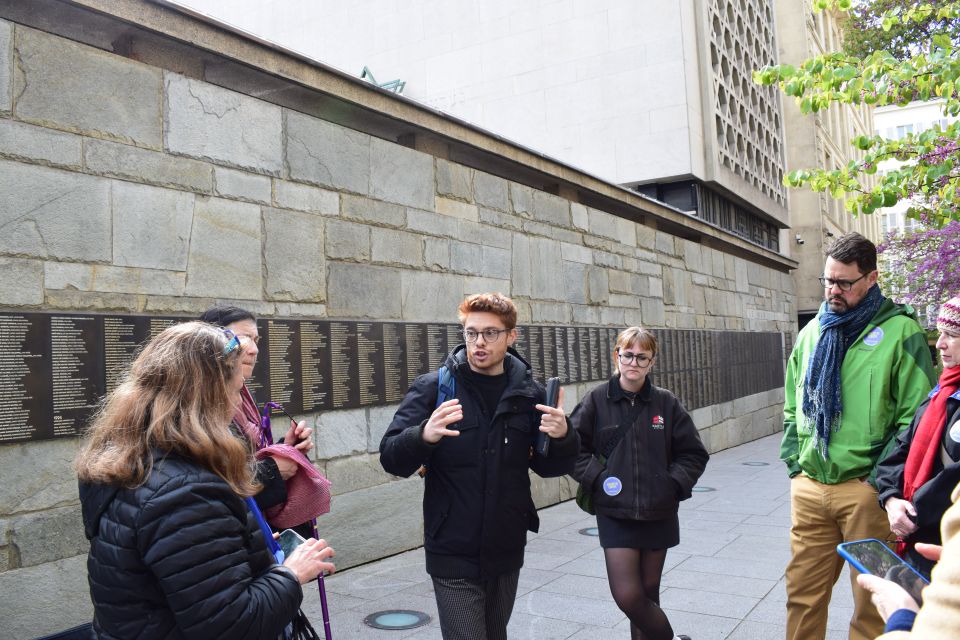
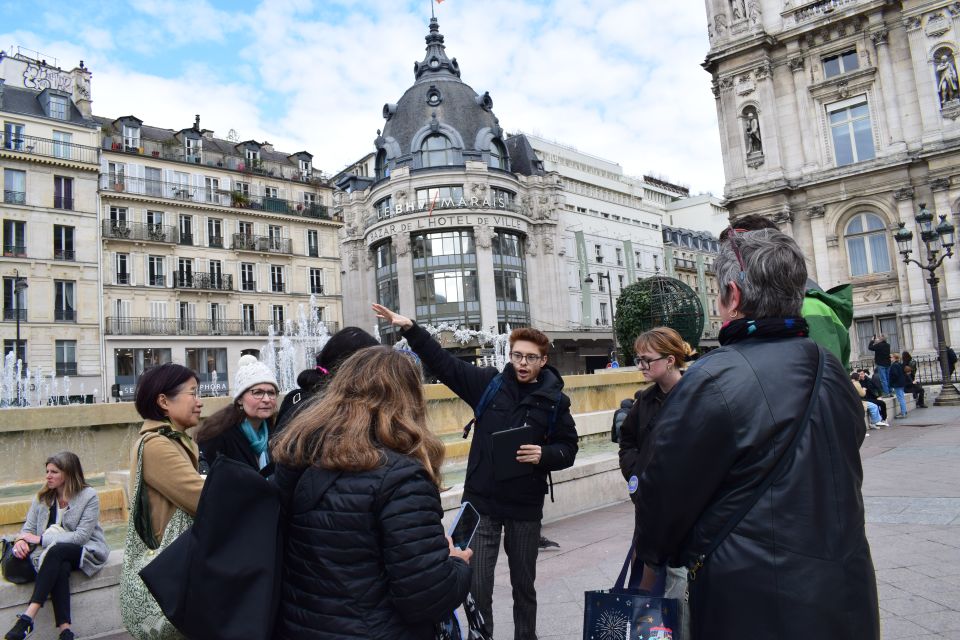
You get two starting options, depending on what you booked: BHV Marais (L’Elephant Du Nil is the other option). Either way, you need to be early. Arrive 15 minutes before start so the group doesn’t get stuck playing finder-and-scanner for your guide.
A heads-up from real-world experiences: one traveler had trouble spotting the guide at BHV Marais because the exact meeting marker wasn’t clear. Your best move is to go to the meeting point with extra time and double-check the instructions you receive when you reserve.
Le Marais: Jewish Paris Starts Here (and Still Feels Alive)

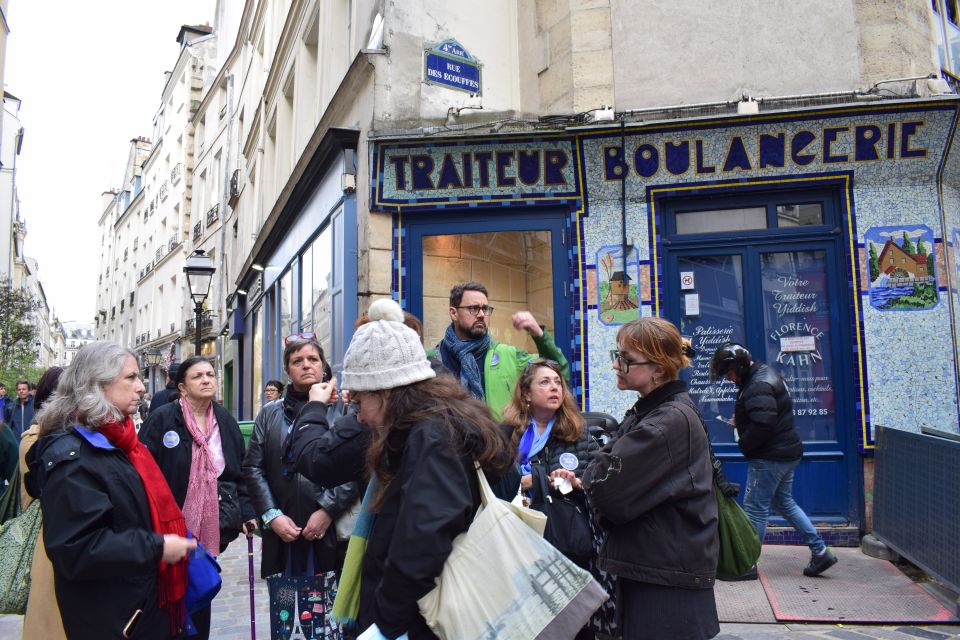
Once you’re moving, Le Marais turns into the backbone of the story. You’ll walk through the area’s older lanes and get the sense of how everyday trade, community life, and local institutions shaped the neighborhood over time.
A standout stop is Le Village Saint-Paul, where the guide sets the scene for why this part of town mattered. The tour doesn’t treat Jewish history as a single era, either. You’ll connect the medieval-to-modern timeline to what you see today.
Agoudas Hakehilos and Hector Guimard’s Art Nouveau Exterior
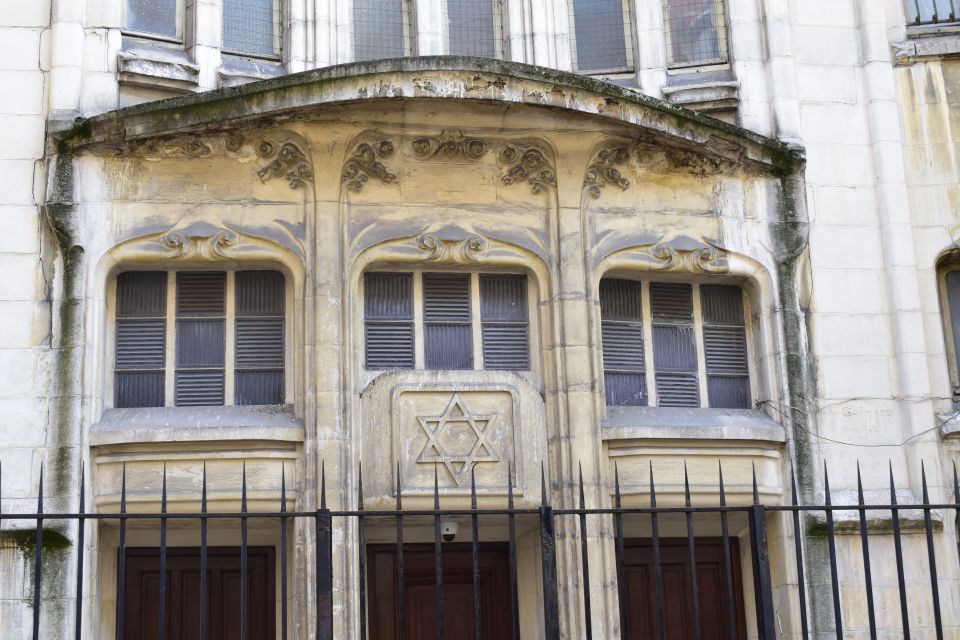
One of the big visual moments is Agoudas Hakehilos Synagogue, tied to Hector Guimard’s Art Nouveau style. You’re not going inside, but seeing the exterior up close is still worth it. Guimard’s work is usually easier to appreciate in person than from photos, and your guide helps you notice the details that signal Art Nouveau design.
Why this matters: it shows how Jewish institutions in Paris weren’t frozen in time. They were part of the city’s architectural and cultural shifts.
Everyday Jewish Life, Not Just Landmarks
The best part of the Marais section is that it feels human-scale. You don’t just tick off addresses. You learn why the neighborhood’s identity formed, how it changed, and how community life left traces in the streets.
Guides on this tour are often praised for mixing serious history with the contemporary vibe of Le Marais. That balance helps you understand the place as something lived in, not something sealed behind glass.
You can also read our reviews of more historical tours in Paris






The Mémorial de la Shoah: A Serious Moment With Real Context
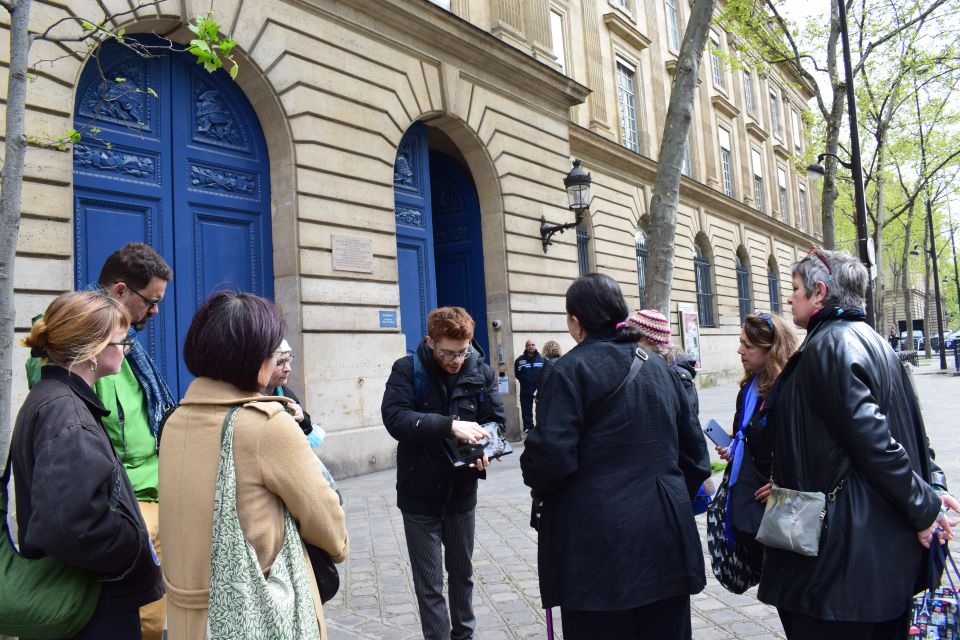
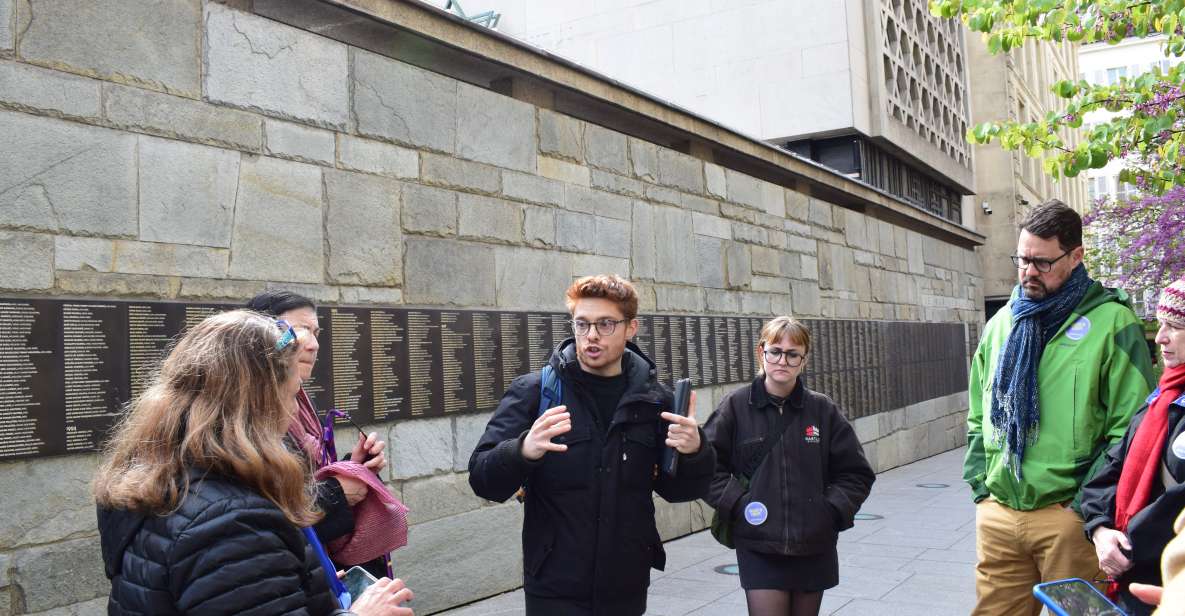
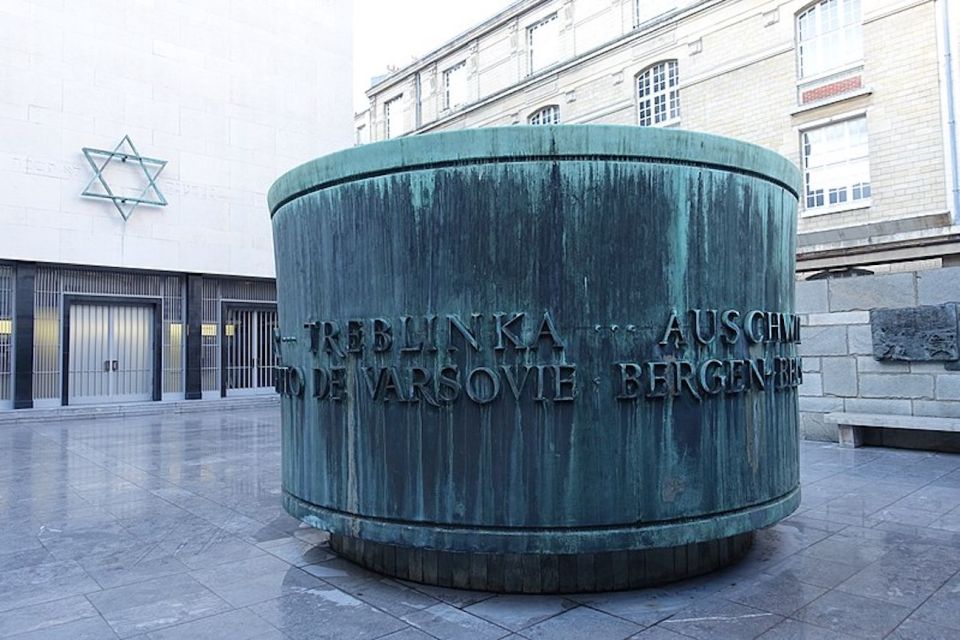
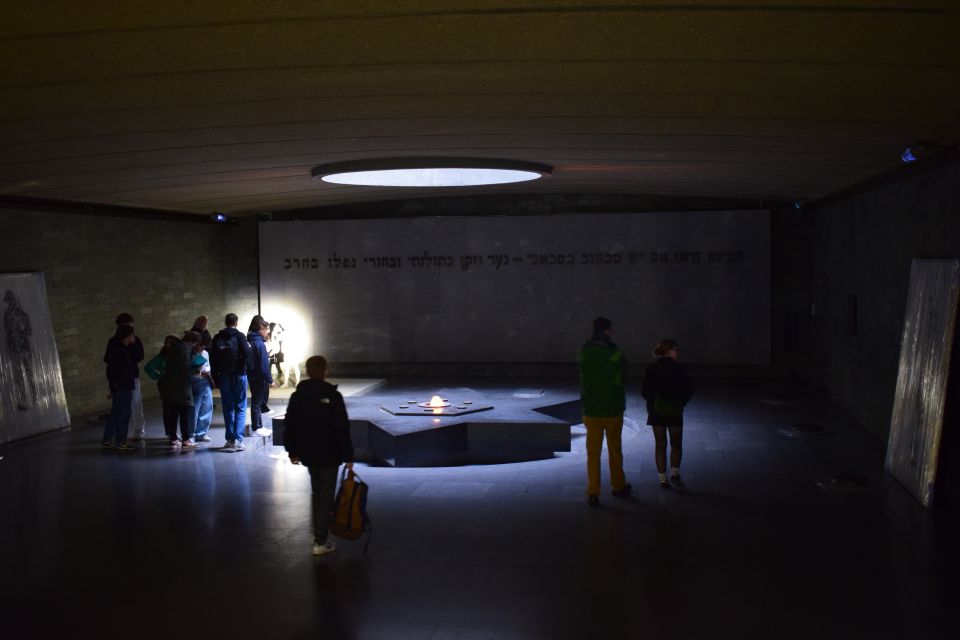
Then comes a turn in tone at the Mémorial de la Shoah (Holocaust Memorial). This isn’t a quick picture stop. The guide explains what the memorial represents and why it matters, and they do it with a sensitivity that multiple reviews specifically call out.
One review noted the moment felt especially solemn, and it’s exactly the kind of stop where the right pacing helps. You’re learning in a city where the past can feel close—so the tour keeps the tone respectful while still grounding the history in place.
If you’re someone who prefers facts to speeches, you’ll likely like this. The guide’s job is to help you connect what you’re seeing to the bigger story, not to overwhelm you with emotion.
Lunch Energy vs. Walking Reality: The Transport Break to Montmartre
Halfway through, you shift from Le Marais into Montmartre using public transport. Public transport tickets are included, which is one less thing to worry about once you’re already moving on foot.
This break matters more than it sounds. Montmartre climbs, and the tour structure gives you a reset before the next neighborhood. It also helps keep the walk from feeling like a single long grind.
Montmartre: Artists, Writers, and Jewish Creative Circles
Montmartre is where Paris turns theatrical. Even if you’ve been here before, the tour reframes it through Jewish presence in the area—especially through art and ideas in the late 19th and early 20th centuries.
You’ll walk iconic Montmartre streets with a guide who links specific locations to themes like creativity, ambition, and resilience. Reviews praise how guides handle sensitive topics with care, while still keeping energy up during the uphill sections.
7 Rue Ravignan and the Bohemian Setting
You’ll pass and stop at 7 Rue Ravignan, then continue toward other Montmartre landmarks. The story here isn’t only about famous figures. It’s about where creative life happened: cafés, studios, and the circles where people argued, sketched, and wrote.
If you like walking tours that explain how neighborhoods functioned socially, this part should click for you. You’ll feel the connection between place and people instead of just memorizing names.
Le Bateau-Lavoir and Montmartre’s Artistic Pulse
The tour also includes Le Bateau-Lavoir as a guided stop. Even if you only know Montmartre by its famous scenery, this is one of the spots that helps you understand why artists were drawn here in the first place.
Again, you’re not being asked to treat Montmartre as a postcard. You’re being guided to see it as a working creative ecosystem, with Jewish artists and thinkers part of the same cultural currents.
Musée de Montmartre Area and 16 Rue du Mont-Cenis
You’ll also pass Musée de Montmartre (and spend time around 16 Rue du Mont-Cenis). These stops work like signposts. The guide uses them to map how Montmartre became a modern creative center—and how Jewish voices fit into that story.
Because indoor entries aren’t included, you should treat this as a street-level history walk. You’ll be looking outward, noticing what the neighborhood still communicates through its design and layout.
Sacré-Cœur Views and the Square Louise-Michel Reflection
At the end, you reach Sacré-Cœur Basilica for sightseeing. You’ll take in sweeping panoramic views over Paris, and the guide ties that visual “big picture” back to the tour’s themes of identity and artistic expression.
The tour then finishes around Square Louise-Michel. The ending is a kind of reflective period—less about collecting one more landmark and more about leaving with the bigger sense of what you just walked through.
If you’re the type who likes a tour to help you process, you’ll appreciate this finish. It’s also a nice place to reset your brain after the stairs and the crowd energy that tends to come with Montmartre.
Pace, Terrain, and Weather: What You Should Plan For
This is a 210-minute walking tour, and it’s not presented as gentle stroller cruising. It’s also not suitable for people with mobility impairments or wheelchair users, which tells you right away the terrain isn’t designed for easy access.
Even fit legs should expect uneven sidewalks and uphill stretches in Montmartre. A few reviews mentioned on-and-off rain, so bring a small umbrella or rain jacket. Paris drizzle can turn cobblestones into slip-and-slide fast.
Also, you can’t join after it starts. So arrive early at the meeting point and be ready to move.
Price and Value: Why $80 Can Be Worth It Here
At $80 per person for about 3.5 hours, the value depends on what you want from Paris.
If you’re hoping to spend your day only looking at pretty buildings, you may feel the price is too high for a street walk. But if you want a guided story that connects architecture, neighborhoods, and difficult history into a coherent route, this price starts making sense.
Here’s what you’re paying for:
- a small-group format (up to 9 people), which makes questions more realistic
- an English-speaking local guide who explains the places
- public transport tickets between neighborhoods
- a route that covers both iconic sights and less-obvious connections
What you’re not paying for:
- indoor synagogue or monument entry
- any included museum ticket-style experiences
That tradeoff matters. You’ll see exteriors and street-level context, not sit-down interiors. For many people, that’s the right focus.
Guides Make the Difference: Benjamin, Pierre-Louis, Benoit, and Others
A repeated theme in reviews is guide quality and how they handle sensitive material. Several guides stand out by name: Benjamin (called out for courteous, detailed knowledge and careful handling of sensitive issues), Pierre-Louis (praised for engaging delivery and strong English), Benoit (noted for a well-structured route and a calm, clear approach), and Achilles (praised for covering thousands of years of Jewish history in a way that kept people engaged).
One review even praised how the guide handled questions and kept the tour moving while staying respectful, even when the topic is heavy. Another mentions that guides gave time for questions and adjusted pace when needed.
So if you book, you’re not just hiring someone to point at buildings. You’re hiring a storyteller who has to balance accuracy, empathy, and clarity.
Food Along the Way: Plan for Snacks and Local Picks
While the tour isn’t described as a formal meal, reviews mention a food moment at the end, including recommendations and tasting things like falafel. It’s also common that the guide points you toward where to eat nearby, especially for Jewish-quarter food choices.
If food is part of your travel style, it helps to think of the tour as both history and a launching pad for your next stop. You’ll likely want a little cash or card ready for snacks after the walk.
Who This Tour Is Best For (and Who Might Want Another Option)
This tour is a strong fit if you:
- like walking tours with a strong narrative thread
- want Jewish history explained in context, not just as dates
- enjoy mixing old streets with modern Paris life
- want panoramic views plus a thoughtful ending
It may be less ideal if you:
- need wheelchair accessibility or step-free routes
- expect indoor synagogue visits or museum-style entry
- want a very lightweight, minimal-walking schedule
Also, be aware you’re looking at two different neighborhoods. If you prefer one area only, you might feel the coverage is a lot. On the flip side, the two-neighborhood structure is exactly what makes the tour feel complete.
Should You Book This Jewish History Walking Tour?
Book it if you want a guide-led walk that connects Le Marais and Montmartre through Jewish history, art, and identity—and you like the idea of finishing with Sacré-Cœur views.
Skip it or choose another format if indoor entries and monument access are your main goal, or if long walking and uphill terrain won’t work for you. The tour’s strength is the route and the story, not inside-the-building sightseeing.
If you’re on the fence, this is the kind of experience where a solid local guide really changes everything. With guides like Benjamin and Pierre-Louis repeatedly praised for clarity and sensitivity, you’re likely to leave with a sharper understanding of how Paris grew around people, memory, and creativity.
FAQ
How long is the Paris Le Marais & Montmartre Jewish History Walking Tour?
The tour lasts about 210 minutes.
What sites are included in the tour?
You’ll cover Le Marais and Montmartre, including stops connected to Agoudas Hakehilos Synagogue, the Mémorial de la Shoah, and viewpoints at Sacré-Cœur Basilica, plus other Montmartre streets and landmarks along the route.
Are we allowed to enter the synagogues or monuments?
Indoor visits to synagogues and entry to monuments and historical sites are not included. The tour focuses on guided viewing and exterior context.
Is the tour in English and is it small-group?
Yes, the tour is guided in English and is offered as a private or small group experience (with a small group size noted as up to 9 people).
Do I need to use public transport during the tour?
You’ll take public transport for part of the route, and public transport tickets are included.
Is the tour suitable for wheelchair users or reduced mobility?
No. It is not suitable for people with mobility impairments or wheelchair users.
What if I want to cancel?
Free cancellation is available up to 24 hours in advance for a full refund.