REVIEW · PARIS
Paris – Historic City Center Walking Tour
Book on Viator →Operated by StellarTours · Bookable on Viator
This walk turns monuments into a story. You’ll get a tight loop around the Île de la Cité and Notre-Dame, with guide explanations that connect the French Revolution, Napoleon, and the 2019 fire. I also like how guides (for example Michael, Daniel, and Alberto) use clear, easy English and throw in practical suggestions for what to do next. One thing to consider: this is a walk-and-see tour, not a Louvre visit.
You’ll cover a lot of iconic spots in about 2 hours 30 minutes, starting in central Paris and finishing near the Tuileries. The experience runs as a private tour for your group, and you’ll use a mobile ticket. Since it ends close to public transport, you’re not stuck figuring out how to get home.
The trade-off is pacing: most stops are short, so you’re getting context more than long sightseeing time. You’ll see why certain bridges and squares matter, then you’ll move on—exactly what you want if your goal is to understand Paris fast without buying museum time.
In This Review
- Key things to know before you go
- Starting on Île de la Cité: why this island sets the tone
- Notre-Dame de Paris: a guided timeline from 1163 to 2019
- Fontaine Saint-Michel: reconstruction-era Paris in miniature
- Pont Saint-Michel and WWII: bullet holes you can’t unsee
- Place Dauphine and Henri IV: a square built for stability
- The equestrian statue of Henri IV: views plus a short reign lesson
- Pont Neuf: the oldest bridge and the story behind the details
- Louvre Museum stories without going inside
- Arc de Triomphe du Carrousel and the Tuileries: Napoleon’s footprint
- Eiffel Tower views from the Tuileries: a grand finish with context
- Price and value: what $156.01 gets you (and what it doesn’t)
- Who this tour is best for
- Should you book the Paris Historic City Center Walking Tour?
- FAQ
- How long is the Paris Historic City Center Walking Tour?
- What is the price per person for this tour?
- Is the tour offered in English?
- Is this tour private?
- Do I need admission tickets for the stops?
- Does the tour include entry into the Louvre Museum?
- Where does the tour start and end?
- Is pick-up or drop-off provided?
- Are service animals allowed?
- What is the cancellation window?
Key things to know before you go
- Île de la Cité first: start on the island that became the heart of Paris, with the story reaching back over 2,000 years.
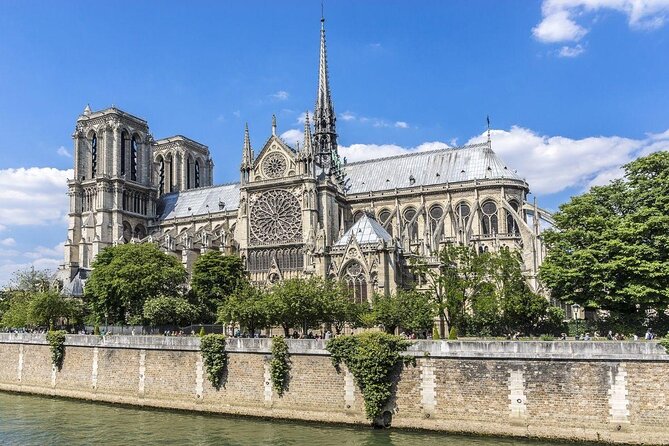
- Notre-Dame timeline, not trivia: construction beginning in 1163, plus later chapters like the French Revolution, Napoleon’s coronation, and the 2019 fire.
- WW2 details on Pont Saint-Michel: you’ll look for bullet holes and get the context for why Paris wasn’t destroyed.
- Henry IV landmarks in sequence: Place Dauphine, the equestrian statue, and Pont Neuf all tie back to one king and one long building legacy.
- Louvre without entering: you’ll hear the Leonardo and Mona Lisa angle, plus Francis I’s role, with views of the glass pyramid.
- Tuileries-to-Eiffel views: the route sets you up for great sightlines at the end, with an explanation of Eiffel’s 1889 construction challenge.
Starting on Île de la Cité: why this island sets the tone
If you want to get Paris in your head quickly, this is a smart way to begin. The tour starts on Île de la Cité, the island that once hosted the Parisii and later became the core of Roman-era attention. It’s not just a convenient starting point. It’s the geographical reason so many of the city’s defining stories cluster in one place.
From here, you’re primed for the main theme: Paris as a layered city. You’re moving through space, but the guide is also moving you through time—so each next stop feels connected instead of random.
One practical plus: several of the stops are listed as free-entry viewing. So you’re not juggling tickets at every corner. You’re spending your time on the human part of the experience: explanations, viewpoints, and context you can carry with you all day.
You can also read our reviews of more walking tours in Paris



Notre-Dame de Paris: a guided timeline from 1163 to 2019
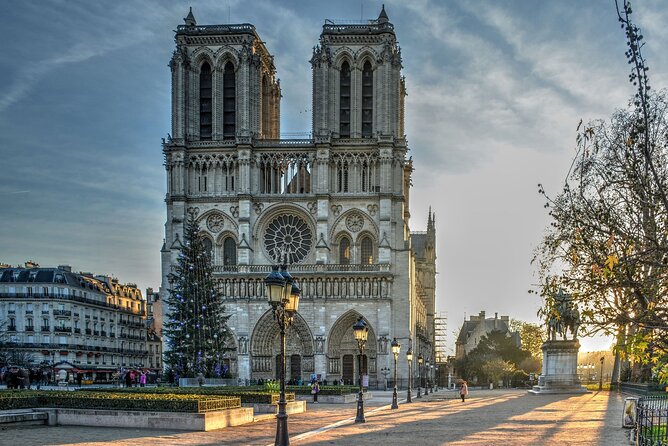
Notre-Dame is the obvious draw, but the value here is how the guide frames it. You’ll get the story of how the cathedral’s construction began in 1163, then you’ll follow it forward through major historical turns. The guide ties in the French Revolution era and Napoleon’s coronation, then fast-forwards to the 2019 fire and what that moment meant.
This is where a great English-speaking guide makes a difference. The strongest comments you’ll hear about this tour are about clarity and energy—people mention guides who are easy to understand and genuinely excited to teach. That matters at Notre-Dame, because there’s a lot to look at, and it’s easy to feel lost if you’re only reading signs.
Is Notre-Dame itself a “long stop” type of experience? Not really. The time is limited, so you’re not doing a full, slow cathedral session. Instead, you’re getting a guided orientation that helps you see more in less time. For first-timers, that’s a win.
Fontaine Saint-Michel: reconstruction-era Paris in miniature
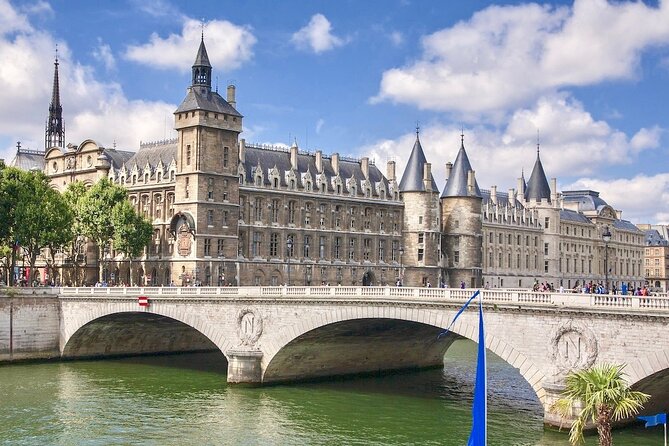
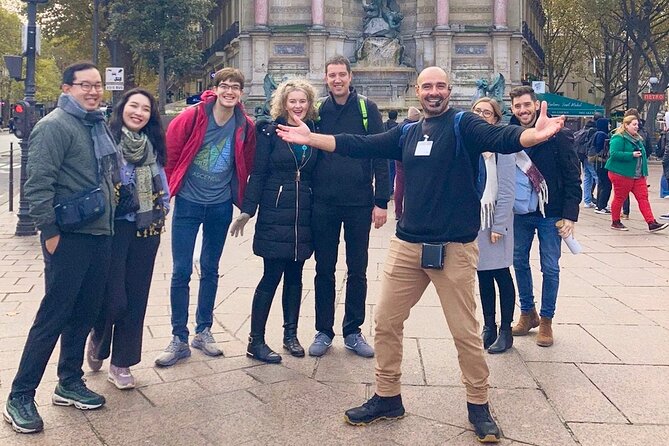
After the cathedral, you shift to Fontaine Saint-Michel. This stop works because it’s less about a single famous building and more about how the city gets rebuilt and reshaped. You’ll learn that the fountain was created during the large reconstruction of Paris, which gives you an easy way to connect the big historic moments to what you see on the street today.
It’s also a good rhythm reset. Notre-Dame is emotional and grand. A fountain with a clear story helps you breathe, look around, and refocus before the bridge section.
Pont Saint-Michel and WWII: bullet holes you can’t unsee
Next comes Pont Saint-Michel, and this is one of those Paris moments that lands because you can actually see the physical marks. You’ll stand where you can observe bullet holes from World War II, and your guide explains why the city was not destroyed.
This is the kind of stop that turns a skyline into something human. You’re not just looking at a bridge. You’re looking at evidence, then hearing the reason behind it. It also makes the walking tour feel purposeful, because every bridge has a point.
If you’re the type of traveler who likes photos, this is one of the best places for them. If you’re not, it’s still one of the best places to pay attention.
Place Dauphine and Henri IV: a square built for stability
The tour then slows down into a more intimate space: Place Dauphine. You’ll get to walk inside the square, and the guide connects it to Henri IV, one of the early major builders of the project. This is also where the pace feels more relaxed, because squares like this are made for pausing.
The practical angle matters, too. The square is well known for restaurants, so it’s a natural spot to plan a lunch without racing across town. If you’re doing this tour early in your trip, your guide’s restaurant suggestions can save you time later.
Think of Place Dauphine as the bridge between history and everyday Paris. After the monumental sites, you get an atmosphere that feels lived-in.
You can also read our reviews of more city tours in Paris





The equestrian statue of Henri IV: views plus a short reign lesson
Then you’ll stop at the statue équestre d’Henri IV, where you get both the monument and the river view. The guide connects Henri IV’s reign to why his choices mattered, even if his time on the throne was short.
This stop is also useful for navigation. After walking near the Seine for a while, you start noticing sightlines. The guide helps you read the city from those sightlines, which pays off later when you’re on your own.
Pont Neuf: the oldest bridge and the story behind the details
Pont Neuf is next, and it’s one of those places where the name is a clue: it’s the oldest bridge in Paris. Your guide points out why Henry IV is tied to the completion of the bridge in 1607, and then adds colorful local context like the tooth pullers of Paris.
That might sound like side-story stuff, but it changes the way you experience the bridge. Instead of treating it like a photo stop, you start noticing how people lived their daily lives around it.
This is also a stop where the guide can help you look. When you know what you’re seeing, you don’t skim past details. You register them.
Louvre Museum stories without going inside
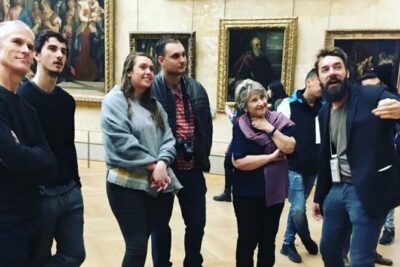
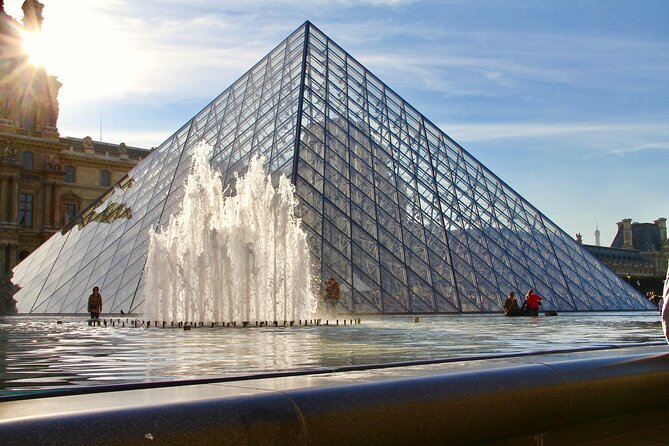
One part of this tour that you should be clear about: it doesn’t include entering the Louvre Museum. You’ll hear stories tied to the Louvre and see views like the glass pyramid area, but you’re not buying a timed ticket for a museum visit.
That still offers real value. The guide covers why Leonardo da Vinci and the Mona Lisa are so famous, and you’ll also learn about Francis I and how he helped establish the Louvre’s foundations as a fortress and palace. Even without going in, these stories help you understand what the museum is, and why people act the way they do once they’re inside.
If you’re trying to do a “Paris hits” day, this approach can be the best of both worlds: you get the big connections without the hours-long museum commitment.
Arc de Triomphe du Carrousel and the Tuileries: Napoleon’s footprint
As you continue, you’ll reach Arc de Triomphe du Carrousel, built under Napoleon. It’s a smaller, more manageable cousin to the more famous triumphal arc, but it still reinforces the theme of power, empire, and how rulers wanted to be remembered in stone.
Then you move through the Tuileries Gardens area. You’ll hear about statues, sculptures, and fountains, and you’ll get the design connection to the same landscape artist associated with the Versailles garden feel. Even if you’re not a formal garden person, this stop matters because it sets up great walking views and gives your feet a more open, scenic stretch.
Eiffel Tower views from the Tuileries: a grand finish with context
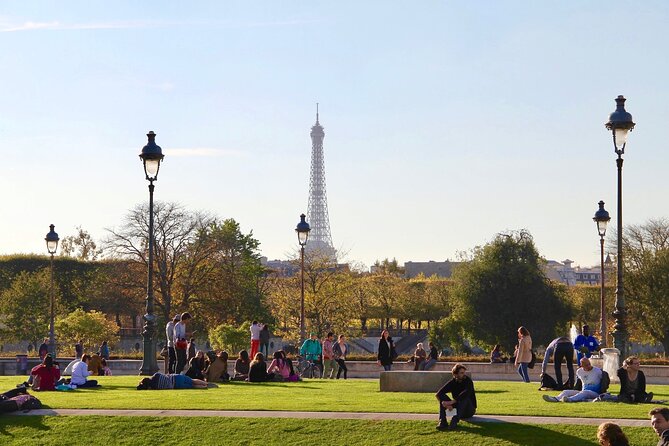
The tour ends with views toward the Eiffel Tower from the Tuileries Gardens area. The guide explains how Gustave Eiffel pulled off the construction in 1889, and that final piece is a nice shift from medieval and early-modern Paris into the engineering era.
This ending works well if you want a strong visual payoff without spending your whole day in queues. You get a sense of why the tower was a breakthrough, then you’re done when the tour pace still feels enjoyable.
Price and value: what $156.01 gets you (and what it doesn’t)
At $156.01 per person for about 2.5 hours, you’re paying for the guide work more than for ticketed sightseeing. The stops are listed as free-entry viewing, and there’s no Louvre admission included. So the value is in interpretation: connecting what you see to the centuries behind it.
This can be a very good deal if:
- You want a fast orientation to central Paris
- You care about understanding what you’re looking at
- You’re traveling with people who benefit from clear, structured explanations
It may be less of a bargain if:
- You’re the type who wants long, independent time inside major sites
- You were counting on included museum entry
One helpful note: there are mentions of group discounts. If you’re traveling with friends or family, splitting the cost can make it feel much more reasonable.
Also, the tour is private for your group. That can be a big value upgrade compared with big group bus-style walking tours, because your guide can keep the pace more directly aligned to your group’s needs.
Who this tour is best for
This is ideal for first-timers who want Paris in a straight line: island heart, cathedral landmark, bridges with wartime scars, Henry IV’s imprint, Napoleon’s arcs, and then a strong finish toward the Eiffel Tower.
It also suits travelers who like English guidance that is easy to follow. Multiple mentions highlight guides who are energetic and communicate clearly. If you’ve struggled with fast-paced tours in other cities, you’ll probably appreciate how this one seems built for understanding.
Should you book the Paris Historic City Center Walking Tour?
Book it if you want:
- A guided, story-driven walk through the most central historic zone
- Notre-Dame context that goes beyond the basics
- Bridge and square stops that explain what matters, not just what looks pretty
- A finish with Eiffel Tower views without committing to a full museum day
Skip it or pair it with other plans if you:
- Want to spend several hours inside the Louvre (this tour does not enter)
- Prefer a lighter walking day with fewer stops (this one covers a lot of ground)
If you’re in Paris for a short stay, this tour is a smart use of time. It helps you build a mental map of why the city looks the way it does, and it gives you concrete ideas for how to spend the rest of your day after the walk.
FAQ
How long is the Paris Historic City Center Walking Tour?
It runs about 2 hours 30 minutes.
What is the price per person for this tour?
The price is $156.01 per person.
Is the tour offered in English?
Yes, it’s offered in English.
Is this tour private?
Yes. It’s listed as a private tour/activity, meaning only your group participates.
Do I need admission tickets for the stops?
The stops are listed with admission tickets as free, so you’re not expected to buy paid tickets at each stop.
Does the tour include entry into the Louvre Museum?
No. The tour does not enter the Louvre Museum.
Where does the tour start and end?
It starts at Cité 75004 Paris, France and ends near Tuileries Garden 75001 Paris, France.
Is pick-up or drop-off provided?
No pick-up or drop-off is included.
Are service animals allowed?
Yes, service animals are allowed.
What is the cancellation window?
Free cancellation is available, and you must cancel at least 24 hours before the experience’s start time for a full refund.