REVIEW · PARIS
History of Paris City Center w/ Notre Dame Semi-Private 12ppl Max
Book on Viator →Operated by Babylon Tours Paris · Bookable on Viator
Paris can feel huge. This walk makes it make sense fast.
You’ll trace the story of the city from the earliest settlement on Île de la Cité to the grand sweep of Place de la Concorde, with a professional guide pointing out what to notice and why it matters. It’s also a smart fit for first-timers because the route is packed with major landmarks in just a couple of hours.
Two things I really like: the semi-private group cap of 12 keeps the walk from turning into a human conveyor belt, and you get helpful local context along the way from guides who are clearly comfortable handling questions (names I saw in past groups include Tamari, Hugo, Alasdair, Lili, Francois, Ren, Alex, and Claudia). The one thing to consider is that not every stop is a full interior visit—some sights are mainly through the exterior viewpoint, and a few admission fees are not included.
In This Review
- Key highlights worth your attention
- The core route: 2.5 hours from Île de la Cité to Concorde
- Why the semi-private 12-person limit matters in real life
- Stop by stop: what you’ll actually see and what to watch for
- Île de la Cité: Paris starts here (and it still feels special)
- Notre-Dame: the 800-year Gothic icon after the 2019 fire
- Palais de Justice area: old buildings, heavy history
- Sainte-Chapelle: the speedrun version of Gothic brilliance
- Conciergerie: revolution-era architecture with real bite
- Saint-Michel Fountain and the Roman-to-Haussmann storytelling thread
- Place Dauphine: romance and royal planning
- Pont Neuf: oldest stone bridge, UNESCO status
- Pont des Arts and the Louvre approach
- Palais-Royal gardens and modern sculpture contrast
- Arc du Carrousel and Tuileries Gardens: a long green palate
- Place de la Concorde: the end point with a shocking past
- Tickets and entrances: what’s free, what’s not
- Price: does $59.69 feel worth it?
- Weather, walking comfort, and what to bring
- Who this tour fits best
- Should you book this History of Paris city center walk?
- FAQ
- How long is the tour?
- What is the group size limit for this semi-private tour?
- Is the tour offered in English?
- Do I get a guided interior visit of Notre-Dame?
- Are tickets included for places like Sainte-Chapelle, the Conciergerie, or the Louvre?
- Where does the tour start and end?
- Does the tour run in bad weather?
- Can I cancel for a full refund?
- What should I provide before the tour?
Key highlights worth your attention
- Small group (max 12) for a more conversational pace
- Time-saving route across the “must-see” center in about 2.5 hours
- Notre-Dame included, but unguided inside due to regulations
- Past-to-present storyline from Lutetia through revolutions and emperors
- All-weather format with moderate walking and weather-appropriate planning
The core route: 2.5 hours from Île de la Cité to Concorde
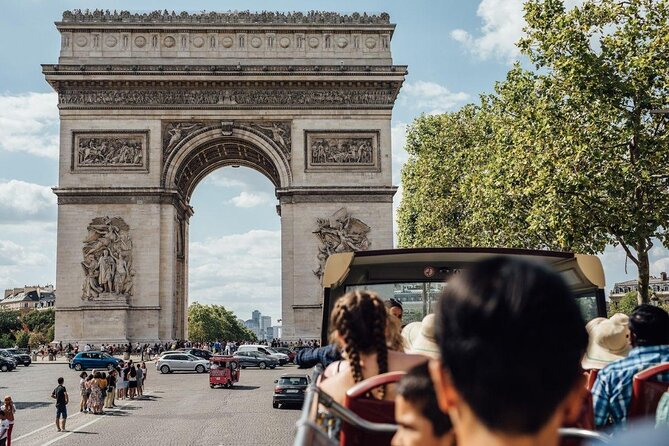
This is a walking tour built like a guided “greatest-hits” arc. It starts at the Cité area by the Cité Métro station and ends at Place de la Concorde. In between, you cover the oldest part of Paris, then cross key bridges, then sweep through the Tuileries Gardens—so you finish in a place that’s easy to connect with the rest of your day.
The duration is about 2 hours 40 minutes, and the pace is designed for people with moderate physical fitness. You’re moving at a comfortable walking tempo, not sprinting. Still, Paris streets add up fast, so treat this like an intentional stroll with breaks built in through the stop-and-learn rhythm.
The big value here is “direction.” Paris center is full of cool stuff, but it’s easy to wander without structure. This walk gives you a clean route and a storyline, so you’re not just looking at monuments—you’re placing them in time.
You can also read our reviews of more city tours in Paris



Why the semi-private 12-person limit matters in real life
The tour is listed as semi-private, and the key detail is that the group is never more than 12 people. That small ceiling changes the vibe. You’re more likely to hear the guide clearly, ask a question without waiting forever, and actually notice details at each stop.
I also like the way the tour is set up for first-timers: it’s “high signal” sightseeing. You’re not trying to cram in museums during the walk. Instead, the guide points out architecture, historical turning points, and the geography linking everything.
The guide quality seems to be a strong theme in past groups. People like Alasdair (even on a rainy morning), Francois, Ren, and Hugo were praised for staying engaging, handling questions well, and making the history feel alive instead of like a textbook. You should expect an active guide, not just someone reciting dates.
Stop by stop: what you’ll actually see and what to watch for
Île de la Cité: Paris starts here (and it still feels special)
Your first stop is Île de la Cité, Paris’s oldest settlement area. You’ll hear how the place evolved from Lutetia—an earlier Roman city—into the Paris that spread outward over centuries. This matters because you’re not just visiting buildings. You’re walking through the “origin point” of the city’s core.
What to watch for: the way the river frames the island. Even if you’ve seen Paris photos, the river-bent geography here helps everything click. You’ll also get a feel for why so many major institutions ended up on this small slice of land.
Notre-Dame: the 800-year Gothic icon after the 2019 fire
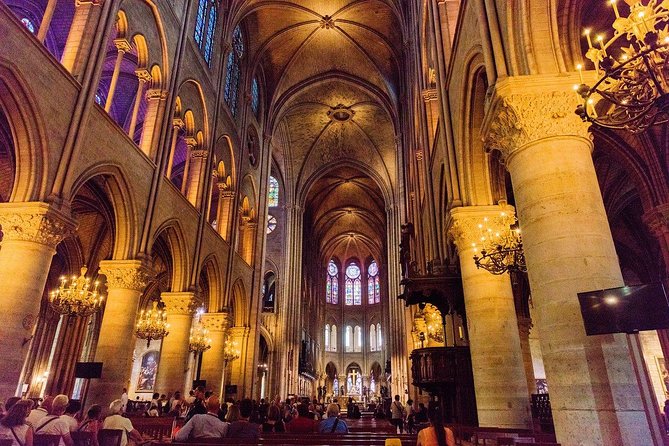
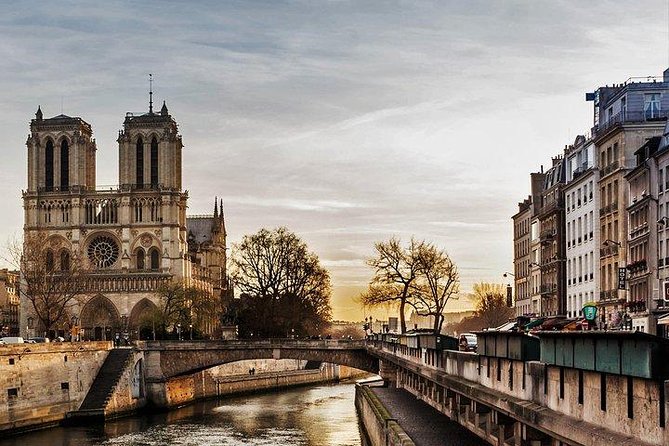
Next comes Cathedrale Notre-Dame de Paris. This is one of those stops where the guide’s context really helps. You’ll admire the 800-year-old Gothic structure and learn the big picture of why this cathedral holds such weight in Paris identity.
Inside note: the interior visit is included but unguided due to regulations. That’s not a dealbreaker—it simply means you’ll get the context outside, then have time inside on your own.
After the 2019 fire, the cathedral remains one of the city’s most enduring symbols. If you go inside, keep your expectations realistic: you’ll be there to experience the space, but you might not get a guided narrative from the guide once you’re in.
You can also read our reviews of more private tours in Paris






Palais de Justice area: old buildings, heavy history
Then you move into the orbit of the Palais de Justice on the island. The key idea here is “surviving structures.” The area includes some of the oldest surviving buildings in that part of Paris.
A practical point: the tour indicates admission for this stop is not included. That usually means you’re either viewing from public areas or you’d need to plan separate ticketing if you want deeper access. Don’t stress—this part still works for getting oriented and learning what the complex represents.
Sainte-Chapelle: the speedrun version of Gothic brilliance
Sainte-Chapelle is billed as a Gothic masterpiece built in seven years, originally intended to house precious Christian relics, including the crown of thorns acquired by Saint Louis.
This stop is also marked as admission not included, so again you’re likely looking at the cathedral experience from where the tour can access—plus learning the story behind why it’s famous. Even if you don’t go inside, you’ll come away with a clearer sense of what makes Sainte-Chapelle special: scale, style, and purpose.
Conciergerie: revolution-era architecture with real bite
Next is the Conciergerie, described as the oldest remaining part of the Palais de la Cité and, at one time, the most notorious prison in France. The history here hits harder: over a thousand enemies of the Revolution were housed there, including famous figures like Marie Antoinette.
Admission is marked not included for this stop, so think of it as a guided history lesson in the middle of a visually dramatic setting. If you’re the type who likes your sightseeing with a side of “how dark can history get,” this stop will land.
Saint-Michel Fountain and the Roman-to-Haussmann storytelling thread
After the prison and court areas, the walk carries you past the Fontaine Saint-Michel. It’s a monumental fountain commissioned by Haussmann under Napoleon III. The sculpture depicts the archangel Michael vanquishing the Devil, which is exactly the kind of symbol-heavy detail that makes Paris feel like a living museum.
Admission is free here. Use this as your mental reset: you’ve been inside the “power and punishment” zone for a bit. Now you get public art energy and an example of how 19th-century Paris reshaped older spaces.
Place Dauphine: romance and royal planning
You’ll see Place Dauphine, tucked on the western tip of Île de la Cité. This small square is known for its historic identity and its connection to Henri IV—including the fact that it was among the early projects he commissioned.
Admission is free, and this is a good place to just look around for a minute. The square’s charm is partly why Paris feels romantic even when you’re walking with a schedule.
Pont Neuf: oldest stone bridge, UNESCO status
Then comes a classic: Pont Neuf, the city’s oldest stone bridge and now part of the Seine riverbanks listed as a UNESCO World Heritage site.
Pont Neuf is one of those viewpoints that helps you “read” Paris. You see how the island links to the larger city. You also get that slow-motion Paris feeling—except you’re still on a timetable.
Pont des Arts and the Louvre approach
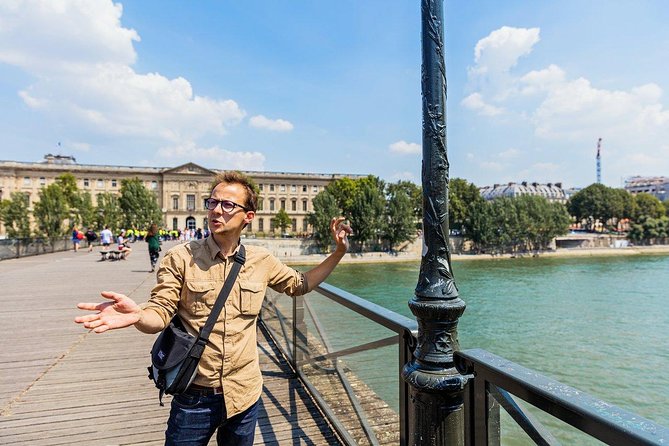
You’ll also pass Pont des Arts, a bridge linking the Institut de France and the Louvre area. It was built between 1801 and 1804 and was the first iron bridge in Paris.
Then you start moving toward the Louvre zone. The tour notes you’ll pass through features like the Cour Carrée and see the Louvre Pyramid designed by I.M. Pei. Admission for the Louvre portion is not included, so treat this as a look-and-learn route. You’ll get the landmarks and geometry; you’re not buying a ticket into galleries during the walk.
Palais-Royal gardens and modern sculpture contrast
Near the Louvre is Domaine National du Palais-Royal. It was created by Cardinal Richelieu in 1633. Royal life was connected to this area before Versailles pulled the spotlight.
The description also points out a peaceful garden setting surrounded by futuristic architecture and contemporary sculptures. Admission here is not included, but the value is in contrast: Paris doesn’t just show one era. It stacks them.
Arc du Carrousel and Tuileries Gardens: a long green palate
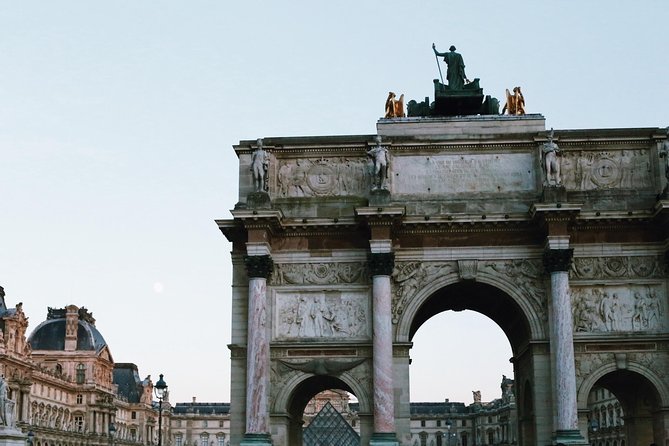
From there you pass the Arc du Triomphe du Carrousel, built to commemorate Napoleon’s military victories. Then you enter the Jardin des Tuileries, described as the oldest park in Paris, with roots dating back to the 17th century.
This is where your feet get a little relief. Gardens are slower. They encourage you to breathe and look at details instead of just walking past façades.
You’ll also pass the Tuileries Gardens bookshop, a small stop that sounds minor but can be a nice break—especially if you like plant and landscape design books or you want a tiny, memorable Paris gift.
Place de la Concorde: the end point with a shocking past
The tour finishes at Place de la Concorde, originally tied to execution during the French Revolution and now connected visually and geographically to the start of the Champs-Élysées.
It’s a strong finish because it’s both dramatic and practical. You end in an area where you can easily continue your day—whether you want to head toward shopping streets, hop on transport, or just keep wandering.
Tickets and entrances: what’s free, what’s not
Here’s the straight talk: the tour includes Notre-Dame Cathedral interior time as unguided access, and the rest of your experience leans on free viewing and exterior context. Some stops are explicitly marked with admission not included.
From the tour details, admission is not included at places like:
- Palais de Justice areas you pass
- Sainte-Chapelle
- Conciergerie
- Palais-Royal section indicated
- Louvre Museum viewing/approach (interior not part of the included ticketing)
Admission is stated as free at key points like Île de la Cité, Notre-Dame (entrance is free and open to all), and several other areas along the route.
If you want maximum value, plan for this strategy: use the tour to get the guide’s storytelling and landmark orientation, then decide later whether you want to pay for the interior experience at specific sites.
Price: does $59.69 feel worth it?

At $59.69 per person for about 2.5 hours, the price makes sense if you care about two things: (1) a structured route through central highlights, and (2) a guide who helps you understand what you’re seeing.
You’re not paying for a museum pass that you might skip. You’re paying for a guided, time-saving loop that covers major “nodes” of Paris—Île de la Cité, Notre-Dame area, bridges, the Louvre approach, Tuileries, and Concorde—in one package.
It also runs in all weather and has a small group cap, which often costs more in other tour models. So if you’re trying to avoid spending your day navigating alone and figuring out which sites are worth your time, this is a relatively clean deal.
Weather, walking comfort, and what to bring
The tour runs rain or shine. That means the biggest planning factor is footwear and comfort. The tour notes:
- moderate walking
- no large bags or suitcases allowed
- bring comfortable shoes
- a bottle of water helps
- an umbrella for rain
- a hat in summer
You’ll be outside for a lot of the experience, so dress like you’re commuting, not like you’re going to a fashion show. Paris can drizzle without warning.
Also, Notre-Dame interior access is controlled by regulations, which is why the interior is unguided. The guide can’t override that. Still, you’ll get the benefit of a stop at the right time and the right explanation so your on-your-own time inside makes sense.
Who this tour fits best
This is best for:
- First-time visitors who want the main story of central Paris quickly
- People who like history when it’s tied to buildings and real places
- Anyone who prefers a small group pacing and asking questions
If you’re a hardcore museum-goer who wants long interior time in major sites, you might find the structure a bit too efficient. This walk is designed to get you oriented and informed, not to replace museum days.
Should you book this History of Paris city center walk?
I’d book it if you want your first Paris day to feel organized. You’ll get a smart loop through the city’s defining center, plus real historical context tied to specific landmarks. The 12-person cap and the guide-driven pacing are the big reasons it feels better than a mega-group “quick photo” tour.
Skip it only if your priority is long indoor museum time. This one is a walking-and-learning format, and some interior tickets are not included—so treat it as the foundation for what you do next in Paris.
If you’re okay with that, you’ll finish with a clearer map of Paris in your head—and a better sense of why Notre-Dame, the bridges, and the Revolution sites all belong to the same story.
FAQ
How long is the tour?
The tour lasts about 2 hours 40 minutes.
What is the group size limit for this semi-private tour?
The group size is capped at a maximum of 12 people.
Is the tour offered in English?
Yes, the tour is offered in English.
Do I get a guided interior visit of Notre-Dame?
Notre-Dame interior entry is included, but the interior visit is unguided due to regulations.
Are tickets included for places like Sainte-Chapelle, the Conciergerie, or the Louvre?
Admission for those stops is listed as not included, so you should plan for possible extra ticket costs if you want interior access.
Where does the tour start and end?
It starts at Cité75004 Paris, France (meeting in front of the entrance to the Cité Métro station) and ends at Place de la Concorde, Pl. de la Concorde, 75008 Paris, France.
Does the tour run in bad weather?
Yes. The tour runs in all weather conditions (rain or shine).
Can I cancel for a full refund?
Yes. You can cancel up to 24 hours in advance for a full refund.
What should I provide before the tour?
You must provide a mobile phone number (including country code).