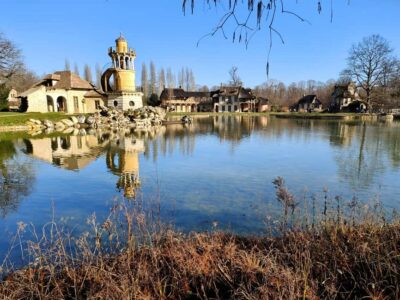
REVIEW · PARIS
Paris: Montmartre Must-See Walking Tour with a Local Guide
Book on GetYourGuide →Operated by French Tales · Bookable on GetYourGuide
Montmartre makes sense when someone explains it. This 150-minute walk through Paris’s 18th arrondissement mixes big-name sights with smaller corners you’d usually miss, guided in English by French Tales. You’ll start near the carousel at Place Saint-Pierre and end by Place des Abbesses, with Sacré-Cœur and the Wall of Love closing out the story.
I love how the guide turns the neighborhood into a timeline you can actually feel, especially when Jean-Baptiste (JB) is leading. His sense of humor and careful pace keep everyone with the group, and he’ll even help with photos and practical tips when the day runs cold or rainy. I also love the built-in photo stops, like Maison Rose and the artist-filled streets around Place du Tertre.
One consideration: this is a real walking route with uphill paths and cobblestones, plus stairs in places. If you have mobility limits or you want step-free routes, you’ll likely find it tough, and it’s not set up for wheelchairs.
In This Review
- Key highlights you’ll feel fast
- What This Montmartre Tour Really Gives You
- Starting Point at Place Saint-Pierre: Easy to Find, Easy to Join
- Square Louise Michel and the Hill’s First Big View
- Sacré-Cœur: Where the View Is the Main Character
- Place du Tertre and Le Poulbot: Artists, Caricatures, and Street Legend
- Maison Rose, Dali Museum, and Place Dalida: Three Different Kinds of Fame
- Vignes du Clos Montmartre and Moulin de la Galette: Proof This Place Isn’t Just a Set
- Bateau-Lavoir: The Workshop Spot That Changed Art Careers
- Wall of Love and the Walk Down Toward Place des Abbesses
- Price and Value: $29 Bought You Real Guidance, Not Just Stops
- Who This Tour Suits Best (and Who Should Think Twice)
- Booking Decision: Should You Do It?
- FAQ
- What is the tour duration?
- Where do you meet the guide?
- What landmarks are included on the route?
- What language is the tour in?
- Is it good for first-time visitors to Paris?
- Does the tour include food or drinks?
- What should I bring?
- Does the tour run in bad weather?
- Is the tour wheelchair accessible?
- Who should avoid this tour?
Key highlights you’ll feel fast
- Stories that connect artists, myths, and everyday Montmartre life at street level
- Sacré-Cœur time with a view plus a chance to step inside
- Place du Tertre and café culture where painters and caricaturists keep showing up
- Dalí and Dalida stops that explain why those names matter on this hill
- Working-art landmarks like Bateau-Lavoir and the windmill that shaped the neighborhood’s identity
- A romantic final stop at the Wall of Love, with “I love you” written in over 250 languages
What This Montmartre Tour Really Gives You
Montmartre gets recommended so often that it can feel like a checklist. This walk is different because it’s built around people and causes: artists who made the area famous, neighborhoods that protected creativity, and legends that still stick to the streets.
At $29 per person, the value comes from what you’re paying for: an English live guide, an included audio guide in English, and a guided route that strings together major sights plus quieter, lesser-known points. You’re not paying for “transport” or a bus window view. You’re paying for someone to help you understand what you’re looking at while you’re actually standing there.
If you’re visiting Paris for the first time, you’ll leave with your bearings quickly. If you’ve been before, this helps you notice a different Montmartre: the angles, the side streets, and the why behind the photos.
You can also read our reviews of more walking tours in Paris



Starting Point at Place Saint-Pierre: Easy to Find, Easy to Join
You meet at Place Saint-Pierre, at the bottom of Square Louise Michel, right by Café Le Ronsard (look for the red storefront). The guide is easy to spot holding a sign with French Tales and a stick featuring Disney’s Ratatouille character, so you don’t waste time searching.
I like that the instructions are clear about timing. Plan to arrive about 15 minutes early so you can settle, get oriented, and start calmly. You’ll also want good shoes before you step into Montmartre’s cobbles.
Getting there is straightforward. Metro Line 2 at Anvers is about a 5-minute walk. Metro Line 12 at Abbesses is roughly a 7–10 minute walk, and the guidance is specific: do not use the stairs; elevators are available. That little detail matters when your day starts with a hill.
Square Louise Michel and the Hill’s First Big View
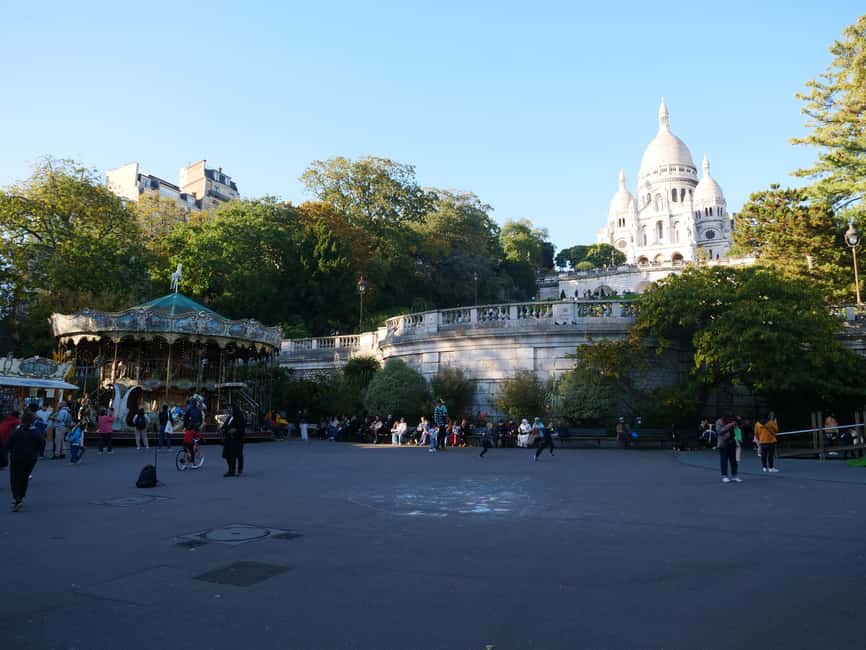
Before you hit the heavy landmarks, you’ll spend time in the Square Louise Michel area. This is a smart warm-up because it frames the hill you’ll be climbing and shows you what Montmartre feels like when you’re not staring upward yet.
Expect photo opportunities and an early chance to get your eyes adjusted. The route up here works better when you understand the layout first: gardens below, streets on slopes, and viewpoints that show up like rewards.
If you’re sensitive to slopes, this is where you’ll feel your legs wake up. It’s not a race, but it is real walking. Build in a calm pace and you’ll enjoy the views more.
Sacré-Cœur: Where the View Is the Main Character
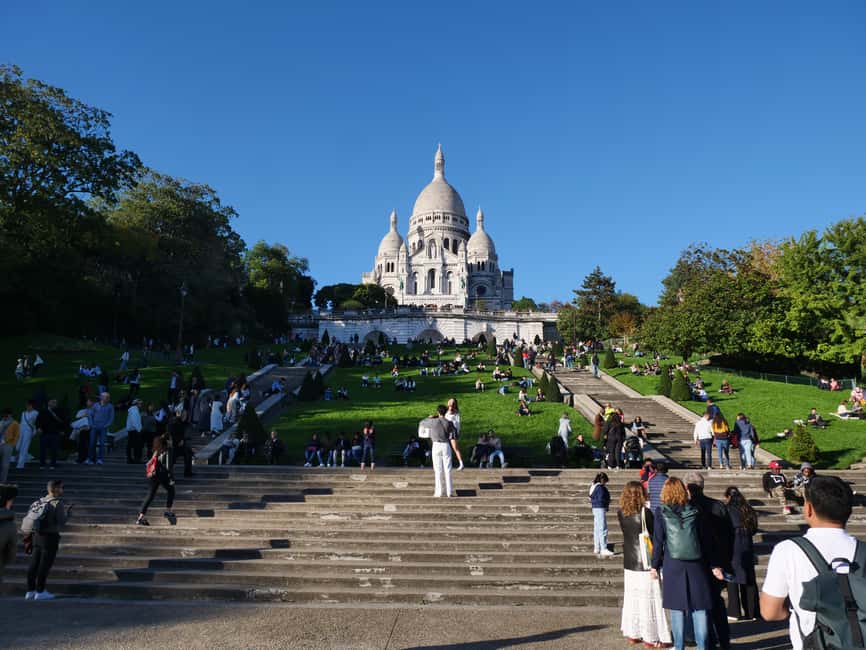
Sacré-Cœur is the obvious stop. The tour’s advantage is that you don’t just show up, take one photo, and move on. You get guided time on the parvis and enough structure to make the visit feel complete.
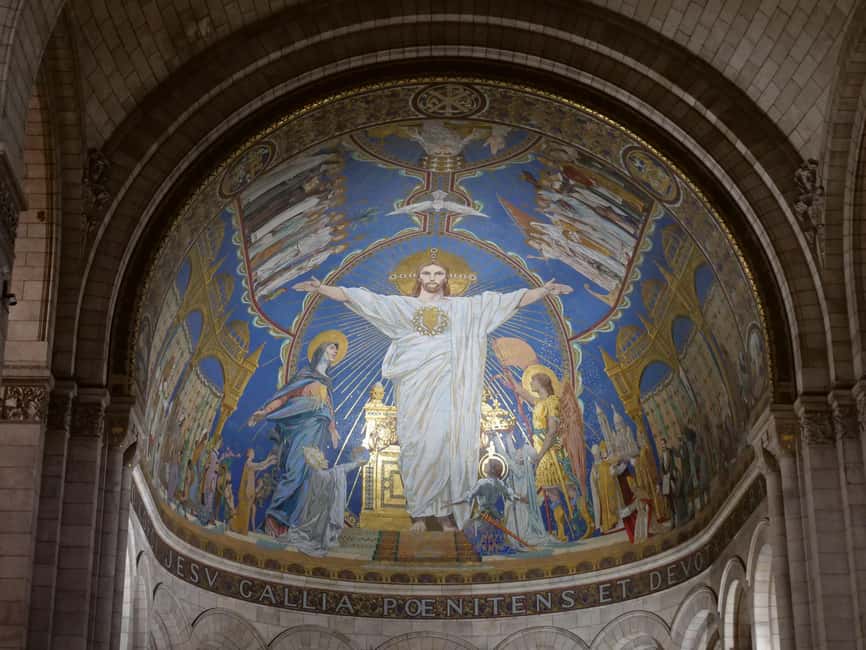
You’ll climb to the parvis and then step inside. You can look closely at the mosaics and also enjoy panoramic Paris views from one of the hill’s highest points. The guide’s job here is to help you understand what you’re seeing, not just point and wave.
A practical note: this area can be busy. Having a guide helps you time your moments, keep the group together, and avoid the feeling of wandering while everyone else is waiting.
Place du Tertre and Le Poulbot: Artists, Caricatures, and Street Legend
From Sacré-Cœur, you’ll move into the heart of Montmartre’s artist square energy: Place du Tertre. This is where you’ll see painters, caricaturists, and the café life that makes the neighborhood feel like it’s acting out its own movie set.
The tour doesn’t treat Place du Tertre like a postcard. You get context about how this creative crowd shaped Montmartre’s reputation and why the square still matters today.
Then you’ll pass Le Poulbot, named for the illustrator tied to Montmartre’s street-child stories. It’s the kind of detail that makes the neighborhood feel human and specific, instead of generic “Paris art district.”
If you want souvenir photos, this is your moment. Aim to step slightly back from the busiest edge of the square so you can photograph without blocking people.
You can also read our reviews of more guided tours in Paris






Maison Rose, Dali Museum, and Place Dalida: Three Different Kinds of Fame
Montmartre is famous for more than painters. You’ll hit stops connected to artists and entertainers whose influence shows up in how the neighborhood brands itself.
You’ll pause at La Maison Rose, the pastel-pink house that always looks good in photos, even from awkward angles. The guide helps you connect why it became such an enduring Montmartre symbol.
Next comes the Dali Museum stop, a nod to Salvador Dalí and the surrealist strand of Montmartre’s artistic identity. You’ll also see Place Dalida and stops tied to Dalida’s former home, with the kind of local storytelling that turns famous names into neighborhood anchors.
I like that this part of the walk keeps variety. You’re not just walking between buildings. You’re walking between eras of creativity—surrealism, music stardom, street illustration, and the broader arts scene that made Montmartre a magnet.
Vignes du Clos Montmartre and Moulin de la Galette: Proof This Place Isn’t Just a Set
Here’s where the tour earns its name as a Montmartre walking experience instead of a sightseeing sprint. You’ll visit Vignes du Clos Montmartre, a vineyard tucked into the neighborhood that’s a rare survival of Paris winemaking history.
Then you’ll reach Moulin de la Galette, the historic windmill. This stop helps explain Montmartre’s artistic and social life, and why the windmill became part of the local identity as the area shifted from village life to a Paris attraction.
I appreciate that the tour doesn’t stop at “pretty.” It shows you why these landmarks are there and what job they performed in the story of the neighborhood.
If you’re thinking, I want the Montmartre that feels real, not manufactured, these two stops are your answer.
Bateau-Lavoir: The Workshop Spot That Changed Art Careers

Bateau-Lavoir is one of the most meaningful stops on the route because it’s tied to the working side of creativity. This famed workshop is associated with art legends like Picasso and Modigliani, and the guide’s storytelling helps you see why a place like this mattered.
The difference between “tourist photos” and “real understanding” often comes down to context. Here, you get the context while you’re standing where the work happened.
This is also a good mental break spot. You get to slow down and reset your feet for the final stretch.
Wall of Love and the Walk Down Toward Place des Abbesses
You’ll finish at Place des Abbesses, and before that you’ll make your romantic closing stop at the Wall of Love (Le Mur des Je T’aime). It’s exactly what it sounds like: “I love you” written in over 250 languages.
This ending works well because it’s a release valve. You’ve spent the walk absorbing art history, street culture, and local legends. Then you land in a playful, photo-friendly monument that feels warm and human.
It’s also a gentle way to end near a lively area without forcing you into one last long climb. By the time you wrap up at Place des Abbesses, you’ll have energy enough to keep exploring on your own.
Price and Value: $29 Bought You Real Guidance, Not Just Stops
At $29 per person for about 150 minutes, the value is unusually strong if you care about the story behind the sights. You’re not only seeing Sacré-Cœur and Place du Tertre. You’re getting a guide who connects details across the whole hill.
What really justifies the price is how the guide experience shows up in practice. People describe Jean-Baptiste (JB) as entertaining and attentive, with a pace that keeps even teenagers engaged. You also see a theme: he helps with photos, watches the group’s comfort and safety, and gives restaurant and café recommendations afterward.
Some tours feel scripted. This one has personality. You might get jokes, wordplay, and interactive moments on the street. Even on a rainy day, guides keep the energy up instead of letting it drag.
If you’re traveling solo, it’s also a good way to get local insight without building your own route.
Who This Tour Suits Best (and Who Should Think Twice)
You’ll love this Montmartre walking tour if you want:
- An English guide to explain what you’re seeing on the hill
- A route that hits big icons and smaller cultural details
- A structured way to walk Montmartre’s slopes with stops built in
It may not suit you if:
- You need step-free access. The tour is not wheelchair accessible due to uneven terrain and stairs.
- You have significant mobility limitations or you prefer flatter routes.
- You’re traveling with kids under 12 unless an adult accompanies them (children under 12 must be with an adult).
- You’re sensitive to weather. It runs rain or shine, so plan clothing accordingly.
Booking Decision: Should You Do It?
If your goal is to understand Montmartre, not just stand in it for photos, I’d book this tour. The mix of Sacré-Cœur, Place du Tertre, Dali and Dalida references, plus working-art stops like Bateau-Lavoir makes it feel like you’re learning the hill’s personality, not reading a brochure.
If you’re short on time, you might skip it in favor of faster self-guided walking. But if you’re here for a real Montmartre moment, this one is the best kind of value: a guided narrative that turns scattered sights into a single story you can remember.
FAQ
What is the tour duration?
The tour lasts about 150 minutes.
Where do you meet the guide?
You meet at Place Saint-Pierre, at the bottom of Square Louise Michel, in front of Café Le Ronsard (red storefront). The guide carries a French Tales sign and a Ratatouille character stick.
What landmarks are included on the route?
Key stops include Square Louise Michel Gardens, Sacré-Cœur, Square Nadar, Place du Tertre, Le Poulbot, Dalí Museum, Le Maison Rose, Vignes du Clos Montmartre, Moulin de la Galette, Bateau-Lavoir, and the Wall of Love, finishing at Place des Abbesses.
What language is the tour in?
The live tour guide is English, and an English audio guide is included.
Is it good for first-time visitors to Paris?
Yes. The route is designed to help you understand Montmartre through a local perspective, including both iconic spots and smaller stories.
Does the tour include food or drinks?
No. Food and drinks are not included, and the guide provides café and attraction recommendations instead.
What should I bring?
Wear comfortable shoes since the route includes uphill paths and cobblestones. Bringing water is recommended.
Does the tour run in bad weather?
Yes, it runs rain or shine.
Is the tour wheelchair accessible?
No. It is not wheelchair accessible because of uneven terrain and stairs.
Who should avoid this tour?
People with mobility impairments and wheelchair users should avoid it. Children under 12 must be accompanied by an adult, and it is noted as not suitable for people over 95 years.