Montmartre has quiet sides few see. This walk threads cobbled backstreets with big-name landmarks, then tops it off with a prize-winning croissant tasting in the hills. The main thing to plan for is the uphill slog—expect steep inclines and stairs on real stone streets.
I like that the pacing keeps you moving but not rushing. You’ll get an English-speaking local guide who ties the sights together with art, film, and neighborhood stories, and you’ll finish at Sacré-Cœur with a view that many people don’t know how to access. If you want, you can choose a small-group option or go private for a calmer climb.
In This Review
- Key things that make this Montmartre walk worth it
- Entering Montmartre’s Village Side (not the postcard version)
- Price and value: what $44.44 buys you in the hills
- Getting your bearings: start, finish, and the kind of walking this is
- Stop 1: Montmartre Village streets and the artist-era feel
- Stop 2: Moulin Rouge hill climb plus a prize-winning croissant
- Stop 3: Le Mur des Je t’aime and the layers behind the square
- Stop 4: Le Moulin de la Galette, expensive Montmartre houses, and a secret passage
- Stop 5: Montmartre vineyards and Le Lapin Agile’s legend
- Stop 6: Sacré-Cœur with an unusual viewing angle and final panorama
- Who this tour suits best (and who should think twice)
- Tips to make the most of your Hidden Montmartre walk
- Should you book Hidden Montmartre?
- FAQ
- Where does the Hidden Montmartre tour start and end?
- How long is the walking tour?
- Is the tour in English?
- How much walking is involved?
- What’s included in the price?
- Is there food besides the croissant included?
- Can vegetarians join?
- Is the tour suitable for children?
- What if I need to cancel?
Key things that make this Montmartre walk worth it
- Croissant tasting at a prize-winning bakery that’s famous for butter and flakiness
- Moulin Rouge area cues like the café from Amélie and Van Gogh spots as you climb
- Le Mur des Je t’aime and the strange, local legend tied to the neighborhood
- Montmartre’s last remaining vineyard plus the cabaret vibe of Le Lapin Agile
- A secret passage and unusual panorama before you reach Sacré-Cœur
- Small size (max 14) with an English local guide who offers practical tips after
Entering Montmartre’s Village Side (not the postcard version)
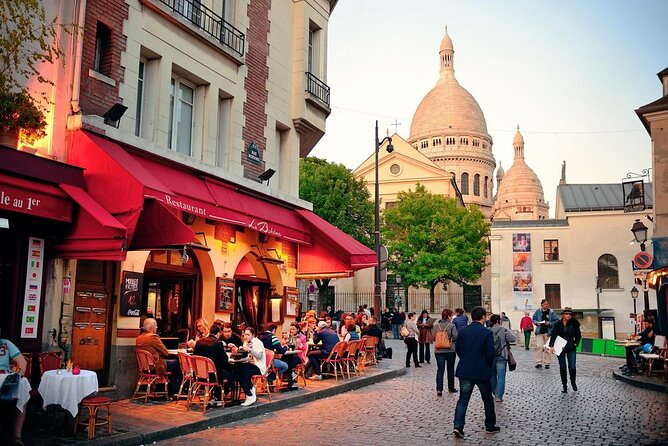
Montmartre works best when you walk it on foot. Cars don’t help you here. You feel the slope. You hear the quieter streets under the tourist noise. This tour leans hard into that “Village” vibe—small lanes, old corners, and places that still feel like a neighborhood instead of a theme park.
What makes it feel authentic is the way the guide connects dots. You’re not just checking boxes like Moulin Rouge, then Sacré-Cœur, then done. Instead, you get the story of why artists once flocked here, and how that creative pull still shapes the streets today. In a district as famous as Montmartre, that storytelling is the difference between seeing it and getting it.
You’ll also get a helpful reminder that Montmartre is actively lived in. Even as you move toward headline sights, you’ll pass local-feeling squares and streets where everyday life continues.
You can also read our reviews of more walking tours in Paris



Price and value: what $44.44 buys you in the hills
At $44.44 per person for about two hours, this is not an all-day splurge. The value comes from three practical things you don’t have to sort out yourself:
- A croissant tasting included
One of the stops is a sample of a buttery croissant at one of the neighborhood’s best bakeries. That alone turns the tour from “just walking” into something you can’t easily copy on your own without research.
- You get structure plus local context
The route is built around sight-to-story connections: film references, art history, and the neighborhood’s artistic past. If you’ve ever wandered Montmartre alone and felt you were only catching the highlights, this kind of guided flow makes your time feel tighter.
- You’re paying for access to viewpoints and small streets
There’s a secret passage on the route and an unusual perspective for the Sacré-Cœur portion. Those are exactly the things that are hard to find without asking around.
What’s not included is also clear: food and drinks beyond the croissant tasting, and the Moulin Rouge show (if you want a performance, you’ll book that separately). So budget for extra snacks if you’re hungry after all the uphill.
Getting your bearings: start, finish, and the kind of walking this is
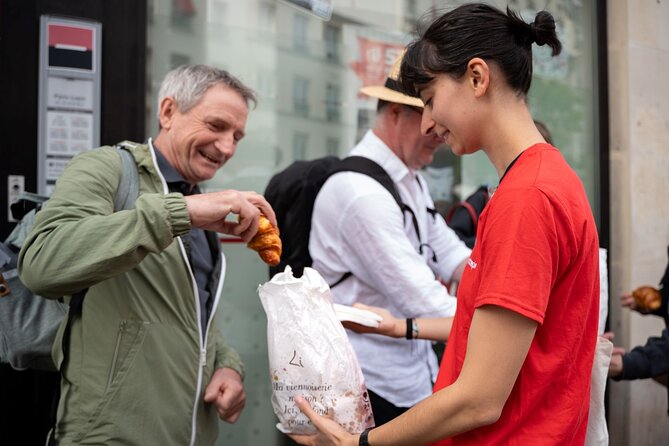
This tour runs about two hours and covers roughly 2 km (1.2 miles) of walking. That doesn’t sound like much on paper. In practice, it can feel longer because the route climbs. Plan on cobblestones and some steep sections.
You start at Place Blanche and end at Basilique du Sacré-Cœur de Montmartre on Rue du Chevalier de la Barre. Ending at Sacré-Cœur is handy: it means you can roll right into your own exploring afterward, rather than backtracking to your starting area.
Group size is capped at 14 people, which keeps the walk from turning into a stampede. It also makes questions easier—especially if you like the art-and-stories angle.
Stop 1: Montmartre Village streets and the artist-era feel
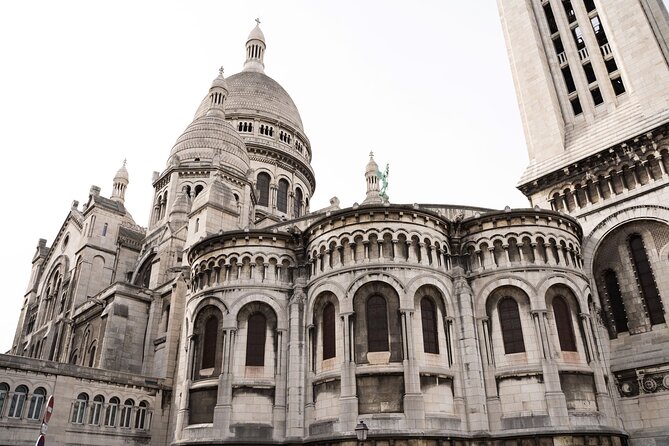
The first part of the walk is all about getting your footing in Montmartre’s character. You’ll spend around 15 minutes in the Montmartre area, and the focus is the neighborhood nickname: Village. Montmartre’s streets got famous for the number of artists—especially painters—who lived and worked on the steep cobbles.
This is also where you learn how to read the neighborhood. You’ll notice the slope, the stone texture underfoot, and the way the streets curve. That matters later, because it helps you understand why the views land where they do.
A quick practical note: since this segment is free and more about wandering, it’s a good moment to adjust shoes and pace. If you’re doing Montmartre in heels, this is where you’ll start regretting it.
Stop 2: Moulin Rouge hill climb plus a prize-winning croissant
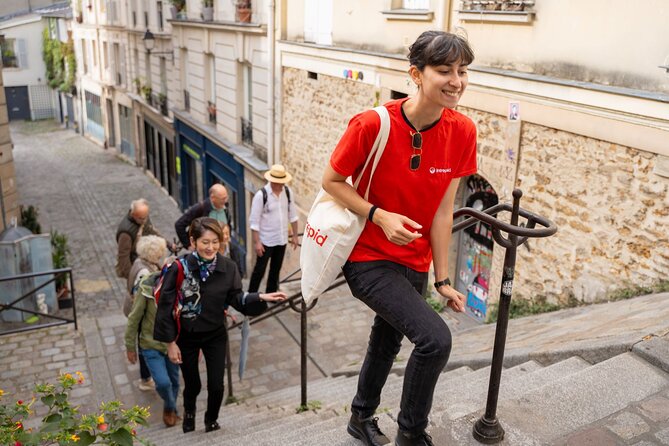
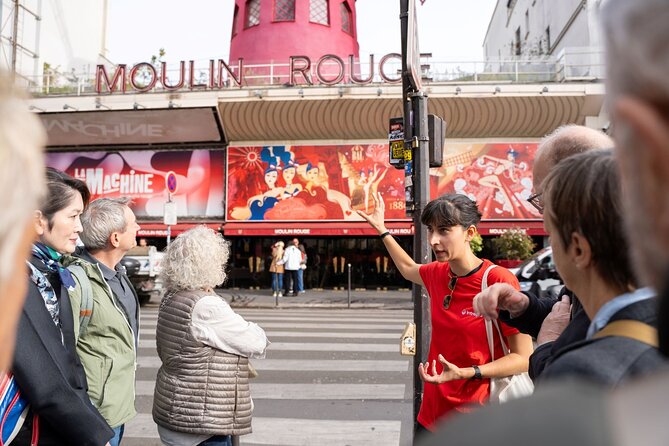
Next, you start opposite the Moulin Rouge windmill, then begin the climb. Expect about 30 minutes here, and this is one of the main “anchor” stops.
This portion is smart because it mixes a big landmark with smaller story details:
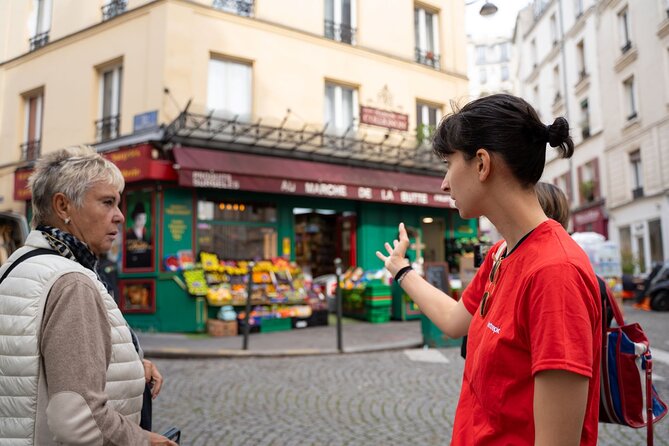
- You’ll spot the café linked to Amélie along the way
- You’ll hear where Van Gogh connections show up in the neighborhood
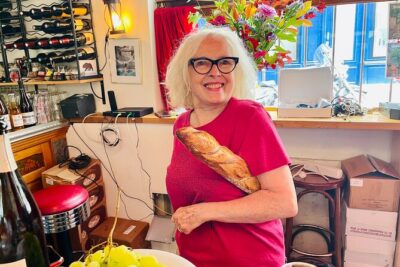
Then comes the tasting. Your first stop at one of the best local bakers is where you sample a buttery croissant from a bakery known for prizes and awards. Even if pastries aren’t your thing, this makes the tour feel like Paris, not just movement.
Drawback to consider: your mouth may be busy (in a good way), which can make it harder to keep up with every spoken cue. If you’re the type who loves photos and facts at once, take a quick sip of water before the tasting so you don’t feel rushed.






Stop 3: Le Mur des Je t’aime and the layers behind the square
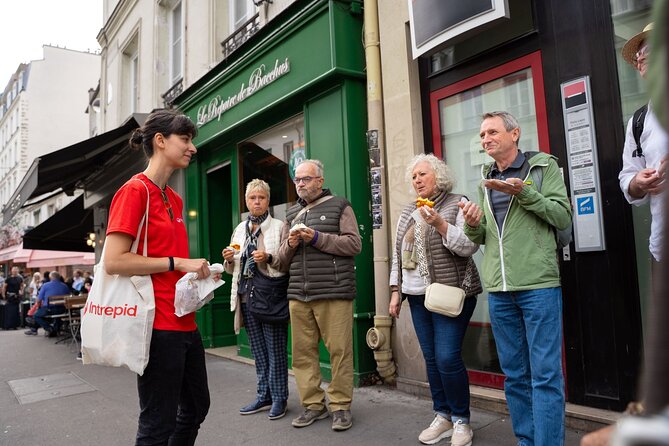
After the Moulin Rouge segment, you’ll head to Le Mur des Je t’aime. This stop runs about 20 minutes and adds texture to Montmartre beyond scenery.
You’ll learn how to say je t’aime in 250 different languages. That’s the visual hook. But there’s also story—there’s mention of a crazy legend about the first Parisian bishop, plus the way faith and art got intertwined in the neighborhood’s past.
Then the walk includes stairs up toward one of Montmartre’s loveliest squares and the area tied to Pablo Picasso, including mention of his former home.
Why this stop is worth it: it gives you a break from the big “must-see” landmarks while still staying emotionally connected to the art scene. It’s also a good spot to slow down for photos, since you’re arriving at a more open viewpoint.
Stop 4: Le Moulin de la Galette, expensive Montmartre houses, and a secret passage
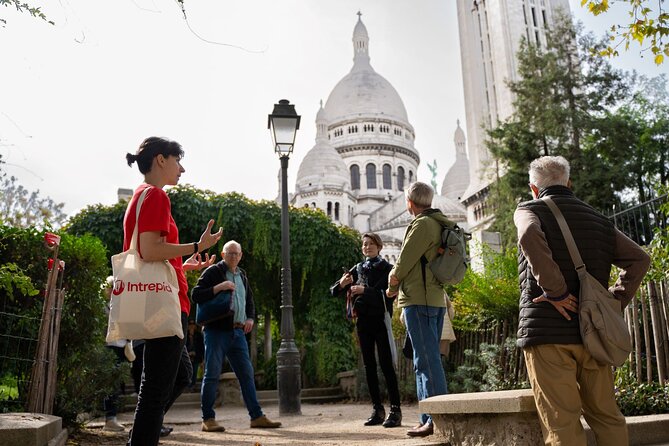
You’ll pass one of the last remaining windmills in Paris: Le Moulin de la Galette. It’s now privatised, so don’t expect full access inside. But you’ll still get the historical feel of what windmills meant in this area.
From there, the route becomes more about “wow, I didn’t know this existed.” You’ll promenade down what’s described as the Champs-Élysées of Montmartre, passing houses that are among the most expensive in the capital.
Then your guide leads you through a totally secret passage. This is the stop that makes the tour live up to its name: a hidden route that reveals both:
- one of the best views over Paris
- and one of the cutest cobbled streets you’ll likely miss if you wander solo
This is also where your walking shoes pay off. The views are worth it, but you’ll feel each step on uneven ground.
Stop 5: Montmartre vineyards and Le Lapin Agile’s legend
Now for the curveball: vineyards in Paris. You’ll head toward the famous vineyards of Montmartre, which produce grapes used for surprisingly good wine. The tour points out that these are urban vineyards—another reminder that Montmartre isn’t only spectacle.
You’ll spend about 15 minutes around this area, and your guide will help you connect the dots between the vines, the hilltop geography, and the neighborhood’s long relationship with artists and creators.
Opposite the vineyards is the entrance to Le Lapin Agile, a well-known cabaret. Your guide shares the legend of Lolo, the painting donkey. Even if you don’t know the story yet, the setting makes it feel like Montmartre’s humor and showmanship belong to the landscape.
One practical consideration: if the weather is wet, vineyard areas can be slippery on foot. Go slowly and keep your gaze on the ground when needed.
Stop 6: Sacré-Cœur with an unusual viewing angle and final panorama
At the end, you walk to Basilique du Sacré-Cœur. This is the grand finale, with about 20 minutes allocated for admiring the church and—more importantly—views from a perspective that very few tourists know about.
The tour doesn’t just deposit you at Sacré-Cœur and move on. It gives you a viewpoint angle, then wraps up with another Paris panorama. In other words, you’re not just arriving at the destination; you’re being shown how to look at it.
If you’re planning your day, this is a great ending point because Sacré-Cœur is the kind of place where you’ll want extra time after the tour. You can hang around, take photos, and decide whether you want to continue down into the neighborhoods or stay on the hill for evening light.
Who this tour suits best (and who should think twice)
This experience fits you if you want:
- art and neighborhood stories, not just famous landmarks
- a guided route through small streets and viewpoints
- included food that feels like a real Paris stop, not a generic snack
It also helps that the tour is child-friendly. If you’re bringing a child under 12, you should inform the operator so the experience can be planned accordingly. There’s also a note that most people can participate, which likely reflects the manageable distance—just don’t ignore the hills.
Think twice if:
- you have issues with stairs or mobility on inclines (the route includes steep climbs and cobblestones)
- you hate walking uphill when you’re already tired from jet lag
If you’re sensitive to pacing, I’d still consider it, but go into it expecting “slow and steady” energy rather than strolling.
Tips to make the most of your Hidden Montmartre walk
Here are the practical things that help, based on how this route is built:
- Wear shoes you trust on stone. This is real cobblestone and steep footpaths.
- Bring water. The croissant tasting is included, but extra drinks aren’t.
- Ask your guide about what to do next. The tour specifically sets aside time at the end for recommendations, which is perfect if you want help beyond Montmartre.
- If you have dietary needs, plan ahead. The tour can cater for vegetarians.
- Use the route ending at Sacré-Cœur strategically. Finish here so you can decide where to go next without backtracking.
One more small thing: guides often bring the neighborhood to life through story. You’ll hear names like Max, Cecilia, and Benjamin from the people who lead this tour. That matters because the best guides don’t only point—they explain why art and place connect the way they do.
Should you book Hidden Montmartre?
Book it if you want a Montmartre experience that feels like a walk through the working layers of the neighborhood: cobbled streets, artist connections, a stop that smells like butter, a vineyard on a hill, and viewpoints that go beyond the obvious line.
Skip it (or choose a slower alternative) if hills and stairs are a problem for you. The distance is short, but the climb is real.
If your goal is to see Montmartre in a way that doesn’t rely on luck—finding secret passages, spotting the right viewpoint angles, and understanding what you’re looking at—this tour is a strong bet for your time.
FAQ
Where does the Hidden Montmartre tour start and end?
It starts at Place Blanche, Paris and ends at Basilique du Sacré-Cœur de Montmartre, 35 Rue du Chevalier de la Barre, 75018 Paris.
How long is the walking tour?
The tour lasts about 2 hours.
Is the tour in English?
Yes. It’s offered in English.
How much walking is involved?
The route covers about 2 km (1.2 miles) of walking.
What’s included in the price?
You get a tasting of a butter croissant, guided walking through Montmartre’s streets, and the tour’s included visits and viewpoints. Your guide also provides tips on what to see and eat during your stay.
Is there food besides the croissant included?
Additional food and drinks are not included. The only tasting specifically listed is the croissant.
Can vegetarians join?
Yes. The tour notes that it can cater for vegetarians.
Is the tour suitable for children?
It’s listed as child-friendly. If you’re bringing a child under 12, you should inform the operator.
What if I need to cancel?
You can cancel for a full refund up to 24 hours before the experience start time. Canceling less than 24 hours before won’t be refunded.