REVIEW · PARIS
Paris Croissant and Breakfast Pastry Class with a French Chef
Book on Viator →Operated by Patisserie a la Carte · Bookable on Viator
Butter, layers, and calm hands in Paris. This small-group croissant class caps at six, so you get hands-on steps from a French pastry chef, not just a quick look.
You’ll bake classic buttery croissants and chocolate-filled pain au chocolat, plus you’ll leave with take-home bags, tea/coffee, and English recipe copies. One consideration: croissant dough needs a lot of time, so you’re not doing every waiting stage from start to finish in the 3 hours.
In This Review
- Key Things You’ll Like
- Croissants in a Six-Person Classroom
- From Beurrage to Feuilleter: The Skills You’ll Actually Use
- What You’ll Bake: Croissants and Pain au Chocolat (Plus a Thursday Special)
- Your Morning Flow: How the Timing Works
- Meeting Point at 9 Rue Thimonnier (What That Means for You)
- Instruction Quality: Why Small Groups Matter More Than You Think
- Take-Home Bags: Eating Your Work the Same Week
- Price and Value: Is $131.54 Worth It?
- Who This Is Best For (And Who Might Want Another Option)
- Quick Checklist Before You Go
- Should You Book This Croissant and Breakfast Pastry Class?
- FAQ
- What is the class duration?
- How many people are in the group?
- What will I learn to make?
- Is there a special option on Thursdays?
- Is the class offered in English?
- What’s included in the price?
- Where is the meeting point?
- What should I wear?
- Do I need to arrange transportation?
- What is the cancellation policy?
Key Things You’ll Like

- Max 6 people means real coaching while you’re rolling, folding, and shaping
- Professional chef + English recipes keeps you focused even if pastry is new to you
- Hands-on technique covers beurrage, turns, feuilleter, and following la pousse
- Take-home results: you bring fresh croissants and pain au chocolat away in bags
- Thursday-only bicolor croissants with chocolate pralin adds a fun twist
Croissants in a Six-Person Classroom
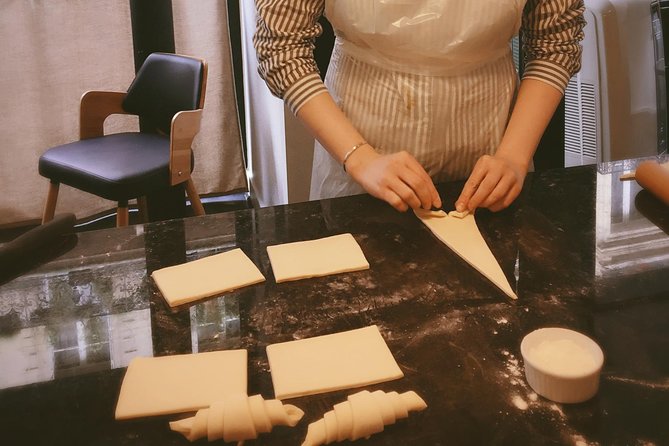
If you’ve ever wondered why Paris croissants taste like they do, this class targets the reason: technique. The format is intentionally small—no crowd noise, no watching from the sidelines. With a cap of six participants (ages 15 and up), you get enough space and attention to actually repeat the steps.
I like that you’re working in a professional setting with all equipment and aprons provided. That matters because croissant making punishes small mistakes, and having the right tools helps you learn without scrambling.
The class runs about 3 hours. For many people, that’s exactly the right length: long enough to feel the process, short enough that you’re not losing your whole day to dough.
You can also read our reviews of more tours and experiences in Paris



From Beurrage to Feuilleter: The Skills You’ll Actually Use
This workshop doesn’t float on vibes. It teaches specific steps using the pastry language French bakers use in real life.
Here’s what you’ll learn and practice:
- Make the beurrage: integrating butter into the dough (pâton) so you get those crisp-thin layers.
- Understand the pâton: the buttered dough block after butter is folded into detrempe.
- Make the turns: rolling and folding the dough to create structured layers.
- Feuilleter: the rolling-and-folding process that forms thin “leaves” of dough and butter.
- Follow la pousse: fermentation and rising driven by yeast, which is part of what makes the inside soft.
Why this matters for you: croissants aren’t just a recipe. They’re a layered process where timing, temperature, and folding count. When you learn what beurrage and feuilleter mean in practice, you can repeat it at home instead of guessing.
One detail I appreciate: the class clearly frames why croissants take effort. Layered yeast dough is demanding, and the organizer notes that some prep happens before class so you still get to enjoy the finished pastries. You still work key stages during the session, but you’re not pretending the clock is magical.
What You’ll Bake: Croissants and Pain au Chocolat (Plus a Thursday Special)
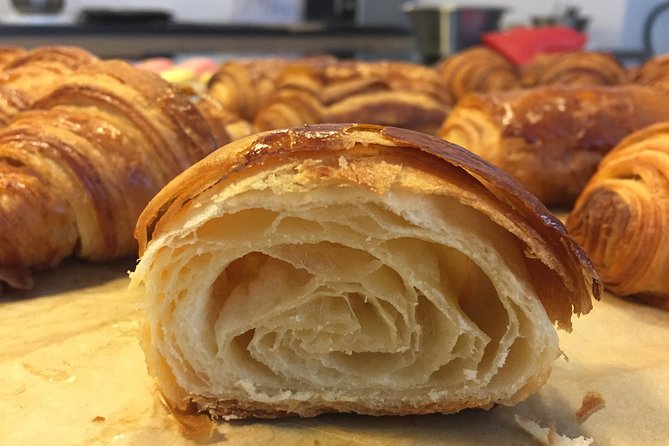
The core bake is classic:
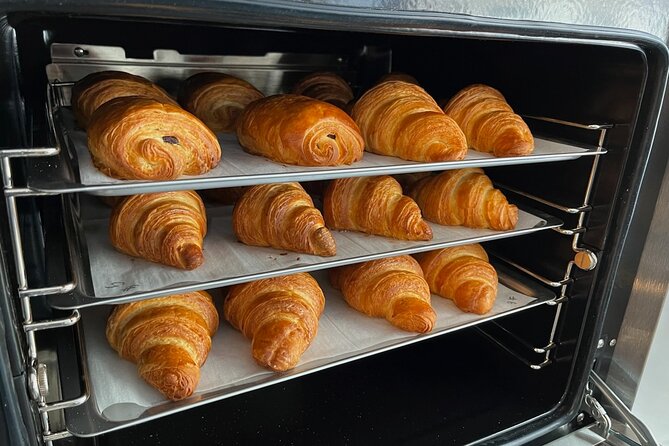
- Buttery croissants
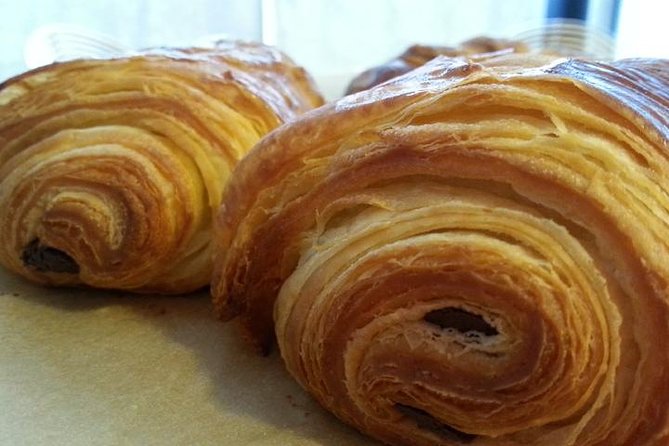
- Pain au chocolat (chocolate-filled croissants)
- Plus breakfast pastries that align with that morning pastry theme
On Thursday mornings, there’s an extra special: bicolor croissants filled with chocolate pralin. It’s a great option if you want your class souvenirs to feel different from the standard croissant-and-chocolate combo.
A useful thing to set expectations: the focus is on croissants and pain au chocolat. If you’re hoping for a wider menu of pastries, you may be disappointed because this is a targeted technique class rather than a sampler tour.
Your Morning Flow: How the Timing Works

The class is about 3 hours, but it’s not a “start dough, bake instantly” situation. Croissant dough requires real fermentation time, and the organizers explain that preparation is better started the day before. That’s why you won’t see every single waiting step in real time.
Instead, the session is designed so you still do hands-on work during the course and can enjoy your pastries at the end. Think of it like learning guitar chords: you don’t spend the whole lesson building the guitar from raw wood, but you still learn the hands-on technique that makes the sound.
So what should you expect while you’re there?
- You’ll get instruction and demonstration.
- You’ll perform the steps yourself in sequence—especially the turning and folding parts that create the layers.
- You’ll practice shaping and baking steps so your croissants come out ready to eat.
From the instructor styles highlighted in prior sessions, the best moments tend to be when the chef slows down for questions and checks your progress. People mention step-by-step guidance and patience, which makes a huge difference when you’re handling dough that needs a steady touch.
Meeting Point at 9 Rue Thimonnier (What That Means for You)
You meet at 9 Rue Thimonnier, 75009 Paris. The good news: it’s near public transportation, so you can fit this into a morning without a long taxi run.
No hotel pickup or drop-off is included, so plan to arrive under your own steam. Also, the class starts on time: after 5 minutes late, the course begins without you, and after 15 minutes without anyone showing up, the class is canceled. If you’re using public transit, I’d build in extra walking time.
What to wear: comfortable casual clothes and flat comfortable shoes. Long hair should be tied back. You’re working in a kitchen, so come ready to stand, reach, and move without feeling restricted.






Instruction Quality: Why Small Groups Matter More Than You Think

The class is capped at six participants, and that number is the whole point. Croissant technique needs correction. When the chef can see your folds, your dough thickness, and your handling, you learn faster.
In prior sessions, instructors (names like Julie, Gaëlle, Marie, Hiba, Gail, and Mary are mentioned) are described as patient and organized, with clear English explanations. That combination is rare: you want both technical accuracy and the communication to match your skill level.
You also benefit from the structure. The class includes English copies of recipes, and the format gives you both demonstration and hands-on time. That’s what you want as a visitor: clear direction, then you do it, then you can compare what you made to what it should look like.
If you’re a confident baker, you’ll still appreciate the professional method. If you’re new to yeast dough, the small group keeps the chef from being forced into “one-size-fits-all” instruction.
Take-Home Bags: Eating Your Work the Same Week
One of the best parts is what happens after the ovens. You’ll take home the croissants you make, packed in take-home bags. People often describe bringing home a substantial amount and eating it over the next few days.
That’s practical value. Instead of buying pastries after class, you get your own. And since croissants are best when eaten fresh, having them ready to travel with means you can enjoy them at home while they’re still at their peak.
You’ll also get tea and coffee during the class. It sounds simple, but it turns the session from a strict workshop into a morning that feels like a small Paris moment.
Price and Value: Is $131.54 Worth It?
At $131.54 per person for about 3 hours, this isn’t a bargain bucket activity. But the value comes from three things you can’t fake:
- Chef-led, hands-on instruction (not just watching)
- A tiny group (max six), which drives the quality of coaching
- What you produce: fresh croissants and pain au chocolat you can take away
For croissant classes, the “cost per pastry” math can look odd until you factor in labor, ingredient handling, and the technical focus. Here, you’re paying for professional method plus a kitchen setup plus ingredient work plus time.
In practical terms, it’s best if you care about baking skill—not only the taste. If you just want something to eat in Paris, you’d probably get more for less money. If you want to learn why croissants work, this price can make sense.
Who This Is Best For (And Who Might Want Another Option)
This class suits:
- You if you want a hands-on French baking skill you can repeat.
- You if you like structured instruction: demonstrations, then step-by-step practice.
- You if you’re traveling with a friend or family member and want an experience that doesn’t feel like a factory tour.
It may not suit you if:
- You dislike “working with your hands.” Croissant making is active and hands-on.
- You want a long, slow, from-scratch pastry day with every waiting stage. The organizers do some prep ahead so you’ll enjoy the end result within the time window.
One more note from how the class is described: it’s an age 15+ activity, and kids must attend with a registered adult (1 adult per child). So keep that in mind if your group includes teens.
Quick Checklist Before You Go
Here’s what you’ll want to plan so you don’t waste your energy:
- Wear flat comfortable shoes and tie back long hair.
- Come with time buffers for transit so you’re not late.
- Be ready to share allergies or dietary needs when booking, since the class requests that information.
- Read the included recipes in English before you go if you’re the kind of person who likes to preview steps.
Also, you’ll get a mobile ticket, so have your phone handy when you arrive.
Should You Book This Croissant and Breakfast Pastry Class?
If your goal is a real skill—beurrage, turns, feuilleter, and la pousse—this is the kind of class that pays off. The small group size is the biggest reason I think it’s worth your time, and the fact that you leave with what you made is a big practical win.
Book it if:
- You want a focused French pastry lesson in English
- You enjoy hands-on work and want to learn technique, not just taste pastry
- You like the idea of taking fresh croissants and pain au chocolat home
Skip it if:
- You’re strictly shopping for the cheapest Paris activity
- You want a broad variety of pastries beyond croissants and pain au chocolat
- You’d rather watch than participate (this class is designed for doing)
FAQ
What is the class duration?
The class runs for about 3 hours.
How many people are in the group?
The class is capped at a maximum of 6 participants.
What will I learn to make?
You’ll learn classic buttery croissants and pain au chocolat, and you’ll also learn breakfast pastry items included in the session.
Is there a special option on Thursdays?
Yes. On Thursday morning classes, you can make bicolor croissants filled with chocolate pralin.
Is the class offered in English?
Yes. It’s offered in English, and English recipe copies are provided.
What’s included in the price?
A professional French pastry chef, maximum 6 person small group, aprons, all cooking equipment, English recipe copies, take-home bags, tea and coffee, and an eBook called Everyday Gourmet French Tarts.
Where is the meeting point?
The start meeting point is 9 Rue Thimonnier, 75009 Paris, France. The activity ends back at the meeting point.
What should I wear?
Wear comfortable, casual clothing and flat comfortable shoes. Tie back long hair.
Do I need to arrange transportation?
Hotel pickup and drop-off is not included. You’ll need to get to and from the meeting point yourself.
What is the cancellation policy?
You can cancel up to 24 hours in advance for a full refund. If you cancel less than 24 hours before the start time, the amount paid is not refunded.