REVIEW · PARIS
Normandy D-Day Beaches and American Cemetery Day Trip from Paris
Book on Viator →Operated by Paris CityVision · Bookable on Viator
D-Day feels close enough to touch. This one-day trip from Paris gives you guided stops at Pointe du Hoc, Omaha Beach, the American Cemetery, Arromanches, and sometimes Juno Beach, all wrapped in a long-but-manageable route along the Normandy coast. I really like two things most: the WWII story is explained on the ground and on the drive, and the American Cemetery gives you real time to think, not just shuffle by. The main drawback to plan for is the pace and the weather—sea wind can make a “20-minute stop” feel like 20 minutes longer.
The trip is built around transportation, so you’re not stuck with trains and transfers; you’re on a coach (or minivan for small groups) with comfort features like USB charging mentioned in the experience notes. You’ll spend about 3–4 hours crossing from Paris to Normandy, then roughly 5 hours doing the key sites before returning.
If you’re okay with moderate walking, flat shoes, and a day that runs long, this tour can be a powerful use of a limited Paris vacation. I’d pack layers and expect the coast to feel colder than the city—then the day becomes more tolerable and more enjoyable.
In This Review
- Key highlights worth clocking
- Why this Normandy D-Day day trip works from Paris
- Ride time: the long coach drive that sets the stage
- Pointe du Hoc: Rangers, cliffs, and the ground-level impact
- Omaha Beach: short stop, big emotions, and why the framing matters
- The American Cemetery at Colleville-sur-Mer: the hour you shouldn’t skip
- Arromanches (Les Falaises d’Arromanches): lunch + the artificial harbor story
- Juno Beach Center and the Canadian Memorial: worth it, but not guaranteed
- Group size, pace, and what to bring for a colder-than-you-think day
- Price and value: is $207.27 fair for a full D-Day route?
- What the best guides tend to do on this tour
- Who should book this, and who should skip it
- FAQ
- Is the Normandy D-Day tour from Paris about 13 hours?
- What are the main stops on this day trip?
- Is the American Cemetery admission included?
- Is lunch included?
- Do I need to pay for tickets at each stop?
- How do I get tickets?
- Is hotel pickup included?
- What should I wear for Normandy?
- Where will there be restrooms during the trip?
- Should you book this Normandy D-Day trip?
Key highlights worth clocking
- Pointe du Hoc first: a cliff-top assault site with surviving craters and bunkers.
- Omaha Beach time with context: a photo stop that’s short, but placed after the guide frames the battle.
- American Cemetery for reflection: about an hour on hallowed ground, with nearly 10,000 US graves.
- Arromanches lunch break: time to eat (and see the harbor remains) in a real beach town rhythm.
- Juno Beach Center may be added: the Canadian Memorial stop depends on timing and isn’t guaranteed.
Why this Normandy D-Day day trip works from Paris

This is the “see the big D-Day places” option that doesn’t force you to rent a car. You trade freedom for a clear route and a licensed guide, and in a day trip that trade is usually worth it.
What makes it work best is the order. You start with dramatic, tactical sites like Pointe du Hoc, then you move to the beaches and end with memorial-focused stops. That sequencing matters because you’ll understand what you’re looking at, not just where it is on a map.
You can also read our reviews of more tours and experiences in Paris



Ride time: the long coach drive that sets the stage
Plan for a long day. The itinerary is about 13 hours total, with a 3–4 hour drive each way from central Paris to the northwest coast, and roughly 5 hours inside Normandy itself.
You’ll be on an air-conditioned vehicle, either a coach or a minivan depending on the option and group setup. Some people note that the vehicle size and comfort can vary (buses are reported as quite comfortable, while cramped vans show up sometimes), so if you’re sensitive to tight seating, it’s worth dressing for comfort and bringing a warm layer.
Also, you don’t have onboard Wi‑Fi or guaranteed restrooms. Restrooms are available at the American Cemetery, the Juno Beach Center, and during a comfort stop, so use those breaks and don’t assume you can wait it out on the road.
Pointe du Hoc: Rangers, cliffs, and the ground-level impact
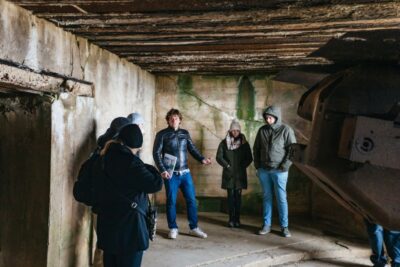
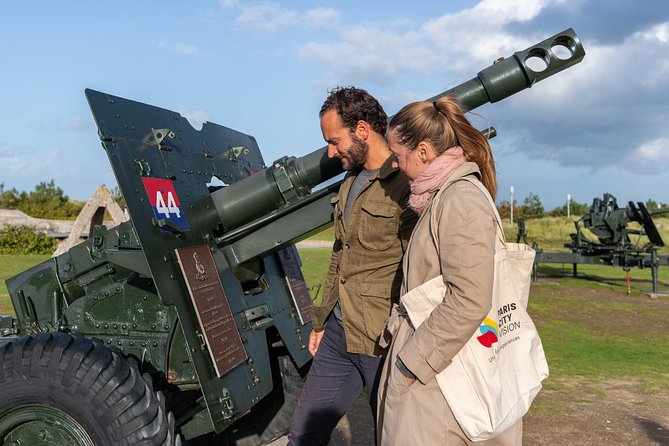
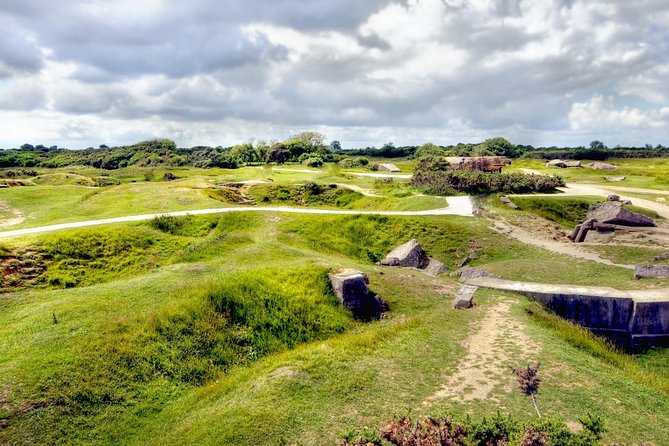
Pointe du Hoc is your first “wow” stop, and it earns that job. This cliff-top area is famous for the US Army Rangers scaling the cliffs under heavy fire to attack German fortifications overlooking the beaches.
What you’re looking at today is not a polished museum display—it’s a site marked with craters and bunker remnants. That matters because it makes the history feel physical, like the battle happened yesterday and the land just hasn’t stopped remembering.
Stop time is short—about 25 minutes—and that’s a fair warning. You can use it well by focusing on viewpoints and the cliff-edge angles the guide points out, then reading what you can as you walk rather than trying to take in everything at once.
Omaha Beach: short stop, big emotions, and why the framing matters
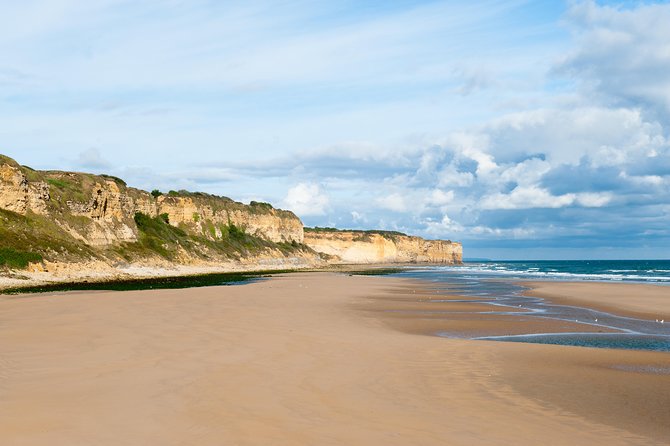
Omaha Beach is one of the toughest landings of the day—an early-morning assault on June 6, 1944 that’s strongly associated with death and destruction. The tour doesn’t give you hours here, but it does give you the battle context first, which makes a short visit far more meaningful.
You’ll have about 20 minutes, plus a chance for a photo stop. It’s easy to leave Omaha feeling like you didn’t “do enough,” mostly because the emotional weight is heavy and the time is limited. Still, the practical win is that you’re seeing the beach with an explanation of what occurred and why this stretch of coast is remembered as it is.
My practical advice: don’t rush your first look. Take your time at the shoreline, then decide what viewpoint you want for photos. If you try to do both at full speed, you’ll end up with neither.
The American Cemetery at Colleville-sur-Mer: the hour you shouldn’t skip
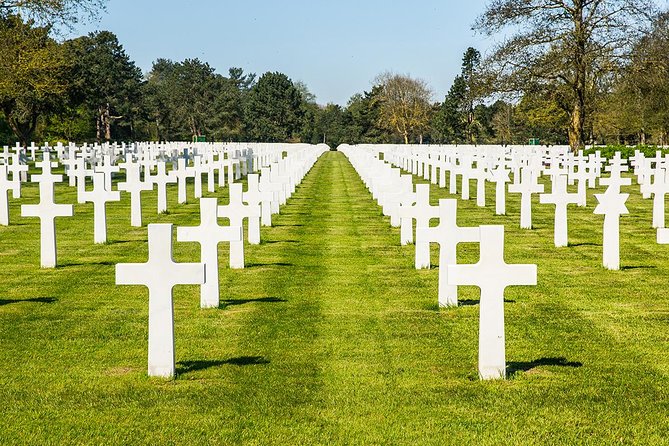
This is the stop that earns the most emotional weight. You spend about one hour at the Cimetiere Americain de Colleville-sur-Mer, where you can pay respects in a quiet, solemn setting. The grounds hold nearly 10,000 US military war dead, and that scale makes the experience feel humbling in a way no summary can match.
Admission is included, so you won’t be juggling ticket hassles here. The time allocation also gives you something important: breathing room. You’re not herded through with the vague instruction to hurry up and feel something.
If you want to make this hour more personal, treat it like a small ritual: arrive calm, walk at your own speed, and give yourself time to look for details rather than just the biggest view.






Arromanches (Les Falaises d’Arromanches): lunch + the artificial harbor story
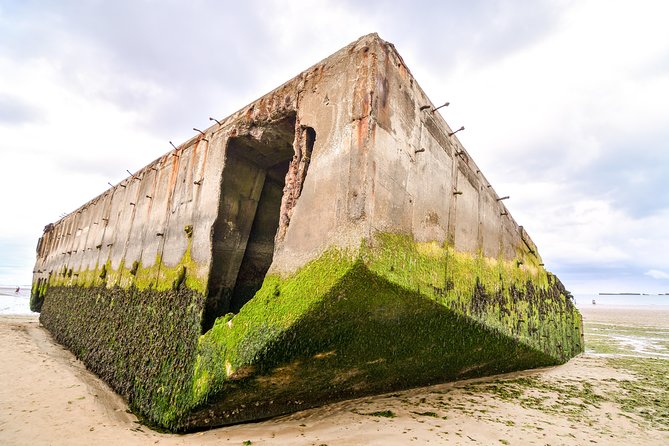
Arromanches is where the day gains a different flavor—less battlefield intensity, more coastal reflection and daily-life pacing. You’ll get free time for lunch here, typically around 1 hour 30 minutes, and the experience may include a 2-course lunch with a drink if you selected the small group option.
Why Arromanches matters is the artificial harbor. This was an allied engineering solution that supported the landing logistics, and seeing the remnants helps explain how the Allies kept supplies moving after the landings.
The ticket for the visit portion is listed as free, so you’re really paying for transportation and the guide’s context. In practice, Arromanches is a nice break point: you can eat, warm up a bit, and look around without feeling like you’re sprinting between memorials.
Juno Beach Center and the Canadian Memorial: worth it, but not guaranteed
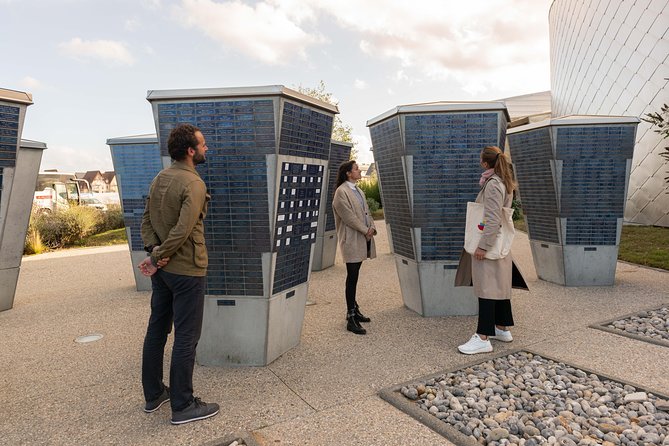
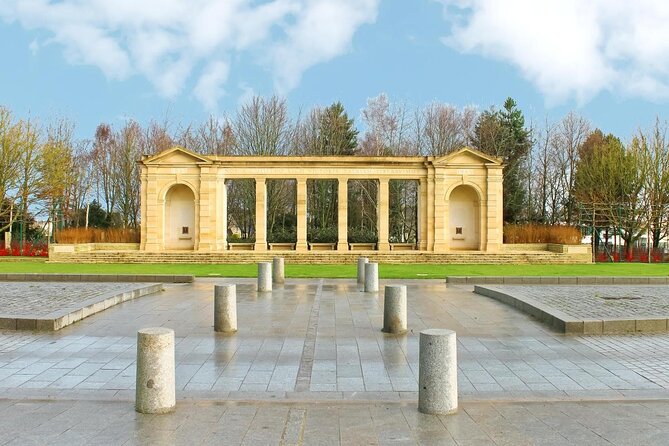
Juno Beach adds the Allied story beyond the US focus. At the Juno Beach Center you’ll see exhibits connected to the Canadian soldiers’ struggle to end Nazi tyranny, and you’ll have the Canadian Memorial element in the plan.
Here’s the key practical note: this stop can depend on time. It’s described as possible depending on the schedule, and it’s not guaranteed. So if Juno is a must for you, don’t build your expectations around it being 100% certain.
When you do get there, it’s a strong pairing with the other memorial sites. You’ll come from Omaha and the American Cemetery into a different national lens, which keeps the day from feeling one-note.
Group size, pace, and what to bring for a colder-than-you-think day
This trip is capped at 45 travelers, and some days run as small group formats. That affects everything: vehicle size, ability to hear the guide, and how tightly the group stays together.
A pattern shows up in the feedback: the tour can feel fast-paced because the day is designed to cover multiple sites. You’ll get guide-led context, then sometimes you’ll be responsible for self-paced exploration within the time window, and the meeting times are important.
Also, expect coastal weather. You’ll be outdoors at beaches and cliff-top areas. A warm coat is recommended in winter, a raincoat in summer, and a good pair of walking or flat shoes is key. Sea wind is real, even when Paris feels mild.
Finally: no big luggage on the coach. If you’re traveling with bulky bags, plan for how you’ll store them or carry them comfortably.
Price and value: is $207.27 fair for a full D-Day route?
At $207.27 per person, you’re paying for more than just a driver. You’re getting a D-Day specialist guide, round-trip transportation from Paris, and a route that hits multiple high-impact sites in one day.
Here’s why the value can feel good:
- Transportation saves you time and stress compared to piecing together schedules.
- The guide brings battle context that makes short beach stops more useful.
- The American Cemetery visit includes admission and gets meaningful time.
- Lunch is only extra if you don’t choose the small group lunch option, so your value can improve depending on what you select.
The main value warning is the trade-off: because it’s a day trip, your time at each site is limited. If you want slow museum wandering and long beach walking, this isn’t that style. It’s a “hit the essentials with guidance” format, and for many people that’s exactly what they need.
What the best guides tend to do on this tour
The guide is the difference-maker on a history-heavy trip like this. The tour experience is designed so you learn while you travel, not just at stops.
I’ve seen multiple guide names connected with particularly strong moments—Camille, Steve, Demetri, Zoltan, Voltron, and Ann—often praised for being engaging, respectful, and organized. What you should look for in a good day is clear pacing, a sense of where you should focus at each site, and explanations that connect what you’re seeing to how the battle unfolded.
If your group is large, hearing can be an issue depending on the vehicle setup and how commentary is delivered. If you personally struggle in noise, consider bringing any listening aids you already trust (without assuming the tour provides them).
Who should book this, and who should skip it
This tour is a good fit if:
- You want a structured Normandy D-Day day without car logistics.
- You’re okay with a long day and limited time at each stop.
- You care about memorial visits where reflection time is built in, especially the American Cemetery.
You might want to skip or choose a different format if:
- You strongly prefer unhurried stops and lots of free time at one location.
- Cold, wind, and outdoor walking are hard for you even with good shoes and layers.
- You need lots of flexibility if your schedule is tight, since the itinerary and timing can shift with traffic or operational reasons.
FAQ
Is the Normandy D-Day tour from Paris about 13 hours?
Yes. The duration is listed as approximately 13 hours.
What are the main stops on this day trip?
The tour includes Pointe du Hoc, Omaha Beach, the American Cemetery at Colleville-sur-Mer, Arromanches (Les Falaises d’Arromanches), and it may also include Juno Beach via the Juno Beach Center depending on available time.
Is the American Cemetery admission included?
Yes. Admission is listed as included for the American Cemetery.
Is lunch included?
Lunch is not always included. The standard plan includes free time for lunch in Arromanches. If you choose the small group option, you may get a booked restaurant lunch with a 2-course menu and a drink.
Do I need to pay for tickets at each stop?
Most stops are listed as free admission, and the American Cemetery admission is included.
How do I get tickets?
You’ll receive a mobile ticket.
Is hotel pickup included?
Hotel pickup is only included if you select that option, and the pickup address must be in Paris with a zip code starting with 75.
What should I wear for Normandy?
Bring a warm coat for winter and a raincoat for summer. Wear good walking or flat shoes.
Where will there be restrooms during the trip?
Toilets are available at the American Cemetery, at the Juno Beach Center, and during a comfort stop.
Should you book this Normandy D-Day trip?
If you want the big-name D-Day sites in one day with a guide who helps you understand what you’re seeing, I think this is a smart booking. The standout is the American Cemetery hour—when you only have one day, that time is the kind you’ll remember.
Book it if your priority is guided essentials over slow exploring. Skip it (or adjust expectations) if you need lots of downtime at beaches or want a flexible, unstructured itinerary. Either way, dress for sea wind and plan for a long day—then you’ll get the full value of what this route is designed to deliver.