REVIEW · PARIS
Paris: Food and Wine Tasting Walking Tour in Le Marais
Book on GetYourGuide →Operated by Devour Tours · Bookable on GetYourGuide
Le Marais tastes like a planned feast. I love the 11+ food samples that add up to a real meal, not tiny nibbles, and I love how the tour pairs French classics with modern twists like Moroccan street crepes and French-Syrian pastries. One thing to plan for: it’s a walking-heavy route and it’s not designed for vegans, celiac disease, or lactose intolerance.
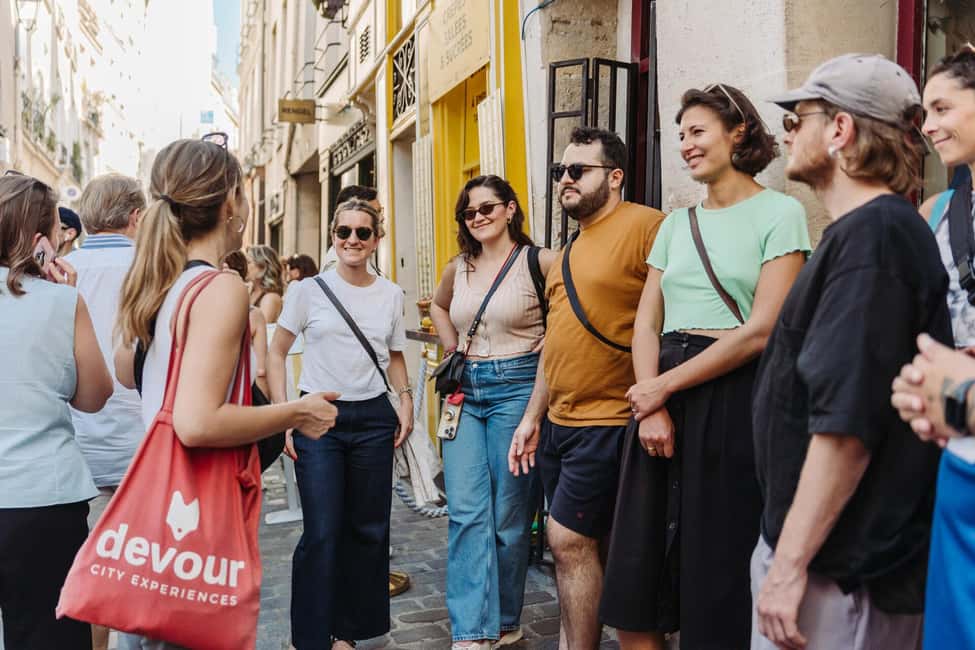
What makes this especially fun is the small-group feel (max 10) and the way the guide turns each stop into a short story. You get a mix of eating and walking through Le Marais, including a short historical pass through the Jewish quarter, and you finish with a serious finale of cheese and natural wine.
In This Review
- Key highlights worth your attention
- Le Marais on foot: what makes this food-and-wine tour work
- The butter croissant opener: why this start matters
- The covered market stop and Moroccan crepes
- Chocolate and macarons: the stop with real craft
- Le Marais flavor turns: pastrami in the Jewish quarter
- Bistro lunch in true Paris style
- French-Syrian pastry nests: where the tour gets creative
- Cheese flight and natural wine finale
- Price and timing: is $113 worth it?
- Who this tour suits best (and who should skip)
- Getting the most out of it: small moves that help
- If you’re choosing between Marais and Left Bank
- Should you book? My decision guide
- FAQ
- How long is the Paris food and wine tasting walking tour?
- How many people are in the group?
- What’s included in the price?
- Does the tour include alcohol?
- Where does the tour start and end?
- Is the tour suitable for vegans or lactose intolerance?
- Can people with celiac disease join?
- Is the tour wheelchair accessible?
Key highlights worth your attention
- Butter croissant + sourdough bread from a top local baker to start strong
- Paris’ oldest covered market with Moroccan crepes and a quick history context
- Meilleur Ouvrier de France chocolate stop, for high-quality sweetness done right
- Classic bistro lunch with tips on how to eat like a Parisian
- French-Syrian pastry nests blending flavors and techniques
- Artisan cheese flight + meet the natural wine owner at the end
Le Marais on foot: what makes this food-and-wine tour work
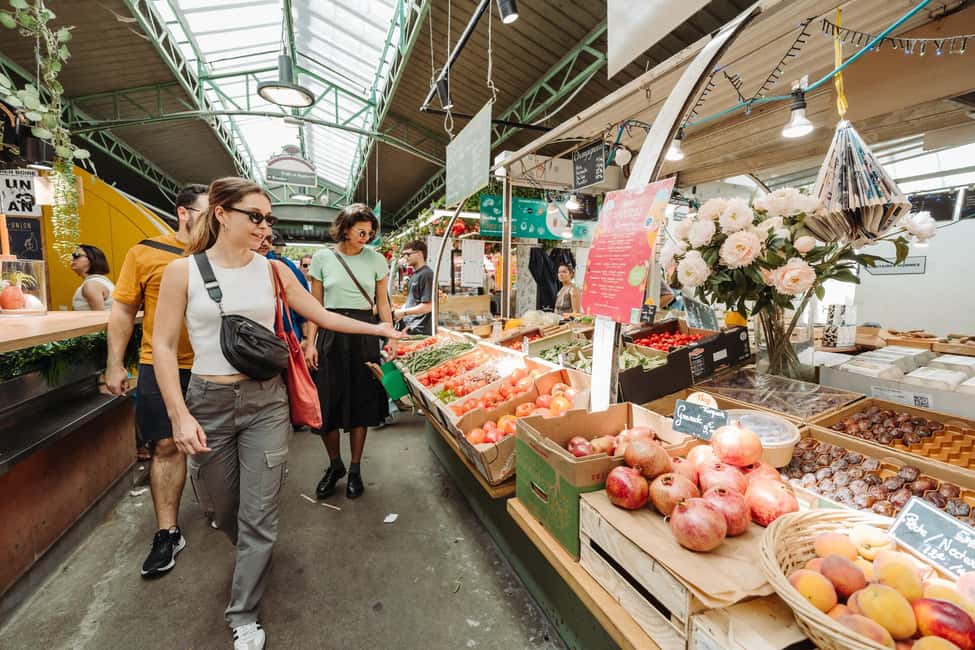
This is a Paris tasting tour built for people who actually want to eat. In about 3 to 3.5 hours, you’ll sample enough food to feel properly fed, with 11+ tastings plus two drinks. The pace stays friendly—short bites, short walks—so you’re not stuck in long stretches with nothing happening.
The best part is the mix. You’ll get the familiar targets (butter croissant, macarons, chocolate, bistro classics) and also the less predictable stops (Moroccan crepes at a covered market, and French-Syrian pastries). That mix is where the tour feels more like local browsing than a generic food checklist.
Guides seem to be a big deal here. I’ve seen names like Antoine, Vanessa, Alice, Anne Lorraine, Juan, and Arturo come up repeatedly in standout experiences. What you want on a food tour isn’t just a list of what to eat—it’s someone who can connect the food to the neighborhood, and those guides consistently do that.
You can also read our reviews of more walking tours in Paris


The butter croissant opener: why this start matters
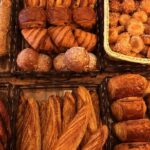
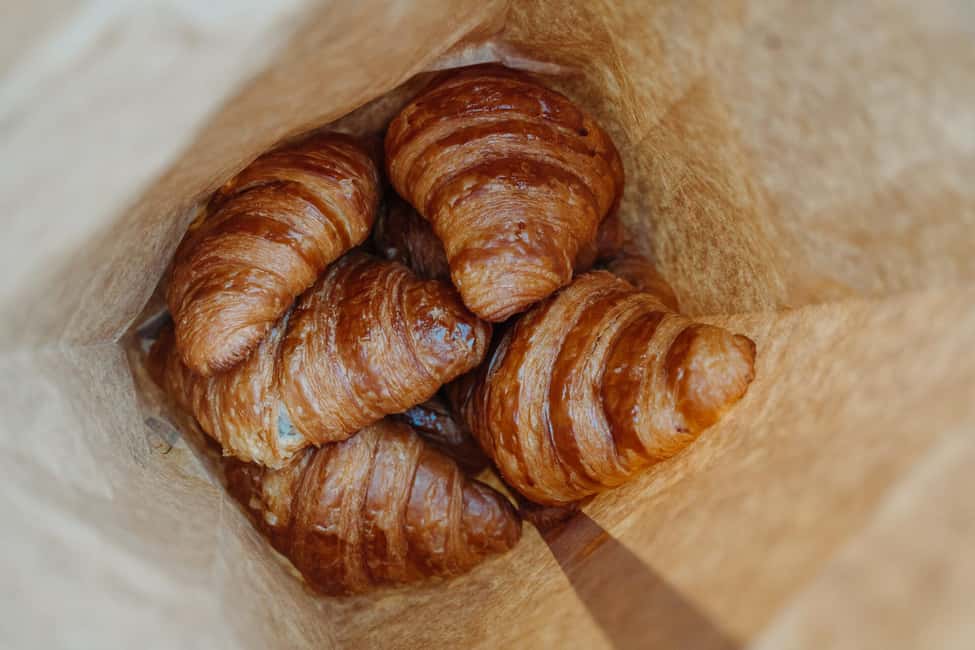
You begin with one of Paris’s true comfort foods: a flaky butter croissant made fresh. It’s not a packaged warm-up. The idea is simple: start with something universally adored, then build out from there.
Right after that, you’ll also get homemade sourdough bread. That combo matters because it sets your palate for the rest of the walk. Croissant first gives you that buttery, crisp shell experience. Sourdough follows with tang and chew, so later tastings (pastries, chocolate, even savory bites) won’t all taste the same.
You’ll also hear about the family behind the bakery. That’s not trivia for trivia’s sake. It helps you understand why French food shops run like small communities—many feel less like businesses and more like places with an identity.
Practical tip: if you’re an early riser, arrive ready. A croissant this good is the kind of start that makes the next 3 hours easier, not harder.
The covered market stop and Moroccan crepes
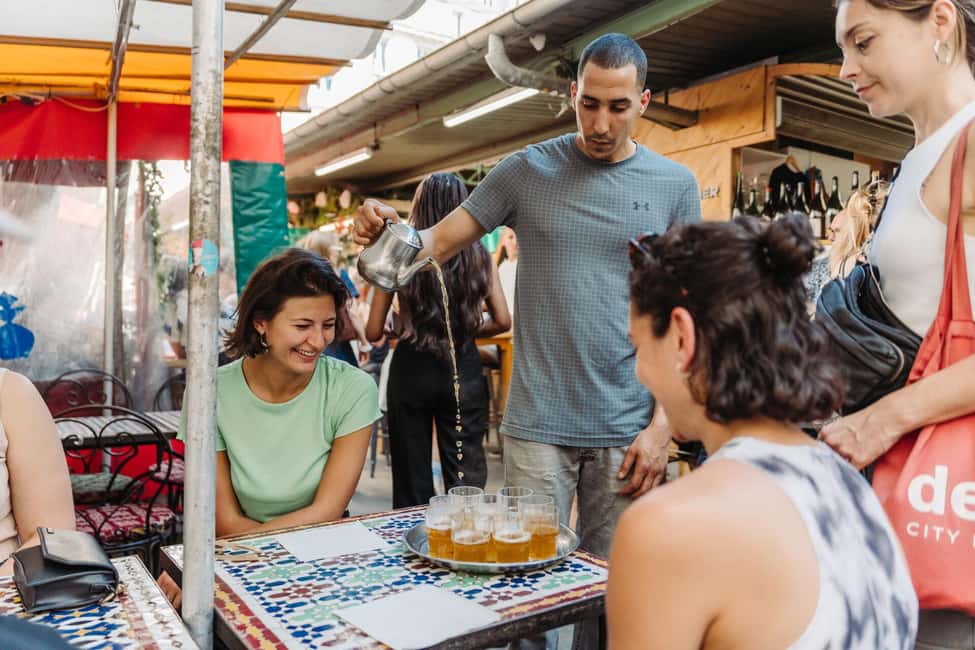
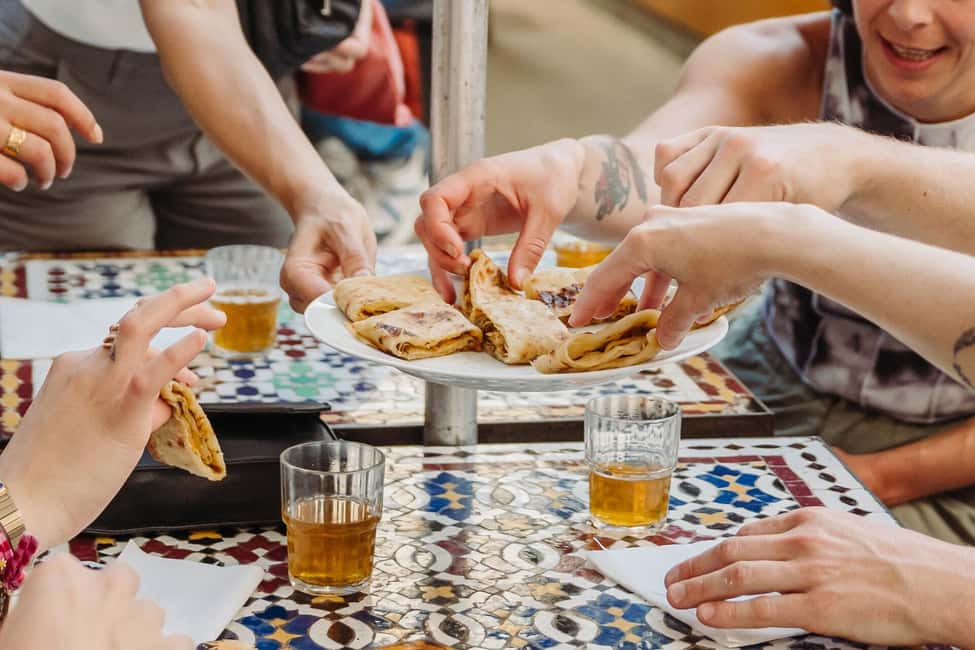
After the bakery, the tour heads toward Paris’ oldest covered market, where you’ll try a savory Moroccan crepe. This is one of the best “street food but guided” moments in the tour.
What makes it more than just tasty is the context you get while you’re eating. Your guide explains the connection to French colonialism and how this kind of street food was adapted for Parisian tastes. In other words: you’re not only tasting a crepe—you’re tasting how history shows up in what ends up on a menu.
This kind of stop also gives you a change of scene. You go from bakery calm to market energy, and it’s a good reset before the sweeter hits like chocolate.
Small caution: crepe is savory, but it still runs into heavy flavors fast. If you tend to get overwhelmed by rich foods, slow down for the first two bites and let the flavors settle.
Chocolate and macarons: the stop with real craft
France and chocolate go together, and this tour leans into it hard—but with quality signals, not just sugar.
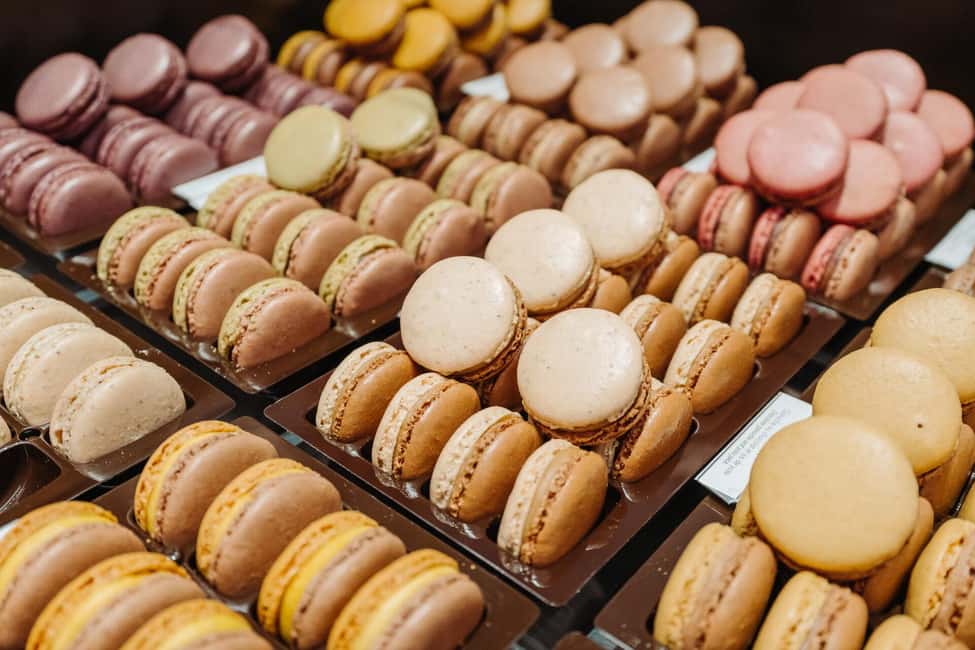
You’ll visit a master chocolatier, and the tour highlights that he carries the Meilleur Ouvrier de France title. That matters because it’s not a marketing decoration; it’s a recognition tied to craft standards. So when you’re handed chocolate or dessert-style tastings here, you’re tasting refinement.
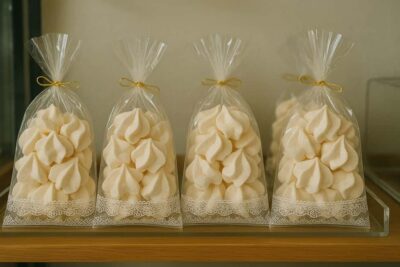
The sequence usually includes classic French sweets like macarons, plus chocolate treats that feel different from mass-market versions. And because you’ve already had bread and savory bites earlier, the sweetness lands in a more interesting way instead of feeling like a sugar overload.
One thing I appreciate here: the tour doesn’t treat dessert like a prize for the end of the meal. It treats it like part of the meal’s arc. You’re learning how a neighborhood moves between baked goods, chocolates, and small savory snacks.
Le Marais flavor turns: pastrami in the Jewish quarter
Next comes a short historical walk through the Jewish quarter, followed by a warm pastrami sandwich at a beloved family-run bakery. This is a smart pacing move. You get walking + storytelling, then a “real bite” reward.
The sandwich stop is where the tour balances the sweetness you’ve already had. Pastrami brings salt, smoke, and richness. It also makes the lunch feel less like a random later event and more like the next chapter.
A good guide here doesn’t just point to a sandwich and say enjoy. They connect the neighborhood identity to what you’re eating today. The Jewish quarter portion is short, but it’s positioned like context, not a lecture.
If you prefer less alcohol during a tasting, this is also the moment to pay attention to how you’re feeling. The tour includes wine later, so having a satisfying savory bite can keep the rest of the afternoon pleasant.
You can also read our reviews of more food & drink experiences in Paris





Bistro lunch in true Paris style
At some point, you’ll sit down for lunch at a classic French bistro. The tour emphasizes that this kind of bistro has a story—one that started as a protest against fast food. That’s a great angle, because it turns “lunch” into something with values.
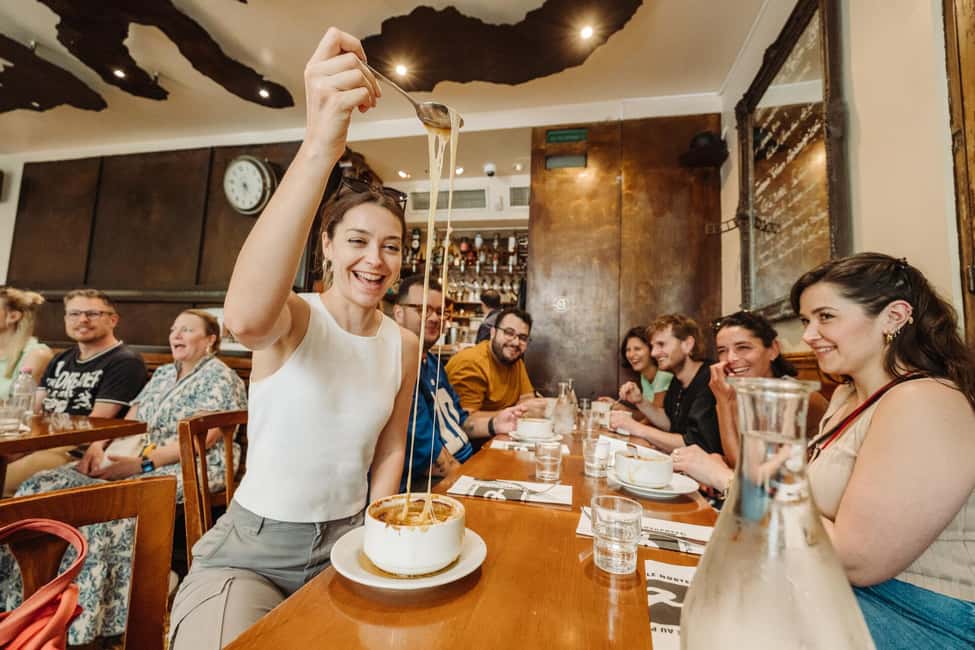
You may try French onion soup or other classic dishes, and your guide shares tips for dining bistro-style. That usually translates into: how to order, how to take your time, and how to treat lunch as a full part of the day—not a quick break.
This is one of the best value parts of the tour. Tastings are fun, but a proper sit-down meal changes the math. You’re not only tasting; you’re practicing the rhythm of Paris eating.
What to watch for: bistros are hearty. Pair that with the earlier bread and market snacks, and yes, you’ll likely be comfortably full before dessert starts winding down.
French-Syrian pastry nests: where the tour gets creative
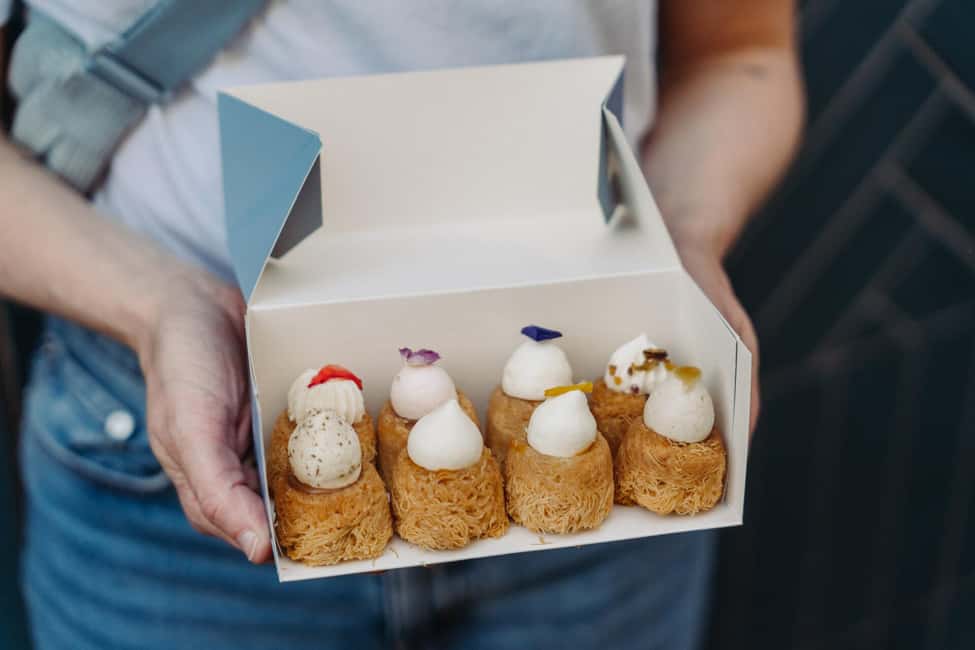
After lunch, the tour takes a turn into something you won’t replicate easily at home: pastries described as nests, made by a French-Syrian baker using Syrian flavors with French patisserie techniques.
This stop is valuable because it shows Paris not as one fixed style, but as a city that keeps absorbing and remixing. You’re not only collecting flavors; you’re seeing how different food cultures get translated into Paris pastry form.
Also, a pastry-nest format sounds whimsical, but the real point is structure. You’re likely tasting something designed with layers, texture, and a deliberate balance between sweetness and richness.
If you like pastry that feels more modern than classic (without losing craft), you’ll probably enjoy this section most. And if you’re more cautious with sweet intensity, pace yourself here—one good bite beats four rushed ones.
Cheese flight and natural wine finale
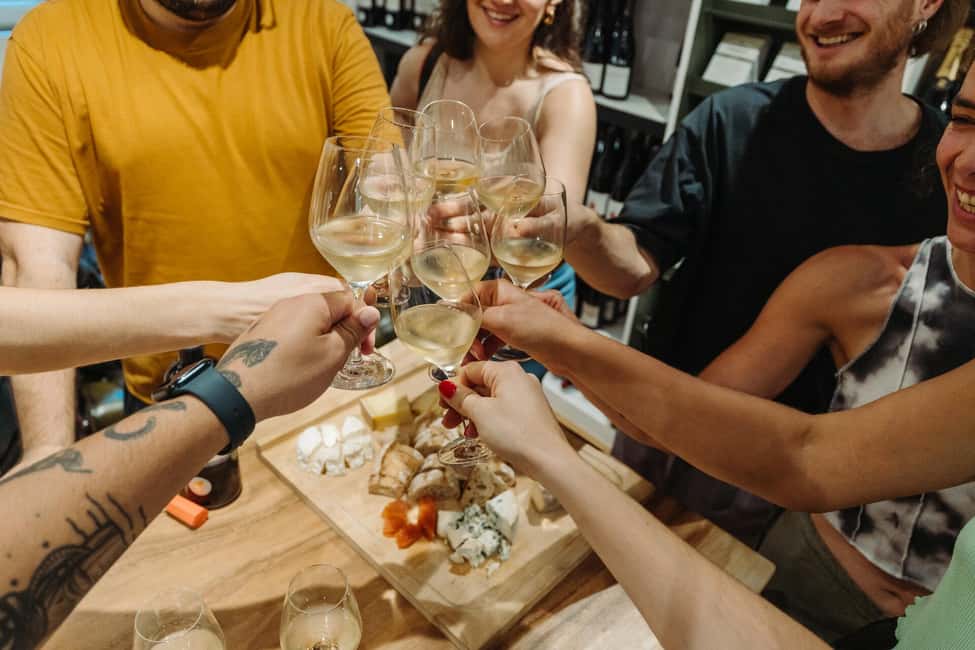
The end of the tour is built like a crescendo: an artisan cheese flight at an up-and-coming cheesemaker, followed by a natural wine stop where you meet the owner.
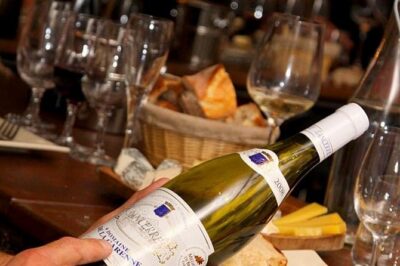
The cheese flight is the perfect bridge from pastries to wine. It also makes the final tasting more educational. Instead of drinking and tasting separately, you’re pairing. That’s how you learn what you actually like—creamy vs. sharp, young vs. aged.
Then comes the natural wine experience. The tour frames it as a fascinating world, and the owner’s presence matters because it makes the tasting feel like conversation, not sales talk. Two drinks total is already included, so you’re not guessing whether the end is worth it.
Practical tip: if you’re doing the wine, take small sips and alternate with water when you can. The tour wraps up after this, so you want to stay alert enough to enjoy your evening plan afterward.
Price and timing: is $113 worth it?
At $113 per person for a 3 to 3.5-hour walking tour, the value depends on what you want most: guided food sampling or self-guided wandering.
Here’s why it can feel like a smart deal:
- You get enough tastings for a full meal. That’s the big economic advantage. You’re essentially buying multiple restaurant-quality samples plus two drinks, with a guide steering the ship.
- You’re paying for access to craft-focused shops. A master chocolatier and a respected bakery type of stop aren’t just convenience; they’re quality-focused.
- You’re buying story time. The guide turns neighborhood routes into context—market history, Jewish quarter notes, and bistro dining culture.
Where you might question the price: if you already know you only want wine, or you don’t like walking, this won’t be as satisfying. Also, if you’re very sensitive to lactose or avoid certain ingredients, the tour’s limitations reduce the value because your options may be narrower.
For most people who want a first-day-ish introduction to Le Marais food culture without a full planning job, the price is reasonable.
Who this tour suits best (and who should skip)
This tour fits best if you:
- Want a guided Le Marais food crawl that includes lunch, not just bites
- Like classic French foods but also want room for market street food and modern pastries
- Enjoy pairing food with wine and learning a few stories as you go
- Prefer small groups (max 10), so conversation and pacing feel human
You should think twice if you:
- Need wheelchair or stroller support (it isn’t suitable for mobility impairments or strollers)
- Are vegan (the tour is not suitable for vegans)
- Have celiac disease (not adaptable due to risk of gluten cross-contamination)
- Have lactose intolerance (not recommended)
Dietary adjustments do exist. The tour is described as adaptable for vegetarians, pescatarians, non-alcoholic options, and pregnant women—but the key detail is that you may not have a replacement food option at every stop. If you have allergies or specific restrictions, email the guest experience team after booking so they can arrange ingredients.
Getting the most out of it: small moves that help
This is a walking tour, so bring practical shoes and plan to stay steady. Bring a passport or ID card, and if you can, keep a light bag so you’re not wrestling with things between tastings.
On food, go with curiosity over comparison. One common way people feel disappointed on food tours is they judge everything against their favorite single bite. Instead, treat each stop like a different course. Early bread and croissant set up the sweet later; bistro lunch resets your palate; cheese and wine land as the finale.
Also, ask your guide what’s worth coming back for. Some guides—like the ones named in standout experiences such as Antoine, Vanessa, Arturo, and Toma—clearly enjoy giving follow-up recommendations. That’s how the tour becomes useful after you leave it.
If you want less alcohol, choose a non-alcoholic option when available and pace your day. You still get the tasting rhythm without needing to push through wine.
If you’re choosing between Marais and Left Bank
This tour is offered as either Explore the Marais or an alternative option exploring the Left Bank’s unique flavors and history. If you’re more into markets and Jewish quarter context, stick with Le Marais.
If you already know you’re walking enough in Le Marais and want variety, the Left Bank option is an easy way to keep your “Paris food map” fresh.
Should you book? My decision guide
Book it if you want a guided way to eat your way through Le Marais with enough tastings for a real meal, plus a sit-down bistro lunch and a strong cheese-and-natural-wine ending. The small group size (max 10) and the craft-focused stops make it feel worth your time, especially if it’s your first days in Paris.
Skip it (or at least think hard) if walking is a problem, if you need vegan options or are celiac, or if lactose is a dealbreaker. In those cases, you may end up missing key parts of the experience, and the tour value drops.
If you fit the sweet spot, this is the kind of Paris food tour that helps you stop guessing what to eat—and start knowing where to go next.
FAQ
How long is the Paris food and wine tasting walking tour?
It lasts about 3 to 3.5 hours.
How many people are in the group?
The tour is limited to a small group with a maximum of 10 people.
What’s included in the price?
You get a local English-speaking guide, the walking tour, 11+ food tastings (enough for a full meal), and two drinks.
Does the tour include alcohol?
Yes, the tour includes wine tasting, and the stops include two drinks total. Non-alcoholic options may be available, but not necessarily at every stop.
Where does the tour start and end?
Meeting points vary depending on the option booked. The activity ends back at the meeting point, and there is also a drop-off option that includes L’Etiquette – Cave/bar à vins near Place de la Contrescarpe.
Is the tour suitable for vegans or lactose intolerance?
No, it is not suitable for vegans, and it is not recommended for those with lactose intolerance.
Can people with celiac disease join?
No. It is not adaptable for those with celiac disease due to the risk of gluten cross-contamination.
Is the tour wheelchair accessible?
No. It is not suitable for guests with mobility impairments, wheelchairs, or strollers.