REVIEW · PARIS
Paris: Small Group Moulin Rouge &Sacré Cœur Montmartre Tour
Book on Viator →Operated by Danis Tour · Bookable on Viator
Paris has a way of turning walking into a story. This small-group tour strings together the Moulin Rouge area with classic Montmartre sights, ending at Sacré-Cœur with panoramic views. I like that it keeps moving at an easy, human pace in a group capped at 15, and I also like the mix of big-ticket landmarks with film-and-artist details you usually miss. One drawback to keep in mind: it involves uphill walking and stairs, and on busy days it can get crowded enough that you’ll want to stand where you can hear your guide.
What really makes this one work is the way the guide connects places to people and periods. Names like Selda, Zelda, Danyl, and Alice show up again and again in the experience, and the common thread is a friendly storytelling style that keeps everyone engaged. If you’re hoping to only take photos and move on fast, you may find some stops are brief and focused on narrative rather than long time inside venues.
In This Review
- Key highlights you’ll feel right away
- Why the 2-hour Montmartre loop is a smart idea
- Starting at Place Blanche: easy to reach, easy to orient
- Moulin Rouge stop: famous from outside, ticket timing from you
- Café des Deux Moulins and the Amélie connection
- Le Moulin de la Galette: windmills that shaped the art look
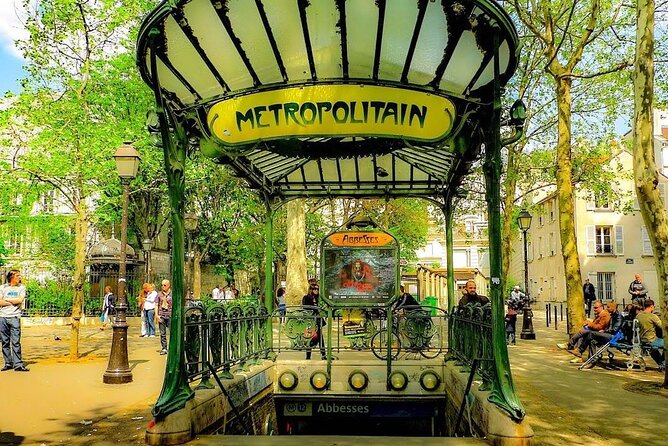
- Place des Abbesses and the Red Abbess story
- Wall of Love: multilingual romance, quick and iconic
- Le Bateau-Lavoir: where early 1900s artists lived on
- Dalida’s former home and a dedicated statue
- La Maison Rose and the Montmartre vibe you came for
- Vigne du Clos Montmartre: a real working vineyard moment
- La Bonne Franquette: a historic café atmosphere stop
- Sacré-Cœur at the end: architecture plus the big Paris view
- Pace, crowds, and how to make this walk feel easy
- Price and value: what $59.28 really buys you
- Who this tour suits best
- Should you book this Montmartre tour?
- FAQ
- How long is the Paris Small Group Moulin Rouge & Sacré-Cœur Montmartre Tour?
- What does the tour include?
- Is the Moulin Rouge show ticket included?
- Are there admission fees for the other stops?
- What language is the tour offered in?
- How big is the group?
- Where does the tour start and end?
- Is the tour available for most travelers?
- What if the weather is bad?
- Do I get a ticket on my phone?
Key highlights you’ll feel right away
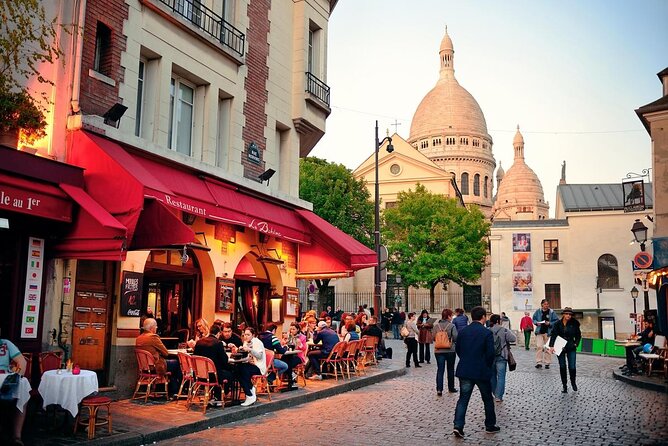
- Small group size (max 15): more attention and a less chaotic vibe on tight streets.
- Amélie and art stop sequence: movie references plus early 1900s creators in one loop.
- Sacré-Cœur viewpoint time: you get a real moment for the skyline, not just a quick pass-by.
- Photo-ready Montmartre corners: the pink house, love wall, and vineyard are easy wins.
- English guide: with a pace that can flex when people want to pause or take a breather.
Why the 2-hour Montmartre loop is a smart idea
This is one of those Paris walks that gives you direction, not just sightseeing. In roughly two hours you cover a dense pocket of Montmartre, so you come away with a sense of layout: where the climbs start, where the famous viewpoints land, and which corners feel like a separate little neighborhood inside the city.
At this price point, you’re paying mainly for two things: a human guide and a tight route. Many Montmartre self-walks turn into wandering. Here, the stops are sequenced so you’re not zig-zagging to chase headlines. You’ll also notice that most of the stops are quick exterior stops or public landmarks, which helps the tour stay on time.
You can also read our reviews of more tours and experiences in Paris.



Starting at Place Blanche: easy to reach, easy to orient

You meet at 5 Pl. Blanche, 75009 Paris, a starting point that’s easy to get to by public transport. That matters because day one in Paris can be messy: you want your first big experience to be simple to find.
You’ll also feel the tour’s “Montmartre energy” right away. You’re starting near the cabaret-adjacent streets, then the route shifts into the older, artsy lanes. If you like the idea of easing in with a landmark everyone recognizes, this start is a good move.
One practical note: the tour ends at 35 Rue du Chevalier de la Barre, 75018 Paris. Start and end points aren’t the same, so plan a little time to get back to your hotel or next stop on your own.
Moulin Rouge stop: famous from outside, ticket timing from you
The first major stop is Moulin Rouge, where you’ll learn about the legendary cabaret. This is a short visit, about 10 minutes, and the show admission is not included.
So here’s how to think about it. You’re not buying a full performance ticket through the tour. Instead, you’re getting context: why this place became a symbol, and how it fits into the Montmartre story. If you want an actual show experience, you’d handle that separately, but the tour still sets the stage so the cabaret feels less like a photo-op and more like a piece of Paris culture.
Café des Deux Moulins and the Amélie connection
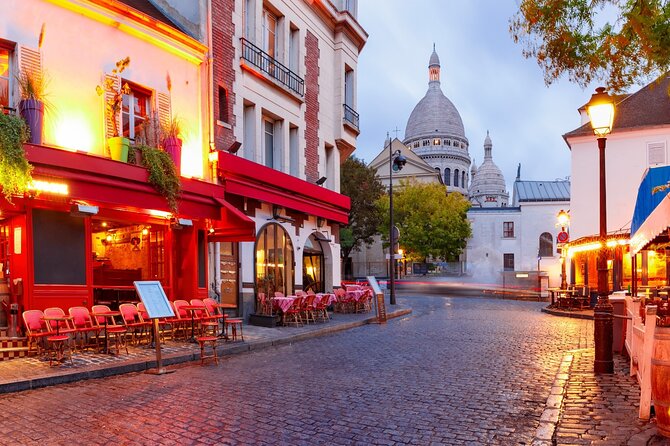
Next you’ll stop at Café des Deux Moulins, with about 5 minutes here. This is the famous spot from the film Amélie, and you’ll hear about the very place associated with the film’s character and the café’s link to that story world.
What I like about this stop is the payoff. You’ll see the spot quickly, then your guide ties it to the wider Montmartre charm: small streets, old cafés, and a neighborhood that has been turning into art material for decades.
Even though it’s short, it’s the kind of stop that makes you slow down for a second and look around, because the setting feels specific, not generic.
Le Moulin de la Galette: windmills that shaped the art look
Then comes Le Moulin de la Galette, about 5 minutes. This is the historic windmill Montmartre is famous for, and it has been immortalized in paintings by Renoir and other artists.
A key thing to remember: you’re mostly outside here. So this isn’t about ticketed museum time. It’s about seeing why painters loved this hill. Windmills, streets, and light all play a role, and having a guide helps you notice what you’d otherwise ignore.






Place des Abbesses and the Red Abbess story
At Place des Abbesses, you get a richer history moment—about 10 minutes total. You’ll learn about Saint Denis, the first bishop of Paris, and his dramatic martyrdom. You’ll also hear about the Red Abbess, and how that church differs from other Paris churches.
This stop is valuable because it breaks the “only art and romance” pattern. Montmartre isn’t just a backdrop for painters and movies. It’s also tied to early Paris religious history, and your guide’s story helps connect the stones to the era.
Wall of Love: multilingual romance, quick and iconic
The Wall of Love (Le Mur des Je t’aime) stop lasts about 10 minutes. It’s romantic, artistic, and simple to enjoy: the phrase I love you appears in many languages, making the wall a message about connection rather than just a single landmark.
For most people, this is a “stand, read, smile, take a picture, move on” stop. But don’t underestimate it. In a neighborhood known for high drama cabarets and serious art history, it’s a nice tonal reset.
Le Bateau-Lavoir: where early 1900s artists lived on
Then you visit Le Bateau-Lavoir, with about 15 minutes. This was an artists’ residence, and your guide points out why it mattered in the early 20th-century art scene. The names tied to the spot include Pablo Picasso and Amedeo Modigliani.
What makes this worth more than a quick glance is the storytelling around the neighborhood’s artist ecosystem: how creative people clustered, how spaces shaped work, and why Montmartre became a magnet.
This stop is also a good example of why a guided walk helps. You can read a plaque yourself, sure. But a guide can point out what the place suggests about the people who were there—without turning it into a lecture.
Dalida’s former home and a dedicated statue
Next up is La Maison de Dalida, then the Dalida statue. You’ll spend roughly 10 minutes at her former home and about 10 minutes at the bust.
This is one of the tour’s smartest touches if you like popular culture as much as fine art. Dalida is a clear Montmartre figure, and the stop helps you see how the neighborhood keeps producing icons long after painters and windmills became the main story.
If you’re someone who likes to understand a place as a timeline—rather than a single era—these Dalida stops add a later chapter.
La Maison Rose and the Montmartre vibe you came for
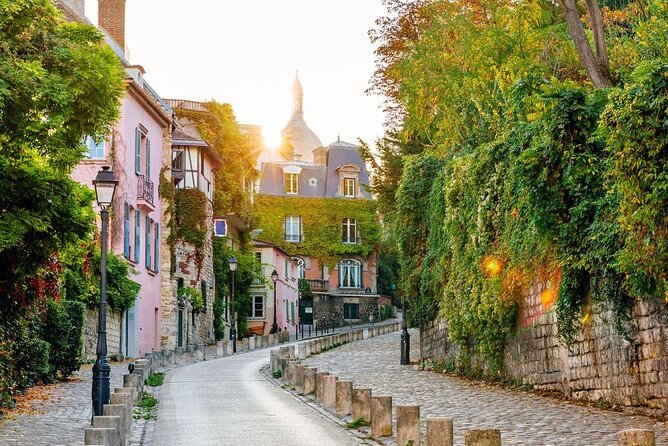
You’ll stop at La Maison Rose for about 10 minutes. It’s exactly what it sounds like: a pink house that photographers love and artists have long used as inspiration.
This is a straightforward photo stop, but it’s also a nice reminder that Montmartre’s visual identity isn’t only monumental churches and famous cabarets. Small buildings and color choices matter here, and the guide helps you get the best angle for photos without you wandering.
Vigne du Clos Montmartre: a real working vineyard moment
Then comes one of the more surprising stops: Vigne du Clos Montmartre, about 5 minutes. It’s a vineyard tucked into the city, producing local wine.
Even with only a few minutes, this is a standout because it shifts your mental image of Montmartre. You’re used to streets and stairs. Here you see that the hill also has agricultural roots and a community link to winemaking.
It’s the kind of moment that makes the whole tour feel more lived-in and less like a checklist.
La Bonne Franquette: a historic café atmosphere stop
Your route continues to La Bonne Franquette, about 10 minutes. This is a historic café in Montmartre where famous artists like Van Gogh and Toulouse-Lautrec once gathered.
A café stop on a walking tour can feel like filler, but this one works because your guide ties it to the artist social scene: where people met, argued, sketched, and swapped ideas. Even if you don’t go inside long, you’ll understand why this area became a magnet for creative personalities.
If it’s cold or you’re tired, you may appreciate this as a chance to reset before the big climb to Sacré-Cœur.
Sacré-Cœur at the end: architecture plus the big Paris view
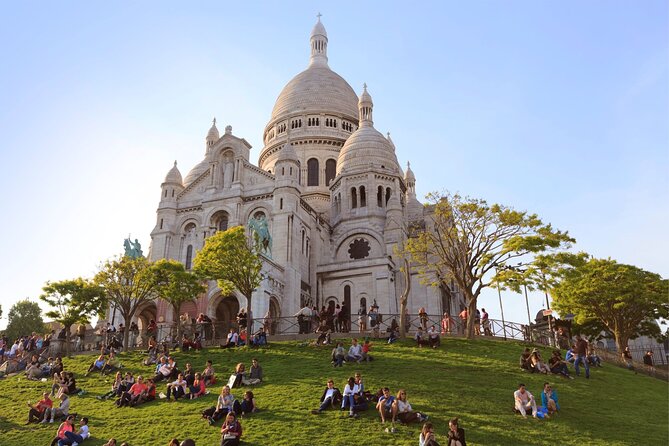
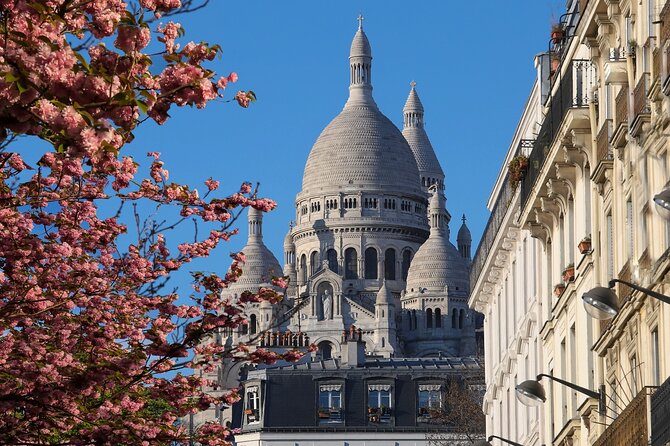
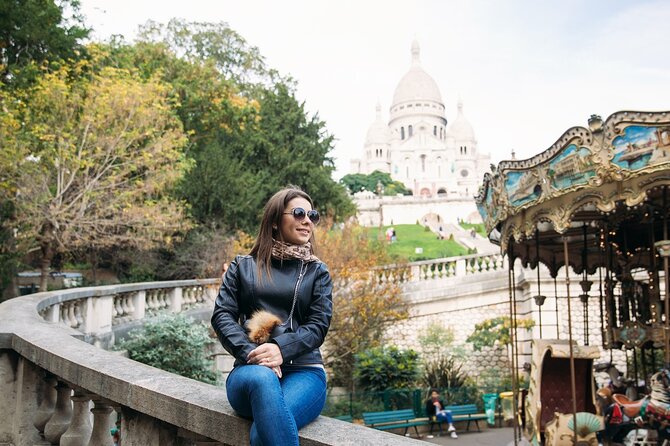
The final stop is Basilique du Sacré-Cœur de Montmartre, about 15 minutes. This is where you get both architecture and the panoramic view from the hilltop.
It’s also where the “stairs and climb” reality shows up. One tip from the vibe of the route: wear shoes that handle uneven pavement and take breaks when you need them. Some people like the so-called 300-stair challenge toward the dome. If that’s your style, do it. If not, pace yourself and focus on the view.
Sacré-Cœur can be crowded, especially on clear days. So think strategically: stand where you can see, then move to a better angle for photos.
Pace, crowds, and how to make this walk feel easy
Most people are fine with this tour, but it’s still a walking route with uphill sections. Expect stairs and incline, and build your comfort around that. If you’re with kids or older family members, the small group size helps because the guide can slow down and keep everyone together.
Your best comfort move:
- Wear comfortable, supportive shoes.
- Bring a layer if it’s chilly, since Montmartre hills can feel windier than the lower streets.
- If the crowds make it hard to hear, position yourself closer to your guide when they stop talking, then step back to take photos.
A lot of guides can run a route. The best ones make you feel like you’re getting a guided walk that still respects your energy level. Several guides tied to this tour have been praised for that exact balance: warm tone, good pacing, and the ability to handle crowds without losing the thread of the story.
Price and value: what $59.28 really buys you
At $59.28 per person for about two hours, you’re paying for the guided route and the time-saving structure. The tour includes the guide, and it uses a stop list where most sights are free at the time you visit.
The exception is the Moulin Rouge show side of things: the show ticket is not included. That means you shouldn’t book expecting a full performance in that price. What you do get is the context and the famous façade moment, which can still be valuable if you want the background before you spend money on a separate ticket.
Also, with a maximum group size of 15, you’re less likely to feel like one extra body in a sea of people. For a neighborhood like Montmartre—where streets get tight—small group size is not a luxury. It’s part of the experience.
Finally, you’ll receive a mobile ticket, which makes last-minute logistics simpler than older paper-ticket systems.
Who this tour suits best
This tour is a strong match if you want:
- Montmartre in a short time without getting lost.
- A guide who ties famous places to stories, from cabaret to early art to pop culture.
- More than just photos, but you still want plenty of visual stops.
It’s especially good for first-time Paris visitors who already plan to hit the big icons but want a different side of the city. It also works for returning visitors who feel they know Paris landmarks yet want a better sense of Montmartre’s local timeline.
Should you book this Montmartre tour?
I’d book it if you want a guided Montmartre walk that hits the big names and the meaningful side streets without turning into an all-day hike. The route makes sense, most stops don’t require extra tickets, and the small-group setup means the guide can keep the storytelling clear and personal.
Skip it or adjust expectations if you’re strictly trying to do only low-energy sightseeing. There’s uphill movement and stairs, and on crowded days you’ll want to be patient and ready to stand in the right spot to hear.
If you’re planning your Paris days with practical pacing, this is a good value use of time: you get orientation, standout photo moments, and a Sacré-Cœur viewpoint finale that puts a finishing period on the Montmartre chapter.
FAQ
How long is the Paris Small Group Moulin Rouge & Sacré-Cœur Montmartre Tour?
The tour is about 2 hours.
What does the tour include?
The tour includes a guide.
Is the Moulin Rouge show ticket included?
No. The Moulin Rouge show admission ticket is not included.
Are there admission fees for the other stops?
The tour lists most other stops (like Café des Deux Moulins, Le Moulin de la Galette, Le Mur des Je t’aime, Le Bateau-Lavoir, La Bonne Franquette, and Sacré-Cœur) as having free admission for the visit time stated.
What language is the tour offered in?
The tour is offered in English.
How big is the group?
The group maximum is 15 travelers.
Where does the tour start and end?
It starts at 5 Pl. Blanche, 75009 Paris and ends at 35 Rue du Chevalier de la Barre, 75018 Paris.
Is the tour available for most travelers?
Yes, most travelers can participate.
What if the weather is bad?
This experience requires good weather. If canceled due to poor weather, you’ll be offered a different date or a full refund.
Do I get a ticket on my phone?
Yes, the tour uses a mobile ticket.