REVIEW · PARIS
Paris by Night Walking Tour: Ghosts, Mysteries and Legends
Book on Viator →Operated by City Wonders Ltd · Bookable on Viator
Paris turns darker after sunset. This 2-hour night walk threads together ghostly legends and real historical violence as you move between key spots tied to executions and massacres. You’ll start by the Pont Neuf area and end near Hôtel de Ville, with your guide keeping the focus on the city’s unnervingly complicated past.
What I like most is the way the tour uses the night to make familiar landmarks feel unfamiliar. Guides such as Sophia and Thelma (at least in the experiences shared) lean into storytelling and keep a steady pace, turning street corners into scenes. I also appreciate that the group is kept small (up to 20 people), which makes it easier to ask questions and stay engaged.
One thing to consider: this is not a full-on supernatural “ghost show.” A number of people go in expecting more spooky, and some leave feeling it’s mostly dark history with a light sprinkle of legend instead of true hauntings.
In This Review
- Key Things To Know Before You Go
- What You’re Really Signing Up For: Dark Paris After Hours
- Price and Value: Why $18.10 Can Make Sense
- The Route Backbone: How the Night Walk Is Laid Out
- Starting Near Pont Neuf: Meeting at the Henri IV Statue
- Hotel de la Conciergerie: Marie Antoinette’s Prison-Linked Stop
- Square du Vert-Galant: Henry IV’s Legacy and the Templars
- Saint-Germain-l’Auxerrois: The Church Linked to 1572
- Île de la Cité: The Island Beneath the Footsteps
- Palais de Justice: Where Trials Turned Into Performance
- Place de l’Hôtel de Ville: Executions and Royal Celebrations in One Square
- How the “Ghost” Feel Works Without Being a Full Scare Show
- Walking Time, Comfort, and How to Prepare
- Is It Worth It If You Already Know French History?
- Who Should Book This Tour (and Who Might Skip It)
- Should You Book This Paris by Night Walking Tour?
- FAQ
- How long is the Paris by Night Walking Tour?
- What is the price per person?
- Where does the tour start?
- Where does the tour end?
- Is the tour offered in English?
- How large is the group?
- What is included in the ticket price?
- Are there any admission tickets involved at the key sites?
- Do I need hotel pickup or drop-off?
- Is the tour good for most people to participate in?
Key Things To Know Before You Go
- Small group pace: capped at 20 people, so it’s not a cattle-line with a distant guide.
- Night walking changes the feel: the same streets hit differently after dark.
- Conciergerie focus: you pass the Hôtel de la Conciergerie, tied to Marie Antoinette’s imprisonment.
- Big events, specific locations: you hit places tied to major episodes like the French Revolution and St. Bartholomew’s Day.
- Often more history than horror: expect murder, massacres, and executions, not jump scares.
- Comfortable shoes matter: plan for about 10k steps over roughly 2 hours.
What You’re Really Signing Up For: Dark Paris After Hours
If you love Paris for its romance, this tour is the fun contrast. You’re not strolling through postcard scenes. You’re walking through streets where politics, religion, and brutal punishment all left marks—then your guide puts them into a story.
The “Ghosts, Mysteries and Legends” label makes you think the supernatural will be front-and-center. In practice, the experience leans heavily toward crime-and-punishment history, with legends and chilling interpretation used to link scenes. That can be a win if you’re after atmosphere and human drama. It can also feel like a mismatch if you came for spooky spirits in the dark.
The best version of this tour works because Paris is a layered city. By night, buildings that look elegant by day take on a sterner mood. And because you’re walking with a guide, you get the context that makes the stories stick—especially when you reach places tied to trials, executions, and massacres.
You can also read our reviews of more walking tours in Paris



Price and Value: Why $18.10 Can Make Sense
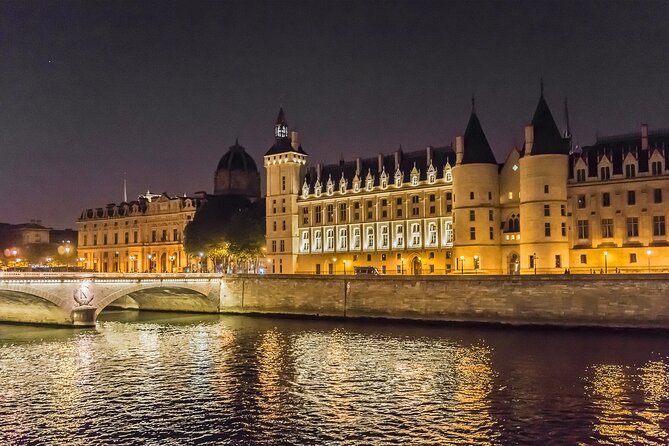
At about $18.10 per person for roughly 2 hours, this is priced like a “do it and enjoy it” evening add-on. The value comes from three practical parts: you get a local guide, you get a small group, and you get a tight route through high-impact locations without having to plan it yourself.
You’re also paying for time efficiency. Instead of figuring out how to string together the Conciergerie area, churches tied to religious violence, and the political center around justice and Hôtel de Ville, the tour handles the sequencing. And since it’s booked fairly in advance, it’s also the kind of tour that tends to fill up when people want a last-minute evening plan.
Here’s the balanced truth: if you already know French history well, you may feel like you’re getting familiar facts with an added story voice. If you’re a first-timer or you’ve mostly seen Paris through the “lights” lens, the tour can feel like a fast education in a side of the city you probably haven’t explored before.
The Route Backbone: How the Night Walk Is Laid Out
The walk follows a clear arc: you start near the Pont Neuf area, move through smaller stops and key sites, then end near Place de l’Hôtel de Ville—a fitting finish because it’s a civic square tied to celebration and execution in the same centuries-long story.
Along the way, you’ll cover eras from the French Revolution to the Paris Commune and the darker period of Nazi occupation, all stitched together with murder, war, and plague as recurring themes. That broad sweep is part of the appeal: it helps you see the through-line of instability and power struggles rather than treating events as isolated chapters.
One practical tip: expect a lot of guided walking between points. If you’re hoping that every minute is spooky theatre, you might find some stretches feel like transit. Still, the stops themselves are the payoff, and they’re placed in ways that keep the story moving.
Starting Near Pont Neuf: Meeting at the Henri IV Statue
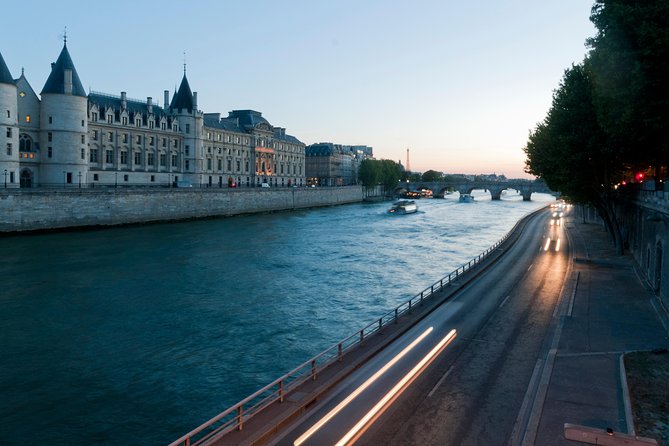
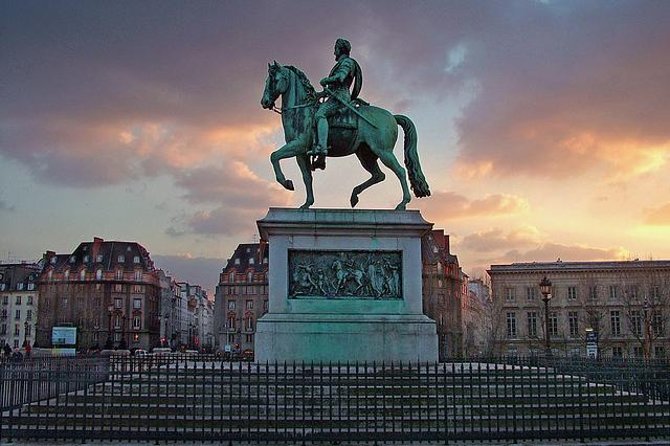
You’ll begin at the Equestrian Statue of Henri IV, at 15 Pl. du Pont Neuf, 75001 Paris. This is a smart start point because it’s central and easy to anchor yourself to. It also puts you close to where the Seine area breathes life into Paris at night—cool air, street noise, and that sense that the city is switching personalities.
From a comfort standpoint, starting at a big visible landmark helps. You’re less likely to end up circling the same block. And because your meeting point is near public transport, it’s simpler to pair this with dinner elsewhere rather than planning your whole evening around logistics.
As the group forms, your guide typically sets expectations and frames the theme: Paris as the City of Light on top, but violence and fear underneath.
Hotel de la Conciergerie: Marie Antoinette’s Prison-Linked Stop
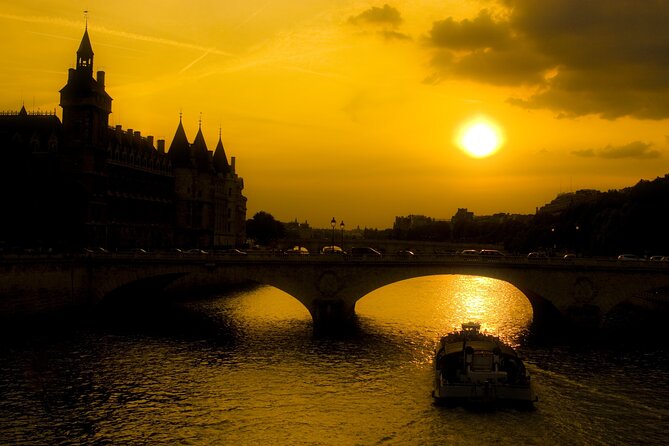
One of the biggest “wow” moments is the Hôtel de la Conciergerie area, where Marie Antoinette was once imprisoned. Even if you’ve only got a passing familiarity with her story, seeing the setting in a nighttime walk gives it extra weight.
This is the kind of stop that works well on a guided tour because the building’s role in the French Revolution context matters. By day it’s just architecture you pass through. At night, with a guide explaining why it mattered—who was held there, what trials and punishments were tied to the period—it becomes part of the emotional timeline of the revolution story.
If you love history that connects to individuals, this will likely land for you. It’s also one of those moments that can feel like a scene from a film, without you needing to hunt down extra tickets or museums just to understand the place.
You can also read our reviews of more evening experiences in Paris






Square du Vert-Galant: Henry IV’s Legacy and the Templars
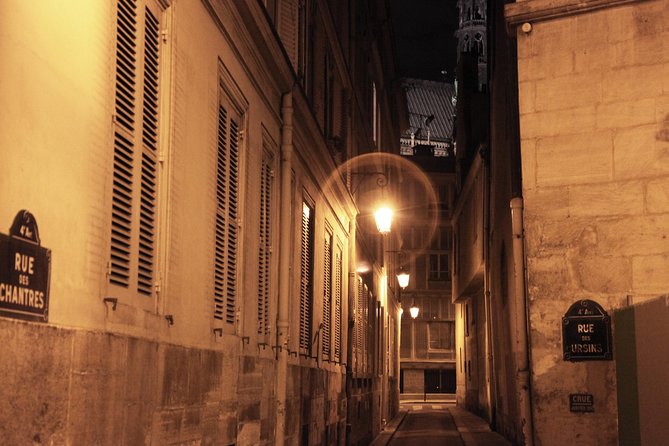
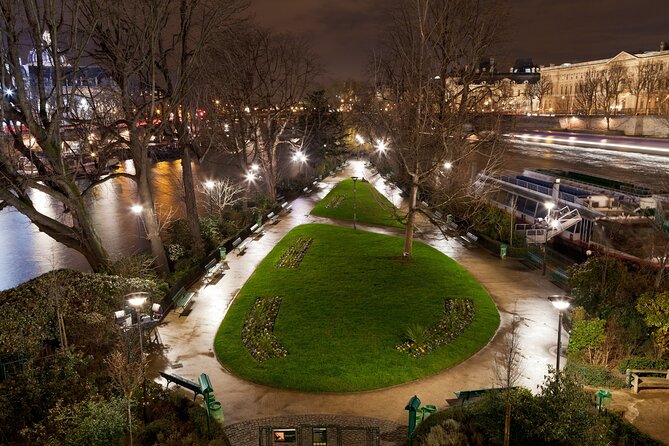
Next, you’ll head to Square du Vert-Galant, a small park area connected to the Pont Neuf neighborhood. The site is tied to Henry IV and his mistresses, and it has been described as an ecological green space.
Then your guide turns the mood. Nearby storytelling shifts to the Templars, including the scene when the last Knights Templar was burned at the stake. It’s a striking contrast: romance-and-history in the same breath, then suddenly you’re in a grim snapshot of religious power and punishment.
This stop is also useful for first-time visitors because it’s a place you might never seek out on your own. It helps you learn Paris through “why this spot exists,” not just “what famous thing is nearby.”
Saint-Germain-l’Auxerrois: The Church Linked to 1572
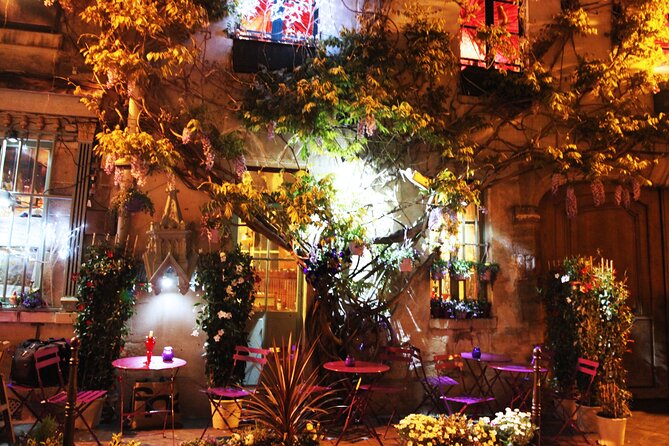
You’ll visit Eglise St-Germain l’Auxerrois, a church dating to the 7th century. The story attached to this stop is the St. Bartholomew’s Day Massacre in 1572, and you’ll hear how around 30,000 Huguenots were murdered.
This is one of the stops where the tour’s dark-history DNA is most obvious. The church becomes a key stage for the religious violence that shaped France. And because this is a famous event that still has a heavy emotional footprint, it often feels more intense when delivered at night—partly because the setting encourages quiet attention.
A drawback for some people: if you want supernatural ghost stories, this kind of content can feel like a history lecture with atmosphere. But if your goal is to understand why Paris became politically unstable and religiously fractured, the stop does real work.
Île de la Cité: The Island Beneath the Footsteps
Your route also includes passing Île de la Cité, the central island in the Seine. You’ll hear that in the 4th century it was the site of the Roman governor’s fortress.
This stop isn’t about a single dramatic execution. It’s more about building the timeline. It reminds you that Paris wasn’t always the capital of art and fashion. Long before the romantics arrived, the city was already a strategic center for power—and power always attracts conflict.
If you like “how did this place become what it is” explanations, this segment helps you connect the story to geography. It’s also an easy moment to reorient your mental map as you move toward the justice and civic areas later.
Palais de Justice: Where Trials Turned Into Performance
At Palais de Justice de Paris, the tour zooms in on punishment and spectacle. You’ll hear about how people were judged during the French Revolution and how some were sentenced to the guillotine, including chilling details about crowds watching.
This is a powerful location to cover on foot because the justice center isn’t hidden. It’s part of the city’s visible identity. Your guide’s job here is to add the missing layer: what it felt like when the law wasn’t about abstract justice but about public demonstration.
There’s also an extra “Paris factor” at this stop: the building is described as being awarded the Grand Prix de l’Empereur for the greatest work of art produced in France in that decade. That kind of detail matters because it underlines the central contrast of the tour. Beauty and brutality can share the same city block.
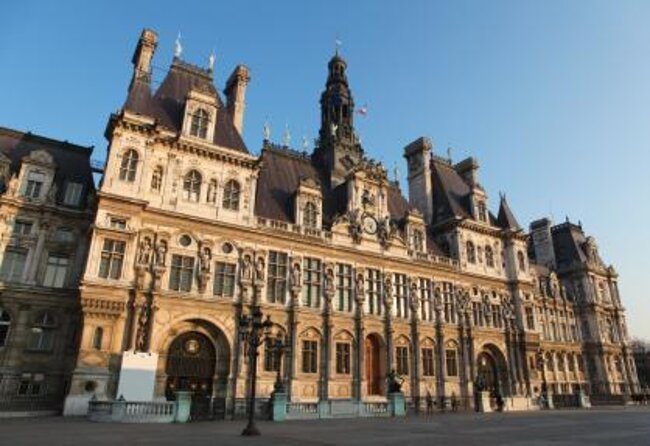
Place de l’Hôtel de Ville: Executions and Royal Celebrations in One Square
The walk ends near Place de l’Hôtel de Ville, tied to the Hotel La Ville address at 70 Rue de Rivoli, 75004 Paris. This is a strong finish because the square’s role spans centuries of civic life—from municipal celebration to major executions.
You’ll learn that Ravaillac and La Brinvilliers were among those executed there, with executions said to have taken place from 1310 to 1830. In other words, it’s not just a single shocking moment—it’s a long-running page of political punishment attached to a place locals know.
This kind of ending is great for your memory. You close the loop with a location you can picture easily when you’re later walking around on your own. It turns your final nighttime stroll into a guided “aftertaste,” where you understand what you’re seeing rather than just passing through.
How the “Ghost” Feel Works Without Being a Full Scare Show
A theme running through the feedback on this kind of tour is expectation management. Some people come hoping for true ghosts and feel disappointed. Others love it precisely because it gives them a new angle on familiar Paris, using legends as a thread through real horror.
What I think is the practical way to approach it:
- If you want jump-scare scares, you’ll likely want a different kind of tour.
- If you want dark stories, creepy atmosphere, and a guided explanation of the city’s worst nights, you’ll probably enjoy yourself.
Guides vary, and names come up often. People describe Sophia and Daniel as entertaining with storytelling. Sylvia is mentioned as friendly and personable. Ami is noted for connecting legends together. The quality matters because the tour’s “spooky” element depends on the guide’s pacing and tone.
Also, don’t ignore the simple effect of night. Even a straightforward story about executions can land harder when you’re standing in the dark, hearing details about crowds, law, and fear. That’s not magic. It’s human psychology in a city with great shadows.
Walking Time, Comfort, and How to Prepare
This tour is short, but it adds up. Plan for about 10,000 steps over roughly two hours, and keep your footwear practical. The route is not described as a sit-and-stare museum visit. It’s a walking evening, with frequent turns and street-to-street transitions.
If you’re sensitive to cold, dress for it. Night in Paris can change quickly. I’d rather over-dress than spend half the tour shifting my legs and thinking about how uncomfortable I am.
One more thing: because some stops may feel like they’re spaced by routine walking, bring a mindset that this is a guided story chain. The guide should connect the locations. If they don’t for you personally, the time between stops can feel thin.
Is It Worth It If You Already Know French History?
Here’s the honest trade-off. If you’ve studied or read a lot about the French Revolution, the massacre era, and related figures, you may already know pieces of what’s being said. In that case, you might feel like the tour adds color rather than new information.
But even if you know the big facts, walking past the specific locations helps a different kind of learning. It turns textbook names into real geography. You’ll still come away with a better sense of where power and punishment actually happened—especially around justice and civic squares.
If you’re a history-first traveler, you might still enjoy it. Just keep expectations realistic: it’s not a university seminar, and the “legend” portion may not satisfy someone looking for a lot of supernatural plot.
Who Should Book This Tour (and Who Might Skip It)
This experience fits best when you’re:
- In Paris for the first time and want a dark counterpoint to the usual highlights
- Interested in how politics and religion shaped everyday spaces in the city
- Comfortable walking and listening for a solid two hours
- Looking for an inexpensive guided evening plan
You might skip it if you:
- Want a full ghost-and-mystery production with heavy supernatural storytelling
- Hate walking long gaps between stops
- Already know most of the major Revolutionary-era and massacre-era background
It’s also a solid option for teens and older kids who like macabre stories but can handle intense themes. Still, it’s not described as kids-focused, so think about your group.
Should You Book This Paris by Night Walking Tour?
I’d book it if your goal is to see Paris as a place where beauty and violence share the same streets. The tour is good value, keeps to a manageable length, and hits specific sites—Conciergerie linked to Marie Antoinette, Square du Vert-Galant, Saint-Germain-l’Auxerrois, Palais de Justice, and the Hôtel de Ville area. That’s a strong set of locations for a low-cost evening.
I wouldn’t book it if you’re strictly hunting for ghosts in the spooky, supernatural sense. The “ghosts and legends” angle often shows up as atmosphere and interpretation around real historical events, not as a heavy paranormal script.
If you go in for dark history told well at night, you’ll likely have a fun, memorable walk. If you go in for real scares, you may feel shortchanged.
FAQ
How long is the Paris by Night Walking Tour?
The tour lasts about 2 hours.
What is the price per person?
The price is listed as $18.10 per person.
Where does the tour start?
It starts at the Equestrian Statue of Henri IV, 15 Pl. du Pont Neuf, 75001 Paris.
Where does the tour end?
It ends near Hotel La Ville, 70 Rue de Rivoli, 75004 Paris.
Is the tour offered in English?
Yes, it’s offered in English.
How large is the group?
The tour has a maximum of 20 travelers.
What is included in the ticket price?
A local guide is included.
Are there any admission tickets involved at the key sites?
Some stops are listed as admission ticket free, such as Square du Vert-Galant and Eglise St-Germain l’Auxerrois.
Do I need hotel pickup or drop-off?
No. Hotel pickup and drop-off are not included.
Is the tour good for most people to participate in?
The information says most travelers can participate.