REVIEW · PARIS
Sports, fun and educational discovery of Paris
Book on Viator →Operated by Paris Running Tours · Bookable on Viator
Paris looks different when you run it. This is a private, guided running tour that strings together big-name sights with real explanations, from the Louvre to Île de la Cité, without the usual museum slog. I really like the hotel pickup convenience, and I also love that the guide builds in photo stops so the run doesn’t turn into just exercise.
The main thing to consider is that this is a running tour: you’ll need moderate fitness and you may spend time moving between sites instead of lingering inside. Also, most stops are viewed from the outside (with the rare chance of a short interior visit depending on timing).
In This Review
- Key things to know before you go
- A Private Paris Run Through the Classics
- Pickup, Pace, and What Private Really Means
- Louvre Museum Area: Courtyards, Passages, and What to Notice
- Tuileries Gardens and Place de la Concorde: A Fun Stretch of Green and Square
- Palais Garnier and the 19th-Century Change in the Air
- Running Along the Seine: Île de la Cité and the Best Kind of Concentration
- Musée d’Orsay, Eiffel Tower Views, and the West-End Snap
- Palais-Royal, Pont Neuf, and a Possible Short Look at Petit Palais
- What You Actually Get (Besides Running): Water, Photos, and Printed Context
- Price and Timing: Is It Good Value for Paris?
- Who Should Book This (and Who Might Want a Different Style)
- Should You Book This Paris Running Tour?
- FAQ
- FAQ
- Is this tour private?
- How long is the Paris running tour?
- What does pickup include?
- Do I need to pay for museum admissions?
- Will we go inside the Louvre or Musée d’Orsay?
- What stops will we see?
- Is this tour in English?
- What fitness level do I need?
- Are photos and water included?
- What if the weather is bad or I need to cancel?
Key things to know before you go
- Private tour for just your group: your pace and your questions drive the experience.
- Pickup from your Paris hotel or apartment lobby: less time herding yourself across the city.
- Photos handled for you: a camera is part of the tour, with images sent later via Dropbox.
- Mostly outside viewing: lots of stops, but you generally won’t enter major museums.
- Easy to match different runners: one guide example is JC, who kept an easy pace for a non-runner while still sharing the stories.
A Private Paris Run Through the Classics
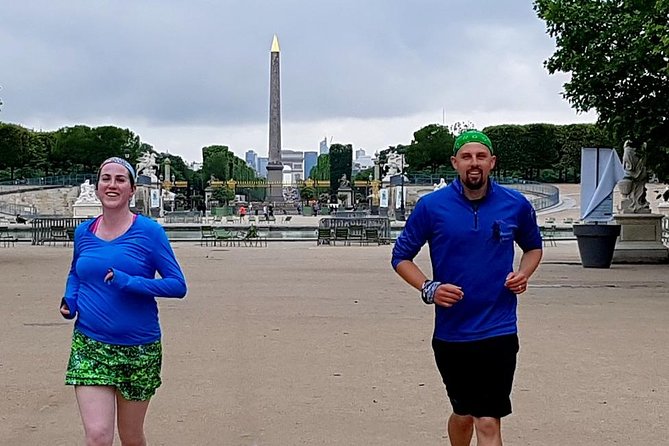
If Paris feels like it’s always moving too fast, this tour is a smart workaround. You still cover ground, but you’re moving with a guide who’s pointing out what matters—then giving you short, practical moments to photograph what you want. You get the payoff of seeing major landmarks without having to plan your own route hop by hop.
This is also a true private format. That matters more than you might think. Instead of squeezing into someone else’s rhythm, you can ask questions, slow down, or pause for pictures. It’s built for your group size, your comfort level, and your “we’d like to see this, not just pass it” mindset.
And yes, you’re running. That’s the point. But it’s not presented as some hardcore test. The tour is best when you want a bit of movement with sightseeing—like turning a casual morning out into something more memorable than a bus ride.
You can also read our reviews of more tours and experiences in Paris.


Pickup, Pace, and What Private Really Means
Pickup starts at your place. The guide comes to meet you at your hotel lobby, or at the bottom of your apartment building if you’re in a rental. That makes a big difference in Paris, where getting across neighborhoods can eat your time.
The tour is also described as running-friendly for people with moderate physical fitness. Translation: you shouldn’t sign up if you’re expecting a slow walk-and-stop-every-five-minutes style tour. Still, private format means pacing can be adjusted. One clear example from the guide experience is JC running at an easy pace so a non-runner could keep up while enjoying the stories and the sights.
Two more practical points that help your morning go smoothly:
- You’ll have water. Bottled water is included, with extra help if it’s hot.
- You’ll have maps and historical pictures. The guide carries documents during the tour and gives them to you at the end, so you can keep your bearings after you stop running.
If you’re the type who hates waiting for trains, hunting for meeting points, or coordinating with strangers, this pickup-and-private setup is exactly the kind of convenience that makes the price feel fair.
Louvre Museum Area: Courtyards, Passages, and What to Notice
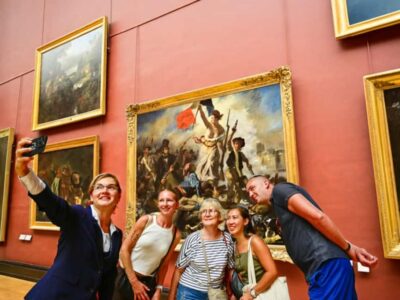
Your run begins at the Louvre Museum area. The focus isn’t on exhausting you with galleries. Instead, you learn the Louvre’s history and the major facts, plus you get to see some appealing passages and courtyards up close.
Even if you’re not going inside, the guide’s framing changes the way you see the space. The Louvre is huge and easy to misread if you only see it from a distance. Here, you get context first, so the architecture and layout make more sense. And because you’re on foot and moving, you experience the site at street level, which feels more “Paris” than museum-only sightseeing.
Timing is tight by design. This stop is brief, and the value comes from the guide’s quick history plus your ability to get a few standout photos without a long line or ticket mission.
Tuileries Gardens and Place de la Concorde: A Fun Stretch of Green and Square
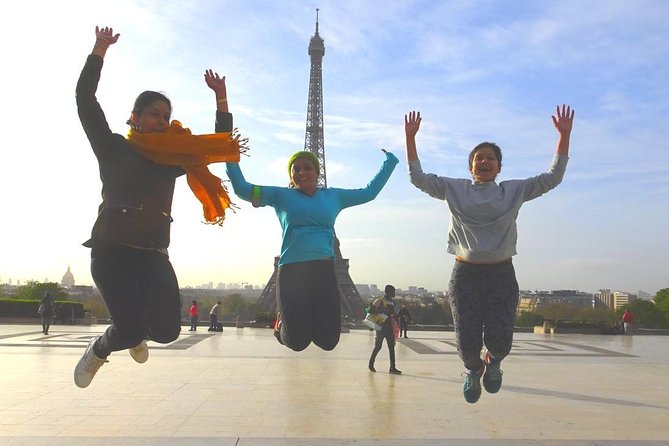
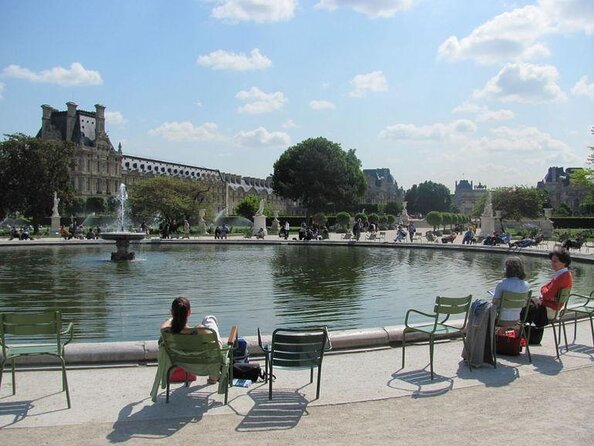
Next you head to Jardin des Tuileries. This is where the tour becomes physically fun. The idea is to run inside the park—so you get a calmer stretch than running on major traffic roads. You also learn about the castle and the garden’s role, which gives you something to connect the green space to.
Then you move on to Place de la Concorde, one of those squares where the story behind the stone matters. You’ll learn the stories linked to the square, take pictures, and enjoy the open space. Concorde is famous on postcards, but the guide’s explanations help you see it as more than a landmark you glance at while walking elsewhere.
For many visitors, these stops are where the tour earns its “fun” label. It’s not just “run past famous things.” It’s run through a mood: park calm, then big Paris square energy.
Palais Garnier and the 19th-Century Change in the Air
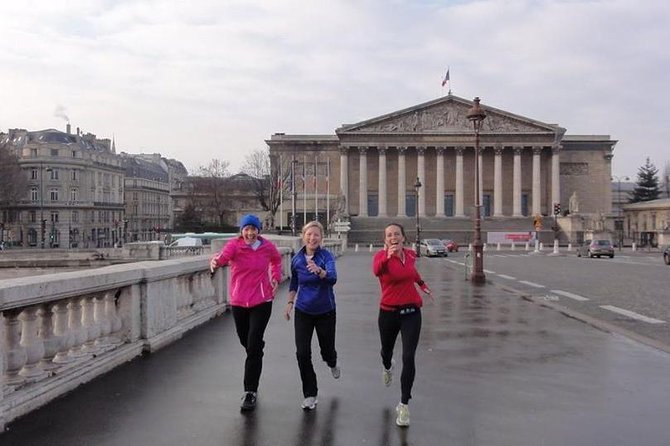
From the Concorde area, the route heads to Palais Garnier (the Paris Opera). You’ll admire the views on the Opera and learn about big changes that happened during the 19th century.
This is the kind of stop that works well on a running tour because you get the exterior impact without the time cost of a full museum visit. The building is designed to impress from the outside, and with a guide, it’s easier to understand what you’re looking at instead of just admiring the façade.
If you’re an architecture person, this is a good payoff: you can connect details to the historical shifts you’re hearing about. If you’re not, it still works because the guide focuses on big picture context rather than overwhelming technical facts.




Running Along the Seine: Île de la Cité and the Best Kind of Concentration
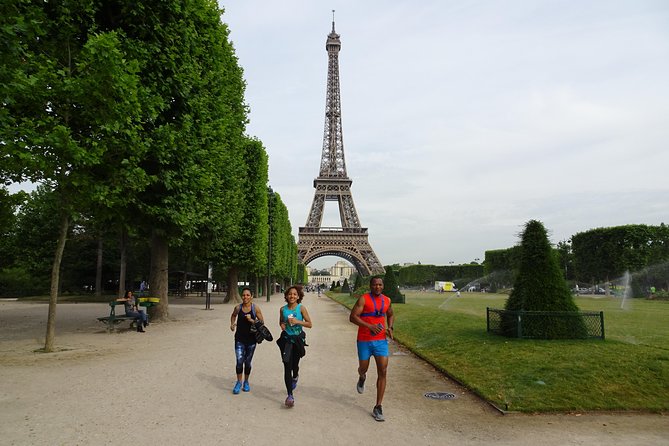
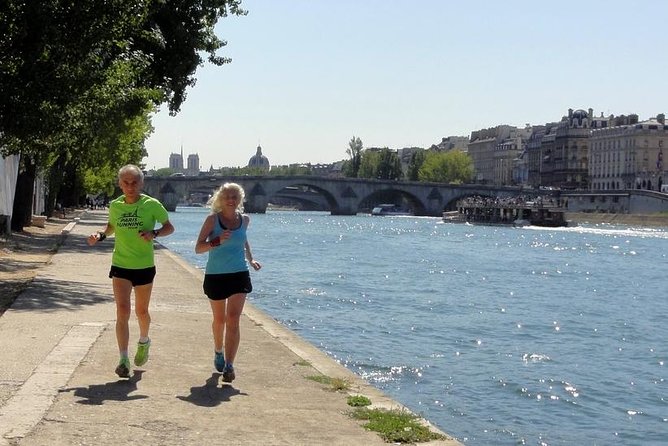
The next phase is built around a river running stretch. This part of the route is meant to be the payoff run—getting the feeling of central Paris while you receive a lot of information from the guide along the way.
You then reach Île de la Cité, one of the most important historical islands in the city. This stop includes multiple sites and short learning breaks, including:
- Conciergerie
- Sainte-Chapelle
- Palais de Justice
- Notre-Dame
- Marché aux fleurs
- Hôtel-Dieu
- Préfecture de Police
Because the tour is time-limited, you’re not doing a full day of island exploring. But you do get a focused overview, with enough stops to give the place structure. The guide helps you connect the dots between the religious, legal, and everyday history layered on the island.
A big plus: this section tends to help you understand why people plan entire days here. Even in a short window, you start to see the island as a living crossroads rather than just one famous church.
Musée d’Orsay, Eiffel Tower Views, and the West-End Snap
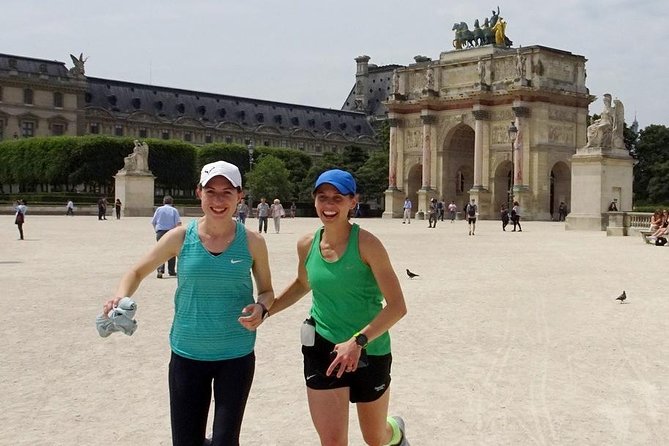
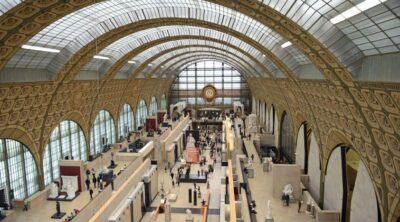
After Île de la Cité, the route shifts toward Musée d’Orsay. You’ll admire the building and learn its history. Again, you’re mostly absorbing the space rather than spending time deep in galleries.
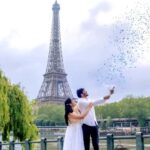
Then you may get an Eiffel Tower view—very close or farther away depending on your tailored route. Either way, the guide’s job is to help you frame the tower in context, since you can see it from many angles around Paris.
From there, you run along the Champs-Élysées area and learn as you go. You’ll also hear about Hôtel des Invalides, another big historical anchor on the route. If you’ve ever stood near Invalides thinking, I know this matters but I’m not sure how, this kind of guided stop is helpful because it gives you the right points to hang your understanding on.
This mid-to-late stretch is also where the tour feels most like a true “Paris morning.” You’re seeing the city at speed, but with guided meaning.
Palais-Royal, Pont Neuf, and a Possible Short Look at Petit Palais
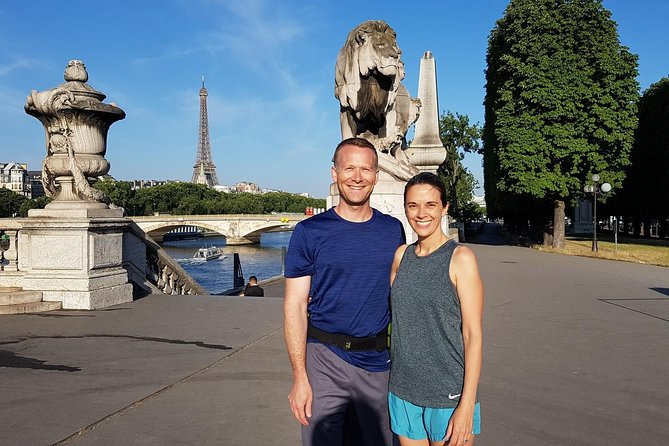
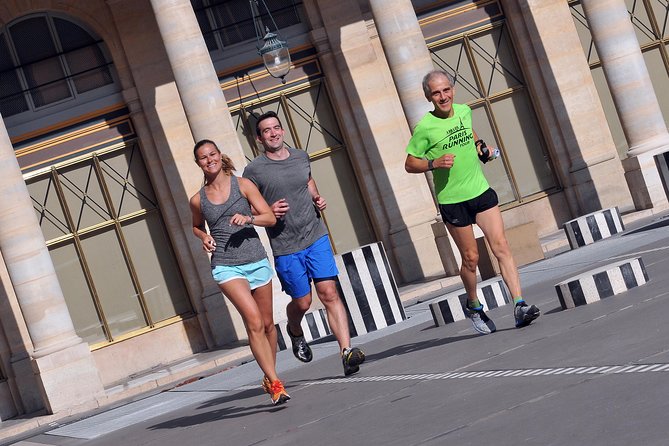
The route then reaches Domaine National du Palais-Royal, a place that’s easy to underestimate until you slow down enough to notice the courtyards, gardens, and galleries. Here, you get a short, guided look at how historical the area feels—without needing hours of planning.
Depending on your tailored route, you may also pass by another park area. The exact path can shift, which is a quiet benefit of the private format. Instead of marching everyone down one template, the guide adapts.
Next comes Pont Neuf, with learning about it as the oldest bridge of Paris, as well as context for other bridges you pass along the way.
If Petit Palais is open at the time you arrive, you may get a short visit of the building. That’s the key exception in the “mostly outside” pattern. The tour generally skips interior visits at major sites, but Petit Palais can be a brief interior moment if timing allows.
What You Actually Get (Besides Running): Water, Photos, and Printed Context
A smart running tour is one that takes care of the small friction points. This one includes:
- Bottled water for hot weather and comfort
- A camera used to take your photos during the run
- Photos sent afterward via Dropbox, so you don’t have to scramble with your own phone at every stop
- Maps and historical pictures handed to you at the end
That photo service is genuinely practical. Paris sights are photogenic, but running makes it hard to set up shots. Having someone handle that part means you can focus on enjoying the moment and not turning the whole morning into a selfie mission.
The printed materials at the end are also useful. They help you revisit what you learned while it’s fresh, and they make it easier to pick your next sightseeing idea on the days after your run.
Price and Timing: Is It Good Value for Paris?
At $104.52 per person for about 2 to 3 hours, the value mainly comes from three things:
- Private setup instead of shared group logistics
- Hotel or apartment pickup, which saves time and hassle
- The guide’s running route plus context, which turns “seeing” into “understanding what you’re seeing”
If you’re visiting for a short time, this can be a strong first-day or mid-trip activity. It gives you a map of how central Paris connects: Louvre area to gardens, big square energy at Concorde, Opera frontage, the Seine run, then the island core of Île de la Cité, and back out toward Orsay and the Eiffel Tower viewpoints.
One more small clue about popularity: it’s often booked about 79 days in advance on average. That suggests it’s not a last-minute filler. If your schedule is fixed, it’s smart to plan ahead.
Also, the tour runs within broad hours listed as 5:00 AM to 8:00 PM. For a running experience, early hours can be the best way to avoid the heaviest foot traffic and heat.
Who Should Book This (and Who Might Want a Different Style)
This tour is best if you want a morning or afternoon that feels active but not stressful. I’d especially recommend it if:
- You like to run or walk fast and enjoy seeing cities at movement speed.
- You want major landmarks without spending most of your time in ticket lines and museum rooms.
- You’re traveling with someone who might not be a runner, because private pacing can make a difference. The JC example is proof that an easy pace can still work with story-focused guiding.
Who might skip it?
- If you hate running or you’re expecting a slow, sit-down sightseeing format. This is designed for moving.
- If you need deep museum time. The tour is not built as an inside-gallery day. It’s built around exterior viewing and quick guided learning, with only a possible short interior look at Petit Palais depending on timing.
Should You Book This Paris Running Tour?
If you want the city’s icons with less planning stress, I think this is a good bet. The private pickup, the photo handling, and the fact that you get a guided overview of several major areas in just a few hours make it feel like real value, not just a gimmick.
Book it if your ideal Paris day includes motion, quick context, and a practical way to see central neighborhoods. Skip it if you want a museum-heavy itinerary or you’re not ready for moderate running.
FAQ
FAQ
Is this tour private?
Yes. This is a private tour/activity, and only your group participates.
How long is the Paris running tour?
It runs about 2 to 3 hours.
What does pickup include?
Pickup is offered from your Paris hotel or apartment. You meet the guide at your hotel lobby or at the bottom of your building if you’re in an apartment.
Do I need to pay for museum admissions?
Admission is listed as free for the tour stops. That said, the tour generally does not enter inside major sites, except under conditions for Petit Palais.
Will we go inside the Louvre or Musée d’Orsay?
The tour is designed so you won’t enter inside most museums. The only mentioned possible short interior stop is at Petit Palais if it is open.
What stops will we see?
You’ll run past or stop at major areas including the Louvre Museum, Jardin des Tuileries, Place de la Concorde, Palais Garnier, Île de la Cité (with multiple landmarks), Musée d’Orsay, Pont Neuf, Petit Palais (if open), and the Palais-Royal area, plus views and stops along the route like the Eiffel Tower.
Is this tour in English?
Yes. The tour is offered in English.
What fitness level do I need?
You should have a moderate physical fitness level.
Are photos and water included?
Yes. Bottled water is included, and the tour includes a camera to take your photos. Photos are sent afterward via Dropbox.
What if the weather is bad or I need to cancel?
This experience requires good weather. If it’s canceled due to poor weather, you’ll be offered a different date or a full refund. You can cancel for a full refund up to 24 hours before the experience starts.