REVIEW · PARIS
Paris: Skip-the-Line Louvre Highlights Guided Tour
Book on GetYourGuide →Operated by Memories France · Bookable on GetYourGuide
The Louvre can feel like a maze. This small-group skip-the-line tour gets you moving fast, with an expert guide calling out the biggest hits and the surprising side-stuff. I like that it focuses on real highlights instead of vague wandering, and that you get a clear route through the museum’s awkward layout. One thing to keep in mind: even with reserved entry, security checks can still slow things down.
In 90 minutes (or 3 hours if you choose the longer option), you’ll see world-famous works like the Mona Lisa, the Venus de Milo, and the Winged Victory, plus major historical sights in and around Napoléon III–era rooms. The result is a visit that feels organized, not rushed.
If you’re the type who wants every last gallery, this won’t satisfy that mood. It’s built for getting the best overview and deepest meaning per stop—so you’ll likely leave wanting to return on your own.
In This Review
- Key Highlights Worth Knowing
- Why the Louvre Feels Easier with a Real Game Plan
- Meeting at Arc de Triomphe du Carrousel and Getting Oriented Fast
- Skip the Ticket Line, But Plan for Security Checks
- The 1.5 vs 3-Hour Decision: What You’ll Gain
- 1.5-hour highlights tour
- 3-hour highlights tour
- The Stops That Actually Matter: Mona Lisa and the Classics
- Mona Lisa: up close, with the right framing
- Venus de Milo and Winged Victory: sculpture that hits differently in person
- Liberty Leading the People and the Coronation of Napoleon
- How the Louvre’s Long Story Gets Told: Egypt, Michelangelo, and Crown Jewels
- Napoléon III Apartments and the Surprise Pleasure of Seeing the Rooms
- What Makes the Small Group Feel Worth It
- Price and Value: Is $137 Reasonable for a Louvre Highlight Tour?
- Who This Tour Fits Best (and Who Might Want Something Else)
- Should You Book This Louvre Skip-the-Line Highlights Tour?
- FAQ
- How long is the Louvre skip-the-line highlights guided tour?
- Where do I meet the guide for this Louvre tour?
- Is this tour in English?
- What does the tour include?
- Do I need to bring ID?
- Are there restrictions on bags or luggage?
Key Highlights Worth Knowing
- Arc de Triomphe du Carrousel start means you’re properly “placed” at the Louvre’s doorstep.
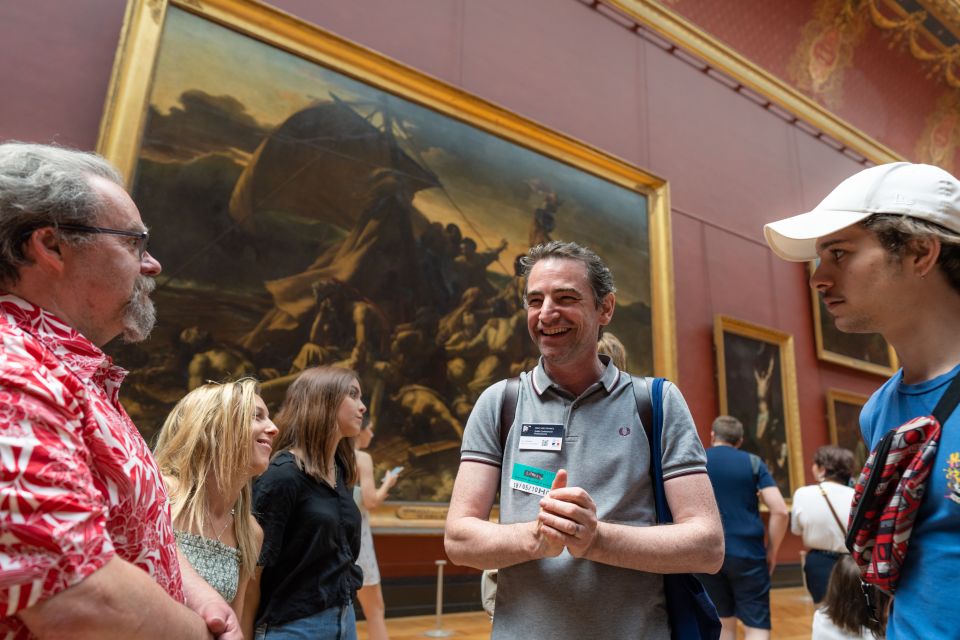
- Small group up to 6 keeps the route flexible and your guide’s attention high.
- Pre-reserved entry tickets help you avoid the worst outer ticket lines.
- A guided plan through the Louvre’s layout saves you from getting lost in nearly 10 miles of galleries.
- Choice of 1.5 or 3 hours lets you match your energy level and how fast you want to see the classics.
Why the Louvre Feels Easier with a Real Game Plan
The Louvre is famous for a reason, but it’s also famous for doing a great job at confusing people. The building wasn’t designed to be a museum in the modern sense, so the galleries sprawl, connect in odd ways, and keep pulling your attention in ten directions at once. Without a plan, you spend energy figuring out where you are instead of noticing what you’re looking at.
That’s why this kind of skip-the-line Louvre highlights tour works so well. You’re not just buying entry. You’re buying a guided route that hits major masterpieces while your guide explains what matters and why it matters. You’ll cover the big names—then you’ll get context so the works don’t just feel like famous images you’ve already seen online.
Two practical perks I value a lot:
- You get an organized run through the museum’s structure, so you can later explore on your own with more confidence.
- You don’t lose time standing around waiting for people to decide what to see next.
The museum is still huge, so you won’t see everything in a short tour—but you’ll leave with the kind of map in your head that makes future wandering far less painful.
You can also read our reviews of more guided tours in Paris



Meeting at Arc de Triomphe du Carrousel and Getting Oriented Fast
The tour meets at Arc de Triomphe du Carrousel, 75001 Paris, and it ends back there. That matters more than it sounds. The Louvre area has multiple entrances, and it’s easy to arrive, wander toward the wrong spot, and lose the benefit of your reserved tickets. Starting at a clear landmark helps you lock in your bearings right away.
Once you meet your guide, expect the first minutes to focus on orientation: how the Louvre flows, how to move efficiently, and what the tour will prioritize. This is where a good guide pays off. The Louvre’s layout can feel illogical until you understand the logic behind it—what sections connect, what paths tend to be fastest, and where you should expect crowd pressure.
Also, you’ll need a passport or ID card to participate. Pack it so you don’t end up juggling documents at the security stage.
Small-group format helps here. When there are only up to 6 participants, your guide can keep everyone together without slowing down to repeatedly regroup. That keeps the tour feeling like a smooth walk, not a series of waiting games.
Skip the Ticket Line, But Plan for Security Checks
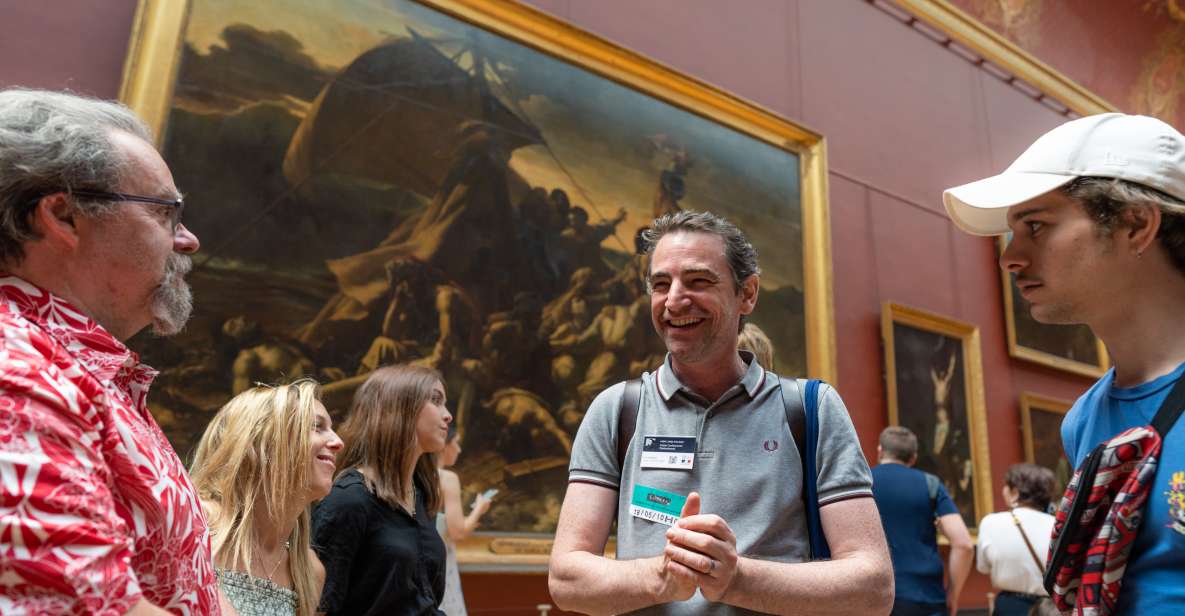
The big promise is skip the ticket line with pre-reserved entry tickets. In practice, that usually means you avoid the most painful waits outside and get directed to the faster lane tied to your booking.
But here’s the honest part: the Louvre uses increased security measures, and those can affect how quickly lines move once you’re inside the entry process. Even if you’re bypassing the worst ticket queue, you may still face delays at security.
This is the main drawback to watch for when you’re thinking about timing. If your day in Paris is packed—maybe you have a train later or a dinner reservation right after—give yourself a buffer. The good news is that a guided tour helps you use your time wisely. The guide keeps you moving toward the first key stops instead of getting stuck in uncertainty.
Tip: keep your bag situation simple. Oversize items are a common reason people slow down. The museum doesn’t allow luggage or large bags, and anything exceeding 55x35x20 cm isn’t permitted.
The 1.5 vs 3-Hour Decision: What You’ll Gain
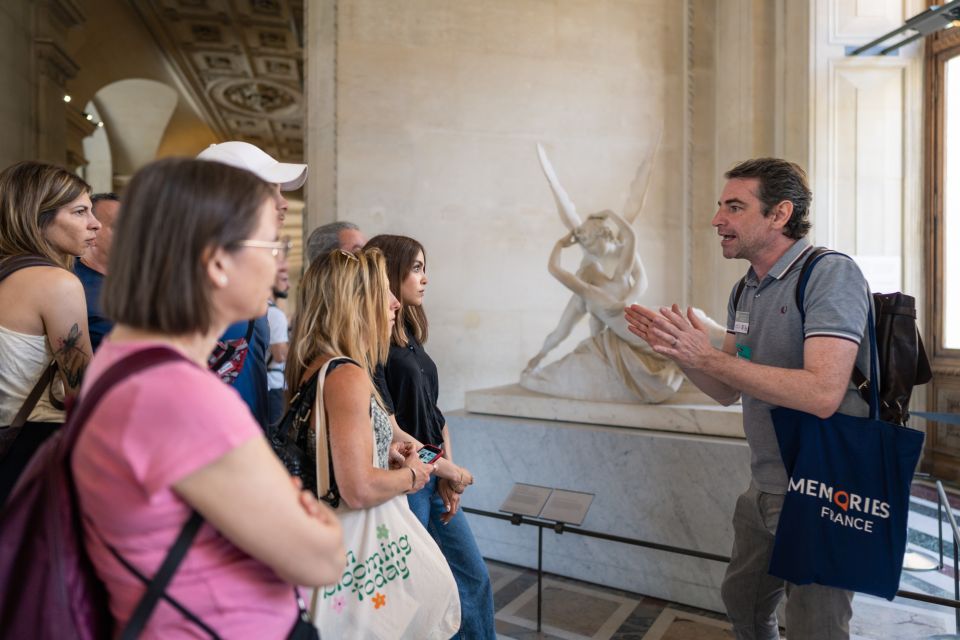
This tour comes in 1.5 hours or 3 hours. Choose based on how you travel, not just how much you want to see.
1.5-hour highlights tour
This is best when:
- you only have one shot at the Louvre,
- you want the top masterpieces plus a quick sense of the museum’s structure,
- you prefer finishing strong and doing the rest at your own pace later.
In this timeframe, your guide will hit major works and give you enough stories to connect the dots without turning the Louvre into a lecture hall.
You can also read our reviews of more tours and experiences in Paris






3-hour highlights tour
This is best when:
- you want more explanation and more time near the most famous pieces,
- you’d like a deeper mix of artworks and historical rooms,
- you want a steadier pace with less pressure to keep moving.
With more time, your guide can slow down at key works and add more of the “why.” That’s where you often start seeing art like a conversation, not like a checklist.
Either way, after your guided portion, you can remain in the museum until closing time if you want. That’s a nice safety valve. If a stop sparks your curiosity, you’re not locked out when the tour ends.
The Stops That Actually Matter: Mona Lisa and the Classics
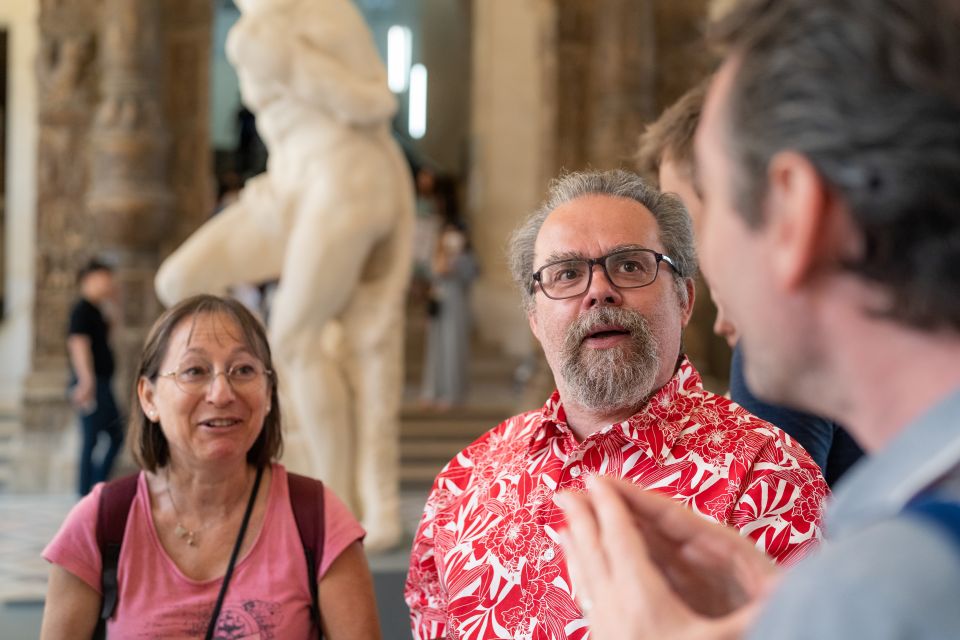
The headline masterpieces are the reason most people come—and this tour plans around them.
Mona Lisa: up close, with the right framing
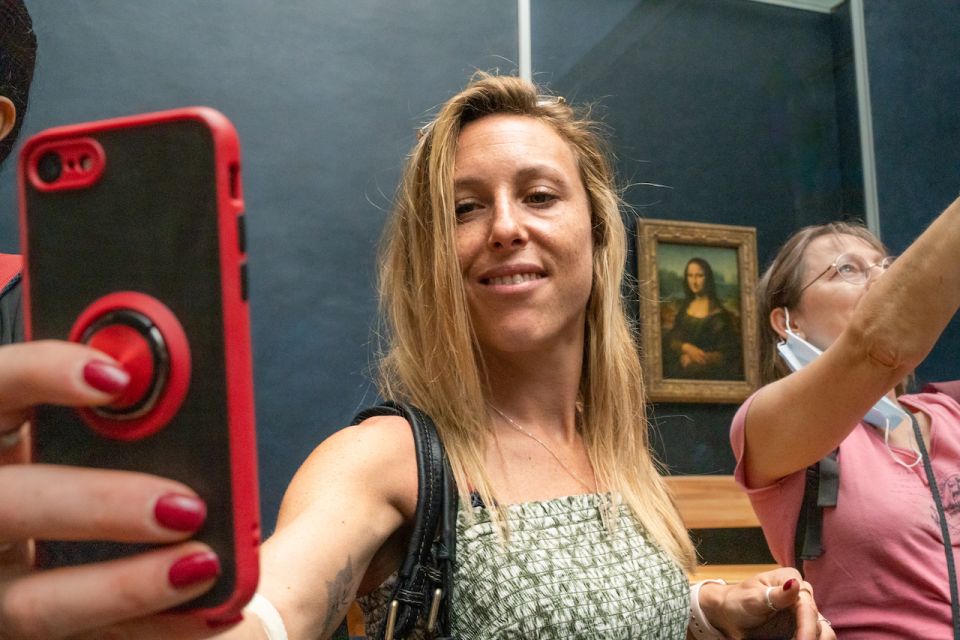
You’ll spend time at Da Vinci’s Mona Lisa and your guide will explain why it’s so mesmerizing. The painting’s reputation can make it feel overhyped before you see it. The guidance helps you notice things you’d miss on autopilot: subtle choices in expression, technique, and the historical mystery that surrounds her.
This is also where time management matters. The area around the Mona Lisa is popular, so a guide’s pacing can help you experience it without getting swallowed by the worst crowd moments.
Venus de Milo and Winged Victory: sculpture that hits differently in person
The Venus de Milo is a short, powerful encounter in stone. Up close, you start seeing how pose and surface details communicate more than a postcard ever will. Your guide’s job here is to point you toward what to look for, so you’re not just staring at a “famous statue.”
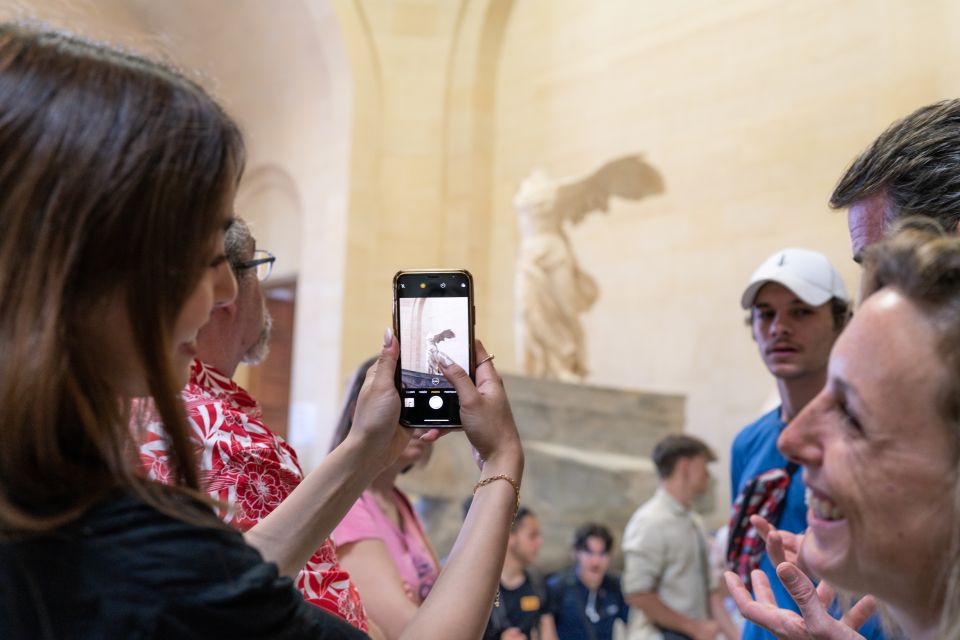
Then comes the Winged Victory, another classic where scale and tension change how you read the piece. With a guide, you’re more likely to notice how the sculpture’s composition creates motion, even though it’s still.
Liberty Leading the People and the Coronation of Napoleon
Large-format paintings like Liberty Leading the People and the Coronation of Napoleon bring the Louvre’s political energy into focus. This is where the museum stops being only about ancient art and becomes a stage for modern identity.
Your guide can connect these works to their historical moment—who commissioned, what they wanted the viewer to feel, and why the imagery became iconic.
How the Louvre’s Long Story Gets Told: Egypt, Michelangelo, and Crown Jewels
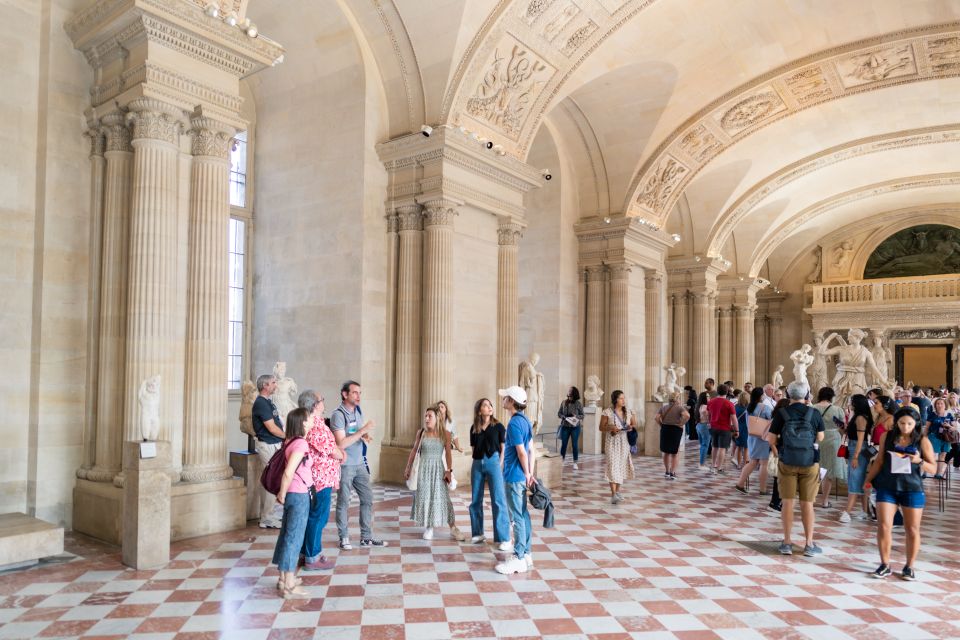
One of the smartest things about a guided highlights tour is that it doesn’t just show famous items—it shows relationships. The Louvre is a collection of civilizations, and the connections are part of the fun.
You might see:
- Egyptian antiquities, some thousands of years old
- sculptural wonders by Michelangelo
- the feel of French royal treasures, including the kind of display people associate with the Crown Jewels
The point isn’t to cover everything. It’s to leave with a sense of how the Louvre builds an argument across time. Ancient objects aren’t just “old things.” They’re evidence of technology, belief, and power—often displayed in ways that influence how you interpret them now.
Michelangelo’s presence also changes the mood. When you’re surrounded by works from different eras, having one stop that’s tied to a master like Michelangelo helps you understand what Renaissance skill looks like in the flesh.
Your guide’s explanations—and the order you see these—matter a lot. If you hit the right sequence, the museum feels like a story you can follow instead of an overwhelming store of artifacts.
Napoléon III Apartments and the Surprise Pleasure of Seeing the Rooms
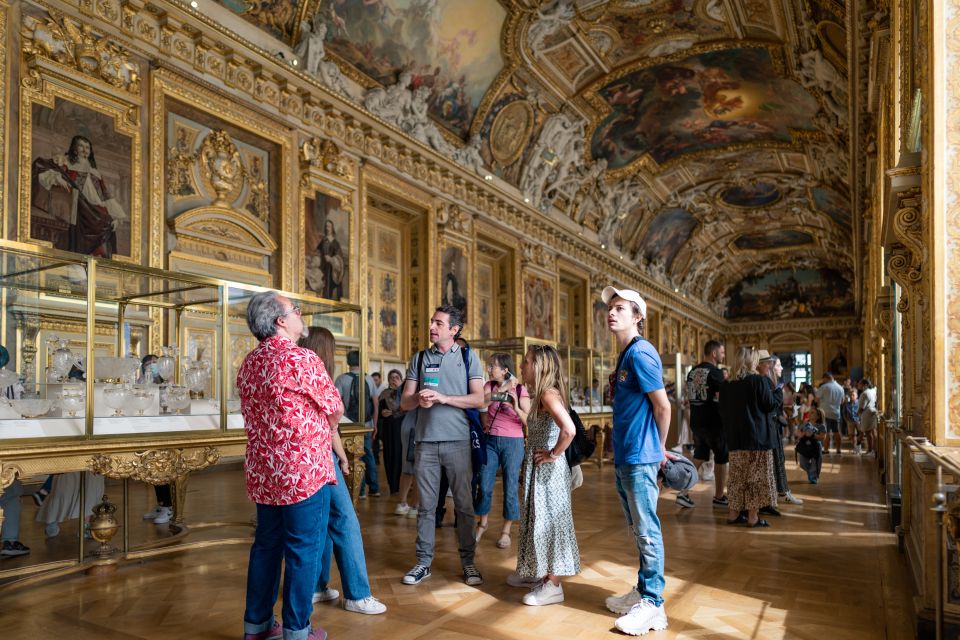
Here’s a twist that many visitors don’t expect: the Louvre isn’t only famous for paintings and statues. It’s also famous for the rooms—especially the sumptuous apartments of Napoléon III and the decorated salons preserved from the Second Empire era.
These spaces can feel like a time machine. Your guide helps you connect the furniture and décor to the political and cultural world that produced them. That context turns a pretty room into something you understand.
This is one of my favorite parts of any Louvre plan that includes more than a quick art sprint. The building itself becomes part of the experience. You get a pause from crowd pressure and a chance to sense what “court life” looked like when the Louvre wasn’t just a museum.
Even if you’re not a design nerd, these rooms give you something different to think about—and they break up the intensity of staring at masterpieces one after another.
What Makes the Small Group Feel Worth It
This tour is limited to 6 participants. That size is key for two reasons.
First, you can actually hear your guide. In a giant group, people drift, questions get drowned out, and the tour becomes a speed-walk. In a small group, your guide can slow down when someone needs a bit more time in front of a work.
Second, it creates momentum. The Louvre layout is tricky, but a good guide can route the group so you spend less time guessing. You’re still walking a lot, but it feels purposeful. A guide also helps you handle what you can’t control—crowd flow, security slowdowns, and the practical reality that some areas are more crowded than others.
Also: your guide is English-language and is described as fully accredited. In the best moments, the guide’s explanations turn familiar images into something you can see fresh. You start noticing how each era uses style to sell an idea—power, faith, empire, emotion.
Price and Value: Is $137 Reasonable for a Louvre Highlight Tour?
At $137 per person for a 1.5-hour option, you’re paying for three things at once:
- Pre-reserved tickets that cut out some of the worst waiting
- A live local guide who knows where the highlights are and how to pace the museum
- A small-group experience designed to prevent you from getting lost
Could you do the Louvre cheaper on your own? Sure. You can buy entry tickets and build your own plan. But the true cost isn’t just money—it’s time and decision fatigue. The Louvre can eat a half-day faster than you’d think, especially if you’re trying to find specific masterpieces without a route.
For many people, the value comes from leaving with understanding, not just photos. A guided stop at the Mona Lisa plus context for other major works can turn a frantic visit into a satisfying one. If you only have limited time in Paris, paying for the structure often feels like the smartest bargain you’ll make.
If you’re a slow museum walker who likes to linger for long stretches, the 3-hour option may be a better match than the 1.5-hour version.
Who This Tour Fits Best (and Who Might Want Something Else)
This tour suits you best if:
- you have limited time and want the big Louvre hits,
- you prefer a plan you can trust,
- you’d like to understand what you’re seeing without studying art history before you go,
- you want a small group experience that keeps your route tight and your questions possible.
You might consider a different approach if:
- you want a deep, gallery-by-gallery survey of everything in the museum,
- you’re expecting a quiet, slow stroll with long stays at every work,
- you’re bringing bulky items (the luggage limits are strict).
One more note: the tour is listed as wheelchair accessible, but it also states it’s not suitable for wheelchair users. That contradiction is important. If wheelchair access affects your decision, check with the provider before booking so you’re not stuck with unpleasant surprises.
Should You Book This Louvre Skip-the-Line Highlights Tour?
If you’re going to the Louvre once, this is a strong bet. The small-group size, the English guide, and the focus on famous masterpieces make it a practical way to get oriented and feel smarter about what you’re seeing.
Book it if:
- you want the Mona Lisa, Venus de Milo, and Winged Victory handled the right way,
- you like learning stories while you walk,
- you want a route that helps you avoid wasting hours.
Skip it or switch plans if:
- you hate any crowding at all and think reserved tickets will make the Louvre empty (it won’t),
- you need guaranteed wheelchair suitability in practice, not just on paper,
- you want a full-depth museum survey rather than a highlights path.
If you use the tour to get bearings fast, then you’re free to keep exploring later until closing time.
FAQ
How long is the Louvre skip-the-line highlights guided tour?
The tour duration is listed as 1.5 hours, with a longer 3-hour option also available. Starting times depend on availability.
Where do I meet the guide for this Louvre tour?
The meeting point is Arc de Triomphe du Carrousel, 75001 Paris, France.
Is this tour in English?
Yes. The live tour guide is listed as English.
What does the tour include?
Included items are a small group guided tour (1.5 or 3 hours), a fully accredited local guide, and pre-reserved entry tickets.
Do I need to bring ID?
Yes. You should bring your passport or ID card.
Are there restrictions on bags or luggage?
Yes. The tour notes that luggage or large bags are not allowed, and items exceeding 55x35x20 cm are not permitted in the museum.