REVIEW · PARIS
Paris: Montmartre Macaron Baking Workshop
Book on GetYourGuide →Operated by MACA’RONG · Bookable on GetYourGuide
Macarons made in two hours can be real. This Montmartre-area workshop teaches the Italian meringue method for smoother macaron shells, with hands-on guidance from chefs like Kanika and Vouthy.
I love how you are not just watching a cooking demo. You make and take home at least 15 macarons in a special box, plus learn a few techniques you can actually use at home.
One consideration: this is not a sit-and-observe activity. Everyone in the room must have a reservation, and it is not suitable for people with certain dietary needs like lactose intolerance or allergies.
In This Review
- Key things I would circle before you book
- Why this macaron workshop feels different from a quick cooking class
- Arriving at Maca’Rong on Rue Legendre: start here, then get working
- The first hands-on phase: tant pour tant and setting up the batter
- Italian meringue macaron shells: why this method helps you avoid the common cracks
- “Macaronage” time: the technique that decides your texture
- Piping, templates, and designs: making your macarons look like you
- Personalize with a smaller double nozzle
- Baking while you learn fillings: raspberry ganache and mango-passion options
- What you take home: 15 macarons, boxes, and the filling count that matters
- Storage reality check
- Price and value: does $150 make sense for your Paris time?
- Who should book Maca’Rong’s Montmartre macaron workshop
- Pairing the class with Montmartre without ruining your day
- Should you book this macaron workshop?
- FAQ
- How long is the Paris Montmartre macaron baking workshop?
- Where do I meet for the workshop?
- How many macarons will I take home?
- What is included in the price?
- Do I have to speak French to participate?
- What is the group size like?
- Is this activity suitable for people with food allergies or lactose intolerance?
- Is there free cancellation?
Key things I would circle before you book
- Italian meringue shells taught in a step-by-step, practical way
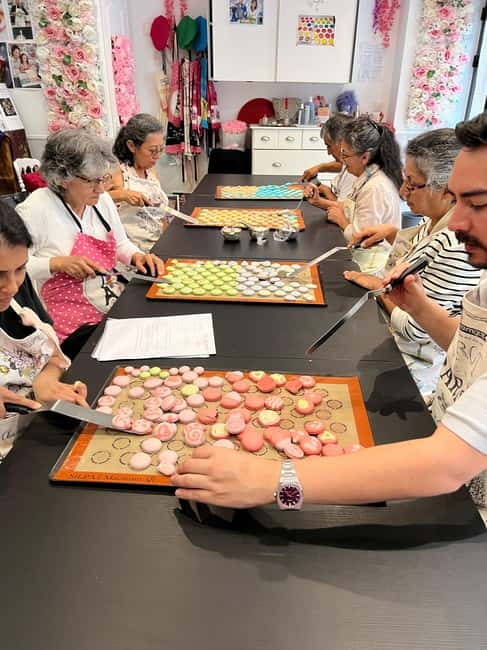
- Small group (up to 8) so you get real coaching, not a wave-from-the-aisle lesson
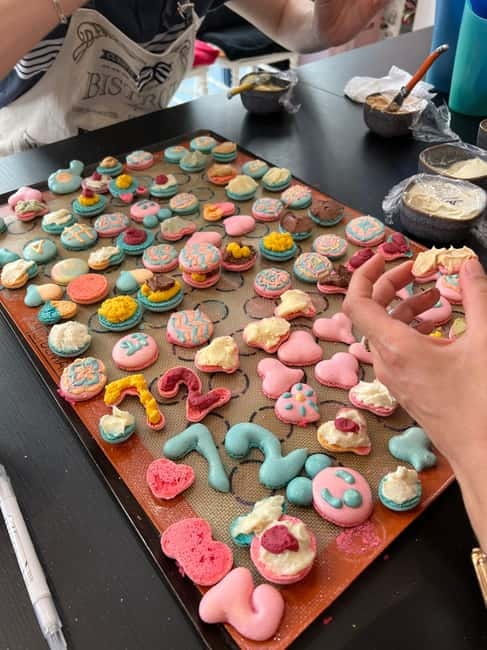
- Hands-on piping and design with a piping bag and a smaller double nozzle for patterns
- Take-home value: at least 15 macarons plus a box and bags for carrying them
- Ganache focus: raspberry (and also mango-passion) filling guidance while your shells bake
Why this macaron workshop feels different from a quick cooking class
If you have ever tried to make macarons at home, you already know the pain: cracked tops, hollow centers, and the dreaded chewy mismatch. The good news is that this class is built around the method that helps shells behave—especially Italian meringue, which is slightly technical but efficient.
I like that the teaching tone is calm and supportive, not intimidating. Many people come in with zero experience, and you still get to walk out with macarons that look like you knew what you were doing.
The other big win is pacing. In two hours, you go from ingredient prep to piping, then to filling guidance while the macarons bake. You are kept busy, but not rushed, and the end result is tangible: a box you can share (or guard).
You can also read our reviews of more tours and experiences in Paris

Arriving at Maca’Rong on Rue Legendre: start here, then get working
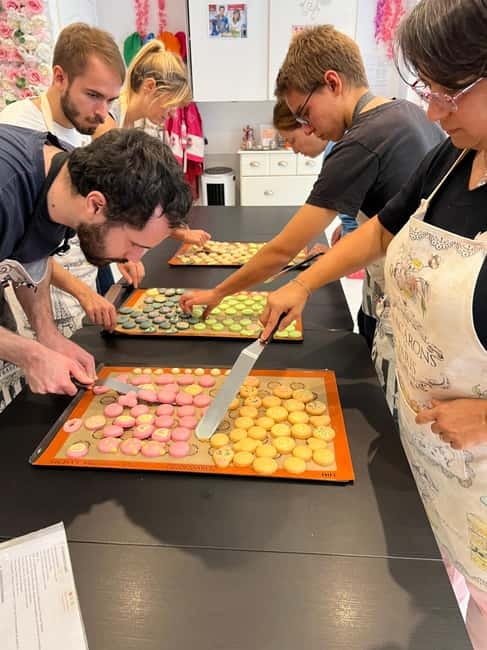
Your meeting point is straightforward: head to 175 Rue Legendre and go inside the Maca’Rong shop on the ground floor. Plan to arrive a few minutes early so you can get checked in, get your station, and start with the other participants.
The group size is limited to 8, which matters more than it sounds. With fewer people, instructors can correct your piping consistency, show you how to hold the bag, and help when your meringue or batter looks off.
One practical note: oversize luggage is not allowed. If you are touring with big bags, try to drop them at your lodging or keep things compact. Also, this workshop is not set up for wheelchair access, and it is not suitable for children under 6 or babies under 1.
And yes, it is hands-on the whole time. You cannot just hang out and watch while others work. If you want a true spectator-friendly food outing, this is not it.
The first hands-on phase: tant pour tant and setting up the batter
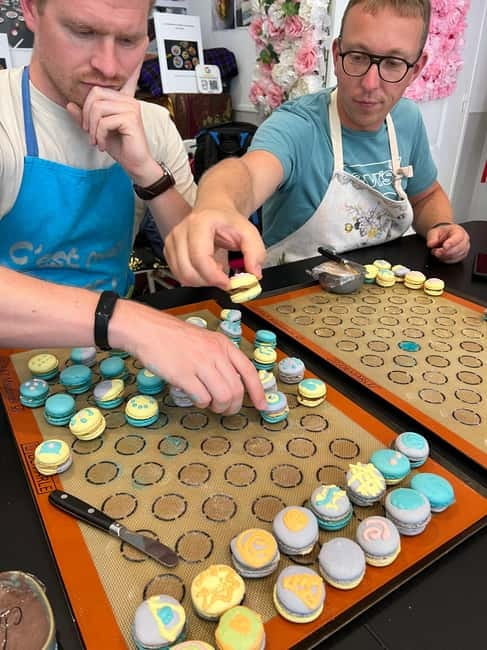
Before you touch the piping bag, you get a bowl of “tant pour tant” ingredients ready for each participant. That phrase basically means an exact ratio—traditionally equal parts of almond powder and powdered sugar—because macarons are all about precision.
This is where the workshop earns trust. They do not just throw ingredients at you. They set up the measurements and the order of steps so you can focus on technique, not math.
You also get an overview of alternative methods. Even though the Italian meringue route is the main focus, learning why other approaches work (or fail) helps you understand what matters when you try again at home.
Italian meringue macaron shells: why this method helps you avoid the common cracks
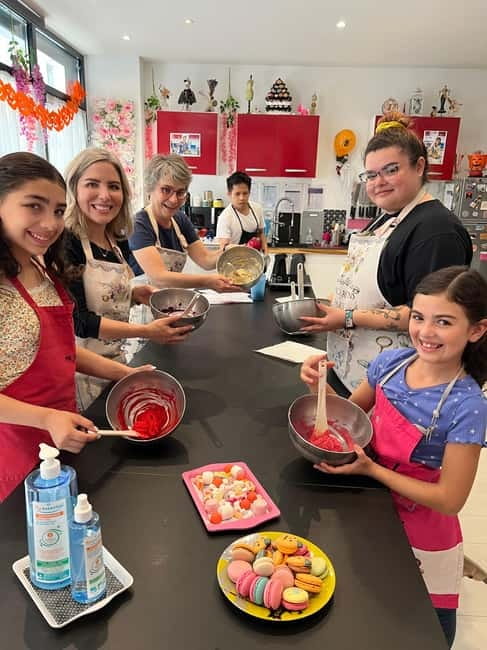
Italian meringue sounds fancy, but the practical idea is simple: you stabilize egg whites by streaming hot sugar syrup in a controlled way. That creates a more stable meringue structure, which helps the macaron batter fold and spread more predictably.
In class, your guide walks you through what to look for at each stage. That is huge, because macarons do not forgive guesswork. Reviews from past participants highlight guidance that focuses on getting the batter to the right consistency so shells do not crack and bake up clean.
The part I think you should pay attention to is the moment when your mixture shifts from thick to glossy. That look matters more than the clock. When instructors explain the visual cues, you get less stress later, and your home attempts become more repeatable.
“Macaronage” time: the technique that decides your texture
Macaronage is the folding step that combines meringue and dry ingredients into batter. This is where beginners often go wrong by under-mixing (lumpy batter) or over-mixing (runny batter that spreads too far).
You learn the key idea: fold with control until the batter flows like it has intent. It should be smooth and shiny, not stiff. In a practical class, this is taught as feel and consistency, not as a vague art lesson.
If your batter looks off, instructors step in. Small-group size helps here. You do not just get told to start over; you get a correction right away, which saves time and prevents frustration.






Piping, templates, and designs: making your macarons look like you
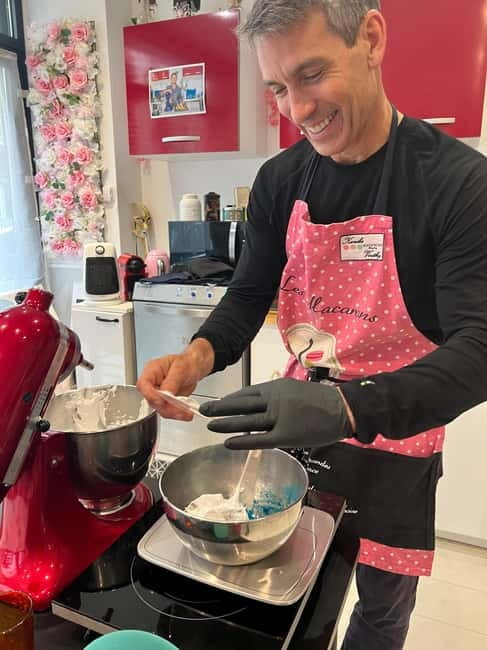
Once the batter reaches the right stage, it is piping time. Your guide demonstrates how to fill the piping bag without wasting batter or overloading the tip. That might sound minor, but it affects everything from shell height to how evenly they form.
Then you pipe onto templates first. This is a smart approach for beginners because it reduces variables. You learn how to apply pressure steadily and stop cleanly so the tops dry out evenly before baking.
Personalize with a smaller double nozzle
Here is the creative highlight. After piping, you embellish shells using a smaller double nozzle for patterns and designs. You can take your macarons from uniform rounds to something clearly yours.
This part is fun, and it also teaches a real technique: adding design detail without disturbing the shell. You learn how close to pipe, how much to add, and how to work neatly so the batter does not smear.
If you like photography, you will enjoy this stage. The end result is genuinely pretty, and the designs make your take-home box feel special rather than generic.
Baking while you learn fillings: raspberry ganache and mango-passion options
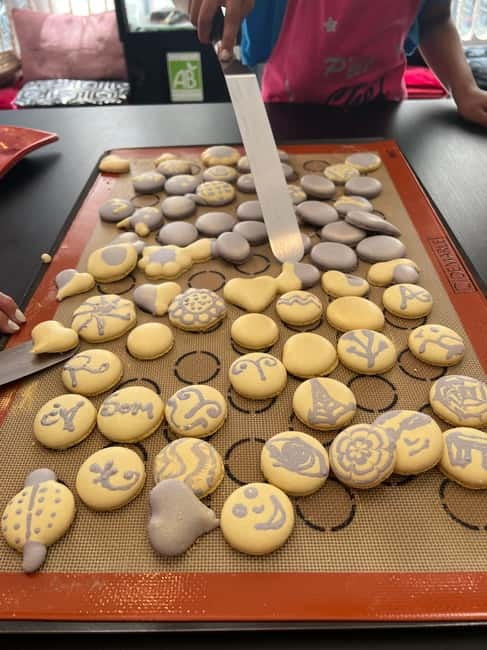
While your shells bake, you keep learning. The class shifts to fillings, focusing on a rich raspberry ganache and also demonstrating another option like mango-passion.
Ganache is one of those desserts that can taste either flat or spectacular depending on texture and balance. In a good workshop, this lesson matters because you learn the fill should be smooth, spreadable, and flavorful enough to stand up against the almond cookie base.
This is also where you get the practical “home kitchen” education. You do not just taste and move on. You get the idea of how the filling should behave when you portion and sandwich your shells.
What you take home: 15 macarons, boxes, and the filling count that matters
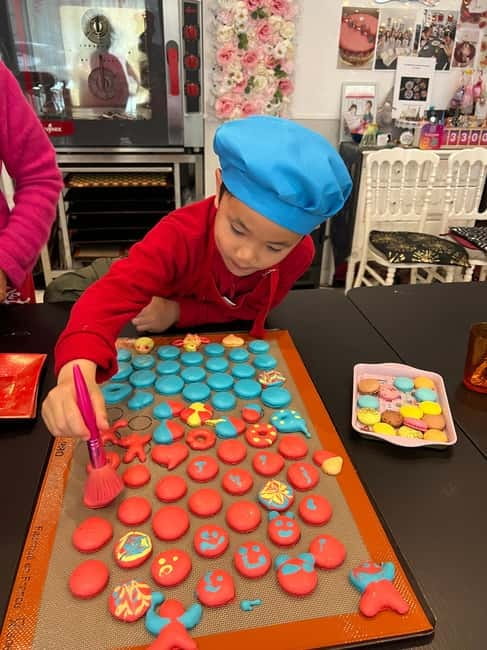
The biggest value piece is simple: you leave with 15 personalized macarons (the experience description says at least 15, and the class is designed to produce that number per participant). You get a specially provided box and also bags for carrying your macarons.
Included with the class are 10 fillings. That matters for variety and for letting you experiment a bit with pairings, rather than being locked into one filling for everything.
You also get tea and coffee, plus macarons to taste during the workshop. For a short class, that food break keeps the energy up and lets you compare your work to what the instructors consider a correct texture.
Storage reality check
Macarons are best when set and slightly softened, so your first day is often the crunchiest and your second day can be even tastier. The good move is to plan to enjoy some soon and save the rest for later in your trip, keeping them cool and protected.
The box and bags help, but heat and time are still factors. If you are going straight into a long day after class, choose a cool window and keep your box shaded.
Price and value: does $150 make sense for your Paris time?
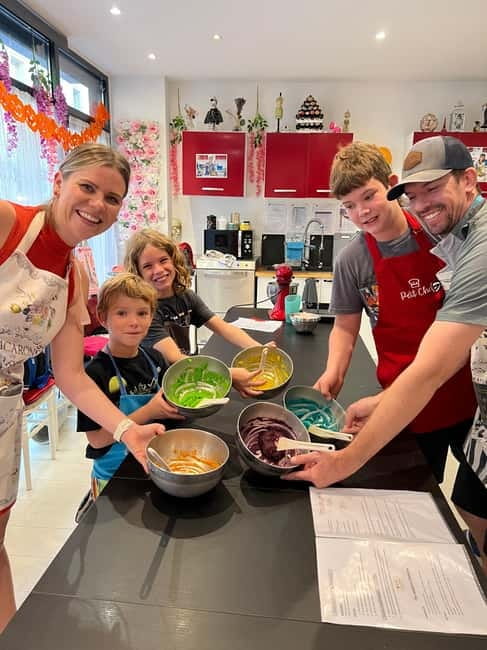
$150 per person is not “cheap,” but it can be good value if you compare it to what you would normally pay for a box of premium macarons plus the time savings of a guided lesson.
Here is where the value comes from:
- You get a 2-hour class with a small group (up to 8).
- You take home at least 15 macarons you made yourself.
- You get tools and packaging support, including a box and bags.
- You get filling variety through included fillings and the ganache lesson.
- You learn a repeatable method (Italian meringue + macaronage + piping + design).
If you love baking, you are buying technique and feedback, not just dessert. And if you do not love baking, you are still buying an experience you can brag about without needing any special skills at home.
So for me, the price makes sense if you want something hands-on that feels like Paris craft work rather than a generic tourist activity.
Who should book Maca’Rong’s Montmartre macaron workshop
This is best for people who want a guided, practical dessert skill. You should book if:
- you like hands-on cooking and want a structured lesson
- you enjoy making things that look good on camera
- you want to customize flavors and designs
- you are traveling with family or a mixed-age group, and you can handle a focused workshop environment
It is also a strong pick for couples or friends because the class format keeps everyone busy and gives you a shared result you can eat together.
Skip it if:
- you need lactose-free options or you have food allergies (it is not suitable for people with food allergies or lactose intolerance)
- you need wheelchair access (it is not suitable for wheelchair users)
- you are hoping to bring very small children (not suitable for children under 6, and also not suitable for babies under 1)
- you want a spectator-only experience (you must have a reservation)
Pairing the class with Montmartre without ruining your day
Since the address is in the Montmartre area, you can turn the class into part of your neighborhood loop. A lot of people like doing it early enough that they still have time to wander for lunch or a simple walk afterward.
What matters most is spacing. You will be carrying a box of macarons, so plan your day so you are not crossing the city in a hot rush right after class. A nearby meal works well, and a slower stroll gives you time to snack and enjoy your own work.
Also, if you are coming from the metro or doing other Montmartre stops, give yourself a little buffer for walking. You do not want to sprint in 20 minutes late and end up stressed before you even start piping.
Should you book this macaron workshop?
I would book it if you want a real technique lesson with visible results. The combination of Italian meringue, hands-on macaronage, piping coaching, and design work gives you more than a cookie-making souvenir.
It is also worth it if you care about leaving with enough macarons to share. The take-home count and the box are a big part of the value, especially in Paris where packaged macarons can be pricey for what you get.
One more honest point: if your top goal is a relaxed, walk-in dessert tasting, this is not the right format. It is structured, hands-on, and you stay in the workshop the entire time.
If you want a small-group craft class that teaches you how to make macarons rather than just eat them, this one is a very solid choice.
FAQ
How long is the Paris Montmartre macaron baking workshop?
The class lasts about 2 hours. You should check availability to see starting times.
Where do I meet for the workshop?
Meet at 175 Rue Legendre. Join the class and go inside the Maca’Rong shop on the ground floor.
How many macarons will I take home?
You will take home 15 macarons that you helped prepare, plus you receive a special box and bags for carrying them.
What is included in the price?
The price includes the baking class, tea and coffee, macarons to taste, a chef secret recipe, 15 macarons to take home, 10 fillings, and bags for the macarons boxes.
Do I have to speak French to participate?
No. The instructor speaks English and French.
What is the group size like?
This workshop is limited to a small group of up to 8 participants.
Is this activity suitable for people with food allergies or lactose intolerance?
No. It is not suitable for people with food allergies or people with lactose intolerance.
Is there free cancellation?
Yes. You can cancel up to 24 hours in advance for a full refund.