REVIEW · PARIS
Paris: Louvre Museum Tour Mona Lisa & Iconic Masterpieces
Book on GetYourGuide →Operated by GetYourGuide France · Bookable on GetYourGuide
The Louvre feels huge, until it makes sense. This 2-hour guided highlights tour gives you fast entry through the famous pyramid and a story-led path to the Louvre’s biggest stars, including the Mona Lisa.
I like that the pace is built for real humans: you get the key masterpieces with context, then you’re free to keep wandering on your own right after the tour ends.
Two things I especially like: the guide-led route to major works like the Winged Victory of Samothrace and Venus de Milo, and the practical setup that includes pre-reserved entry plus headsets so you can actually hear the stories. As a small group (max 20), it also feels easier to navigate than trying to wing it through corridors full of art-loving chaos.
One drawback to weigh: the Louvre has lots of steps, and once you’ve exited the wings and gone under the pyramid, you can’t re-enter the rooms. If you need slow breaks, have mobility limits, or want maximum flexibility, this format may feel a bit rigid.
In This Review
- Key things I’d circle before you go
- What this Louvre tour is really good at
- Meeting at Kiosque des Noctambules instead of the Louvre entrance
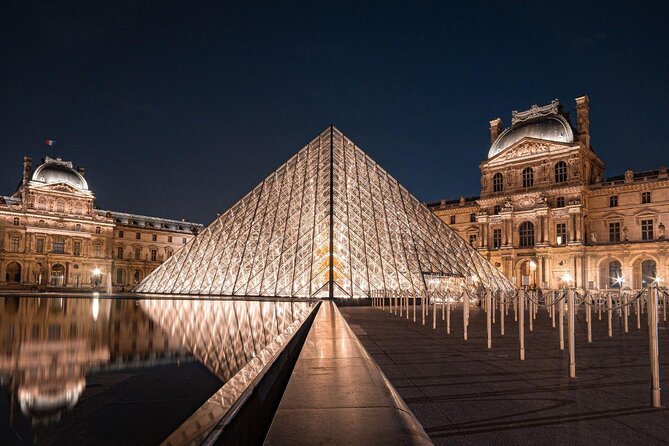
- Entering the Louvre pyramid with pre-reserved access
- The highlights route: Mona Lisa and the real reasons behind the stars
- Venus de Milo and the magic of Greek sculpture
- Winged Victory of Samothrace: Nike made into art
- The Mona Lisa: not just a face, a history engine
- Beyond the big names: how the tour helps you notice the Louvre
- A word on pacing and the one-way rule under the pyramid
- After the tour: how to use your free time without getting lost
- Orsay upgrade: when it actually makes sense
- Who this Louvre tour fits best (and who should pass)
- What the guide experience tends to look like
- Price and value: is $79 worth it?
- Quick planning checklist for a smoother Louvre day
- Should you book this Louvre Museum Tour?
- FAQ
- Where is the meeting point for the tour?
- Do I go to the Louvre entrance first?
- What time should I arrive at the meeting point?
- How long is the Louvre tour?
- What’s included with the ticket?
- Will I have time to explore after the guided portion?
- Which major artworks are part of the highlights route?
- Are there restrictions on bags or devices?
- Is the tour wheelchair-accessible?
- What if I need to cancel or change my plans?
Key things I’d circle before you go
- Pre-reserved pyramid entry means you’re not hunting ticket lines right at the door
- Headsets help you catch the guide’s explanations in crowded rooms
- A tight highlights route hits the most famous anchors plus a few less-obvious stops
- One-way movement after you pass under the pyramid keeps the group on schedule
- Free time after the tour lets you linger where your favorites really land
- Optional Orsay add-on helps you stack two Paris art stops in a smart day
What this Louvre tour is really good at
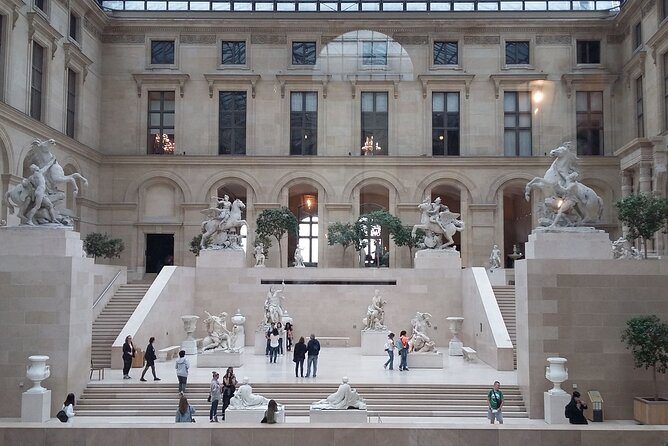
This is a Louvre tour built for decision-making. The Louvre is so big that “seeing everything” is basically a joke. What this experience does well is give you a guided hit list of the works that people remember, with enough story to make them click.
You’ll also get a museum sense of time. You’re not only looking at masterpieces; you’re following how the Louvre’s collection developed across eras, from ancient civilizations through the mid-19th century. And yes, that includes the Renaissance and the long-running fascination with Greek sculpture.
Finally, it’s designed for first-timers without feeling like school. The group stays together, you hear the why behind the art, and you still get time afterward to go at your own speed.
You can also read our reviews of more museum experiences in Paris



Meeting at Kiosque des Noctambules instead of the Louvre entrance
Here’s the first thing to get right: you do not go straight to the Louvre entrance. You meet at the Kiosque des Noctambules, a colorful structure decorated with Murano glass beads, facing the Comédie Française. It’s about a 5-minute walk from the Louvre entrance, so it’s easy to reach, but easy to miss if you go too direct.
Look for your guide holding a GetYourGuide flag. They arrive at the tour start time, not before. The nearest metro stop is Palais Royal – Musée du Louvre (exit Place Colette).
I’d treat this meeting like the start of a mission. Show up early enough to find the kiosk calmly, not sprinting with your camera out like it’s an action movie.
Entering the Louvre pyramid with pre-reserved access
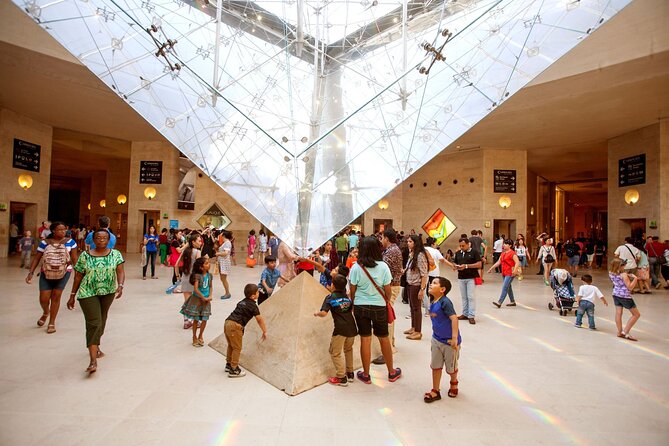
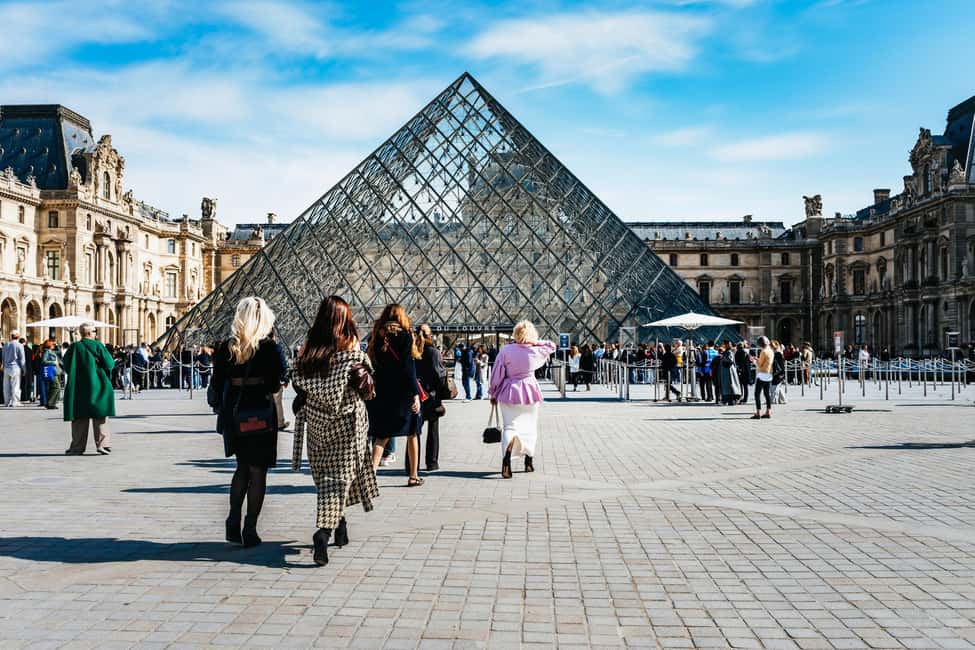
Once you’re in, the tour’s main advantage becomes obvious fast: you enter through the Louvre pyramid with a pre-reserved ticket. That matters because the Louvre’s ticket chaos can eat your morning.
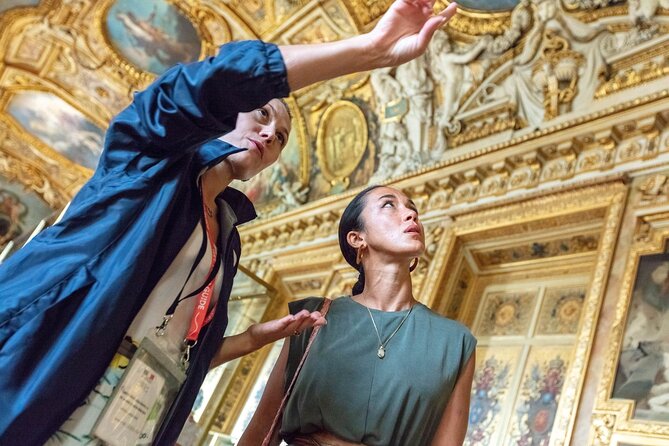
You’ll also move with support, not guesswork. The tour includes headsets, which is huge in a museum where guides can get buried under crowd noise. With a group size capped at 20, the experience stays manageable.
In peak season, you might still wait during security. In summer, the Louvre is busier than usual and there may be a wait of up to 20 minutes at security check-in. The ticket line may be shorter, but it’s still the Louvre, so you should plan for lines to exist.
The highlights route: Mona Lisa and the real reasons behind the stars
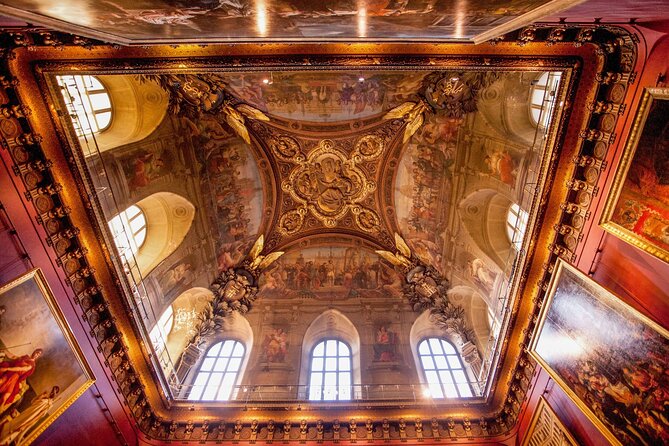
This tour is centered on iconic works, but the value is in the guidance around them. You’re not just looking. You’re learning what to notice—materials, style choices, symbolism, and the stories that helped the works become famous.
Venus de Milo and the magic of Greek sculpture
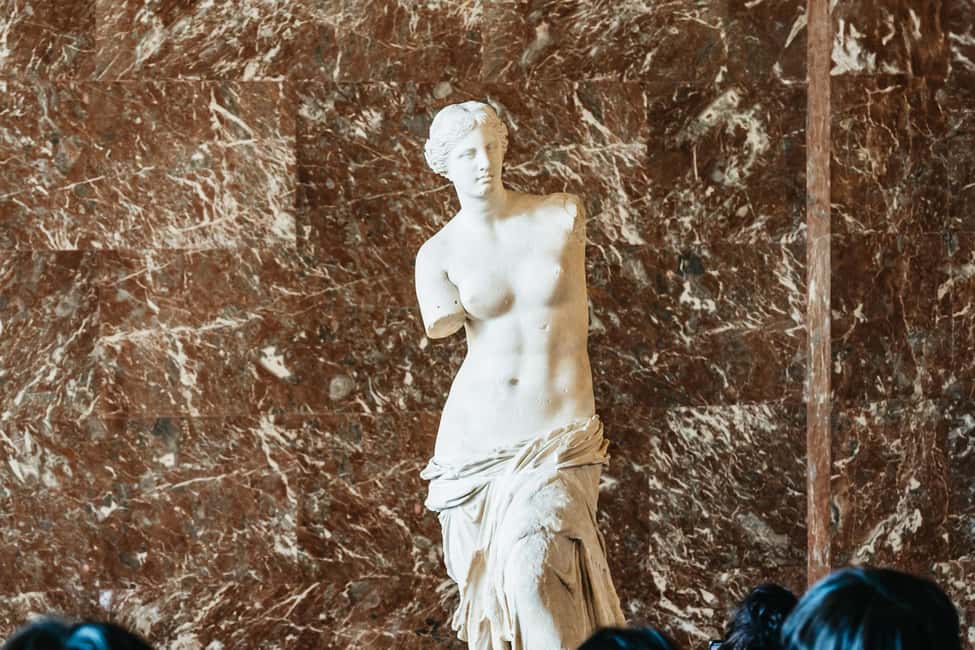
One of the big stops is Venus de Milo. Even if you’ve seen pictures a hundred times, seeing it in person changes the scale and the mood. This sculpture has inspired artists for generations, and the guide’s explanations help you understand why people keep returning to it.
You’ll also get context around Greek art and how it developed. The group is shown major anchors like this to help you connect the dots between different sculpture styles and the broader evolution of classical forms.





Winged Victory of Samothrace: Nike made into art
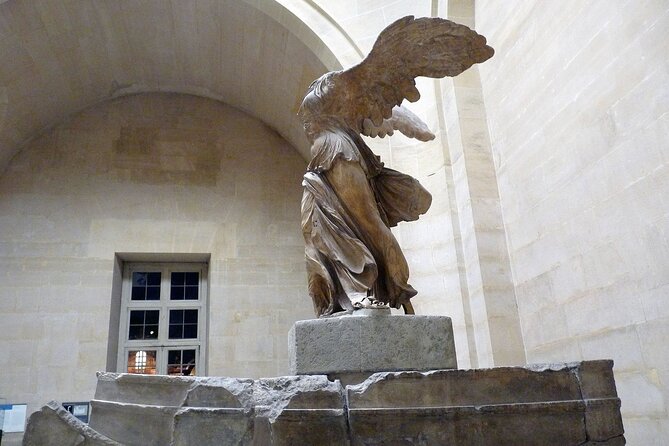
Next up is the Winged Victory of Samothrace, the Hellenistic statue carved in the form of Nike, the Greek goddess of victory. This is one of those works where your brain goes, wait, how is this stone doing that.
A good part of the value here is the story behind what makes Hellenistic sculpture feel so alive—how movement and expression are built into stone. You’ll be able to see why it became one of the Louvre’s signature ancient pieces.
The Mona Lisa: not just a face, a history engine
Then you hit the center of gravity: the Mona Lisa. The tour includes the story of its theft in 1911, which is one reason the painting became even more famous than it already was.
What I like about a guided stop here is that it forces you to look at details you would otherwise miss in the “everyone-take-a-photo” rush. Even within a highlight route, you get an explanation that helps you see the painting as an artwork with a life story, not just a tourist checkpoint.
Beyond the big names: how the tour helps you notice the Louvre
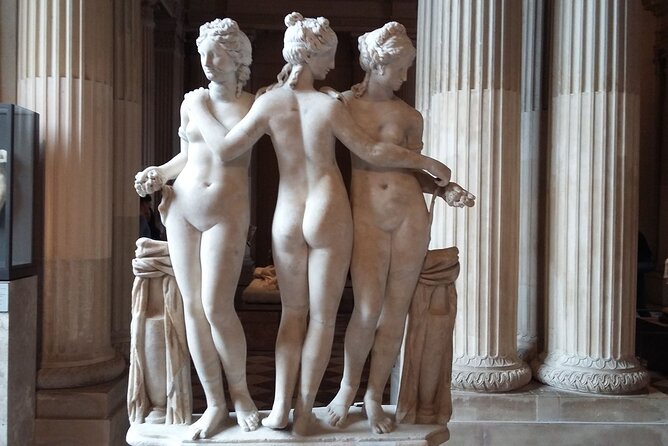
The highlights matter, but the tour also aims to show you that the Louvre isn’t only one painting per room. You’ll see more than just three famous objects, including works across multiple centuries—Renaissance treasures, ancient Greek relics, paintings from the 13th to 19th centuries, and prints connected to the Royal Collection.
You also get a sense of the museum as a building with history. The Louvre used to be the residence of the Kings of France, and now it functions as one of the oldest and most-visited museums in the world. That background helps you understand why the collection feels both royal and layered.
There’s also a strong “structure as story” moment: in the basement, you can see the foundations of the castle that once stood on the site. Even if you’re not a museum architecture nerd, that stop makes the Louvre feel like something older than your itinerary.
A word on pacing and the one-way rule under the pyramid
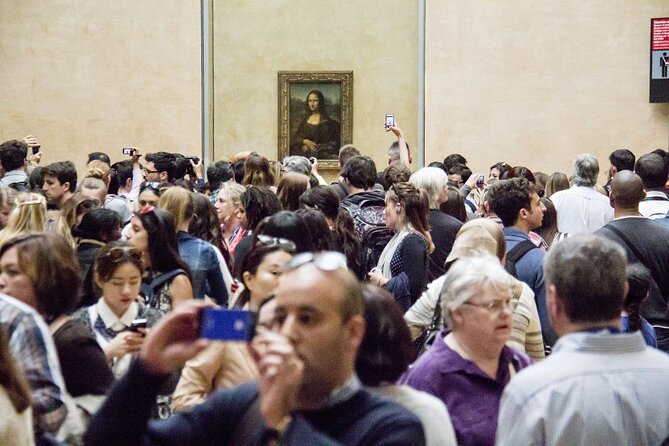
The tour is 2 hours, and the route is designed to keep the group moving through the museum’s big zones. That’s great for staying focused, but it comes with a specific constraint.
Once you’ve exited the wings and are under the pyramid, you cannot re-enter the rooms. This affects how you should think about restrooms and breaks. If you’re likely to need a pause, plan it before you pass that point.
Also note the practical rule on timing: if you’re late, the group booking may mean you won’t be able to issue you a ticket. So build buffer time into your day.
After the tour: how to use your free time without getting lost
One of the best parts is what comes after the guided portion. After your tour, you can spend as long as you’d like in the museum. The guide’s highlights route acts like your map, even if you still end up wandering.
My advice: after the tour, don’t try to “finish.” Instead, pick 1–2 themes you cared about during the talk—Greek sculpture, Renaissance painting, or the museum’s royal side—and give yourself permission to go deeper there.
Because the Louvre is a maze, this approach beats aimless sprinting. You’ll get more satisfaction from returning to what you loved rather than ticking boxes you’ll forget the next day.
Orsay upgrade: when it actually makes sense
There’s an upgrade option that adds a morning tour of the Orsay Museum. If you love art that sits closer to the 19th century and you want a more connected “Paris art day,” this pairing can be a smart way to spend time efficiently.
The value here is sequencing: the Louvre gives you sweeping historical anchors, while Orsay leans into later art. Together, it can turn a long day of museum fatigue into a clearer story arc.
Who this Louvre tour fits best (and who should pass)
This works best if you want:
- A first visit to the Louvre and you want the big icons explained
- A guided structure that reduces overwhelm
- A quick way to get the key masterpieces without losing half the day to logistics
It may not fit if:
- You have mobility impairments or need wheelchair access. The tour notes there are many steps, and wheelchairs are not permitted on this tour.
- You need luggage storage flexibility. Luggage or large bags are not allowed, and you also can’t bring selfie sticks or non-folding strollers.
If you’re traveling with kids, the tour says any children joining must be booked on the tour, so plan accordingly.
What the guide experience tends to look like
The guide is licensed, and the tour format is built for storytelling through a highlights route. From the recurring guide names people mention, the experience often includes energetic, personable explanation styles.
Names that show up a lot in the write-ups include Sophie, Gabriela, René, Andrea, Imad, Babou, Lucia, Megan, Martha, and Natalia. You’ll see a pattern: people praise how the guide connects art to context, and how they help a massive museum feel organized.
It’s also worth noting that some guides handle practical needs in thoughtful ways. For example, one guide (René) is described as setting up a locker and helping the group with a bathroom break. That kind of attention can make a crowded museum day feel less stressful.
Price and value: is $79 worth it?
At $79 per person for a 2-hour Louvre highlights tour, the price isn’t just paying for walking. You’re paying for:
- A pre-reserved entry ticket that helps you avoid the worst line chaos
- A licensed English (and Portuguese) guide
- Headsets, which are a quality-of-life upgrade in crowded rooms
- A small group size (up to 20), which typically means better control and less wandering time
- A structure that hits iconic works you’d struggle to prioritize on your own
So the real value question is time. If you’d spend hours figuring out where to start, or you’d miss key masterpieces because you never find the right wing, this tour buys you focus. If you already know the Louvre layout deeply and you love designing your own route, you might prefer to self-guide.
Quick planning checklist for a smoother Louvre day
- Wear comfortable shoes (the tour includes many steps).
- Don’t plan on bringing luggage or large bags.
- Leave selfie sticks and non-folding wheelchairs at home.
- Confirm you can reach the Kiosque des Noctambules before the start time, since the guide won’t arrive early.
One small strategy: start your day with the mindset that you’re going to learn a map first, then you explore. That’s the flow this tour supports best.
Should you book this Louvre Museum Tour?
Book it if you’re a first-time Louvre visitor who wants the Mona Lisa, Venus de Milo, and Winged Victory of Samothrace explained in a way that makes the museum feel less overwhelming. The pre-reserved pyramid entry plus headsets are practical wins, and the small group size helps keep the experience focused.
Skip it or reconsider if you need wheelchair access or you rely on flexibility to move back and forth through the same rooms. The one-way rule after you pass under the pyramid is real, and the step-heavy nature of the Louvre can limit who enjoys this kind of fast highlights tour.
If you’re doing only one museum tour in Paris, this is a strong pick. It’s structured, it’s efficient, and it turns iconic art into something you can actually understand while you’re standing in front of it.
FAQ
Where is the meeting point for the tour?
You meet at the Kiosque des Noctambules, a colorful structure decorated with Murano glass beads facing the Comédie Française. It’s about a 5-minute walk from the Louvre entrance.
Do I go to the Louvre entrance first?
No. The instructions say not to go directly to the Louvre museum entrance. You should go to the kiosk first and meet the guide there.
What time should I arrive at the meeting point?
The guide arrives at the selected tour start time, not before. If you want to be safe, arrive early enough to find the kiosk and get oriented.
How long is the Louvre tour?
The duration is 2 hours.
What’s included with the ticket?
The tour includes a Louvre Museum pre-reserved entry ticket and entry through the pyramid, plus a guided tour in English (and Portuguese), a licensed guide, and headsets.
Will I have time to explore after the guided portion?
Yes. After the tour, you can spend as long as you like in the museum.
Which major artworks are part of the highlights route?
The tour highlights include the Mona Lisa, Venus de Milo, and the Winged Victory of Samothrace.
Are there restrictions on bags or devices?
Yes. Luggage or large bags are not allowed, and selfie sticks are not allowed. Non-folding wheelchairs and electric wheelchairs are also not permitted on this tour.
Is the tour wheelchair-accessible?
No. It is not suitable for people with mobility impairments, and wheelchairs are not permitted. The tour notes there are many steps.
What if I need to cancel or change my plans?
The activity states free cancellation up to 24 hours in advance for a full refund, but it also says the tour is non-refundable and cannot be rescheduled. Check your exact booking terms before you go forward.