REVIEW · PARIS
Closing Time at the Louvre: The Mona Lisa at her Most Peaceful
Book on Viator →Operated by Walks - France · Bookable on Viator
A calmer Mona Lisa is the whole point. This small-group, English-language tour focuses on the Louvre’s key rooms and finishes with the Mona Lisa experience right as the crowds thin out. I especially love the calmer Mona Lisa timing and the way the art guide turns famous paintings into real stories. One drawback to plan for: it’s still a big museum, and routes can shift if areas close or if the Louvre has disruptions.
You start outside near the Arc de Triomphe du Carrousel, then work your way into the Louvre through the central courtyard area. The price isn’t just paying for access. It also includes a guided route, an official entrance ticket (adult), and a headset so you can actually hear your guide without leaning in for every fact.
The tour runs about 3 hours on foot at a moderate pace. That’s great for people who want the highlights with context, but you won’t have time afterward for a slow wander of the entire museum. Also, the Louvre can be affected by strikes, and your guide may re-route if certain sections are shut.
In This Review
- Key things to know before you go
- Closing-Time Timing: Why it feels less intense
- Price and value: What you’re really paying for
- From Arc de Triomphe du Carrousel to the Pyramid courtyard
- Inside the Louvre: The route that keeps you moving with purpose
- Mona Lisa at her most peaceful: how the moment is staged
- Art-historian guidance: what makes the stories click
- Louvre highlights beyond paintings: the sculptures that change how you see
- Practical pacing tips so you don’t hate your feet
- Who this tour suits best
- Should you book Closing Time at the Louvre: The Mona Lisa at her Most Peaceful?
- FAQ
- How long is the tour?
- What is included in the price?
- What is the meeting point and where does it end?
- Is this tour suitable for most people?
- Is the tour in English?
- How big is the group?
- What if the Louvre closes parts of the museum or there are strikes?
- What is the cancellation window?
Key things to know before you go
- Max 20 people keeps the experience focused instead of chaotic
- Headset included helps you hear your guide clearly in busy galleries
- Mona Lisa at closing time is the star moment, with lighter foot traffic
- Stops include major sculptures and major painters like Venus de Milo and Winged Victory
- Route can change if areas are closed on the day
Closing-Time Timing: Why it feels less intense
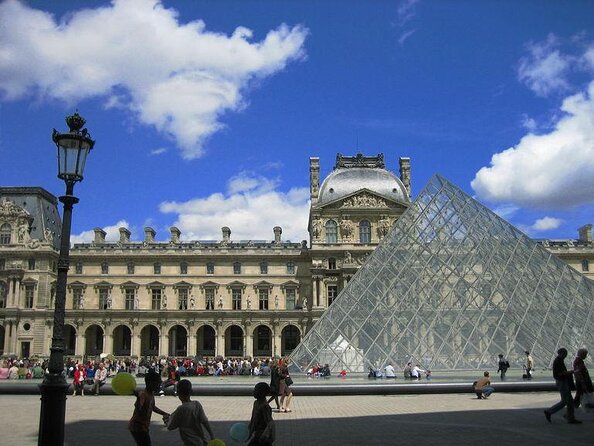
The Louvre is famous for two things: masterpieces and crowds. This tour aims squarely at the second problem. By going near the end of the day, you trade the usual crush for a quieter rhythm, especially around the big, headline works like the Mona Lisa. Your guide’s job then becomes easier too, because you’re not constantly losing ground in bottlenecks.
I like that the tour isn’t just about getting to one painting. You get a curated sweep of the essential sections, with stop points chosen so the flow makes sense while you’re walking through the museum’s biggest highlights. In a place this large, that matters. Without guidance, you often spend time figuring out where to go next instead of looking closely at what’s actually in front of you.
Still, set expectations: “peaceful” doesn’t mean empty. The Louvre draws people all day, and peak season can stay busy even late. If you’re the type who gets frustrated by standing in line near anything famous, come with a flexible mindset.
You can also read our reviews of more tours and experiences in Paris.



Price and value: What you’re really paying for
At $101.58 per person, you’re paying for three practical pieces:
1) the Louvre admission ticket (adult ticket is included for the tour),
2) a guided walk with an art-historian style explanation, and
3) a headset, which is a big deal in a museum where people talk and move constantly.
That bundle is where the value shows. The Louvre ticket alone doesn’t help you connect the dots between artworks, and the museum is so large that even a well-planned self-visit can end up feeling like a checklist. Here, the guide steers your attention—toward the big works and toward details you would likely miss while scanning the walls.
One more value angle: small group size. With a cap of 20, you’re more likely to get your questions answered and stay together without constant regrouping. That also helps with timing, which is everything when you’re aiming for a quieter Mona Lisa.
From Arc de Triomphe du Carrousel to the Pyramid courtyard
Your meeting point is at Arc de Triomphe du Carrousel, in the 75001 area. This is a smart start because it gets you near the Louvre complex without having to fight your way across the busiest interior entrances right at the start.
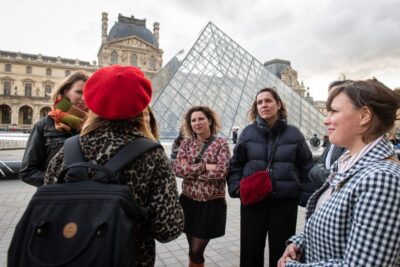
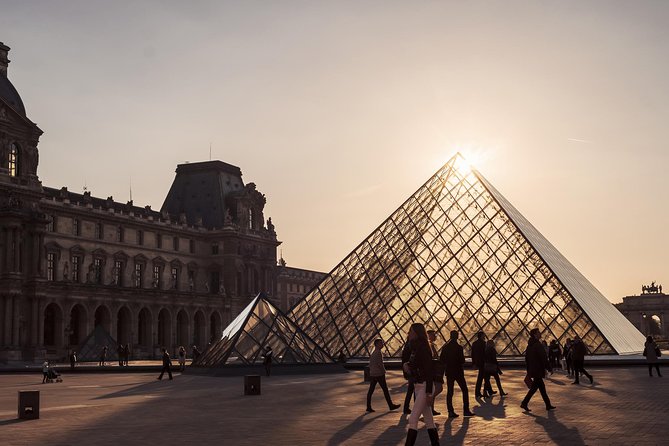
Before you’re deep in galleries, you pass through key courtyard landmarks such as Place des Pyramides and Place du Carrousel, plus the Louvre Pyramid itself—a striking glass triangular prism that people can’t stop photographing. Even if you’ve seen pictures before, standing there in person changes the feeling. It’s not just a backdrop; it’s part of how the Louvre works as a modern entrance to an old palace.
A practical note: the tour is a walking tour with a moderate pace, so wear shoes you’re comfortable moving in for the full 3 hours. There’s no hotel pickup, so you’ll want to arrive on your feet and ready to go.
Inside the Louvre: The route that keeps you moving with purpose
Once you enter the museum, the flow is built around “high impact” stops rather than trying to cover everything. You begin by learning about the palace foundations at the moat, then shift into sculpture and painting highlights that help you understand how different eras and styles relate.
Here’s the kind of tour pacing you can expect:
- Foundations and the moat area to give you context on the setting
- Classical Greek statues, where you’ll hunt for major icons like Venus de Milo and Winged Victory of Samothrace
- A sweep through landmark paintings from Caravaggio, Raphael, and da Vinci
- Time with Géricault’s The Raft of Medusa, a piece that hits differently when someone explains why it mattered in its moment
The nice part is that these aren’t random pick-one-and-run stops. The guide helps you make sense of why the works are famous, what to notice in the composition, and how to read the visual story without turning it into a lecture you can’t use.
One drawback: because it’s a focused highlights tour, you won’t see every corner of the museum. If you’re hoping to spend hours in one department, this isn’t that kind of visit.
Mona Lisa at her most peaceful: how the moment is staged
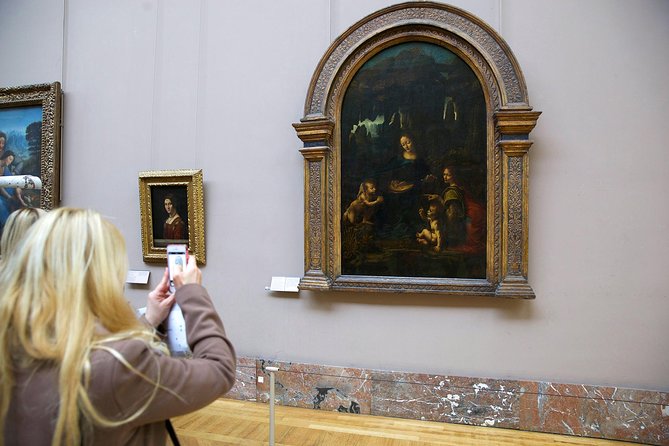
The Mona Lisa is the headline, so the timing is the whole strategy. By reaching her late in the day, you’re more likely to experience her without the wall of bodies you see earlier. Several guides on this tour have been praised specifically for pacing and for helping people get close to the painting despite crowd pressure.
A big reality check: you likely won’t be able to stand there for a full long session the way you would in a smaller museum. The Louvre still manages flow around the painting. But you can still do something more valuable than just rushing a photo: you can actually look. The guide’s context helps, because when you understand what you’re seeing—face, expression, and the painting’s famous reputation—you stop treating it like a selfie checkpoint.
If you’re traveling with art lovers who want more than a quick stop, this timing does the job. If you’re traveling with someone who hates waiting and hates being in crowds, this is also the more humane choice, since the day’s energy is fading.





Art-historian guidance: what makes the stories click
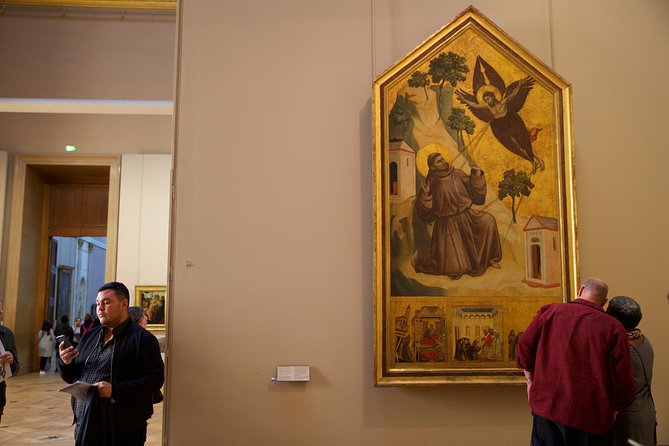
The guide is the difference between seeing art and understanding it. And on this tour, the strongest praise is consistently about how guides teach: clear explanations, strong engagement, and a sense of fun while keeping you on track.
Different guides bring different styles, but names that have come up with top marks include Adam, Julie, Nancy, Felicia, Laurence, Felix, Lee, Omar, Ahmed, Antoine, Stephanie, Daniel, and Aurelia. That matters for you because you can watch for the teaching style that fits your pace. Some guides focus on the biggest anchors and how they relate; others add extra interpretation; some keep families moving and entertained.
One practical benefit that shows up again and again: headsets. When you’re standing among dozens of people, you don’t want to rely on guessing what the guide is saying. The headset makes the stories usable right then, not later in memory.
There’s also a comfort factor. The Louvre provides free folding stools in some areas, and that can be a lifesaver if your feet start talking back. Even if you don’t sit the whole time, knowing you can pause is reassuring.
Louvre highlights beyond paintings: the sculptures that change how you see
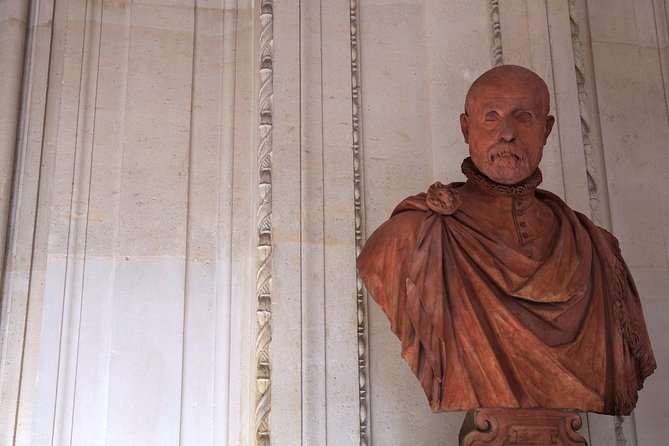
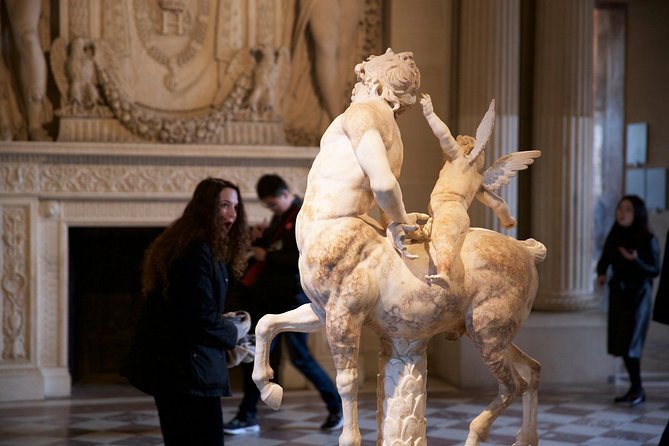
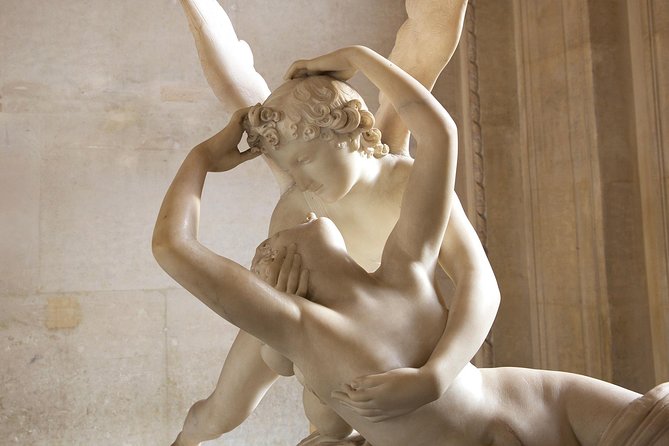
It’s easy to think this tour is only for painters, but the sculpture stops matter. When you shift into the Greek statues, you get a different kind of attention: posture, drapery, and motion. Finding Winged Victory of Samothrace after the foundation context helps you see it as more than a famous image. And Venus de Milo becomes a real object in space instead of a postcard.
Then the tour pivots back to painting—Caravaggio’s dramatic effects, Raphael’s balance, da Vinci’s mix of technique and subtle expression. The guide’s framing links these periods so it feels like one story rather than disconnected rooms.
That’s also why the tour works for mixed groups. If you’re traveling with someone who loves art but not long museums, the tour hits major stops fast. If you’re traveling with someone who doesn’t care much about art, the stories help you get interested in why these works are still talked about.
Practical pacing tips so you don’t hate your feet
A 3-hour walking tour is manageable, but only if you prepare like a grown-up:
- Wear comfortable shoes with grip. Stone floors can be slick.
- Don’t overpack your day. If your evening plans require big stamina, you might feel it after the museum.
- Bring a small water option if you tolerate it well. (The tour is short enough that you don’t need a full backpack routine.)
- Listen early, not later. The guide’s best context often comes right before a key artwork, so keep the headset volume at a usable level.
Also, expect that the Louvre can adjust routes. The tour notes say areas visited are subject to closure, and strikes can affect the museum. When that happens, your guide may modify the path. That’s usually not a disaster—it’s the normal reality of touring a living museum with staff and security constraints.
Who this tour suits best
This one fits best if you want:
- the Louvre highlights without spending your whole day mapping the museum
- a calmer Mona Lisa moment with less crowd pressure
- a guided art storyline that helps you look at famous works more intelligently
- an English guide and clear audio through a headset
You might choose a different style of visit if you:
- want to linger in one gallery for a long time on your own
- prefer a full self-paced museum day (this tour ends when the tour ends)
- are extremely sensitive to any walking or to reroutes due to closures
Should you book Closing Time at the Louvre: The Mona Lisa at her Most Peaceful?
Yes, I’d book it if your goal is a Louvre visit that feels focused and humane. The combination of small group size, headset support, and late-day timing makes it a smart way to see the museum’s biggest name works without getting steamrolled by crowds.
I’d hesitate only if you need total control over your exact path and want to roam afterward. This tour is built for highlights with expert guidance, not for freeform wandering.
If you can handle 3 hours of moderate walking and you want to see the Mona Lisa with better odds of breathing room, this is a solid choice.
FAQ
How long is the tour?
The tour lasts about 3 hours.
What is included in the price?
The tour includes an admission ticket to the Louvre for adults (listed as a €22 entrance ticket), an expert guided walking tour, a local English-speaking guide, and a headset.
What is the meeting point and where does it end?
You meet at Arc de Triomphe du Carrousel, Pl. du Carrousel, 75001 Paris, France, and the tour ends at the Louvre Museum.
Is this tour suitable for most people?
Most travelers can participate, and it is a walking tour. You should be able to walk at a moderate pace without difficulty.
Is the tour in English?
Yes, the tour is offered in English.
How big is the group?
The tour has a maximum of 20 travelers.
What if the Louvre closes parts of the museum or there are strikes?
The Louvre can close areas due to strikes. If time permits, you’ll be contacted in advance. For last-minute closures, cancellations may be communicated at the meeting point, and the guide may modify the areas visited.
What is the cancellation window?
You can cancel up to 24 hours in advance for a full refund. If you cancel less than 24 hours before the start time, the amount paid will not be refunded.