REVIEW · PARIS
Le Marais District & Jewish Quarter – Exclusive Guided Walking Tour
Book on Viator →Operated by Babylon Tours Paris · Bookable on Viator
Le Marais tells stories on every corner. This guided walk through Le Marais and the Jewish Quarter strings together centuries in a way that feels practical, not academic: courtyards and squares, then the streets of the Pletzl, and finally major architectural contrasts like the Centre Pompidou. It is the kind of route where you notice details you would otherwise walk past.
What I love most is how the guide anchors big themes in specific places. The mix of Place des Vosges-scale beauty and hands-on history makes the area click fast, and it works even if you only have a couple hours in Paris. I also like that the tour makes WWII-era memory part of everyday street-level sightseeing, especially around the Jardin des Rosiers and the story of Joseph Migneret.
One consideration: you will not go inside synagogues, and some stops are outside-only due to security. If your priority is lengthy museum time or synagogue interior access, this tour may feel too focused on walking and viewpoints rather than doors you can walk through.
In This Review
- Key highlights that make this tour worth your time
- Le Marais and the Jewish Quarter: why this walk makes sense
- Showing up at Saint-Paul and staying comfortable for 2.5 hours
- Stop 2: Saint-Paul-Saint-Louis church and the Jesuit architectural link
- Stop 3: Hôtel de Sully courtyard and garden (Renaissance with Baroque notes)
- Stop 4: Place des Vosges, the Marais square you should not skip
- Stop 5: Rue des Francs Bourgeois and shopping streets with history
- Stop 6: Musée Carnavalet and Hôtel Carnavalet (what you see without extra tickets)
- Stop 7: Rue des Rosiers and the center of the Jewish Quarter
- Stop 8: Jardin des Rosiers and Joseph Migneret’s WWII story
- Stop 9: Centre Pompidou from the street, not as a full museum day
- Stop 10: Hôtel de Ville, ending at one of Paris’s long-running power centers
- Stop 11: Église Saint-Gervais-Saint-Protais, first French Baroque in Paris
- Price and value: what $59.69 buys you in the Marais
- Which type of traveler will love this tour most
- Should you book this Le Marais & Jewish Quarter walking tour?
- FAQ
- Where does the tour start?
- How long is the walking tour?
- Is the tour offered in English?
- Is it private or shared?
- What is included in the tour price?
- Are synagogues included?
- Do I need separate tickets for any stops?
- What should I bring and expect for weather?
Key highlights that make this tour worth your time
- 2.5 hours with a tight route that covers major sights without turning into a marathon
- Royal Marais landmarks first, then the Jewish Quarter streets like Rue des Rosiers and the Pletzl
- WWII remembrance on the route via the Jardin des Rosiers and Joseph Migneret’s story
- Architecture contrasts in one walk, from Renaissance and Baroque details to the high-tech look of Centre Pompidou
- Strong guide impact, with multiple guides praised for clarity, energy, and managing the group well (names like Hugo, Eden, Francois, Alasdair, Agustina)
Le Marais and the Jewish Quarter: why this walk makes sense
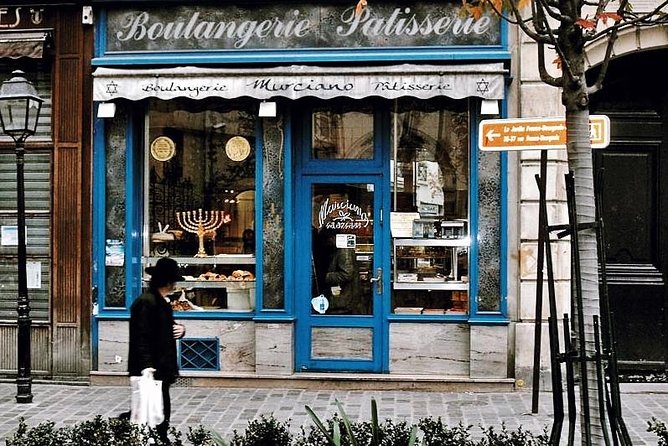
Le Marais is one of those neighborhoods where Paris feels layered. You can see old Paris in the stonework, then watch modern Paris play out in shops, cafés, and street life. This tour ties it all together by moving in order: start with the Marais as a historical power center, then shift toward the Jewish Quarter that put new cultural weight on the area.
The Jewish Quarter portion is especially helpful for first-timers. You get context for street names and what happened here over time, without needing you to read a lot of background before you start walking. And because it is a guided route, you do not have to guess what you are looking at.
Best of all, the tour is designed for real sightseeing. It runs rain or shine, lasts about 2.5 hours, and stays near transit. That matters because Le Marais can eat time fast when you are hunting for the next landmark.
You can also read our reviews of more walking tours in Paris



Showing up at Saint-Paul and staying comfortable for 2.5 hours
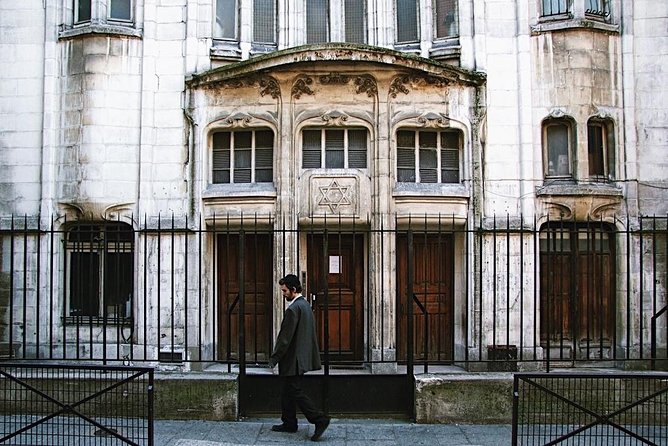
The tour starts around Saint-Paul in the 4th arrondissement, and it finishes back in the Marais area after the last church glimpse near Hôtel de Ville. Plan on a moderate walking pace and wear comfortable shoes—this is not a sit-and-stare museum day.
A detail that pays off: you need a mobile phone number (with country code) for the day-of coordination. In one guide story, the guide texted the morning of the tour and was there about 15 minutes early, which can help you start relaxed and on time.
Bring water and a small umbrella. The route can be affected by national celebrations, too, with an alternative route provided to still hit the main highlights. That is useful to know ahead of time so you do not get thrown when something feels slightly rerouted.
Stop 2: Saint-Paul-Saint-Louis church and the Jesuit architectural link
You begin with the 17th-century Église Saint-Paul-Saint-Louis, a Jesuit church built after a design inspired by the Gesù church in Rome. Even if you do not know architectural terms, you can still appreciate the intent: this is a church shape and style meant to communicate in a confident, European way.
This stop works as a warm-up. It sets the tone for the rest of the walk: Paris here is not just old buildings for photos, it is a record of who had influence and how taste moved across borders.
Tip for your own viewing: take a minute to look at the church as a whole before you zoom in on details. It makes the later architecture contrasts feel easier.
Stop 3: Hôtel de Sully courtyard and garden (Renaissance with Baroque notes)
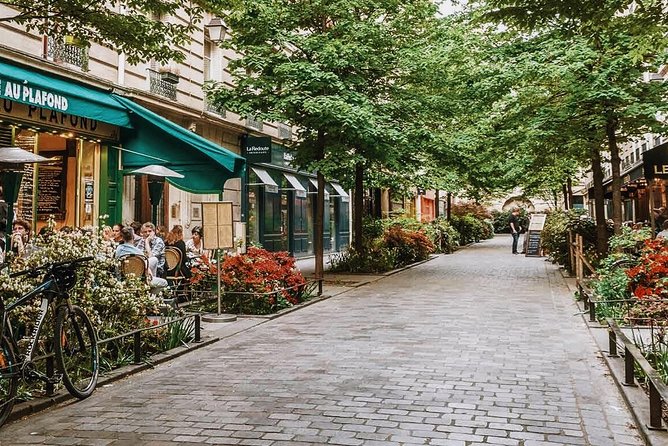
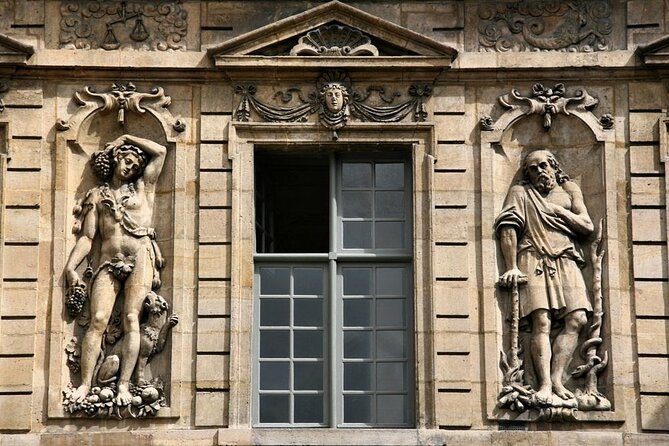
Next comes the Cour et jardin de l’Hôtel de Sully, a building constructed between 1624 and 1630. The style is Renaissance with Baroque elements, designed by Jean Androuet du Cerceau and Yves Boiret.
You will not just hear dates. You will also get the practical idea of why these big hôtels particuliers mattered: this was how wealthy power expressed itself in stone, with monumental forms and controlled outdoor spaces. Standing near the courtyard helps you picture the old layout and how people moved through the neighborhood.
Even as a short stop (about 10 minutes), it sets you up to enjoy Place des Vosges more. You start to recognize the difference between planned civic space and private grand residence.
Stop 4: Place des Vosges, the Marais square you should not skip
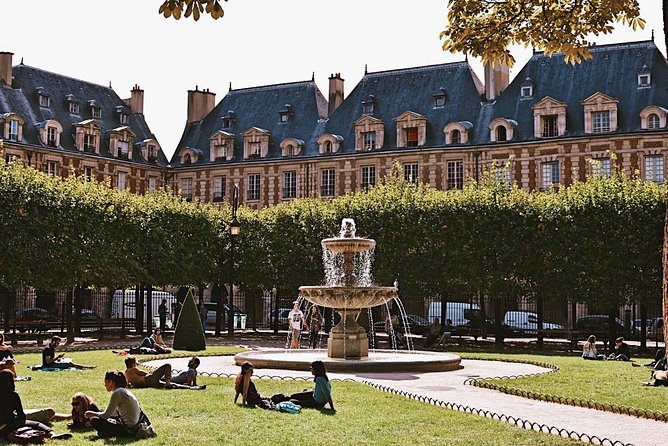
Place des Vosges is the oldest planned square in Paris, and you will feel why the guide points it out early. The square is easy to read from the edges: it is organized, symmetrical, and built to be a public stage.
What makes this stop valuable on a guided route is that you get the historical angle alongside the visual one. The square is not only a pretty stop; it is part of how the Marais earned its reputation and identity over time.
If you like photography, arrive with patience for your framing. The square can look different in daylight and shadow, so even a brief pause can turn into a better photo than you expected.
You can also read our reviews of more guided tours in Paris






Stop 5: Rue des Francs Bourgeois and shopping streets with history
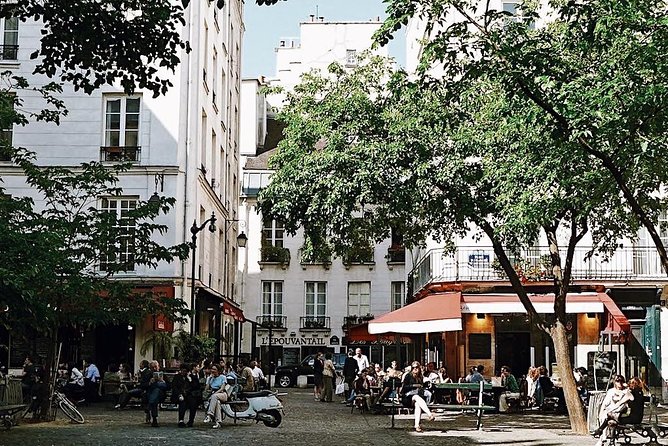
Rue des Francs Bourgeois is one of the longer streets in the Marais and a favorite for fashion boutiques today. The tour uses it as a bridge: you go from grand planning (Place des Vosges) into the street scale where everyday commerce and identity show up.
On a walk like this, the guide’s job is to stop you from treating it like just another shopping lane. The street name and the mix of old mansions nearby help you understand the Marais as a place where elites and ordinary life overlapped.
If you want a strategy: when the guide points out a building façade, look up first, then down at street level. You will often notice a shift in style or era, even within a few steps.
Stop 6: Musée Carnavalet and Hôtel Carnavalet (what you see without extra tickets)
You will pass Hôtel Carnavalet, a rare example of Renaissance architecture in Paris along with the museum setting. Musée Carnavalet focuses on Paris past and helps explain why the city feels the way it does now.
Important practical point: museum entry is not included, so you will likely see more from the outside than as a full interior visit. That is not a problem if you think of this as a guided orientation plus historical storytelling. It is a problem if you were hoping to squeeze in a full museum session on top of the walking tour.
For best value, treat the museum as a decision point. If you are the type who loves “greatest hits” city history, you can come back another day. If you want only the highlights today, you still get the context on the walk.
Stop 7: Rue des Rosiers and the center of the Jewish Quarter
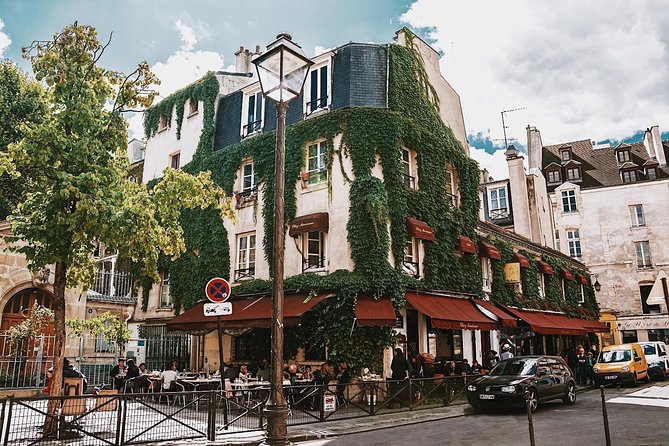
Now the tour pivots toward the Jewish Quarter, focusing on the streets that helped put the Marais on the map through the 18th and 19th centuries. Rue des Rosiers sits at the center, and you will see the area’s food and shop energy as part of the experience.
The guide’s commentary helps you read the street. It is easy to walk through and just see current life, but with the historical context, you start noticing how the neighborhood identity formed.
One thing I like here: the tour does not just tell you history as a lecture. It connects history to what you are seeing in front of you—street-level clues, the rhythm of commerce, and the significance of place names.
Stop 8: Jardin des Rosiers and Joseph Migneret’s WWII story
This is the most emotionally grounded stop. The Jardin des Rosiers is a small garden tucked between hotels and hidden behind boutiques. The garden honors Joseph Migneret, a school principal who hid dozens of students in his home during WWII. He was eventually arrested and killed.
Even if you have visited the Marais before, this kind of stop changes how you experience the neighborhood. It is a reminder that “nice streets” can hold painful chapters. A good guide makes the facts clear and keeps the tone respectful, so it feels like memory, not a shock tactic.
If you want to get the most out of it, slow down for this one. Take 60 seconds of quiet looking at the space before the guide moves on. It helps the story land.
Stop 9: Centre Pompidou from the street, not as a full museum day
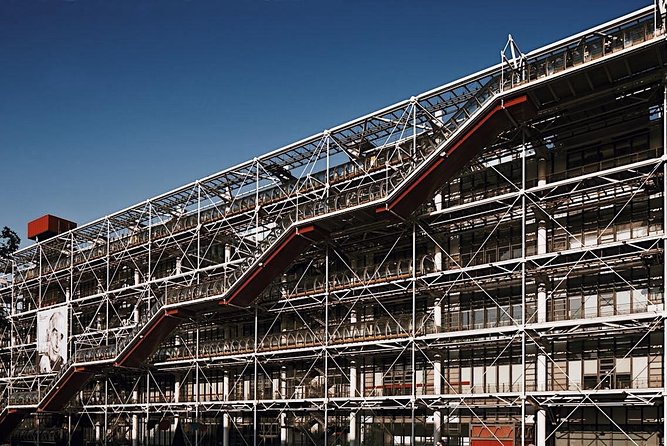
Near the end, you get to Centre Pompidou. Its exterior is famous for high-tech style, and the idea behind the complex was to bring different forms of art and literature together, connected to France’s first Minister of Cultural Affairs.
Here is the trade-off: museum entry is not included. So what you get is the viewpoint and the explanation that makes the building understandable in its cultural context. If you want to go inside, you will need a separate ticket and time.
This stop still earns its place in the tour. You get a sharp contrast: old Paris courtyards and squares, then a modern Paris cultural engine. That contrast is part of how Le Marais feels today.
Stop 10: Hôtel de Ville, ending at one of Paris’s long-running power centers
The tour finishes at Hôtel de Ville, the building that has housed Paris municipal administration since 1357. The guide frames it as the local seat of power, which helps you connect the neighborhood stories to how cities are actually run.
This works well as an ending point. You are not just dropped somewhere random—you end at a civic landmark where the history of the city makes practical sense.
If you plan what to do next: this area is also a good launchpad for self-guided exploring nearby, since you end near a hub of streets rather than deep in a residential pocket.
Stop 11: Église Saint-Gervais-Saint-Protais, first French Baroque in Paris
Next to Hôtel de Ville, you catch a glimpse of Église Saint-Gervais-Saint-Protais. It is considered the first example of French Baroque style in Paris. It was a parish church until 1975 and is now the headquarters of the Monastic Fraternities of Jerusalem.
This stop is a strong final note because it ties style, religion, and modern use together in a simple way. You are not just learning that the church exists—you get what it became.
If your camera battery is low, prioritize looking over shooting. The baroque style can be more satisfying when you see it slowly rather than trying to capture everything at once.
Price and value: what $59.69 buys you in the Marais
At $59.69 per person for about 2.5 hours, you are mostly paying for the guide and the structure of the walk. Many of the sights around this route have free exterior viewing, so the guide’s job is to make those free moments feel richer.
What is included:
- A walking tour lasting about 2.5 hours
- A guide dedicated to your group (the fully private setup does not apply if you choose a semi-private option)
- The tour runs rain or shine
What you should plan for:
- No hotel pickup or drop-off (Uber or taxi is the practical choice)
- Gratuities are optional
- Musée Carnavalet and Centre Pompidou entry are not included
- No synagogue visits, since access is restricted for security reasons
- Some stops may not be visited from the inside
That last point matters. The tour can show you the city without promising interior access at every stop. If you want lots of indoor time, you may need a separate museum or synagogue-focused visit.
Which type of traveler will love this tour most
This is a great fit if you want a smart overview of Le Marais with the Jewish Quarter as a central thread. It is also good if you like architecture but do not want to spend your trip hunting for facts alone.
It suits:
- First-time visitors who want the Marais story fast
- People who want a mix of royal Paris, architecture, and Jewish history
- Anyone who appreciates respectful WWII context built into a real walking route
- English speakers since it is offered in English
It may be less ideal if:
- Your top goal is entering synagogues or spending long hours inside museums
- You prefer big open-ended wandering without a structured route
Should you book this Le Marais & Jewish Quarter walking tour?
Book it if you want a guided route that turns recognizable streets into meaningful context, especially with the WWII remembrance built into the neighborhood walk. The standout for me is the way the tour connects grand Paris landmarks to the smaller street-level reality of the Pletzl and Rue des Rosiers, then closes the loop at Hôtel de Ville.
Skip it or pair it with other tickets if you need inside access everywhere or you want a full museum day. Since Musée Carnavalet and Centre Pompidou entry are not included, you will want to plan separate time if those interiors are your main goal.
FAQ
Where does the tour start?
The tour starts at Saint-Paul, 75004 Paris, France.
How long is the walking tour?
It runs for about 2 hours 30 minutes.
Is the tour offered in English?
Yes, the tour is offered in English.
Is it private or shared?
It is set up as a private walking tour/activity where only your group participates. A semi-private option may exist, depending on what you choose.
What is included in the tour price?
You get the guided walking tour for about 2.5 hours. Admission tickets for some stops are free where noted.
Are synagogues included?
No. The tour does not include entry into any synagogues because access is restricted for security reasons.
Do I need separate tickets for any stops?
Yes. Musée Carnavalet and Centre Pompidou entries are not included based on the tour details. Other listed stops have free admission where noted.
What should I bring and expect for weather?
You should dress appropriately since it runs rain or shine. Comfortable shoes are recommended, along with water. An umbrella is recommended in case of rain, and a hat in summer.