REVIEW · PARIS
Paris Montmartre & Sacre Coeur Semi-Private Guided Tour 12ppl Max
Book on Viator →Operated by Babylon Tours Paris · Bookable on Viator
Montmartre is a world of hills, art, and views. This semi-private tour gives you a small group (12 max) and a guided push up to Sacré-Cœur, so you get the lay of the land fast. The only real catch is the walk: this is a climb on uneven cobblestones, so you’ll want solid shoes and a moderate fitness level.
I like that the pacing is built for real questions, not just a stampede. Guides often bring the neighborhood to life, and you can feel that in the way they talk about landmarks and everyday details, the kind you’d miss wandering alone (names like Alistair, Eden, and Georgia come up in guide experiences). It runs rain or shine, so you don’t have to stress about weather derailing your Montmartre plan.
One more consideration: a few stops are primarily exterior sights, and some interiors may be limited by security. If you’re hoping for lots of ticketed museum time, this tour is more about “see, learn, and enjoy” than a full-day deep dive.
In This Review
- Key things that make this tour worth your time
- Starting at Blanche Metro: why the first climb matters
- Sacré-Cœur Basilica: the views, the inside time, and what to watch for
- Montmartre’s classic trio: windmill start, Moulin Rouge area, and the cabaret legend
- Van Gogh, Picasso vibes, and the alleyway side of “modern art”
- Place Dalida and the Montmartre culture loop
- Jardin Sauvage de St-Vincent and the Clos Montmartre vineyard
- Cabaret history: Au Lapin Agile and the Montmartre Bohemian set
- Le Bateau-Lavoir and Place des Abbesses: finishing with style
- Dalí in quick bites: Espace Dali and Maison de Dalida
- Price and value: is $59.69 for 2.5 hours fair?
- Who should book, and who should skip
- Should you book this Montmartre & Sacré-Cœur tour?
- FAQ
- FAQ
- How big is the group?
- What’s the duration of the tour?
- Where does the tour start and end?
- What language is the tour offered in?
- Is the tour only outdoors?
- Are any attractions included for free?
- Does the price include hotel pickup or drop-off?
- Are gratuities included?
- Is the tour accessible for wheelchair users?
- What should I bring for the walk?
- What if the tour doesn’t meet minimum participants?
Key things that make this tour worth your time
- Small-group feel (max 12): you get breathing room for questions and photos.
- Sacré-Cœur photo payoff: you time the climb around major viewpoints from one of Paris’s highest points.
- Montmartre’s art-world trail: Moulin Rouge windmill area, Van Gogh’s house area, Le Bateau-Lavoir, and more.
- “Hidden Paris” detours: a wild-plant garden section and the Clos Montmartre vineyard tucked behind the main streets.
- Dalí stops without museum overload: quick looks at Espace Dali and the Maison de Dalida area.
- Multiple guide styles, one common goal: the tour’s structure stays steady, but storytelling energy varies by guide.
Starting at Blanche Metro: why the first climb matters
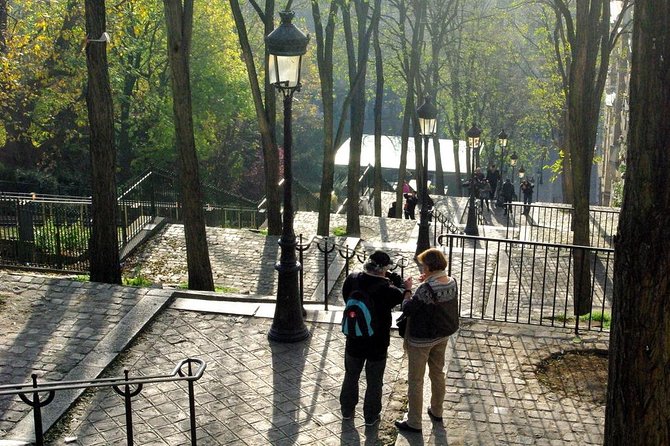
You meet at the Blanche Métro station near Montmartre, then your guide leads the group uphill right away. That matters because Montmartre isn’t just a neighborhood you “visit.” It’s a hill you work through. Your legs warm up, your bearings click into place, and by the time you’re near Sacré-Cœur, everything starts to make sense.
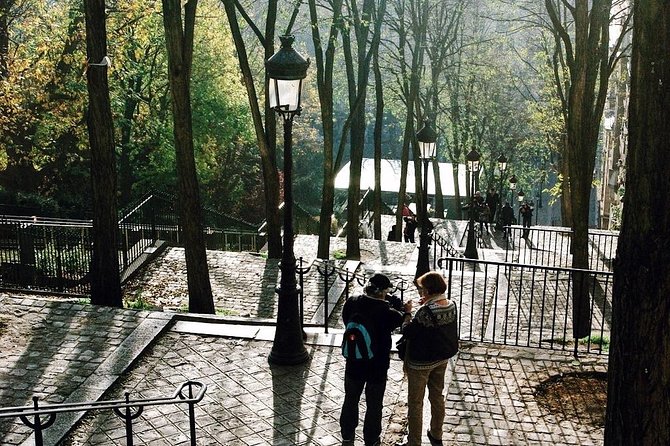
Expect cobbled streets, uneven ground, and stairy sections. Reviews consistently call out that the climb is real, even if it’s totally manageable with the right mindset. If you want an easy hack, consider bringing walking sticks if you use them at home; the terrain is much nicer when you have a bit of support.
The group size also affects your start. With up to 12 people, you don’t get pulled into long gaps the way larger walking tours can. You’ll still share the sidewalks with other visitors (Montmartre is popular), but your guide can adjust pacing and keep the group together.
You can also read our reviews of more guided tours in Paris



Sacré-Cœur Basilica: the views, the inside time, and what to watch for
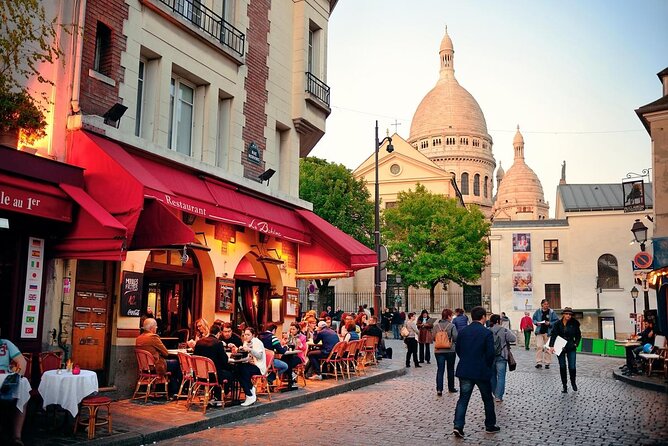
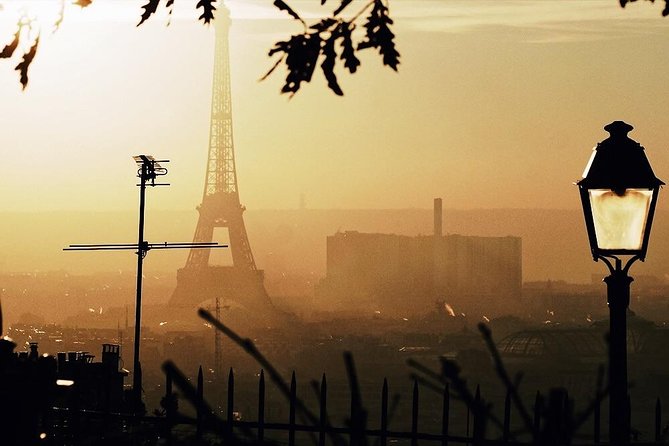
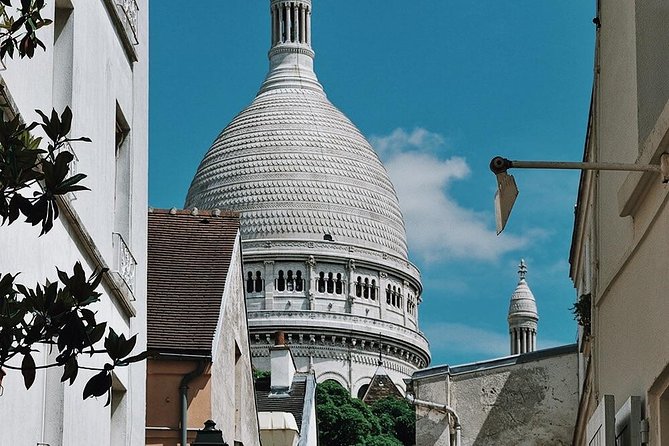
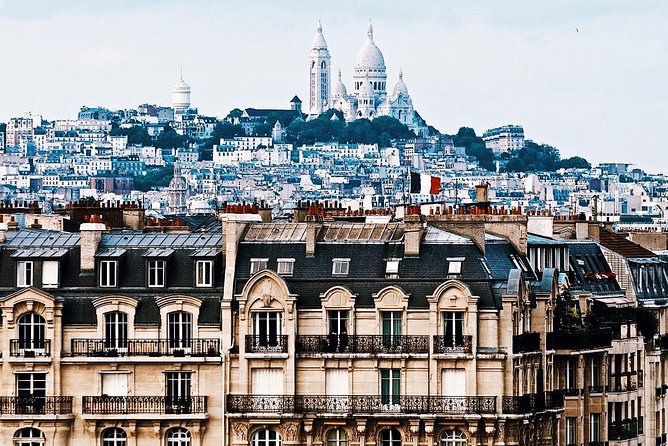
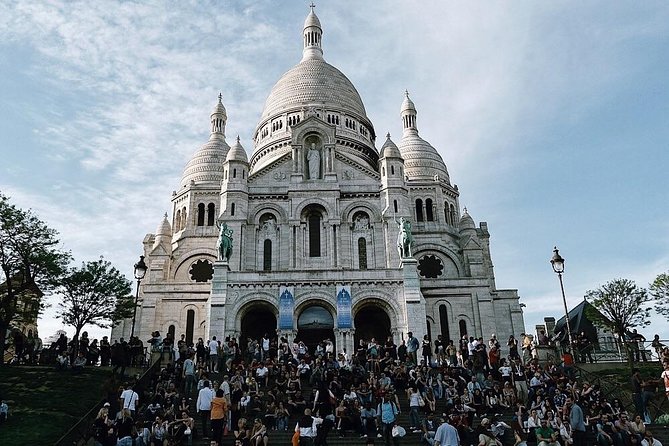
The headline moment is Sacré-Cœur Basilica. You reach it after climbing the butte, and you get a major photo stop from one of the highest points in Paris. In clear weather, the city stretches out in layers, and the bright white basilica feels almost unreal against the skyline.
Your tour also includes time to enter the basilica. The interior is famous for its large mosaic depicting Jesus Christ, and it’s one of those stops that benefits from having a guide point out what you’re looking at. Without context, you can still enjoy the space, but with a guide you understand why it’s such a standout.
Timing can make a difference. If you can choose a later start (when the light softens), the end of your tour can align with that “Paris glow” feeling people love. Even without a perfect sunset, Sacré-Cœur is a strong anchor for this itinerary because it turns the walking into a story arc: climb, summit, then wind down through lesser-seen streets.
One practical note: security rules and crowds can limit access at certain points. The tour is designed to work around this, but you should keep expectations flexible about how much you can see inside any one place.
Montmartre’s classic trio: windmill start, Moulin Rouge area, and the cabaret legend
Montmartre’s personality begins near Moulin Rouge. At the base area, you’ll hear about the windmill that still spins slowly. That little detail sets the mood: this district has been performing and attracting attention for over a century, and your guide connects modern landmarks to what made them famous in the first place.
From there, you’ll move toward the Moulin Rouge cabaret area for a short stop and context. This isn’t a show ticket. It’s a “get it on the map and understand why it matters” moment—perfect if your goal is orientation and storytelling without turning the morning (or evening) into a ticket hunt.
A heads-up based on real pacing: the beginning can feel more “background” than “street theater,” especially if you’re hoping for only side-street surprises from minute one. If you like a narrative build-up—how the cabaret world links to artists and the district’s identity—this start will click.
Van Gogh, Picasso vibes, and the alleyway side of “modern art”
Montmartre’s art legacy isn’t just museum talk. Your route includes areas tied to the artists who lived and worked in the district, and the guide helps you connect the dots.
You’ll see Van Gogh’s house area on Rue Lepic (a short, focused look). Even when you’re not going inside, it’s meaningful because it places you in the real geography of the artist’s life. Guides also tend to frame why Montmartre attracted painters and writers: studios, cheap spaces, and communities that formed around the same streets.
You’ll also pass key art-world touchpoints like:
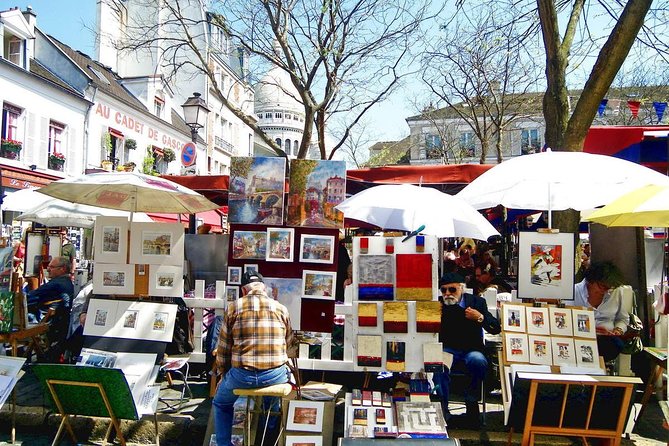
- Place du Tertre, where artists set up easels (a reminder that Montmartre’s creative identity is still very much alive).
- Le Bateau-Lavoir, tied to the artistic scene starting in 1889, originally known as an artist residence where painters, writers, actors, and art sellers gathered to live and discuss ideas.
If you’ve been to Paris before, you already know the famous attractions. This is different because it feels like you’re walking through the “workshop streets” rather than just the big monuments.
Place Dalida and the Montmartre culture loop
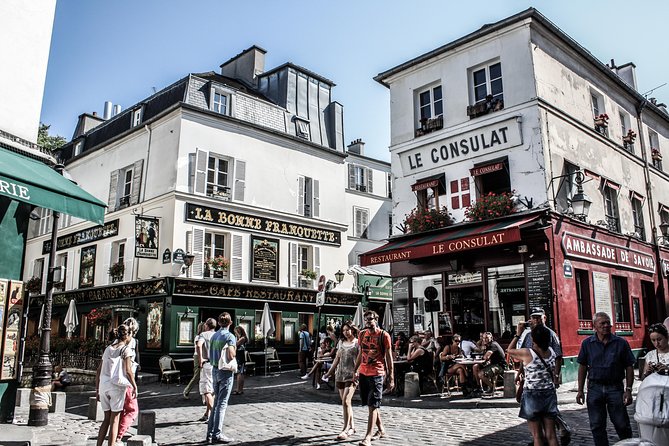
Between the bigger-ticket landmarks, your tour includes stops that give Montmartre its local rhythm. A great example is Place Dalida, dedicated to the French music icon Dalida. It’s not a museum stop; it’s a quiet square moment, and it helps break up the climb with something calmer.
You’ll also pass by Amélie-related references in the district. The neighborhood has that cinematic feel, and a good guide points out where the vibe comes from—so even if you’re not laser-focused on film trivia, you still understand why Montmartre feels like a set.
These shorter stops matter because they keep the tour from becoming one long “look, point, move on.” You’re constantly returning to what makes Montmartre Montmartre: music, art, cafés, and the oddball corners that tourists usually skip.
You can also read our reviews of more private tours in Paris






Jardin Sauvage de St-Vincent and the Clos Montmartre vineyard
This is where the tour becomes more than a greatest-hits walk.
You’ll pass Jardin Sauvage de St-Vincent, a sloping natural area left in a fragile state to watch plant life and biodiversity. The guide explains what you’re seeing and why it’s different from a typical manicured park. Expect a short stroll and a “look closer” attitude—elderberry trees, ivy, and the wild insect ecosystem that comes with the territory.
Then you’ll reach Le Clos Montmartre (the Clos Montmartre vineyard), one of the last remaining vines in central Paris tucked into side streets behind Sacré-Cœur. It’s a surprising visual contrast: you’re in the middle of a major European city, and yet you’re standing next to living vines on a hillside.
For me, these stops are the proof that this isn’t just a tourist checklist. They’re built for curiosity. If you like Paris when it’s a little off-script, you’ll appreciate the way the itinerary mixes art landmarks with nature and local survival stories.
Cabaret history: Au Lapin Agile and the Montmartre Bohemian set
Your tour includes a look at Au Lapin Agile, a cabaret known as a home for the Montmartre bohemian set until 1914. The sign itself is a memorable feature, and your guide provides the context that makes the area feel less like trivia and more like cultural history.
This kind of stop works especially well in a small group, because you’re not rushing past it to chase the next “must see.” You can slow down, absorb the atmosphere, and ask how the cabaret scene shaped the district’s identity.
Le Bateau-Lavoir and Place des Abbesses: finishing with style
As you near the end of the tour, you’ll pass Place des Abbesses, known for its Art Nouveau Metro entrance designed by Hector Guimard. It’s one of the two surviving entrances of that style, and it’s a nice reminder that Montmartre isn’t stuck in the past—it keeps reshaping itself while keeping visual signatures.
The tour then ends in the Montmartre neighborhood. That’s ideal because it leaves you in the right place to continue on your own—whether you want another café stop, more wandering, or simply to take your time absorbing the streets now that you understand their layout.
Dalí in quick bites: Espace Dali and Maison de Dalida
This tour includes Dalí-related stops, but it doesn’t turn into a full museum day. You’ll pass Espace Dali, described as a permanent exhibition with around 300 original artworks, focused on Salvador Dalí sculptures and engravings. The visit window is short, so it’s designed for a taste: see the space, get the context, and keep moving.
You’ll also pass La Maison de Dalida, the house where Dalida lived between 1962 and 1987, and it’s described as the location connected to her death in 1987. Since the stop is short, a guide’s ability to frame what you’re seeing matters. Otherwise, it’s easy to treat it like a photo moment only.
Price and value: is $59.69 for 2.5 hours fair?
At $59.69 per person for about 2 hours 30 minutes, this tour is priced like a smart, time-efficient Montmartre orientation. You’re paying for:
- A professional guide who manages the route and story structure
- A semi-private group size (12 max)
- A hike-to-summit experience with multiple stops, most of them free to view from the outside
- Real “where you are, why it matters” context for the art and cabaret landmarks
What you should weigh: the tour doesn’t include hotel pickup/drop-off, so you’ll want to get yourself to Blanche (UBER/taxi is suggested, or public transit). Also, while some places are free or pass-by oriented, not every “name on the map” spot is something you’ll enter for a long visit.
Still, if you value not wasting time, this is good value. Montmartre can be chaotic to navigate on your own. This route gives you an organized climb, a big viewpoint payoff, and a set of side streets you’d likely miss if you only chased the most famous photos.
Who should book, and who should skip
This tour fits best if you:
- Want a starter tour to learn Montmartre’s layout and art/cabaret threads
- Prefer small-group walking over large crowds
- Are happy with a guided mix of exterior landmark views and a basilica interior stop
- Like the idea of a nature-and-history detour (Jardin Sauvage and Clos Montmartre)
Skip it (or choose something gentler) if you:
- Use a wheelchair or have serious walking limitations. The tour specifically notes it isn’t recommended for those with walking disabilities or wheelchair use.
- Hate steep uphill walking. Reviews are clear: the climb is part of the deal, even when the pacing feels manageable.
Should you book this Montmartre & Sacré-Cœur tour?
Yes, I think you should book it if you want a well-paced Montmartre experience that avoids the “random wandering” problem. The combination of Sacré-Cœur viewpoints, art-world stops like Van Gogh’s house area and Le Bateau-Lavoir, plus the surprise detours (wild-plant garden and Clos Montmartre vineyard) makes it feel like more than a standard highlights walk.
Book it with a realistic plan: wear comfortable shoes, carry water, and expect uneven pavement. If you’re arriving with low energy or you want long indoor museum time, you might feel constrained by the short stop durations.
FAQ
FAQ
How big is the group?
It’s semi-private, with a maximum of 12 travelers.
What’s the duration of the tour?
The tour is about 2 hours 30 minutes.
Where does the tour start and end?
It starts at Blanche Métro station and ends in the Montmartre neighborhood.
What language is the tour offered in?
The tour is offered in English.
Is the tour only outdoors?
It’s a walking tour, and it includes time at the Basilique du Sacré-Cœur. The tour runs rain or shine.
Are any attractions included for free?
Many stops are listed with admission ticket free, but some specific sights are marked as admission ticket not included.
Does the price include hotel pickup or drop-off?
No. Hotel pickup and drop-off are not included.
Are gratuities included?
No. Gratuities are optional.
Is the tour accessible for wheelchair users?
No, it’s not recommended for those with walking disabilities or using a wheelchair.
What should I bring for the walk?
Wear comfortable shoes and bring items like a water bottle; an umbrella is recommended for rain, and a hat can help in summer.
What if the tour doesn’t meet minimum participants?
If minimum numbers aren’t met, you’ll be offered an alternative date or a full refund.