REVIEW · PARIS
Paris Latin Quarter Walking Tour: History & Culture – Small Group
Book on Viator →Operated by Dayin · Bookable on Viator
Paris’s Latin Quarter rewards slow looking.
This 2-hour small-group walk strings together Roman Paris, medieval street life, and big-dog landmarks without making your day feel like a checklist. I like that the pace leaves room to ask questions, and I especially like that you start with Sorbonne’s doorstep and end right in Jardin du Luxembourg—so you can keep wandering after the tour.
Two other things I’d watch for: first, most stops are short (around 10–20 minutes), so you won’t linger like you would solo. Second, like many Paris walks, you’ll cover ground on foot, so comfortable shoes matter even if the group is small.
In This Review
- Key takeaways before you go
- Where this Latin Quarter route really shines
- Starting at Sorbonne, ending in Luxembourg Gardens
- Small-group format: what the 8-person limit changes
- Arenes de Lutece: Roman Paris you can walk into
- Place Monge and Rue Mouffetard: squares and market streets
- Place de la Contrescarpe: a quieter pocket in the heart of it all
- St. Etienne du Mont: a quick stop with big-photo potential
- Pantheon: tying the neighborhood’s story to a major landmark
- Luxembourg Gardens: your natural end-of-tour reset
- Is $66.16 good value for this kind of tour?
- What to expect from the guide and the vibe
- Tips for getting more from the 2-hour walk
- Who should book this tour
- Should you book Paris Latin Quarter: History & Culture
- FAQ
- How long is the Paris Latin Quarter walking tour?
- What language is the tour offered in?
- What is the group size?
- Where does the tour start and end?
- How much does the tour cost?
- Is admission required for the stops?
- Do I need to buy a ticket?
- Does the tour run in bad weather?
- Can I cancel and get a full refund?
Key takeaways before you go

- Small group size (8 max) means more back-and-forth and less rushing.
- A tight route packs Roman ruins, classic streets, and the Pantheon into about two hours.
- Free admission stops at multiple points help keep the cost focused on the guide.
- English-led tour with a mobile ticket, easy to handle on the go.
- Ends at Jardin du Luxembourg, a natural place to pause, snack, or keep exploring.
Where this Latin Quarter route really shines
If you’ve visited Paris before, you know the city can feel like a hundred great photos happening at once. This tour does something smarter: it helps you read the neighborhood like a story. You begin at the academic edge of the Latin Quarter near Sorbonne, then trace outward through streets and squares where layers of Paris history are still visible.
The biggest value is the explanation around what you see. The Roman portion matters here, because the Latin Quarter isn’t only about medieval streets and student life. You’ll get the context that turns stone, arches, and street corners into evidence—why this place was important, how the city grew around it, and what to look for as you keep walking.
And it’s not all lecture style. The tour is designed for a relaxed flow with questions welcome. One review mentions Benoit as an engaging guide who clearly made the history stick, and another highlights Waled for tailoring the walk to what the group wanted. That kind of adjustment is a practical win: you get more from the stops you personally care about.
You can also read our reviews of more walking tours in Paris



Starting at Sorbonne, ending in Luxembourg Gardens
The meeting point is Sorbonne University Pierre and Marie Curie Campus, 4 Pl. Jussieu, 75005 Paris. It’s an area that already signals you’re in the middle of the Latin Quarter’s brainy, historic core. You’re also not stuck far from public transport, which matters if you’re trying to fit this into an already-packed itinerary.
The tour ends in Jardin du Luxembourg, 75006. This is one of the smartest finishes you can ask for in Paris. The gardens are a calm landing pad after walking streets and squares. Even if you don’t plan a long sit-down, it’s a great place to regroup, grab a drink, and decide your next move—without fighting crowds or backtracking.
Also, ending in a park helps you avoid the common Paris problem where tours drop you in a busy intersection and you feel like you have to sprint to stay on schedule. Here, you get a natural pause.
Small-group format: what the 8-person limit changes
With a maximum of 8 travelers, you’re not just paying for a guide—you’re buying better timing. In a large group, you’re often stuck listening from the back while the front disappears around a corner. In a small group, you can actually hear, ask, and reposition when the guide points out details.
It also makes the Q&A feel normal, not awkward. The tour is described as relaxed, and that usually means you’ll get more direct answers and less of the rushed feeling that can happen when a guide has to keep everyone moving every 60 seconds.
If you want an even more tailored approach, there’s an upgrade option for a private tour. That’s ideal if you’re traveling as a couple, celebrating something, or you have specific interests like architecture, Roman sites, or how neighborhoods evolved over time.
Arenes de Lutece: Roman Paris you can walk into
The first stop is Arènes de Lutece, with about 20 minutes there and admission noted as free. This is the kind of site that makes Paris feel layered in a way you can actually see.
Why it’s such a strong opener: Roman Paris isn’t usually the first mental image people have for the Latin Quarter. Starting here sets the tone. You’ll get a clearer explanation of how this neighborhood fits into the bigger timeline of the city—and it gives you a reference point for everything you see later.
Practical note: Roman ruins can be visual, but the story behind them can be the difference between noticing stone vs understanding what you’re looking at. If you’re the type who likes to know what mattered, who used it, and why it lasted, this stop is designed for you.
Place Monge and Rue Mouffetard: squares and market streets
Next you move to Marche Monge for about 10 minutes, then to Rue Mouffetard for about 20 minutes. Both are free to visit during the walk, and they play a different role than the Roman site.
Here’s what these stops do for you: they connect the monumental landmarks to everyday life. After Arènes de Lutece, the route shifts to the neighborhood’s human scale—squares where people gather and a famous old street that’s known for its markets and local shops.
For Rue Mouffetard, the key benefit is atmosphere with context. You’re not only walking a classic Paris street; you’re learning what makes it old, why it became known, and how it functions as a meeting point. Even if you don’t stop to shop, it helps you understand why locals keep returning to the same streets.
One small drawback: Rue Mouffetard is the kind of place where you might want more time than a 20-minute stop. That’s the trade-off for squeezing the whole tour into about two hours. If you love markets, plan a little extra wandering after you finish.
You can also read our reviews of more historical tours in Paris






Place de la Contrescarpe: a quieter pocket in the heart of it all
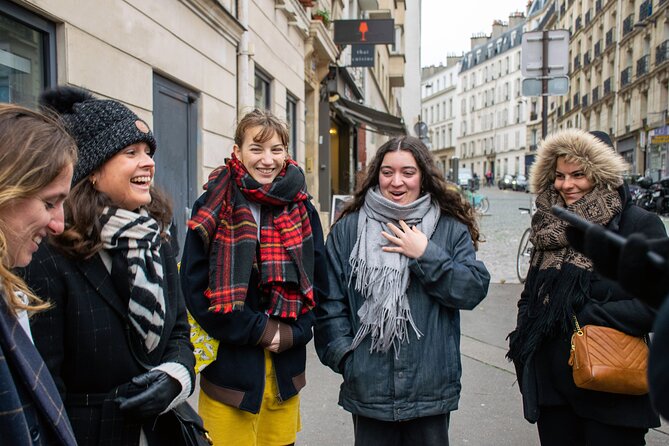
You get Place de la Contrescarpe for about 20 minutes. It’s described as a peaceful square in the heart of Paris, and that’s exactly why it’s a good mid-tour breather.
This stop works well after the more lively market street. You shift from buying and browsing energy to a slower, reflective pace where you can look around and absorb the setting. The guide’s job here is crucial: a square like this can look simple at first glance, but with a bit of context you’ll notice how the location relates to the neighborhood’s history and layout.
If you like walking tours that don’t only hit the biggest names, this kind of square stop is where you’ll feel the difference. It’s the “you’d miss this on your own” part—especially if you usually stick to the postcard highlights.
St. Etienne du Mont: a quick stop with big-photo potential

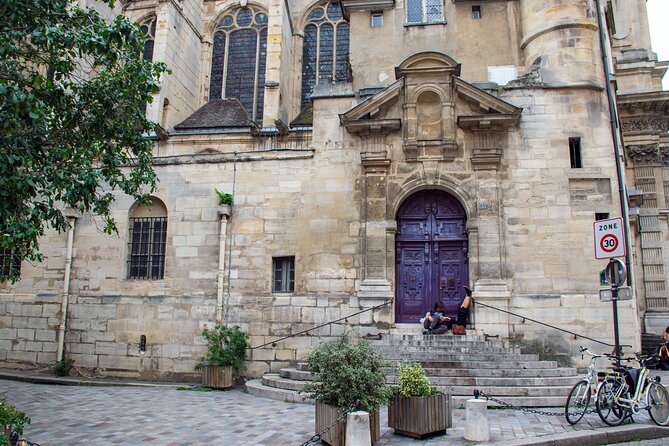
The tour includes St. Etienne du Mont for around 10 minutes. Admission is listed as free. The time here is short, so think of it as a focused orientation stop rather than a full stop-and-stare.
What you can do with that: if the guide points out architectural or historical features, you’ll likely catch details you’d normally overlook. Ten minutes goes fast, so have your camera ready and be ready to look where the guide directs you.
This is a good match for people who want a balance: a meaningful landmark moment, but not so much time that you lose the thread of the rest of the route.
Pantheon: tying the neighborhood’s story to a major landmark
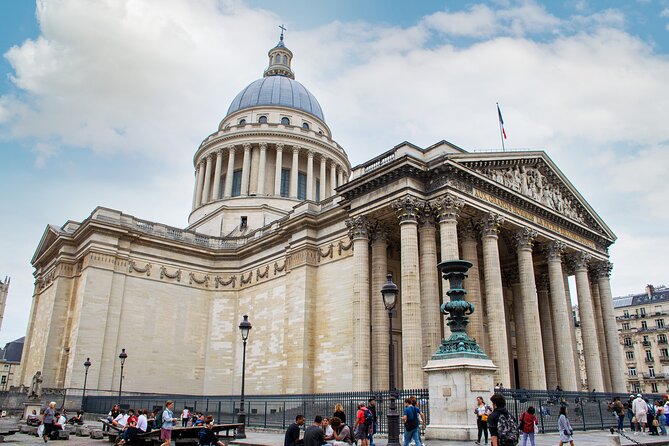
The biggest classic stop is the Pantheon, with about 20 minutes. Again, admission is listed as free.
This is the moment where the Latin Quarter becomes bigger than its own streets. The Pantheon is one of Paris’s iconic landmarks, and it’s also a cultural and architectural anchor. A guided explanation helps you connect what you’re seeing to what the building stands for, and why it matters within the city’s story.
The advantage of having this explained on the walk: it changes how you experience the structure. Instead of just viewing a famous building, you understand what it represents and why people talk about it. That matters because the Pantheon can easily blend into a “yes, it’s there” photo stop if you don’t know what to focus on.
If you’re the type who likes to know context before you arrive somewhere, this tour’s pacing is working for you. You don’t hit the Pantheon in isolation—you get there with earlier history already in your head.
Luxembourg Gardens: your natural end-of-tour reset
You finish at Jardin du Luxembourg (about 10 minutes as part of the tour), with the practical bonus that you can stay after. This is a soft landing—perfect for people who want to keep moving through Paris but hate the feeling of ending a tour in the middle of traffic.
Think of the gardens as your “rewind button.” You can review what you learned while you sit, people-watch, and plan your next stop. If you’re traveling with kids or with anyone who gets tired walking, the finish helps your whole day feel smoother.
Is $66.16 good value for this kind of tour?
At $66.16 per person for roughly 2 hours, the pricing makes sense when you look at what’s included. You’re paying for a local guide plus a route that includes major sights and context—not just time spent walking.
A big value signal is that multiple stops are admission-free during the tour. You’re not stacking ticket costs on top of the guide fee. Instead, you’re using your money for interpretation: the stories behind the sights, the way the neighborhood fits into Paris’s broader past, and the practical guidance that helps you navigate after the tour.
The small group also affects value. Eight people max changes what the guide can do, and that’s not a minor difference in a city where attention gets diluted fast.
If you’re on the fence, ask yourself this: do you enjoy walking when there’s a story to follow? If yes, this price is reasonable. If you only want the shortest possible route to see major monuments with zero talking, you might feel like you could build a self-guided walk. But for most first-time visitors to this area—or repeat visitors who want a smarter way to read the streets—this format is a good deal.
What to expect from the guide and the vibe
This is set up as an off-the-beaten-path style walking tour, with tips to help you navigate after. That matters because the best tours don’t only show you sights. They help you understand how to move through the city with confidence afterward.
From the review details you can infer a guide-friendly environment. People praised Benoit for being engaging and sharing history around the Roman ruins. Another person praised Waled for friendliness, tailoring to interests, and even helping the group fuel up with a great coffee shop early in the day.
You don’t need to plan around those exact moments, but it tells you the guides aim to keep things human: less script, more conversation, and enough flexibility to match what your group cares about.
Tips for getting more from the 2-hour walk
You’ll get the most if you treat it like a guided orientation rather than a “see everything” sprint.
- Wear comfortable shoes. Even with a relaxed pace, it’s still a walking tour.
- Keep questions ready, especially about the Roman parts and why certain squares matter. The tour is set up for Q&A.
- Bring a phone with the mobile ticket accessible. It’s easier than scrambling at the start.
- If you like food streets, plan a little time for browsing after Rue Mouffetard. The tour gives you context; your eyes can do the rest.
Also, the tour runs rain or shine, so bring something to stay comfortable. Paris weather can switch fast, and your enjoyment depends on whether you’re distracted by being wet or cold.
Who should book this tour
This is a great fit if you:
- want a short walking tour that still covers important “layers” of the city
- like Roman history but also want the neighborhood street life afterward
- prefer a small group where you can actually talk to the guide
- want a smooth start near Sorbonne and a calm finish at Luxembourg Gardens
It’s also a good choice for your first or second day in Paris if you’re trying to get your bearings fast in the Latin Quarter.
Should you book Paris Latin Quarter: History & Culture
I’d book it if you like Paris best when it’s explained—when stone and street layouts come with reasons. The route hits Roman ruins, a classic market street, and major landmarks like the Pantheon, then ends in a place that lets you relax and keep exploring.
Skip it only if you’d rather do a fully self-guided walk with longer stops at fewer sites. Because the tour is short, every stop is about hitting the highlights and moving on.
If your goal is to leave the Latin Quarter understanding what you just saw—and feeling like you can navigate the area afterward—this small-group format is a strong match.
FAQ
How long is the Paris Latin Quarter walking tour?
It’s listed as about 2 hours.
What language is the tour offered in?
The tour is offered in English.
What is the group size?
The tour has a maximum of 8 travelers.
Where does the tour start and end?
It starts at Sorbonne University Pierre and Marie Curie Campus, 4 Pl. Jussieu, 75005 Paris and ends in Jardin du Luxembourg, 75006 Paris.
How much does the tour cost?
The price is $66.16 per person.
Is admission required for the stops?
Admission is noted as free for the stops listed in the itinerary, including Arènes de Lutece, Marche Monge, Rue Mouffetard, Place de la Contrescarpe, St. Etienne du Mont, the Pantheon, and Luxembourg Gardens.
Do I need to buy a ticket?
The tour includes a mobile ticket.
Does the tour run in bad weather?
Yes, it runs rain or shine.
Can I cancel and get a full refund?
Yes. There is free cancellation, and you can cancel up to 24 hours in advance for a full refund.