Montmartre rewards slow walking and good timing. This small-group route hits the famous sights and the quieter corners of the hill in about two hours, with a maximum of eight people so you actually get to ask questions. If you meet the guide named Nafi, you’ll notice she’s especially good at keeping things interesting and answering family questions without rushing you.
I also like that the stops are practical: most places are free to enter, so you can spend your money on food later instead of tickets. Plus, the tour runs with multiple departure times through the day, which makes it easier to fit into a packed Paris itinerary.
One thing to consider: it’s still walking uphill. Even with a comfortable pace (and it tends to be slower and more intimate), you’ll want solid shoes and a little patience for the stair-and-slope moments near Sacré-Cœur.
In This Review
- Key points to know before you go
- Why This 2-Hour Montmartre Walk Works for Limited Time
- Group Size, Guide Style, and the Pace on the Hill
- Stop-by-Stop: From Dalida to Moulin Rouge
- Stop 1: Dalida Statue
- Stop 2: La Maison Rose de Montmartre (since 1920)
- Stop 3: Vigne du Clos Montmartre
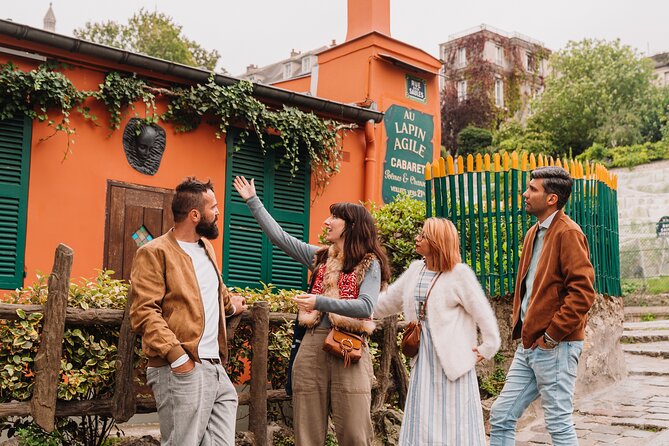
- Stop 4: Au Lapin Agile
- Stop 5: Basilique du Sacré-Cœur
- Stop 6: Place du Tertre
- Stop 7: Vieux-Moulin (Moulin de la Galette)
- Stop 8: Le Bateau-Lavoir
- Stop 9: Wall of Love
- Stop 10: Café des Deux Moulins
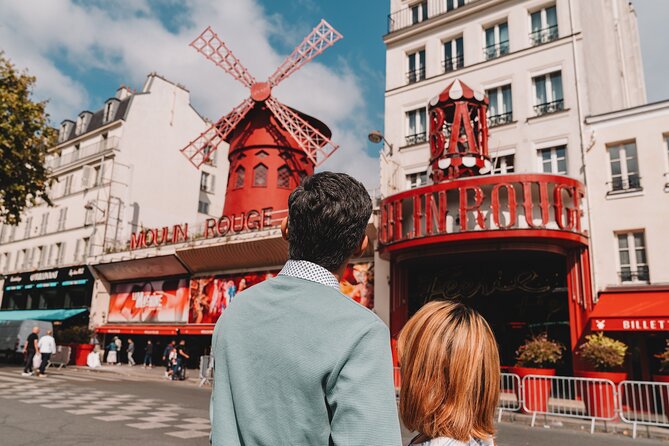
- Stop 11: Moulin Rouge (finish)
- Views at Sacré-Cœur and How the Ending Helps You Keep Moving
- Price and Value: What You Get for $54.13
- Practical Tips so You Enjoy It (Not Just Survive It)
- Who This Tour Is Best For
- Should You Book Montmartre’s Highlights and Lesser-Known Corners Tour?
- FAQ
- How long is the Montmartre walking tour?
- How big is the group?
- What language is the tour offered in?
- Where does the tour start and end?
- Are there admission fees for the stops?
- Are snacks included?
- Do I get a mobile ticket?
- Is the tour accessible for most people?
- Is the tour near public transportation?
- What is the cancellation policy?
Key points to know before you go

- Max 8 people keeps the vibe personal and question-friendly
- Two hours makes Montmartre manageable when you have limited time
- Licensed guide (including Nafi) helps you connect the dots fast
- Most stops are free, so you control what costs extra
- Ends at Moulin Rouge, with metro directions and local food ideas
Why This 2-Hour Montmartre Walk Works for Limited Time
Montmartre can eat an entire day if you let it. This tour is built for the opposite problem: you want the big landmarks, but you also want the story behind them without spending hours wandering in the wrong direction.
You get a tight loop starting near Chez Ginette (101 Rue Caulaincourt) and finishing at Moulin Rouge (82 Bd de Clichy). It’s roughly two hours, with brief pauses at each stop, so you leave with a sense of the neighborhood instead of just photos.
And because the group stays small, the guide can adjust on the fly—speed up for confident walkers, slow down if someone needs a breather. That small-group feel is a big part of why people rate this so highly.
You can also read our reviews of more walking tours in Paris



Group Size, Guide Style, and the Pace on the Hill
The tour caps at eight travelers, and that matters more than it sounds. In a big group, Montmartre can feel like a conveyor belt. With a smaller group, you can hear the explanations and keep moving together without getting left behind.
In the comments, the guide Nafi comes up again and again. The common thread is how accommodating she is—answering questions, adjusting to your needs, and keeping the walk fun rather than lecture-y. It also helps that the pace can be a little slower than you might expect, which is welcome on a hill where every turn feels steeper than the last.
This is also a good fit for first-time visitors. You’ll learn what to notice as you go: the landmarks, the neighborhoods’ artist side, and why certain buildings became famous.
Stop-by-Stop: From Dalida to Moulin Rouge

Think of this as a guided route through Montmartre’s creative DNA—music, painters, cafés, and the kind of corners you’d miss if you just follow the main postcard trail.
Stop 1: Dalida Statue
You start with a tribute to Dalida, a French singer and actress. The bronze statue is described as a graceful homage to her legacy—one of those Montmartre moments that reminds you this hill isn’t only about painters and poets.
What I like here: it sets a tone early. Montmartre grew into an artistic magnet for a reason, and Dalida’s story is part of that bigger cultural mix.
Stop 2: La Maison Rose de Montmartre (since 1920)
Next is the famous pink house/café on a cobblestone corner. It’s been a classic subject for artists and photographers for over a century—exactly the kind of spot where you’ll understand why people keep painting this neighborhood.
A practical note: if you’re into photography, you’ll get a good look without needing to line up. The stop is short, but it’s long enough to absorb why the place matters.






Stop 3: Vigne du Clos Montmartre
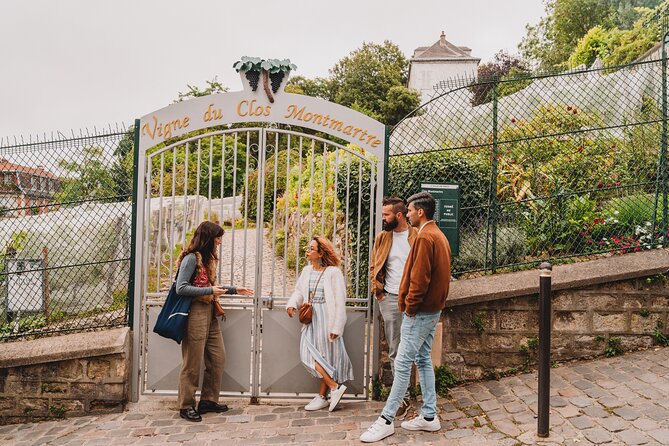
Then comes something you don’t expect in Paris: a working vineyard right inside the city. Clos Montmartre is positioned as one of Paris’s best-kept secrets, and the stop gives you a quick way to see Montmartre beyond cafés and viewpoints.
This is a smart “reset” in the walk. After the postcard-looking façades, you get a real-world working landscape moment—vineyard-life energy instead of tourist energy.
Stop 4: Au Lapin Agile
You shift to one of Montmartre’s best-known bohemian hangouts: Au Lapin Agile. Dating to the 19th century, it’s described as a historic cabaret that attracted artists, writers, and musicians—names like Picasso, Modigliani, and Apollinaire are tied to its story.
This stop is one of those places where a short pause can still feel meaningful, because the guide can connect the building to the creative crowd that made Montmartre famous.
Stop 5: Basilique du Sacré-Cœur
From there you reach Sacré-Cœur Basilica. The big payoff is the panoramic view over Paris, and that viewpoint angle is hard to replicate if you’re doing Montmartre on your own with only a vague plan.
The drawback? This area often brings in crowds. The tour keeps your time focused: you get the viewpoint moment without turning your whole afternoon into a line-management exercise.
Stop 6: Place du Tertre
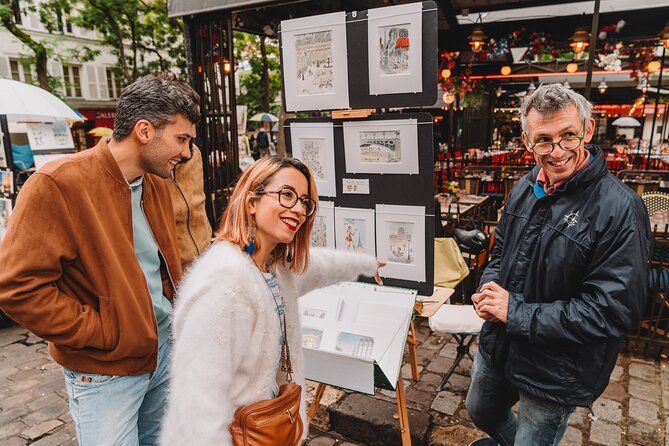
Next is Place du Tertre, the artist square where local painters are part of the scene. If you want that classic Montmartre vibe—easels, sketches, the neighborhood’s creative theater—this stop delivers.
If you’re shopping or bargaining, keep your eyes open. The tour stop is brief, so use it to decide if you want to linger after your walk ends.
Stop 7: Vieux-Moulin (Moulin de la Galette)
Then you meet Moulin de la Galette, one of the last remaining windmills in Montmartre. It dates to the 17th century, started as part of a flour mill, and later became a dance hall in the 19th century—an important piece of how this hill turned into a place for public art and nightlife.
The story also ties into paintings by Renoir, van Gogh, and Toulouse-Lautrec. This stop helps you understand why people keep returning to Montmartre as an inspiration source, not just a photo spot.
Stop 8: Le Bateau-Lavoir
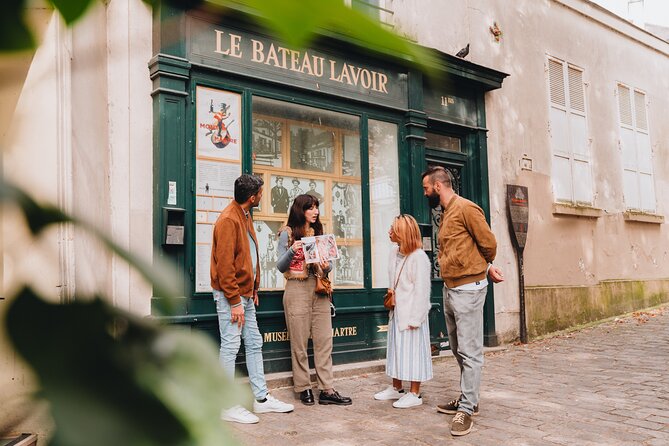
You move into the area connected to modern art origins via Le Bateau-Lavoir. This historic building is described as the former hub for Montmartre’s artistic community.
What’s useful here is the framing. Even if you don’t memorize dates, you start to see patterns: studios, gatherings, and the way creative communities cluster in specific streets and buildings.
Stop 9: Wall of Love
Now you get the romantic, playful side: the Wall of Love, covered with I love you in hundreds of languages. It’s short, but it’s memorable—one of those quick “only in Paris” moments that feels fun even if you’re not a sentimental person.
Stop 10: Café des Deux Moulins
The walk then heads to Café des Deux Moulins, made famous by the 2001 film Amélie. The café’s connection to the movie’s protagonist is why so many visitors recognize the place instantly.
If you like pop-culture landmarks, this stop lands well. If you don’t, it’s still a real café atmosphere moment. Either way, you’re absorbing Montmartre as a lived-in neighborhood, not just a museum.
Stop 11: Moulin Rouge (finish)
Finally, you end in front of Moulin Rouge, at the historic entrance into Paris. This is the last visual hit of the tour—and it’s practical too, because your guide will point you to the nearest metro and share local food recommendations in the SOPI area.
Important cost note: the Moulin Rouge admission ticket is not included. You can still enjoy the exterior and the neighborhood energy, but if you want to go inside, plan for an extra expense.
Views at Sacré-Cœur and How the Ending Helps You Keep Moving
Sacré-Cœur is the moment where Montmartre stops feeling like a collection of stops and starts feeling like a city-within-the-city. The big viewpoint is the point, and you’ll likely want to pause longer than the tour’s set time—just remember you’re on a schedule.
Where this tour shines is the ending. Finishing at Moulin Rouge is not an accident: it puts you near transport, and it helps you transition into dinner and night plans instead of ending with “good luck finding your way.”
The guide’s direction to the nearest metro is also a nice touch if you’re tired. Montmartre is pretty, but it’s not always intuitive if you’re walking back down with legs that have opinions.
Price and Value: What You Get for $54.13
At $54.13 per person for about two hours, this tour isn’t trying to be a budget hack. It’s priced like a thoughtful, guided Montmartre experience with a small group.
The value angle is straightforward:
- You get a licensed guide for the whole route.
- Most stops are free of admission fees, so your money goes toward guidance and context, not paying for entry after entry.
- The group size cap at eight is the kind of detail that changes the experience more than you’d think.
Also, it’s often booked around 42 days in advance on average. That doesn’t guarantee you’ll always find seats, so if Montmartre is on your must-do list, booking ahead tends to reduce stress.
Practical Tips so You Enjoy It (Not Just Survive It)

Wear shoes you trust. Montmartre is full of slope, steps, and uneven surfaces, and even a “slower” pace still means real walking.
Bring a small plan for timing:
- If you’re sensitive to stairs, you might want to save extra energy for the Sacré-Cœur stretch.
- If you’re visiting with kids or anyone who needs short breaks, the small group size helps, and the guide is described as accommodating to needs and questions.
Snacks aren’t included, so plan to grab something before or after your tour. A bottle of water is also smart because you’ll be outside most of the time.
One more thing: the tour uses a mobile ticket. Make sure your phone battery is happy before you start, because Paris is not the place to hunt for a charger halfway through.
Who This Tour Is Best For
This fits best if you want Montmartre in a concentrated dose:
- First-time visitors who want the neighborhood’s main landmarks plus context.
- Anyone with limited time who doesn’t want to research every stop.
- Groups that like the idea of a small maximum of eight and a guide who answers questions.
It’s also a good pick if you care about a mix of art-related sites and cultural stops—from the vineyard moment to the cabaret to film-famous cafés.
If you’re the type who loves to linger on your own, you can treat this as your foundation walk. Then you return to the places that grabbed you most.
Should You Book Montmartre’s Highlights and Lesser-Known Corners Tour?
Yes—if you want a smart orientation to Montmartre without spending half the day figuring it out. The tour scores extremely well, with a 5-star rating and 14 reviews, and the repeated praise centers on a friendly, accommodating guide (including Nafi) and an experience that feels more intimate and slower than larger-group options.
Book it if:
- You want two hours to cover a lot of ground.
- You like the idea of mostly free stops and a guide who connects the stories.
- You’d rather start at Chez Ginette and end ready for metro + dinner than finish lost in the maze.
Skip it if:
- You don’t want any structured pacing at all and prefer total freedom.
- You’re looking for a museum-heavy itinerary rather than a neighborhood walk.
FAQ
How long is the Montmartre walking tour?
It runs for about 2 hours (approx.).
How big is the group?
The tour has a maximum of 8 travelers.
What language is the tour offered in?
It’s offered in English.
Where does the tour start and end?
It starts at Chez Ginette, 101 Rue Caulaincourt, 75018 Paris and ends at Moulin Rouge, 82 Bd de Clichy, 75018 Paris.
Are there admission fees for the stops?
Most listed stops are marked Admission Ticket Free. The Moulin Rouge ticket is not included.
Are snacks included?
No, snacks are not included.
Do I get a mobile ticket?
Yes, the tour includes a mobile ticket.
Is the tour accessible for most people?
The experience notes that most travelers can participate.
Is the tour near public transportation?
Yes, it’s noted as being near public transportation.
What is the cancellation policy?
Cancellation is free up to 24 hours in advance for a full refund.