REVIEW · PARIS
Paris: Guided City Highlights Bike Tour
Book on GetYourGuide →Operated by XL Tour Paris · Bookable on GetYourGuide
Paris feels faster on two wheels. This 3-hour Paris highlights bike tour lets you glide past major sights along bike lanes with guides like Toma and Marco keeping the ride easy and the story clear. You skip the stress of traffic and still get close to the monuments, with frequent stops for photos and quick explanations.
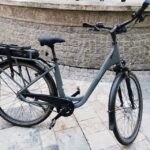
I really like the family-friendly setup: Dutch bikes, a clear safety briefing, and kids can ride starting at 6 (with children’s bikes available from 6 to 11). I also like the way the tour mixes famous landmarks with short, practical moments—think Louvre-to-Seine bridges-to-Orsay—so you build a mental map fast. Guides including Thomas and JP come through strongly here, especially for keeping kids calm and moving safely.
One drawback to consider: you’re not buying your way inside monuments. Entry isn’t included, and a lot of the experience is exterior views plus short guided pauses—so if your dream is long museum time, you’ll need a separate plan.
In This Review
- Key highlights at a glance
- Starting out at 10 Rue de la Paix (and finding the bikes)
- Dutch bikes, helmets, and the pace that works for families
- Why bike lanes beat the metro for first-time Paris bearings
- Louvre to Tuileries: the classic Paris starter pack
- Seine bridges and the Île de la Cité skyline
- Musée d’Orsay and the long ride across to the Eiffel side
- Palais de Tokyo, Place de la Concorde, and the trip home
- What the guide actually does (and why it matters)
- Photos, selfies, and how to plan your camera time
- Audio guide support if you’re not listening in the moment
- Price and value: is $47 a good deal?
- Who this bike tour fits best
- Should you book the Paris highlights bike tour?
- FAQ
- How long is the Paris highlights bike tour?
- What’s included in the price?
- Are monument entry tickets included?
- What age can kids ride?
- Where do I meet the tour?
- What languages are available for the guide and audio?
- Does the tour run in bad weather?
Key highlights at a glance
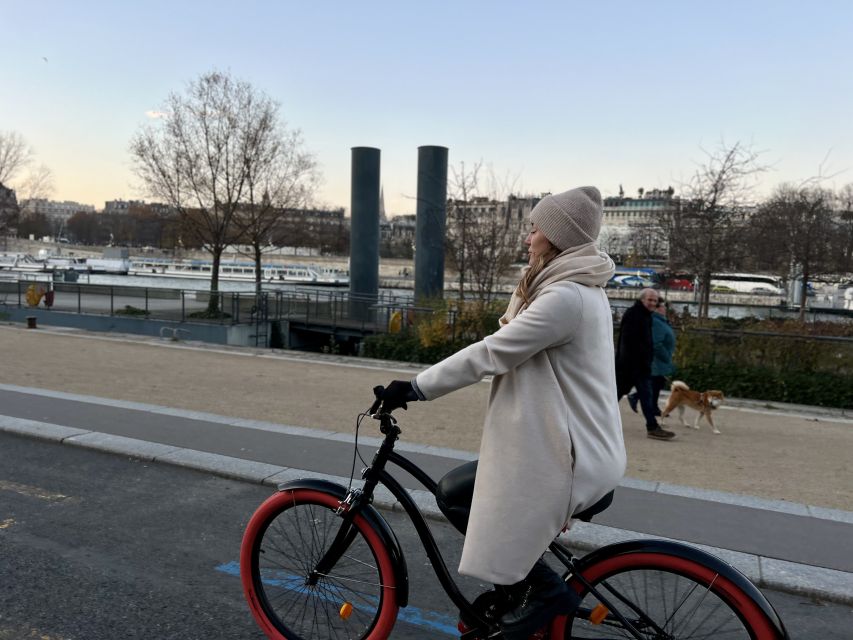
- Dutch bikes + a safety briefing that sets you up fast
- Cycle paths and sidewalks used to help avoid car traffic
- Monument stops from the Louvre area to the Eiffel Tower zone and back
- Family-friendly rules (kids from 6, helmets for under-12, stroller access)
- Photo-friendly timing with multiple short stops and selfie moments
Starting out at 10 Rue de la Paix (and finding the bikes)
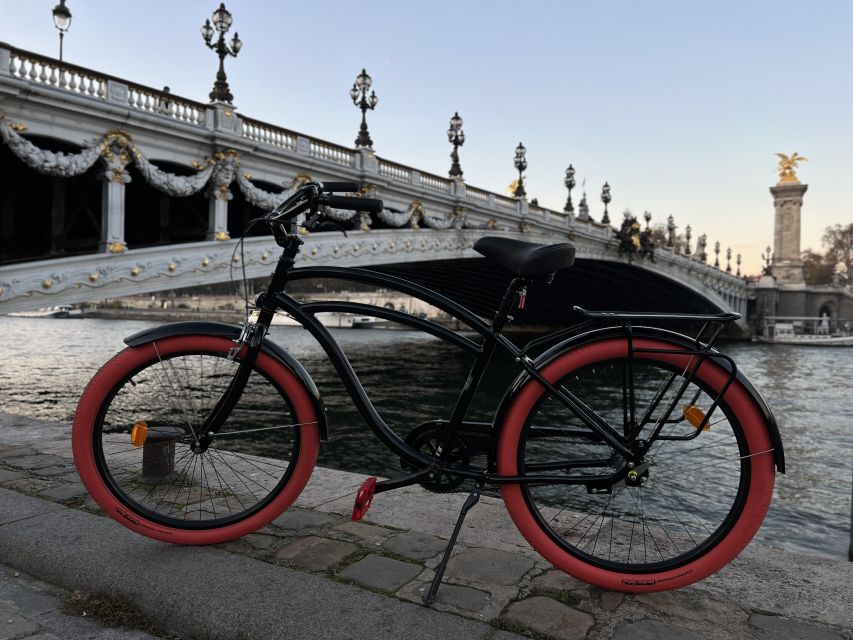
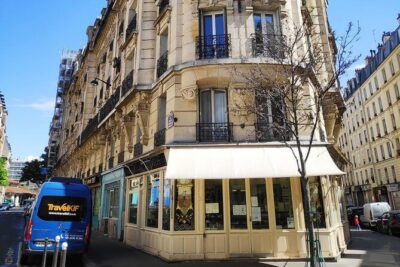
Meeting point matters in Paris, and this one is straightforward. You’ll meet at 10 Rue de la Paix, in the parking lot shared with Sixt. Wait in the yard in front of the Sixt shop. It’s worth arriving a little early so you can handle helmets, bike fitting, and any questions before the group rolls.
What you wear is not a small detail here. Bring comfortable clothes and skip high heels and open-toed shoes. The rules are simple: closed-toe footwear will keep your ride smooth and safer around the bike pedals and routes. No alcohol or drugs during the tour.
Also plan your physical expectations. The route is built for comfortable cruising, but it’s still a bike tour. This isn’t a slow stroll where you can stop for long reads at every corner.
You can also read our reviews of more cycling tours in Paris

Dutch bikes, helmets, and the pace that works for families
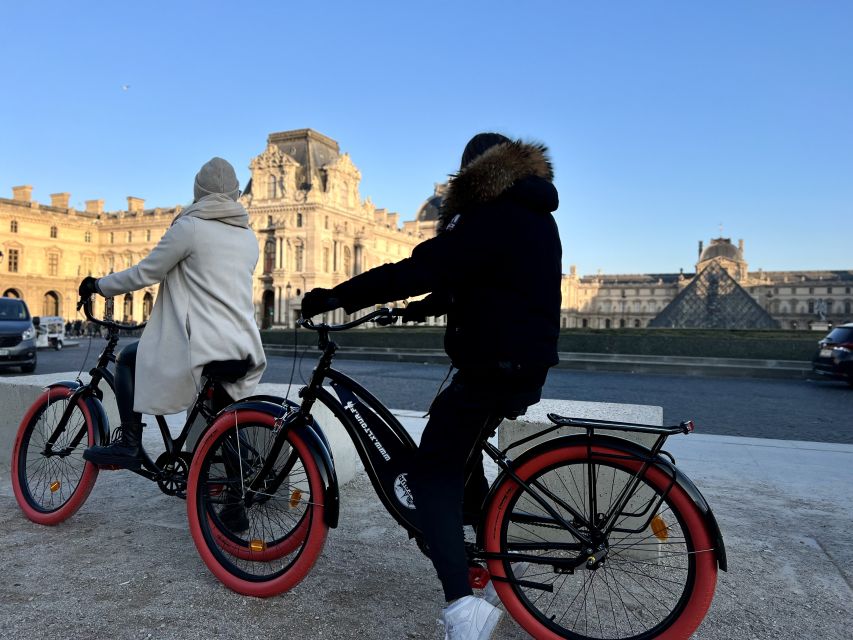
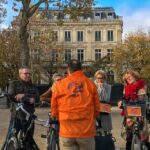
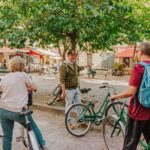
The whole feel of the tour is about making Paris doable on two wheels. You meet the team, get a safety briefing (about 10 minutes), then you’re riding Dutch bikes with the group staying together via planned stops along the way.
Helmets are included on demand, and they’re only mandatory for children under 12. Even if you’re an adult, you may feel better wearing one, especially if you’re not used to riding in busy cities. The tour is designed to be manageable: flat routes, bike lanes and sidewalks, and plenty of chances to regroup.
Age and equipment rules are clear:
- Riding starts at 6 years old.
- Children’s bikes are available for ages 6 to 11.
- Under 6 can be accommodated with a baby seat if reserved in advance and the child is within 22 kg.
- Strollers are accessible.
There are also hard limits for comfort and safety. The tour isn’t suitable for pregnant women, people with back problems, anyone over 110 kg, and anyone over 80 years. If any of those apply, you’ll be happier with a walking tour or a private driving option.
One small reality check: the exact length can shift with local traffic. The tour runs about 3 to 3.5 hours, depending on conditions. That’s usually fine, but it’s why I treat this as a morning or afternoon anchor, not a “right before dinner” activity unless you’re comfortable with some flexibility.
Why bike lanes beat the metro for first-time Paris bearings
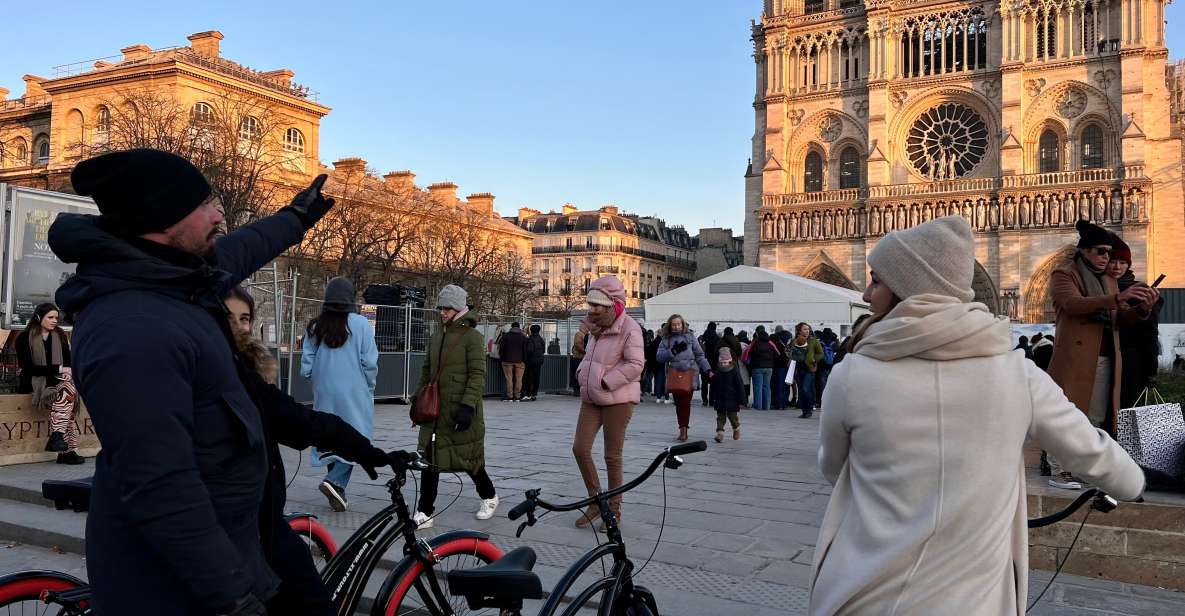
I love tours that help you place Paris in your head. A bike tour does that faster than a bus and often with less waiting than the metro. Here, the emphasis is on using cycle paths and sidewalks so you can actually experience sightlines instead of studying maps between stations.
You’ll also get movement without constant stops for transit connections. The rhythm is built around:
- a short ride between landmark clusters,
- a quick guided stop for the story and photos,
- then back on the bike for the next bridge or square.
This matters if you’re traveling with kids or teens who don’t want a museum day but still want “real Paris” landmarks. It also helps if you’re first-timer who wants a smart orientation route you can repeat later on foot.
Louvre to Tuileries: the classic Paris starter pack
You kick off near the Louvre area, and the tour hits the kind of sights that help you understand the city’s layout right away.
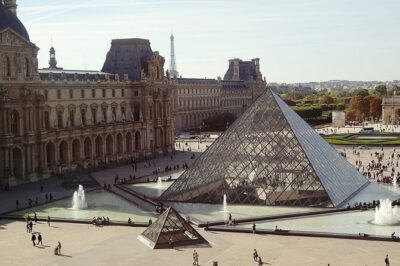
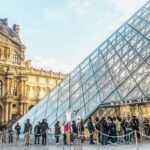
Louvre Museum (quick guided stop): you’ll get a guided overview from the outside with a short ride-and-look approach. Even if you don’t plan to enter the museum, being able to see the Louvre’s scale and location in relation to the Seine is useful. It sets the tone: grand, symmetrical, and very “Paris.”
Then it’s onto Tuileries Garden, where you get more open space and a different mood—less monument wall, more strolling energy. This is a great moment to reset. It also gives you a “feel” for the axis between major landmarks, which is something you can carry with you for the rest of the trip.
If you like taking photos, this early part is when your patience pays off. Everyone is still fresh, and the group is organized enough that you can grab selfies without the scramble you sometimes get later in the day.
Seine bridges and the Île de la Cité skyline
From the Tuileries zone, you start working toward the river crossings—where Paris really starts to look like a postcard. Expect a sequence of short, guided visual moments that put the landmarks into context.
Pont des Arts: this is your quick “Seine moment.” You’ll get guided sightseeing while riding and pausing. The key value here is learning what you’re actually looking at: bridges as connectors of neighborhoods, viewpoints, and lines of history.
Pont Neuf: another quick bridge stop with guidance on what makes it special. Bridges in Paris aren’t just crossings; they’re part of how the city’s story got built in layers.
Conciergerie: a short guided stop here gives you context for the dramatic historical associations of the area. It’s brief, but it’s the kind of stop that makes later street names and building facades feel less random.
Sainte-Chapelle: you’ll stop briefly for a guided look. Even with no monument entry included, seeing it in the city streets helps you understand why this area is so meaningful.
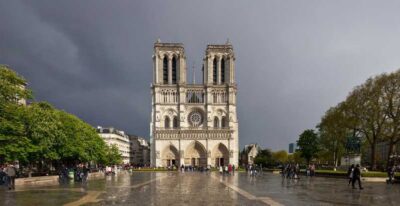
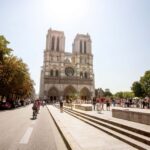
Notre-Dame Cathedral area: you’ll get a guided moment around the cathedral, plus a bit of that “Paris is real” feeling people chase. Since entry isn’t included, treat this as close-up orientation time. If you want to go inside, plan a separate ticket visit later.
You’ll also pass through the Latin Quarter. This is a ride-by, not a long walk. That’s exactly why it works here: you get the sense of the neighborhood without losing the tour’s flow.
You can also read our reviews of more guided tours in Paris





Musée d’Orsay and the long ride across to the Eiffel side
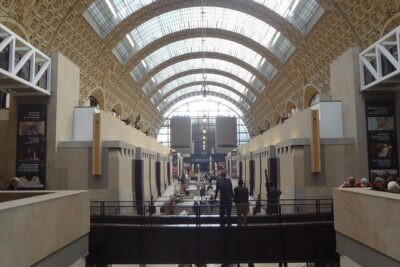
Then comes one of the best “wow” stretches. You ride toward Musée d’Orsay, which is perfect for this format because you get to see how the building sits by the river without committing to museum time.
Musée d’Orsay (guided stop + scenic ride): the tour uses the location to give you context on why this part of Paris is so photogenic. You also get a change in energy—more open river angles, more space to breathe.
Break time: in the 10 a.m. slot, you get a 20-minute snack break. Food and beverages are not included, and you’ll want to have money ready if you plan to buy something. You can also bring your own food. Practically, this break is what keeps the rest of the ride fun instead of just tiring.
From there you move into the showpiece bridge zone:
- Pont Alexandre III for a grand crossing viewpoint
- Grand Palais and Petit Palais for classic façade spotting
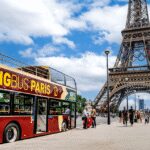
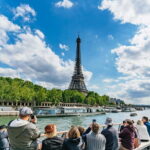
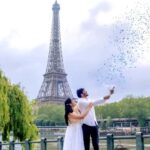
- Eiffel Tower for the big, obvious payoff (again, guided stop with sightseeing rather than entry)
After Eiffel Tower, you’ll ride toward Chaillot for nearby views and a change of perspective. This area often feels like the city opens up a bit, and it’s a nice contrast after the dense landmark clusters.
Palais de Tokyo, Place de la Concorde, and the trip home
The second half keeps stacking major names, but the tour never feels like a random list. It’s designed as a loop that helps you remember where everything is.
Palais de Tokyo: another guided stop with exterior views. Even if art museums aren’t your thing, it’s useful for map memory—knowing what sits on which side of the Seine.
Place Diana and Les Invalides: these stops help you shift from “center” monuments to the broader historical geography of Paris. It’s also where you may notice how the bike lane network changes. You’ll likely feel more comfortable by now because you’ve already done the early safety learning.
Then you hit the grand squares:
Place de la Concorde gives you a huge open-space view. It can feel airy after the tighter monument streets.
Place Vendôme adds a finishing-classic look, and it’s a strong way to close the loop before returning to your meeting point.
You finish back at 10 Rue de la Paix. The end matters just as much as the start, because you’ll want time right after the tour to do something flexible—coffee, walking, or simply letting the city sink in.
What the guide actually does (and why it matters)
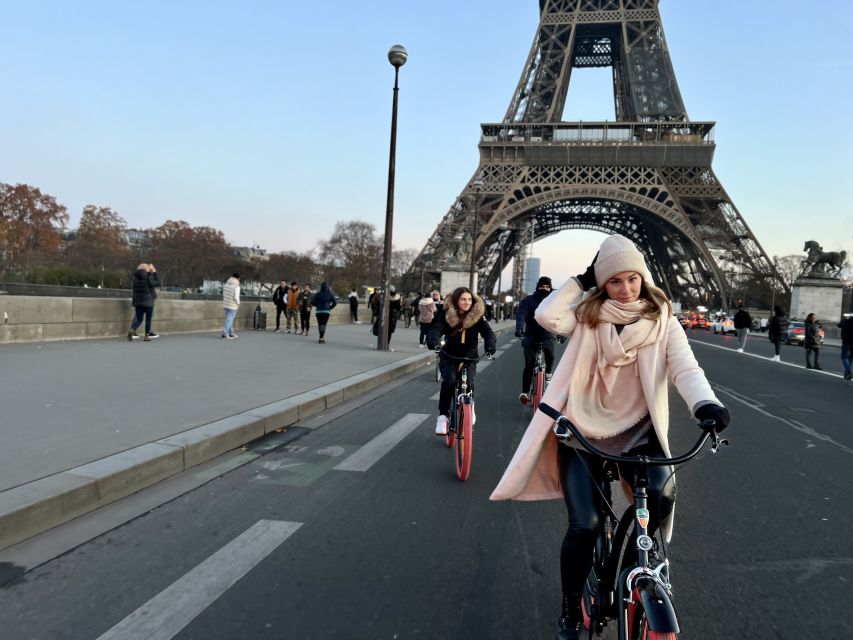
This tour works because the guide isn’t just reciting names. The strongest praise in the tour experience is about how the guide handles:
- safety and group control,
- pacing,
- and making the landmarks understandable without turning it into a lecture.
Guides like Thomas, JP (Jean-Pierre), Marco, Toma, Igor, Ella, and Amie have all been highlighted for being attentive with kids and for keeping the tour moving with a relaxed rhythm. A few travelers specifically noted that guides give clear instructions for navigating busy streets and keep an eye on the group so you don’t feel lost.
One practical tip: if you’re traveling with children, keep the energy light and focus on short listening windows. The tour structure already gives you stops for photos and breaks, so you’re not stuck listening for long stretches.
Photos, selfies, and how to plan your camera time
You’ll be taking photos the natural way: stop, look, shoot, regroup. The pace is designed so you’re not just passing by scenery at speed.
One important note: photos taken by the guide are not included. That said, some guides may offer to take pictures and share them later (for example via phone-sharing). Don’t assume it’s automatic. If photos are a priority, ask your guide at the start what they can do for your group.
If you want the best results:
- charge your phone fully before the tour,
- bring a phone holder or use a strap if you’re prone to dropping things while stopping,
- and decide early whether you want selfies or group shots first.
Audio guide support if you’re not listening in the moment
On top of the live guide, there’s an audio guide included in many languages, including Dutch, German, Japanese, Chinese, Hebrew, Arabic, Italian, Danish, Norwegian, Swedish, Portuguese, and more. Even if your live guide is speaking in English, the audio support can help you follow along when the group is moving quickly or when you’re trying to catch every detail.
Practically: bring comfortable headphones or use your preferred audio setup if your device requires it. The tour data confirms audio guide availability, but it doesn’t spell out hardware, so keep your own basic audio gear in your day bag.
Price and value: is $47 a good deal?
At $47 per person for about 3 hours, this can be strong value—especially for a first-time Paris visit.
Here’s why. You’re getting:
- a guided overview of major monuments and squares,
- bike support with Dutch bikes,
- safety briefing,
- and an included audio guide.
You’re not getting paid monument entry, and you’re not getting food included. But compared with paying for multiple separate museum tickets (or piecing together a bunch of transit + walking), this gives you a structured, efficient “orientation and highlights” experience for a single set price.
To maximize value:
- treat it as day-1 or day-2 planning for your bigger museum visits later,
- budget a little for the snack break if you’re on the 10 a.m. slot,
- and plan a second visit on foot if you fall in love with a building you only saw from the outside.
Who this bike tour fits best
This is a good match if you:
- want major Paris landmarks without spending hours in lines,
- are traveling with kids (minimum riding age is 6, with kid bikes available),
- like bike travel as your main sightseeing tool,
- want a guided route that helps you understand where neighborhoods sit.
It’s less of a fit if you:
- need a fully seated, low-movement tour,
- have back problems or are pregnant,
- plan on doing lots of inside-the-building museum time in one day,
- or are outside the tour’s limits (over 110 kg or over 80).
If you’re a nervous rider, this setup can still work because the route is built around bike lanes and sidewalks and you start with a safety briefing. Start calm, follow the guide’s pace, and you’ll feel better after the first stretch.
Should you book the Paris highlights bike tour?
I’d book it if you want a high-efficiency Paris orientation that stays fun, especially for families. The combination of bike lanes, Dutch bikes, and repeated guided landmark stops makes it easier to see a lot without feeling like you sprinted through the city.
Skip it only if your priority is monument interiors and long museum time. Since entry isn’t included, you’ll still admire the sights, but you won’t get the full inside experience. For most people, though, this is exactly the right kind of “first impressions” Paris tour.
FAQ
How long is the Paris highlights bike tour?
The tour lasts about 3 hours, with some departures running up to around 3 and a half hours depending on local traffic.
What’s included in the price?
You get a live guide and an included audio guide. Helmets are available on demand, with helmets mandatory for children under 12.
Are monument entry tickets included?
No. Entry in the monuments is not included, so you’ll be doing guided sightseeing stops rather than paying for indoor access.
What age can kids ride?
Riding is available from age 6. Children’s bikes are available for ages 6 to 11. A baby seat is available for reservation for children under 6 within the 22 kg limit.
Where do I meet the tour?
Meet at 10 Rue de la Paix. You’ll be in the parking lot shared with Sixt, and you should wait in the yard in front of the Sixt shop.
What languages are available for the guide and audio?
The live guide is available in English, French, and Spanish. The audio guide is available in many languages, including Dutch, German, Japanese, Chinese, Hebrew, Arabic, Italian, Danish, Norwegian, Swedish, Portuguese, and more.
Does the tour run in bad weather?
Yes. The tour runs rain or shine.