REVIEW · PARIS
Paris: Complete Louvre Private Tour with Mona Lisa
Book on Viator →Operated by LivTours · Bookable on Viator
The Louvre gets manageable with a plan. This private 2.5-hour tour runs from the glass Pyramide du Louvre into the museum’s biggest highlights, with Da Vinci’s Mona Lisa as the payoff.
You’ll hear the building’s story first, then move through iconic paintings and sculptures across major eras, with your guide shaping the pace to your group.
I love how efficiently the route hits the works people actually come for—Venus de Milo, Winged Victory of Samothrace, and the big-name paintings like The Raft of the Medusa and Coronation of Napoleon. I also like the way guides handle real-life moments: one standout guide (Claire) kept the tour moving even when an audio amplifier malfunctioned, and families reported it worked well even with teens.
One thing to weigh: this isn’t a true skip-the-line ticket. You get reserved timed entry, but you still do security checks, so a short wait can happen.
In This Review
- Key highlights to know before you go
- Price and what you’re really buying
- Meet the guide under Louis XIV: location and timing basics
- Stop 1 at the Pyramide du Louvre: why the first 5 minutes count
- Stop 2: the Louvre highlight circuit in two wings
- Ancient Egypt: Great Sphinx of Tanis
- Ancient Greece: Venus de Milo and Winged Victory
- Major paintings across later periods
- Mona Lisa: the centerpiece you can actually enjoy
- How the private guide keeps the Louvre from overwhelming you
- Skip-the-line expectations: what reserved entry means in real life
- What works best for you (and who might want a different style)
- Practical tips to make your 2.5 hours feel longer
- Should you book this private Louvre tour?
- FAQ
- Where is the meeting point for the tour?
- How long is the Louvre tour?
- Is this tour private?
- What language is the tour offered in?
- Is admission included, and will I get a mobile ticket?
- Do you truly skip the line at the Louvre?
- Who can get free admission?
- What is the cancellation refund policy?
Key highlights to know before you go
- Private guide, only your group: you won’t get swept into a large crowd tour.
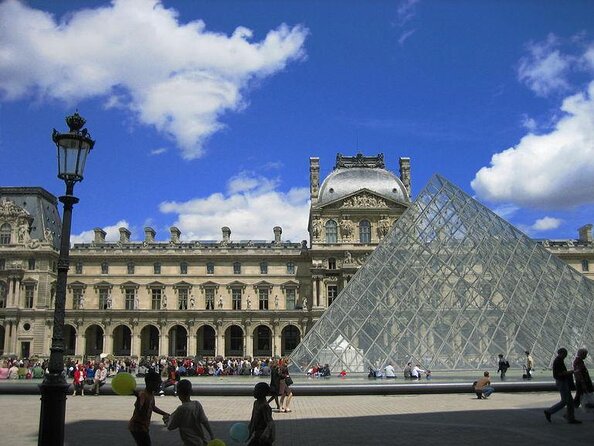
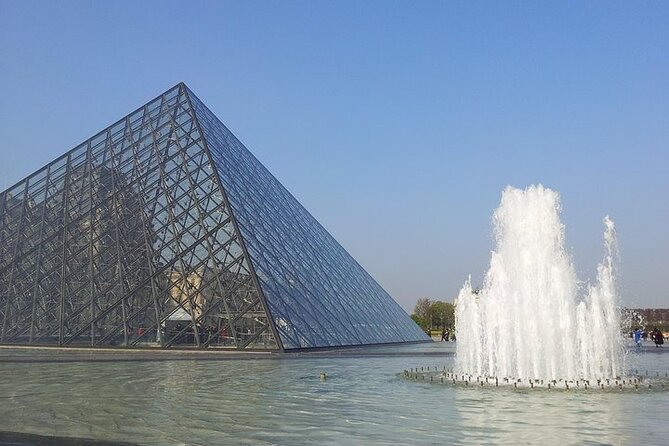
- Pyramide du Louvre start: you begin with the Louvre’s modern layout and history right at the glass pyramid.
- Top sculpture hits: Great Sphinx of Tanis, Venus de Milo, and Winged Victory of Samothrace show up on the route.
- Iconic painting sequence: you’ll pass major landmarks like The Wedding Feast at Cana, Coronation of Napoleon, and The Raft of the Medusa.
- Mona Lisa is the focus: it’s built into the highlight circuit, not treated like a random stop.
- Timed entry, not total line-free: expect a brief wait even with reserved tickets and security.
Price and what you’re really buying
At $295.66 per person for about 2 hours 30 minutes, this Louvre tour sits in the “you’re paying for certainty” category. You’re not paying for a magic wand that removes every obstacle. You’re paying for a guide who can steer you through the world’s most intense art overload, plus a mobile ticket and reserved timed entry that keeps your visit from turning into a half-day queue.
For me, the value makes sense if:
- you want the Louvre’s biggest hits without spending hours deciding where to go
- you care about context (what you’re looking at, and why it matters)
- your group includes kids/teens who need a pace that doesn’t drift
- you’d rather spend your time in galleries than plotting routes
It can be less worth it if you’re the type who loves getting lost on purpose and you already know the exact works you want. The Louvre is huge, and a guided highlight route is about choosing. You won’t see everything in 2.5 hours, so you’re paying to see the best of the best in the time you have.
Also note: this is booked fairly far ahead—on average, people lock it in about 66 days in advance—so if your dates are fixed, don’t wait too long.
You can also read our reviews of more private tours in Paris



Meet the guide under Louis XIV: location and timing basics
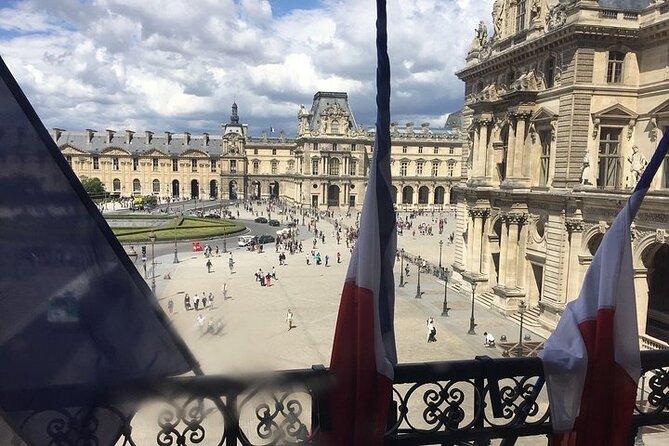
Your tour starts at Louis XIV sous les traits de Marcus Curtius (copie), in Cour Napoléon in front of the Pyramide du Louvre. The guide meets you under the Louis XIV statue, and the first minutes set the tone: you’ll learn how this famous courtyard and the pyramid became the museum experience you picture in your head.
This matters more than it sounds. The Louvre can feel confusing when you arrive—so starting at a clear landmark helps you get your bearings fast. It also makes it easier for a private group to coordinate without hunting around.
The tour ends back at the meeting point, which is helpful when you’re planning dinner or juggling kids’ schedules. And since it’s near public transportation, you can usually build a smooth day without complicated transfers.
Stop 1 at the Pyramide du Louvre: why the first 5 minutes count
At the Pyramide du Louvre, the tour begins with more than a photo-op. You get the history of the building and what changed when it became the museum we recognize today. That context is practical. It helps you understand what you’re walking through once you enter the wings and start seeing artwork arranged across centuries.
This first stop is also a pressure-release valve. Before you’re surrounded by crowds and masterpieces, your guide frames the visit so you’re not just reacting. You’re learning how to look.
A small caution: because this is a private tour, the exact flow can vary depending on your guide and timing. But the goal stays the same—start smart, then move efficiently into the collections.
You’ll also have the admission ticket included as part of the tour experience.
Stop 2: the Louvre highlight circuit in two wings
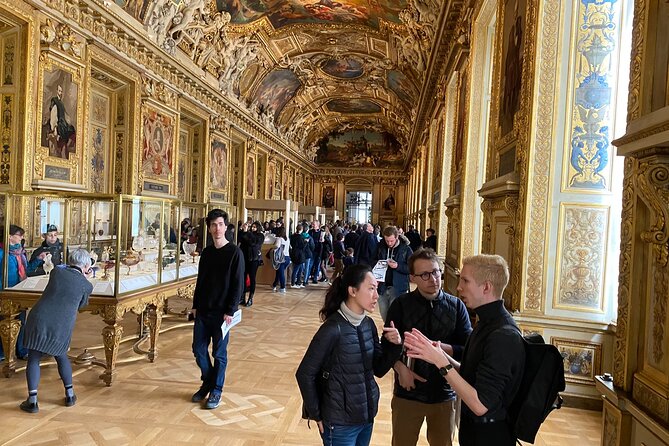
The main event is inside the museum for about 2 hours 25 minutes. This is where the tour earns its keep: instead of trying to cover everything, you focus on the Louvre’s most influential works across big periods—Ancient Greece, Ancient Egypt, the Renaissance, Neoclassicism, and Romanticism.
One important detail: the tour covers two of the museum’s three wings. That means it’s not a random walk—it’s a carefully selected path that gives you the strongest concentration of iconic art within the time limit.
Here are the kinds of stops you can expect, and what makes them worth your attention:
Ancient Egypt: Great Sphinx of Tanis
You’ll look closely at the Great Sphinx of Tanis, a major Western museum treasure noted for being among the biggest and best-preserved versions you can see outside the region. In a highlight format, the point isn’t just to say you saw it. Your guide helps you connect the object to the ancient world that produced it, and that context makes the sculpture feel less like a strange statue and more like a historical artifact with real weight.





Ancient Greece: Venus de Milo and Winged Victory
Two globally recognizable sculptures show up here:
- Venus de Milo (the armless statue)
- Winged Victory of Samothrace (famous for the missing head)
These are the kind of works you’ve probably seen in photos and textbooks, but a guide can help you notice how movement, proportion, and material choices are doing the heavy lifting. Even without going deep into art theory, you come away seeing why these are still reference points for artists.
Major paintings across later periods
Expect a sequence of heavyweight paintings, including:
- Paolo Veronese’s Wedding Feast of Cana
- Jacques-Louis David’s Coronation of Napoleon
- Théodore Géricault’s The Raft of the Medusa
These picks matter because they anchor multiple stories at once: power and ceremony, political change, and human drama. The Louvre is full of masterpieces, but a highlight route needs titles that carry cultural meaning. This one does.
Mona Lisa: the centerpiece you can actually enjoy
Yes, you’ll get to see the Mona Lisa (Mons Lisa in the description). In a fast-paced museum, that can be tricky—people end up rushing, craning, and disappointed. In this format, it’s integrated into the highlight plan, which usually means you’re not searching for it while your attention frays.
Also, one guide (Sebastian) was praised for accommodating interests, including skipping the line up to Mona Lisa for a better view when possible. That’s a reminder that a private guide can shift the plan in small ways that make your experience feel less stressful.
How the private guide keeps the Louvre from overwhelming you
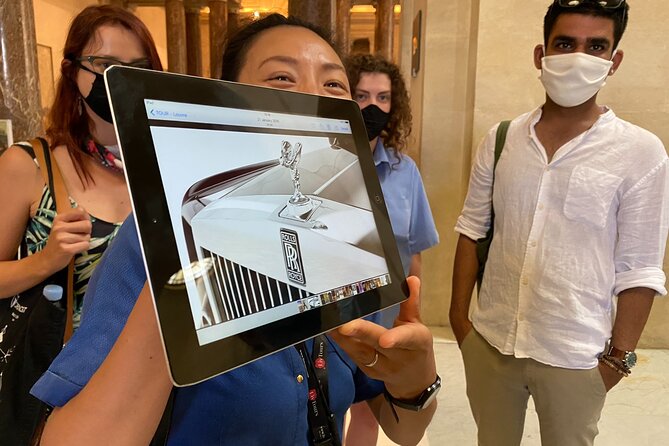
Even when the Louvre is crowded, a private guide changes the experience. Your guide is managing:
- where you stand
- how much time you spend at each work
- what you’re noticing while you’re there
That pacing came up again and again in the feedback you shared. Guides like Avi were praised for helping visitors enjoy the museum without feeling swallowed by it. Another highlight was Zacharie, who made the experience feel like you walked away with a clearer understanding even when the group only spent around 3 hours.
For families, that kind of structure is gold. One family shared that Claire handled the situation when an audio amplifier stopped working and still kept the tour’s key points moving. That tells you something important: the tour isn’t just about reading a script. It’s about solving problems so the group doesn’t lose time or attention.
That said, private can also mean variance. One negative account described a guide who spoke broken English, rushed through rooms, and even left the group late in the tour. It’s not the norm in the overall rating, but it’s a real reminder: in any private experience, you should confirm ticket handling at the start and keep an eye on timing if something feels off.
Skip-the-line expectations: what reserved entry means in real life
A key detail: the Louvre doesn’t sell true skip-the-line entry in the way some tours market it. Instead, you’re given reserved timed tickets, which help keep waiting brief. You still must pass mandatory security checks, and those checks are outside the guide’s control.
So if your expectation is zero wait, you’ll be disappointed. If your expectation is less chaos and a more efficient entry window, you’ll likely feel the difference.
In practical terms, this tour reduces the worst-case scenario—hours lost to logistics—while keeping the experience focused on art. It’s a smoother start, not a totally line-free miracle.
What works best for you (and who might want a different style)
This tour is a strong fit if you want:
- a highlight route through the Louvre rather than wandering and guessing
- a guide to connect the dots across periods and styles
- an efficient way to see the big sculptures and paintings, including Mona Lisa
- a private format for groups that need a customized pace
It also seems to work well for families with teens, based on how guides handled attention and pacing in those examples.
You might consider a different approach if:
- you’re an ultra-detail seeker who wants to trace one theme deeply across many galleries
- you already have a very specific self-guided plan with exact rooms and works
- your group prefers a slow museum day where you can stop and roam
In short: this tour is for visitors who want maximum impact per minute, with a human guide translating the museum into something you can actually enjoy.
Practical tips to make your 2.5 hours feel longer

Here’s how to get the most out of a timed, private highlight visit:
- Wear shoes you can stand in. You’ll be moving across rooms and spending real time looking.
- Have a quick plan for Mona Lisa. Decide whether you want a short look or a linger moment, and tell your guide early.
- If you rely on audio, mention it right away. One guide handled an amplifier malfunction well, but you’ll feel safer if you know where things stand.
- Pick a departure time that matches your group’s energy. Since there are multiple morning and afternoon options, you can align the visit with when your group focuses best.
Also: service animals are allowed, and most travelers can participate, so you can generally plan confidently from a basic comfort standpoint.
Should you book this private Louvre tour?
Book it if you want a guided hit list that includes the Louvre’s heaviest masterpieces in a tight window—especially if you’re paying attention to time, stress, and the way art can become easier to understand with a good guide. The route concentrates on major works across the major eras, and the private format helps keep kids engaged and adults oriented.
Skip it (or consider another style) if you’re expecting true skip-the-line entry with no security wait, or if you know you want dozens of extra rooms beyond what fits in 2.5 hours. This is a highlight experience, not a full museum marathon.
If you do book: verify the timed entry expectations with a realistic mindset, meet your guide at Cour Napoléon under the Louis XIV statue, and treat the guide’s job as your shortcut to seeing more, not rushing more.
FAQ
Where is the meeting point for the tour?
You meet at Louis XIV sous les traits de Marcus Curtius (copie), Cour Napoléon et Pyramide du Louvre, 75001 Paris, France, under the Louis XIV statue in front of the pyramid.
How long is the Louvre tour?
The tour is about 2 hours 30 minutes total, including a short starting segment at the Pyramide du Louvre and about 2 hours 25 minutes inside the museum.
Is this tour private?
Yes. It’s a private tour/activity, and only your group participates.
What language is the tour offered in?
The tour is offered in English.
Is admission included, and will I get a mobile ticket?
Admission tickets are included, and you receive a mobile ticket.
Do you truly skip the line at the Louvre?
The experience includes reserved timed entry, which can make the wait relatively brief, but you still have to go through mandatory security checks.
Who can get free admission?
Free admission applies to visitors under 18 and EEA residents under 26, with valid ID and proof of residency.
What is the cancellation refund policy?
You can cancel for free. To get a full refund, you must cancel at least 24 hours before the experience starts. If you cancel less than 24 hours before, the amount paid is not refunded.