REVIEW · PARIS
Montmartre District and Sacre Coeur – Exclusive Guided Walking Tour
Book on Viator →Operated by Babylon Tours Paris · Bookable on Viator
Montmartre feels like a storybook climb. This guided walk strings together the neighborhood’s art corners, big-name landmarks, and Sacré-Cœur panoramas in one efficient 2.5-hour outing.
Two things I really like: the small-group feel (or private upgrade) keeps it relaxed, and you get a focused route that hits the postcard spots without wandering for hours. One possible drawback: the walk is hilly, with cobbled streets and steps—moderate fitness helps.
Fast Montmartre orientation with a clear path from Blanche into the heights
Sacré-Cœur photo moment plus inside time (including the famous mosaic)
Art-focused stops tied to Van Gogh, Dalí, Dalida, and the Montmartre scene
Small-group Q&A energy, with guides praised for clear English and good answers
Rain or shine with sensible route planning (and a change of route if needed)
In This Review
- Value and pacing: why this 2.5-hour route is a smart use of time
- Getting there and walking reality: Blanche to the top of Montmartre
- Montmartre itinerary: from the windmills to Sacré-Cœur mosaics
- Stop 1: Montmartre streets and the climb to Sacré-Cœur
- Stop 2: Moulin Rouge (quick look)
- Stop 3: Van Gogh’s house on Rue Lepic
- Stop 4: Place Dalida
- Stop 5: Jardin Sauvage de St-Vincent
- Stop 6: Vigne du Clos Montmartre
- Stop 7: Au Lapin Agile
- Stop 8: Basilique du Sacré-Cœur de Montmartre (time inside)
- Stop 9: Place du Tertre
- Stop 10: Espace Dalí (Dali Museum Paris area)
- Stop 11: Le Bateau-Lavoir
- Stop 12: La Maison de Dalida
- Stop 13: Place des Abbesses (Art Nouveau metro entrance)
- What makes the guide matter here (and why English clarity is a big deal)
- Tickets and inside visits: what’s included versus what you’ll pass
- Who should book this Montmartre and Sacré-Cœur walk
- Should you book this Montmartre and Sacré-Cœur walk?
- FAQ
- How long is the Montmartre District and Sacré-Cœur guided walking tour?
- Where does the tour start and end?
- Is the tour private?
- What language is offered?
- What’s included in the price?
- Are tickets for attractions included?
- What fitness level do I need?
- What should I bring or wear?
- Is there free cancellation?
Value and pacing: why this 2.5-hour route is a smart use of time
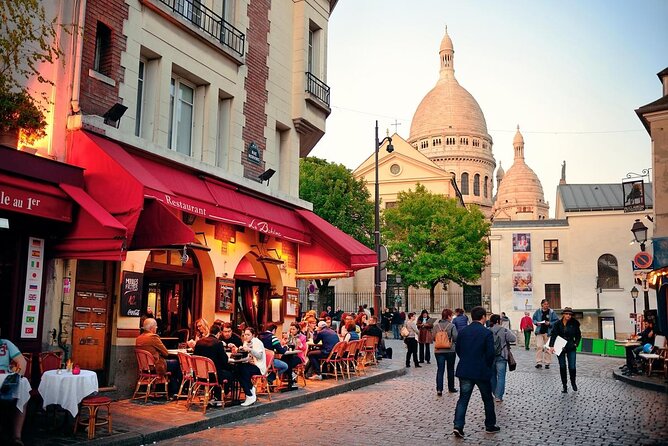
At $59.69 per person, you’re paying for something simple but rare in Paris: a guided route that covers a lot of Montmartre without feeling like a rushed bus tour. In just 2 hours 30 minutes, you get the big visual payoff (Sacré-Cœur and the skyline views) plus the art and music places that make Montmartre more than just a pretty hill.
This is also one of those tours where timing matters. You can pick from several departure times, which helps if you’re trying to avoid the peak crowds or if you want an evening option for sunset vibes (season-dependent). And since it runs rain or shine, you’re not left scrambling when Paris weather flips on you.
One more value point: it’s designed to be small-group most of the time, and the description also notes an upgrade to private (and a fully private option where only your group participates). That matters in Montmartre, because you’ll be climbing, turning corners, and pausing for photos and context. A guide can slow down at the right moments—and speed up when you’re ready.
Getting there and walking reality: Blanche to the top of Montmartre
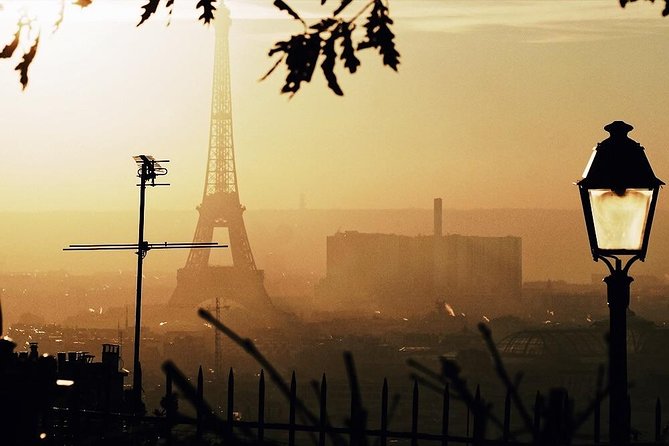
The tour starts around Blanche (75018) and ends back in the Montmartre area (75018). That’s convenient if you’re using public transport around central Paris, and it also means you’re not locked into a long, complicated transit plan just to reach the first hill.
But be honest with yourself: this is not a flat stroll. The route includes climbing the butte/hills and moving through cobbled streets and steps, so plan for a moderate fitness level. If you’re bringing kids, strollers, or anyone with limited mobility, you’ll want to think carefully before booking.
Practical prep helps a lot:
- Wear comfortable shoes (Montmartre cobblestones can be unforgiving).
- Bring water.
- Pack an umbrella for rain and a hat for hot weather.
- Skip large bags or suitcases; the tour notes no large bags.
You can also read our reviews of more walking tours in Paris



Montmartre itinerary: from the windmills to Sacré-Cœur mosaics
This walk is built like a guided storyline: you start at the base, climb into the artist quarter, hit the famous sights, and end with the Art Nouveau and classic squares near the metro.
Stop 1: Montmartre streets and the climb to Sacré-Cœur
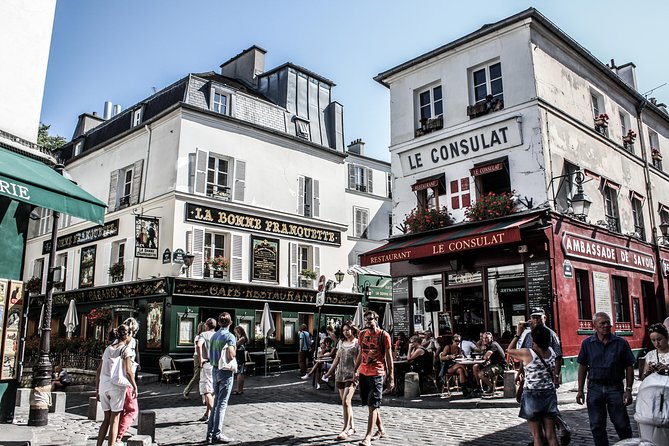
You begin at the Montmartre base, where the tour heads uphill from the area near Moulin Rouge’s windmill, then winds through cobbled streets that feel like they were made for wandering slowly. The guide shares history along the way—especially how artists shaped the neighborhood. You’ll hear names tied to Montmartre’s creative era, including Van Gogh and Picasso, and you’ll also get context for why the district feels so cinematic.
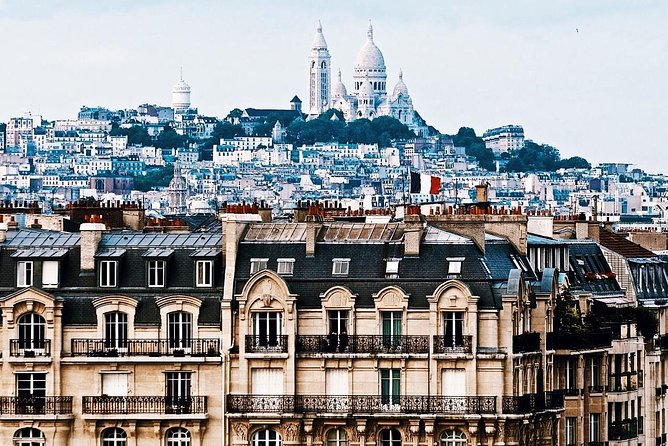
As you climb, the tour points you toward the summit area where Sacré-Cœur dominates the view. This is where your best early photo moments usually happen: Montmartre’s elevation gives you a “from above” perspective on Paris that’s hard to replicate elsewhere.
There’s also a pop-culture layer. If you’re a fan of Amélie, you’ll recognize the vibe—this is the kind of place the film leaned on, with charming streets and classic Montmartre mood.
Inside note: the tour explicitly allows time to explore Sacré-Cœur later on, so during the climb you’ll mostly be orienting yourself and enjoying the dramatic views.
Stop 2: Moulin Rouge (quick look)
Next you head toward Moulin Rouge, the famous cabaret. This stop is short—about 10 minutes—and the admission is not included. Still, it’s a useful anchor in the story. It’s the landmark most people picture when they think of Montmartre, and it helps you place the rest of the walk in context.
Stop 3: Van Gogh’s house on Rue Lepic
You’ll then see Van Gogh’s house on Rue Lepic, the home of the artist and his brother from 1886. This is another short stop (around 10 minutes) with exterior viewing.
Even if you don’t go inside anywhere, it helps to have the guide connect the street-level detail to the broader artist-era Montmartre theme.
You can also read our reviews of more guided tours in Paris






Stop 4: Place Dalida
After that, the route passes Place Dalida, a small square dedicated to the French music icon Dalida. The tour gives you about 10 minutes, and admission is free. This is one of those stops that feels quieter than the big-ticket sights—more like a pause in the music-and-memory side of Montmartre.
Stop 5: Jardin Sauvage de St-Vincent
Next comes a genuinely different kind of stop: Jardin Sauvage de St-Vincent. Instead of another postcard building, you’re walking past a sloping plot that was intentionally left in a more fragile, natural state to observe ecosystem behavior and wild plants. The description notes elderberry trees, ivy, and wild insect life.
This is a great breather from crowds, and it also reminds you that Montmartre isn’t only “art on every corner.” It’s a real neighborhood.
Stop 6: Vigne du Clos Montmartre
Then you reach Le Clos Montmartre, a hidden vineyard tucked behind Sacré-Cœur area streets—one of the last remaining vines in central Paris. It’s about 10 minutes with free viewing.
Even if you’re not a wine person, you’ll probably enjoy this stop because it’s so unexpected for Paris. It adds a layer of “place” rather than just “monument.”
Stop 7: Au Lapin Agile
Next is Au Lapin Agile, a cabaret tied to the Montmartre bohemian set until 1914. The tour frames it as a symbol you’ll remember, with a classic sign that’s part of the district’s identity. Expect around 10 minutes; admission is not included.
This is a good stop for atmosphere, even if you just take a moment on the street. It connects the dots between the artists, the music, and the cabaret culture.
Stop 8: Basilique du Sacré-Cœur de Montmartre (time inside)
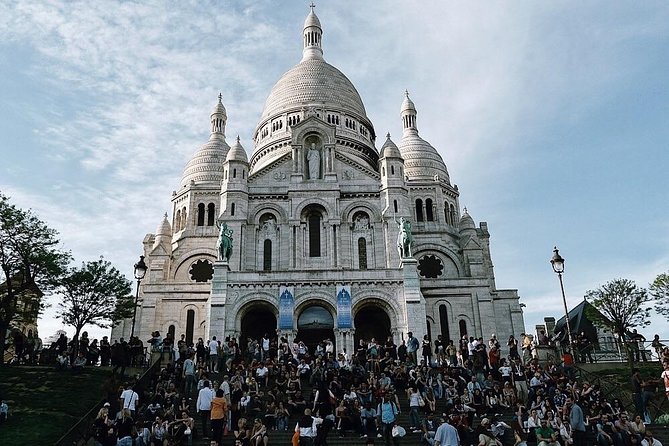
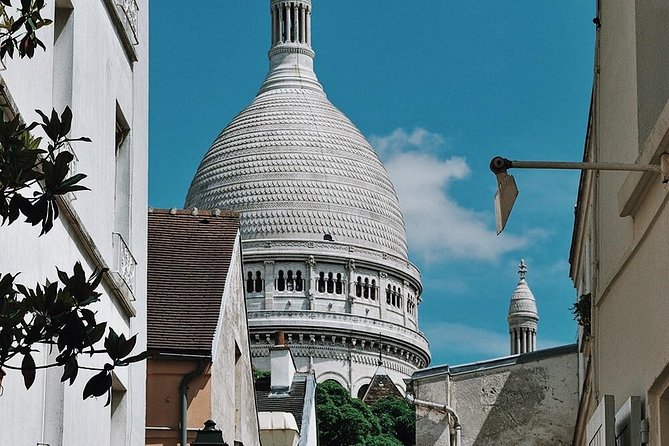
Now you get the big one: Sacré-Cœur itself. The tour includes about 20 minutes of time with the basilica, and the description notes that exploring inside is part of the plan. Admission is listed as free for this segment.
Inside Sacré-Cœur, the interior mosaic is a standout—the tour mentions one of the world’s largest mosaics depicting Jesus Christ. This is where the walk stops being just “streets and stories” and becomes a proper landmark visit.
If you’re the kind of person who likes photos, you’ll also likely enjoy the lighting inside compared to the bright hill exterior. It’s often calmer inside too, compared with the crowds in the square.
Stop 9: Place du Tertre
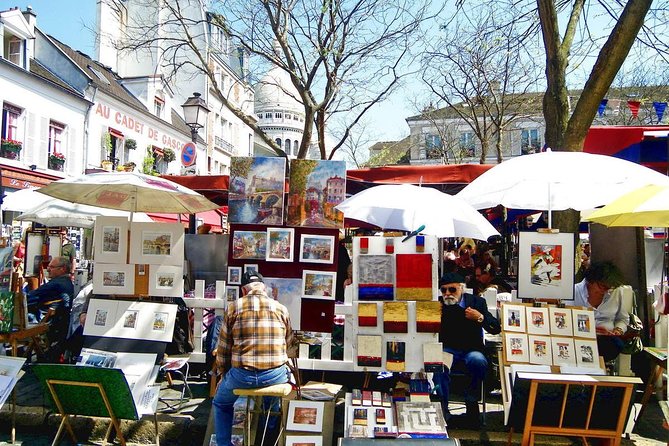
Next, you pass Place du Tertre, near the Sacré-Cœur area, known for artists setting up easels. The tour gives 15 minutes and admission is free.
This is where Montmartre shifts from museum-like history into living street art culture. You’ll see the day-to-day version of what tourists imagine—so it’s a nice midpoint before the walk finishes with more artist-related sites.
Stop 10: Espace Dalí (Dali Museum Paris area)
Then you pass Espace Dalí (described as Dali Museum Paris), with around 300 original artworks devoted to Salvador Dalí’s sculptures and engravings. Admission here is not included, and the stop is about 10 minutes.
Even just walking past with context can make Dalí make more sense, because Montmartre is part of his creative story (even though you’re not necessarily stepping into the galleries on this walk).
Stop 11: Le Bateau-Lavoir
Next is Le Bateau-Lavoir, a well-known artistic creation spot. The description notes it was an artist’s residence starting around 1889, and it served as a place where painters, writers, actors, and art sellers discussed and worked.
This is a good stop for people who like to understand how art scenes function—not just who famous artists were, but how communities formed.
Stop 12: La Maison de Dalida
You’ll also see La Maison de Dalida, where Dalida lived between 1962 and 1987. The tour description specifically mentions 11 Bis de la Rue Orchamp(t) and notes the location is associated with her suicide in 1987.
This is one of the more emotional stops on the route. A guide’s tone matters here—because it’s easy for a tragic reference to feel cold if the story isn’t handled with care. Expect the walk to keep it respectful and grounded.
Stop 13: Place des Abbesses (Art Nouveau metro entrance)
Finally, you head toward Place des Abbesses and the Abbesse metro station area. The description calls out the Art Nouveau architecture, designed by Hector Guimard, and notes it’s one of the two surviving metro entrances of that kind in Paris.
This ending works well because it’s visually distinctive and gives you an easy way to connect back to the metro after your climb.
What makes the guide matter here (and why English clarity is a big deal)
Montmartre can be confusing if you’re walking it on your own. Streets twist. Names overlap. The landmarks are famous, but the connections between them are the real payoff. This tour focuses on those connections, with guides who are often praised for making the stories feel tied to real places.
A few guide details from the information you provided are especially useful:
- Hugo Kennedy is repeatedly praised for English pronunciation that’s easy to follow.
- Francois and Tamari are praised for tailoring and storytelling that turns the neighborhood into something you can picture, not just memorize.
- Eden M. (and Eden) shows up in the feedback with strong firsthand knowledge and thoughtful pace.
- Gabriele gets called out for making the walk more fun through clear explanations and helpful after-tour suggestions.
Also, a consistent theme in the feedback you shared is that guides handle questions well. If you’re curious about what’s worth seeing next—especially how to spend the rest of your evening—this tour’s tone seems to land on practical advice, not just facts.
And yes, one more practical point: the tour is designed to run rain or shine. That matters because Montmartre weather can flip fast, and having a guide keep the group moving (without rushing through the key moments) makes the day feel smoother.
Tickets and inside visits: what’s included versus what you’ll pass
The tour description is clear about what’s included. For Sacré-Cœur, admission is listed as free and there’s time allowed to explore inside. The big interior moment is the mosaic.
For other stops—like Moulin Rouge, Van Gogh’s house (as a viewing point), Au Lapin Agile, and Espace Dalí—the tour notes that admission is not included. In practice, that usually means you’ll get the exterior landmark experience and the context, and then you decide separately if you want to pay for entry elsewhere.
One more thing to plan for: the notes say some sites can’t be visited from the inside due to security measures at many attractions. That’s not a guarantee you’ll be locked out, but it is a real possibility in Paris. If inside access is your top priority, consider treating this as an orientation-and-streets tour first, with one major landmark inside (Sacré-Cœur).
Who should book this Montmartre and Sacré-Cœur walk
This fits best if you want:
- A first-time Montmartre orientation that connects landmarks to the people and art movements behind them.
- A moderate, manageable walking commitment with a guide to handle the “where do I go next?” problem.
- A mix of classic sights and offbeat stops (vineyard, wild garden, small memorial squares).
It also looks like a good family option. The feedback you shared includes families with teenagers and kids around the 10–14 range doing well with the storytelling and walking pace. If you have younger children, you might still make it work, but expect some breaks.
If you want a museum-heavy day with multiple indoor ticketed attractions, you’ll probably find this tour is more “streets + one big indoor stop” than a full ticket museum marathon.
Should you book this Montmartre and Sacré-Cœur walk?
I’d book it if you want the smartest use of limited time in Paris and you care about understanding Montmartre instead of just photographing it. The route hits the skyline payoff at Sacré-Cœur, then keeps going through the artist/music corners that people usually miss without a guide.
Skip it—or at least reconsider—if the hills and steps are a deal-breaker for you, or if you need lots of indoor museum time beyond Sacré-Cœur. Also, if you’re traveling with large luggage, plan to keep your bag situation simple.
Overall, this is a well-structured, guide-led way to see why Montmartre has so much staying power. You’ll finish with clear mental maps of the neighborhood—and a lot more to say than you started with.
FAQ
How long is the Montmartre District and Sacré-Cœur guided walking tour?
It runs about 2 hours 30 minutes.
Where does the tour start and end?
The tour starts at Blanche 75018 Paris, France and ends in Montmartre, 75018 Paris.
Is the tour private?
It’s listed as a private tour/activity, with only your group participating. There is also mention that a private guide does not apply if you choose a semi-private option.
What language is offered?
The tour is offered in English.
What’s included in the price?
The listing includes a tour guide (for private options), 2.5 hours, and that the tour runs rain or shine. A mobile ticket is also mentioned.
Are tickets for attractions included?
Admission to Sacré-Cœur is free as part of the tour plan, but several other stops list admission as not included (like Moulin Rouge and certain museums).
What fitness level do I need?
The tour notes moderate physical fitness is recommended due to the hill climb and walking.
What should I bring or wear?
Bring comfortable shoes and water. The notes also recommend an umbrella for rain and a hat in summer. No large bags or suitcases are allowed.
Is there free cancellation?
Yes. It states free cancellation with a full refund if you cancel up to 24 hours in advance of the experience start time.