REVIEW · PARIS
Paris: Normandy D-Day Sites Guided Day Trip with Lunch
Book on GetYourGuide →Operated by City Wonders Ltd. · Bookable on GetYourGuide
Normandy hits hard, fast, and with good reason. This Paris-to-D-Day day trip strings together the big landing sites, with stops designed to help you follow the story from planning to sacrifice. I love that the day is guided end-to-end, not just a bus drop-off, so the places make more sense as you move.
Two standouts for me: the Utah Beach Museum inside a German bunker with ocean views (and a B-26 aircraft on display), and the American Cemetery overlooking Omaha Beach, where you get real time to walk, reflect, and absorb what’s being honored.
One drawback: it’s a long day on the road (about 14 hours total), and some locations get relatively short time windows—so bring comfortable shoes and a mindset of seeing the highlights, not lingering for hours.
In This Review
- Key things I’d circle before you go
- A Long Day Trip From Paris With Real Payoff
- Utah Beach Museum in a German Bunker: Where the Shore Still Matters
- Pointe du Hoc: The View, the Craters, and the Rangers’ Climb
- Omaha Beach Free Time: Walk the Sand Before You Face the Names
- The Normandy American Cemetery: A Place to Walk, Pause, and Pay Tribute
- Lunch at Grandcamp-Maisy: A Timed Break That Keeps the Day Human
- Price and Value: What You’re Paying For at $117
- Timing, Comfort, and What to Bring for the Coach-and-Walk Day
- Meeting in Paris and Ending Back in the City
- Should You Book This Normandy D-Day Day Trip?
- FAQ
- What’s included in the tour?
- How long is the day trip from Paris?
- Which D-Day sites does the tour visit?
- Where do we meet in Paris?
- Is lunch included, and what is it like?
- Is the tour suitable for wheelchair users or strollers?
Key things I’d circle before you go
- Utah Beach Museum in a historic bunker on the shore, with standout views and a rare B-26 aircraft
- Pointe du Hoc clifftop fortifications, bomb craters, and the story of the Rangers scaling the cliffs
- Omaha Beach free time to walk the sand and think before you go to the cemetery
- Norman-style lunch with a drink included, timed so you’re not stuck waiting around
- Long-guided day with multiple stops, so you’ll want to pace yourself and keep energy for walking
A Long Day Trip From Paris With Real Payoff
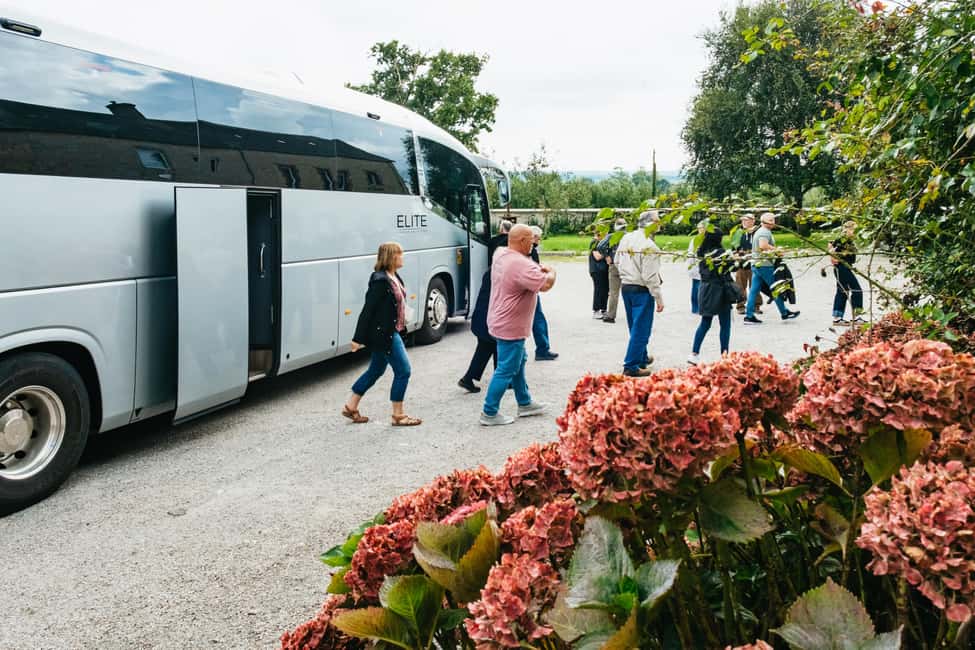
This tour starts in Paris and then commits you to a full day in Normandy. Expect about 4 hours by air-conditioned coach to get you out to the landing beaches, then a steady rhythm of museum time, short coach hops, and guided site visits before the 3.5-hour return back toward Paris.
The key value here is not just the destinations. It’s the sequencing. You’re not jumping randomly between memorials. You’re moving through the D-Day story—starting with a place tied to the landings at Utah Beach, then heading to the dramatic high ground at Pointe du Hoc, then finishing with the emotional bookends at Omaha Beach and the American Cemetery.
Practical tip: plan for walking at the beaches and at the cemetery, and don’t count on having tons of time to wander wherever you like. This is structured for momentum. In exchange, you see a lot in one day without the stress of figuring out routes and schedules on your own.
You can also read our reviews of more guided tours in Paris



Utah Beach Museum in a German Bunker: Where the Shore Still Matters
Your first major stop is the Utah Beach Museum, and it’s one of those locations that feels like it was built to make the history land. The museum sits inside a historic German bunker right on the shore, and the setting matters: you’re learning while looking out at the same coastline that shaped the fight.
You also get a rare kind of “wow” artifact: the museum is home to one of the last remaining B-26 bombers in the world. That’s the sort of detail that turns a lesson into something you can point to and remember later.
Why this stop is so strong: it connects planning, operations, and lived experience. The guide’s narration helps you understand Operation Overlord in a way that matches what you’re seeing outside the museum walls—so it doesn’t become a list of dates. You get about 75 minutes here, which is enough time to absorb the exhibits and still have a moment to take in the view.
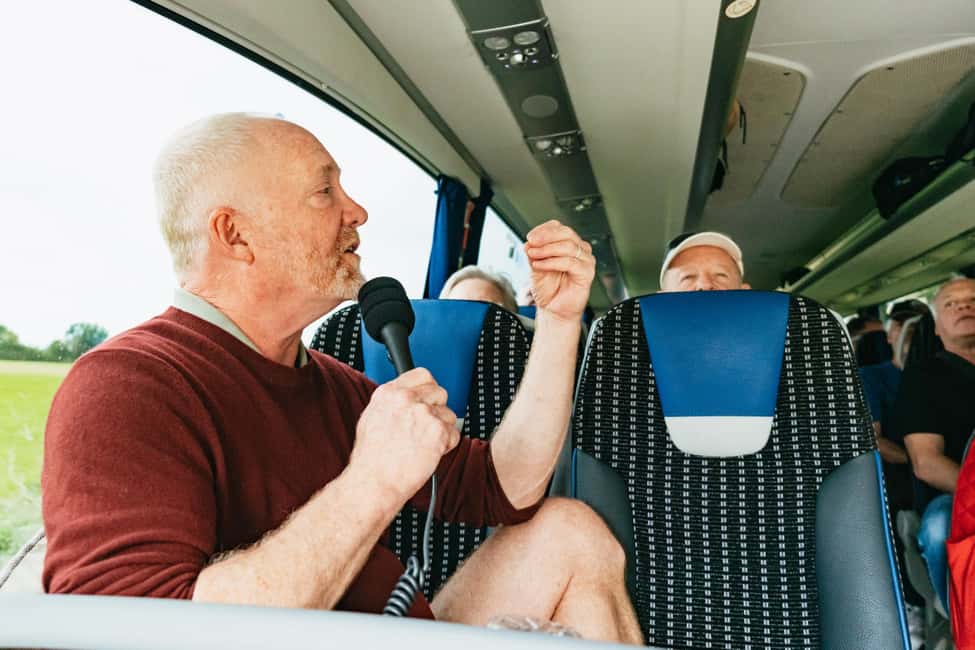
If you like when a guide puts history in order, you’ll likely enjoy the bus talk too. Several guides referenced in the day’s feedback—like Ash, who explained WWII context clearly—made the transition from Paris to the beaches feel logical, not sudden. That kind of framing really helps at Utah Beach, because it’s easy to miss the “why” if you only focus on “what happened.”
Pointe du Hoc: The View, the Craters, and the Rangers’ Climb
Next comes one of the most dramatic sites on the D-Day map: Pointe du Hoc. This is where the cliffs and fortifications do most of the talking. You walk among the remains of German clifftop defenses, still marked by bomb craters, and you stand in a place tied to one of the most intense parts of the landing story.
The guide-led element here is crucial. The story centers on the U.S. Army Rangers—the account of them scaling the cliffs under heavy fire isn’t delivered as a Hollywood plot. It’s framed as a strategic necessity and a human risk, which changes how you look at what’s left behind.
You’ll have about 1 hour on site. That’s not a long time, but it’s enough if you’re paying attention. Here’s how to make the most of it: slow down at viewpoints, and use the time to look back toward the coastline and then up along the cliff remains. Even without going deep into technical details, your eyes start to understand why this point mattered.
This is also a good stop if you want a more emotionally honest mix: it’s not only about beaches and landing craft. It’s about the problem of gaining control of height and observation—exactly the kind of battlefield challenge you want to feel in your bones before you move to Omaha.
Omaha Beach Free Time: Walk the Sand Before You Face the Names
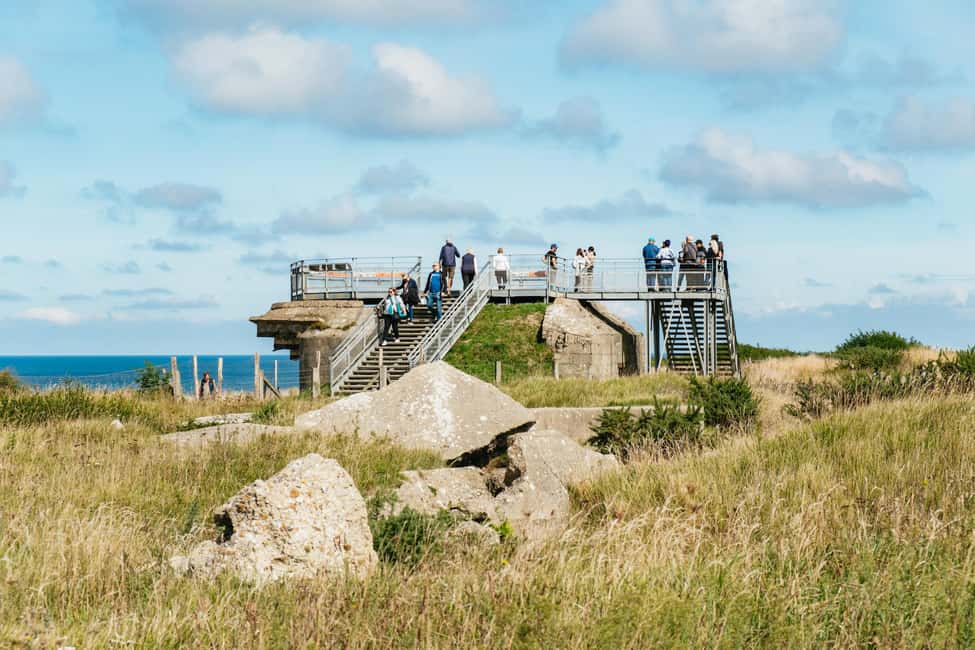
After Pointe du Hoc, you’ll head to Omaha Beach. Here, the pace shifts a bit. You get free time to walk along the shoreline, roughly 20 minutes as scheduled.
That may sound short, but it’s intentional. Omaha is wide and emotionally heavy. A short walk gives you enough time to feel the scale without turning the visit into a rushed sprint—or a long daze where you’re not really taking anything in.
What I like about this portion is the reset it creates. The Rangers story is intense and action-heavy. Omaha shifts the focus to the ground-level experience: the beach itself, the open distance, and the sense that the battle was fought in a very exposed place.
Then you move on to the cemetery, which is where the day really becomes personal.
The Normandy American Cemetery: A Place to Walk, Pause, and Pay Tribute
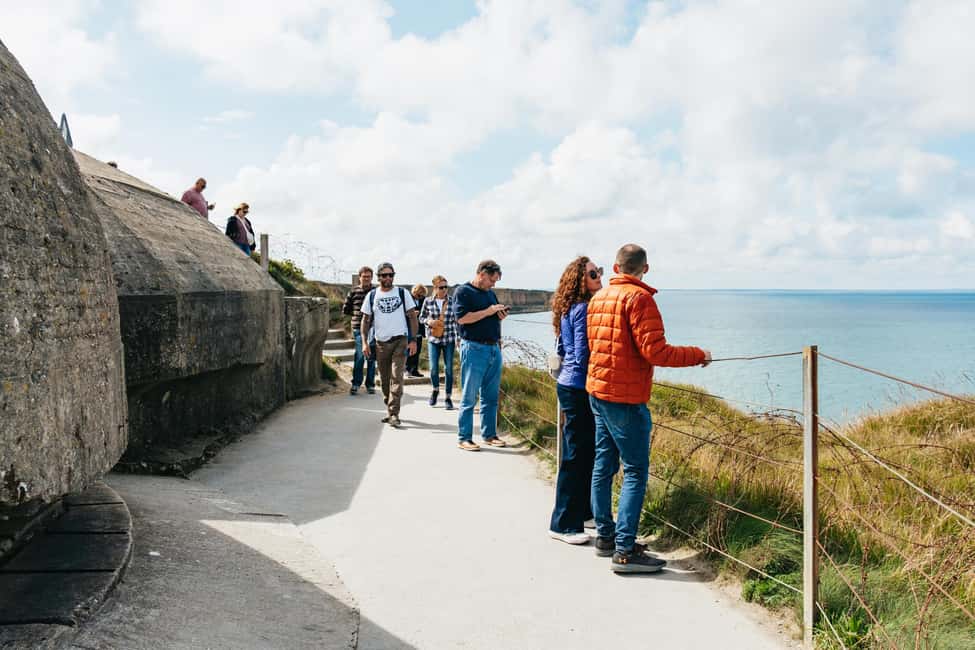
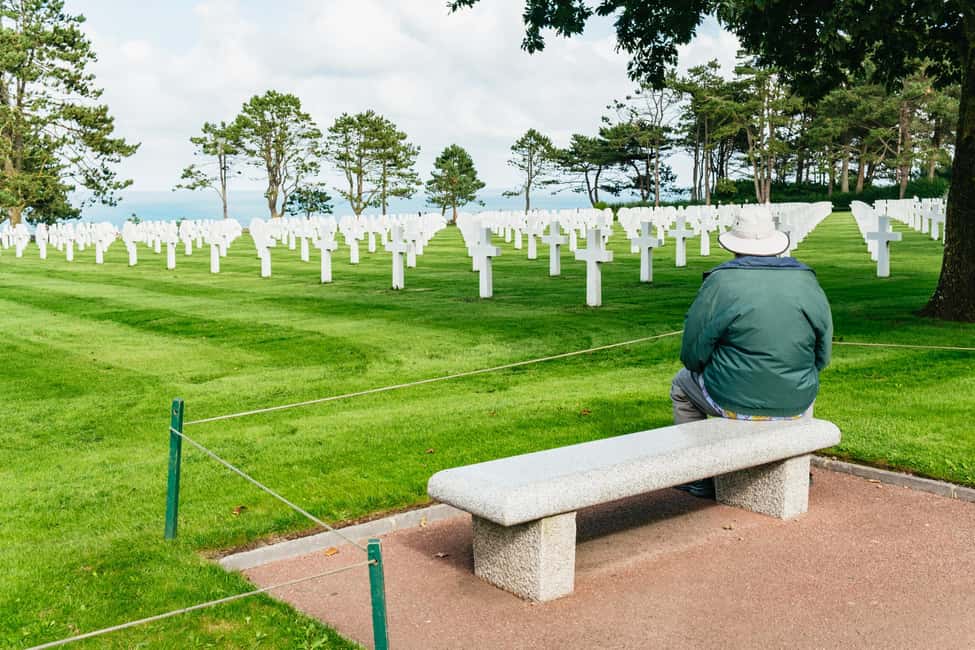
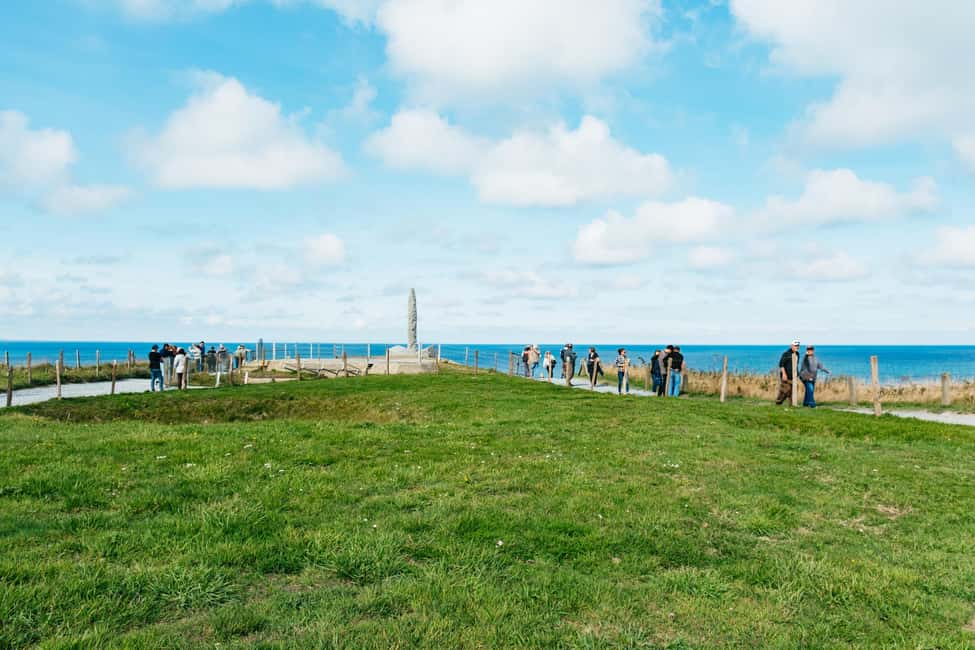
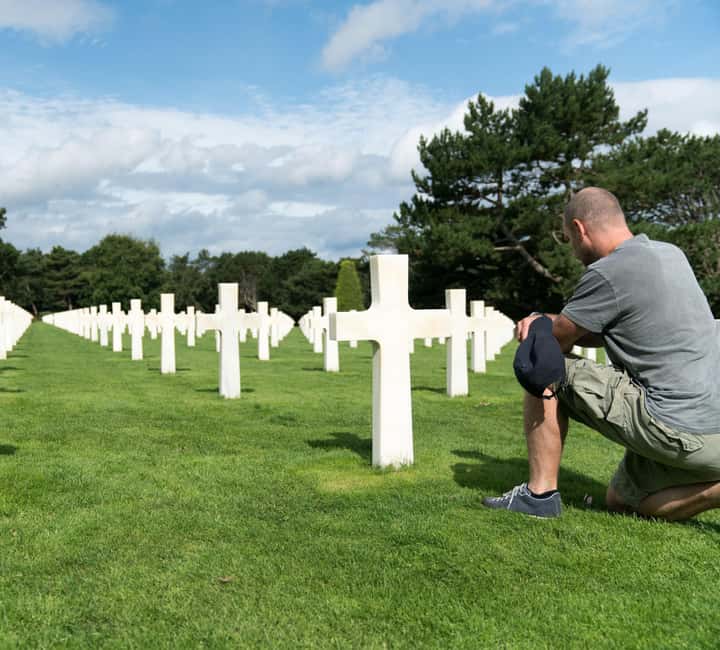
Your final major site is the American Cemetery at Colleville-sur-Mer, overlooking Omaha Beach. This is one of the most moving places in the whole region, and the tour schedule gives you 75 minutes, including a guided tour and free time.
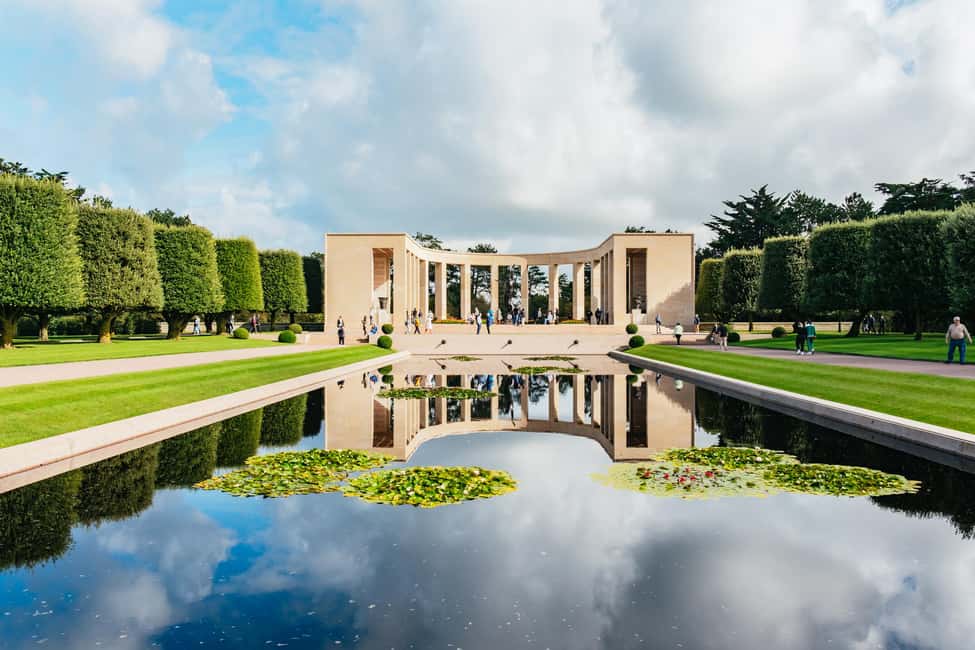
What you’ll see is carefully designed to be both respectful and readable: you’ll have time to move through the grounds, pause at the reflecting pool, and pay tribute to nearly 10,000 American soldiers buried here. One name specifically called out is Theodore Roosevelt Jr., the son of President Roosevelt and a Medal of Honor recipient.
There’s also a visible inclusiveness in how memorials are marked—rows of white crosses and Stars of David are part of the grounds. That detail matters because it underlines that this isn’t only one kind of story. It’s many families, many identities, one shared outcome.
The best way I can describe this stop: it’s quiet, even when you’re not. You feel the difference immediately once you’re walking among the graves and seeing the coastline beyond.
If your guide is like Raymond—praised as respectful and moved by the history—the cemetery stop often feels even more grounded. If you get a guide in the Sam style, who reportedly kept a child engaged while still treating the site with seriousness, you get the same respect with less stiffness. Either way, you’re in the right place to let the day sink in.
You can also read our reviews of more tours and experiences in Paris






Lunch at Grandcamp-Maisy: A Timed Break That Keeps the Day Human
Lunch is included: a 2-course local meal with one glass of cider. It’s planned as a Norman-style stop at a port restaurant overlooking Grandcamp-Maisy.
In value terms, lunch matters because it controls the day’s energy. After hours on the coach and before the emotional end of the tour, having a pre-booked meal prevents the usual trap: you’re starving, you’re late, and you choose whatever is closest instead of something worth having.
Quality reads mixed in the feedback you were given. A few people described it as good, while at least one note said it could feel rushed or not exceptional. That said, most of the praise around the day’s structure suggests the meal is reliably timed and easy to enjoy without logistics stress.
My practical take: treat lunch as a breather, not the main event. If you’re picky about food, mention dietary needs ahead of time when booking. And if you’re sensitive to long travel days, eat at a steady pace and drink water between stops since the schedule is built to keep moving.
Price and Value: What You’re Paying For at $117
At $117 per person, this isn’t a bargain-basement day trip. But you are paying for three things that add real value:
- A full-day guide experience across multiple sites tied to D-Day planning and battle geography. The narration is what turns sites into a story.
- Roundtrip coach transport from Paris, which would be a hassle to organize independently if you want the same streamlined stop order.
- Entry to the Utah Beach Museum plus the guided Pointe du Hoc visit and a lunch that’s already arranged.
Where the price can feel less “worth it” is if you’re the type who wants lots of unstructured time. Omaha Beach is only about 20 minutes, and even the cemetery’s 75 minutes is still a set window. This tour is built for seeing key sites and understanding them, not for wandering for hours.
So I’d frame it like this: if you want a well-run highlights route with context, it’s good value. If you want total freedom and long time at one or two locations, you might prefer doing fewer stops on your own.
Timing, Comfort, and What to Bring for the Coach-and-Walk Day

This is a 14-hour day, and that’s before you start thinking about where you’ll actually be standing and walking. Comfortable shoes are explicitly recommended, and that’s the right call. Beaches aren’t the same as museum floors.
There are also on-the-ground limits that can affect your day:
- The tour is not suitable for people with mobility impairments and wheelchair users.
- Baby strollers are not allowed, and non-folding strollers are also not allowed.
If you’re traveling with infants, you’ll want to bring your own infant/child seat because the responsibility is on the parent or guardian for safety.
One more comfort note: even with an air-conditioned coach, you’ll likely want to wear layers. Normandy coastal weather can shift quickly, and you’ll spend time outside at the beaches and cliffs.
Meeting in Paris and Ending Back in the City
Getting on the right bus is half the battle. The meeting point is at Place du Général Kœnig (75017 Paris) beside Église Notre-Dame de Compassion, at the intersection of boulevard d’Aurelle de Paladines and Avenue de la Porte des Ternes. A City Wonders representative holding a City Wonders sign will be standing on the right side when facing the church.
There’s no hotel pick-up included. You’ll start from the meeting point and finish back in Paris at Place de la Porte Maillot.
This “get yourself to the start” setup is common for day trips from central Paris, but it also means you should aim to arrive early. The tour depends on everyone boarding on time since it’s a fixed schedule across four time blocks: Paris to Normandy, stops on the coast, then the return.
Should You Book This Normandy D-Day Day Trip?

Book it if you want a structured, guided Normandy highlights route that hits the biggest D-Day sites in a single day: Utah Beach Museum, Pointe du Hoc, Omaha Beach, and the American Cemetery. I’d also recommend it if you like history explained in order—many of the guide names praised in the provided info (like Maja, Sam, Lawrence, John, Ash, Thelma, and Raymond) were noted for making the stories clear and emotionally respectful.
Skip it or consider a different style if you strongly prefer slow travel and long time at fewer places. This one moves, and while the stops are meaningful, the schedule doesn’t cater to lingering for hours.
If you only have one day and you want it to count, this is a solid choice. It’s serious, well paced for what it covers, and it ends in the right place—standing where the sacrifice is honored, with Omaha Beach still in view.
FAQ
What’s included in the tour?
The tour includes an English-speaking expert guide, roundtrip transportation from Paris by air-conditioned coach, entrance to the Utah Beach Museum, a guided visit of Pointe du Hoc, visits at the American Cemetery overlooking Omaha Beach, and a 2-course local lunch with 1 glass of cider.
How long is the day trip from Paris?
The total duration is 14 hours.
Which D-Day sites does the tour visit?
You’ll visit the Utah Beach Museum, Pointe du Hoc, Omaha Beach, and the Normandy American Cemetery at Colleville-sur-Mer.
Where do we meet in Paris?
You meet at Place du Général Kœnig, 75017 Paris, beside Église Notre-Dame de Compassion (City Wonders representative holding a sign).
Is lunch included, and what is it like?
Yes. Lunch is a 2-course local meal with 1 glass of cider at a port restaurant in Grandcamp-Maisy.
Is the tour suitable for wheelchair users or strollers?
The tour is not suitable for people with mobility impairments or wheelchair users. Baby strollers are not allowed, and non-folding strollers are also not allowed.