REVIEW · PARIS
WWI Somme Battlefields Day Trip from Paris
Book on GetYourGuide →Operated by Blue Fox Travel · Bookable on GetYourGuide
WWI Somme goes from textbook to real life. This day trip pairs the solemn field sites of the Great War with stops that are also awe-inspiring: the 13th-century Cathedral of Amiens and the huge Lochnagar Crater, blasted by tunneling engineers using 30 tons of explosives. I especially like the small-group format (only eight people) and the way the guide builds context without bulldozing your quiet moments, and you’ll feel it at places like Beaumont-Hamel where you walk the trenches and then face row after row of graves marked Here lies a soldier known only to God. One possible drawback: it’s a long day (11 hours) with several short stops, so you’ll want comfortable shoes and patience.
You’ll start with a smooth, air-conditioned ride out of Paris and into Hauts-de-France, then work your way through major memorials in the Somme region. Expect guided time at the crater and meaningful walking at Beaumont-Hamel, plus museum time focused on artifacts and uniforms. If you’re looking for a relaxed “Paris-adjacent” stroll, this won’t be that—but if you want a focused day that actually connects the dots between sites, the value is strong.
In This Review
- Key things to know before you go
- Leaving Paris for the Somme: what the ride is really for
- Thiepval Memorial: understanding the scale in one concentrated stop
- Lochnagar Crater: seeing tunneling and 30 tons of explosives up close
- Beaumont-Hamel Newfoundland Memorial: trench walking you can’t fake
- Lunch break: quick reset, then back into memorial mode
- Villers-Bretonneux: cemeteries, names, and a clearer Allied story
- Sir John Monash Centre (and what happens if it’s unavailable)
- Pozieres and back toward Amiens: pacing before the cathedral moment
- The museum and artifact factor: uniforms, artillery, posters, and personal items
- Price and value: why $271 can make sense (and when it won’t)
- What this tour feels like: moving, factual, and not rushed
- Who should book this WWI Somme day trip from Paris
- Should you book this WWI Somme day trip from Paris?
- FAQ
- How long is the WWI Somme Battlefields day trip from Paris?
- What’s included in the price?
- Where do I meet for the tour?
- Is the tour rain or shine?
- Is there a museum stop on this day trip?
- What happens if the Sir John Monash Centre is closed?
Key things to know before you go
- Small group (eight people): more questions answered, less rushing through big moments
- Lochnagar Crater guided stop: you see what tunneling and explosives looked like on the ground
- Beaumont-Hamel trench walking: you’re on preserved lines tied to Canadian soldiers
- Memorials that teach through silence: Thiepval, Pozieres, and the cemeteries hit hard
- Museum artifacts, not just names: uniforms, artillery, posters, and personal items are part of the day
- Luxury van timing: air-conditioned transport helps when the day runs long
Leaving Paris for the Somme: what the ride is really for
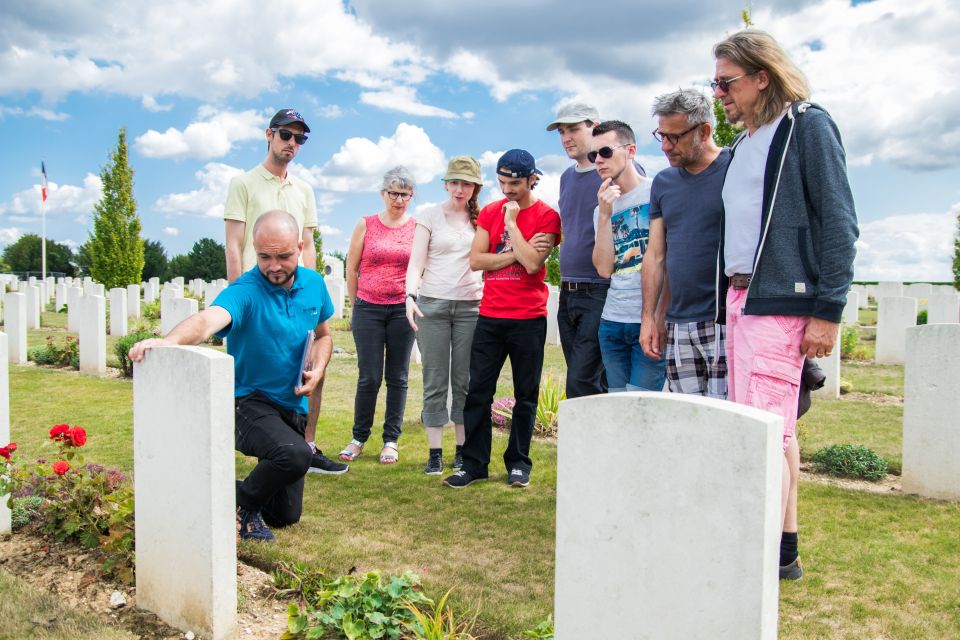
This tour is built around one big problem with the Somme: it’s far. You could DIY it, but you’d spend your day juggling transit schedules and transfer times—then you’d still arrive at emotionally heavy sites with no guide to connect the story from place to place. Here, you get an air-conditioned minibus/van and a live English-speaking guide, and the group stays small enough that it doesn’t feel like you’re being herded.
The drive out matters because you’re trading city noise for repetition: fields, memorials, and names. You’ll leave from Café Dada Ternes (the meeting point for this tour) and you’re expected to be there at least 15 minutes early. The driver-guide arrives about 10 minutes before the scheduled departure time with a grey minibus, and the tour starts sharp—so don’t treat “15 minutes early” as optional.
You can also read our reviews of more tours and experiences in Paris



Thiepval Memorial: understanding the scale in one concentrated stop
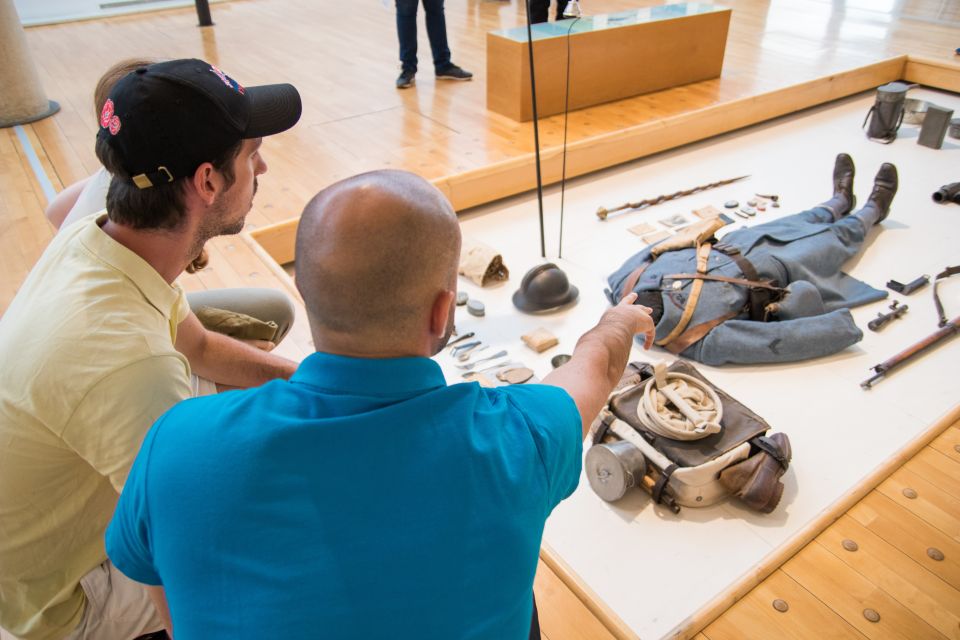
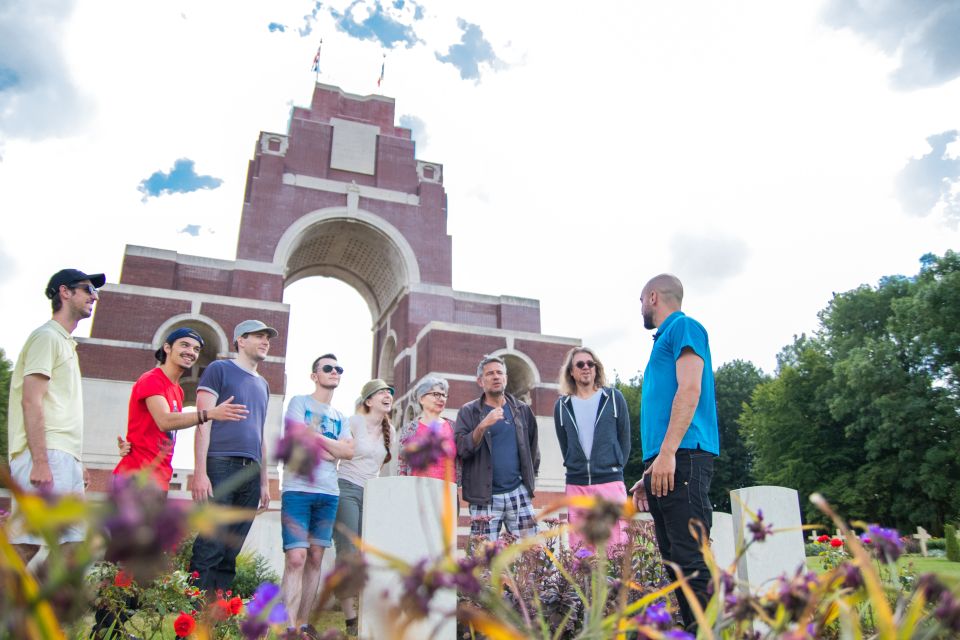
Your first major memorial stop is Thiepval, one of the best places to grasp how the Somme campaign is remembered. You get about 30 minutes there, which is enough time to orient yourself and understand what the memorial does: it gathers the missing, and it refuses to let the dead become a statistic.
This is also where your guide’s approach starts to pay off. A good guide doesn’t just recite dates. Instead, they help you read what you’re seeing—what a memorial like this is designed to do, and why it looks the way it does. You’ll likely notice that the time isn’t meant for selfies. It’s meant for looking, absorbing, and then moving on with more context than you had before you arrived.
Lochnagar Crater: seeing tunneling and 30 tons of explosives up close
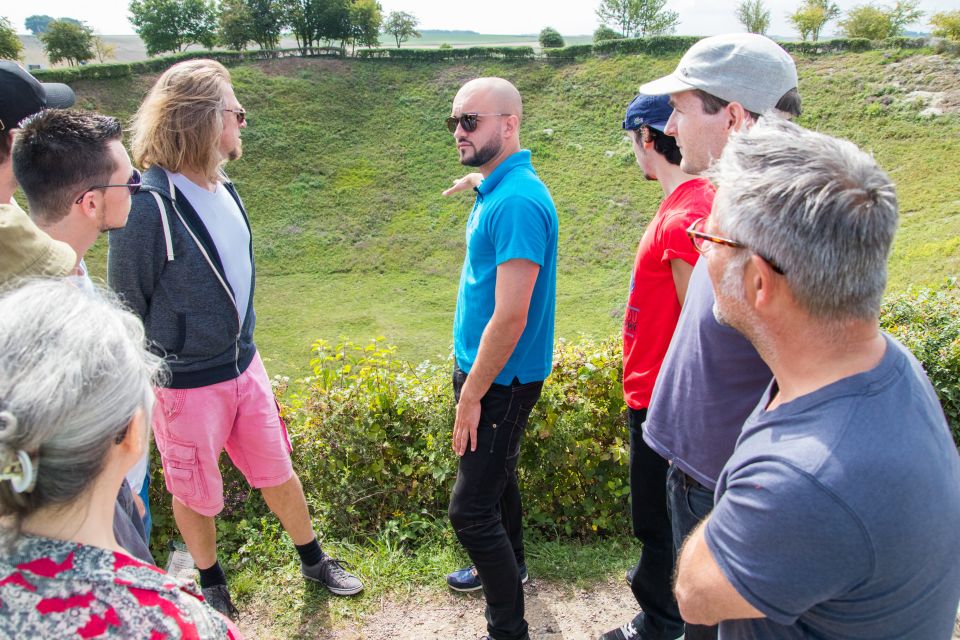
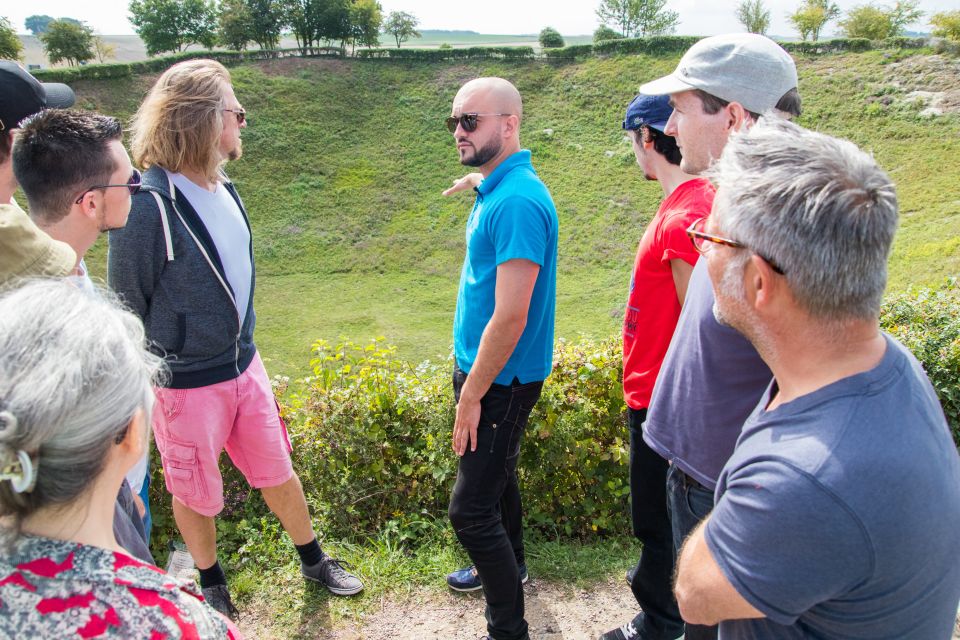
Then comes one of the Somme’s most dramatic physical reminders: the Lochnagar crater. You’ll get a guided tour here for about 30 minutes, and that guidance is key because a crater is both simple and confusing at the same time. It looks like a hole in the ground, but it was the result of an engineering plan—Royal Engineers tunneling companies using 30 tons of explosives to obliterate German dug-outs.
Walking around Lochnagar, you start to understand how the war wasn’t only about bravery. It was also about labor, logistics, and the power to change a battlefield with engineering. If you’re the type who likes “how” questions—how something was done, not only that it was done—this stop tends to be a highlight.
Beaumont-Hamel Newfoundland Memorial: trench walking you can’t fake
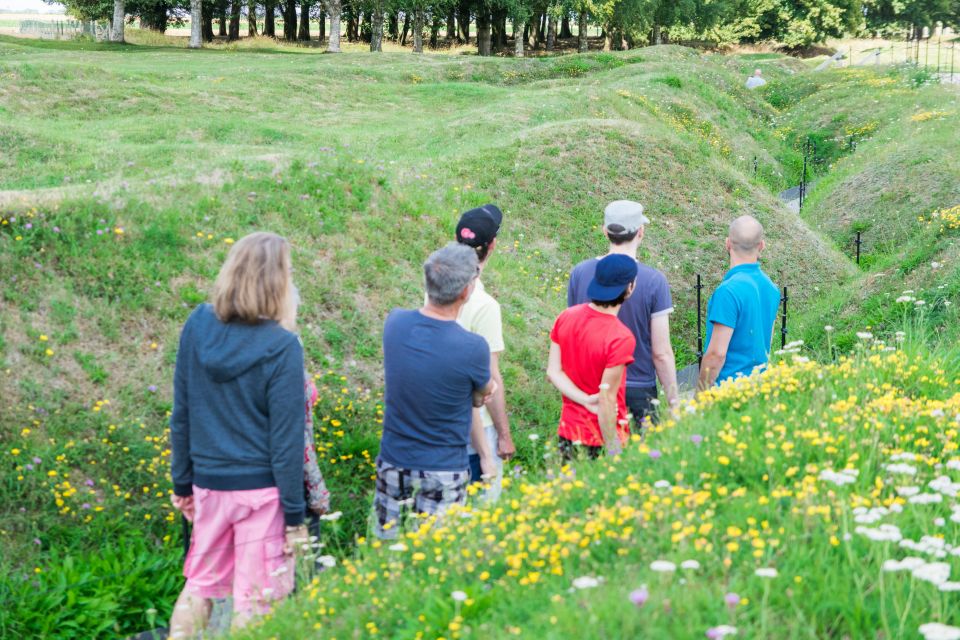
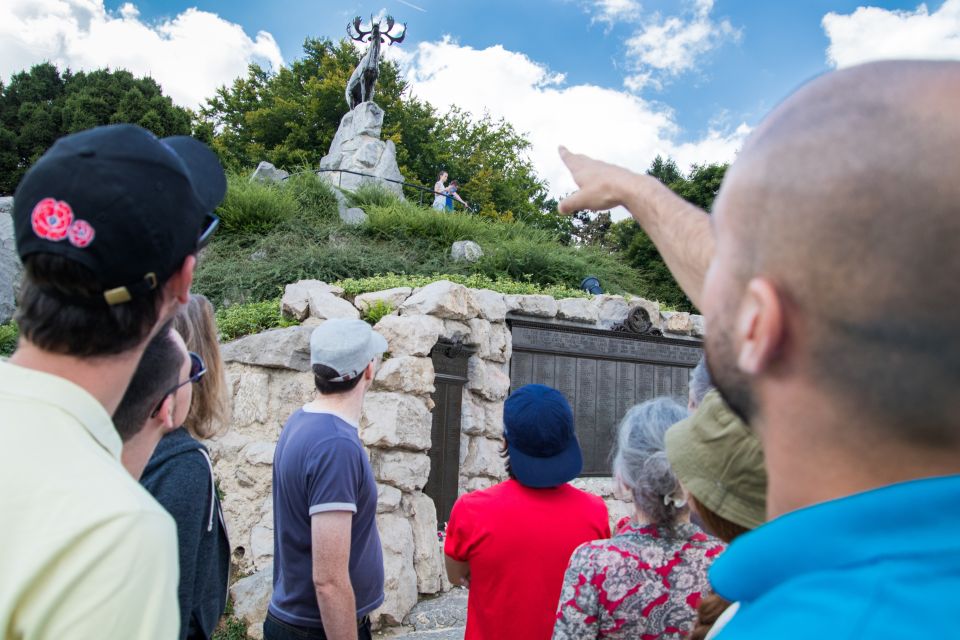
Beaumont-Hamel is where the day becomes visceral. You spend around 30 minutes at the Newfoundland Memorial, and the point isn’t just to look at it—it’s to walk in the trenches and feel how close the opposing forces were. This section of the battlefield is tied to Canadian soldiers, and the experience is designed to make that connection feel immediate.
The preserved trenches do something powerful to your brain: they shrink distance. Suddenly you can picture movement, noise, and the “in-between” moments that usually vanish when you only read about the Somme. One of the best things about this tour is that it keeps a respectful pace. You’re given time for quiet reflection, not only rapid site-to-site coverage.
If you’re visiting as a family or with someone new to WWI, this is also the easiest stop to explain later. It gives you a concrete anchor: we walked here, and this is what it means.
Lunch break: quick reset, then back into memorial mode
Lunch is a simple local restaurant stop, and the scheduled time is short. Food isn’t included in the price, so you’ll want to plan for that in your budget and timing. Because the day keeps moving, I recommend you treat lunch like logistics: eat something you can handle outdoors if it’s cool or windy, and don’t rely on the meal to be your long break.
If you’re prone to getting chilly, consider bringing a layer that you can throw on without drama. One thing about these northern French battlefields is that the weather can switch gears fast, and the tour operates rain or shine.






Villers-Bretonneux: cemeteries, names, and a clearer Allied story
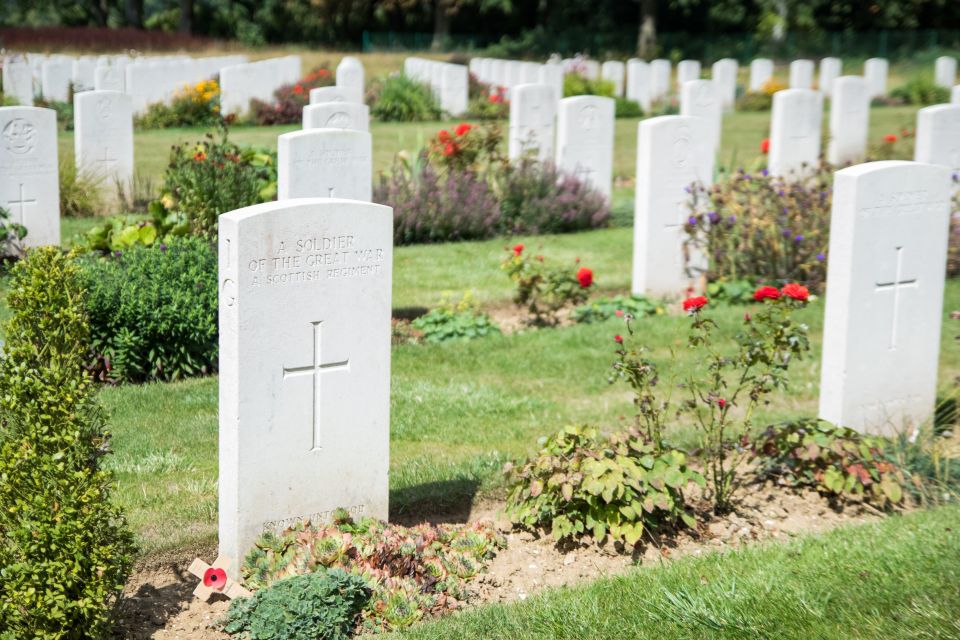
Next up is the Commonwealth section at Villers-Bretonneux, starting with the military cemetery. You’ll have about 30 minutes here. Cemeteries can feel repetitive if you rush them, but with this schedule—and a small group—you can slow down where it counts.
This is also the moment when you may feel the tour’s emotional rhythm settle. At Beaumont-Hamel you face the trenches. At Villers-Bretonneux you face graves and remembrance on a different scale. You’re no longer just thinking about the fighting. You’re thinking about the people and the families behind the names.
A lot of guides on this route are praised for balancing information with space to reflect, and that balance is crucial here. Memorial time isn’t a lecture—it’s a conversation between what you learn and what you feel.
Sir John Monash Centre (and what happens if it’s unavailable)
You then spend about an hour at the Sir John Monash Centre. This is one of the best “bridge” stops on the day because it shifts from walking and reading memorials to understanding what the war looked like through artifacts and interpretation.
The center’s focus fits especially well if you’re interested in Australia’s role in the conflict (it’s designed with that perspective in mind). Some guides are praised for making the museum time feel practical—explaining what you’re seeing and how it connects back to the battlefield sites outside the doors.
Important contingency detail: if the Sir John Monash Centre has exceptional closure, it may be replaced by the Historical Museum of Péronne. So if this stop is a major part of your motivation, it’s smart to be flexible while you’re in the region.
Pozieres and back toward Amiens: pacing before the cathedral moment
After Villers-Bretonneux, you’ll visit the Pozieres Memorial for a shorter stop. These memorials often work best when you’ve already built context earlier in the day. By now you’ve seen how the war is remembered, so you’re better equipped to read what you see at Pozieres.
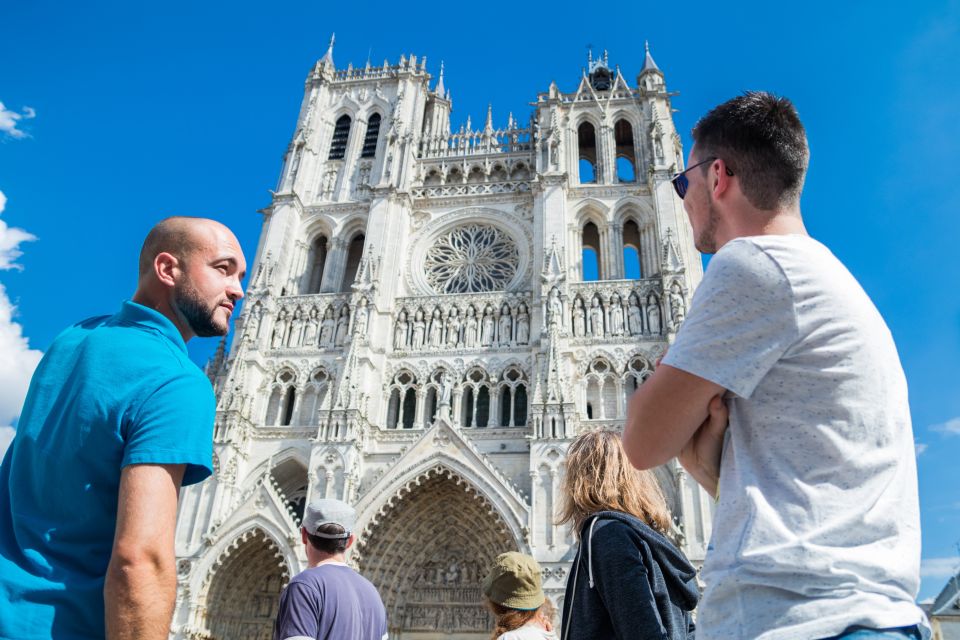
Then the tour turns toward Amiens and the 13th-century Cathedral of Notre-Dame. You get about 30 minutes there, and it’s a real payoff. The cathedral is the largest in France, and even if you’re not a cathedral person, it’s hard not to feel the contrast: towering stone after a day spent thinking about men who never came home.
It’s also a practical timing choice. A longer cathedral visit would be great, but it would crowd out the battlefield stops. This schedule gives you a real cathedral moment without pretending you can do everything in one day.
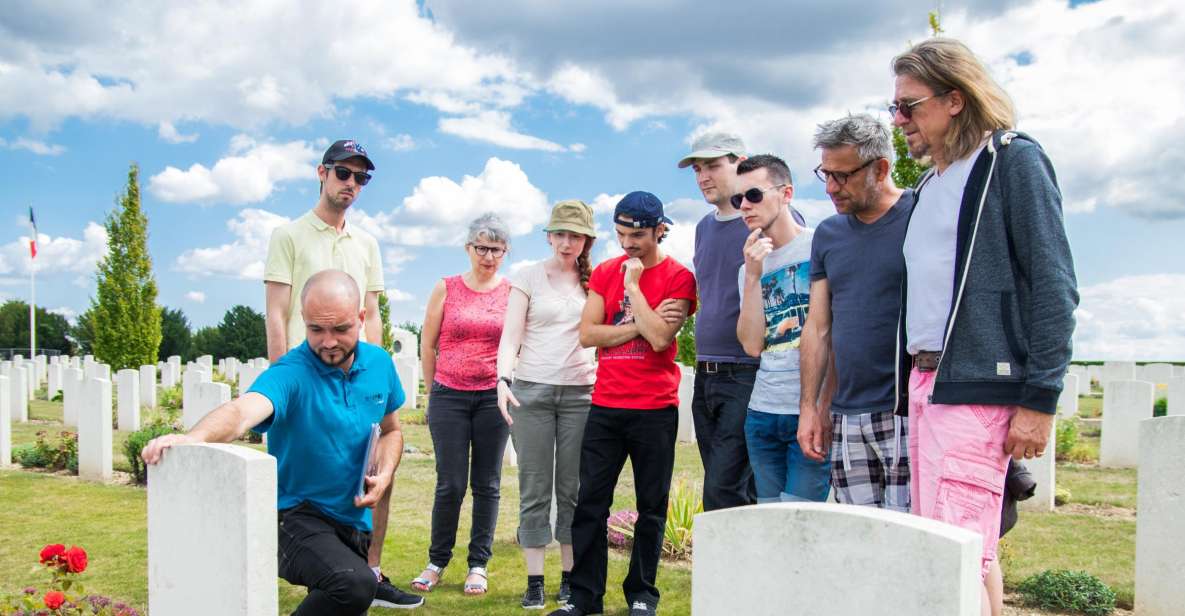
The museum and artifact factor: uniforms, artillery, posters, and personal items
A big part of why this tour feels more complete than a “cemeteries-and-craters” checklist is the museum component. The day is designed to show you artifacts and the material side of the war: uniforms, artillery, war posters, and many personal items belonging to the soldiers who fought.
This matters because the battlefield sites answer the where and the trenches answer the physical reality, but museums answer the how and the who. You start to connect the dots between what happened in the ground and how the war was experienced by individuals on both sides.
If you’re the kind of person who likes to go beyond names—someone who wants to understand the soldier’s world—this is one of the most valuable parts of the day.
Price and value: why $271 can make sense (and when it won’t)
At $271 per person for an 11-hour day trip, you’re paying for more than transport. You’re paying for guided interpretation, air-conditioned van service, and entrance fees. You’re also paying for time. The Somme isn’t next door, and the value of this format is that you get the day’s major stops with minimal hassle.
Where the value can wobble is if you’re only interested in one or two sites. Because the schedule includes multiple memorials and museum time, you should know what you want before you book. If you want “a bit of everything” from WWI commemoration and tangible sites, this tour’s structure is exactly how you get it.
Also remember food isn’t included. Lunch is short, and you’ll need spending money for meals.
What this tour feels like: moving, factual, and not rushed
Many guides are praised for the same core skill: pacing with respect. They’ll explain what you’re looking at, but they also slow down when the moment needs it. People like Will, Marrie, Matthieu, Olivier, Phillipe, Étienne, Matthew, Lisa, Julian, Jonathan, Aaron, Rocky, Ollie, Clement, and Antoine (among others) are mentioned for mixing strong local context with a calm, reflective approach.
You’ll also benefit from the small group size. When you’re with only eight people, it’s easier for the guide to answer your questions without derailing the day. One guest mentioned the tour can be adjusted depending on group interests, including swapping emphasis between Australian-focused sites and other stops. That kind of flexibility is a big deal if you care about specific angles of WWI.
Who should book this WWI Somme day trip from Paris
This tour is a strong fit if:
- You want WWI sites you can’t easily string together on your own with the same context.
- You care about both the battlefield (trenches, craters) and the remembrance (memorials and cemeteries).
- You like guided interpretation that leaves room to reflect.
It might not be the best fit if:
- You’re hoping for a short, light day with minimal walking.
- You get emotionally overwhelmed easily and need lots of downtime.
- You only want one attraction and hate structured schedules.
My practical take: if you’re coming from Paris and this is a bucket-list region for you, the combination of small group comfort, guided crater and trench time, and major memorial/museum stops is exactly what makes it worth booking.
Should you book this WWI Somme day trip from Paris?
Yes—if you want the Somme to make sense. This tour connects key sites in a way DIY travel usually can’t. The small group size, the luxury A/C van comfort, and the guided time at major landmarks (Lochnagar, Beaumont-Hamel, and the museum stop) give you a day that’s both educational and genuinely moving.
If you’re ready for a long day with short stops and you’re okay handling your lunch separately, this is a very good value way to experience the Great War memorial landscape around the Somme.
FAQ
How long is the WWI Somme Battlefields day trip from Paris?
The tour duration is listed as 11 hours.
What’s included in the price?
The tour includes an English-speaking guide, transportation by A/C minibus, and entrance fees. Food is not included.
Where do I meet for the tour?
You meet at a café called Café Dada Ternes at the tour’s starting location. Arrive at least 15 minutes early because tours start sharp.
Is the tour rain or shine?
Yes. Tours operate rain or shine.
Is there a museum stop on this day trip?
Yes. The itinerary includes major museum time in the Somme region, including the Great War Museum in Péronne as described, and it specifically lists a visit to the Sir John Monash Centre. The Monash Centre may be replaced by the Historical Museum of Péronne if there is exceptional closure.
What happens if the Sir John Monash Centre is closed?
If there is exceptional closure, the Sir John Monash Centre may be replaced by the Historical Museum of Péronne.