REVIEW · PARIS
Tours of Paris and the Hauts-de-Seine in an Amphibious Bus
Book on Viator →Operated by Les Canards de Paris · Bookable on Viator
A splashy, story-filled way to see Paris. You’ll ride the first French amphibious bus for a smooth loop that mixes iconic landmarks with calmer river scenery—and yes, you actually go into the water. I like how the tour feels small (max 35) and light on crowds, and I also like that the narration is designed for both first-timers and curious travelers who want the background behind what they’re seeing.
What sold me: the amphibious novelty (driving into the Seine on Marcel le Canard) and the tight focus on major sights—from Pont Alexandre III and Les Invalides to the Eiffel Tower viewpoint and key bridges, parks, and neighborhoods along the way. The one thing to consider is that the English experience can vary by guide mic presence and pacing; a few past passengers noted that some information came through less fully in English than they expected.
In This Review
- Why This Amphibious Bus Tour Works So Well
- Key Highlights I’d Put on Your Must-Do List
- The Amphibious Concept: More Than a Gimmick
- Meeting Point Reality: Know Where You’re Boarding
- Inside the Tour Experience: What the Route Feels Like
- Pont Alexandre III and Les Invalides: The First Big Story Beat
- The Eiffel Tower View: Why This Stop Is a Big Deal
- The Hot Air Balloon Moment: A Park With a First
- The Royal Treatment Side: A Majestic Pool and a Luxury Hotel
- Paris Saint-Germain Stadium: A Modern Detour With Energy
- Getting to the Splash: History Behind the Bus Moment
- The Launching Splash at the Monsieur Island Nautical Park
- On the Seine: Seine Musicale, Seguin Island, and the River View
- Saint Cloud Gardens Waterfall: A Scenic Reward
- Back on Land: Issy-Les-Moulineaux and Art-World Details
- The Statue of Liberty Connection: Paris Has One Big One
- Eiffel Tower Again, Then You’re Done
- Guides Make or Break It: What I’d Look For
- Price and Value: Is $50.79 a Good Deal?
- Who This Tour Best Suits
- Should You Book This Amphibious Bus Tour?
- FAQ
- What is the price of the tour?
- How long is the experience?
- Where do I meet the guide?
- How early should I arrive?
- Is the tour offered in English?
- Is there a mobile ticket?
- What is the group size?
- Does the tour go into the water?
- Where does the tour end?
- Do I need good weather?
- Is free cancellation available?
Why This Amphibious Bus Tour Works So Well
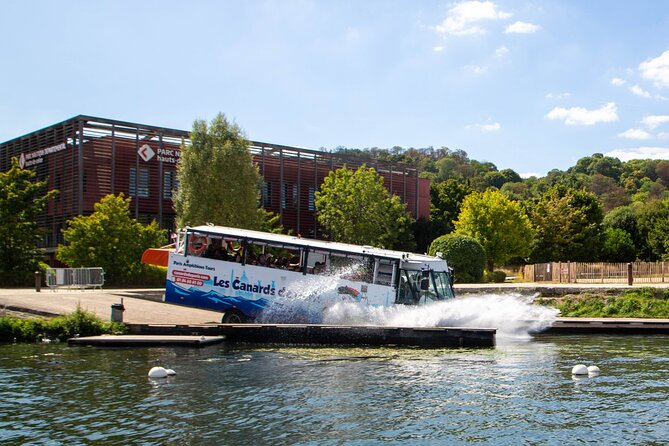
This is the kind of Paris activity that helps you get your bearings fast. You’re not trying to squeeze everything in on foot, and you’re not stuck on a long, slow cruise. Instead, you get a land-and-water mix in about two hours, plus a guide who keeps the atmosphere playful.
The setting matters too. You start in central Paris near public transport, and the route naturally funnels you past landmarks many visitors only catch from a distance. Then comes the fun part: the bus transitions to a river crossing with a dramatic splash, so you get that rare you-can-only-do-this-here feeling.
Key Highlights I’d Put on Your Must-Do List
- Small group size (up to 35) that usually means easier listening and better energy.
- Marcel le Canard, the first French amphibious bus, including the land-to-water splash moment.
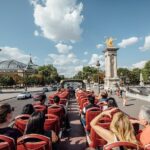
- Pont Alexandre III + Les Invalides storytelling, with the bridge’s 1900 World’s Fair connection and Louis XIV-era roots.
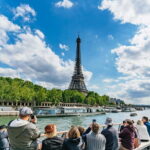
- Top Eiffel Tower viewing spot, timed as part of the loop for a strong photo moment.
- River stops beyond the postcard lane, like the Seine Musicale area, Seguin Island, Saint Cloud gardens, and the Monsieur island nautical park.
You can also read our reviews of more tours and experiences in Paris.

The Amphibious Concept: More Than a Gimmick
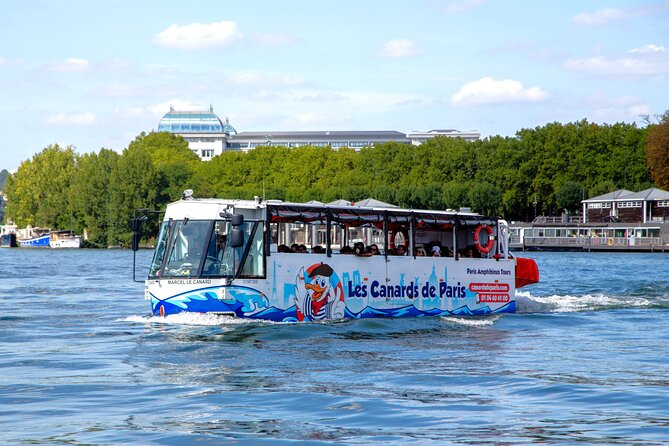
There are tours that rely on a single trick. This one uses the amphibious bus as the “hook,” but the payoff is broader: you’re seeing multiple parts of Paris in one compact loop, and you’re moving between viewpoints without the friction of transfers.
On land, the guide can do real commentary on what you’re passing—Les Invalides, Pont Alexandre III, the Eiffel Tower area, and the grand streets that frame the city’s big moments. Then when you hit the water, the guide can point out what you’d miss from a standard bus window.
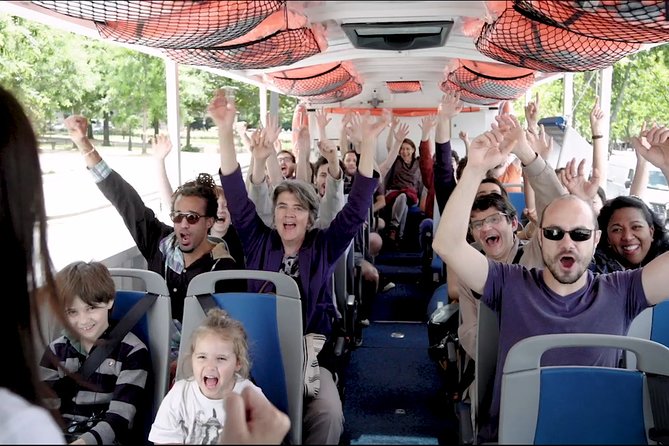
That’s also why this works for different ages. Kids tend to be locked in during the water portion. Adults usually perk up when the guide ties architecture to specific eras, like the Louis XIV construction of Les Invalides and Pont Alexandre III’s Universal Exhibition roots.
Meeting Point Reality: Know Where You’re Boarding
Your departure and return are at the same place, but the exact meeting plaza can change. You’ll board about 15 minutes before departure time from the address on your booking confirmation email—either Place Jacques Rueff or Place Vauban. If you’re unsure, you can call the operator.
Practical tip: plan to arrive early and be ready to move. The tour is time-based, and the whole thing is designed to keep the group together, especially for the water segment where timing and positioning matter.
Inside the Tour Experience: What the Route Feels Like
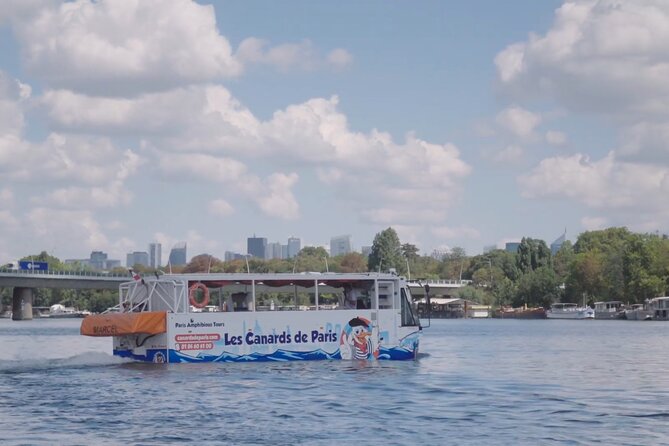
The schedule runs about 1 hour 45 minutes to 2 hours. That’s long enough to cover major sights and still short enough that you won’t feel exhausted by the end.
You’ll ride aboard Marcel le Canard, with commentary in English when offered. The standard pattern is narration tied to what you’re seeing—bridges, landmarks, parks, and then the river crossing. Many guides also keep things conversational and funny, and the best moments happen when you can hear the mic clearly while moving.
Pont Alexandre III and Les Invalides: The First Big Story Beat
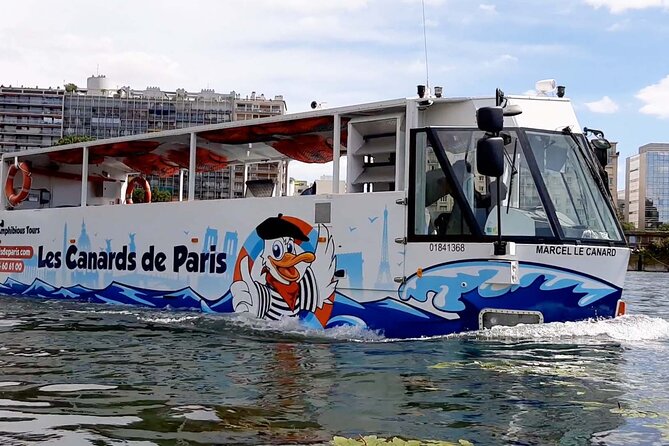
One of the smartest parts of this tour is how it front-loads the “wow” sights while you’re still fresh and the day is calm.
You pass by Les Invalides, described as a jewel of western Paris built under Louis XIV in 1671. Even if you don’t spend time inside, you’ll understand why it matters: this is where the scale of royal ambition meets the later idea of France as a global power.
Then you reach Pont Alexandre III, the bridge built for the Universal Exhibition of 1900. The tour frames it as a point where Paris flexes its decorative confidence: it’s the kind of bridge you want to see in person, not just in photos.
Drawback to keep in mind: the view can depend on how the bus is positioned and how the group is seated. It’s still very worthwhile, but I recommend being ready to shift your angle as you go.




The Eiffel Tower View: Why This Stop Is a Big Deal
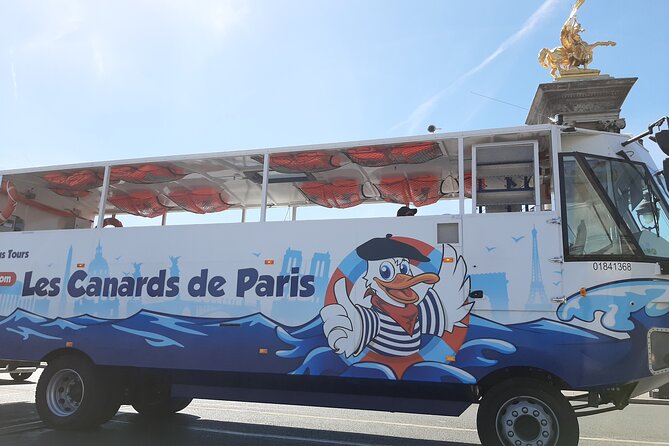
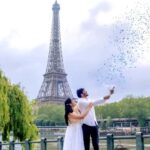
This tour calls out a spot that’s considered the place to be for the best view of the Eiffel Tower. That’s valuable because Eiffel Tower viewing is all about timing and angle. From some streets, you get a sliver. From others, it looks too low or too distant.
On this route, the timing and the park placement help you get a clean line of sight. Even if you’ve already seen the tower from another viewpoint, this is the stop that makes the amphibious concept feel worth it as more than a novelty ride.
The Hot Air Balloon Moment: A Park With a First
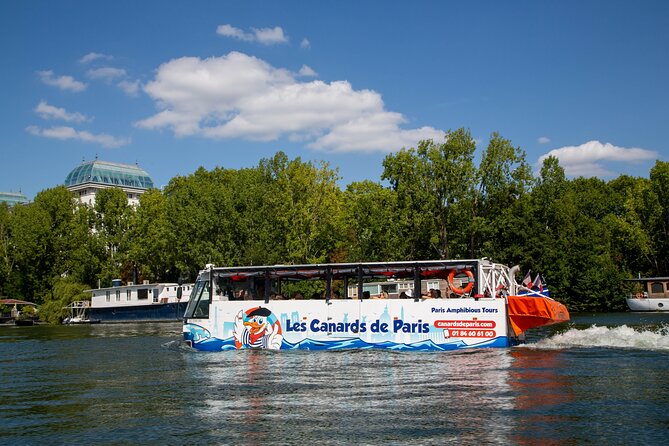
After the tower area, you’ll discover a park tied to an early milestone: it experienced the first manned flight in a hot air balloon. Paris has a habit of hiding big science and early adventure behind tidy greenery, and this is one of those moments.
This portion of the loop is a nice pacing break. You go from monumental architecture to a greener slice of the city, and the guide’s stories help you connect what you see with why it happened.
If you’re traveling with kids, this is a great mental reset before the water segment. If you’re traveling solo, it gives you something to watch besides the big icons.
The Royal Treatment Side: A Majestic Pool and a Luxury Hotel
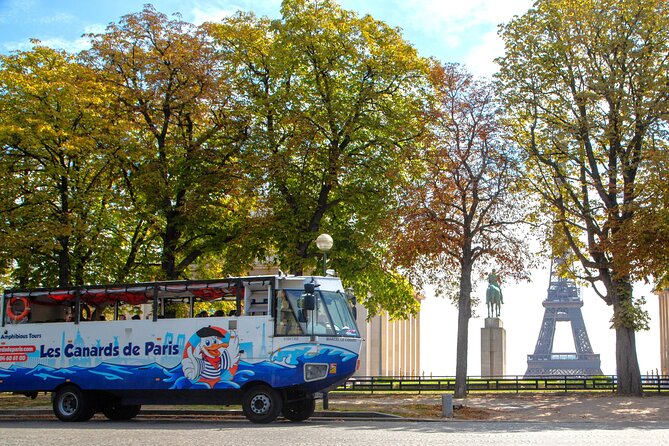
Next you pass a famous swimming pool complex that houses a luxury hotel. The tour leans into how this place has marked the history of Paris.
Even if you don’t know the name, you’ll likely recognize the grandeur from street view. It’s one of those Paris visuals that makes you pause because it feels more like a landmark than a facility.
I like it because it adds texture. Not every stop needs to be “the museum stop.” Paris is also about the way impressive institutions show up on everyday streets.
Paris Saint-Germain Stadium: A Modern Detour With Energy
The loop continues past the Paris Saint-Germain stadium. If luck is on your side, you might even catch chants from supporters.
This is one of those “local life” inclusions that keeps the tour from feeling like a museum checklist. It’s also a useful reminder that Paris isn’t only monuments. It has a pulse, and big stadiums are a visible part of it.
Getting to the Splash: History Behind the Bus Moment
Then you head toward the crossing splash, where you’ll learn more about the manufacturing and the secrets behind Marcel, the first French amphibious bus. That matters because the water transition is the signature action, and it helps to know what you’re watching.
I’d treat this segment as part of the show and part of the explanation. The more the guide frames it, the more the splash turns into a moment with meaning instead of just water.
The Launching Splash at the Monsieur Island Nautical Park
This is the star event: you enter the water in the charming nautical park on the island of Monsieur, the brother of Louis XIV. The narration ties the location back to the long royal thread of the city.
And yes, it gets wet. This is not a dry, sit-and-look-from-below experience. If you’re traveling with a phone camera you care about, bring a basic waterproof cover or at least plan to keep it tucked away during the splash.
Also, expect a little excitement as the bus transitions. Many people time the moment for photos. Don’t block sightlines for others—just be ready.
On the Seine: Seine Musicale, Seguin Island, and the River View
Once you’re on the water, the tour focuses on what you can spot along the Seine. You’ll admire the Seine Musicale and hear how it relates to its surrounding area.
The guide also mentions Seguin Island, and on a river route like this, those names become more than trivia. They turn into wayfinding—so later, if you decide to walk along the river on your own, you’ll know what you’re looking at.
One caution: on some parts of the river crossing, you may not get the same variety you’d see on a longer boat ride. The bus route can follow a less interesting curve of the Seine, likely because it’s operating like a bus in water rather than a dedicated full-time boat. Still, you do gain the green pockets and river texture that you miss from a typical driving tour.
Saint Cloud Gardens Waterfall: A Scenic Reward
You’ll also admire the gardens of Saint Cloud and see its large waterfall from the river. This is where the Seine feels less like a highway and more like a stage.
If you like photos, this is the stretch where the light often looks more forgiving because you’re not staring straight at stone. You’re looking across water toward landscaped space.
Back on Land: Issy-Les-Moulineaux and Art-World Details
After you return to land toward the starting point, the tour passes by Île Saint Germain and the posh district of Issy-Les-Moulineaux. There’s also a reference to the Tower featuring figures of Monsieur Jean Dubuffet, associated with outsider art.
This is a smart inclusion for anyone who enjoys seeing how culture shows up outside the museum. It’s also a reminder that the Paris region has creative gravity beyond the main “must-see” core.
The Statue of Liberty Connection: Paris Has One Big One
Here’s a fun fact you can actually use: Paris once had six Statues of Liberty, and you’ll be able to admire the largest. The tour connects it to the enlargement process that was used to create the one in New York.
This is the kind of detail that sticks because it links two cities in a way you don’t usually hear on standard sightseeing loops. It’s also a great “wait, what?” moment for people who think they already know every Liberty reference they’ll ever see.
Eiffel Tower Again, Then You’re Done
Before you disembark, you get another chance for Eiffel Tower context—kind of a wrap-up view that helps everything you saw earlier feel connected.
Then you’re back at the starting meeting point. In a city where time gets eaten fast, that “back where you started” element matters. It helps you plan the rest of your evening without guessing how to get back.
Guides Make or Break It: What I’d Look For
Many of the best notes from previous rides revolve around the guides’ energy and comedy. Names that came up include Paul and Elliot, plus guides described as funny and fluent with English support.
If you care about English delivery specifically, a good approach is this: arrive early, get a seat where you can hear the mic, and don’t hesitate to ask questions if your guide prompts for them.
One review did mention a mismatch where the tour ran more in French with limited key info translated into English. So if English narration is your top priority, keep your expectations flexible—but also know the operator takes notes seriously when something doesn’t land.
Price and Value: Is $50.79 a Good Deal?
At $50.79 per person, you’re paying for a lot of things at once: a small-group guided loop, central transportation by bus, the amphibious water transition, and narration tied to multiple major stops.
You’d typically pay separately for a river cruise and still need a guide or a plan for the land sights. Here, the water splash is bundled into the touring day, which is why the price feels reasonable for many visitors.
Value also depends on your goal:
- If you want one activity that covers several big areas quickly, this is strong value.
- If you only want the Eiffel Tower and nothing else, you might compare it with a cheaper city driving tour.
For most people, the amphibious part is the “price justification.” For others, it’s the fact that you get a structured route with storytelling rather than random wandering.
Who This Tour Best Suits
This experience fits especially well if you:
- want a family-friendly activity that doesn’t drag,
- are visiting for the first time and want quick orientation,
- like offbeat experiences that still hit top icons,
- prefer a smaller group where you can hear the guide.
It’s also a good pick when you have limited time. Two hours in Paris can disappear fast if you try to do everything on your own. This tour helps you avoid that.
Should You Book This Amphibious Bus Tour?
Yes, if you want a memorable Paris moment that’s more active than a standard city drive. The amphibious ride, the splash, and the combination of landmarks (Pont Alexandre III, Les Invalides, Eiffel Tower viewing) make it a smart “one-and-done” orientation plan.
I’d think twice or at least go in with flexible expectations if:
- English narration is critical and you’re very sensitive to missed details,
- you’re uncomfortable with getting wet during the splash moment,
- weather is questionable—because good conditions matter for the water portion.
If the weather looks good and you’re open to a playful, story-driven ride, this is the kind of Paris tour that gives you something you can’t recreate on your own.
FAQ
What is the price of the tour?
The tour is listed at $50.79 per person.
How long is the experience?
It runs about 1 hour 45 minutes to 2 hours.
Where do I meet the guide?
The tour starts at Place Jacques Rueff, 75007 Paris. The meeting place may vary between Place Jacques Rueff and Place Vauban, based on the period shown on your booking confirmation email.
How early should I arrive?
You board about 15 minutes before departure time from the address on your booking confirmation email.
Is the tour offered in English?
The tour offers English. Confirmation is received at booking, and the experience notes that tours are in French and English, with some exceptions when only one language group is on board.
Is there a mobile ticket?
Yes, it’s offered with a mobile ticket.
What is the group size?
The maximum number of travelers is 35.
Does the tour go into the water?
Yes. You enter the water at the nautical park on the island of Monsieur in a splash moment, and it can get wet.
Where does the tour end?
The return ends back at the same meeting point where you started.
Do I need good weather?
Yes. The experience requires good weather, and if it’s canceled due to poor weather, you’ll be offered a different date or a full refund.
Is free cancellation available?
Yes. You can cancel up to 24 hours in advance for a full refund.