REVIEW · PARIS
Normandy D-Day Sites & Cemetery Day Trip from Paris with Lunch
Book on Viator →Operated by City Wonders Ltd · Bookable on Viator
Few days hit harder than Normandy’s beaches. This full-day tour strings together the most important D-Day sites with an English-speaking expert guide and real time to stand where the landings happened. You also get a pre-booked meal, so the day stays on track.
I like that you start with the Utah Beach Museum set inside an old German bunker. It gives context fast, before you walk the sand. I also like the American Cemetery at Colleville-sur-Mer, which is planned for both guided meaning and quiet time to look at what the sacrifices actually were.
The main drawback is simple: it’s a long day. Expect about 14 hours from Paris with lots of sitting on a coach, and you’ll move at a pace that fits “see the key sites” more than “wander slowly.”
In This Review
- Key things I’d bookmark before you go
- One coach, six WWII stops: what the full day really feels like
- 7:00am departure from Paris: the ride-time reality check
- Utah Beach Museum: learn the story before the sand
- Utah Beach itself: why the western landing matters
- L Estran lunch: a smart time-saver, with a quality wildcard
- Pointe du Hoc: cliffs, bunkers, and the Ranger story
- Omaha Beach shoreline time: where the hardest landing story lives
- The American Cemetery at Colleville-sur-Mer: how to pace your reflection
- Comfort on a 14-hour day: shoes, weather, and coach temperature
- Value check: is $120.93 a good deal for Normandy from Paris?
- Who this tour fits best (and who should skip it)
- Should you book it?
- FAQ
- How long is the Normandy D-Day day trip from Paris?
- What time does the tour start in Paris?
- Is the tour offered in English?
- What D-Day sites are included in the day?
- Is lunch included, and what does it include?
- Is the Utah Beach Museum ticket included?
- Is there free time at Omaha Beach and the cemetery?
- Where do we meet and where do we end?
- Is the group size limited?
- Can I cancel for free?
Key things I’d bookmark before you go
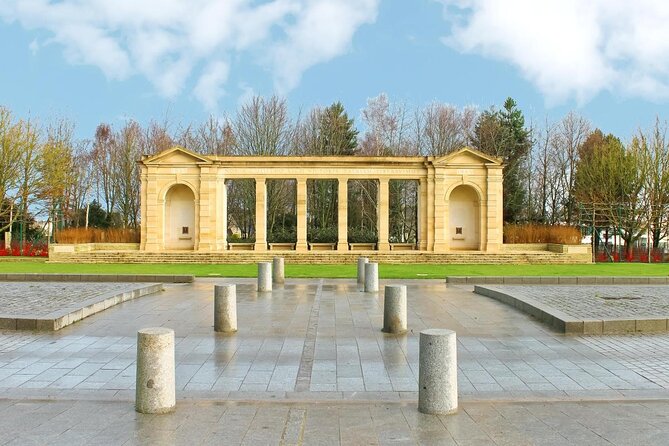
- Utah Beach Museum in a WWII bunker: a focused start that makes the rest of the day click.
- Pointe du Hoc with guided battlefield context: the cliffs don’t feel like trivia once someone explains them.
- American Cemetery time for reflection: you’re not rushed through rows of crosses and Stars of David.
- Pre-booked lunch at L Estran: saves you from hunting restaurants in a small coastal area.
- Real coach time tradeoff: one-day logistics from Paris means fewer hours on-site.
One coach, six WWII stops: what the full day really feels like
This is a classic “big day, clear order” trip. You leave Paris early, ride west with your guide, and then stack up major landing-site moments in a logical sequence: Utah first, then the cliff fight at Pointe du Hoc, then Omaha, then the cemetery that holds the story together.
You’re not trying to cover everything. You’re aiming to see the places you’ve probably already heard about—then add understanding to the names. That matters, because Normandy’s scale is hard to grasp from afar. Even when you do a museum later, the beach itself teaches the mind differently. Sand, horizon, wind, distance. It’s hard to stay detached.
The tour also keeps the day structured in a way that helps you. Time is carved out for a museum visit, a guided battlefield walk, and then free time at places where you may want to pause. That mix is a big part of why this day trip earns strong marks for being “moving” and “well organized.”
You can also read our reviews of more tours and experiences in Paris



7:00am departure from Paris: the ride-time reality check

Meeting is at Église Notre-Dame de Compassion (Pl. du Général Koenig, 75017 Paris) and the day starts at 7:00am. You’ll return to Place de la Porte Maillot in Paris.
From what you should expect, a lot of the day is road time. The itinerary is about 14 hours total, which means you’re trading sleep-in freedom for a one-day hit of Normandy’s biggest sites. If you hate bus days, this might feel like too much. If you can handle long seating and you’re there for history, it’s a workable plan.
Pack like it’s a coach day: a small water bottle, a light snack if you tend to get hungry, and a layer for changing temperatures. Normandy coastal wind can be very different from Paris.
Utah Beach Museum: learn the story before the sand
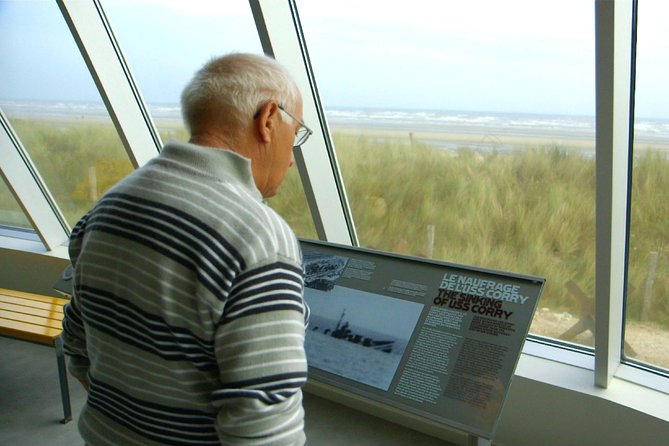
Your first stop is the Musée du Débarquement Utah Beach. You’ll spend about 45 minutes, with admission included. The standout here is setting: it’s housed in an old German bunker right on the landing beach. That kind of setting turns a museum from “facts on walls” into a place where you can feel the war’s geometry.
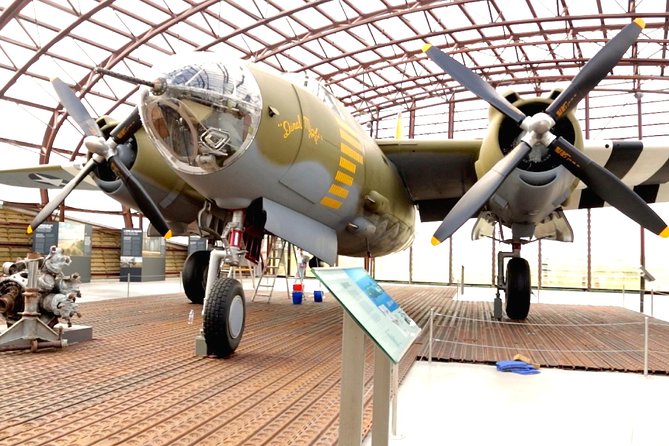
You’ll see displays that connect tactics and human stories. The museum includes items like an original B-26 airplane on display and personal letters from soldiers—details that help you stop thinking of D-Day as just a headline. It becomes people writing home, people doing a job they may not survive, people with minutes to decide everything.
A practical note: because this is a time-boxed museum visit, focus on the sections your guide points out. Let the guide’s talk guide your attention, then use the museum time to confirm what you just heard.
Utah Beach itself: why the western landing matters
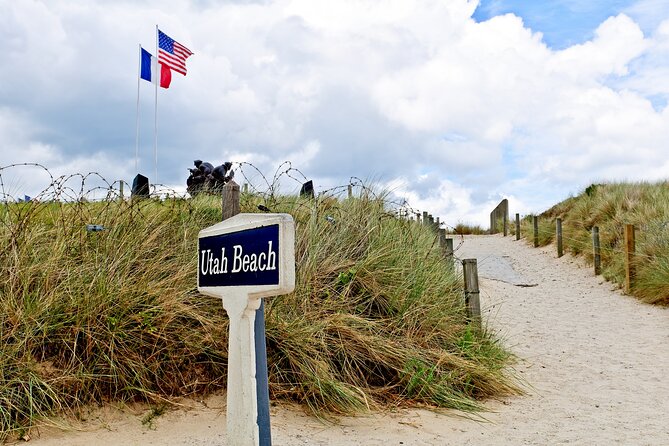
After the museum, you get about 30 minutes at Utah Beach. Admission is free for this stop, and you’ll have time to stand on the sand and look out toward the open coastline.
Utah Beach is described as the westernmost landing site on D-Day, and it played a crucial role in the success of the invasion. Unlike some other beaches where resistance was fiercer, Utah’s landings faced comparatively lighter resistance, which helped troops move inland more quickly and secure strategic positions.
What you’ll notice from standing there now is the openness. With the horizon in your face, you can start picturing how hard it must have been to navigate under fire, how exposed troops were during the early moments, and how “just a few miles of coastline” was actually a huge operational problem.
This short time is one reason to set expectations. It’s enough to feel the place and snap a few thoughtful photos. It’s not enough to do a slow, meandering beach walk like you might on an overnight trip.
L Estran lunch: a smart time-saver, with a quality wildcard
Lunch is scheduled for about 1 hour at L Estran, with a two-course lunch and a glass of Norman cider included. This is a big value feature of the tour because Normandy towns can be thin on dining options, and a last-minute restaurant hunt can wreck your timing.
In real terms, this matters because the day already has enough moving parts. When lunch is arranged ahead, you keep the bus itinerary flowing and you avoid the “where do we eat?” group scramble.
That said, the lunch experience can be a mixed bag in practice. Some people talk about the lunch quality not matching the promise, including issues like uninspiring food or cold plates. No surprise: group meal logistics at set times are rarely gourmet.
My advice is simple: go into lunch hungry, but don’t center your day on it. If you’re picky or you have a sensitive stomach, mention dietary requirements at booking (the tour asks you to do this in the Special Requirements field). And if you’re traveling with kids or you just know you get cranky when food falls short, consider bringing a small backup snack.
You can also read our reviews of more tours and experiences in Paris




Pointe du Hoc: cliffs, bunkers, and the Ranger story

Next up is Pointe du Hoc, one of the most dramatic stops on the day. You get about 1 hour with a guided battlefield visit.
This site is known for steep cliffs overlooking the English Channel, and it was heavily fortified. The Rangers scaled roughly 100-foot cliffs under relentless enemy fire to seize the position on June 6, 1944. Today, you can still see original bunkers, bomb craters, and shattered fortifications.
What makes Pointe du Hoc work on this tour is the guidance. On your own, it’s easy to admire the views without fully grasping why the site mattered. With a guide’s narration, the terrain becomes readable: you start understanding where people had to land, where defenders could aim, and why the operation was so risky.
Wear sturdy shoes. This is a battlefield walk on rugged ground, and you’ll appreciate having traction when you stop to look at the fortifications up close.
Omaha Beach shoreline time: where the hardest landing story lives

You then head to Omaha Beach. You’ll have about 30 minutes of free time here.
Omaha is essential if you want the emotional balance of the day. This was where American forces faced the fiercest resistance, with heavy casualties. Even with just a short stop, walking along the shoreline helps you understand the scale. Museums can explain plans. The beach helps you feel the geometry: the long sweep of sand, the distance to the waterline, the exposure.
This is also where the tour’s pacing becomes personal. Thirty minutes can feel short if you want to linger. But it does give you enough time to stand, take in the coastline, and let the meaning settle before the cemetery visit.
If your group likes photos, this is also the time to do them. Early light or late light can change the mood a lot, even on a cloudy day.
The American Cemetery at Colleville-sur-Mer: how to pace your reflection
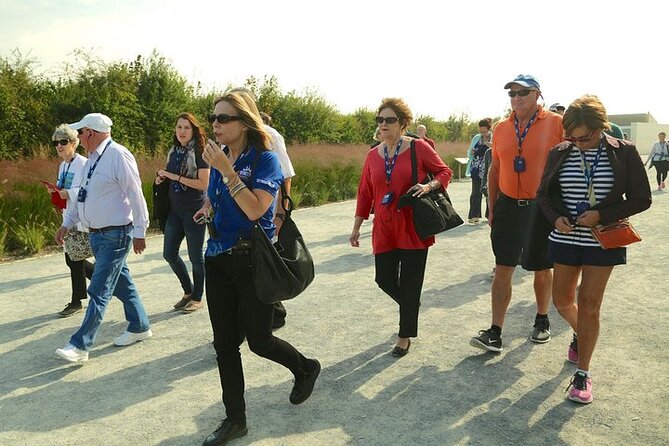
The final major stop is the Cimetiere Americain de Colleville-sur-Mer, with about 1 hour 15 minutes for a guided tour plus free time.
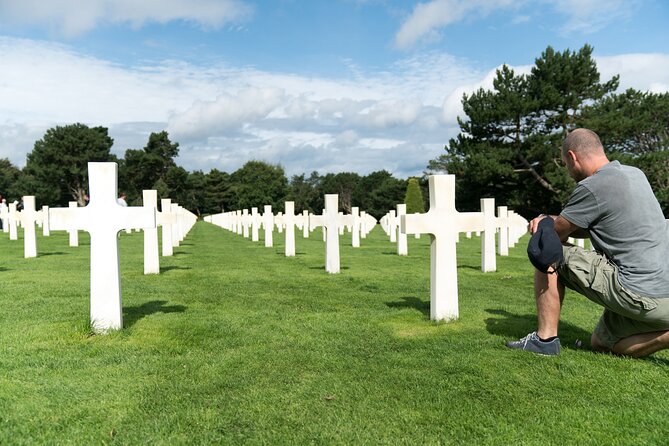
This cemetery overlooks Omaha Beach, and it’s laid out as a calm, orderly tribute to nearly 10,000 U.S. soldiers who died in the Normandy landings. You’ll see rows of white crosses and Stars of David stretching across the grounds. There’s also a reflecting pool and a chapel.
This is one of those places where the best experience is not rushing. If you feel overwhelmed, that’s normal. Give yourself room to walk slowly between sections. Let the guide cover the core story, then use free time to look at names and dates at your own speed.
If you’re with family or traveling as a group, it helps to set a gentle expectation: this stop is not a quick photo stop. Even if you do take photos, you’ll remember it more for the quiet moment of reading and noticing.
Comfort on a 14-hour day: shoes, weather, and coach temperature
You’re going to be on your feet for portions of the day, and you’ll also spend serious time seated on an air-conditioned coach. The tour notes that moderate physical fitness is required, and the walking amount is not “level zero.”
Here’s what I’d do to make the day smoother:
- Bring comfortable shoes for uneven ground at Pointe du Hoc and long stretches at the beaches.
- Dress for wind. Coastal air can change everything, fast.
- Expect coach temperature variation. Some people prefer it cooler; some want it warm. That can be hard to balance for everyone on a shared bus.
A few people mention discomfort with cold during winter-type weather and challenges with heating choices. You can’t fix the physics of a group coach, but you can help yourself by packing layers.
Restrooms can also be a question on long transport days. The itinerary includes driving time and doesn’t promise a stop at every single leg, so having a flexible approach helps.
Value check: is $120.93 a good deal for Normandy from Paris?
At $120.93 per person, you’re paying for more than just transport. You’re getting:
- An English-speaking expert guide for the whole day
- Admission to the Utah Beach Museum
- Guided coverage at Pointe du Hoc
- Guided tour plus free time at the American Cemetery
- A structured free-time visit to Utah Beach and Omaha Beach
- A 2-course lunch plus a glass of Norman cider
- Return transportation from Paris by air-conditioned coach
So the value isn’t just the sights. It’s time saved and context added. Without this kind of guided day plan, you’d be spending more time figuring out connections and navigation, and you might end up with less meaningful storytelling.
When the lunch disappoints, it can feel like the one weak link. But even then, you’re still getting museum admission, multiple guided stops, and a full one-day route that’s hard to replicate easily from Paris without a car.
If your goal is a high-impact overview with strong emotional moments, the price can make sense. If your goal is deep exploration and long hangs at each location, you may want to consider a multi-day plan instead.
Who this tour fits best (and who should skip it)
This tour is best for:
- WWII history buffs who want the big sites in one day
- People who don’t want the hassle of planning transport across multiple locations
- Travelers who like guided context and want a strong narrative thread from Utah to the cemetery
It may not be best if:
- You hate long coach days and want a slow pace
- You want serious time to wander each beach area independently
- You’re very sensitive to food quality issues and would rather choose your own lunch
One more note from the guide angle: people often praise guides who make the story hit harder, with names like Sam, Maja, John, Raymond, and Thelma showing up in standout experiences. If you’re choosing between tour styles, a guide who can pace the story matters a lot on a day like this.
Should you book it?
If you’re visiting Paris and you only have one window for Normandy, I’d book this. It gives you a guided, structured path through the sites that carry the most weight, and it doesn’t leave you guessing where to go next.
Go in with the right expectation: it’s a full-day overview, not an unhurried, self-guided wandering trip. Bring layers, comfy shoes, and a little patience for coach logistics. And treat lunch as a functional stop, not the highlight.
If that sounds like your style, you’ll likely leave with a clearer picture of D-Day—and a quieter, more personal connection to the places where it happened.
FAQ
How long is the Normandy D-Day day trip from Paris?
The tour is listed at about 14 hours.
What time does the tour start in Paris?
It starts at 7:00am.
Is the tour offered in English?
Yes, it’s offered in English.
What D-Day sites are included in the day?
You’ll visit Utah Beach (including the Utah Beach Museum), Pointe du Hoc, Omaha Beach, and the American Cemetery at Colleville-sur-Mer.
Is lunch included, and what does it include?
Yes. Lunch includes a 2-course meal plus a glass of Norman cider.
Is the Utah Beach Museum ticket included?
Yes. Admission and the visit to the Utah Beach Museum are included.
Is there free time at Omaha Beach and the cemetery?
Yes. The itinerary includes free time at Omaha Beach, and the American Cemetery visit includes both a guided tour and free time.
Where do we meet and where do we end?
You meet at Église Notre-Dame de Compassion in Paris and end at Place de la Porte Maillot in Paris.
Is the group size limited?
Yes. The tour has a maximum of 50 travelers.
Can I cancel for free?
You can cancel up to 24 hours in advance for a full refund. If you cancel less than 24 hours before the start time, the amount paid is not refunded.