REVIEW · PARIS
Paris WW2 The German Occupation Small group or Private tour
Book on Viator →Operated by Chris Pollard · Bookable on Viator
Paris during the German Occupation is a story you can still read in stone. This tour turns famous landmarks into clues about why people collaborated, resisted, or got swept along by events from 1940 to Liberation.
I liked two things right away: the pace is small-group and conversational, and the guide’s focus stays on people and decisions, not a checklist. One thing to consider is that this is an outdoor walk in real weather, and you’ll be on your feet for much of the time.
In This Review
- Key highlights you will feel in 3–4 hours
- A Paris WWII walk built around decisions, not postcards
- Meeting at Palais-Royal: where the tour really starts
- The small-group format that keeps WWII from feeling like homework
- Stop 1: Palais-Royal and the occupation’s early shockwave
- Stop 2: Louvre area exteriors—where the occupation met the city’s power centers
- Stop 3: Rue de Rivoli—Gestapo HQs, collaboration networks, spy signals, and the resistance
- Rue Rouget de Lisle: where resistance momentum began
- Jeu de Paume: Nazis, stolen art, and the machinery of cultural theft
- Place de la Concorde build-up: scars that are visible if you know where to look
- Stop 4: Place de la Concorde finish—guillotines, German HQs, and the Grand Palais scars
- How Chris Pollard keeps the tour personal (and not scripted)
- Price and value: $108.84 for context you can’t easily get alone
- Practical tips so you enjoy the walking part
- Who should book this WWII Occupation tour?
- Should you book this Paris WWII Occupation tour?
- FAQ
- Where do we meet for the tour?
- How long should I plan for?
- Is it a small group or a private tour?
- Will we visit the Holocaust memorial?
- Are there admission tickets included?
- What should I wear or bring?
Key highlights you will feel in 3–4 hours
- Small group size (max 10) keeps the questions from getting lost.
- Palais-Royal meeting point puts you right where the story starts.
- Rue de Rivoli corridor links Gestapo activity, collaboration, resistance origins, and looted art.
- Jeu de Paume stop gives context for how Nazi theft of art worked before it left France.
- Place de la Concorde finish ties Liberation scars to major wartime leadership sites.
A Paris WWII walk built around decisions, not postcards
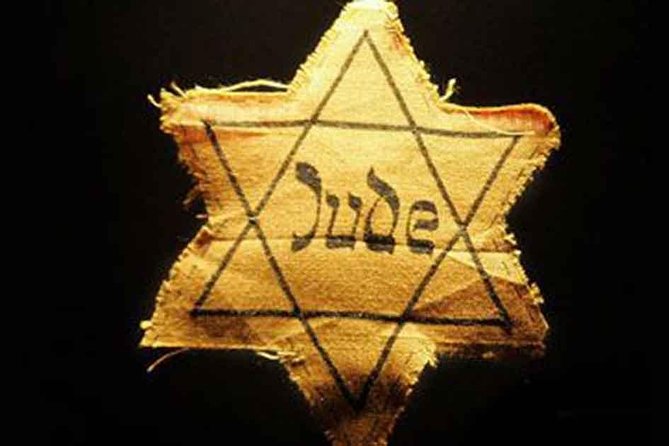
If your idea of history tours is standing in front of one plaque at a time, this won’t fit that mold. The German Occupation of Paris is complicated, fast-moving, and full of uncomfortable tradeoffs. So the best way to understand it is to connect the dots between buildings where power sat, where secrets moved, and where ordinary people tried to survive.
That’s what this tour does. You start near Palais-Royal, then work west through the core of Paris—eventually ending at Place de la Concorde. You’ll also hear about major themes you’ll see referenced in films and books, like the rise of collaboration, the growth of organized resistance, anti-semitism, and the machinery that led to the Final Solution.
And unlike some tours that sound like a museum audio guide, the guide (Chris Pollard) runs this as a guided discussion. You’ll be asked questions, and you’ll get answers. That alone changes the experience from seeing sites to understanding events.
You can also read our reviews of more private tours in Paris



Meeting at Palais-Royal: where the tour really starts
You meet at Place Colette, Rue Saint-Honoré area (Paris 75001), at Palais-Royal Metro Exit 5, opposite the Comédie-Française theater. It’s a clean, easy-to-find start if you’re already in the Louvre/central 1st arrondissement zone.
This matters more than you might think. A lot of Paris tours hop between areas and leave you with a geographic blur. Starting here helps you build an internal map quickly—then as you move toward Place Vendôme, the Ritz/Hotel Meurice area, and finally Concorde, you’ll feel how the occupation tightened control across the city.
The small-group format that keeps WWII from feeling like homework
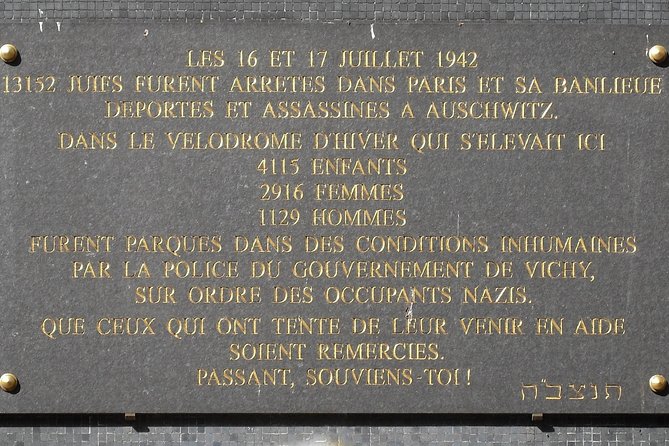
This experience runs as semi-private with a cap of 8–10 people, and it can also be fully private with a personalized plan. Maximum group size is 10 travelers, which means you’re not competing with a crowd for the guide’s attention.
From the reviews and the way the tour is described, Chris Pollard is prepared to tailor. He asks ahead of time what you care about, and you’ll get visual support (photos and references) rather than a strict script. In other words, you’re not just hearing facts—you’re getting context that helps you judge motives and consequences.
You’ll also notice the tour isn’t framed as a timed march with no room to react. The stops are guided, but the content can shift based on what questions people ask and what you want to understand more deeply. That flexibility is usually reserved for private tours, so it’s a real value add.
Stop 1: Palais-Royal and the occupation’s early shockwave
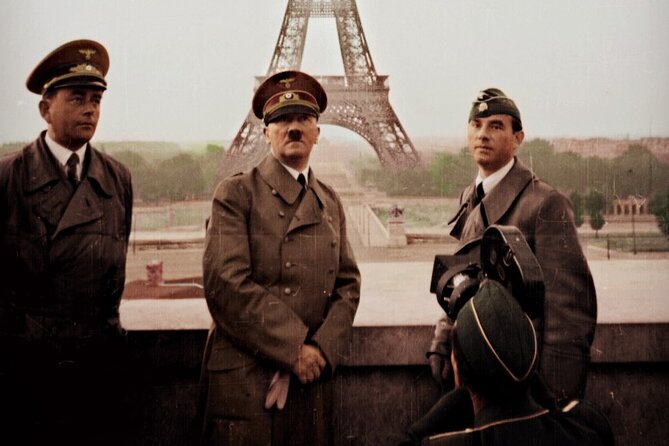
Palais-Royal is your first “anchor point.” It’s not a random starting location—it’s a way to open the story of how German rule took shape in Paris and how daily life started changing fast.
This is the moment where you get the overview: what leads to World War II, what the Occupation looked like on the ground, and how Paris moved from shock to adaptation. The goal here isn’t just dates. It’s the atmosphere—how control, propaganda, and fear began shaping choices.
At this stage, it helps if you’re ready to listen for patterns. The guide ties later moments back to this early context, so you don’t just memorize a sequence. You start understanding the logic of how occupation systems spread.
Stop 2: Louvre area exteriors—where the occupation met the city’s power centers
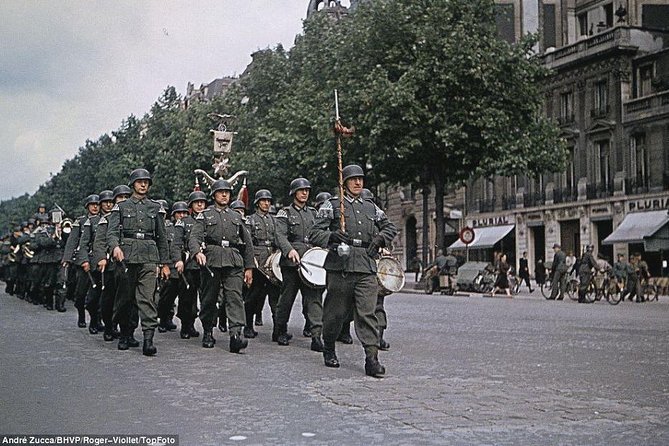
After Palais-Royal, the tour works through the area around the Louvre and Palais-Royal, with the emphasis on exteriors and street-level interpretation. You’re not walking into a “linear history museum.” You’re walking through a city where events happened everywhere at once.
Here’s the key idea that makes the tour click: the guide treats places like stages, and people like the actors. You might see a door, a façade, or a major hotel complex—and then hear what used to happen there: headquarters, meeting points, and decision hubs.
This part typically builds toward the larger themes you’ll keep hearing again and again:
- how German military control operated
- how local collaboration worked (and why it attracted followers)
- how the early resistance attempts were seeded in ordinary routines
If you like your WWII explained in a way that feels logical rather than random, this is where you’ll start trusting the structure.



Stop 3: Rue de Rivoli—Gestapo HQs, collaboration networks, spy signals, and the resistance
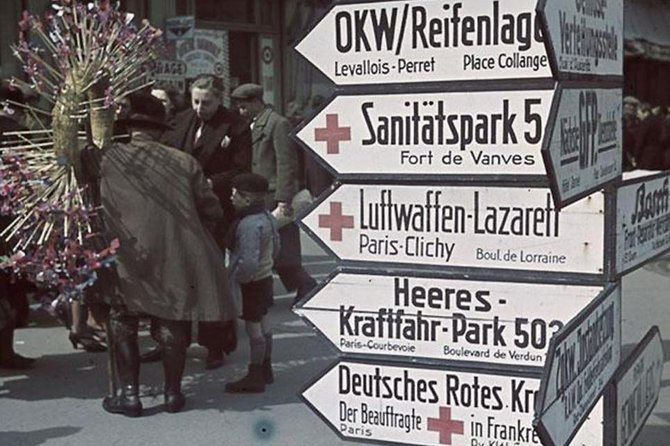
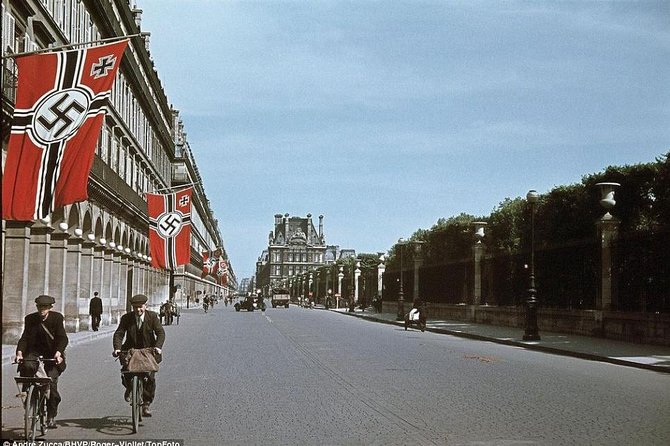
The heart of the walk is around Rue de Rivoli and nearby streets. This is where the tour earns its name: you get a concentrated look at how the occupation network functioned across Paris, from intelligence and trials to early resistance signals and cultural theft.
A few specific highlights you can expect to hear connected to locations around this corridor:
- A secret HQ of the Gestapo in Paris
This is about how intelligence control wasn’t abstract. It had rooms, corridors, and procedures.
- The PPF collaboration network and its leader
You’ll hear about France’s collaborationist currents and how they linked to the occupying power.
- Hotel Meurice as a German Army HQ for Paris
It’s one thing to read about occupation; it’s another to understand how command centers sat inside elegant addresses.
- Place Vendôme and the Ritz hotel connection
The tour ties Coco Chanel’s link to the Ritz to the building’s broader wartime story. You’ll also hear about anti-Nazi activity connected to German forces and how the Final Solution’s implementation entered France.
- Societe Maurice Duclos: an early Allied spy network and radio work
Spy craft sounds like spy movies until you learn what it depended on: coordination, secrecy, and communications.
- Continental Hotel as another German-controlled hub
This reinforces the pattern: occupation power wasn’t one office. It was a web.
Then the tour also turns toward resistance and cultural plunder:
Rue Rouget de Lisle: where resistance momentum began
Rue Rouget de Lisle is described as a place where the organic French resistance really began in October 1940. That detail matters, because it roots resistance in time and choice—not just heroic headlines.
You’ll get a sense of how resistance grew in a city under pressure. People weren’t waiting for permission. They were finding ways to act even when the risks were high.
Jeu de Paume: Nazis, stolen art, and the machinery of cultural theft
One of the most memorable stops is around Jeu de Paume. This is where the Nazis stored, processed, and looted art before it was sent to Germany.
What makes this stop valuable is the explanation around it. It’s not just that art was stolen—it’s that there was a system. People made decisions in the same spaces where cultural objects became a kind of currency: prestige, profit, and propaganda.
If you care about the human cost of occupation beyond battles, this is the part that often sticks.
Place de la Concorde build-up: scars that are visible if you know where to look
By the time you approach the end of the walk, you’ll already be primed to notice details. The tour keeps teaching you a mindset: look for what’s still there, then ask what it survived, what it replaced, and what it was meant to hide.
Stop 4: Place de la Concorde finish—guillotines, German HQs, and the Grand Palais scars
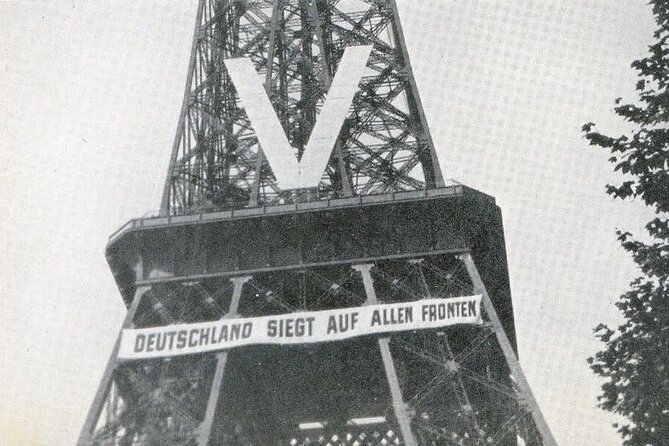
The tour typically ends around Place de la Concorde, one of the most monumental squares in France. It’s also framed as the place where you see both political history and wartime damage in the same field of view.
This stop wraps up the story with big, visible reminders:
- Louis XVI and Marie Antoinette faced the guillotine here
The tour uses this to show how Paris has repeatedly served as a stage for political punishment.
- Major German wartime sites nearby, including the twin Naval Ministry and Hotel Crillon as German HQs
Occupation wasn’t only fear—it was administration and strategy.
- Grand Palais: described as the only building in Paris destroyed during the occupation and Liberation
The point isn’t just the fact of destruction. It’s that scars can remain in plain sight if you know what to look for.
- Bullet holes and hidden scars from Liberation
This part feels different once you’ve heard how the occupation worked earlier. The story stops being abstract and becomes physical.
- The Luxor Obelisk
The tour doesn’t treat it like a decoration. It’s included as part of the square’s long view—how Paris layers time on top of itself.
At the end, you should feel like you understand the city as a system under stress. You’re not just leaving with photos. You’re leaving with a map in your head.
How Chris Pollard keeps the tour personal (and not scripted)
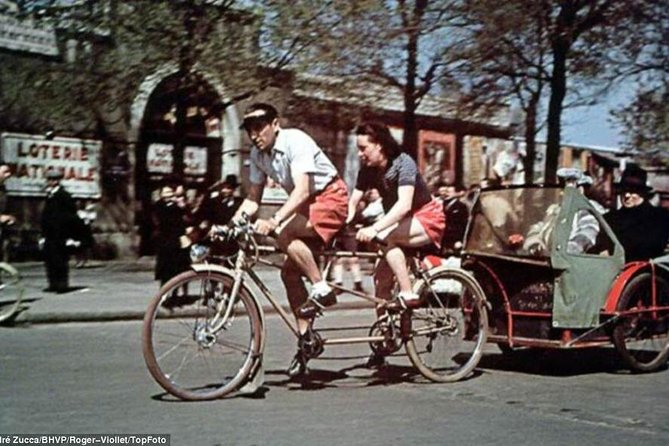
This is where the reviews really line up with the tour format you’re buying. Chris Pollard doesn’t run like someone reading lines. He uses prepared material, then adapts to the group—especially to what you want to know.
In practice, that means:
- you’ll likely get a chance to ask questions more than once
- the guide can spend extra time at a site if it connects to your interests
- you’re not forced into a one-size-fits-all timeline
I also like the emphasis on interaction. You’ll get a more honest sense of what different groups believed and did, and why. The guide is aiming to correct common oversimplifications and show how messy real behavior was—on both the German side and the French side.
That’s exactly what you want from a WWII Occupation tour. Oversimplified stories make history feel safe. Real history isn’t safe.
Price and value: $108.84 for context you can’t easily get alone
At $108.84 per person for about 3 to 4 hours, this sits in the “serious interest” category. You’re paying for three things:
1) A guide who can connect sites to decisions
You’re not just seeing a list of addresses. You’re getting the logic that ties them together.
2) A small-group setting
Max 10 means your questions have a better chance of being heard. That’s where this tour’s format starts paying off.
3) Time in the center of Paris with interpretation built in
If you try to self-guide this, you’ll end up relying on multiple sources at multiple stops, and you’ll still miss the connections. Here, those connections are the product.
Also, the tour is built around free-entry stops (so you’re not paying separate museum fees for each stop). That helps keep the total spend closer to the advertised price.
The only “cost” you should expect is effort: outdoor walking, cold/wind exposure, and standing. If you show up ready for that, you’ll get your money’s worth in understanding.
Practical tips so you enjoy the walking part
Even with a relaxed, question-friendly pace, this is still a street walk. One review specifically notes about 2 miles walked over roughly 4 hours. So plan your day like you’d plan any proper half-day on foot.
My quick advice:
- wear layers (Paris weather can flip quickly)
- bring water
- expect some time outdoors between points
- wear shoes you trust on uneven pavement
This is especially important if you’re sensitive to cold or fatigue. There is also mention of the guide trying to accommodate comfort needs, and a stool was used for at least one guest in a review—but don’t count on miracles. Build in your own comfort plan.
Who should book this WWII Occupation tour?
Book it if you want WWII explained as a living system across Paris. This tour fits best if you care about:
- collaboration and resistance as real human choices
- intelligence networks, propaganda pressure, and survival logic
- the cultural theft story around Jeu de Paume
- understanding why anti-semitism deepened in the years leading up to mass persecution
It’s also a good fit if you’re traveling with someone who likes history but gets bored by long lectures. The guide’s style is narrative and interactive, and the route is packed with concrete addresses you can point to later.
If you’re looking for a purely museum-style chronology or a comfort-first stroll with minimal standing, you might find it too active.
Should you book this Paris WWII Occupation tour?
Yes—if you want WWII history you can actually place on a map. I like that it ends at Place de la Concorde, because you get closure with visible Liberation scars and major wartime sites in view.
I’d skip or reconsider only if you:
- need a very short, low-walking tour
- want a full, Holocaust-only focus from start to finish
- dislike outdoor walking in windy or cold weather
One more thoughtful note: the guide explains that Holocaust depth typically needs a dedicated Shoah-focused tour. On a general tour, you still cover the overall currents leading toward implementation, plus conditions for Jewish people and their role in resistance—but not the kind of deep focus that a dedicated tour can provide. If that’s your top priority, you’ll get more justice from a specifically arranged Shoah tour.
Overall, this is a strong value for people who want the Occupation made real—without turning it into a cold, scripted lecture.
FAQ
Where do we meet for the tour?
You meet at Palais-Royal Metro Exit 5 on Place Colette, opposite the Comédie-Française theater area.
How long should I plan for?
Expect about 3 to 4 hours. The tour time can be around 3 to 3.5 hours depending on the flow of stops and questions.
Is it a small group or a private tour?
It runs as a small-group experience with a maximum of 10 travelers (typically 8–10 people), and fully private tours are available with a personalized itinerary.
Will we visit the Holocaust memorial?
On the general tour, the Holocaust topic is discussed at an overview level. The materials provided also state that a deeper Holocaust-focused experience generally requires a dedicated Shoah/private tour.
Are there admission tickets included?
The tour notes indicate admission ticket free for the listed stops, so you’re not buying museum tickets as part of the standard route.
What should I wear or bring?
Dress for extended outdoor time in layers and bring water, since you’ll be walking through central Paris for a good stretch.