REVIEW · PARIS
Paris: Skip-the-Line Louvre Highlights Tour with Mona Lisa
Book on GetYourGuide →Operated by Walks France-Spain · Bookable on GetYourGuide
The Louvre is too big to wing it. This skip-the-line Louvre highlights tour is built for speed and focus, so you hit the headliners like the Mona Lisa without losing half your day to crowds and wandering. You also get a real art-history story while you walk, not just a list of names.
What I like most is the mix of must-see artworks and clear guidance. You’ll see icons such as the Mona Lisa, Venus de Milo, Winged Victory, and other standout sculpture and masterpieces, and you’ll get context for what you’re looking at. I also like the small-group feel when you book the 9:30 AM slot, which is capped at six guests for a more intimate pace.
One consideration: the meeting point can trip people up. The guide is holding a green Walks sign, but a few people noted the sign wasn’t obvious right away. Arrive early, and scan for the winged statue at the correct arc—this tour is not at the Arc de Triomphe on the Champs-Élysées side.
In This Review
- Key things to know before you go
- Quick Louvre Win: Skip the Line and Get to the Icons
- Meet at Arc du Carrousel: Finding Your Guide Fast
- Inside the Louvre: How the Highlights Tour Actually Flows
- The Mona Lisa Moment and Other Works You’ll Actually Remember
- Mona Lisa
- Venus de Milo
- Winged Victory of Samothrace
- Other major stops
- 2 Hours Sounds Fast: Timing, Security, and Group Size
- Price and Value: Is $67 a Good Deal?
- Comfort, Shoes, and What You Can Bring
- Who Should Book This Louvre Highlights Tour?
- Should You Book This Skip-the-Line Louvre Highlights Tour?
- FAQ
- Where is the meeting point for this Louvre tour?
- What time should I arrive before the tour starts?
- How long is the tour?
- Which sights does the tour include?
- Is this tour suitable for wheelchair users or mobility impairments?
- What should I bring and what can’t I bring?
Key things to know before you go
- Skip-the-line entry gets you into the museum faster than starting at the main queues
- English guide with headsets so you can hear details even in busy galleries
- Top works in a short visit: Mona Lisa, Venus de Milo, Winged Victory, plus more
- 9:30 AM is the small-group option (maximum six) for an easier, less rushed flow
- Meeting point details matter: Arc du Triomphe du Carrousel area, not the larger Arc de l’Étoile
- You’ll be walking and you can’t bring strollers or large bags
Quick Louvre Win: Skip the Line and Get to the Icons
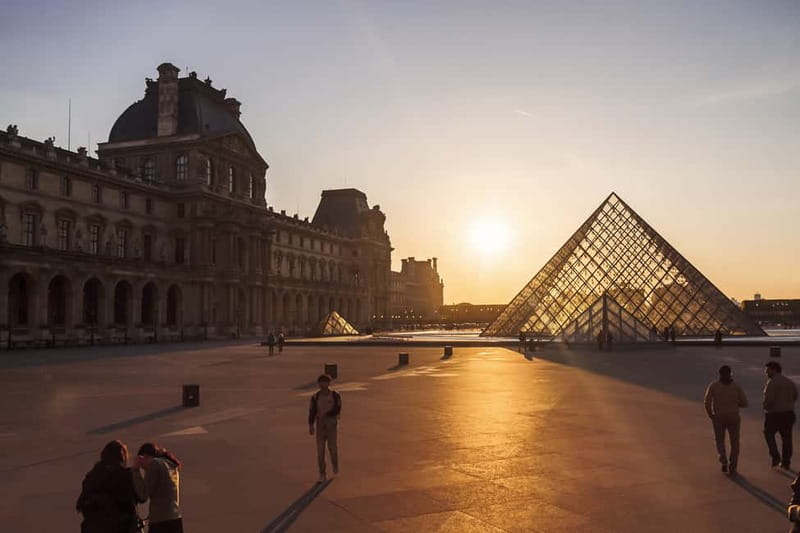
Here’s the truth about the Louvre: it’s not a museum you “finish.” It’s a museum you choose. With only a couple hours, you need a plan that prioritizes the works most likely to make you feel something—then explains them while you’re looking.
This tour’s value is that it treats your time like it matters. The big promise is skip-the-line, and the practical benefit is that you spend more minutes inside the galleries and less time standing still. That’s not a small thing when you’re up against long entry lines and tight schedules.
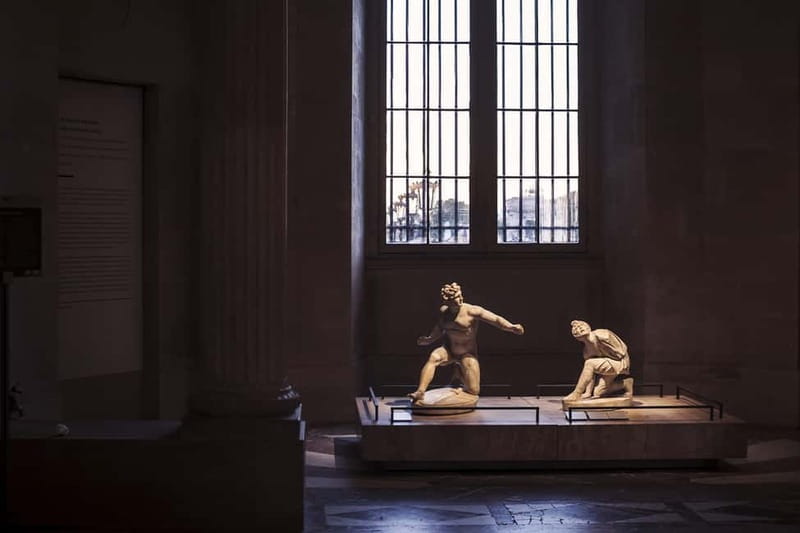
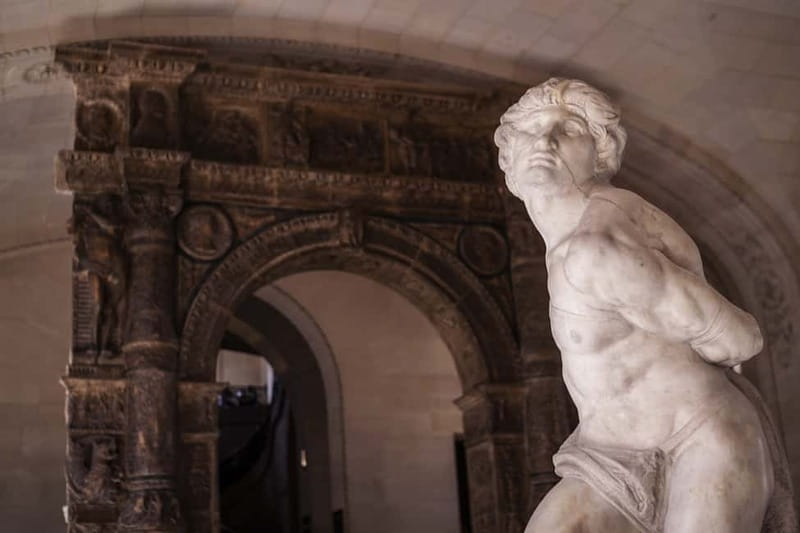
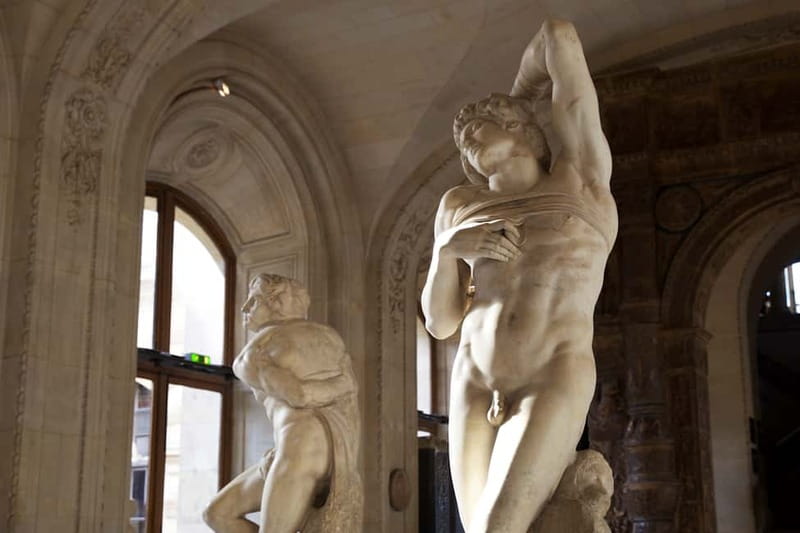
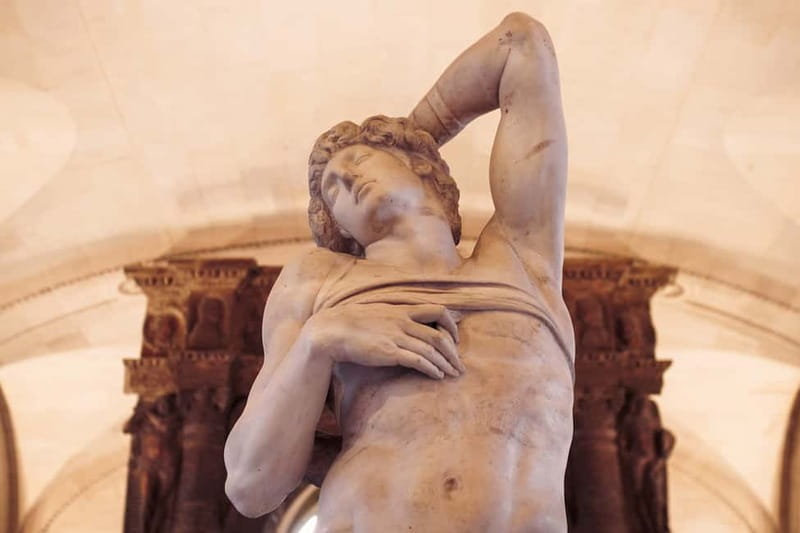
And the artworks are the reason it works. You’re not walking for the sake of walking. Your guide points you to the highlights that people actually come to Paris for, including the Mona Lisa and Venus de Milo. You’ll also see Winged Victory of Samothrace, plus other famous works like Michelangelo’s Slaves. Even if you’ve seen these names in books, the in-person scale and lighting do the real work.
You can also read our reviews of more tours and experiences in Paris



Meet at Arc du Carrousel: Finding Your Guide Fast
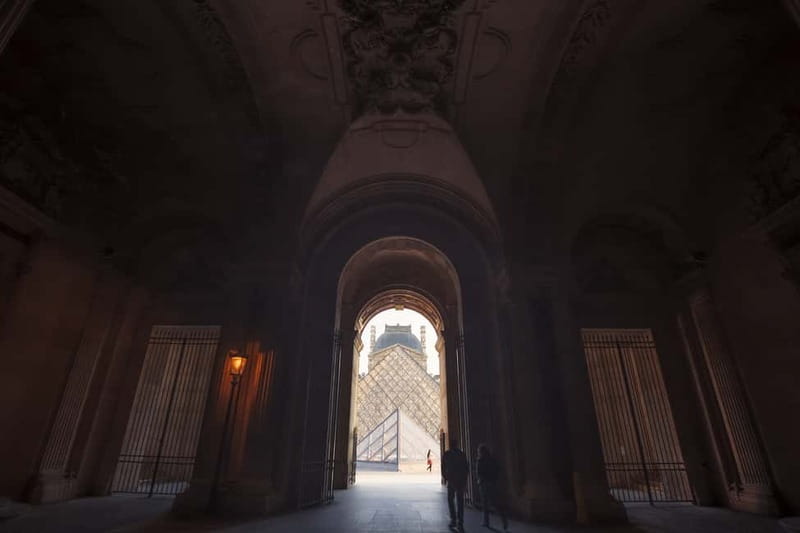
Your tour starts outside the Louvre area, at the Arc de Triomphe du Carrousel. This is the arch by the Tuileries Gardens—near the Louvre’s pyramid area—not the Arc de Triomphe on the Champs-Élysées side.
When you face the arch, look for the winged statue on the left. The guide is holding a green Walks sign, and they ask you to arrive about 15 minutes early. Do that. It’s the difference between calmly checking in and doing the awkward tourist sprint.
If you’re worried about finding the group, focus on two things:
- The green Walks sign (held by the guide)
- The correct arch and the winged statue landmark
A few guides were mentioned by name in the praise—people talked about leaders like Adam and Laurence delivering energy and clear direction. Names aside, the key takeaway is that your success depends on starting at the right spot and being early enough to get grouped before you move.
Inside the Louvre: How the Highlights Tour Actually Flows
Once you’re inside, the tour keeps momentum. You get headsets, which helps a lot in rooms where voices disappear under echo and crowd noise. It also means your guide can keep moving without constantly repeating themselves.
The route is built around reducing lost time. The Louvre is labyrinthine, and shortcuts don’t exist the way you’d wish they did. This is where an expert guide’s route planning matters: you follow them, and you don’t spend your energy trying to orient yourself.
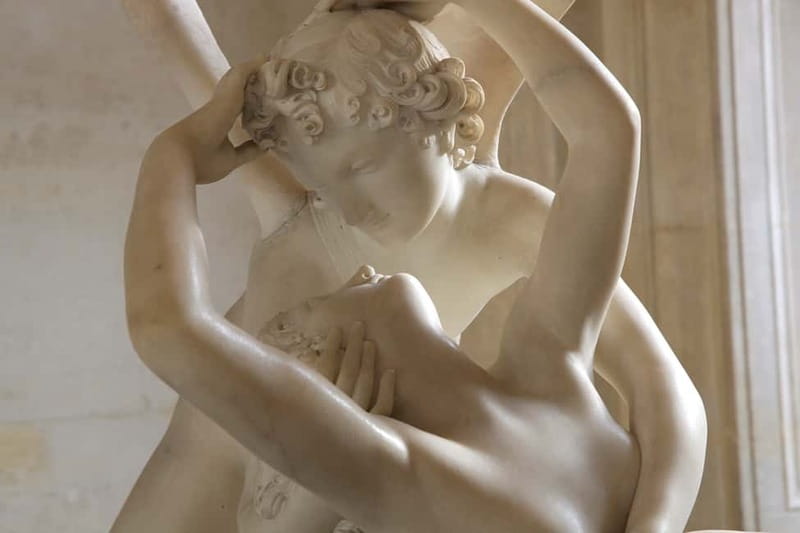
You also get context between stops. As you move from gallery to gallery, the guide brings the museum to life with stories connected to artists and the art itself. Names mentioned include Antonio Canova, Théodore Géricault, Eugène Delacroix, and Jacques-Louis David. That’s helpful because it turns single paintings and sculptures into part of a bigger conversation about style, politics, and how artists were trained and celebrated.
Another layer that makes this tour feel different from a basic highlights walk: the guide talks about the building. You’ll hear the Louvre’s “palace history” angle—stonework, frescoes, and the royal dramas that unfolded in these spaces. Even when you’re just looking upward at decorative details, it helps you understand why the Louvre feels like more than an art storage building. It’s a stage.
The Mona Lisa Moment and Other Works You’ll Actually Remember
The tour is designed around emotional impact and recognizable masterpieces. Here’s what you can expect to see, based on the highlights your guide is set up to cover.
Mona Lisa
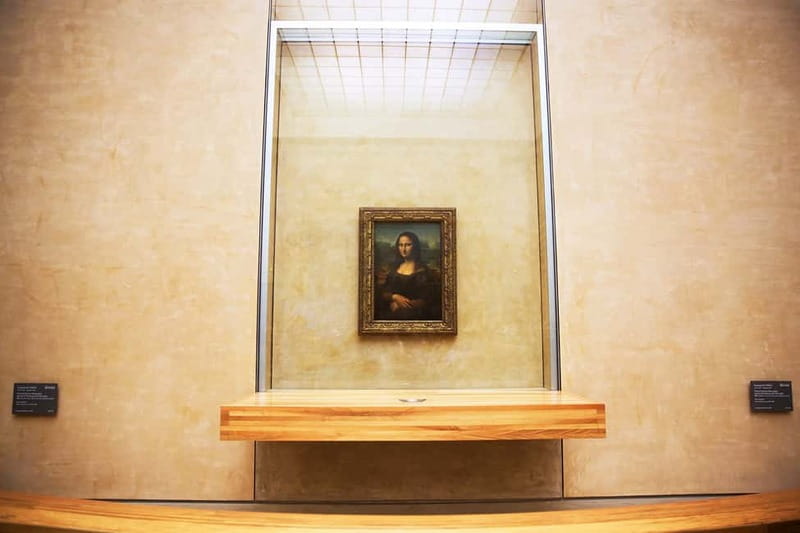
This is the star. Expect a different kind of viewing pressure here than anywhere else. The Mona Lisa draws heavy crowds, so the advantage of a guided route is that you’re not spending your time searching. You’ll get the story behind why da Vinci’s painting is considered so important, and your guide helps you focus on what to look for beyond the famous face.
One practical note: people often say it can be hard to get close because of crowds. Your guide can’t change that reality, but having a plan and staying with the group makes the experience feel smoother rather than stressful.





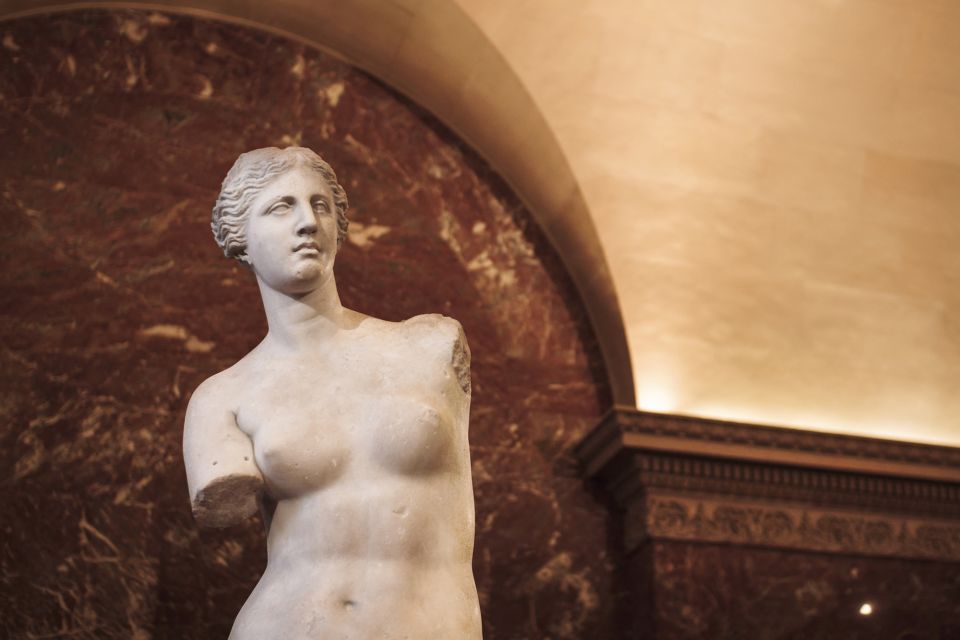
Venus de Milo
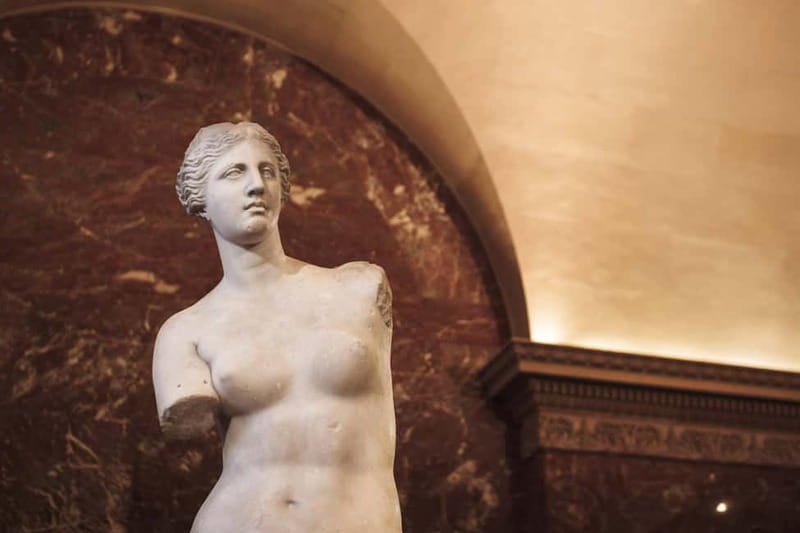
Venus de Milo is the kind of sculpture that hits you in the first look. You’ll learn about what makes it iconic, and your guide’s job is to connect the artwork to its wider cultural context—so you’re not just taking a quick selfie and moving on.
Winged Victory of Samothrace
Winged Victory is another “wow” stop. It’s a 2nd century BC piece described as the world’s greatest masterpiece of Hellenistic sculpture. The tour frames why that matters—how the sculpture’s presence and technique made an impact, and why it’s still treated as a benchmark for this style.
Other major stops
You may also see Michelangelo’s Slaves and other widely recognized works that represent different periods and artistic goals. You won’t see everything, and you shouldn’t try to. The tour is built to help you leave with a strong hit list instead of a vague blur.
2 Hours Sounds Fast: Timing, Security, and Group Size
The tour is advertised as lasting about 2 to 3 hours, and that range is important. Here’s why: even with skip-the-line entry, you still deal with museum logistics. You might spend some time getting through security, checking bags if needed, and simply moving from the entrance to the first galleries.
Some people noted that the “2-hour” experience can feel closer to around 1.5 hours once you account for time before you fully settle into the galleries. That doesn’t mean it’s bad. It means you should treat the schedule as “about two hours of guided highlights,” not a guarantee that every minute on the clock is inside artwork rooms.
Now, the big perk for timing is the group size:
- 9:30 AM is the intimate version with max six guests.
- If you book a time with a larger party, you could be split into smaller groups depending on ticket availability.
In other words, choose your departure time if you care about comfort and pace. If you want a slower, more personal experience, the 9:30 AM slot is your best bet.
Price and Value: Is $67 a Good Deal?
At around $67 per person, the math mostly comes down to one question: do you want to spend your Louvre time in queues and decision-making, or do you want to spend it looking and learning?
For me, the value here is the combination of:
- Skip-the-line ticket
- Live English guide
- Headsets (so you can actually follow the story in noisy rooms)
If you’re the type who likes self-guided museums, you might feel torn. But if you’ve ever stood in the Louvre thinking, Okay, where do I start, this tour removes that stress fast. You get a route that hits the iconic works and gives you enough art context to make your photos and memories mean something.
Also, the guide matters. In the praise, specific names came up repeatedly: Adam, Laurence, Lee, Rosaria, Violeta, Nancy, Alberto, and others. The common theme across those comments is that the guides don’t just recite facts—they keep people moving, answer questions in a way you can hear through earphones, and make the art feel connected to real history.
Comfort, Shoes, and What You Can Bring
This is a walking tour, and the museum is full of steps and uneven surfaces. Wear comfortable shoes. Bring your passport or ID card.
The tour doesn’t allow:
- Oversize luggage
- Baby strollers
- Luggage or large bags
So pack light. If you’re traveling with a lot of stuff, the “highlights in a short window” plan gets harder.
It’s also not suitable for guests with mobility impairments, wheelchair users, or people needing strollers. If any of that applies, you’ll want a different format so the day isn’t stressful.
One more practical reality: the Louvre can close certain areas or shift access due to operational issues like strikes. The guide may modify what you visit on the day, depending on openings.
Who Should Book This Louvre Highlights Tour?
I think this tour is a strong match if:
- You want to see Mona Lisa and Venus de Milo without getting lost
- You like art history delivered as stories, not just textbook captions
- You’d rather pay for guidance than spend hours guessing your route
- You’re short on time and want the best-known masterpieces in one focused visit
It’s less ideal if:
- You want a long, slow museum day with minimal structure
- You need wheelchair access or stroller access
- You hate group logistics and prefer total freedom (because you will be following a route and staying with the group)
If you’re visiting the Louvre for the first time, this is often the smart way to start. Then, if you fall in love, you can come back later and go deeper at your own pace.
Should You Book This Skip-the-Line Louvre Highlights Tour?
If you’re trying to compress the Louvre into a short trip, I’d book it. The biggest reason is simple: skip-the-line plus a strong route beats the “tourist scramble” almost every time. You’ll see the iconic works—Mona Lisa, Venus de Milo, Winged Victory—plus the kind of historical and artistic context that makes those stops more than photo opportunities.
I’d only hesitate if you’re very sensitive to walking, need accessibility accommodations, or you want to spend most of your visit wandering independently. Otherwise, for a couple-hour hit list with a guide you can hear through headsets, this is a solid value.
FAQ
Where is the meeting point for this Louvre tour?
The tour meets at the statue next to the Arc de Triomphe du Carrousel in front of the Louvre Museum, opposite the pyramid at the entrance of the Tuileries Gardens. When facing the arc, meet at the winged statue on the left.
What time should I arrive before the tour starts?
Plan to arrive about 15 minutes early so your guide can check you in. The guide will be holding a green Walks sign.
How long is the tour?
It runs about 2 to 3 hours, depending on the time slot. Check available starting times for the exact schedule shown.
Which sights does the tour include?
The highlights include the Mona Lisa and Venus de Milo, plus other major works such as Winged Victory of Samothrace and Michelangelo’s Slaves. The route is designed to focus on top works within a short visit.
Is this tour suitable for wheelchair users or mobility impairments?
No. It is not suitable for guests with mobility impairments, wheelchair users, or strollers.
What should I bring and what can’t I bring?
Bring a passport or ID card and wear comfortable shoes. Oversize luggage, baby strollers, and large bags are not allowed.