REVIEW · PARIS
Paris: Montmartre Hill & Sacré-Cœur Guided Walking Tour
Book on GetYourGuide →Operated by Z-Ocean Tours LLC · Bookable on GetYourGuide
Those crooked streets tell stories fast. This Montmartre Hill and Sacré-Cœur guided walking tour turns the artist quarter into something you can actually picture, with on-the-ground history and a big viewpoint payoff at the top. I especially like how the guide connects famous names to the streets where you can still feel their presence.
What I like most is the way the walk is built around real stops. You get time at Place du Tertre and along Rue Abbesses, plus entertaining background about painters and performers that makes the neighborhood feel personal instead of like a photo stop.
One thing to weigh before you book: this is an uphill, stair-heavy experience. Even with the option of the funicular, you should come ready for a real climb in comfortable shoes.
In This Review
- Key things to know before you go
- Why Montmartre feels different with a guide
- Meeting near Blanche: the easiest start matters
- The artist streets: from Picasso and Van Gogh to real corners
- Rue Abbesses and Place du Tertre: the two classic Montmartre stops
- Sacré-Cœur at the top: views, timing, and photo rules
- Steep steps vs. the funicular: choose your effort level
- How you’ll feel during a 2-hour tour (and why pacing matters)
- Skip-the-line promises: what to expect realistically
- Price and value: is $50 worth it?
- Guide quality: what the named guides suggest
- Who should book this Montmartre walking tour
- Should you book this Montmartre Hill and Sacré-Cœur tour?
- FAQ
- Where is the meeting point?
- How long is the tour?
- How big is the group?
- Is the tour offered in English?
- Does the tour include entry to Sacré-Cœur?
- Can I take photos inside Sacré-Cœur?
- Is the funicular included?
- Are food and drinks included?
- What if I need to cancel?
Key things to know before you go
- Small group pacing: Limited to 10 participants, so you can ask questions and move at a human tempo
- Artist-quarter route: Streets tied to Picasso, Van Gogh, and Toulouse-Lautrec, plus a walk through Rue Abbesses
- Top-of-the-hill payoff: A panoramic view of Paris from the Sacré-Cœur area
- Place du Tertre stop: Time in one of Montmartre’s most famous squares
- Plan for the climb: If stairs are an issue, the funicular is an optional workaround
Why Montmartre feels different with a guide
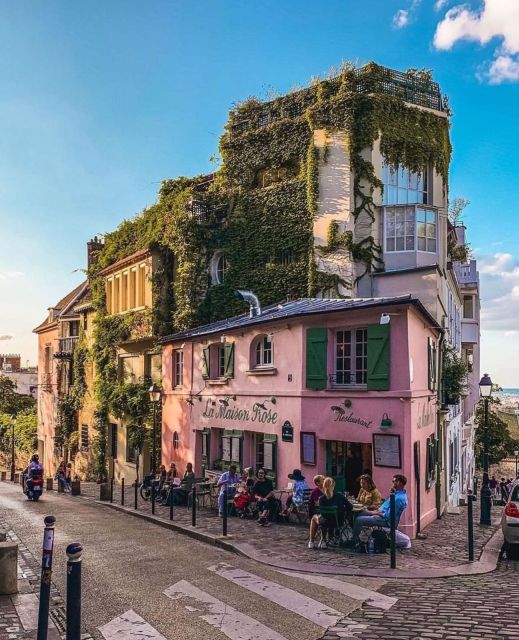
Montmartre is one of those places where you can walk in circles for hours and still miss the point. A good guide gives you the map for meaning: which corners mattered, what changed over time, and why people still talk about this hill.
I love that this tour keeps the focus on stories tied to what you’re standing in. The route is built to move you through the painter-and-singer vibe of the neighborhood, with fun historical anecdotes that make the art quarter feel more like a lived-in neighborhood than a museum.
The second big win is the payoff view at Sacré-Cœur. Seeing Paris from the hill is the obvious reason people come—but the guide helps you interpret what you’re looking at so it lands as more than just a pretty panorama.
You can also read our reviews of more walking tours in Paris



Meeting near Blanche: the easiest start matters

You meet at the Exit Via Blanche metro station, with the guide meeting you in front of the Moulin Rouge. That’s a solid choice because it’s easy to find on foot, and the area gives you quick access to the start of the Montmartre climb.
Because the group is small, timing matters. I suggest you arrive a few minutes early, ready to go, and keep an eye out for the guide since meeting location changes can throw off the flow fast. On one less-great experience I saw described, a delay at the meeting spot cut into the walk time—so treat your start like a timed appointment.
Also plan for a phone battery. You’ll likely want navigation help and quick photo checks along the way, but inside Sacré-Cœur there’s a photo restriction (more on that later).
The artist streets: from Picasso and Van Gogh to real corners
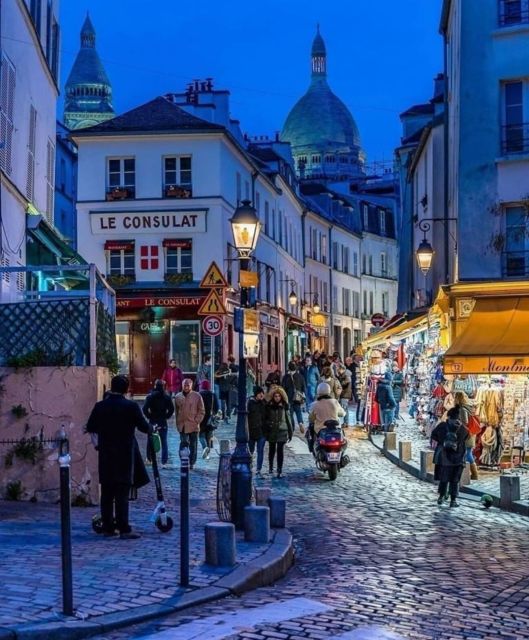
The heart of the experience is the guided stroll through Montmartre’s narrow, winding streets—especially the parts associated with famous artists and entertainers. The tour highlights streets where names like Van Gogh, Toulouse-Lautrec, and Picasso are connected to the neighborhood’s creative history.
What makes this valuable is the cause-and-effect feel. You don’t just hear that these artists mattered—you hear why this place, this hill, and these streets shaped how they lived and worked. After that, you start to notice details on your own: the slope of the street, the tight turns, and the way the neighborhood is laid out like it grew organically from the hill.
In practice, your guide’s style makes a difference. Some guides pace carefully and keep the group together; others can steer the walk faster or rely more on steps. I’d choose this tour with the expectation that you’ll trade a bit of independence for better context.
Rue Abbesses and Place du Tertre: the two classic Montmartre stops
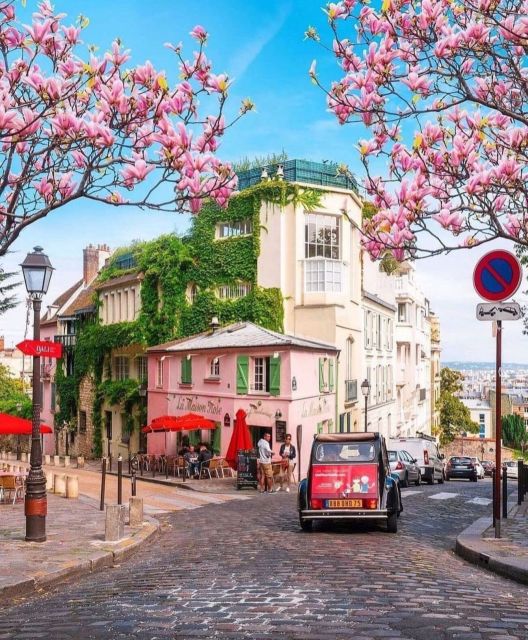
Most people know Montmartre for postcards. This tour leans into two of the neighborhood’s most iconic public spaces—Rue Abbesses and Place du Tertre—and uses them as turning points.
Place du Tertre is one of the most famous squares in Paris, and it tends to be where you can feel the street-performance and artist-culture energy. The guide’s value here is framing: you’re not just seeing a square, you’re hearing how Montmartre became the kind of place where artists could attract attention, build reputations, and live among admirers.
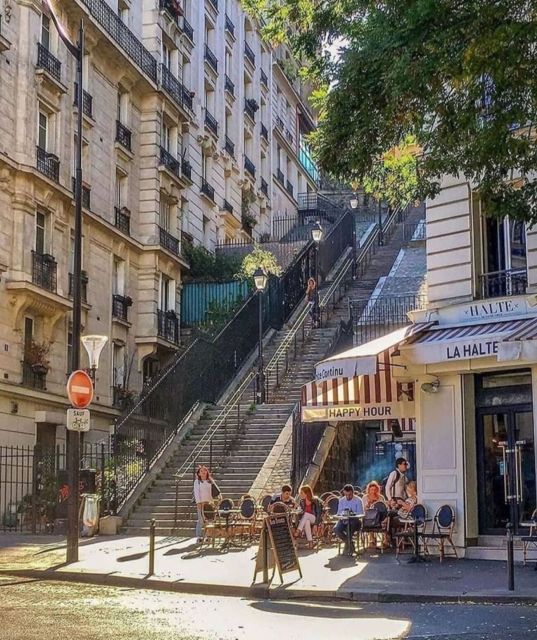
Then there’s Rue Abbesses, which feels like a different mood shift. It’s quieter than the big viewpoint areas and gives you that narrow-street rhythm—shops, stairs, and corners that look like they’ve been squeezed out of the hill itself.
If you’re the type who likes to understand what you’re looking at while you walk, these stops make a real difference.
Sacré-Cœur at the top: views, timing, and photo rules
The climb ends at the top of Montmartre at the iconic Sacré-Cœur Basilica. This is where the panoramic view of Paris becomes the star of the show.
Two practical things to know. First: plan on crowding. Even with a guide, Sacré-Cœur entry can involve some waiting. One experience I saw noted that the advertised line-skip didn’t eliminate waiting inside, so don’t assume you’ll walk right in like you’re skipping airport security.
Second: photography rules. Photography is not allowed inside the Sacré-Cœur church. You’ll still be able to take photos outside for sure, and the view from the hill is the main reason most people came—just don’t waste time trying to shoot inside when you get there.
If you care about photos, I also suggest you take your own shots rather than relying entirely on guide photos. One account mentioned that a guide’s photos had awkward cropping, while another described a guide helping capture great angles. So use the guide for positioning and context, then do your own final camera work.
You can also read our reviews of more guided tours in Paris






Steep steps vs. the funicular: choose your effort level
This tour is designed around uphill walking. The tour description even notes that if the hill is too steep, you can take the funicular for the steepest part of the route.
Here’s how to think about it: stairs slow you down, but they also feel more “Montmartre.” The funicular can save your legs and keep you from arriving at Sacré-Cœur already exhausted. If you’re traveling with knee pain, limited mobility, or you just hate steep grades, I’d strongly consider using the funicular.
There’s a caution from at least one experience described: someone ended up walking about 180 steep steps and reported knee trouble afterward. That’s not a universal outcome, but it’s a clear signal that the climb can be intense. Bring your “upright stamina” mindset, or plan an escape route via the funicular early, not as a last-second decision.
And yes, comfortable shoes aren’t optional. They’re the difference between enjoying the walk and white-knuckling every step.
How you’ll feel during a 2-hour tour (and why pacing matters)
The tour lasts about 2 hours, and it’s limited to a small group of up to 10 people. That format is good for a guided walking experience because you can ask questions and the guide can tailor explanations on the fly.
But the best experiences also depend on pacing. In a standout account, a guide moved at the group’s pace, gave solid history, and even helped with photo moments. In a less-great account, the tour seemed to run short—more like about 60 minutes—and the walk didn’t fully match what was expected (more stairs than street weaving, and less guide time).
You can’t fully control that day’s execution, but you can reduce the odds of a rough version. Show up early. Wear shoes that can handle steep slopes. Be ready for some variation in how the guide navigates crowds and entry lines.
Skip-the-line promises: what to expect realistically
The tour includes skipping the ticket line. That’s a great selling point, especially at a major site like Sacré-Cœur.
Still, entry processes can be inconsistent depending on the day. Even if the guide helps you bypass one bottleneck, you might still wait for entry control once you’re at the front. The practical takeaway: treat the time as guided and efficient, not frictionless.
If you’re someone who hates waiting, bring a patient attitude for the last stretch. If you’re okay with a little queue time for a great view and a guided walk, this is easier to enjoy.
Price and value: is $50 worth it?
At $50 per person for about 2 hours, the value comes down to what you’re buying: interpretation and navigation.
If you walk Montmartre solo, you’ll see plenty. But you’ll probably miss the connections between the street layout and why famous artists ended up here. For many people, that’s the whole reason to hire a guide.
You’re also getting a live English-speaking guide and a small group setting. And the tour includes the guided route; you’re not paying extra for the basic experience besides the optional funicular ticket and your own food and drinks.
So is it worth $50? For me, it’s reasonable if you care about context and you want help turning the neighborhood into a story. If you mainly want exercise and scenery, you could do it on your own cheaper—but you’ll likely learn less along the way.
Guide quality: what the named guides suggest
You’ll see different guide styles, even within the same tour format. Two names came up in reported experiences: Robin and Farhan.
When things go well, the accounts describe guides who are personable, answer questions, and adjust to the group’s pace. One account praised Farhan for moving at their pace and pointing out special spots for photos. Another mentioned Robin as sweet and friendly, but also pointed to issues with tour timing, stairs vs. street weaving, and photo usefulness.
My practical advice: pick this tour because you want a guided walk, but plan to be an active traveler. Ask a question early. If you feel rushed, tell the guide you want a slower pace. And take charge of your own photos outside the church.
Who should book this Montmartre walking tour
This tour is a good fit if:
- you want an easy way to connect Montmartre’s art legend to actual streets
- you enjoy short, focused guided walks rather than all-day sightseeing
- you want Sacré-Cœur’s viewpoint with context, not just a quick photo
It’s not the best choice if:
- steep stairs are a major problem for you and you’d rather avoid hills as much as possible
- you expect the entry process to be totally line-free
- you need guaranteed photo support from the guide (you should plan to take your own)
This tour can still work for many walkers who aren’t athletes, as long as you respect the climb and use the funicular if needed.
Should you book this Montmartre Hill and Sacré-Cœur tour?
I’d book it if you want a guided story walk that ends with a real view of Paris. The price is in the middle of the range for a live, English-speaking, small-group walking tour, and the key value is the way you’ll understand what you’re seeing—especially at Place du Tertre, Rue Abbesses, and at the hilltop finale.
Skip it (or plan changes) if you’re worried about the steep climb. If you’re on the fence, remember the option to use the funicular for the steepest part. If your legs can handle uphill streets and you like historical anecdotes with artists and singers, this is a strong, straightforward way to experience Montmartre.
FAQ
Where is the meeting point?
You meet at the Exit Via Blanche metro station. The guide meets you in front of the Moulin Rouge.
How long is the tour?
The tour runs for about 2 hours.
How big is the group?
The group is small, limited to 10 participants.
Is the tour offered in English?
Yes, the live guide offers the tour in English.
Does the tour include entry to Sacré-Cœur?
The tour includes guided access planning and is described as skipping the ticket line, but photography inside Sacré-Cœur is not allowed.
Can I take photos inside Sacré-Cœur?
No. Photography is not allowed inside the Sacré-Cœur church.
Is the funicular included?
No. The funicular ticket is optional and not included.
Are food and drinks included?
No. Food and drinks are not included.
What if I need to cancel?
Free cancellation is available up to 24 hours in advance for a full refund.