REVIEW · PARIS
Paris: Le Marais Walking Tour
Book on GetYourGuide →Operated by ExperienceFirst · Bookable on GetYourGuide
Marais corners teach you Paris fast. This 90-minute Le Marais walking tour keeps things practical and lively, with inside-out Center Pompidou views and a stop on the Street of Rosebushes in the former Jewish quarter. One caution: it’s about 2 miles of walking, so you’re moving at a steady pace and shouldn’t expect long pauses at every sight.
I like that you get an English-speaking local guide and a clear route that links architecture, religion, and community stories in one loop. You’ll finish near Le Village Saint-Paul, where you can keep exploring on your own, and you can add a narrated Seine cruise if you want more Paris scenery after the walk.
In This Review
- Key highlights you’ll notice right away
- Getting Oriented in Le Marais: what a 90-minute loop really gives you
- Stravinsky Fountain: playful art that sets the tone
- Center Pompidou and the thrill of seeing the building’s outsides
- Jewish quarter streets: Rue des Rosiers and the Street of Rosebushes
- Sainte-Croix-de-la-Bretonnerie: LGBTQ+ history you can walk through
- Cloisters, churches, and the Church of Our Lady of the White Friars
- Hidden lanes and short streets that add up: Impasse des Arbalétriers
- Hôtel Carnavalet, Place des Vosges, and the end-of-tour payoff
- Guide quality: why this tour often feels fun and not like a lecture
- Price and value for a 90-minute Le Marais walk
- Optional upgrade: narrated Seine cruise to stretch your evening
- Should you book this Le Marais Walking Tour?
- FAQ
- Where does the tour start?
- How long is the Paris: Le Marais walking tour?
- How much walking is involved?
- Is the tour in English?
- Is it wheelchair accessible?
- Does the tour run in bad weather?
- What’s included in the price?
- Is food or drinks included?
- Is there an optional Seine cruise upgrade?
- Is the Stravinsky Fountain always available?
Key highlights you’ll notice right away
- Inside-out Center Pompidou: a quick architectural wow moment built right into the route
- Stravinsky Fountain start: abstract, playful sculptures with water features to kick things off
- Jewish quarter streets: Rue des Rosiers and nearby lanes connected to the neighborhood’s past
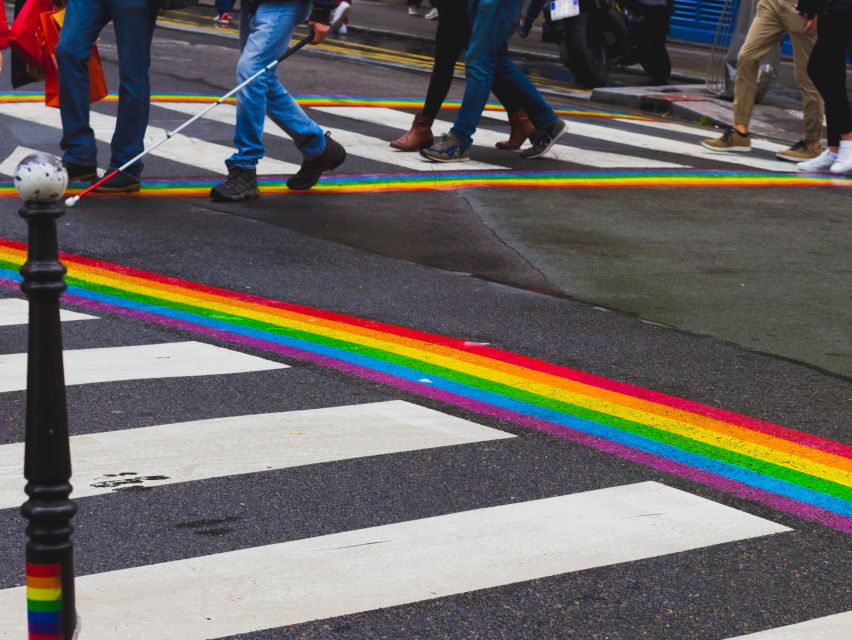
- LGBTQ+ history at Sainte-Croix-de-la-Bretonnerie: a place-based lesson you can picture as you walk
- Historic churches and cloisters: Our Lady of the White Friars and Église des Billettes add depth
- Finish at Le Village Saint-Paul: shops and galleries to turn the tour into real free time
Getting Oriented in Le Marais: what a 90-minute loop really gives you

Le Marais is one of those Paris neighborhoods where it’s easy to get wowed… and then confused. Streets branch, courtyards appear, and suddenly you’re staring at something beautiful without knowing what it is. This tour is built to fix that. In about 90 minutes, you get a guided path that connects the big visual hits with the human stories behind them.
I especially like tours like this when they don’t just point and move. Here, the route links the Jewish quarter heritage, the LGBTQ+ community history, and the area’s church and courtyard life. That makes the architecture and tiny lanes feel less random and more meaningful.
The tradeoff is that it’s not a slow museum day. You’ll walk roughly 2 miles at a leisurely pace, but there still isn’t time to linger. If you like stopping for long photos, reading every plaque, or going in and out of indoor sites, plan to spend extra time after the tour—especially around Place des Vosges and Le Village Saint-Paul.
You can also read our reviews of more walking tours in Paris



Stravinsky Fountain: playful art that sets the tone
Your tour can start at the Stravinsky Fountain at 2 Rue Brisemiche. The draw is immediate: the fountain is known for abstract, outlandish sculptures that move and spray water. Even if you’re not a “water feature” person, this is a great attention-grabber because it’s theatrical in a very Paris way—modern art showing off in public space.
One practical note: the tour info flags the Stravinsky Fountain as under renovation until 2023. That doesn’t automatically mean it’ll be closed when you go, but it does mean you should expect the possibility of limited access, scaffolding, or something that changes your photo angles. If weather is wet, you might end up with extra splash from the fountain itself—bring a hood or light layer.
This first stop matters because it trains your eye for the rest of the walk. After you’ve seen playful “outside the building” art here, it’s much easier to appreciate the way Le Marais mixes old and new styles as you head toward the Center Pompidou area.
Center Pompidou and the thrill of seeing the building’s outsides
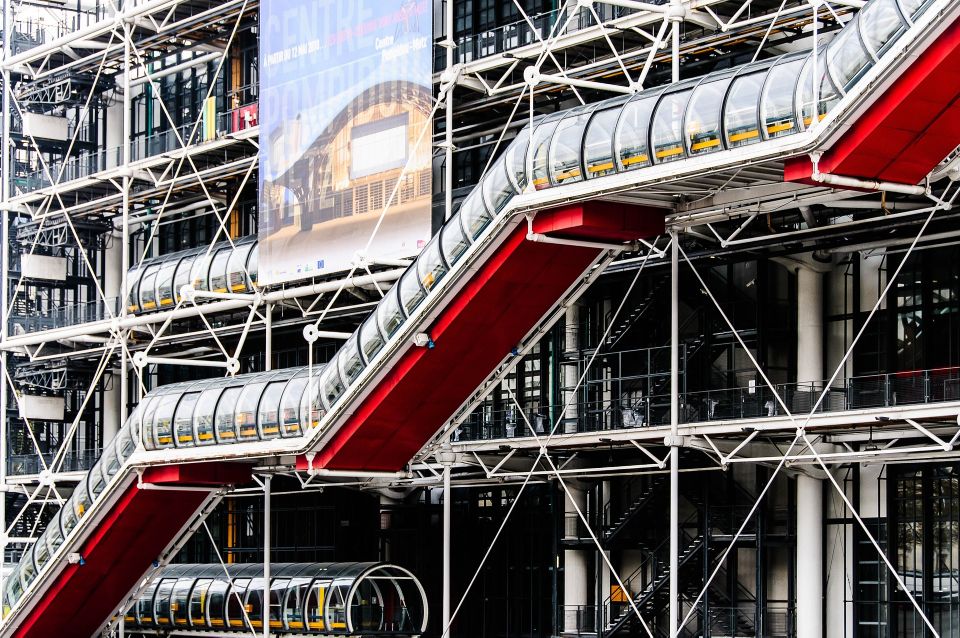
Next up is Center Pompidou, and the tour spotlights its famous inside-out architecture. Whether you love modern design or not, this is one of those landmarks that gives you instant context: Paris isn’t just old stone. It’s also bold planning and visible structure.
Why I think this is smart in a walking tour: Pompidou is a landmark people recognize, but the architectural idea can be hard to explain on your own while you’re scanning the crowd. A guide helps you understand what you’re looking at and why this building looks the way it does.
If you’re hoping for a long museum visit, this isn’t that tour. The value here is getting the architecture and neighborhood history in a single pass—then you can decide later whether you want to return for galleries.
Jewish quarter streets: Rue des Rosiers and the Street of Rosebushes
One of the most distinctive parts of Le Marais is how quickly you can feel the layers of time. The route includes the former Jewish Quarter area and features the Street of Rosebushes (Rue des Rosiers). Even without adding a shopping stop, this street feels like it’s doing more than being pretty—it’s tied to long-running community life.
What makes Rue des Rosiers work on foot is that it’s easy to recognize how neighborhoods grow around everyday routines: you’ll see storefront energy, narrow passageways, and the kind of street scale that makes Paris feel intimate. The guide’s job is to connect what you see with the history—especially useful here, because Le Marais can look “timeless” even when it’s very specific in its past.
Keep your expectations realistic: a 90-minute walk means you’ll get enough time to appreciate the area and take photos, but you won’t cover every side street you might notice. If you want to linger, treat the tour as your map. Then go back later and follow your own curiosity.
Sainte-Croix-de-la-Bretonnerie: LGBTQ+ history you can walk through
A standout highlight on this tour is learning about Paris’ thriving gay community at Sainte-Croix-de-la-Bretonnerie. This is exactly the kind of stop that makes a walking tour worth it. Landmarks alone can feel like scenery. But when you connect the place to people and community history, the street starts telling you a story.
I like that the tour doesn’t keep LGBTQ+ history off in a separate “special interest” category. It’s placed in the flow of Le Marais, right where you’re already learning about churches, courtyards, and neighborhood identity.
If you’re interested in how culture evolves through space—where people meet, celebrate, and live—this stop gives you a framework. And because you’re walking, you can look around and picture how the area would have felt at different moments in time.






Cloisters, churches, and the Church of Our Lady of the White Friars
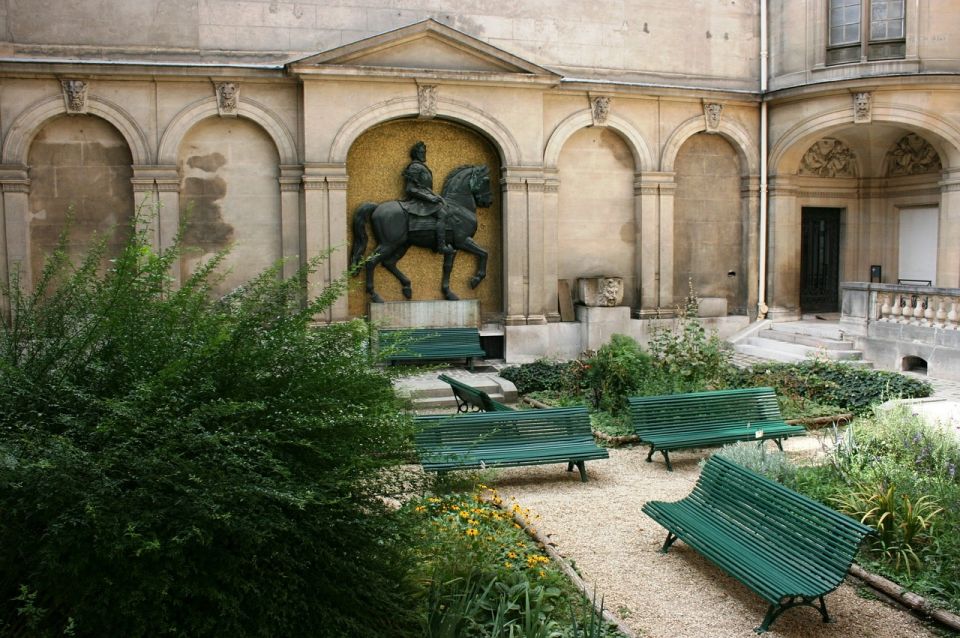
Le Marais has more than one sacred landmark, and the tour uses that to show how the neighborhood developed. You’ll visit Église des Billettes, and the route also includes Cloister of Billettes as part of what you’ll see. There’s also a stop at Notre-Dame-des-Blancs-Manteaux, where the tour specifically references the Church of Our Lady of the White Friars, built in 1258 by Saint Louis.
That “built in 1258” detail matters because it gives you a concrete anchor. It’s easy to walk past old buildings and treat them as decorative. Here, the guide helps you recognize why a church from that period still shapes how the area feels today.
One tip: churches can be quiet, but they can also be crowded depending on the day. Since this is a timed walking tour, you’ll likely get enough time to look and understand, not enough to fully settle in for a long sit-down visit. If that’s your style, plan to come back later and give yourself extra time.
Hidden lanes and short streets that add up: Impasse des Arbalétriers
After the larger sights, the tour moves into smaller street moments that feel like Le Marais at its best. You’ll walk past Impasse des Arbalétriers (also referenced as Impasse des Crossbowmen in the tour description), and then continue toward more iconic squares and public spaces.
Why I like including these lanes: they stop Le Marais from becoming just a checklist. These short streets are where you see the neighborhood texture—how movement works, how courtyards and entrances appear, and how architecture shapes the everyday.
This is also where the guide’s pacing matters. A good guide helps you slow down for the right corners, so the “small” stops feel rewarding rather than rushed.
Hôtel Carnavalet, Place des Vosges, and the end-of-tour payoff
As you continue, the route includes the bibliothèque de l’hôtel de ville de Paris and Hôtel Carnavalet, and then it reaches Place des Vosges. These are the kind of stops that feel like a reset button after narrower streets—space to breathe, take photos, and see how grand Le Marais can be.
Place des Vosges is especially useful as an ending visual. It’s open enough that you can orient yourself, spot where you are in relation to the rest of the neighborhood, and decide where to go next.
Then you finish at Le Village Saint-Paul, described as a treasure trove of antiques, art galleries, and artisan boutiques. That ending works well because it turns the tour into a practical next step: you don’t just walk away; you land in a place where your free time has direction.
Guide quality: why this tour often feels fun and not like a lecture
The experience rises or falls on the guide, and the strongest moments in the information you provided point to guides who mix clear explanations with real personality.
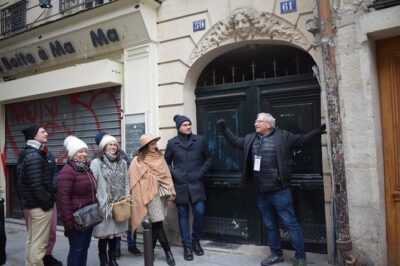
In the best sessions, guides such as Joanna, Zack, and Maria are described as engaging, answering questions, and adding humor without losing the point. Maria is also associated with sending a follow-up email with recommendations, which is a smart extra—because it helps you convert a 90-minute walk into a full neighborhood plan.
Of course, there’s also a caution flag: one reported issue involved a guide not showing up on time and the group being unable to contact anyone. That doesn’t mean your tour will go that way, but it does mean you should protect yourself with basic habits. I’d show up a bit early, confirm your exact meeting spot for your chosen start option, and keep your booking details accessible on your phone.
Price and value for a 90-minute Le Marais walk
At $42 per person for 90 minutes, the value is strongest when you treat this as a “neighborhood orientation + story” tour rather than a museum substitute. You’re paying for:
- a local guide to connect architecture and community history,
- a route that covers multiple major Le Marais landmarks,
- and a finish point that drops you into a walkable shopping and gallery area.
It also helps that the tour runs rain or shine. In Paris, weather can be the difference between a great afternoon and an awkward one. A guided plan gives you something to do even when the sky turns.
Food and drink aren’t included, so you’ll want to plan your timing. If you’re touring near lunchtime, consider grabbing a quick snack before you start (or plan to snack right after you finish at Le Village Saint-Paul).
Optional upgrade: narrated Seine cruise to stretch your evening
If you want to turn your day from “neighborhood history” to “Paris scenery,” the tour offers an optional upgrade for a narrated Seine river cruise. The big practical advantage is flexibility: the cruise is valid for a year from your tour date.
This upgrade makes sense if:
- you want a low-effort way to see major city views,
- you’d like something calmer after the walking portion,
- or you’re traveling with someone who likes history but also wants classic postcard moments.
Since the cruise is narrated, it can also act as a second act for your day—different angle, same city, and often a better chance to sit back and let stories land.
Should you book this Le Marais Walking Tour?
Book it if you want a clear, walkable way to understand Le Marais beyond the photos—especially if you care about architecture, church history, and how communities shaped the neighborhood, including stops tied to Jewish quarter heritage and LGBTQ+ history.
Skip or think twice if you’re the type who needs lots of downtime to read, browse, and linger at each stop. This is designed for momentum: about 2 miles, 90 minutes, and a finish that expects you’ll keep exploring afterward.
If you’re on the fence, a good strategy is this: treat the tour as your “first pass.” Then plan a second visit on your own to the places that made you stop and look twice—often that’s Rue des Rosiers, Place des Vosges, or the Le Village Saint-Paul area after the walk.
FAQ
Where does the tour start?
The meeting point can vary based on the option booked. You can start at either the Stravinsky Fountain (2 Rue Brisemiche) or at the Centre Pompidou.
How long is the Paris: Le Marais walking tour?
It lasts about 90 minutes.
How much walking is involved?
The tour involves around 2 miles of walking at a leisurely pace.
Is the tour in English?
Yes, the live tour guide speaks English.
Is it wheelchair accessible?
Yes, the tour is wheelchair accessible, and it’s also stroller-friendly.
Does the tour run in bad weather?
Yes, it takes place rain or shine.
What’s included in the price?
A local guide is included, along with a private option if you choose it. The tour also includes a Paris shuttle for convenient transportation.
Is food or drinks included?
No, food and drink are not included.
Is there an optional Seine cruise upgrade?
Yes. You can upgrade to a narrated Seine river cruise, and it’s valid for a year from your tour date.
Is the Stravinsky Fountain always available?
The tour info notes that the Stravinsky Fountain is under renovation until 2023, so plan for possible changes during renovation periods.