REVIEW · PARIS
Montmartre Walking Tour
Book on GetYourGuide →Operated by Soul Tours · Bookable on GetYourGuide
Montmartre can feel like a movie set with hills. This walking tour makes it practical to cover the main stops in about 1.5 hours, while keeping the focus on Sacré-Cœur views and artist stories that connect the streets to Picasso and Van Gogh. One thing to consider: there have been reports of guide no-shows and slow communication, so it’s worth being ready to follow up on the day.
I like that the tour is structured around specific places that actually shaped Paris art life—think Le Bateau-Lavoir and the squares where painters gather. You’ll also get helpful photo moments along the way, including guide help for group shots, which is a small detail that saves time when you’re trying to remember everyone’s faces. The trade-off is simple: you’ll be walking on uneven, steep streets, so wear comfortable shoes and don’t count on wheelchair access.
If you want a short, guided Montmartre plan (and not a solo wandering day), this tour is built for you. Just be picky about meeting-up reliability, especially if rain is in the forecast or your schedule is tight.
In This Review
- Key highlights worth aiming for
- Montmartre in 90 minutes: how this route stays doable
- From Moulin Rouge to Place des Abbesses: iconic start, clever details
- Rue Lepic and Vincent van Gogh’s Paris chapter
- Place du Tertre: where artists work and stories linger
- Le Bateau-Lavoir: the building that explains Picasso’s early momentum
- Saint-Pierre de Montmartre: Romanesque calm before the final climb
- Sacré-Cœur steps and the Paris panorama payoff
- Price and value: is $28 worth it for this Montmartre route?
- Guide reliability is the big question to test
- Should you book this Montmartre walking tour?
- FAQ
- How long is the Montmartre Walking Tour?
- How much does the tour cost?
- Where does the tour start and end?
- What languages is the live guide available in?
- Is food included in the tour price?
- What should I bring?
- Is the tour wheelchair accessible?
- What happens if I need to cancel?
Key highlights worth aiming for
- Moulin Rouge start: kick things off at the cabaret landmark everyone recognizes from postcards.
- Place des Abbesses + art nouveau metro entrance: a colorful stop that feels like Montmartre’s design DNA.
- Le Mur des Je t’aime: I love you written in over 300 languages.
- Rue Lepic + Van Gogh’s No. 54: a street-level connection to his time in Paris.
- Le Bateau-Lavoir and Picasso’s creative years: the building tied to his early work and the tour’s focus on Les Demoiselles d’Avignon.
- Sacré-Cœur steps panorama: the classic view of Paris, with a payoff at the end.
Montmartre in 90 minutes: how this route stays doable
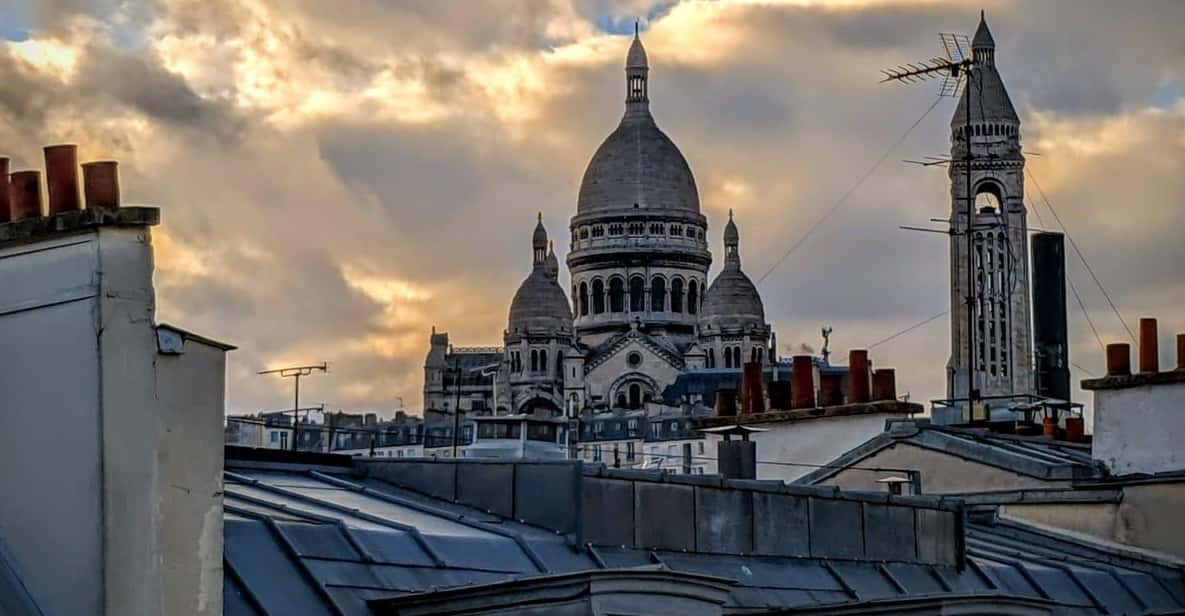
Montmartre’s charm comes with stairs, slopes, and cobblestones. This tour keeps the pacing reasonable by clustering major sights across the hill instead of spreading them out across multiple days. At 1.5 hours, you’re not stuck in “see everything” mode; you’re in “see the key art-and-history hits” mode.
The other reason this time window works: the tour includes frequent photo opportunities. That means you won’t just march past landmarks—you’ll get built-in pauses that help you actually remember the place later. And because it’s a small group, you can ask questions without the guide shouting over a crowd.
One practical note: you’ll be moving through public squares and narrow lanes, so plan your energy for short bursts of walking and uphill transitions. If you’re the type who stops to read plaques and study architecture, this still fits—just don’t expect to linger for 20 minutes at every corner.
You can also read our reviews of more walking tours in Paris



From Moulin Rouge to Place des Abbesses: iconic start, clever details
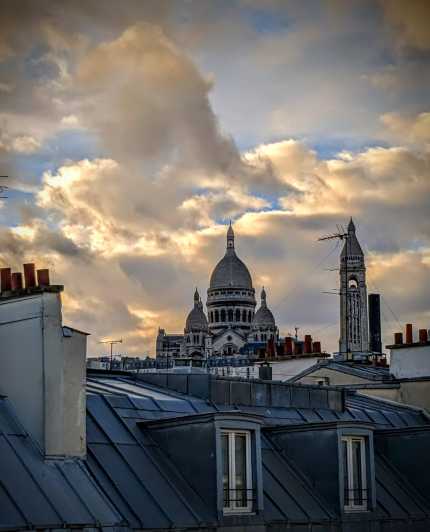
The tour begins at Moulin Rouge, the famous cabaret tied to French show culture since 1889. It’s the kind of landmark that anchors the neighborhood instantly—before you even start walking, you understand why Montmartre became a magnet for performers and artists.
From there, you head toward Place des Abbesses, a lively square with a standout art nouveau metro entrance. This is a nice shift: you’re not only seeing “famous,” you’re spotting design and style. It helps you read Montmartre like a place with its own visual language, not just a highlight reel.
The I Love You Wall—Le Mur des Je t’aime—is one of the most memorable moments on the walk. The wall features I love you in over 300 languages, turning language into a visual souvenir you can actually photograph. You’ll likely want to slow down here, because it’s easy for the details to blur if you keep moving.
A drawback? This area can be crowded around peak times. The good news is that the stop is short enough to enjoy without feeling trapped.
Rue Lepic and Vincent van Gogh’s Paris chapter
Rue Lepic is the kind of street that makes Montmartre feel human-sized. You’ll walk along this historic lane where Vincent van Gogh lived with his brother Theo at No. 54.
What I like about this stop is how it shifts the tour from “art as legend” to “art as everyday life.” Instead of treating artists like names in textbooks, the guide frames the neighborhood as the context for their work and routines. You’ll get stories about van Gogh’s time in Paris—exactly the kind of background that makes his paintings feel more grounded when you later see images.
Even if you’re not a hardcore art-history fan, the street connection is an easy win. It’s also a practical photography moment: Rue Lepic gives you perspective lines that show the slope of Montmartre and the layered rooftops.
Tip: if you want your best photos, keep your camera ready while you’re walking between the numbered addresses, not only when you stop.
Place du Tertre: where artists work and stories linger
Place du Tertre is one of those Montmartre squares that turns attention into a sport. Artists paint and sell their work here, and the tour uses that energy as a jumping-off point for the neighborhood’s artistic past.
This is also where you’ll hear stories about famous artists—especially the connection to Picasso and the idea of his workshop presence in the area. Even if you’ve seen Picasso’s work in museums, hearing how he was tied to specific corners of Montmartre helps the neighborhood click.
The practical value of this stop is that it’s memorable without being complicated. You can look up at the buildings, watch ongoing painting, and still understand why this square mattered historically. It’s a great place to pause and absorb how the hill functions as a creative zone today.
One thing to keep in mind: the square can attract lots of photographers and shoppers. If you don’t enjoy crowds, aim to keep your time focused on a few angles and then move on with the group. You’ll get the story; you won’t need to “win” the square.
Le Bateau-Lavoir: the building that explains Picasso’s early momentum
Le Bateau-Lavoir is the name of the building at 13 Rue Ravignan, and it’s where the tour centers on Picasso’s early career. This stop is particularly satisfying if you like “place-to-person” connections—when you can stand somewhere and understand why an artist’s ideas might have formed there.
The building is tied to Picasso’s lived and working years, and the guide discusses his early trajectory along with the creation of Les Demoiselles d’Avignon. Whether you know the painting well or not, the conversation helps you place it within the messy, real-world atmosphere of Montmartre studios.
What I enjoy most here is the contrast: you go from squares full of visible activity to a more specific, location-based story. The stop gives you a sense of how studios, workshops, and creative neighbors shaped artistic output.
Small practical tip: bring your patience for street-level photos. Buildings in this area often don’t offer clean framing from a single spot. If your group photos are happening, let the guide help with positioning so you don’t lose time trying to find the perfect angle alone.






Saint-Pierre de Montmartre: Romanesque calm before the final climb
Saint-Pierre de Montmartre is one of the oldest churches in Paris, dating back to the 12th century. The tour highlights its Romanesque architecture and historical significance, which works well as a mental reset before the final big finale.
I like this stop because it’s a different kind of Montmartre experience. Instead of chasing art-world stories only, you slow down for stonework, design details, and the feel of age. Romanesque architecture can be easy to overlook if you’re only thinking about modern landmarks, so having it placed here is smart.
The church also helps you “read the neighborhood” differently. Montmartre isn’t only 19th-century cabarets and painters selling sketches. It also has a long timeline that stretches well beyond the famous artist era.
Potential drawback: if you’re expecting a dramatic view at this stop, you won’t get it. The payoff is architectural and atmospheric. Think of it as re-centering before Sacré-Cœur.
Sacré-Cœur steps and the Paris panorama payoff
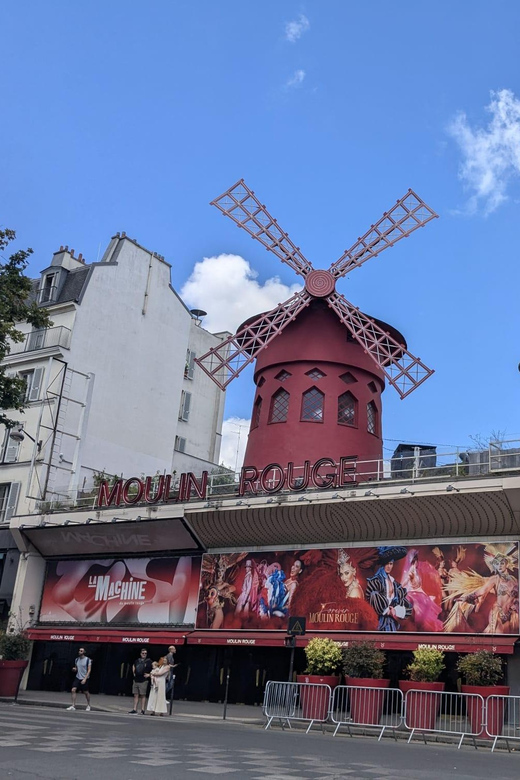
The tour ends at Sacré-Cœur Basilica, on top of Montmartre. The big highlight is the panoramic view of Paris from the steps, and it’s the kind of finale that feels worth the effort—especially after walking the hill.
What makes Sacré-Cœur a good finish is the way it pulls together your earlier stops. Moulin Rouge and the art streets feel far away once you’re high above them, and you get a clearer sense of how Montmartre sits as a whole district. The guide also discusses the history and architecture of the basilica, so you’re not just collecting a photo—you’re understanding what you’re photographing.
Advice for the view: pick your angles and commit. This is not the place to constantly switch positions or you’ll end up with a half-finished gallery. If weather is clear, the skyline can look crisp; if it’s foggy or rainy, you may get mood instead of sharp detail.
And yes, the basilica steps are your reward. Just remember you came up for a reason—take in the view before checking your phone.
Price and value: is $28 worth it for this Montmartre route?
At about $28 per person, this tour is in the category of “pay for guidance, save time, and get context.” For a 90-minute walk, you’re paying for the guide’s ability to connect each stop—Moulin Rouge, Place des Abbesses, Rue Lepic, Place du Tertre, Le Bateau-Lavoir, Saint-Pierre, and Sacré-Cœur—into one story rather than just a list of landmarks.
You’re also getting real extras that matter on the street:
- A professional guide fluent in English and Spanish (and the tour is listed in those languages plus French).
- Anecdotes about artists including Picasso and van Gogh.
- Plenty of photo opportunities, plus help capturing group shots.
What’s not included is also straightforward: no food or drinks. That’s fine for many people because Montmartre tours often lead straight into cafés afterward. It just means you should plan your snack break outside the tour.
Small group size is a quiet value driver here. It usually means fewer waits, more chances to ask questions, and smoother pacing through narrow spots.
If you’re the type who learns faster with context—who wants to know why each corner matters—this price can feel fair. If you prefer to read on your own and stop only when you want, you might do just as well with self-guided walking. But the guide storytelling is the reason to book.
Guide reliability is the big question to test
This is the part I can’t gloss over. The reviews you provided include reports where the guide did not arrive, with no response after messages and phone calls, and at least one situation where the group got soaked in rain while waiting. In one case, the company’s response led to reimbursement after contact.
I’m not saying this will happen to you. I am saying you should protect your time.
Here’s how to do that in a practical way:
- Confirm the meeting time and exact meetup spot before you leave your lodging.
- Bring a way to contact the guide or organizer quickly on the day (and keep it accessible).
- Take a moment to screenshot your booking details and any message threads.
- If rain is likely and your schedule is strict, have a backup plan for doing the route at your own pace.
A walking tour can be amazing. The whole experience depends on the human factor at the start. Make sure you’re covered.
Should you book this Montmartre walking tour?
Book it if you want a focused 1.5-hour Montmartre walk anchored at Moulin Rouge and finishing at Sacré-Cœur, and you care about art stories tied directly to place names like Le Bateau-Lavoir and Rue Lepic. The guide-led connections to Picasso and van Gogh, plus the I Love You Wall stop, make it a good fit for people who like context as much as photos.
Skip it (or at least plan carefully) if you’re depending on flawless timing, or you absolutely can’t handle a delay if the meetup goes wrong. With the guide arrival issues shown in your information, you should treat this as a “book with safeguards” experience.
If you do book, wear comfortable shoes, bring a rain layer if the forecast hints at showers, and be ready to enjoy the hill in short, story-driven segments.
FAQ
How long is the Montmartre Walking Tour?
The tour lasts about 1.5 hours.
How much does the tour cost?
The price is listed as $28 per person.
Where does the tour start and end?
It begins at Moulin Rouge and concludes at Sacré-Cœur Basilica.
What languages is the live guide available in?
The live guide is available in English and Spanish, and French is also listed among the tour languages.
Is food included in the tour price?
No. Any snacks or beverages you want are not included.
What should I bring?
Wear comfortable shoes, since the walk includes hills and uneven streets.
Is the tour wheelchair accessible?
No, it is listed as not suitable for wheelchair users.
What happens if I need to cancel?
Free cancellation is available up to 24 hours in advance for a full refund.