REVIEW · PARIS
Notre-Dame Cathedral Exterior & Latin Quarter Guided Tour
Book on Viator →Operated by Connecting France · Bookable on Viator
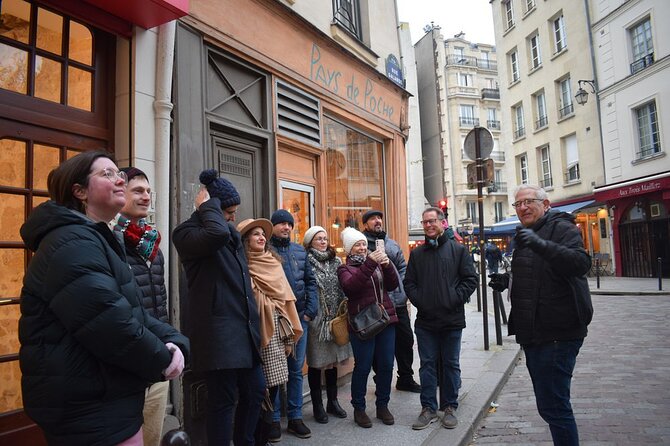
Paris has a way of hiding its best clues in plain streets. This guided walk links the Latin Quarter to Notre-Dame with expert context, so the city stops feeling like random postcard angles. I like that it’s a small group (up to 11), which means you get real answers instead of hearing history through a crowd. The route is mostly walking where cars can’t go, so you actually feel the neighborhood scale.
I also like that you don’t just stare at famous monuments—you get pointed out details at churches and viewpoints you’d likely miss with a basic guidebook. One thing to consider: the tour focuses on exteriors, and Notre-Dame’s interior is not available for guided viewing, so plan to enjoy the façade and sculptures rather than expecting to go inside.
In This Review
- Key things that make this tour worth your time
- How the 2-hour format works for first-timers
- Starting at Place Saint-André des Arts: where the Left Bank feeling begins
- Quartier Latin streets and Notre-Dame from the outside
- Fontaine Saint-Michel: a 19th-century anchor in the middle of older streets
- St. Séverin’s Gothic details: the church you’ll remember after the tour
- Cluny Roman Baths and the Musée de Cluny context
- The climb to the Panthéon: French icons in a grand setting
- St. Julien le Pauvre: quiet, old, and close to Notre-Dame
- Notre-Dame finale: façade, sculptures, gargoyles, and the 2019 story
- Price and value: is $50.47 a good deal?
- What kind of day this tour fits best
- Who should book (and who might skip it)
- Practical tips so you enjoy it more
- Should you book Notre-Dame exterior and Latin Quarter guided tour?
- FAQ
- Is this tour offered in English?
- How long is the guided tour?
- Is the group size limited?
- What’s included in the tour?
- Do I need to pay admission tickets for everything?
- Where do I meet and where does the tour end?
Key things that make this tour worth your time
- Small group size (max 11) for easier questions and a calmer pace
- Walking-only streets give you the true feel of the Left Bank
- St. Séverin and St. Julien le Pauvre add strong church details beyond Notre-Dame
- Roman Baths ruins at Cluny connect Paris’s Roman past to what you see today
- Panthéon viewpoint gives you the uphill “why Paris feels built on layers” moment
- Notre-Dame exterior finale includes the famous façade, sculptures, and gargoyles
How the 2-hour format works for first-timers
This is a tight, efficient tour that fits into a normal day of sightseeing. At about two hours, you get a guided route through multiple “layers” of Paris: Roman-era traces, medieval churches, and monumental French landmarks. It’s not trying to replace a full-day museum plan. It’s a way to set your bearings fast and help you understand why these places are connected.
The pacing also matters. The itinerary moves at a neighborhood-walk tempo rather than a sprint. The listing notes a moderate physical fitness level, which usually means you’ll be walking and handling a few changes in elevation without expecting a slow stroller pace. If you’re comfortable doing a couple of kilometers of city walking, you’ll likely be fine.
You can also read our reviews of more guided tours in Paris



Starting at Place Saint-André des Arts: where the Left Bank feeling begins
Your tour begins at Place Saint-André des Arts in the 6th arrondissement, a sensible launchpad for walking toward the heart of the Latin Quarter. From the start, you’re in the zone where you can sense the city’s mix of old stone and student-energy Paris. The guided approach is helpful here because the streets can look similar when you’re just sightseeing on your own.
What I like in this kind of launch is how it shapes your expectations for the rest of the walk. Your guide sets up what you’ll be looking for: architectural clues, why certain sites were built when they were, and which buildings have stories that connect to later eras. That means when you reach the major landmarks, you’re not just photographing—you’re reading the city.
Quartier Latin streets and Notre-Dame from the outside
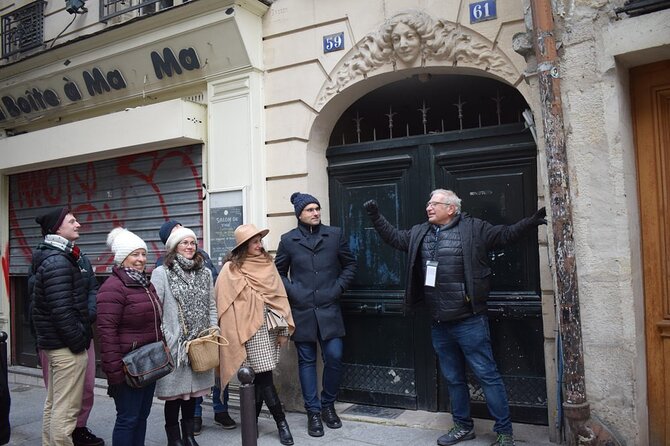
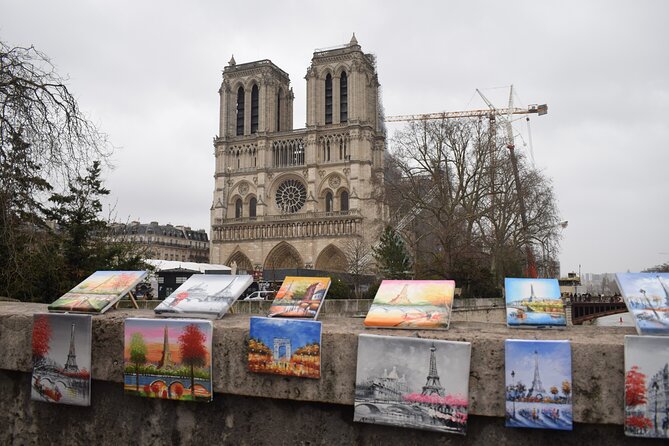
After you get your bearings, the tour focuses on the Latin Quarter and brings you to admire Notre-Dame Cathedral from the outside. This is a smart move. Even though Notre-Dame’s interior isn’t open for guided tours on this experience, the exterior is where you’ll spend your time—and that’s where the big visual storytelling lives.
You’ll get attention paid to the façade’s sculptural program and the famous gargoyles. Your guide also shares the cathedral’s dramatic modern history, including the 2019 fire. That matters because it changes how you look. Instead of seeing the building as a fixed icon, you start seeing it as something Paris is actively repairing and reinterpreting—stone by stone.
And yes, it helps that this is a walk. The tour is described as going where cars can’t go, which usually means you’re threading through smaller streets and viewpoints that cars and buses never give you. For many visitors, that’s the difference between seeing Paris and experiencing it.
Fontaine Saint-Michel: a 19th-century anchor in the middle of older streets
One of the stops is Fontaine Saint-Michel, a striking 19th-century fountain with a statue of Archangel Michael defeating the Devil. Even if you’ve walked past fountains before, this one tends to catch attention fast because it’s theatrical in a very French way—very composed, but still dramatic.
The value here isn’t just the photo angle. It’s that the guide uses the fountain as a time-marker. It reminds you that Paris doesn’t move in a straight line. A neighborhood can feel medieval, but the city still keeps decorating itself in later centuries. That makes the Latin Quarter feel layered rather than frozen in time.
This stop is brief, around 15–20 minutes depending on pacing, which keeps the tour moving while still letting you stop and look closely instead of glancing and rushing off.
St. Séverin’s Gothic details: the church you’ll remember after the tour
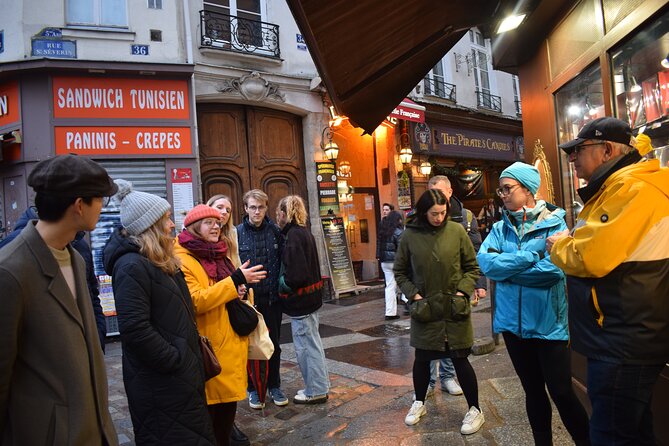
A highlight for architecture lovers is St. Séverin Church (Église Saint-Séverin). You get time to see its Gothic architecture, including medieval stained glass and the double ambulatory. This is the kind of detail that’s hard to notice if you’re walking in with zero context. With a guide, you learn what you should focus on—shape, layout, and how the design supports how people used the space.
This is also one of those stops where the tour feels more valuable than a landmark checklist. St. Séverin isn’t as famous as some of the headline cathedrals, so you’ll likely get a calmer, more personal experience—especially compared with the most crowded sites.
From a practical angle, this is also a good “reset” moment. It breaks up the outdoor walking with an indoor-feeling stop for your eyes and mind. The tour notes no admission fee for this portion, which is useful for budgeting.






Cluny Roman Baths and the Musée de Cluny context
Then you shift into Paris’s earlier past with the Cluny Roman Baths ruins, tied to Lutetia, the Roman name for what later became Paris. This is one of the tour’s clever educational bridges: it shows you that “old Paris” isn’t only medieval churches and grand façades. The city’s foundation goes further back, and you can see evidence of that in the stones.
Your guide also connects this to the adjacent Cluny Museum and points out what you can understand from the baths about daily life in early Paris. Even if you don’t go inside any museum galleries during the tour, the explanation helps the ruins make sense.
And here’s the practical bonus: these kinds of stops are great when you’re starting to feel monument fatigue. Roman baths ruins are different from cathedrals, which keeps your interest level steady.
The climb to the Panthéon: French icons in a grand setting
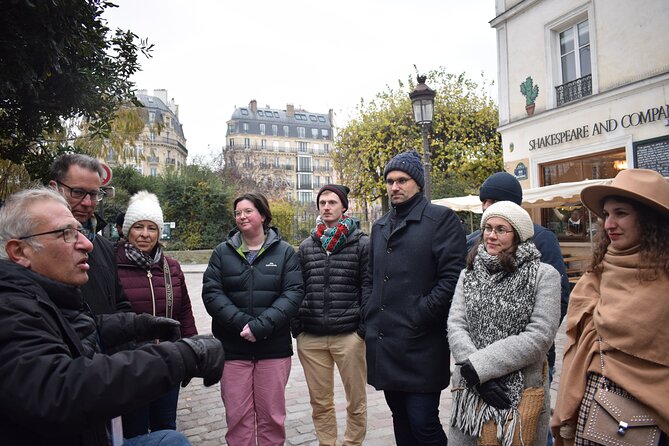
Next comes the uphill approach to the Panthéon, a neoclassical mausoleum where major French figures are buried. The tour includes the names: Voltaire, Rousseau, Victor Hugo, and Marie Curie. That’s a strong list, and your guide shares how the building started as a church and later transformed into a monument celebrating French intellectual and cultural achievements.
This stop works for you even if you only care about a few of those names. It’s not just about who’s buried there. It’s about how Paris chooses to honor ideas—through architecture, symbolism, and public memory.
The timing is also solid, about 20 minutes. Long enough to get the story, short enough to keep your legs from burning out before the final push.
St. Julien le Pauvre: quiet, old, and close to Notre-Dame
Right next to Notre-Dame, in a quieter square, you’ll visit Eglise Saint-Julien le Pauvre, a church dating back to the 12th century. This stop adds variety because it’s different in style compared with the major Gothic drama you see at Notre-Dame.
The tour highlights a Byzantine-style church look (at least in the way it’s described), which makes the comparison really interesting: one site is about overwhelming Gothic grandeur; the other feels like a calmer, older cousin with a distinct visual language. You’ll also learn how it fits into the medieval story of the city.
One practical note: this portion lists admission not included, so if you want to go inside, plan for that extra cost. The good news is that the stop is short—about 10 minutes—so the time impact is limited.
Notre-Dame finale: façade, sculptures, gargoyles, and the 2019 story
The tour culminates at Cathedrale Notre-Dame de Paris, where you’ll admire the façade, sculptures, and gargoyles. Since interior access for guided tours isn’t part of this experience, I’d treat this finale as a guided “read of the exterior.” That still delivers a lot. Notre-Dame’s exterior is packed: it tells stories through sculpture, and it’s impossible to understand its design without a bit of narrative context.
The guide also covers the cathedral’s medieval origins and then brings you to more recent events, including the tragic 2019 fire. That’s a meaningful last step because it gives the cathedral a living quality. You’re not just seeing what used to be there. You’re seeing a building that has a chapter in modern Paris.
Price and value: is $50.47 a good deal?
At $50.47 per person for about two hours, this isn’t a bargain like a free self-walk with a map—but it also isn’t priced like a full museum day. Where the value comes in is the mix: multiple major landmarks plus architectural church detail, all guided by a professional who can explain what you’re looking at.
For me, the best value signals are:
- Small-group cap of 11, which usually improves your attention-to-question ratio.
- A structure that covers several big stops without wasting time.
- The fact that many monument-adjacent parts are listed with free admission during the tour window.
Two more value points from real-world experience: the guides in this program seem to handle Q&A well. In feedback, you’ll see names like Pierre-Louis, Jean Pierre, and Benjamin mentioned for friendly, funny, and clear explanations. When the guide can answer follow-up questions, the tour feels like time well spent rather than a scripted lecture.
If you’re budget-minded, just remember the two places that list admission not included: St. Julien le Pauvre and Notre-Dame interior (not offered as part of guided entry here). That means your all-in cost could be a little higher depending on whether you want entry where available.
What kind of day this tour fits best
This tour is ideal when:
- You’re in Paris for a first trip and want a guided “context thread” linking neighborhoods to monuments.
- You like walking and want a route you can’t easily assemble from scattered guidebook pages.
- You’re interested in architecture, churches, and how different centuries shaped the same area.
It’s also a good choice if you want something lighter than a museum marathon. The stops mix outdoor landmark views with church and ruin storytelling, so you get variety without needing extra tickets everywhere.
Who should book (and who might skip it)
Book this if you:
- Want a Left Bank introduction that goes beyond Notre-Dame alone.
- Like explanations in plain language, and you enjoy asking questions while you walk.
- Prefer a semi-private or private feel within a small group (up to 11).
You might skip it if you:
- Plan to focus heavily on museum interiors and want a bigger-ticket “inside-the-buildings” schedule.
- Specifically want Notre-Dame interior access. This experience is built around the exterior and stories tied to it.
Also, this tour is described as being booked on average about 50 days in advance. I’d treat that as a hint to reserve sooner rather than later, especially in peak travel seasons.
Practical tips so you enjoy it more
- Wear shoes you trust on cobblestones and city sidewalks. The Latin Quarter streets can be uneven, and the tour is a walking experience.
- Keep a bit of small change or card-ready spending for entry where admission isn’t included.
- Bring a water bottle. It’s only two hours, but you’ll still appreciate it on a long walk day.
- The tour offers a mobile ticket and runs in English, so make sure your confirmation email is saved on your phone for quick check-in.
Should you book Notre-Dame exterior and Latin Quarter guided tour?
For most first-time visitors, I think it’s a strong yes. You get a well-structured route that connects major Paris icons with less-obvious church details and Roman-era remnants. The small group size makes it feel personal, and the ending at Notre-Dame gives you a guided way to look at what’s right in front of you.
If your top priority is entering Notre-Dame’s interior, then you’ll need a different plan. But if you want great pacing, smart context, and an efficient way to understand why the Latin Quarter leads naturally into Notre-Dame, this tour is a solid use of your time.
FAQ
Is this tour offered in English?
Yes. The tour is offered in English.
How long is the guided tour?
It’s about 2 hours.
Is the group size limited?
Yes. The tour has a maximum of 11 travelers.
What’s included in the tour?
It includes professional expert guides, a semi-private or private tour (max 11), and a guided walk covering the Latin Quarter with major buildings from outside. You’ll also receive a mobile ticket.
Do I need to pay admission tickets for everything?
Not for all stops. The tour notes admission ticket free for several portions, but entry to St. Julien le Pauvre is not included, and Notre-Dame interior is not included for guided access.
Where do I meet and where does the tour end?
You meet at Place Saint-André des Arts and the tour ends at Notre-Dame, Paris. Service animals are allowed. The tour is also near public transportation.