REVIEW · PARIS
Paris : Immersive Eiffel Tower tour with virtual reality
Book on GetYourGuide →Operated by VIALITY TOUR · Bookable on GetYourGuide
You see the Eiffel Tower rise in 360°.
This VR tour turns Champs de Mars into a time machine: a live guide hands you a headset on site, then you step into modeled 360° scenes based on archives. I like that it has the feel of a guided walk, not a silent device. I also like that you get hands-on context—construction life, the site story, and the moment the Tower shows up for the 1889 World’s Fair.
One thing to consider: this experience takes place exclusively outdoors, so you’ll want proper weather gear. Also, it isn’t adapted for children under 8, and people with epilepsy should skip it.
In This Review
- Key Things That Make This VR Eiffel Tower Tour Worth Your Time
- VR on the Champs de Mars: What You’re Really Buying
- Meeting at the Monument of Human Rights: Easy Start, Clear Recognition
- 1 Hour Through 1887: Construction Life Comes Into Focus
- The 1889 World’s Fair Moment: Watching the Tower Meet the World
- Meeting Gustave Eiffel: The History Factor You Can’t Get From Photos
- What Makes the Guide Important (and Why Small Groups Help)
- Price and Value: $34 for VR + a Real Guide (Not Eiffel Entry)
- Timing, Pace, and Where It Ends: Plan Your Next Move
- Who This Tour Suits Best (and Who Should Rethink It)
- Practical Tips So You Don’t Waste a Minute
- Should You Book This VR Eiffel Tower Tour?
- FAQ
- Where is the meeting point?
- How long is the tour?
- Is an Eiffel Tower entry ticket included?
- What languages are offered?
- Is it suitable for children?
- Is it wheelchair accessible?
Key Things That Make This VR Eiffel Tower Tour Worth Your Time
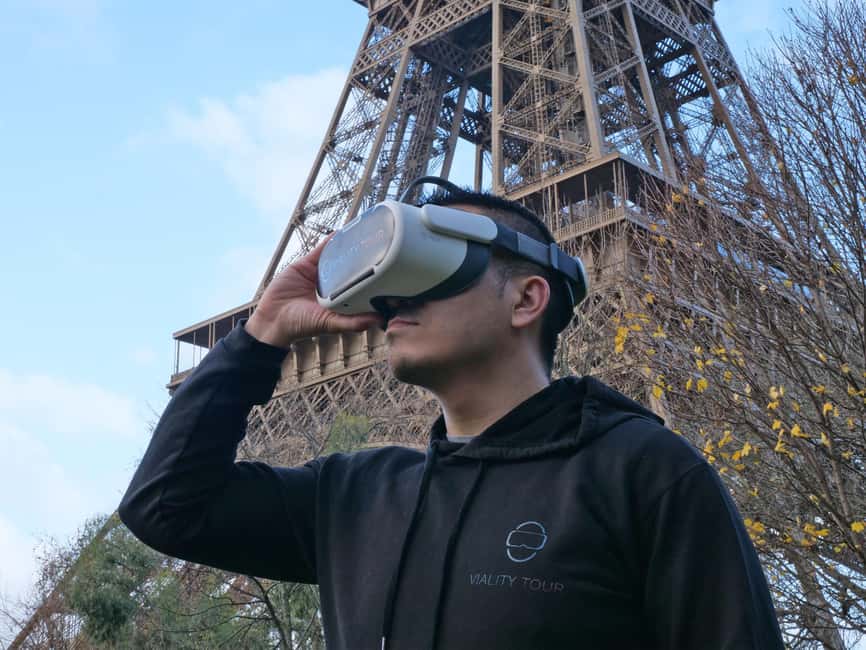
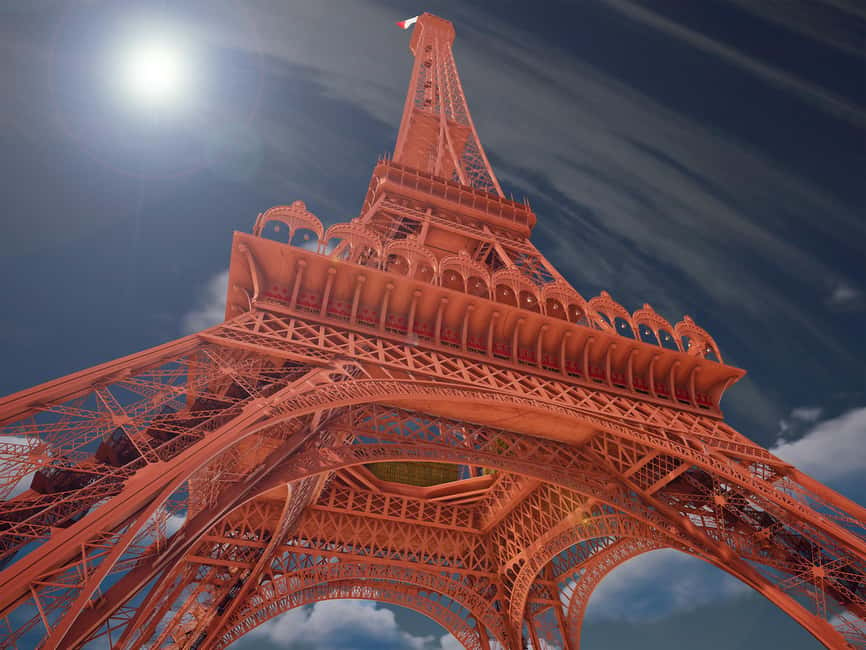
- 360° modeled scenes based on archives for that realistic feel
- A live guide in the loop so you can ask questions during the VR
- Small group size (max 10) for a more personal pace
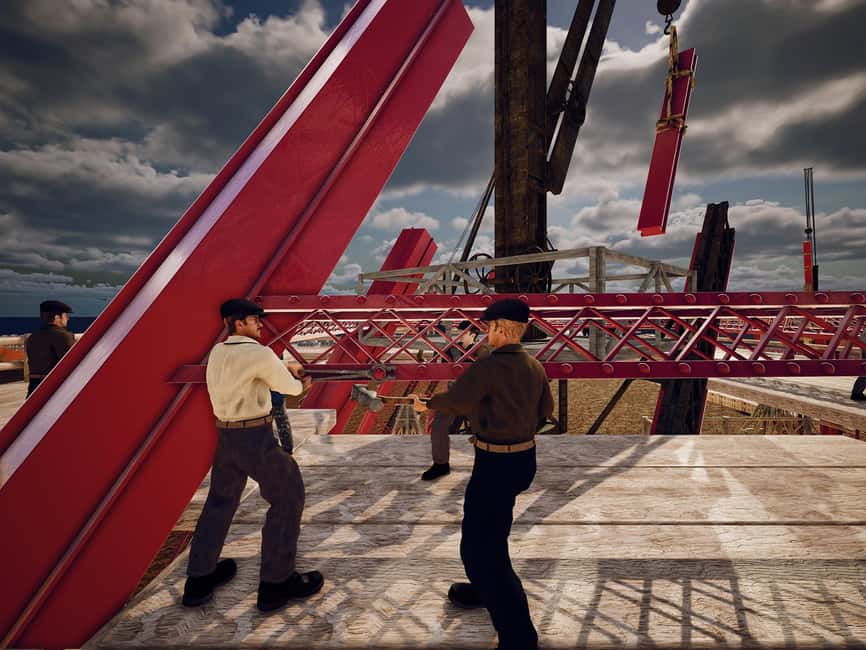
- Back-to-1887 storytelling focused on workers and the construction site
- Gustave Eiffel appears in person for a memorable history moment
- Ends at the Eiffel Tower so you can keep exploring right after
VR on the Champs de Mars: What You’re Really Buying
For $34, you’re not paying for entry into the Eiffel Tower. You’re paying for guided storytelling plus a VR headset, and that’s a meaningful difference.
Here’s the trade-off: you’ll spend your hour-and-change with a headset and a guide, so you won’t be doing the tower-view “tourist checklist” inside the monument during this specific activity. But what you gain is a clear, human-scale timeline. Instead of just seeing the Tower as a landmark, you’ll watch how it became one—through the eyes of the people building it and the public meeting it for the first time in 1889.
The small group cap (up to 10 participants) is also a big value factor. With fewer people, your questions are more likely to land, and the guide can keep the pace comfortable—especially in a format that depends on everyone getting set up with headsets.
You can also read our reviews of more tours and experiences in Paris.



Meeting at the Monument of Human Rights: Easy Start, Clear Recognition
The tour begins on the Champs de Mars, at the Monument des Droits de l’Homme (Monument of the Human Rights). You’ll meet your guide there at your booked time.
Look for the company name tag: the guide wears a badge for Viality Tour. It’s one of those small details that saves time and stress—no roaming around trying to find the right group.
Because it’s outdoors-only, dress like you’re walking in the park. If weather’s chilly or rainy, plan for it. In this setup, you can’t wait out discomfort once the headset portion starts, so being prepared matters.
1 Hour Through 1887: Construction Life Comes Into Focus
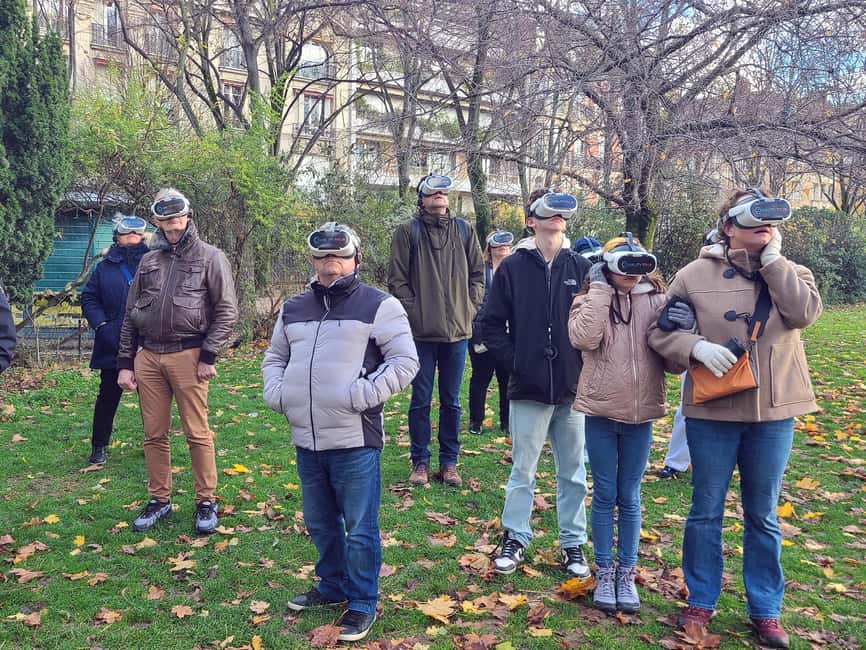
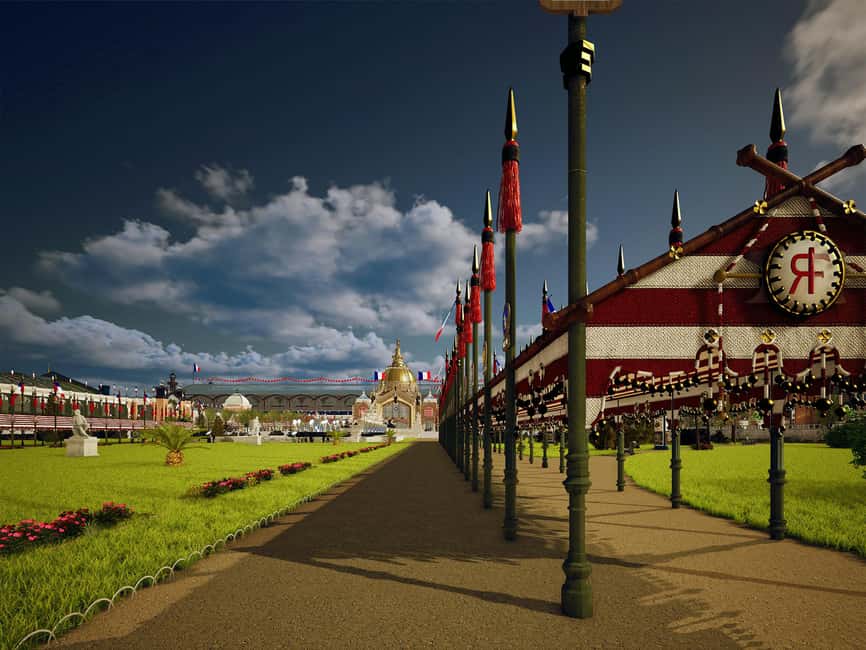
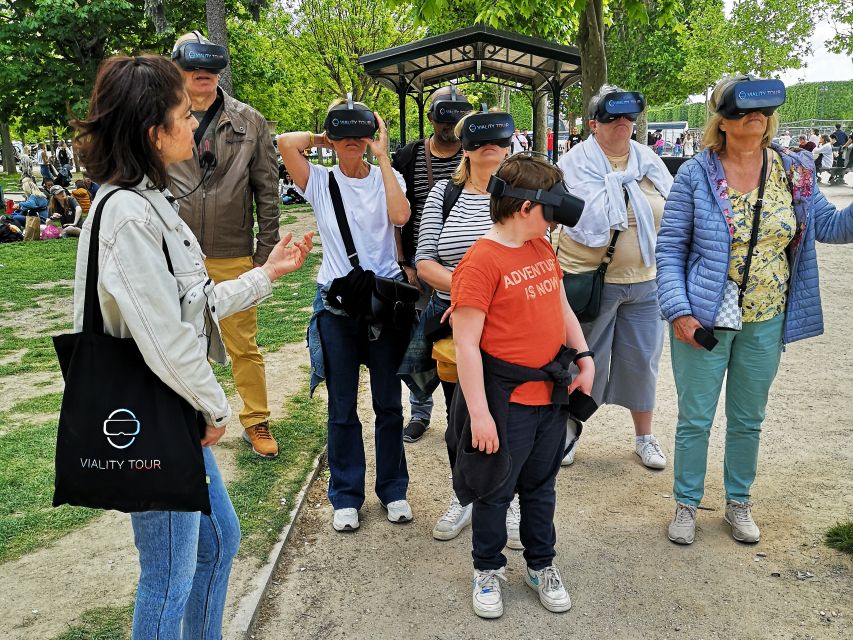
Once everyone is gathered, your guide gives you a VR headset. Then the show starts: a guided tour that takes you back to 1887, when the Eiffel Tower was under construction.
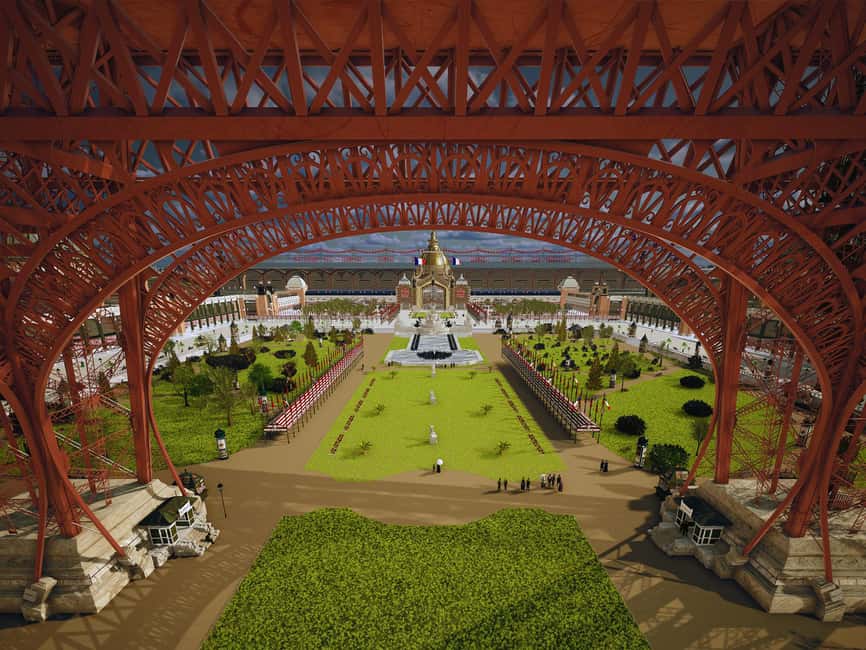
This is where the tour earns its keep. A normal walking tour can describe the Tower, and a museum can explain it, but VR gives you scale and point-of-view. You’re not just being told that it was a construction spectacle—you’re seeing the environment and how it fits together. The experience uses 360° modeled environments based on archives, so it’s not random sci-fi imagery. It’s trying to recreate what the site felt like in that period.
And the storytelling isn’t only about structures. You get the workers’ life on the construction site, which changes the feel from monument admiration to human context. That’s often what makes history stick. When you understand who was working, and what a job like that demanded, the Tower becomes more than a photo background.
A guide helps keep it from becoming a passive video. You’re allowed to talk and ask questions while the tour runs, which is one of the biggest differences from a straight audioguide setup.
The 1889 World’s Fair Moment: Watching the Tower Meet the World
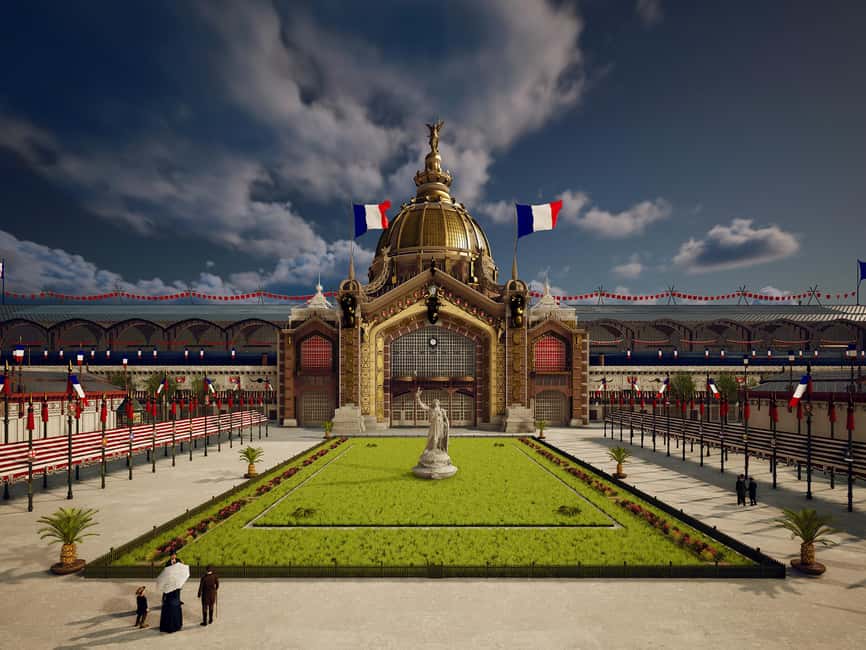
After the construction phase, the tour shifts into the heart of the 1889 World’s Fair, when the Tower was introduced to the public for the first time.
This is a smart pivot. Construction is fascinating, but it’s also missing the “why this matters” part. The World’s Fair portion connects the Tower to its arrival in popular imagination—when people first saw it and reacted to the idea that a new kind of iron landmark could define Paris.
If you like history that explains impact (not just dates and design), this section tends to land well. It gives the Tower a narrative arc: created by workers, then unveiled to the world as a symbol of modernity.
Meeting Gustave Eiffel: The History Factor You Can’t Get From Photos
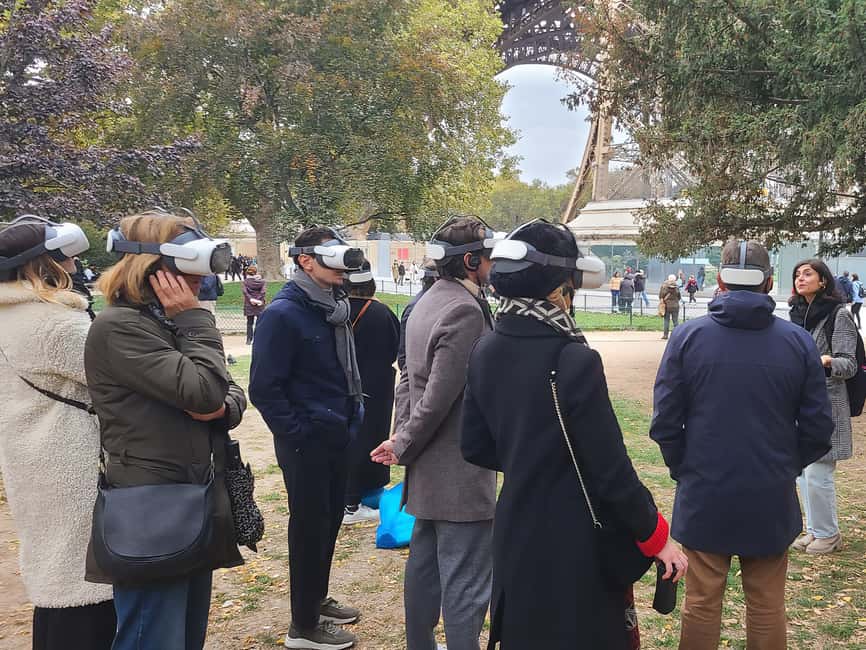
One of the highlights is that you get to meet Gustave Eiffel in person during the experience.
Now, VR doesn’t replace reading real primary sources. But it can do something useful: it puts a major figure into your frame of reference, so the story doesn’t feel like it’s floating on the surface. Hearing key points through a character experience can make the name Gustave Eiffel feel less like a label on a map and more like a person tied to decisions and engineering risk.
It’s the kind of moment that usually creates that head-tilt reaction: yes, you know the name, but the tour helps you understand why he mattered in the Tower’s public story.






What Makes the Guide Important (and Why Small Groups Help)
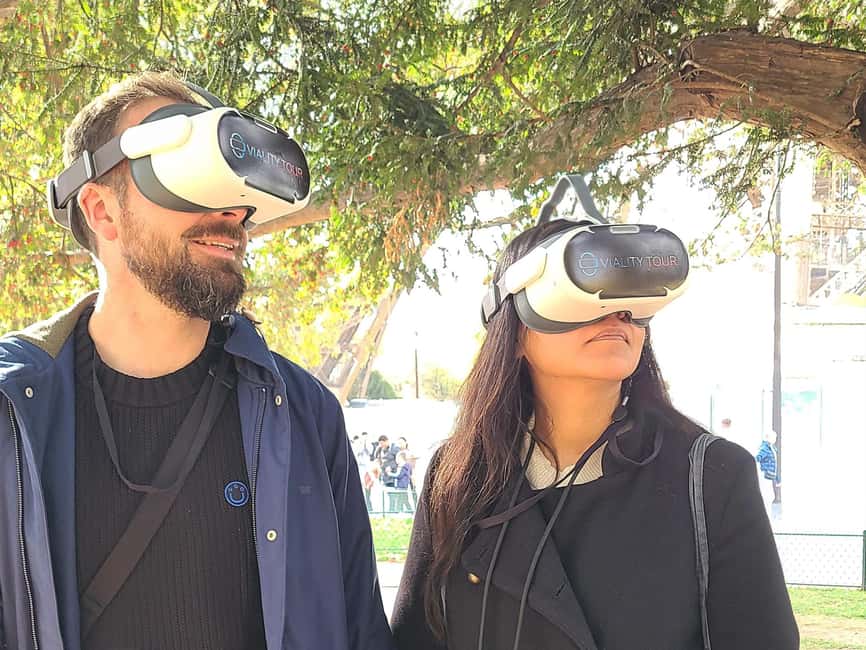
This is billed as a subtle mix of guided tour plus VR. The “guided” part is not decorative. Your guide is there to lead you through what you’re seeing and to answer questions as you go.
In the real world of tours, the difference between a good experience and an okay one is often the explanation quality. Some guides can reel off facts. Better guides connect facts to what you’re actually experiencing in the moment.
If you’re lucky and your guide is Michel, you’ll likely appreciate the extra details—one of the guide’s strengths that shows up in feedback is making the timeline feel vivid, with lots of practical context.
Also, with groups capped at 10, you’re less likely to feel like a seat-filler. You get a bit more of the human attention that VR formats can otherwise miss.
Price and Value: $34 for VR + a Real Guide (Not Eiffel Entry)
At $34 per person, this is worth thinking about as a value “add-on” to a larger Eiffel-area day.
What you get included:
- VR headset
- Professional tour guide
- One hour guided tour
- Small group guarantee (max 10)
What you don’t get included:
- Eiffel Tower entry ticket
So the value equation depends on what you plan next. If you were already considering paying for a separate guided visit inside the tower, this VR session can be a good alternative for the “story” part. You’ll have a stronger mental picture of what you’re looking at, even if you don’t go inside during this activity.
On the other hand, if your priority is views from the top and you’re short on time, you may prefer to put your money directly into tower access. In that case, VR is a luxury-history layer, not the main event.
Timing, Pace, and Where It Ends: Plan Your Next Move
The tour duration is listed as 1 hour to 75 minutes, which is a comfortable slot. It’s long enough to tell a story with a timeline shift, but not so long that you feel stuck if you’re eager to keep exploring Paris afterward.
The experience ends at the Tour Eiffel. That’s convenient: you finish near the monument, so you can decide what to do next without backtracking. Just remember: the tour itself does not include an entry ticket, so if you want access inside, you’ll need to arrange that separately.
Who This Tour Suits Best (and Who Should Rethink It)
This is a strong fit if you want:
- A guided history experience with visuals that go beyond flat pictures
- A small group format with live Q&A
- A chance to understand how the Eiffel Tower went from construction project to global event
It’s also a good option for families with children old enough to handle it, but the tour notes that it’s not adapted for children under 8. If you’ve got kids 8+ and they enjoy structured stories, it can work well. The VR format is the main reason for that age boundary.
Skip it if you:
- Have epilepsy, since the experience is not suitable
- Travel with pets (assistance dogs are allowed)
Wheelchair accessibility is stated, which is a big plus if you need it. The fact that it’s outdoors helps too, though you’ll still want to consider comfort on uneven park surfaces.
Practical Tips So You Don’t Waste a Minute
Here are the small choices that can make the hour smoother:
- Bring your passport or ID card for children (required per the tour info).
- Wear clothing you can stand in comfortably outdoors.
- If you’re sensitive to bright lighting outdoors, consider bringing sunglasses, since the Champs de Mars setting can be sunny depending on the day.
- Plan to arrive a few minutes early at the Monument des Droits de l’Homme, so the headset setup doesn’t push back your start.
Also, note that no last-minute walk-ups are accepted without a reservation. If you’re trying to work around a tight itinerary, book your time slot first, then build your day around it.
Should You Book This VR Eiffel Tower Tour?
Book it if you want a guided, story-driven way to understand the Eiffel Tower—especially the 1887 construction and the 1889 World’s Fair reveal. The small group size and live guide make it feel more human than a video-only attraction, and the 360° archive-based VR helps you “see” what standard tours usually only explain.
Don’t book it if your main goal is getting inside the Eiffel Tower right away and you’re short on time. In that case, you might get better value spending your limited hours on tower access instead of a headset-based history session.
If you’re on the fence, here’s my simple way to decide: if the Tower is just going to be a photo stop for you, choose something else. If you want the story behind the iron, this VR-guided visit at the Champs de Mars is a fun, practical way to bring it to life.
FAQ
Where is the meeting point?
Meet your guide at the Monument of the Human Rights (Monument des Droits de l’Homme) on the Champs de Mars. The guide wears a name tag with the company name Viality Tour.
How long is the tour?
The tour lasts about 1 hour to 75 minutes.
Is an Eiffel Tower entry ticket included?
No. The Eiffel Tower entry ticket is not included in this tour.
What languages are offered?
The live tour guide is available in English and French.
Is it suitable for children?
It is not adapted for children under 8.
Is it wheelchair accessible?
Yes, the tour is listed as wheelchair accessible.