REVIEW · PARIS
Paris: French Wine and Cheese Guided Tasting
Book on GetYourGuide →Operated by L’Oeno’Vice · Bookable on GetYourGuide
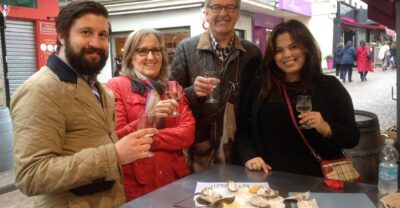
Wine lessons fit in a bar. In Paris, you meet Simon at L’Oeno’Vice for a small-group tasting that teaches you how to taste French wine using sight, smell, and the right pairings. You’ll also compare each wine’s aroma to a specific perfume sample, so the learning sticks.
What I like most is how hands-on it is: you taste 2 whites, 2 reds, and 1 champagne in one tight, 2-hour session, with a different cheese for each pour. I also like that Simon doesn’t just talk labels—he connects what you’re tasting to wine regions, grapes, and climate, then shows you how to make smarter choices in Paris restaurants.
One thing to consider: at $82 per person for a short tasting window, it’s better if you want instruction and pairings—not just an easy drink-and-chat night.
In This Review
- Key takeaways before you go
- Where the tasting starts: L’Oeno’Vice and Simon’s teaching style
- What you taste in 2 hours: 2 whites, 2 reds, and champagne plus 5 cheeses
- How French wine regions show up in flavor (and in your choices later)
- The perfume-sample trick: training your nose to taste better
- Cheese pairings that actually teach you something
- Value check: is $82 worth it for wine and cheese in Paris?
- Who should book this tasting (and who should skip it)
- Should you book: the quick decision guide
- FAQ
- How long is the Paris French wine and cheese guided tasting?
- What wines and cheeses are included?
- Where do I meet for the tasting?
- Is the guide available in English and French?
- Is it suitable for kids or pregnant women?
- Is it wheelchair accessible, and how large is the group?
Key takeaways before you go
- Small group size (max 8): you can ask questions and move at a human pace
- 5 wine tastings + 5 cheeses: every pour has a pairing purpose
- Sight–smell–taste method: you learn what to notice before you swallow
- Perfume comparisons for aroma training: a practical way to sharpen your nose
- French wine regions explained simply: geography and grapes connect to flavor fast
Where the tasting starts: L’Oeno’Vice and Simon’s teaching style
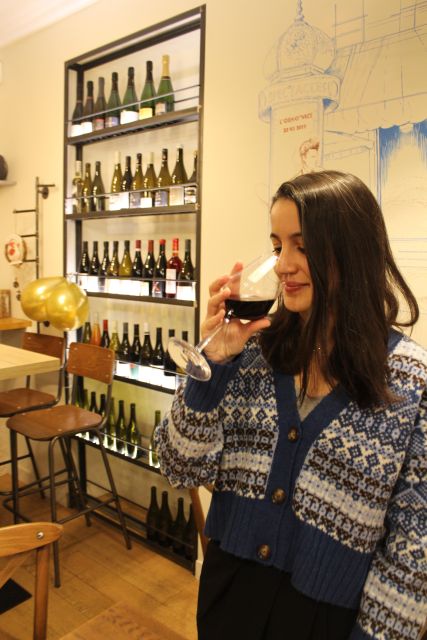
This experience begins at L’Oeno’Vice, Simon’s wine bar in Paris. Expect an intimate setting rather than a big classroom: the space is built around tasting, with the guide close enough that questions don’t feel like interruptions. The tour runs in English and French, which matters because you’ll get clear explanations either way.
The group stays small—limited to 8 participants—which is a big part of why this works. In a tiny group, Simon can adjust the pace, slow down when someone wants more detail, and answer the same question in a way that actually makes sense for where you are in your wine comfort level.
You’ll likely notice the bar’s vibe immediately: it’s the kind of neighborhood spot with lots of café-and-wine-bar energy nearby. One practical tip from the reality of small urban spaces: if you’re early, it can be easy to second-guess where you’re supposed to go. Plan to arrive close to your start time, so you don’t spend precious minutes circling the block trying to confirm the exact entrance.
You can also read our reviews of more food & drink experiences in Paris

What you taste in 2 hours: 2 whites, 2 reds, and champagne plus 5 cheeses

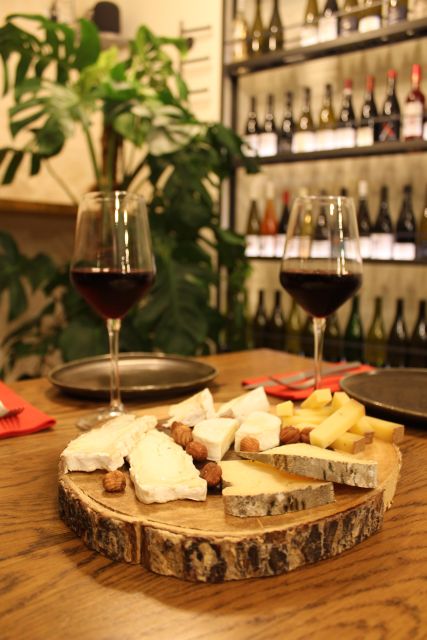
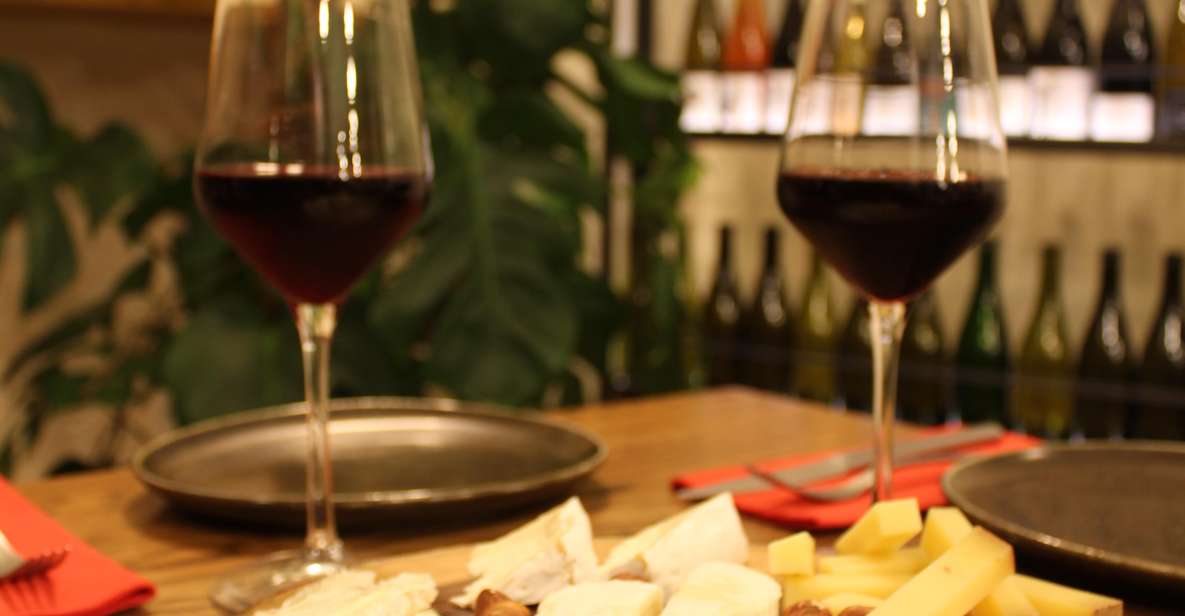
The tasting is structured and you know what you’re getting: you’ll sample 2 glasses of white wine, 2 glasses of red wine, and finish with 1 glass of champagne. Each wine is paired with a different cheese, for a total of 5 kinds of cheese.
The order is part of the learning. You begin with an introduction to French wine—then you move into tasting. For each wine, Simon guides you through a three-step approach:
- Look: check the color and what it suggests
- Smell: focus on aroma before you taste
- Taste: then notice how the cheese changes the experience
That last part is the reason this doesn’t feel like a random wine flight. By pairing a different cheese with each pour, you get a repeatable experiment: same wine, different mouthfeel and flavors. Over five pairings, you start to understand how wine structure and cheese texture interact.
If you’re new to wine, the format is forgiving. You’re not asked to be an expert; you’re taught a process. And because you’re tasting both still wines and champagne, you also get a quick sense of how bubbles and acidity can shift the overall experience.
How French wine regions show up in flavor (and in your choices later)
Simon’s pitch is simple: French wine tastes the way it does because of geography, grape variety, and the local growing conditions. In practice, that means you don’t just learn trivia—you learn what to listen for when you’re standing in a shop or scanning a restaurant list.
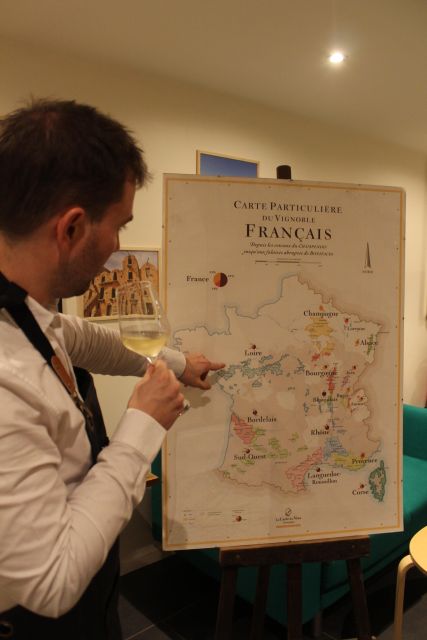
You’ll get an overview of wine history and how different regions developed their styles over time. You’ll also learn the basics of how climate and location influence the grapes, and how that becomes aroma and flavor in the glass. In several accounts, Simon uses visual aids—like graphics—to make region-to-flavor connections easier to grasp.
The practical payoff is what comes after the tasting. The goal isn’t just to finish with full glasses; it’s to help you choose better wines in Paris. After this session, you should feel more confident ordering because you’ll know what to ask yourself:
- Is this wine likely to feel lighter or heavier?
- How might its acidity work with food?
- What kind of flavor direction am I actually looking for?
That’s a valuable skill in Paris, where wine lists can be intimidating and the language can hide the meaning. Even if you stick to just a couple of bottles, you’ll make fewer random guesses.
The perfume-sample trick: training your nose to taste better
One of the most memorable parts is the use of perfume samples. As you taste each wine, you compare the wine’s aromas to a scent sample. This isn’t about smelling perfume like a fashion contest. It’s about building a vocabulary for aroma and training you to separate “I like it” from “I can describe what I’m sensing.”
Smell is the biggest lever in wine tasting. Without smell, wine becomes mostly taste. With smell training, you start noticing things like fruit notes, floral hints, or how some wines feel more aromatic while others lean toward deeper, darker impressions.
For most people, this perfume step changes the whole experience. It makes tasting more active and less passive. Instead of hoping the wine guide will do the explaining for you, you’re participating in the tasting process the entire time.
And because you repeat the smell-and-taste cycle across whites, reds, and champagne, you’re building pattern recognition fast. Even if you forget the exact details later, you’ll remember the method—and that method is what helps you become a better judge of what you like.
Cheese pairings that actually teach you something
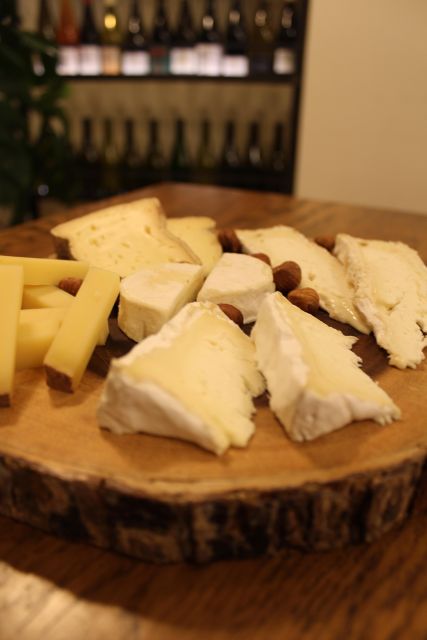
You won’t just get cheese as a snack. The tasting is designed so each pour comes with a different cheese, and you learn alongside Simon about pairing logic—how to choose wine and what matches best with what meals.
In real terms, cheese pairings help you understand wine in a way that’s hard to get from sipping alone. Cheese has fat, salt, and texture, which can soften some wine edges and sharpen other notes. When you compare pairings one by one, the cheese stops being background and becomes a flavor tool.
This is also where the tour feels extra “French” in the most useful way: not the pageantry, but the daily habit of pairing wine and cheese as part of food culture. Many cheese tastings are about tasting many items; this one connects cheese to wine choices. That connection is what makes the information stick.
Also, the session stays friendly rather than stiff. Simon’s humor and willingness to answer questions show up in the atmosphere. Several people also mention he can adapt to the group, which means you’re not stuck listening to a monologue if you’re a quiet learner.
You can also read our reviews of more guided tours in Paris
Value check: is $82 worth it for wine and cheese in Paris?
At $82 per person, this isn’t a budget tasting. But it also isn’t just “five small sips of wine.” You’re getting a structured tasting lesson, with:
- 5 wine tastings (2 whites, 2 reds, champagne)
- 5 cheese tastings
- A live guide who explains how wine geography and tasting technique connect
- A small group setting that makes questions easy
That combo matters. If you’ve done wine tastings before that felt vague or generic, this one is designed around learning steps—look, smell, taste—and around pairing each wine with cheese so you get immediate feedback on your palate.
A couple of accounts also mention people leaving interested enough to buy bottles they enjoyed, including one note about buying several favorites at a reasonable price. That kind of momentum can make the experience feel like more than entertainment.
The main reason you might question the price is simple: if you only want a quick drink, the format can feel like “instruction plus small pours.” But if you want a method you can use in restaurants, plus the satisfaction of pairing wine and cheese in a guided way, the cost starts to look fair.
Who should book this tasting (and who should skip it)
This is a strong fit if you want a tasting that teaches more than it impresses. It works well for people with no wine background, and it also appeals to food-minded travelers and even someone with professional cooking experience—because the guide’s explanations and pairing approach give you new angles on what to notice.
It’s also a good choice for couples and solo travelers since small groups keep the experience personal.
There are clear limits: it’s not suitable for pregnant women and children under 18. If anyone in your group falls into those categories, you’ll need a different option.
Wheelchair accessibility is listed as available, and the group size is capped at 8, which generally helps with comfort in a small bar environment.
Should you book: the quick decision guide
Book this if you want to leave Paris better at tasting. The biggest strengths are the structured format—five tastings with five cheese pairings—and Simon’s teaching approach, which ties wine flavors to region and then gives you a practical method (including the perfume aroma step) you can actually use later.
Skip it if you’re mainly chasing volume or don’t want wine education. This is a learning experience first, and the pricing reflects that.
If you’re the type who enjoys tasting with a purpose—looking, smelling, tasting, and comparing—this one is easy to recommend.
FAQ
How long is the Paris French wine and cheese guided tasting?
The experience lasts 2 hours.
What wines and cheeses are included?
You’ll taste 2 white wines, 2 red wines, and 1 champagne, along with 5 kinds of cheese.
Where do I meet for the tasting?
Meet at L’Oeno’Vice.
Is the guide available in English and French?
Yes. The live guide speaks English and French.
Is it suitable for kids or pregnant women?
No. It is not suitable for children under 18 or pregnant women.
Is it wheelchair accessible, and how large is the group?
It is listed as wheelchair accessible. The group is small, limited to 8 participants.