REVIEW · PARIS
Paris Croissant Small-Group Baking Class with a Chef
Book on Viator →Operated by Maison Fleuret — The Baking School · Bookable on Viator
Paris is great at pastries, but this gives you the hands-on part. This small-group baking class at Maison Fleuret turns a classic Paris stop into a real skill you can use at home. It runs about 2 hours 30 minutes near the Marais, with a chef-led session and plenty of time at the workbench.
What I like most is the practical, guided coaching while you shape and bake. You may work with chefs such as Chef Felix, Clara, Milly, Prisca, Rosalie, Ines, Delphine, or Lizzy, and the common theme is clear instruction and patient help. I also love that you finish with multiple finished items, plus a take-home illustrated booklet so you can repeat the steps later.
One thing to consider is that, like any small operation, a last-minute disruption can happen if a chef is unavailable. It looks rare, but it does mean you should keep your schedule flexible if you can, especially if you’re booking close to your trip dates.
In This Review
- Key Points You’ll Care About
- Marais-Orbit Location: Easy to Find and Great for Pairing With Sightseeing
- Inside the Pastry Studio: What the First Minutes Look Like
- Croissant Practice: Learning the Technique Behind the Flaky Layers
- Pain au Chocolat and Pain au Raisin: Two More Classics, Same Dough Logic
- The Chef Advantage: Small Ratio, Clear English, and Lots of Patience
- What You Eat and Take Home: Snacks, Shared Results, and a Real Souvenir
- The Illustrated Booklet: How You Actually Recreate This at Home
- Studio Supplies and Safety Comforts: What’s Provided and Why It Helps
- Price and Value for a 2.5-Hour Chef-Led Skill Class
- How Far in Advance to Book and How to Slot It Into Your Trip
- Who This Class Is For (and Who Might Want Something Else)
- Should You Book This Paris Croissant Class at Maison Fleuret?
- FAQ
- What pastries will I make in the class?
- How long is the Paris croissant baking class?
- Where is the meeting point in Paris?
- Does the class have a small group size?
- Is the class offered in English?
- Are drinks included during the class?
- Do I get to take the baked pastries home?
- Is a recipe booklet included?
- What safety or health items are provided?
- What’s included in the price, and what is not?
Key Points You’ll Care About
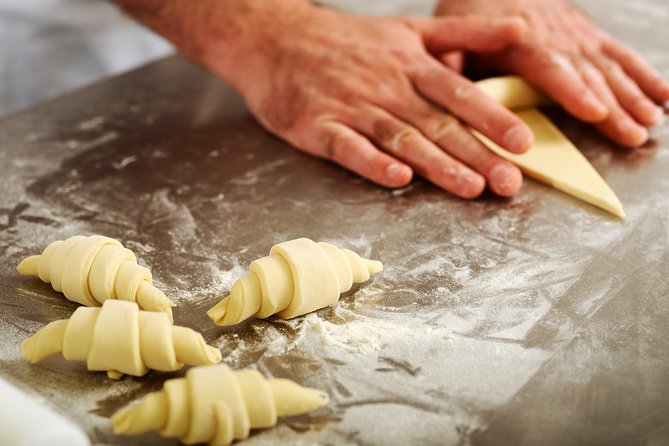
- Small group feel: sessions are limited, with many classes effectively running around 8 participants for easier one-on-one help
- Three pastries, one session: croissant plus both pain au chocolat and pain au raisin
- You do the work: you’re not just watching, you’re shaping, laminating, and baking
- Take-home results: you eat during the class and take the baked pastries away
- Recipe support: an illustrated booklet helps you recreate what you made back home
Marais-Orbit Location: Easy to Find and Great for Pairing With Sightseeing
You start at 7 Rue de Béarn in Paris’s 3rd arrondissement, right around the area of Place des Vosges. That matters because you get a pastry experience without committing your whole day to transit and long rides. It’s also described as near public transportation, so you can fit it into a normal Paris itinerary.
The meeting point is a short walk from a neighborhood that’s easy to explore on foot. After class, you’re in a strong position to continue with the Marais vibe: small streets, cafés, and plenty of good people-watching. Even if your main goal is baking, you’ll likely enjoy the location’s convenient rhythm.
Plan your timing with the session length in mind. This is about 2 hours 30 minutes total, which is long enough to learn real technique but short enough that you won’t lose an entire afternoon. If you want that balance, it’s a good fit.
You can also read our reviews of more cooking classes in Paris
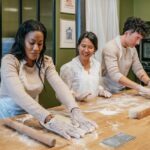
Inside the Pastry Studio: What the First Minutes Look Like
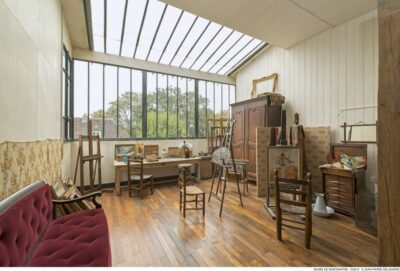
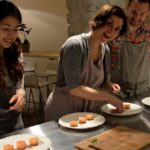
Once you arrive, you step into a fully equipped pastry studio and meet the chef-instructor and your group. You’ll be set up with what you need to work, including an apron and utensils, so you can focus on technique rather than logistics.
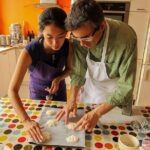
Then comes the core of the experience: step-by-step instruction while you handle the dough. Expect the session to move through dough preparation, kneading, and shaping, with the chef guiding you as you go. Because the group stays small, you can ask questions and get corrections in real time.
That small-group structure is the quiet advantage here. Croissant dough can feel fussy, and small tweaks matter. When a chef can actually watch what your hands are doing, you learn faster and with less frustration.
Croissant Practice: Learning the Technique Behind the Flaky Layers
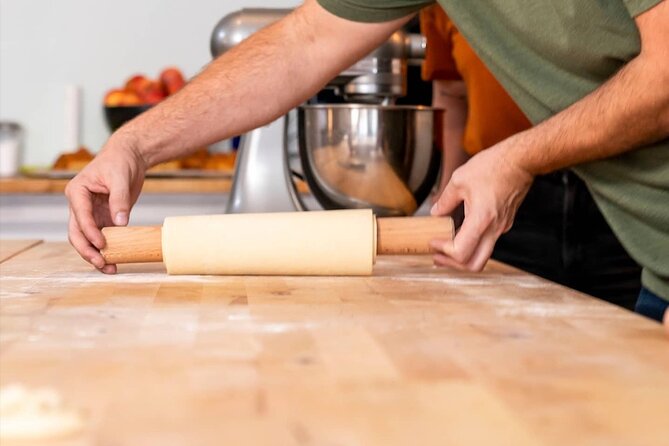
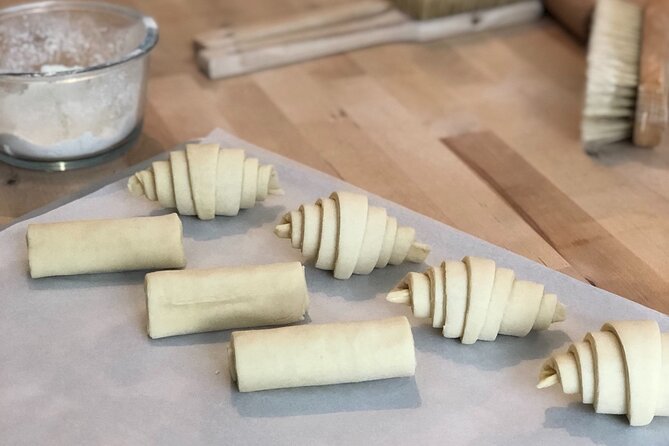
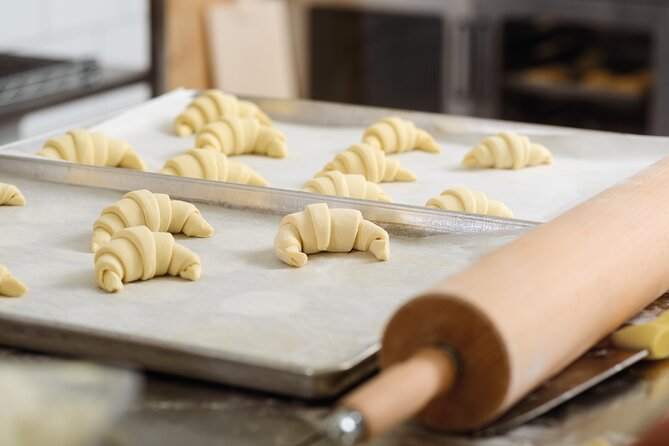
The class begins with a classic croissant. The big idea is that you’re learning technique, not just following a script. Croissants rely on layering and proper dough handling, and your chef explains what you’re doing and why.
In the hands-on portion, you’ll work the dough and get it shaped properly before baking. Many people highlight that they don’t just watch someone else laminate and bake; they actively participate in that process. That is what turns this from a fun activity into an actual skill you can repeat.
If you’re a first-timer, this is still approachable. You’re learning in a studio environment designed for teaching, and the pacing is guided. If you already bake, you’ll likely appreciate how the chef explains method in plain language so you can understand where problems usually come from.
Pain au Chocolat and Pain au Raisin: Two More Classics, Same Dough Logic
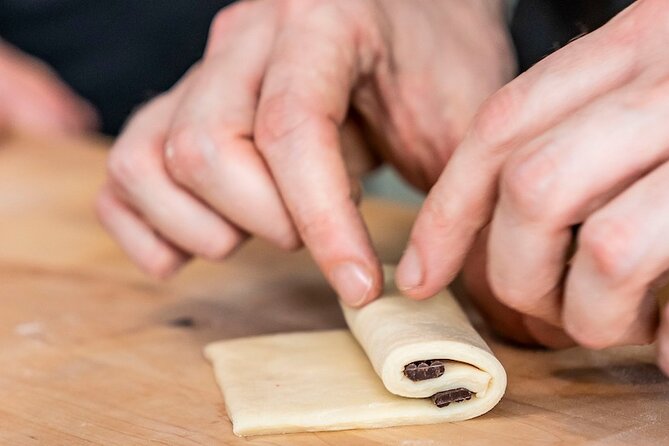
After the croissant work, you move to two other French favorites: pain au chocolat and pain au raisin. It’s a smart pairing because they feel different in the mouth, but they share core pastry logic. That helps you make progress in one lesson without switching into a totally separate craft.
Pain au chocolat typically means rolling and shaping dough around chocolate. Pain au raisin adds a fruit-based filling that changes how you handle the dough during shaping. By the end, you’ll understand how the same pastry base can become different results with smart technique.
This is also where the class gets especially rewarding. You spend time making multiple pastries rather than just one big item. Many participants finish with several pieces to eat right away and more to take home, so you’re not leaving with only a single snack.
The Chef Advantage: Small Ratio, Clear English, and Lots of Patience
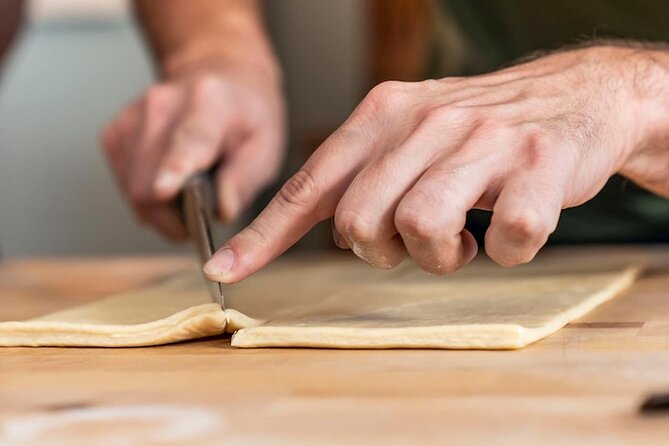
A recurring theme from instructors in this program is patient, interactive teaching. Chefs like Clara, Milly, Prisca, Rosalie, and others show up repeatedly in participant feedback, and the common thread is that the class stays hands-on and questions get handled.
Another practical factor is the ratio. Some sessions are described around 6:1, and the overall experience is limited, often with up to eight people in the workshop. That’s a big deal for croissants because you learn by doing, and you improve when someone can correct your dough handling before it sets.
Language support is also stated as English. That means you can focus on the technique rather than decoding gestures or guessing at instruction. It’s one of the reasons this type of class works so well for people who want a meaningful experience without taking a long language course.
You can also read our reviews of more tours and experiences in Paris




What You Eat and Take Home: Snacks, Shared Results, and a Real Souvenir
You’ll have hot and cold drinks during the workshop while you work. That’s not just a comfort perk. It helps you keep energy up while dough sessions take some waiting and careful steps.
When your pastries come out of the oven, you snack on what you made. Then you take away all of the produce, so you’re not limited to eating everything on-site. For many people, that’s the best part of the deal: the class turns into a meal you can share later.
Because this is a baking class, expect that you’ll leave with multiple items. People consistently mention leaving with several pastries per person, which helps justify the price. You’re paying for ingredients, instruction, and time in a real studio setup, not just a demonstration.
The Illustrated Booklet: How You Actually Recreate This at Home
You get a free illustrated booklet with recipes. That’s a big value add because croissants are easy to mess up from memory. Written steps and visual guidance help you replicate the process without guessing.
This matters more than you might think. Croissant technique is full of small checkpoints, like texture and timing. A booklet gives you a reference point when you’re back home with your own kitchen tools and different ingredients.
If you’ve ever tried a French baking recipe from a vague description, you know the problem. This kind of takeaway turns the day into a lasting skill rather than a one-off pastry moment.
Studio Supplies and Safety Comforts: What’s Provided and Why It Helps
The class includes supplies and instruction, plus face masks and hand solution as part of adapted health and safety equipment. Even if you’re not focused on safety measures, it does signal a well-run operation that takes guest readiness seriously.
It also reduces friction. You don’t have to think about what to bring besides yourself. In a hands-on class, that’s a real win.
One more practical note: this is a baking workshop, so it can be a messy activity. Plan for that in your own way, like wearing clothes you don’t mind getting flour-dusted. The class setup is designed for baking work, so dressing comfortably is the sensible call.
Price and Value for a 2.5-Hour Chef-Led Skill Class
At $157.21 per person, this isn’t a bargain-corner souvenir. But it also isn’t just a tour stop. You’re paying for a chef-led small-group workshop, ingredients, equipment use, hot and cold drinks, tasting time, and take-home pastries plus an illustrated recipe booklet.
The value is strongest if you want hands-on teaching rather than a look-and-learn experience. Many people describe the class as worth it because you do key steps yourself, including laminating dough and baking. That’s the difference between a cooking show and a skill-building session.
If you’re comparing to other Paris activities, the best way to judge is simple. Think about how much you’d pay for a lesson where you leave with multiple pastries and a repeatable method. For many visitors, that math works out well.
How Far in Advance to Book and How to Slot It Into Your Trip
On average, this is booked about 43 days in advance, which tells you demand is real. If your dates are fixed around a specific week, booking earlier gives you more choice. If your schedule is flexible, you may find options closer to your trip.
Since it’s near the Marais and Place des Vosges area, I’d pair it with a walking day. Do other nearby sights before or after, so you’re not crisscrossing Paris for a short program.
Also keep your expectations aligned with the format. This is not a cultural lecture that wanders through sights. It’s a focused workshop where your time is spent working dough, shaping pastries, and learning pastry fundamentals.
Who This Class Is For (and Who Might Want Something Else)
This is a great fit for:
- Couples, friends, or families who want an active Paris experience
- People who like food and want a skill you can repeat at home
- Anyone who wants clear instruction in English in a small setting
It also seems to work well for kids, including families with children ranging from about 7 up through the teen years. If your kids are curious and can follow simple instructions, they’ll likely enjoy the hands-on nature and the payoff of eating fresh pastries.
If you’re looking for a quiet, sit-down museum-style experience, this might feel too hands-on. You’ll be working your hands and paying attention to steps. But if you enjoy making things, it’s a satisfying use of a Paris afternoon.
Should You Book This Paris Croissant Class at Maison Fleuret?
I’d book it if you want to leave Paris with more than photos. The big reasons are simple: small-group coaching, making croissants plus pain au chocolat and pain au raisin in one session, and leaving with pastries plus an illustrated booklet.
If you want a low-effort activity with zero chance of schedule disruption, no class is 100% guaranteed. One participant reported a cancellation due to a pastry chef being unavailable for health reasons, so if timing is critical, consider booking with some flexibility.
For most people, though, this is one of those experiences that turns Paris pastry magic into something you can actually do. If you like learning by doing, it’s a very strong choice.
FAQ
What pastries will I make in the class?
You’ll make croissants, pain au chocolat, and pain au raisin during the workshop.
How long is the Paris croissant baking class?
The class lasts about 2 hours 30 minutes.
Where is the meeting point in Paris?
You meet at 7 Rue de Béarn, 75003 Paris, France.
Does the class have a small group size?
Yes. The experience is described as limited to a small group, with a maximum of 12 travelers, and workshops are also described as limited to only eight participants.
Is the class offered in English?
Yes, the workshop is offered in English.
Are drinks included during the class?
Yes. Hot and cold beverages are included throughout the workshop.
Do I get to take the baked pastries home?
Yes. You’ll taste the baked goods and take away all the produce.
Is a recipe booklet included?
Yes. You receive a free illustrated booklet with recipes.
What safety or health items are provided?
The experience includes adapted health and safety equipment such as face masks and hand solution.
What’s included in the price, and what is not?
Included: hot and cold beverages, tasting, taking away all the pastries, the illustrated booklet, and safety equipment. Not included: private transportation.