REVIEW · PARIS
Paris Covered Passages Walking Tour plus Seine Cruise Option
Book on Viator →Operated by ExperienceFirst · Bookable on Viator
Paris has a second city hiding in plain sight.
You’ll walk through covered passages where shopping, architecture, and street life overlap under glass roofs and ornate facades. I love that the pacing is tight, so you get a real sense of how these pass-throughs function without eating up your whole day. And since the route focuses on interiors, it can feel like a smart way to see more Paris even when the weather turns.
My other big plus: this tour is built around architecture you can actually see up close. You’ll stop at Galerie Vivienne, Passage Choiseul, Passage des Panoramas, Passage Jouffroy, and Passage Verdeau, with guide talk that ties the look of each place to its history and purpose. It’s not just “pretty corridors” time. You learn what makes each passage different.
One drawback to keep in mind: it’s fairly short. Plan for about 1 hour 30 minutes, and if you like lingering in shops or taking forever on photos, you may wish you had more time at each stop. Also, start on time, because being late can put you behind the group.
In This Review
- Key things I’d bank on before you book
- Paris covered passages: why these odd hallways matter
- Meeting at Place des Petits Pères and how the route runs
- Stop 1: Galerie Vivienne’s neoclassical glow and luxury storefronts
- Stop 2: Passage Choiseul and its sunlit glass-roof shopping
- Stop 3: Passage des Panoramas from 1799 to modern dining
- Stop 4: Passage Jouffroy and the simple glass-and-iron lines
- Stop 5: Passage Verdeau to finish near the Grands Boulevards
- Optional Seine cruise: the one-hour payoff and the 1-year ticket trick
- Price and value: what about $43.54 really buys you
- Guide quality: what to expect from real guide styles
- Who this tour fits best (and who might want a different plan)
- Smart tips so you actually enjoy every minute
- Should you book Paris Covered Passages plus the Seine cruise?
- FAQ
- How long is the Paris covered passages walking tour?
- How many passages are visited?
- Is the Seine cruise included or optional?
- Where does the Seine cruise start and end, and what sights does it pass?
- Is the Seine cruise ticket only valid on the same day as the walking tour?
- What’s the cancellation window?
Key things I’d bank on before you book
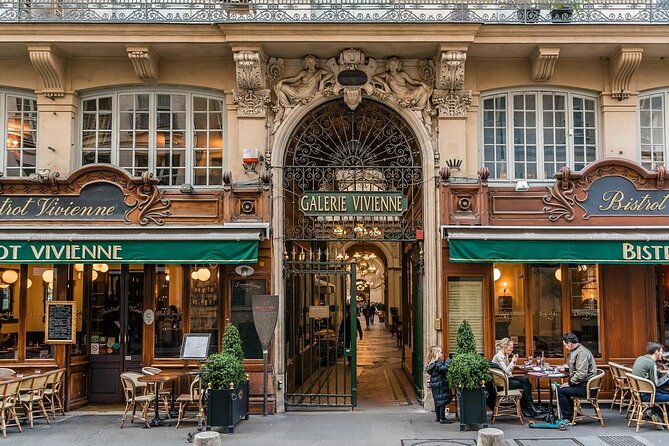
- Five signature passages in one go: Galerie Vivienne to Passage Verdeau, with quick stops that still feel meaningful
- Small group size (max 15): enough space for questions and photo pauses
- Photo-friendly details: Passage Jouffroy’s glass-and-iron lines are especially good for pictures
- Weather-smart route: lots of time under glass, with only street crossings between entrances
- Optional Seine upgrade with a 1-year ticket: do it anytime within a year, still starting/ending at the Eiffel Tower
- Guides can vary in clarity: some guides speak with an accent, and repeating points helps if you miss something
Paris covered passages: why these odd hallways matter
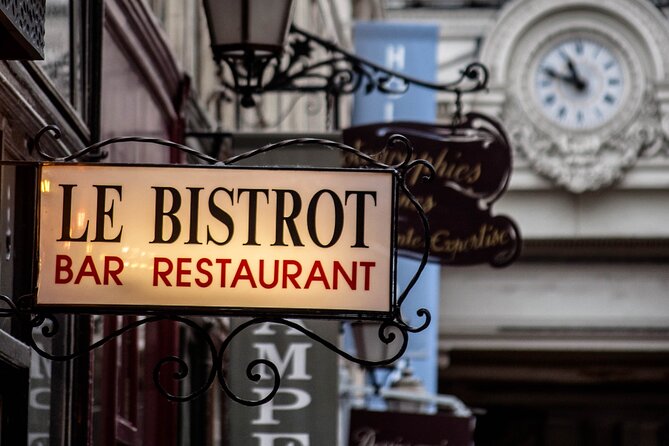
Paris covered passages are a weird little miracle. They’re not “underground” in the subway sense. They’re more like urban corridors that protect people and shops from the weather, while keeping foot traffic moving through the city center.
That’s why this tour feels like more than sightseeing. As you walk, you start noticing how Paris uses space: narrow streets, side entrances, and a kind of commercial geometry that funnels you from one shop-lined pocket to another. The guides also tend to connect what you see to the bigger story of Paris—how these spaces grew, why glass roofs were so appealing, and what each passage’s design suggests about its era.
For you, the main payoff is time and comfort. You’re getting a small, concentrated dose of “real Paris” that isn’t the standard museum circuit. And because you’re moving through multiple passages, you’ll quickly understand the style differences instead of just seeing one decorative street.
You can also read our reviews of more walking tours in Paris


Meeting at Place des Petits Pères and how the route runs
The tour starts at Place des Petits Pères in the 2nd arrondissement. The walk ends at Passage Verdeau, 6 Rue de la Grange-Batelière, near the Grands Boulevards area.
Expect the flow to be simple: short guide moments, quick transitions, and time to look around inside each passage. Stops are listed at about 18 minutes each, so the whole thing stays focused. The maximum group size is 15, which matters because these passages can feel tight. A bigger crowd would turn the experience into shoulder-to-shoulder navigation. Here, you’re usually able to stop, look up, and take photos without constantly shuffling.
One practical note: the tour starts promptly. I’d plan to arrive early at the meeting point and stay there. One unhappy experience reported that being even a few minutes late made it hard to connect back with the guide in real time, so you could end up paying for time you can’t use. Bottom line: give yourself buffer time.
Stop 1: Galerie Vivienne’s neoclassical glow and luxury storefronts
Your first stop is Galerie Vivienne, a neoclassical passage that’s treated like a landmark. The key thing you’ll notice is how “grand” it feels compared to the idea people have of a passage being just a covered shopping strip.
Inside, you’ll see a formal, upscale vibe—think luxury boutiques and classic architectural details. And even with all that shopping energy, the passage design keeps pulling your attention upward and inward, making the glass-covered space feel intentional rather than improvised.
What I like about starting here: it gives you a baseline. After Galerie Vivienne, the later passages will feel like different chapters of the same concept—each one with its own design choices and attitude toward commerce.
If you love photography, this is also a good entry point because you’ll get a feel for lines, symmetry, and lighting early on. If the light is harsh outside, it often looks softer and more even under the passage roof.
Stop 2: Passage Choiseul and its sunlit glass-roof shopping
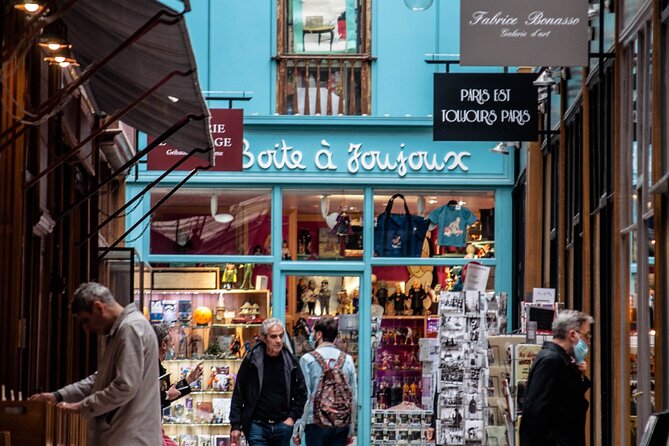
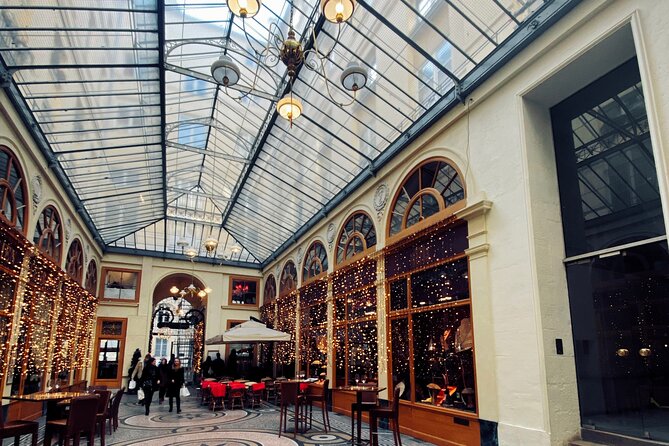
Next up is Passage Choiseul, known for its long run of shop frontage and that “sunlit under glass” effect. The glass roof matters because it changes the color and contrast of everything inside. Instead of bright street glare, you get a diffuse, warm look that can be easier on both eyes and camera lenses.
This passage also helps you understand a key practical function of covered passages: they’re designed to keep movement comfortable. People can browse, pause, and re-enter street life without getting hammered by rain or wind.
A small caution: if you’re expecting an empty, museum-like interior, you may find it feels more active and commercial. That’s not a flaw. It’s part of what made passages endure. They weren’t built for quiet tourism—they were built to serve shoppers.
Stop 3: Passage des Panoramas from 1799 to modern dining
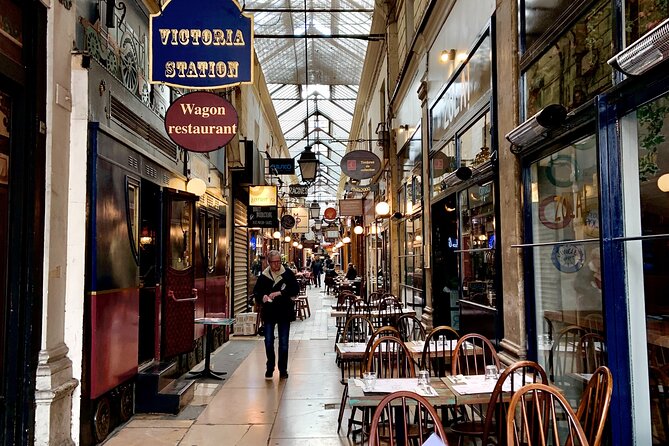
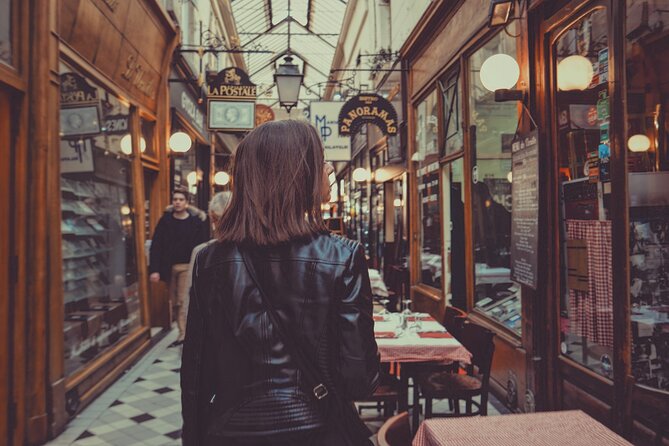
Passage des Panoramas takes you further back, with origins dating to 1799. The biggest thing here is the architecture. You’ll see elaborate design work that’s meant to make the passage feel like a destination, not a shortcut.
This stop also gets associated with dining, so you’ll likely spot places where you can grab food or plan a longer return later. Even if you don’t eat on the tour, it’s useful to know that the passage isn’t just about retail. It’s part of a lived Paris rhythm.
One reason this stop works well in a short tour: it shows how a passage can stay relevant across time. The street structure may be old, but the purpose still fits modern city life—people still want protected browsing and convenient access.
You can also read our reviews of more boat tours in Paris

Stop 4: Passage Jouffroy and the simple glass-and-iron lines
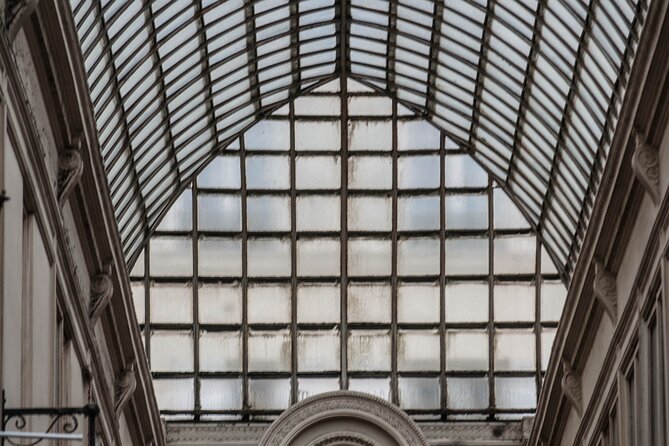
Passage Jouffroy is a photographer’s stop. The vibe here is lighter and more technical than some of the more ornate passages. The highlights are the simple glass and iron framework—clean lines, patterns, and those “look up and see geometry” moments that make covered spaces feel architectural rather than purely commercial.
If you like taking pictures with structure—verticals, repeated shapes, reflections—this is a great place to slow down for a few minutes. Because the tour keeps to a tight schedule, you’ll want to be ready with your phone/camera set up before your attention gets pulled by shop windows.
A practical detail: guides may pause briefly while explaining what you’re looking at. If you want the best photos, stand so you can capture the lines, but also listen. The design is easier to appreciate once you know what feature matters.
Stop 5: Passage Verdeau to finish near the Grands Boulevards
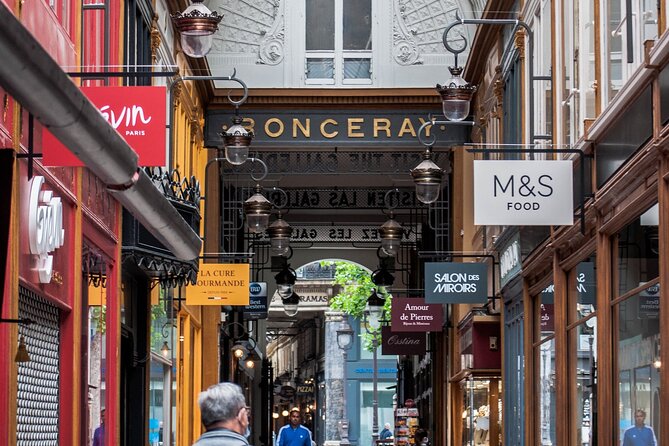
The tour wraps in Passage Verdeau. This is a good closing choice because it leaves you in a broader area where you can keep moving—especially since Passage Verdeau sits near the Grands Boulevards.
What I like about the finish: you’re not locked into a dead-end interior. After the tour, you can step back into “regular Paris” life—streets, cafés, and the kind of neighborhood flow that makes it easy to extend your day.
Also, ending on the last passage helps you compare the overall arc of the walk. You start with Galerie Vivienne’s neoclassical grandeur, move through glass-roof shopping and historic architecture, and end with a passage that feels picturesque and easy to transition from.
Optional Seine cruise: the one-hour payoff and the 1-year ticket trick
If you add the upgrade, you’ll get a one-hour narrated Seine river cruise that begins and ends at the Eiffel Tower. The cruise also passes by major sights including Notre Dame, the Petit Palais, the Musée d’Orsay, and the Conciergerie (plus other landmarks along the route).
The really useful part is flexibility: your ticket is valid for a one-hour cruise anytime within one year of your tour date. That means you’re not forced to match the cruise to the same day as the walking portion. If your schedule gets tight, you can likely pick a calmer time later.
Why this upgrade makes sense: after you’ve spent time under glass roofs, the Seine adds a different kind of Paris perspective—views of landmarks from the water that you simply can’t get on foot. It’s also a nice “settle down” activity after a quick walking tour, because you can relax while the city moves past.
Two things to keep in mind:
- It starts and ends at the Eiffel Tower, so plan for that area before and after.
- A one-hour cruise is short. It’s great for highlights, not for deep landmark-by-landmark study.
Price and value: what about $43.54 really buys you
At $43.54 per person, the biggest value isn’t just the listed sites—it’s the efficient format. You’re paying for guided context plus concentrated access to five major covered passages in about 1.5 hours.
Here’s the practical math I’d use as you decide:
- Short tour length means you can fit it between bigger plans without wrecking your day.
- Free admission is built into the stops, so you’re not paying extra entry fees at each location.
- The small group size (max 15) improves the experience because these interiors can get crowded fast.
- The optional cruise upgrade can extend value further, especially since the ticket is usable anytime within a year.
On the flip side, because it’s not a long hang-out tour, you won’t have unlimited time to shop inside every passage. If your dream is to spend an hour inside one place, you might feel rushed. But if your goal is to see the key passages and understand what makes them special, this price feels fair.
Guide quality: what to expect from real guide styles
Guide names that show up include Fanny, Paula, Marie, and Maria—and the common thread in their approach is clear: history and “how the passage works” get explained while you’re walking.
Some guides are especially strong at connecting details to real Paris life, including notes while you’re moving between entrances. One example from feedback involved a stop that triggered a story about Colette when passing her plaque. That kind of street-level context is what turns a route of pretty corridors into something you’ll remember.
Clarity can vary by guide. One account noted a guide whose first language was Spanish and who had an accent, but they also repeated points when people didn’t catch them the first time. If you’re sensitive to accents, you can still make this work—just be ready to ask for repetition if needed.
Also, pacing tends to be good. That means you usually get quick looks inside each passage and enough time to step back and re-orient.
Who this tour fits best (and who might want a different plan)
This is a strong fit if you:
- Want an off-the-beaten-path Paris experience that’s still central and easy to combine with other days
- Enjoy architecture, layout, and the “why” behind street design
- Prefer small groups over big coach tours
- Like photo stops and won’t mind short time boxes
It may not be ideal if you:
- Want long shopping time or deep dives in one or two places
- Get irritated by tight schedules and frequent switching between entrances
- Are the type who needs a lot of quiet time—these passages can feel active
Because it’s “most travelers can participate” and service animals are allowed, it’s generally inclusive. And since it’s near public transportation, getting to and from the start/end areas is usually straightforward.
Smart tips so you actually enjoy every minute
- Arrive early at Place des Petits Pères. The tour starts promptly, and reconnecting if you’re late can be hard.
- Dress for weather. Even with lots of covered space, you’ll still be on the streets between passages.
- Use the photo opportunity stops intentionally. At Passage Jouffroy, spend your camera time on the iron-and-glass structure.
- If you’re doing the Seine cruise, pick a date within the one-year window that matches your energy level. Don’t force it into a rushed day.
- If you’re concerned about understanding the guide, don’t be shy about asking for repetition. Some guides naturally repeat key points when they see confusion.
Should you book Paris Covered Passages plus the Seine cruise?
Yes, I’d book it if you want a focused Paris experience that mixes architecture, shopping history, and practical comfort. The covered passage route is a clever way to see more of the city in less time, and the small group size helps the guide talk land.
I’d skip or rethink it if you’re expecting long leisurely exploration inside each passage. This tour is about variety and context, not lingering. And if your schedule is tight, remember the cruise is optional—your walking tour can stand alone as a complete plan.
If you’re deciding between doing it and doing something larger, consider this: it’s short enough to protect your energy, and it sets you up to notice Paris differently afterward—especially the way the city uses glass, iron, and design to move people through space.
FAQ
How long is the Paris covered passages walking tour?
It lasts about 1 hour 30 minutes.
How many passages are visited?
You visit 5 passages, from Galerie Vivienne to Passage Verdeau.
Is the Seine cruise included or optional?
The Seine cruise is an optional upgrade. It’s a one-hour narrated cruise.
Where does the Seine cruise start and end, and what sights does it pass?
It starts and ends at the Eiffel Tower. It passes landmarks including Notre Dame, the Petit Palais, the Musée d’Orsay, and the Conciergerie.
Is the Seine cruise ticket only valid on the same day as the walking tour?
No. The ticket is valid for a one-hour cruise anytime within one year of the tour date.
What’s the cancellation window?
You can cancel for a full refund up to 24 hours before the experience’s start time.