REVIEW · PARIS
Paris City Center w/ Notre Dame interior | Exclusive Walking Tour
Book on Viator →Operated by Babylon Tours Paris · Bookable on Viator
Paris has a way of grabbing you by the coat.
This exclusive-style walk strings together the city’s most important sights in a tight, human-paced loop, from Île de la Cité to the Tuileries. I like that you get a live guide to connect the dots, plus a route that keeps you moving through central Paris without feeling swallowed by crowds.
Two standouts for me: first, the tour format gives you a calmer rhythm (private pace, rain-or-shine), so you can actually ask questions while you’re walking. Second, the itinerary blends major landmarks with streets-and-squares details that help you understand why Paris looks the way it does today—then ends at a classic “grand finale” spot near the Champs-Élysées.
One thing to consider: Notre-Dame interior time is unguided because of regulations, so you’ll want to treat that entry as your chance to look at details yourself while your guide handles the bigger story outside and around the site.
In This Review
- Key highlights I’d plan around
- The real value: a private pace in the busiest part of Paris
- Île de la Cité: where Paris started (and why it still matters)
- Notre-Dame: exterior first, then your self-guided interior window
- Palais de Justice, Sainte-Chapelle, and Conciergerie: Gothic power and revolutionary consequence
- Fontaine Saint-Michel and Place Dauphine: Paris charm in the middle of big history
- Pont Neuf to Pont des Arts: walk the bridges that shaped the riverfront
- Louvre area without the full museum day: Cour Carrée and the Pyramid views
- Palais-Royal gardens and Arc du Carrousel: calmer pockets after the museum intensity
- Tuileries Gardens, the garden bookstore stop, and a dramatic end at Place de la Concorde
- Timing and walking reality: what 2.5 hours feels like
- Price: what you’re paying for at $59.69
- The guides: energy matters in a history-heavy walk
- Who should book this Notre-Dame to Louvre to Tuileries walk
- Should you book it? My take
- FAQ
- Do I get to enter Notre-Dame Cathedral?
- Is the tour guided inside Sainte-Chapelle, Conciergerie, or the Louvre?
- How long is the walking tour?
- Is the tour private?
- Does the tour run in bad weather?
- Where does the tour start and end?
- What language is the tour in?
- What’s included in the ticket price?
- Do I need to bring a mobile phone number?
- What should I wear or bring?
- Are hotel pickup or drop-off included?
Key highlights I’d plan around
- Private pacing that helps you avoid the worst crowd crush while still seeing big-name sites
- Notre-Dame included, with entry but an unguided interior visit due to regulations
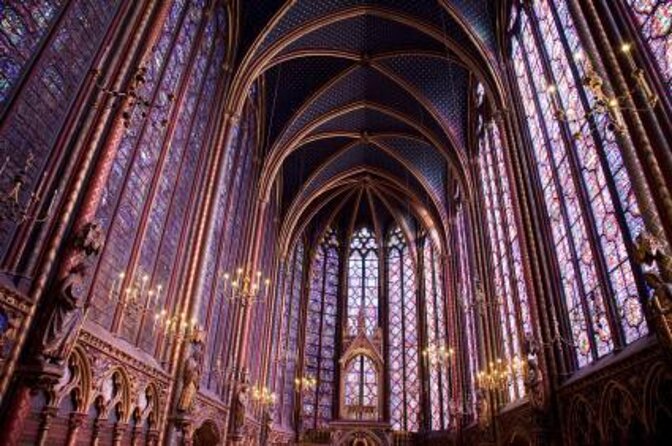
- Stained-glass Gothic stop at Sainte-Chapelle, built in just seven years
- Bridges with real stories: Pont Neuf (oldest stone bridge in Paris) and Pont des Arts (first iron bridge)
- Revolution-era landmarks via the Conciergerie and the Place de la Concorde area
- A smooth ending at Place de la Concorde before you head toward the Champs-Élysées
The real value: a private pace in the busiest part of Paris

This is a walking tour designed for the center of the city, where you’d normally spend more energy weaving through people than learning. The promise here is straightforward: private walking with your guide, so you set the pace and keep control of your photos, your questions, and your walking breaks.
That matters because the sites on this route are not sleepy. Notre-Dame, Sainte-Chapelle, and the Louvre area pull in huge numbers daily. With a guide steering the timing and route, the experience feels less like a checklist and more like a guided walk through how the city grew, what changed, and what got rebuilt.
Also worth noting: the tour runs rain or shine. Paris weather can be moody, so I’d pack for it. Comfortable shoes beat slick fashion every time here.
You can also read our reviews of more walking tours in Paris



Île de la Cité: where Paris started (and why it still matters)
Your tour kicks off on Île de la Cité, the oldest settlement area in Paris. This island matters because it’s the seed of the city: once called Lutetia when the Romans were here, it’s where Paris grew outward from.
I like starting here because it’s a clean way to understand the city’s geography. You’re not just seeing monuments—you’re seeing the logic of the setting: islands, bridges, and the way power and faith clustered in the same zone.
Even early on, the guide’s job is to make the walls and streets feel connected. You’ll also get a feel for how this area moved from ancient times to medieval influence, and then into the modern city layout you still recognize today.
Notre-Dame: exterior first, then your self-guided interior window
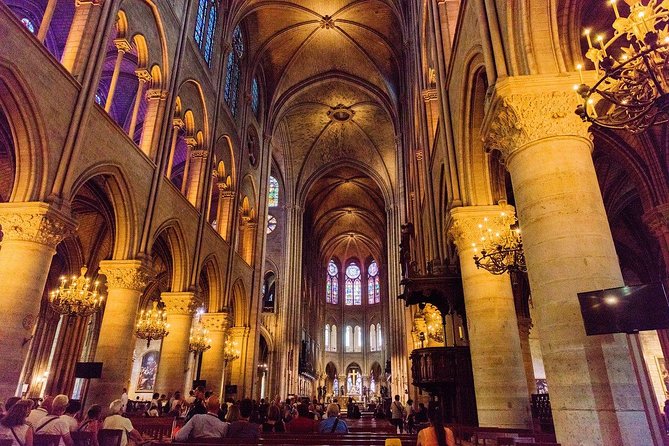
Notre-Dame is the anchor of the morning, and the tour treats it like one. You’ll begin with the exterior overview and the Gothic masterpiece story that people love to argue about—why it’s important, what “Gothic” means in real terms, and why Notre-Dame remains such a symbol.
Then you enter for the interior part, with an important detail: the interior visit is unguided due to regulations. In practice, that means your guide can’t deliver commentary inside the church the way you’d expect. But the upside is you still get to go in, and you can slow down to notice what your eyes are drawn to: the scale, the atmosphere, the craftsmanship.
Here’s a practical tip: if you’re able to plan your schedule around it, you might enjoy staying for a service when one is happening. That small change can turn your visit from sightseeing mode into a more emotional, less tourist-y moment.
After the interior window, you’ll continue around the neighborhood so the building isn’t isolated in your mind. You’ll connect Notre-Dame to what’s around it—justice buildings, old squares, and the riverfront bridges that frame this part of Paris.
Palais de Justice, Sainte-Chapelle, and Conciergerie: Gothic power and revolutionary consequence
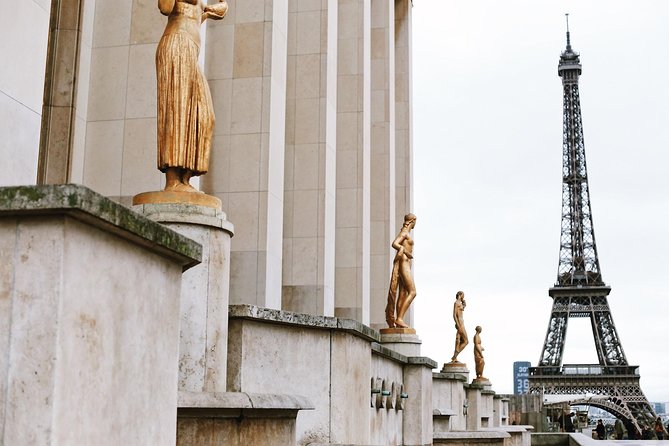
After Notre-Dame, you move into the next layer of history: the legal and political heart of the city. The tour heads to the Palais de Justice area (the Palais de la Cité complex), where some of the oldest surviving buildings in the area are still present.
The best way to think about this segment: it’s not about collecting facts. It’s about understanding that medieval Paris didn’t separate church, law, and state power the way we do today. You’re standing in a zone where decisions were made and lives were affected.
Next up is Sainte-Chapelle, built in seven years to house precious Christian relics, including Christ’s crown of thorns acquired by Saint Louis. I love this stop because it’s a pure Gothic statement. Even if you only get a short time, the stained-glass experience changes how you see the word cathedral. This is the kind of place where light is part of the architecture.
From there, you’ll reach Conciergerie, described as the oldest remaining part of the Palais de la Cité—and at one point, notoriously the prison in France. It’s hard to walk through any space tied to the Revolution without feeling history’s weight. The tour frames it with clear context, including the idea that more than a thousand people were held there, including Marie Antoinette in the story.
One practical note: some of these stops list admission as not included. So if you’re planning tightly, check what you’ll need to pay separately for the days you visit.
Fontaine Saint-Michel and Place Dauphine: Paris charm in the middle of big history
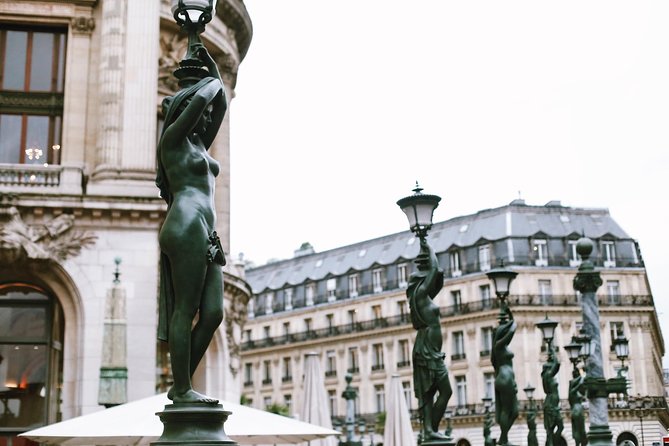
After the heavier history, the route shifts into a calmer, more local rhythm. You pass Fontaine Saint-Michel, a monumental fountain commissioned by Haussmann under Napoleon III. The design—archangel Michael vanquishing the Devil—gives you a strong visual metaphor for good vs. evil, which fits neatly with the tour’s theme of moral and political change.
Then you see Place Dauphine, a historic square tucked on the western tip of Île de la Cité. It’s one of those Paris scenes that works as a breather. You get beauty and symmetry, but also a sense of planning decisions—Place Dauphine was one of the first projects commissioned by Henri IV.
This stretch is useful because it gives your brain a break between indoor-scale stops and long river walks. It’s also a good moment to take photos without fighting the hardest crowd friction.
You can also read our reviews of more city tours in Paris





Pont Neuf to Pont des Arts: walk the bridges that shaped the riverfront
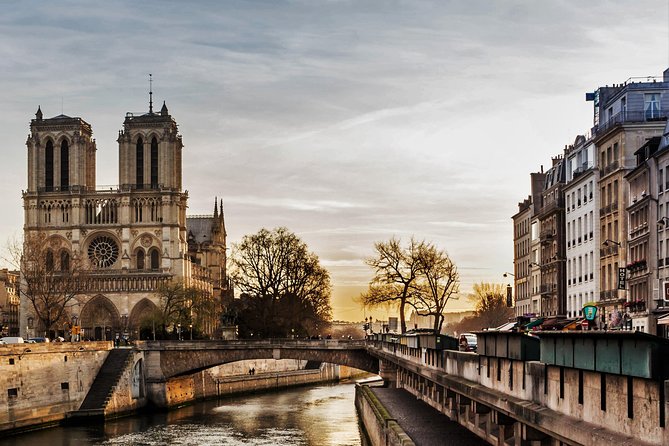
This tour becomes more fun—and more scenic—when you start walking across the Seine. You’ll head to Pont Neuf, considered the oldest stone bridge in Paris. Today it connects to UNESCO-listed riverside heritage, which makes the river feel like a living museum, not just a view.
In the middle of Pont Neuf, you’ll spot the equestrian statue of Henri IV. The statue you’ll see now is a replica because the original was destroyed during the French Revolution. That detail is more than trivia. It’s a reminder that Paris re-uses symbols even when regimes change.
Then comes Pont des Arts, a bridge connecting the Institut de France and the Louvre area. Built between 1801 and 1804, it was the first iron bridge in Paris—another example of how the city evolved from stone-and-medieval power to engineering and modern style.
If you like your tours to include actual movement (not just stopping at corners), this is the payoff part.
Louvre area without the full museum day: Cour Carrée and the Pyramid views
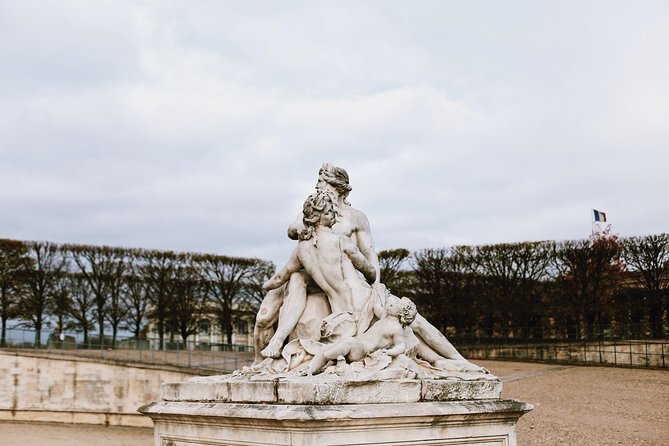
You’ll move toward the Louvre, but the tour doesn’t try to make you do the whole museum in 2.5 hours. Instead, you’ll pass through key external areas—Cour Carrée, a major courtyard, and you’ll see the Louvre Pyramid at the main entrance area.
This approach makes sense for a first trip. You get the big “I’m here” moment, the architecture cues, and the layout of the palace-museum complex. It also keeps the pace manageable, since Louvre interior visiting can eat a lot of time fast.
If you plan to go inside later (and many people do), you’ll be better oriented after this walk. You’ll also know where you want to start.
Palais-Royal gardens and Arc du Carrousel: calmer pockets after the museum intensity
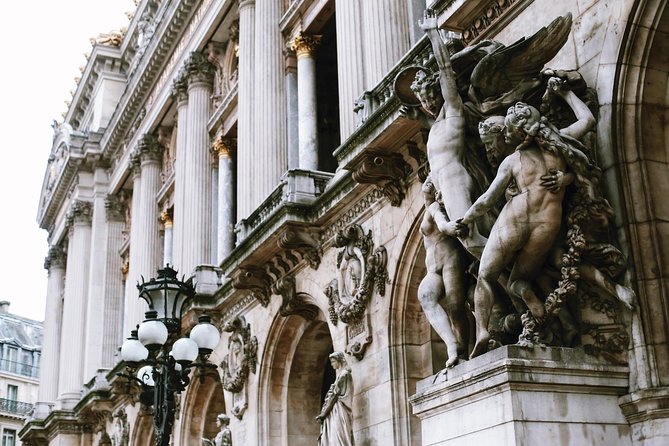
Leaving the Louvre zone, you’ll walk past the Arc du Carrousel, a large arch built to commemorate Napoleon’s military victories. This is quick, but it helps connect the earlier royal-medieval storytelling with the later imperial era.
Then you’ll reach Domaine National du Palais-Royal. The tour focuses on the palace area and gardens near the Louvre, created in the 1600s by Cardinal Richelieu. The palace held royal families until Versailles took over as the main power center.
I like this segment for the contrast. After all the monumental architecture and heavy themes near Notre-Dame and the Revolution sites, the Palais-Royal gardens are a pocket of quiet, plus some contemporary art-like energy through contemporary sculptures. It’s a pleasant change in pace before the final stretch.
Tuileries Gardens, the garden bookstore stop, and a dramatic end at Place de la Concorde
The tour walks into the Tuileries Gardens, described as the oldest park in Paris with origins in the 17th century. Even if you’re not a garden person, you’ll get the sense of how central Paris creates “living rooms” out of public spaces—places to wander, look, and slow down.
You’ll also pass the Tuileries Gardens Bookstore, a small shop tucked into the gardens with gardening and landscape-design books and related gifts and cards. It’s the kind of stop that feels old-Paris-true without being overly sentimental.
The ending point is Place de la Concorde, originally known as an execution site during the French Revolution and marking the start of the Champs-Élysées. That’s a big thematic bookend: the tour has already taken you through the rise of power, the church and Gothic era, the prison and revolutionary years, and now lands you at a central square tied to those outcomes.
From there, it’s easy to keep walking toward the grand boulevard energy of the Champs-Élysées area, or hop into transit.
Timing and walking reality: what 2.5 hours feels like
This tour runs about 2 hours 40 minutes (also described as 2.5 hours). The time at each major stop is short—around ten minutes per listed segment—so this is a fast-moving overview, not a long sit-down museum tour.
It’s best for people with moderate physical fitness, since it’s a lot of city walking. If you’re sensitive to standing around, plan to use the squares and river views as natural breaks. Also, the tour is rain-or-shine, so bring a small umbrella and wear shoes with grip.
Another practical note: the route can change if there are national celebrations. The tour says you’ll still see the highlights, but you won’t get refunds or discounts in those cases. So if you’re traveling on a key holiday, I’d set expectations that the exact turns might differ.
And please don’t plan on bringing big bags—no large bags or suitcases on this tour. Keep it light.
Price: what you’re paying for at $59.69
At $59.69 per person, this tour sits in the “worth it if you value a guide” category.
Here’s why the value works:
- You’re paying for a private walking guide for about 2.5 hours, with a route built for the central landmarks that are otherwise time-consuming to piece together.
- Many stops involve free access (for example, Notre-Dame interior entry is free, and several squares/bridges are naturally free).
- You’re not trying to do everything inside major museums. Instead, the Louvre segment stays in the “see the shape of the place” lane, which saves time and keeps you moving.
Your money is buying orientation plus storytelling. That’s the difference between seeing buildings and understanding why they’re there and what they replaced.
The guides: energy matters in a history-heavy walk
One pattern that shows up again and again is that guides bring personality to the history. Names like Eden, Jay C., Maria, Adrien, Hugo, Francois, Georgia, Augustine, Marcel, Tamari, and Sergio come up for a reason: people appreciate guides who keep the pace friendly, stay ready with answers, and adjust to the group.
For you, that translates into a tour where you can ask questions and get more than stock answers. Even if you’re just hoping to understand what you’re looking at—Gothic architecture, the Revolution sites, how Haussmann and Napoleon III changed Paris—this style of guiding helps you connect the scenes.
Who should book this Notre-Dame to Louvre to Tuileries walk
This tour fits best if you:
- Want major sights without spending an entire day trapped inside lines
- Like history explained in plain language while you walk
- Prefer a calmer route through central Paris, especially around Notre-Dame and the Louvre area
- Want a strong overview you can build on later with museum time
It might be less ideal if you’re hoping for a deep, long museum session inside the Louvre or a long, guided interior experience for Notre-Dame. The tour is designed for movement and context, not marathon indoor time.
Should you book it? My take
I’d book this if your goal is to get the Paris core story fast, with a guide steering you through the right places. The free-access design plus the private pace is a good mix, and the ending at Place de la Concorde makes it feel like you finished a real route, not just hopped between landmarks.
If you have limited time and want Notre-Dame, Sainte-Chapelle, and the river-and-bridge sweep, this is a strong use of half a day. Just go in ready to walk and accept that some interiors are short and some are unguided.
FAQ
Do I get to enter Notre-Dame Cathedral?
Yes. The Notre-Dame Cathedral interior is included, and the entrance is free. The interior visit is unguided due to regulations.
Is the tour guided inside Sainte-Chapelle, Conciergerie, or the Louvre?
The tour description indicates admission tickets are not included for several sites. The Notre-Dame interior is specifically noted as unguided; for other interiors, the tour data only states ticket inclusion details.
How long is the walking tour?
The duration is listed as about 2 hours 40 minutes, also described as 2.5 hours.
Is the tour private?
Yes. It is described as a private walking tour/activity where only your group participates. The private/guide benefits do not apply if you choose the SAVE! BOOK SEMI-PRIVATE option.
Does the tour run in bad weather?
Yes. The tour runs rain or shine.
Where does the tour start and end?
It starts at Cité 75004 Paris, France and ends at Place de la Concorde, 75008 Paris, France.
What language is the tour in?
The tour is offered in English.
What’s included in the ticket price?
You get a private walking tour with the guide for the duration, and a mobile ticket. Some sites have free admission, but other attractions list admission as not included.
Do I need to bring a mobile phone number?
Yes. It’s imperative that you provide a mobile phone number (including country code).
What should I wear or bring?
Wear comfortable shoes. Bring water and an umbrella for rain, and a hat during summer.
Are hotel pickup or drop-off included?
No. Hotel pickup or drop-off is not included. The tour suggests using Uber or taxi.