REVIEW · PARIS
Seine River Direct Access Guided Cruise
Book on Viator →Operated by Vedettes de Paris · Bookable on Viator
Get Paris in one clean hour. This 100% electric Seine cruise from Port de Suffren lets a live guide point out big sights like the Eiffel Tower and Notre-Dame, and the panoramic windows make it feel effortless to take photos. Main thing to consider: English narration can be tricky on some trips, and the top deck can get chilly or windy.
You’ll board with a mobile ticket and settle in for an hour of sightseeing while the city slides by. Morning and afternoon departures are offered, and the group size is capped (so you typically won’t feel buried in people).
For value, this hits a sweet spot: you get a guided loop past major landmarks without the long walk-and-transit grind. If you’re hunting for a deep museum experience, you’ll still need to plan that separately—but for getting your bearings fast from the river, it’s a smart use of time.
In This Review
- Key things to know before you go
- Why a 1-hour Seine Cruise Beats a Landmark Marathon
- Finding Your Boat: Port de Suffren Basics (2 Port de Suffren)
- 100% Electric Boat Comfort: Photos, Seating, and Weather Reality
- Eiffel Tower to Invalides: The Big-Stories Segment
- Eiffel Tower (and why it almost didn’t last)
- The American Church with the green clock tower
- Hotel des Invalides: Napoleon’s final address
- Alexandre III Bridge: gold-leaf symbolism and a Franco-Russian link
- Orsay to Pont Neuf: Bridges, Museums, and the Details You’ll Actually Remember
- Pont de la Concorde: Bastille stones and revolutionary change
- Orsay railway station turned museum
- Institut de France and the Académie Française
- Pont Neuf: oldest bridge plus 381 grimacing masks
- Île de la Cité, Notre-Dame, and the Paris Islands Loop
- Pont Saint-Michel and the Latin Quarter link
- Île de la Cité: Lutetia and the presumed birthplace
- Notre-Dame de Paris: Gothic dates and the Rose du Midi
- Tournelle Bridge and Saint Genevieve’s statue
- Arab World Institute: culture and science focus
- Île Saint-Louis: prestige island architecture
- Hôtel de Ville to Palais de Chaillot: Closing Views and the Paris-Icon Finale
- Hôtel de Ville and the banquet hall detail
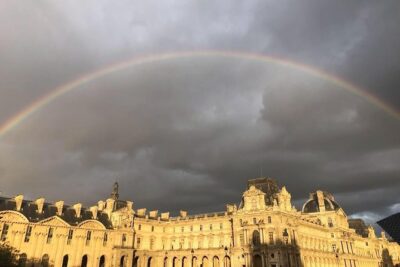
- Louvre: from royal palace to the museum scale
- Place de la Concorde: execution site and the Luxor obelisk
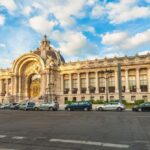
- Grand Palais: Universal Exhibition architecture in a modern role
- Palais de Chaillot: museums and views over Trocadéro
- Champagne, Snacks, and Your Real Onboard Spending
- Who This Seine Cruise Is For (and Who Should Skip It)
- Should You Book the Seine River Direct Access Guided Cruise?
- FAQ
- How long is the Seine River Direct Access Guided Cruise?
- Where does the cruise start and where does it end?
- What’s included in the price?
- Is the cruise offered in English?
- Can I buy champagne on board?
- Is free cancellation available, and up to when?
Key things to know before you go
- 1 hour on a 100% electric boat with live narration included
- Panoramic windows help you see landmarks even when the weather turns
- English narration is part of the experience (often alongside French)
- Pick your deck with the weather in mind: windy/cold up top, stuffy inside in strong sun
- Champagne is available onboard for purchase (age rules apply)
- Small-to-moderate group size for easier viewing and easier photos
Why a 1-hour Seine Cruise Beats a Landmark Marathon
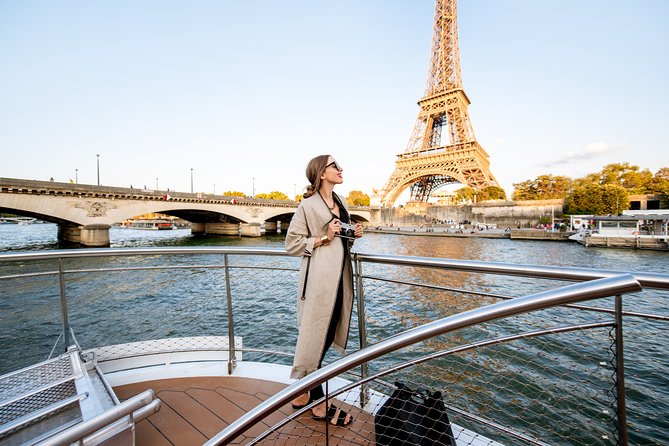
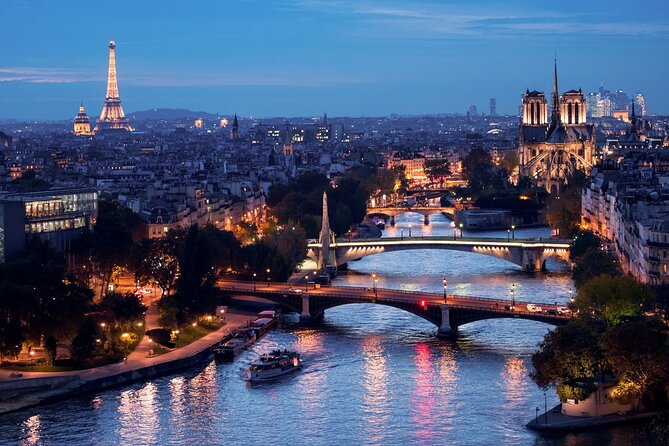
Paris is full of stand-still attractions, and the Seine is the rare place where motion actually helps. In an hour, you can connect a lot of dots: the Eiffel Tower’s engineering story, the cathedral’s Gothic details, the Louvre’s sheer scale, and the bridges that shape what you see from the water.
This cruise also avoids the common problem with first-timer sightseeing: doing too much on foot before you’ve even learned the city’s “shape.” From the river, you get a clean overview. You can treat it like an orientation session, then come back later (on land) for the places that grab you.
The price is also hard to argue with. At about $25.23 per person for the cruise plus a live guide, it’s one of those low-risk Paris bets. You’re not paying extra for the narration, and you’re not locked into a full day. If your day is packed, this is a solid plug-in.
You can also read our reviews of more boat tours in Paris
Finding Your Boat: Port de Suffren Basics (2 Port de Suffren)
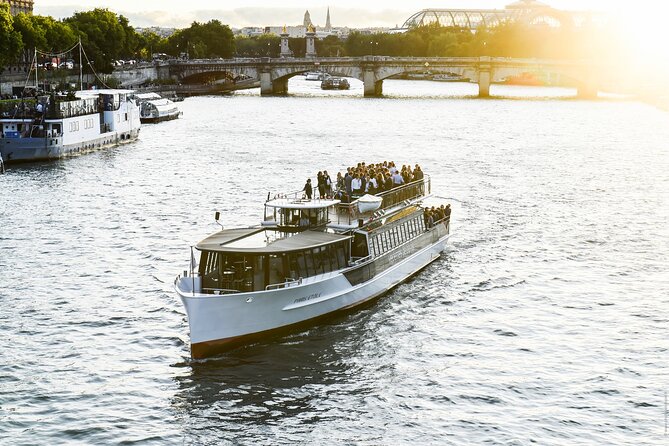
Your start point is 2 Port de Suffren, 75007 Paris, and the cruise ends back at the meeting point. It’s also noted as being near public transportation, which matters in Paris, where you can waste a lot of time hopping between lines.
Two practical tips that save headaches:
- Arrive a bit early so you can choose your viewing spot without stress.
- Have your mobile ticket ready—the whole experience is designed for quick boarding.
Because the tour time is short, being late can hurt. If you’re traveling with kids or you’re juggling metro timing, build in a cushion.
100% Electric Boat Comfort: Photos, Seating, and Weather Reality
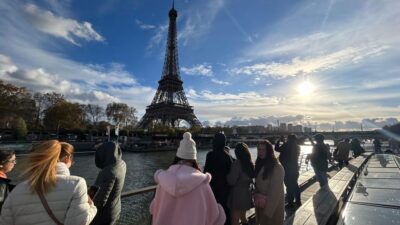
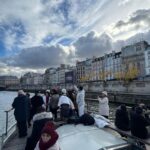
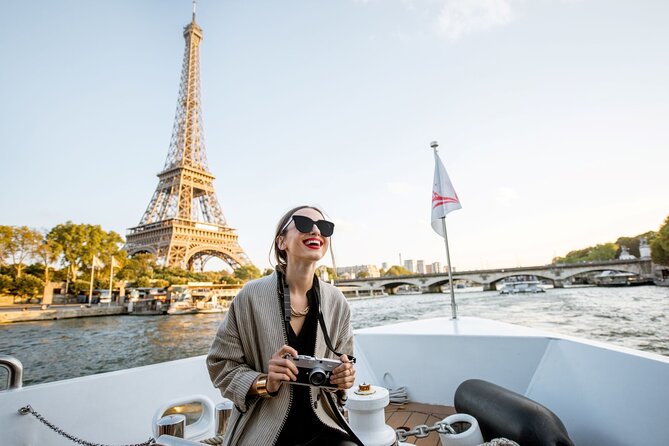
This is a sightseeing cruise on a 100% electric boat, and the experience is built around seeing Paris from the water. You’ll have panoramic windows for views even when you’re inside.
Here’s the tradeoff you should plan for: weather controls your comfort.
- On colder or windy days, the top deck can feel sharp—think hat and wind protection.
- On hot, sunny days, people may choose to sit inside, but you might find it stuffy before the boat gets moving, with air improving once you’re underway.
For photos, your best bet is simple: get where you can see clearly and don’t fight the window glare. That often means choosing the deck level that matches the day’s conditions rather than assuming one is always better.
One more small comfort note from real-world experience: the boat is often described as comfortable and not overcrowded, which helps when you want to reposition for a shot without doing parkour.
Eiffel Tower to Invalides: The Big-Stories Segment
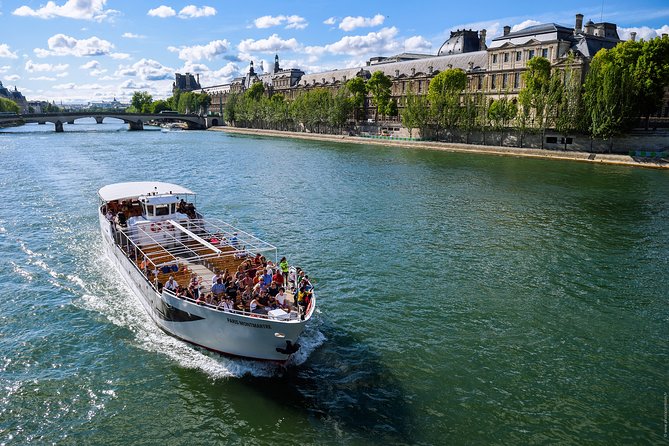
Because you start near the Eiffel Tower area, this first stretch is all about iconic Paris visuals with actual context behind them.
Eiffel Tower (and why it almost didn’t last)
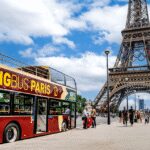
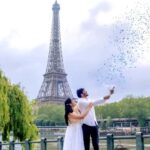
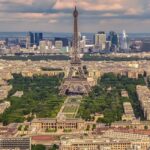
The narration focuses on Gustave Eiffel’s tower as a 1889 Universal Exhibition project, completed in just over two years. You’ll hear key numbers—324 meters tall and about 7,300 tonnes—plus the human twist: Parisians were scandalized by its metal look and height.
The guide also points out the durability angle. It was built to last about 20 years, then an antenna added in 1903 helped keep it from demolition. That’s the kind of story that turns a postcard tower into a historical plot.
You can also read our reviews of more guided tours in Paris
The American Church with the green clock tower
Next up is the American Church in Paris, identifiable by its green clock tower. It’s described as the first American Church built outside the U.S., in 1931, and the narration highlights stained-glass windows by Louis Comfort Tiffany, which are listed as a historic monument.
From the river, you can spot buildings like this faster than you can hunt them down on foot—use the cruise to learn what to search for later.
Hotel des Invalides: Napoleon’s final address
The boat passes the Hotel des Invalides, commissioned by Louis XIV as a military hospital for injured soldiers and officers. The royal chapel is singled out because it houses the tomb of Napoleon I.
Even if you don’t step inside later, this stop gives you a clear reason why the area looks the way it does: it’s not just another grand building—it’s tied to France’s military and imperial story.
Alexandre III Bridge: gold-leaf symbolism and a Franco-Russian link
A major bridge segment follows with Alexandre III Bridge, built for the 1900 Universal Exhibition and connected to the Franco-Russian Alliance. The narration emphasizes the central Paris coat of arms covered in gold leaf, plus two nymphs representing the Seine.
You’ll also hear that the other side references Saint Petersburg—including its arms—and nymphs representing the Neva. That’s a lot of diplomatic meaning packed into stonework and metal decoration.
Orsay to Pont Neuf: Bridges, Museums, and the Details You’ll Actually Remember
Once the cruise moves beyond the first cluster of giants, the narration leans into bridges and institutions—things that are visually busy, but explainable in minutes when someone tells you what to look for.
Pont de la Concorde: Bastille stones and revolutionary change
You’ll glide past Pont de la Concorde, built using stones from the former Bastille prison after the storming in 1789. The bridge also connects you toward major civic areas: the Palais Bourbon to one side and the Place de la Concorde to the other.
It’s a reminder that bridges in Paris aren’t just crossings. They often come with their own historical “payload.”
Orsay railway station turned museum
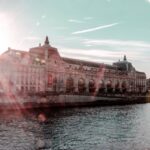
The cruise passes the former Orsay railway station, originally built for the 1900 Universal Exhibition. In the 1980s, it became a museum for 19th-century art, including works by Auguste Renoir, Claude Monet, and Vincent Van Gogh.
From the water, this is one of those moments where you can see the building’s bones—then later understand why the art suits the architecture.
Institut de France and the Académie Française
Another stop in the storybook run is the Institut de France, formerly the Collège des Quatre Nations, funded by Cardinal Mazarin in 1661. It houses five academies, and the narration spotlights the Académie Française.
The key practical detail: their role includes shaping and updating the official French dictionary—so language isn’t just culture here, it’s formalized work.
Pont Neuf: oldest bridge plus 381 grimacing masks
Then comes Pont Neuf, noted as the oldest bridge in Paris. The narration points out a design shift: it was one of the first stone bridges with pavements rather than houses lining it.
And the famous detail: 381 grimacing stone masks, individually decorated and unique. Even if you can’t count them yourself during the pass, you’ll understand why people pay attention to this bridge.
Île de la Cité, Notre-Dame, and the Paris Islands Loop
This is where the cruise starts to feel like a guided tour of the city’s origin points and spiritual centers—without you stepping off the boat.
Pont Saint-Michel and the Latin Quarter link
You pass Pont Saint-Michel, built at the request of Napoleon III, with two imperial Ns on its pillars. The narration connects the bridge to the Latin Quarter, explaining that students spoke Latin there until the 19th century.
That tiny detail is useful. When you later walk the area, you’ll be able to picture why it earned that name.
Île de la Cité: Lutetia and the presumed birthplace
The cruise describes Île de la Cité as the presumed birthplace of Paris, first settled by the Parisii tribe about 300 years before the Common Era. The name Lutetia comes up as the older label for the island.
It’s a good reminder that Paris isn’t just “old.” It’s old in layers.
Notre-Dame de Paris: Gothic dates and the Rose du Midi
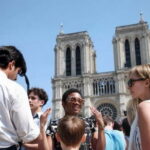
The boat narration includes Cathedrale Notre-Dame de Paris—construction starting in 1163 and completed around 1345. Expect mention of gargoyles and sculptural details, plus the south rose window, the Rose du Midi.
You’ll hear that the Rose du Midi is dedicated to the New Testament and described as a gift from Saint Louis. Admission is listed as free in the provided information, which makes Notre-Dame a rare case where the big-ticket view is also a low-barrier stop when you plan your on-land time.
Tournelle Bridge and Saint Genevieve’s statue
The narration then brings in Tournelle Bridge, with a statue of Saint Genevieve, patron saint of Paris. It’s described as sculpted by Paul Landowski, the same sculptor associated with Christ the Redeemer in Rio de Janeiro.
If you’re the type who likes matching artists to their other works, this is a fun thread to catch.
Arab World Institute: culture and science focus
You’ll also hear about the Arab World Institute, inaugurated in 1987 by President François Mitterrand. It’s described as focusing on history, art, society, religions, and science in the Arab world.
This stop adds balance to the usual Eiffel-and-cathedral rhythm. From the water, it also helps you see Paris as more than a single postcard template.
Île Saint-Louis: prestige island architecture
The cruise includes Île Saint-Louis, described as one of the most prestigious areas of Paris, with former town houses dating from the 17th century. The narration highlights Hotel Lambert and Hotel Lauzun, and even points to celebrity connections like Charles Baudelaire and Georges Moustaki.
A one-hour cruise can’t replace a neighborhood walk—but it can tell you which side streets might be worth your time later.
Hôtel de Ville to Palais de Chaillot: Closing Views and the Paris-Icon Finale
As the cruise progresses, you’ll get a final sweep of the civic heart, the biggest museum silhouette, and the grand exhibition-era buildings along the right-bank edges.
Hôtel de Ville and the banquet hall detail
Hotel de Ville de Paris is described as the seat of the Paris City Council since 1357, with inspiration from Neo-Renaissance style. It also notes that you can visit, including a banquet hall designed as a template of the Hall of Mirrors in Versailles.
That’s the kind of detail that makes you want to follow up in person.
Louvre: from royal palace to the museum scale
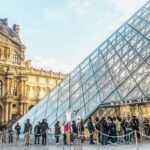
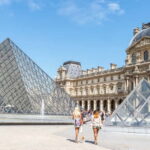
The narration includes the Louvre, describing it as a royal palace turned museum in 1793. You’ll hear impressive scale numbers: over four kilometres of façades and nearly 14 kilometres of galleries, plus around 38,000 works.
Specific works mentioned include the Winged Victory of Samothrace, Venus de Milo, and the Mona Lisa. Even if you already know these names, hearing the museum’s size from the river helps you understand why you can’t do it all in one visit.
Place de la Concorde: execution site and the Luxor obelisk
Next comes Place de la Concorde, described as the place where Louis XVI and Marie-Antoinette were executed during the French Revolution. The center focus is the obelisk from Luxor, described as 34 centuries old and brought to France in 1836.
This is a “big emotions” stop, and it changes how you view the wide square when you later stand there.
Grand Palais: Universal Exhibition architecture in a modern role
You’ll also pass the Grand Palais, built for the 1900 Universal Exhibition. The glass roof is described as the largest in Europe. Today, it’s framed as a venue for events and exhibitions, including a funfair and the largest skating rink in Europe.
From the Seine, it’s easier to appreciate as architecture first, not just a schedule of what’s on.
Palais de Chaillot: museums and views over Trocadéro
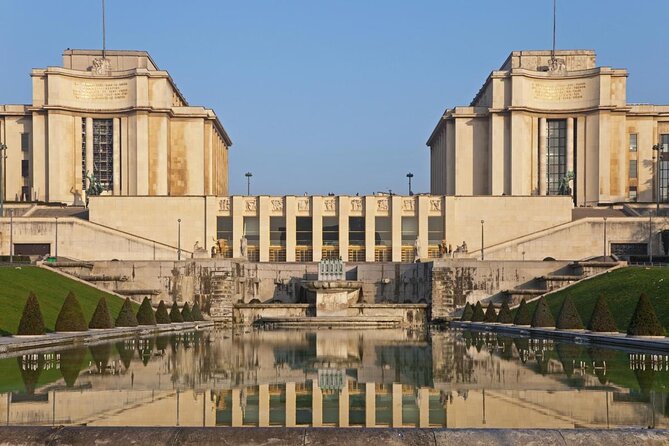
Finally, the narration covers the Palais de Chaillot at the Place du Trocadero. Built for the 1937 Universal Exhibition, it features two Neoclassical pavilions and esplanades overlooking the Trocadero gardens. The information provided also lists several institutions housed there, including the National Navy Museum and the Museum of Humankind, plus the National Theatre of Chaillot.
This makes a nice bookend. After an hour of river sights, it points you toward the next stage: stepping off and exploring on foot.
Champagne, Snacks, and Your Real Onboard Spending
This cruise includes the 1H cruise on a 100% electric boat and a live guide. Alcoholic drinks are not included. Champagne is available onboard for purchase, and the specific glass option is mentioned as Duval Leroy Champagne if you don’t select it.
There are also age rules: only drinks to travelers 18 years old and above, while under-18 gets non-alcoholic drinks.
If you want a simple planning approach: assume the ticket is for the cruise and narration, then budget for any treats you choose onboard. One real-world tip that helps your decision-making: this kind of cruise often stays comfortable for photo time and short breaks, so even a small onboard refresh can feel like a nice payoff.
Who This Seine Cruise Is For (and Who Should Skip It)
This is a good fit when you want:
- A short Paris activity that covers multiple headline sights
- A guide explaining what you’re seeing so you’re not just staring out a window
- A family-friendly format (the narration is set up to hold attention, including with kids)
You might skip it if you want:
- A full museum day, since you’re not entering those places during the cruise
- A long, silent, reflective ride where you rarely hear anyone talk—because this experience is guided and narration-driven
If you’re visiting in shoulder season, plan for the deck temperature. If you’re visiting in hot sun, plan for indoor airflow and sun glare. Choose your clothing like weather is part of the itinerary, because it is.
Should You Book the Seine River Direct Access Guided Cruise?
Yes—if you want a practical, high-value Paris overview in about an hour. At roughly $25.23, with live narration and a route that hits the Eiffel Tower, Notre-Dame, the Louvre area, the Grand Palais, and more, this is one of those timesaving moves that also improves your later sightseeing.
I’d especially book it if:
- You’re short on time and want a guided “greatest hits” pass
- You’d rather spend your energy walking later, after the cruise has set your bearings
- You like learning why famous buildings look the way they do, not just seeing them
If you’re sensitive to weather or you rely on crisp English narration every single minute, then go in prepared: bring a wind layer, aim for the best seat for visibility, and don’t assume every spoken detail will land perfectly.
FAQ
How long is the Seine River Direct Access Guided Cruise?
It runs for about 1 hour.
Where does the cruise start and where does it end?
It starts at 2 Port de Suffren, 75007 Paris, France, and ends back at the same meeting point.
What’s included in the price?
The price includes a 1-hour cruise on a 100% electric boat and a live guide.
Is the cruise offered in English?
Yes. It’s listed as being offered in English.
Can I buy champagne on board?
Yes. Champagne is available onboard for purchase, and alcohol is only served to people 18 and older.
Is free cancellation available, and up to when?
Yes. You can cancel for a full refund up to 24 hours in advance of the experience start time.