REVIEW · PARIS
Musée d’Orsay & Montmartre Tour Semi-Private Guided Tour 8ppl Max
Book on Viator →Operated by Babylon Tours Paris · Bookable on Viator
Impressionism, then instant Montmartre energy. This semi-private outing pairs Musée d’Orsay masterpieces with a guided hike into the artist-saturated streets of Montmartre, plus a private car transfer to save your legs. You get a clear story arc: how Paris artists changed what they painted, and how that same scene lived right on this hill.
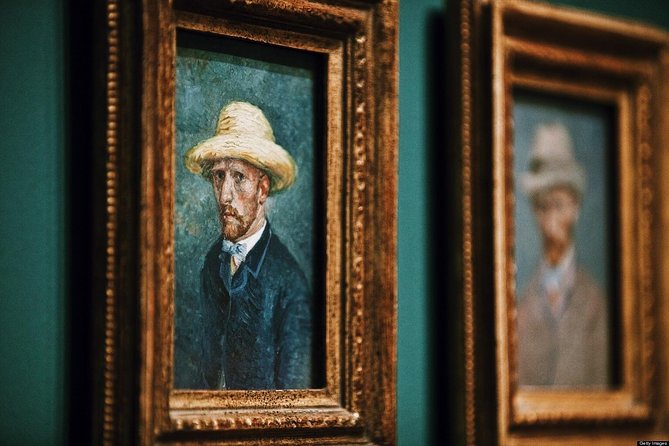
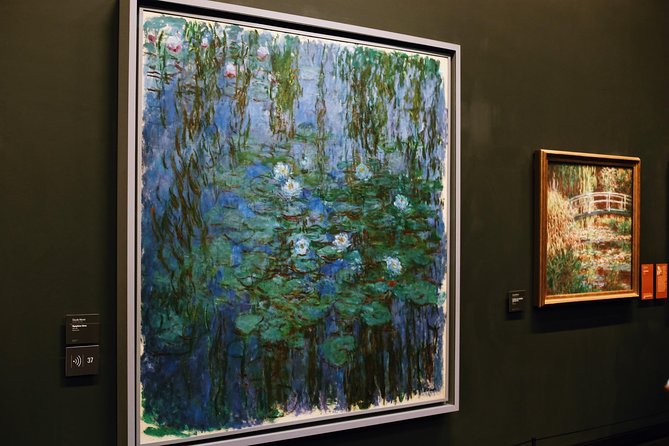
What I like most is the way the art tour is explained in plain, human terms. You’ll see major works like Manet’s Luncheon on the Grass, Renoir’s Dance at Le Moulin de la Galette, Millet’s The Gleaners, Van Gogh’s Bedroom in Arles, and Monet’s poppies, then hear how those styles connect. I also like the pacing promise of small groups, because Montmartre is not a sit-down day.
The main drawback is physical: Montmartre includes climbing cobbled streets up to Sacré-Cœur. If you use a wheelchair or have walking disabilities, this isn’t the right fit, and even with moderate fitness, you’ll want comfy shoes and a bit of patience for stairs.
In This Review
- Key highlights worth your attention
- Why Orsay + Montmartre works better than doing them separately
- Musée d’Orsay: a former train station, now an Impressionism story engine
- The Orsay museum tip that actually helps
- Montmartre climb: the smart way to do the hill without burning out
- A fair warning about pace and footing
- Moulin Rouge to Sacré-Cœur: the quick stops that connect the dots
- If you want the best photos, plan for timing
- Private transit and the value of “semi-private”
- What’s included (and why it reduces stress)
- What you should know before you go (so the day runs smoothly)
- Who this tour is best for—and who should skip it
- Should you book this Orsay and Montmartre tour?
- FAQ
- How long is the Musée d’Orsay & Montmartre tour?
- What group size is this tour?
- Where does the tour start and what time does it begin?
- Is the tour in English?
- Are entrance tickets included?
- Do you provide transportation between Orsay and Montmartre?
- Is this tour wheelchair accessible?
- What’s the cancellation window?
Key highlights worth your attention
- Max 8 people keeps the guide focused and the pace more human than typical big-group tours
- Reserved entry at Orsay reduces your museum stress so you can spend time on the art, not logistics
- Art-to-neighborhood connections link painters and movements to the streets where they lived
- Private car transfer between Orsay and Montmartre saves time and helps your energy for the hill
- Sacré-Cœur time inside plus a top-of-the-city photo stop for big Paris views
Why Orsay + Montmartre works better than doing them separately
Orsay and Montmartre can feel like two different trips—one is a museum, the other is a neighborhood. The good news here is that this day is built to connect them. You start at Orsay in a converted train station, then move into Montmartre with a guide who ties the art you just saw to the people and places that shaped it.
For you, that means you’ll understand what you’re looking at, not just what’s famous. At Orsay, you’re guided through the evolution leading toward Impressionism. Then on the hill, you’re walking through the same kind of creative energy, the cafés, the studios, and the famous viewpoints that made the area such a magnet for artists.
Also, a small group makes it easier to ask questions. And in a museum, questions are half the fun.
You can also read our reviews of more guided tours in Paris



Musée d’Orsay: a former train station, now an Impressionism story engine
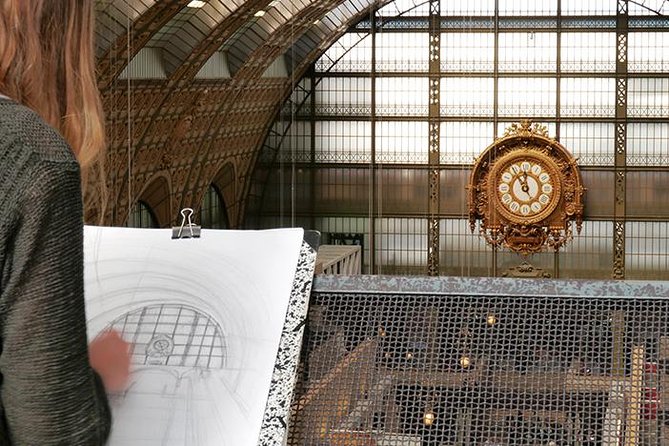
Orsay is gorgeous because it’s more than a box of paintings. The museum sits inside a converted Beaux-Arts train station, so you get grand architecture and high ceilings while you’re learning how modern art formed. That setting matters because Impressionism was about breaking routines—so starting in a space built for movement and departure fits the theme.
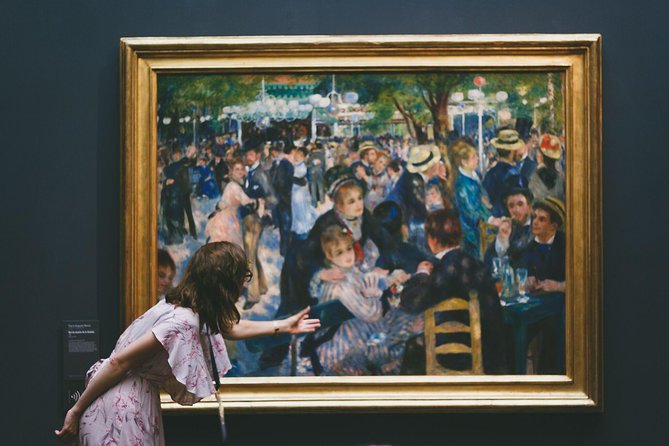
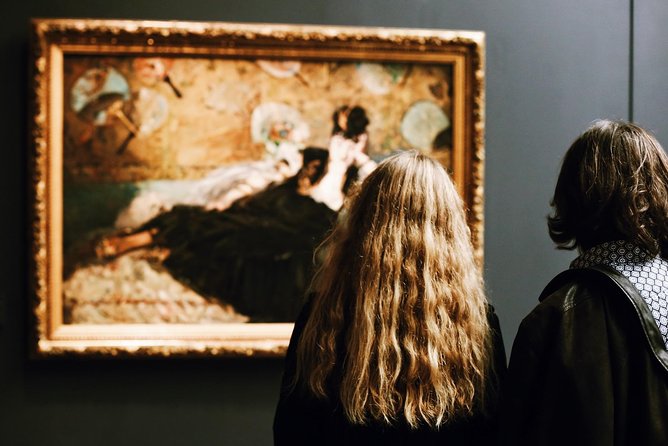
Your guide leads you through the artistic movements that set the stage for Impressionism, then zeroes in on key works. You’ll see Manet’s Luncheon on the Grass, which is famous for the scandal factor—your guide helps translate why it rattled people at the time. You’ll also visit Renoir’s Dance at Le Moulin de la Galette, which is where Impressionism’s social world comes into focus: light, people, and that sense of a moment caught mid-life.
A standout in this format is the “before and after” approach. You’re not stuck only with the Impressionists. You’ll also look at artists who came before, like Millet and The Gleaners, and you’ll hear how later artists built on what came next, including Van Gogh’s Bedroom in Arles. And yes, Monet’s famous poppies are part of the picture, tying back to color, light, and what these artists were trying to prove.
I like that the guide doesn’t treat masterpieces like museum stickers. The explanations are built to help you notice techniques, understand why the paintings look the way they do, and connect personalities behind the scenes. If you enjoy art history but hate slow, vague tours, this style usually feels right.
The Orsay museum tip that actually helps
Orsay security rules matter. You won’t be able to bring big bags inside—only handbags or small thin bag packs are allowed through security. It’s worth arriving with what you need and wearing layers, because museums can swing from warm crowds to cooler gallery air faster than you expect.
Also, some rooms can be quiet or restricted for speaking. The guide will point this out before you enter those areas, so you can keep your voice down and still get the information you came for.
Montmartre climb: the smart way to do the hill without burning out
After Orsay, you’ll take a private car transfer and then you’ll head into Montmartre. That transfer is a big deal for value. It doesn’t just save time; it saves your energy for the part you can’t avoid: the climb and cobbled streets.
At the base, you start with the Moulin Rouge’s windmill, which is a memorable “okay, we’re here” moment. Then you wind up the hill through the kind of streets that look postcard-perfect, but are also genuinely alive with artists, old buildings, and small storefronts. Your guide frames the area as the home of painters like Van Gogh and Picasso, so you’re not just sightseeing. You’re seeing why the neighborhood mattered.
Once you reach the summit, you enter the gleaming white Sacré-Cœur. You’ll have time to explore inside, which is the difference between a quick photo stop and a real pause. And you’ll get a spectacular photo moment from one of the city’s highest points. If you’re the sort who loves an iconic viewpoint, this is where you’ll feel like you earned it.
A fair warning about pace and footing
Montmartre is physically challenging. Even if you’re moderately fit, the cobbles and the slope add up. You’ll be better off with shoes that have grip and with a realistic mindset: this is walking and stairs, not a museum-calm stroll.
One of the strongest review patterns is how guides manage pace when conditions get rough. For example, when snow showed up, guides have kept things flexible so the tour stays doable. That kind of adjustment is exactly what you want on a hill.
You can also read our reviews of more private tours in Paris






Moulin Rouge to Sacré-Cœur: the quick stops that connect the dots
This portion of the tour is designed like a guided walk through key Montmartre landmarks, tying them back to the art themes you heard at Orsay. You’ll pass the Moulin Rouge area and then work your way toward the basilica, moving through streets associated with the Belle Époque scene.
Along the route, you’ll have short stops at specific spots that give the neighborhood its character:
- Moulin Rouge (a quick connection point between the art world and the neighborhood)
- Vincent van Gogh’s house area
- Place Dalida
- Jardin Sauvage de St-Vincent
- Au Lapin Agile
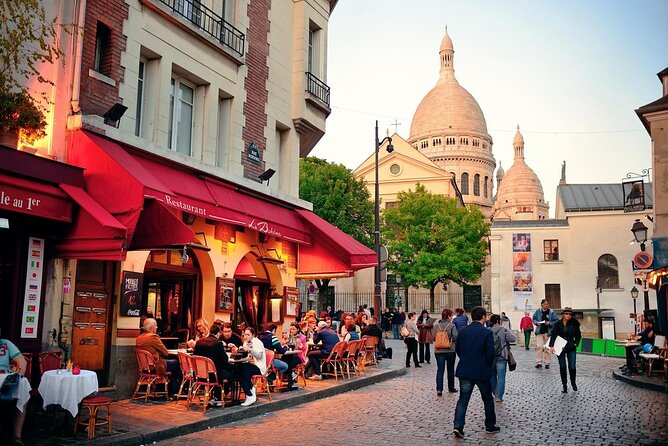
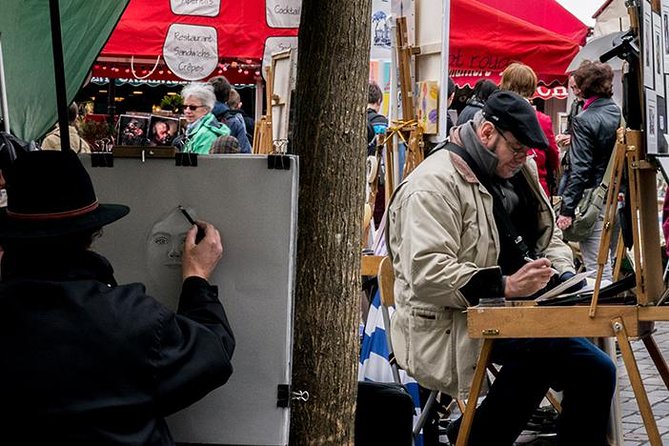
- Place du Tertre, where the atmosphere screams Montmartre
Not every one of these is a formal museum stop with included tickets. Some entrances are listed as not included, while Sacré-Cœur is free for entry. Think of these as guided orientation moments: where to look, what to notice, and how this scene ties back to the Impressionist-era story.
And because Montmartre is also a film-favorite district, you’ll likely recognize the vibe from Amélie. The tour experience leans into that feeling of whimsy mixed with real history.
If you want the best photos, plan for timing
You’ll have multiple opportunities for photos, but the big one is near the top with Sacré-Cœur and the viewpoint. If crowds are heavy, keep your expectations realistic and try to slow down for framing. A good guide will help you find the best angles without taking forever.
Private transit and the value of “semi-private”
At $259.59 per person for about 5.5 hours, this is not a budget tour. But it’s also not a bare-bones group sprint. The value comes from two things you can feel on the ground: small-group size and private transport between the two biggest sites.
With a maximum of eight people, you get a more personal experience than you would on larger coach-style tours. That matters at Orsay, where galleries are huge and people can get lost in the noise. It also matters on the hill, where keeping the group together is harder than it looks.
You also get professional guidance that’s focused on connecting the art evolution. Some guides named in people’s experiences include Marcel, Nancy, Mathew, Belen, Lily, and Christofer. I’m not treating those as bragging rights. I’m pointing to a real sign of quality: guides who take time to explain techniques, personalities, and how the art changed rather than repeating a generic script.
What’s included (and why it reduces stress)
Your Orsay admission is included, and it’s reserved entry. That’s a practical advantage because Orsay can be busy and security lines can slow you down. Also included is entrance coverage for the Orsay museum portion and the guided museum and walking components.
One more thing: you’ll use a mobile ticket. That tends to make check-in smoother when you’re juggling time and walking.
What you should know before you go (so the day runs smoothly)
A few details here can make the difference between a smooth day and a day you think about later with annoyance.
Dress code and bag rules: some sites require appropriate dress, and Orsay has bag restrictions. Wear shoes you can walk in for the hill, and keep your bag small enough to pass security without drama.
Communication: you’ll need to provide a mobile phone number with country code. Tour days run faster than you think, and a contact number helps the team coordinate day-of logistics.
Quiet rooms: some parts of Orsay have restricted speaking. The guide will warn you so you don’t accidentally feel like you need to whisper the whole time.
Lines can still happen: even with reserved entry, security at many attractions can still produce lines. The guide can help you manage that time better than you could alone.
Possible museum closure: Orsay may occasionally close without warning. If opening is delayed by more than an hour from the start time, the tour company provides an alternative. In those cases, refunds or discounts aren’t provided, so it’s smart to plan with a bit of flexibility in your overall Paris schedule.
Who this tour is best for—and who should skip it
This fits best if you want two iconic Paris experiences tied together with real explanations. If you love Impressionism and want to understand what changed and why, this tour is a strong match. If you also enjoy walking and viewpoints, Montmartre is the natural follow-up.
It’s also ideal for couples and small groups who hate big crowds but still want a guide’s storytelling. The pacing can be flexible in weather, which is a big plus in shoulder season.
Skip it (or at least think carefully) if:
- you have limited mobility, because the Montmartre climb and cobbles are not wheelchair-friendly
- you’re expecting a mostly indoor day, because a lot of the Montmartre experience is walking uphill
- you dislike security bag rules, because you’ll need a small bag for Orsay
Should you book this Orsay and Montmartre tour?
I’d book it if you want the day to feel like a story, not two disconnected checkboxes. The combination of Orsay reserved entry, a guide who connects movements to real artists and places, and private transit makes the $259.59 feel more reasonable than it first appears.
I’d hesitate if your main priority is slow, flat sightseeing. Montmartre is the one part you can’t truly customize away. If you’re comfortable with moderate walking and stairs, you’ll likely come away thinking the art and the neighborhood actually belong together.
FAQ
How long is the Musée d’Orsay & Montmartre tour?
It runs for about 5 hours 30 minutes.
What group size is this tour?
It’s a semi-private format with a maximum of 8 people.
Where does the tour start and what time does it begin?
It starts at Musée d’Orsay, 75007 Paris, and the listed start time is 1:30 pm. It ends in Montmartre, 75018 Paris.
Is the tour in English?
Yes, the tour is offered in English.
Are entrance tickets included?
Admission for the Musée d’Orsay portion is included (reserved entry). Sacré-Cœur is listed as free. Other stops along the Montmartre route may have tickets not included.
Do you provide transportation between Orsay and Montmartre?
Yes, private transport from Orsay to Montmartre is included.
Is this tour wheelchair accessible?
No. The tour is not available for those with walking disabilities or using a wheelchair.
What’s the cancellation window?
You can cancel up to 24 hours in advance for a full refund. If you cancel less than 24 hours before the start time, the amount paid isn’t refunded.