REVIEW · PARIS
Montmartre en chansons: tour with a professional singer
Book on GetYourGuide →Operated by Montmartre en chansons · Bookable on GetYourGuide
Montmartre sings back at you. This tour turns a normal walking loop into an a cappella show led by professional singer Anne-Sophie, with you moving between iconic spots while she strings together famous French tunes like La Vie en Rose, L’hymne à l’amour, and La Bohème. I especially love how the music is not stuck in one performance space, so you hear it in context as you walk, stop, and look around.
I also like that Anne-Sophie mixes melody with real neighborhood details, including stop-by-stop anecdotes tied to singers such as Édith Piaf, Charles Aznavour, Jacques Brel, and Dalida. One thing to consider: you’re walking uphill on the Butte, outdoors in whatever weather Montmartre serves, and it’s not designed for people with mobility impairments.
In This Review
- Key things that make this tour worth your time
- Why this Montmartre walk feels different than a standard sightseeing loop
- Meet Anne-Sophie: professional voice, neighborhood energy
- The 2-hour route: Abbesses to Sacré-Cœur, stop by stop
- Starting at Place des Abbesses: get your bearings fast
- Wall of Love: a quick stop with a lot of feeling
- Rue Lepic and the downhill/uphill rhythm
- Moulin de la Galette: where the scenery and the story meet
- Dalida’s sites: Maison de Dalida, Théâtre Lepic, and a statue moment
- La Maison Rose and the old cabaret mood
- Vigne du Clos Montmartre: a surprising pause with a view
- Au Lapin Agile and the cabaret tradition
- La Bonne Franquette and Place du Tertre
- Sacré-Cœur Basilica: finishing with the big view
- Price and value: $34 for a professional singer, not just a guide
- Timing, languages, and what to bring so you’re comfortable
- Who should book this tour?
- Should you book Montmartre en chansons?
- FAQ
- Where do I meet for the tour?
- How long is the tour?
- What languages are offered?
- Is the performance done with recorded music?
- What stops does the tour include?
- What should I bring?
- Is food or drinks included?
- Is it suitable for people with mobility impairments?
Key things that make this tour worth your time
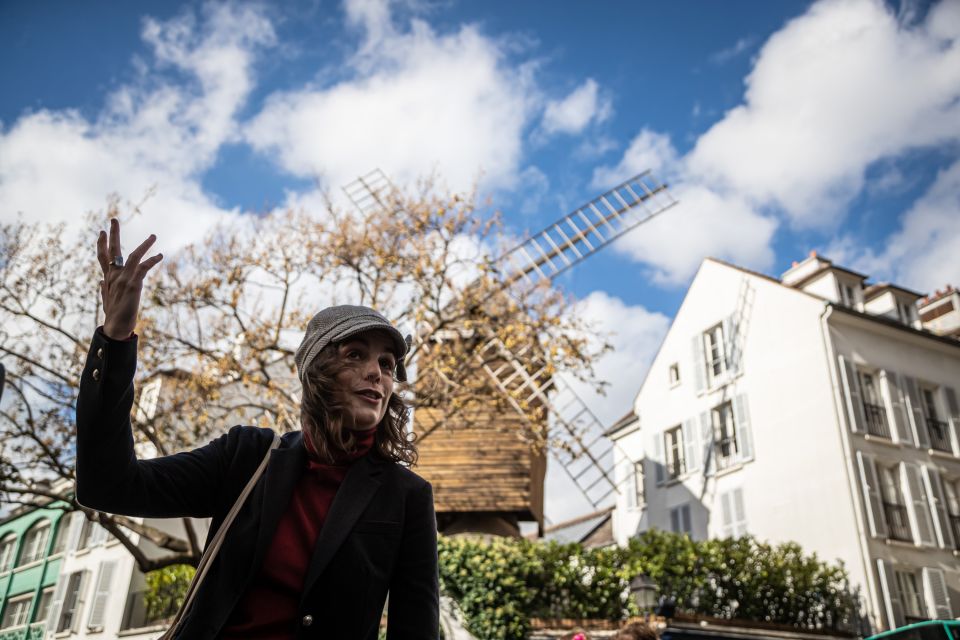
- Street-singer style a cappella in real Montmartre corners, not a stage show
- Songs tied to specific places, so the music helps you read the neighborhood
- A local-feeling route from Abbesses to Sacré-Cœur with classic landmarks along the way
- Singer-focused stories, with names like Piaf, Brel, Aznavour, and Dalida built into the walk
- Quick, frequent moments of performance so the whole 2 hours stays moving
Why this Montmartre walk feels different than a standard sightseeing loop
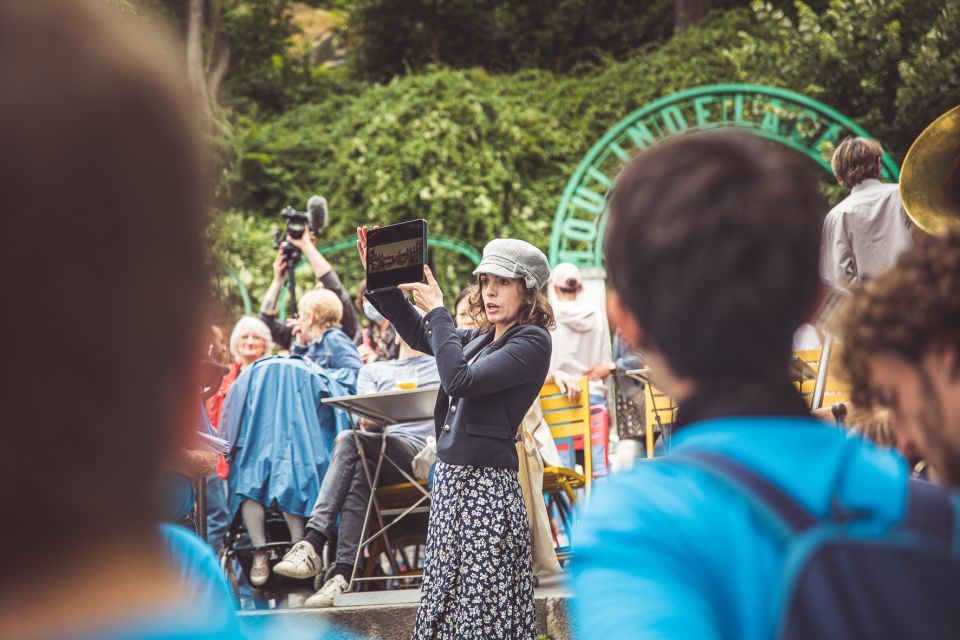
Most Montmartre tours give you the photos first and the atmosphere later. Here, the order feels smarter: you get the sound, then the street makes sense. Anne-Sophie performs in a way that shuts people up mid-sentence—when her voice rises, attention shifts. That matters, because Montmartre is often busy visually, but it can feel disconnected from why it became a home for artists.
You’ll get to walk through the places people associate with French music and then hear why those spots mattered to performers like Piaf and Brel. The goal isn’t to memorize dates. It’s to feel how cabarets, small rooms, and street corners shaped the songs you already know.
And yes, the tunes you recognize are front and center. You should expect famous French classics during short musical stops along the route, delivered in a powerful, dense interpretation that feels like a tradition older than the tourist postcard.
You can also read our reviews of more tours and experiences in Paris.



Meet Anne-Sophie: professional voice, neighborhood energy
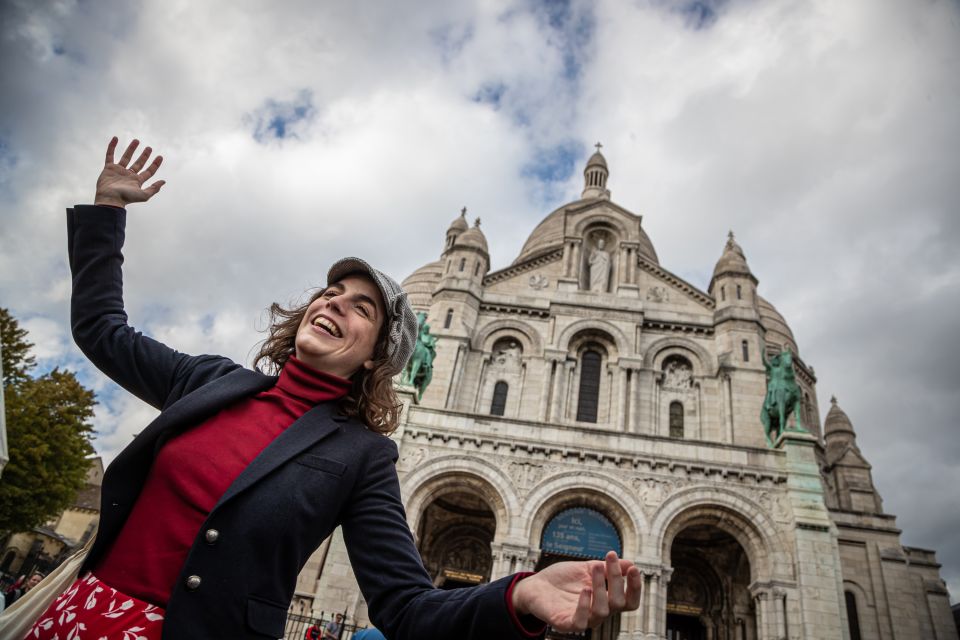
Anne-Sophie is the engine of the experience. The vibe I’d look for is exactly what you get on this tour: bubbly, smiling energy, plus a real passion for Montmartre as a living neighborhood. She tells stories like a local who loves the area, then sings with the kind of control that makes strangers stop walking.
Her approach also connects to Montmartre’s street-singer tradition. Instead of placing you in a seated venue, she brings the performance to the sidewalk, where the neighborhood itself becomes part of the show. That’s the difference between hearing songs and experiencing them.
You’ll also notice the tour is built around interpretation, not only facts. When she shares anecdotes about famous singers—Piaf, Dalida, Aznavour, Brel and others—you understand why those artists ended up where they did, and why the Butte still feels like a world of its own.
The 2-hour route: Abbesses to Sacré-Cœur, stop by stop
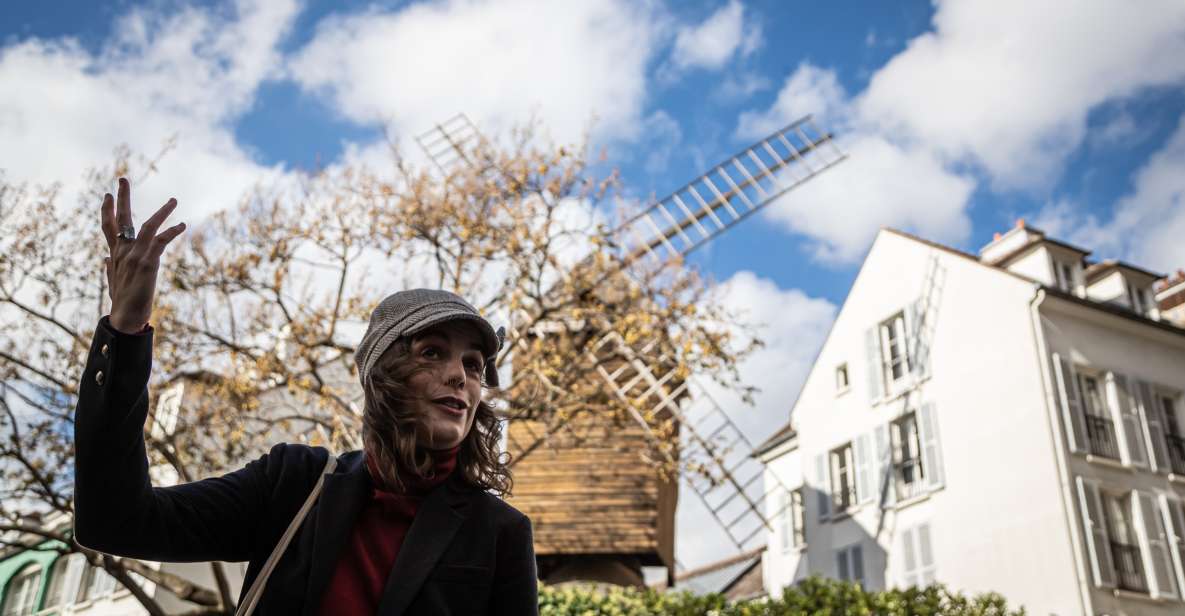
The walk is designed as a sequence. Each stop is short, then you move on. Expect quick guided moments and brief performance segments at several of the most memorable locations.
Starting at Place des Abbesses: get your bearings fast
You meet behind the exit of the Abbesses subway station. From there, the tour eases you into the neighborhood without wasting time. Abbesses is a good anchor point because it immediately signals: this is Montmartre, not just a museum.
The first moments set the tone. Anne-Sophie frames what you’ll see and what you’ll hear, so when you later pass landmarks tied to Dalida, cabarets, and classic streets, you’re not just looking—you’re following a storyline.
Wall of Love: a quick stop with a lot of feeling
At the Wall of Love, you get a guided look plus a short concert moment. It’s one of those spots where people snap photos, but on this tour it becomes more than a background. The music and the neighborhood details help you understand why Montmartre keeps re-inventing itself while still honoring its artistic past.
Practical tip: this stop can be a natural gathering point. Give yourself a few seconds to find a comfortable spot to watch and listen, especially if the walkway is crowded.






Rue Lepic and the downhill/uphill rhythm
Then you head along Rue Lepic. This is where you feel the shape of Montmartre: the slopes, the turns, the tight streets. The walking here matters, because you start learning how “the neighborhood” works—how quickly you go from view to wall, then to a new angle.
You’ll likely notice that the best moments aren’t only at the loud landmarks. They happen during the turns, when the singer’s voice carries and you catch a view framed by buildings.
Moulin de la Galette: where the scenery and the story meet
Next up is the Moulin de la Galette area, with another short guided visit and concert segment. This is one of Montmartre’s classic identifiers, and the tour uses it well: you’re not just looking at a famous name. You’re learning why the Butte turned into a magnet for performers and why cabarets and song became part of daily life.
One consideration: it’s a popular area for pictures, and you’ll want to stay aware of foot traffic while you listen. If you like to stand back and take in a view, pick a spot that doesn’t block other people’s movement.
Dalida’s sites: Maison de Dalida, Théâtre Lepic, and a statue moment
The tour gives you a focused Dalida segment that feels like mini-theater. You’ll visit Maison de Dalida and then move through the Théâtre Lepic area, followed by the Dalida statue.
These stops work because they connect a performer to specific places, rather than treating her like a name on a poster. If Dalida is your favorite, this part alone is a strong reason to book. If you’re less familiar, you still come away with a clearer sense of how Montmartre supported artists who performed, reinvented, and stayed connected to the neighborhood.
La Maison Rose and the old cabaret mood
Then comes La Maison Rose, one of the restaurant names Montmartre is famous for. This is one of the tour’s “feel it” moments. Even if you don’t plan to eat there, you’re visiting an emblem of the look and attitude of old Montmartre.
You also get another short performance break. That’s smart scheduling: after walking and sightseeing, a short song moment helps reset your attention and keep the tour from turning into constant talking.
Vigne du Clos Montmartre: a surprising pause with a view
Next you reach the Vigne du Clos Montmartre. It’s brief, but it adds a layer the average route often skips. Suddenly you’re not only in streets and facades—you’re in a living corner of Montmartre, where the neighborhood’s artist identity meets a practical, local tradition.
If you’re the type who likes variety, this stop is a nice change of pace. It also gives you something to photograph that doesn’t feel like every other Montmartre shot.
Au Lapin Agile and the cabaret tradition
After that, you visit Au Lapin Agile, another stop made for sound. The tour uses Lapin Agile as a bridge between street singing and the cabaret world. You’re hearing the music and then looking at the setting where entertainment culture took hold.
This is also a good moment to simply watch the street. Montmartre’s charm here isn’t just visual. It’s in how quickly the atmosphere can switch from normal walking to something that feels like a performance happening in real time.
La Bonne Franquette and Place du Tertre
You’ll continue to La Bonne Franquette, then reach Place du Tertre. These areas are classic for artists, and they can feel busy at times because they’re known for activity. The tour helps you slow down anyway by keeping the focus on specific stories and short musical moments.
Place du Tertre is where the neighborhood identity is most visible. If you love street art culture, this is where you’ll feel the connection between singing, performing, and the village spirit of Montmartre.
Sacré-Cœur Basilica: finishing with the big view
The final stop is the Parvis du Sacré-Cœur. You end with the classic Montmartre view payoff, but you’re walking in already emotionally prepared. The tour ends right where the city-bulletin postcard feeling is strongest, so it lands as a satisfying wrap-up.
Practical tip: this area is popular. If you want clear photos, arrive ready to wait a minute or two for a gap, especially around sunset when people like to linger.
Price and value: $34 for a professional singer, not just a guide
At about $34 per person for a 2-hour experience, you’re paying for three things together: a guided walking tour, a professional singer performance, and singer-focused storytelling tied to specific Montmartre landmarks. Many Montmartre options split those elements across different experiences. Here, they’re packaged into one route, which is why the value feels more solid than you might expect.
What’s not included is simple: no food and drinks, and you’ll handle your own subway tickets. That’s a fair trade if you come prepared to snack later or hydrate during the walk, especially because the route includes steps and outdoor walking.
If you want a musical souvenir you don’t have to carry home, this is a strong pick.
Timing, languages, and what to bring so you’re comfortable
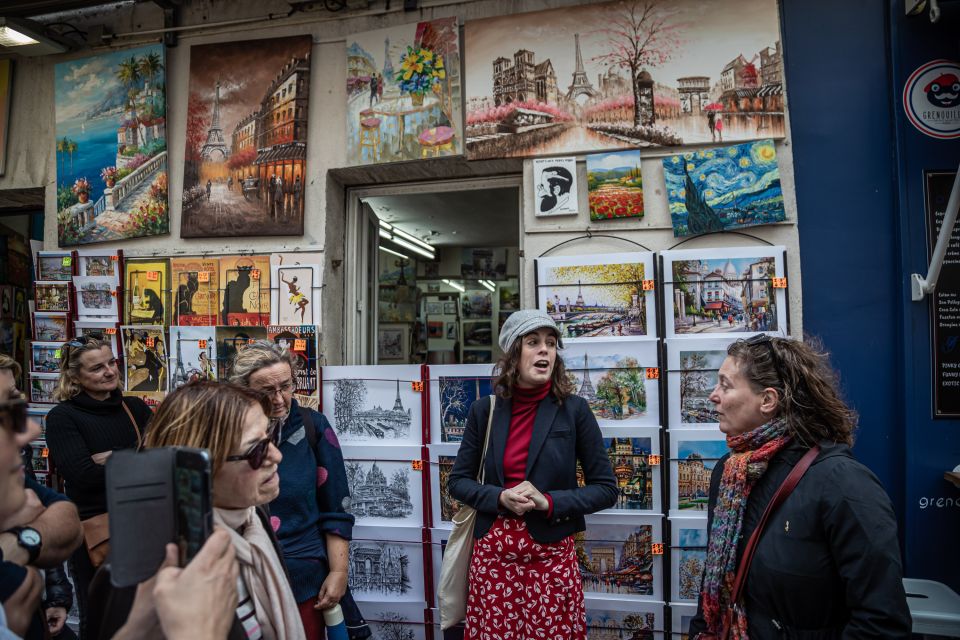
The tour runs for 2 hours. Anne-Sophie performs as you move through key spots, with short concert moments at multiple locations. For planning, think of it as an active walk with frequent stops, not a long seated show.
Languages are English and French. Private tours are available on request during the week and on some Sundays, while public departures run on Saturday, mostly Sundays, and Fridays. If you want a less crowded feel, a private option can be worth asking about.
To enjoy the full experience, pack like it’s a hill walk:
- Hiking shoes (Montmartre is not flat)
- Water
- Umbrella (weather changes quickly)
- Sun hat (sun can bounce off pale stone)
Not allowed items include bikes, oversize luggage, and backpacks. You’ll want a small bag that stays easy to manage on narrow streets. Also, this isn’t suitable for people with mobility impairments.
Who should book this tour?
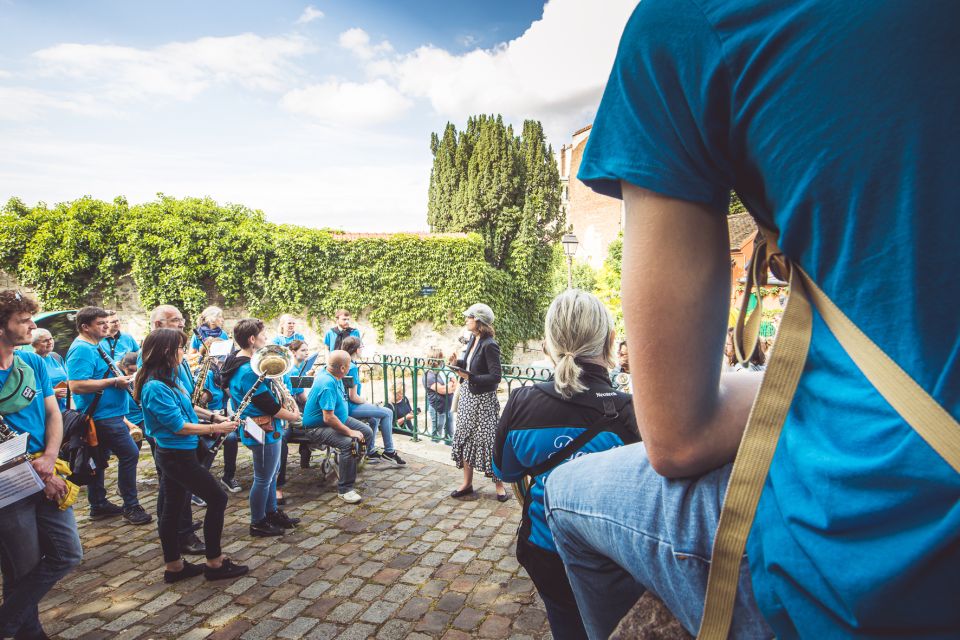
Book it if you want Montmartre to feel like a place that made music, not just a place you photographed. It’s ideal for people who already love French classics and want the songs connected to the streets where that culture grew.
It also works well as a “different Montmartre” option. If you’ve seen a lot of sightseeing tours that repeat the same big stops, this adds something distinct: a capella singing woven into the route.
If you dislike walking, if you need step-free accessibility, or if you only want major landmarks with minimal time on slopes, you may be happier with a different format.
Should you book Montmartre en chansons?
Yes—if you can handle a hill walk and you like your travel with sound. For the price, you get a professional voice, a clear narrative through famous singer anecdotes, and a route that stays interesting because the music keeps resetting your attention.
Skip it only if mobility limits are a concern or if you’re traveling with expectations of long museum-style stops. Otherwise, this is one of the more memorable ways to experience Montmartre: you walk the streets, and the streets sound like they belong to the songs.
FAQ
Where do I meet for the tour?
You meet behind the exit of the Abbesses subway station.
How long is the tour?
The tour lasts 2 hours.
What languages are offered?
The tour is available in English and French.
Is the performance done with recorded music?
No. It includes songs performed by a professional singer with an a capella performance style in the street.
What stops does the tour include?
The route covers Montmartre highlights such as the Wall of Love, Moulin de la Galette, Maison Rose, Au Lapin Agile, Place du Tertre, and it finishes at the Parvis du Sacré-Cœur.
What should I bring?
Bring hiking shoes, water, an umbrella, and a sun hat.
Is food or drinks included?
No. Food and drinks are not included.
Is it suitable for people with mobility impairments?
No. It is not suitable for people with mobility impairments.