REVIEW · PARIS
Gothic Paris – Castles & Cathedrals (Marais History Walk-Small Group Tour)
Book on Viator →Operated by Visit the Hidden Paris · Bookable on Viator
Paris has a medieval side few notice. This small-group Marais walk is built for seeing off-the-usual-route corners you usually can’t reach by bus, with a local guide stitching together the Gothic and Baroque eras into one clear story.
I especially like the stop selection: you move from half-Gothic, half-Baroque St. Gervais to the easy-flow charm of Place des Vosges, without turning it into a checklist. I also like that the guide works with a tablet, using photo and video to show how things used to look, which helps you read the buildings. The only real drawback is pacing: many stops are short, so you’ll be there for key views and explanations, not long museum-style time.
In This Review
- Key highlights you’ll feel right away
- Marais on foot: why this route feels different than the main sights
- St. Gervais and St. Protais: where Gothic structure meets Baroque drama
- The Hotel de Sully courtyard: a Baroque pause with 17th-century manners
- Place des Vosges: the charming square that frames everything around it
- Saint-Paul Saint-Louis: the city’s first fully Baroque church
- The Archives at Hôtel de Soubise: a palace feel with hidden garden vibes
- How Ellen-style guiding makes the architecture stick
- Price and value: why $92.61 can make sense for this kind of tour
- What to expect on the ground (comfort, timing, and flow)
- Who this tour suits best in real life
- Should you book Gothic Paris: Castles & Cathedrals (Marais History Walk)?
- FAQ
- How long is the Gothic Paris Marais history walk?
- How much does the tour cost?
- What’s included, and what do I need to pay for?
- Where does the tour start and end?
- Is this a private tour?
- Does the tour run in bad weather?
- Is admission included for the church and sites on the route?
- Is there free cancellation?
Key highlights you’ll feel right away
- A private, small-group format so the guide can answer your questions and adjust at street level
- Gothic meets Baroque in actual buildings, not just museum photos
- Tablet storytelling with historical images and video that make architectural changes click
- Marais courtyards and in-between spaces that most walking tours skip
- Free-entry church and palace sites included on the scheduled route
- Start and finish in two different historic pockets of the Marais area
Marais on foot: why this route feels different than the main sights
Paris is famous for major landmarks, but the city is also made of transitions. One street you’re looking at one era; the next turn changes the materials, the style, and the mood. This tour leans into that reality with a walking route through the Marais, where medieval and early-modern Paris still shows up in doorways, courtyards, and church facades.
What makes it practical is that you’re not stuck in a big bus rhythm. You get a guided pace designed for narrow streets and quick visual prompts. That means you can spot small architectural details without having to slow down alone and guess what you’re looking at.
You can also read our reviews of more historical tours in Paris



St. Gervais and St. Protais: where Gothic structure meets Baroque drama
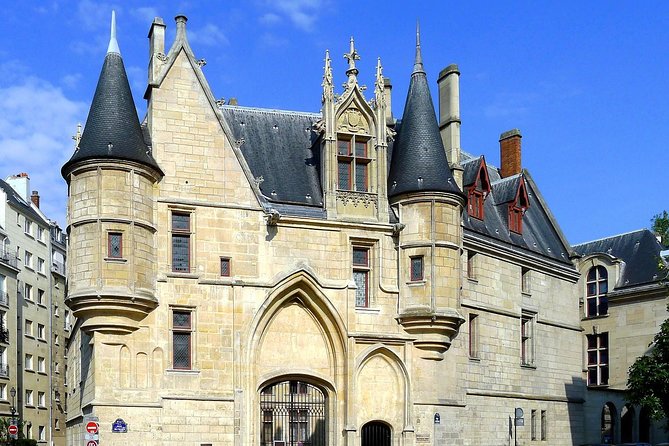
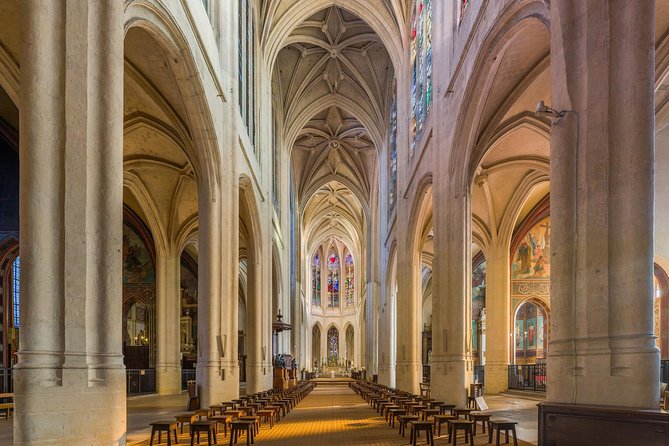
Your first stop is the Church of Saint-Gervais and Saint-Protais, a standout because it mixes styles right on the same site. You’ll get a guided look at how the church shifts between Gothic and Baroque, which is a big part of why this tour works. Instead of treating “Gothic” and “Baroque” like separate topics, you see how they overlap in the same real place.
Expect the guide to point out how the architecture functions, not just how it looks. Gothic is often about form and vertical emphasis; Baroque tends to feel more theatrical and decorative. In this church, you can compare those ideas in one walk-up encounter.
One nice detail: the stop is listed as free admission, so you’re not juggling extra costs or ticket confusion right at the beginning. Also, the time is long enough to settle in and learn the main features, not just snap photos from the sidewalk.
The Hotel de Sully courtyard: a Baroque pause with 17th-century manners
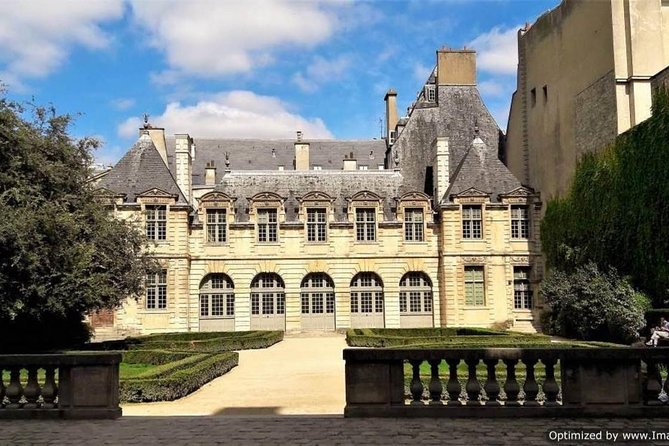
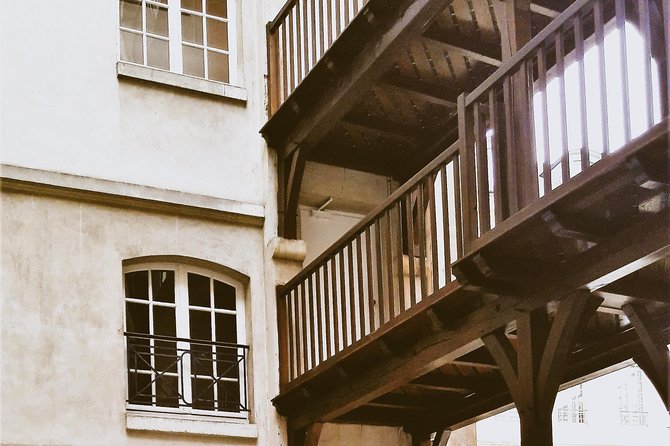
Right after the church, you step into a different kind of scene: the courtyard and garden of the Hôtel de Sully. This is a Baroque mansion from the 1630s, but what you take away isn’t a date quiz. It’s the feeling of how power and taste shaped everyday space in Paris.
Courtyards like this are where Paris stops being a view and starts becoming a set of rooms you can mentally navigate. You’ll likely notice contrasts: grand architectural intent on the outside, but a more contained, human-scale world once you’re inside the courtyard logic.
The time here is short, so it’s more of a “key moment” than a full stop-and-stay. Think of it as a breathing interval that resets your eye before you move toward one of the Marais’s best-known squares.
Place des Vosges: the charming square that frames everything around it
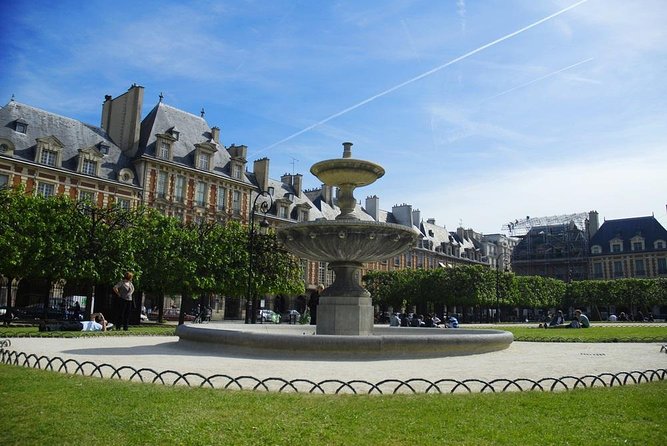
Then comes Place des Vosges, the Marais’s most famous square for good reason. It’s one of those places where your brain instantly understands the geometry: a carefully planned space, symmetrical in feel, designed for strolling.
On this walk, Place des Vosges works like a history hinge. You go from church to mansion courtyard, then into a civic space where you can interpret how Paris organized urban life. Even if you’ve seen photos, it’s worth hearing the guide’s take on what you’re looking at—because squares in Paris aren’t just scenery. They’re stage sets for how the city thought about order and prestige.
The tour time is listed at about 10 minutes here, which is perfect for this kind of stop. You get orientation, atmosphere, and a few pointed details without turning it into a long break. If you like quick, high-signal sightseeing, you’ll probably appreciate the timing.
Saint-Paul Saint-Louis: the city’s first fully Baroque church
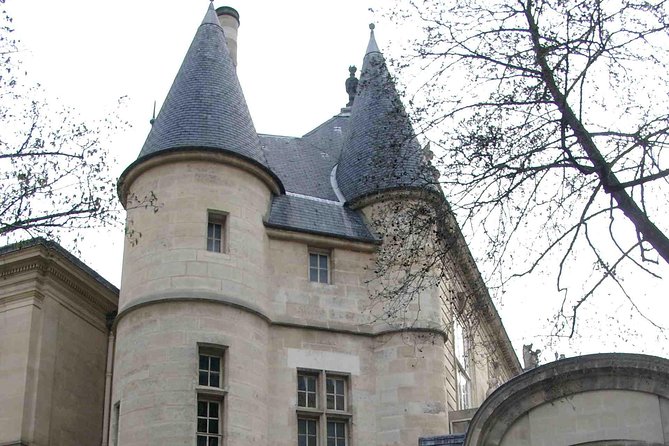
Next is Eglise Saint-Paul Saint-Louis, introduced as the city’s first fully Baroque church. This is where the tour leans harder into style. Gothic architecture often feels like it’s reaching upward through structure; Baroque tends to grab your attention through movement, ornament, and rhythm.
You’ll want to pay attention to how Baroque communicates. It’s not only about decoration. It’s about persuasion—how the building guides your eye and shapes emotion. With a guide, you can compare this church with the earlier Gothic/Baroque mix at St. Gervais and see how “Baroque” can be both different from Gothic and also a deliberate shift in how a church wants to feel.
The scheduled time is around 10 minutes, so you’ll focus on what matters most: the facade impression, key elements the guide flags, and how the Baroque identity shows up quickly when you know what to look for.






The Archives at Hôtel de Soubise: a palace feel with hidden garden vibes
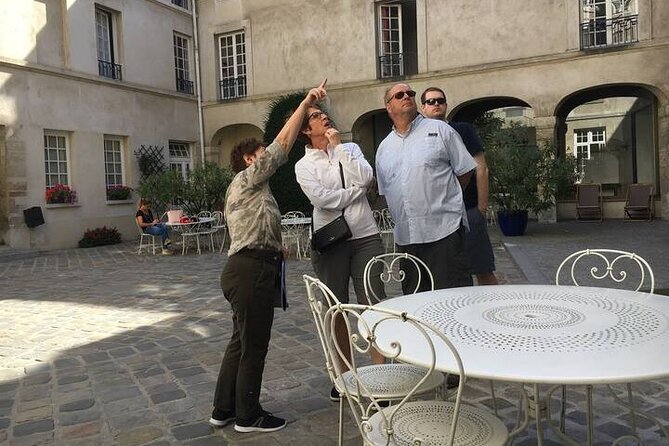
The route ends at the National Archives Museum at the Hôtel de Soubise. This is one of those Paris moments where you realize you’re not just looking at a building; you’re walking through a former palace setting.
The tour schedule includes a visit to what’s described as one of the most magnificent Baroque palaces in Paris, plus its hidden gardens. Even though your stop time is short, the point is to leave with scale in your head: a palace complex is meant to work on visitors, and the architecture is doing that work even when you’re only there briefly.
Because the end location is the Hôtel de Soubise area, it’s also practical for your day. You can wrap the tour and continue exploring nearby streets at your own pace while your sense of Marais history is still fresh.
How Ellen-style guiding makes the architecture stick
The reviews you’ll find for this experience consistently highlight the same thing: the guide doesn’t just name styles. They explain why those choices were made and how buildings changed over time. Ellen, for example, is praised for being especially strong on history, architecture, and culture, and for using her tablet to show historic images that underline how much the place has transformed.
That tablet element matters more than it sounds. When you’re standing in front of old stone and you don’t know what a church looked like centuries ago, it’s easy to miss why a small detail is important. Photo and video support helps you connect the building in front of you to the building as it was imagined in its earlier life.
You also get a sense of the broader neighborhood logic. One review notes the tour begins with an overview about Hausmann and then shifts focus to the Marais. Even if you’re not trying to become a Paris planning expert, that kind of framing helps you place what you see into a city-wide timeline.
Price and value: why $92.61 can make sense for this kind of tour
At $92.61 per person for about two hours, the cost isn’t a bargain price. It’s also not in the “only for once-in-a-lifetime” category. In my view, this is the kind of tour where value comes from focus.
You’re paying for:
- A local guide leading you to sites you can’t easily reach in a standard bus tour rhythm
- A story-driven route that turns architecture into understanding
- Tablet-based photo and video that saves you from doing guesswork on your own
- A small, private-group experience that can adjust to questions and attention
If your travel style is more about wandering with a purpose, this is where a paid guide can feel worth it. If you mostly want big sights and don’t care much about architecture, you might feel the time is too short and the focus too narrow.
What to expect on the ground (comfort, timing, and flow)
This is a walking tour, and it moves through churches, courtyards, and palatial interiors/exteriors in the Marais. The scheduled stop times are relatively brief—some are around 5 minutes—so your best strategy is to be ready for quick context and then take in what the guide points out.
Because the operator says it runs in all weather conditions, I’d plan on dressing for wind, sun, or rain. Paris weather can flip fast, and a tour like this depends on staying on the route. Comfortable shoes matter more than fancy ones.
You also get a mobile ticket, which keeps things simple once you arrive at the meeting point near Eglise Saint-Gervais (75004). The tour ends at the National Archives Museum – Hôtel de Soubise (60 Rue des Francs Bourgeois, 75003), which is helpful because you’re not retracing your whole path.
Who this tour suits best in real life
This is a great fit if you like:
- Learning how styles connect, especially Gothic to Baroque
- Seeing Paris neighborhood history without turning it into a museum day
- Short, guided stops where you get a few strong takeaways per location
- A guide who can answer questions on architecture and culture
It may not be the best choice if your ideal day is long indoor stays, big-ticket monuments, or a slow pace with lots of downtime. Here, the energy is in the walking route and the explanations that come quickly at street level.
If you’re traveling with friends or want a more personal experience, the private format is also a plus. You stay with your group, and the guide can focus on what you want to understand, rather than splitting attention across strangers.
Should you book Gothic Paris: Castles & Cathedrals (Marais History Walk)?
I’d book this tour if you want the Marais to feel like more than pretty streets. The mix of St. Gervais, Baroque courtyard space at the Hôtel de Sully, the geometry of Place des Vosges, then into the Baroque identity of Saint-Paul Saint-Louis, ending at the Hôtel de Soubise is a smart route. You’ll leave with a clearer picture of how different eras show up in the same neighborhood.
Skip it only if you’re mostly chasing the biggest famous sights or you dislike walking when the stops are short and frequent. Otherwise, this is the kind of guided stroll that turns architecture into something you can actually read as you go.
FAQ
How long is the Gothic Paris Marais history walk?
It runs for about 2 hours.
How much does the tour cost?
The price is listed as $92.61 per person.
What’s included, and what do I need to pay for?
Included is a local guide. Food and beverages are not included. Transportation to and from the attractions is also not included.
Where does the tour start and end?
It starts at Eglise Saint-Gervais, 75004 Paris and ends at the National Archives Museum – Hôtel de Soubise, 60 Rue des Francs Bourgeois, 75003 Paris.
Is this a private tour?
It’s a private tour/activity, meaning only your group participates.
Does the tour run in bad weather?
Yes. It operates in all weather conditions, so dress appropriately.
Is admission included for the church and sites on the route?
The scheduled stops list admission tickets as free for the church and sites included in the route.
Is there free cancellation?
Yes. You can cancel up to 24 hours in advance for a full refund.