REVIEW · PARIS
Virtual Reality Guided Tour at the Eiffel Tower
Book on Viator →Operated by VIALITY TOUR · Bookable on Viator
A 3D Eiffel Tower lesson in real time. This is a VR-guided walk that mixes Paris streets with time-travel scenes of the tower’s past, while a guide keeps you on track with live commentary. I especially like how the experience lands at the Champ-de-Mars for a satisfying, forward-looking finale, and how the small group setup keeps questions easy.
One thing to consider: VR isn’t for everyone. If you’re prone to motion sickness, or you have epilepsy or balance issues, this may not be a good fit.
In This Review
- Key things you’ll notice on this Eiffel Tower VR tour
- VR Eiffel Tower magic starts at the human-rights landmark
- What the price covers (and why it’s not just a gimmick)
- Your small group and the headset setup: quick, clear, hands-on
- The real walk: Champ-de-Mars is your anchor point
- Time travel on the ground: 1889 construction and opening scenes
- Live commentary keeps the tech from feeling cold
- The practical side: timing, transport, and where you’ll end up
- Comfort and safety: VR has limits for good reasons
- Weather dependence: plan for a flexible day
- Who this Eiffel Tower VR tour is for
- Price check: is $34.84 worth it?
- Should you book the Eiffel Tower VR guided tour?
- FAQ
- How long is the Eiffel Tower VR guided tour?
- Is there a live guide, or is it self-guided?
- What language is the tour offered in?
- Where do I meet, and where does the tour end?
- Does the price include the VR headset?
- Are children allowed?
- Are dogs allowed?
- Is the tour safe for people prone to motion sickness or epilepsy?
- What happens if the weather is bad?
- What is the cancellation policy?
Key things you’ll notice on this Eiffel Tower VR tour
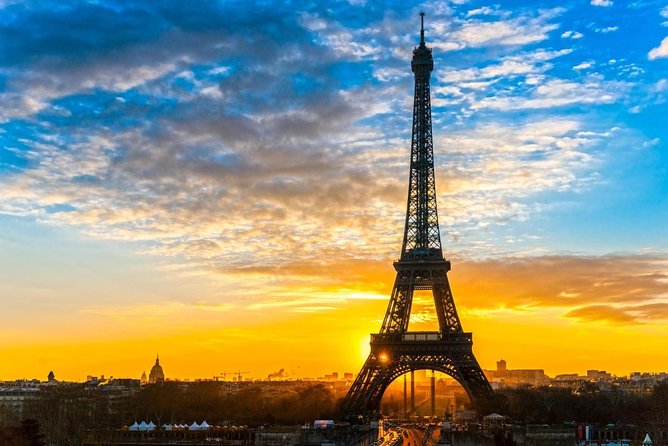
- Live English guide throughout: You’re not just watching screens; you’re listening and learning as you move.
- Small group feel: Capped at a small number of people, with a max stated at 8 travelers (and small-group language also mentions up to 10).
- Headset loan included: You get the gear, so you don’t have to fuss with your own tech.
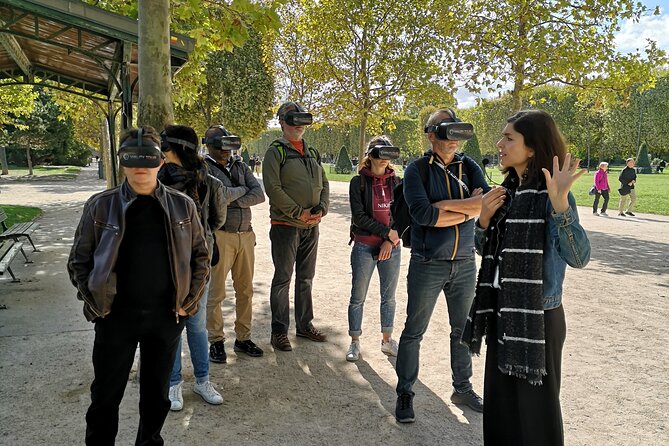
- Champ-de-Mars, real + virtual: You walk the park area while VR reconstructs key moments from the tower’s early years.
- 1889 Universal Exhibition focus: The story points to when the tower was built and opened for the public.
VR Eiffel Tower magic starts at the human-rights landmark
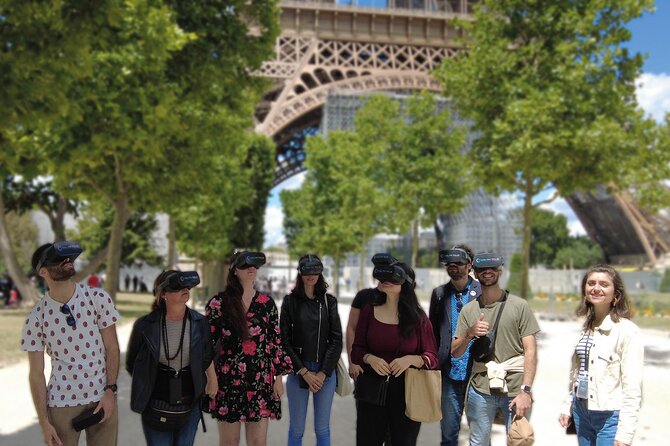
The tour meeting point is easy to spot once you know the name: Monument to Human Rights, Av. Charles Risler (75007 Paris). From there, the plan is simple. You gather, get your instructions, and then you’re walking toward the Eiffel Tower area while the high-tech part kicks in.
What I like here is that the start location is in a real, central Paris setting—not tucked inside a confusing maze of lines and offices. It also helps if you arrive early to find the group and get oriented. Since this is a guided experience, showing up on time matters more than it would for DIY sightseeing.
The tour ends at 4 Av. Pierre Loti (75007 Paris), and it finishes at the foot of the Eiffel Tower—where most people want to be anyway.
You can also read our reviews of more guided tours in Paris



What the price covers (and why it’s not just a gimmick)
At $34.84 per person, this is priced in a way that makes you ask: what am I actually paying for?
Here’s the value equation you should see:
- A professional guide who talks while you’re moving (so it’s not passive screen time).
- A one-hour guided experience tied to a specific walking area at the Eiffel Tower’s base.
- The loan of a VR headset, which removes one common travel friction point.
- A small-group format, which is a big deal when the guide can actually answer questions.
You’re essentially buying structure and interpretation. The VR helps you visualize moments you can’t stand in today—like how the tower looked during major construction phases and when it first opened to the public in 1889. Then the guide connects that to what you’re seeing in front of you on the ground.
If you enjoy history that has a “how did this work?” angle, you’ll likely feel the price makes sense. If you’re expecting a long ride up into the tower using VR, adjust expectations: this is a ground-level, park-area experience that uses VR to amplify what you’re walking past.
Your small group and the headset setup: quick, clear, hands-on
This experience is built for a small circle. The tour format promises a maximum group size (there’s a max stated at 10 people in the included description, and the overall maximum shows 8 travelers). Either way, you should expect a more controlled, coach-like vibe rather than a big crowd scene.
The headset is provided—you don’t bring your own. That matters because the learning curve is usually the biggest barrier to VR tours. When the headset loan is included and the guide is there to steer you, you can focus on the story instead of troubleshooting equipment.
A guide you might encounter is Vladina, who stands out in customer feedback for being friendly and genuinely welcoming. That kind of host energy matters in VR settings, too. If people feel comfortable and guided, they’re more likely to enjoy the tech instead of getting stuck worrying about it.
The real walk: Champ-de-Mars is your anchor point
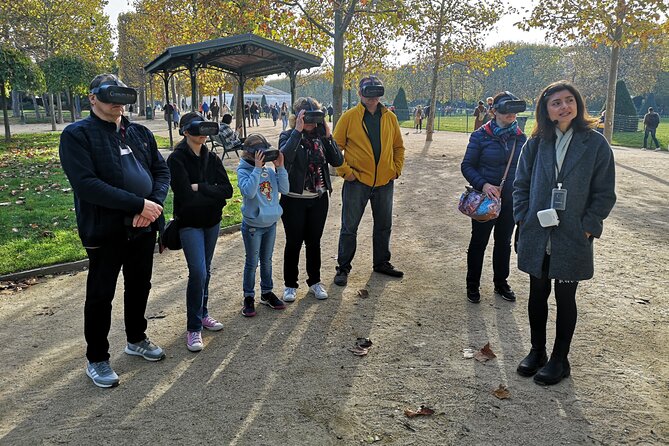
Throughout the tour, you walk through Parc du Champ-de-Mars to the base area of the Eiffel Tower. VR is layered on top of that real-world location, so you’re not imagining the tower in a vacuum. You’re standing in the same park landscape the modern Eiffel Tower still occupies, while the virtual scenes show how it changed.
For a reader, this matters because it turns VR from a video into a navigation tool. You start relating landmarks to time periods. You learn what was built, where it landed, and why the tower mattered to the Paris of that era.
Also, walking the park area gives you a chance to regulate your pace. If you’re someone who likes short breaks during city sightseeing, this is a nice middle ground: structured enough to feel guided, flexible enough to keep your feet happy.
Time travel on the ground: 1889 construction and opening scenes
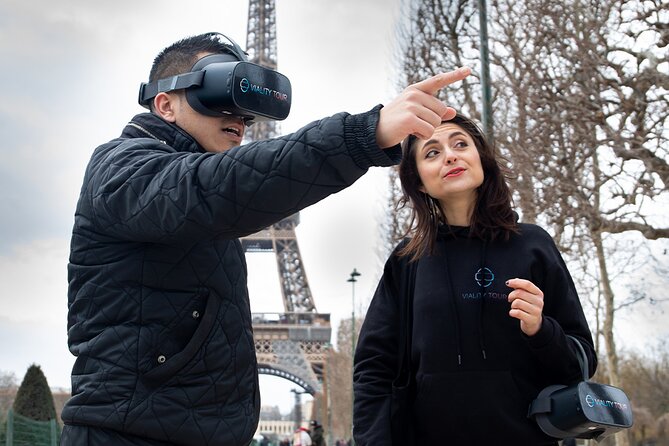
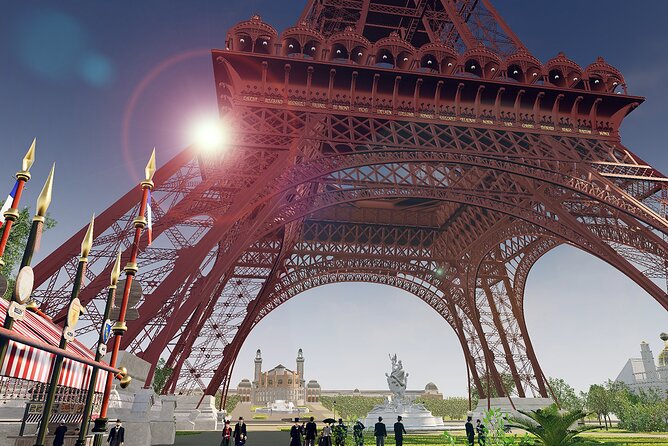
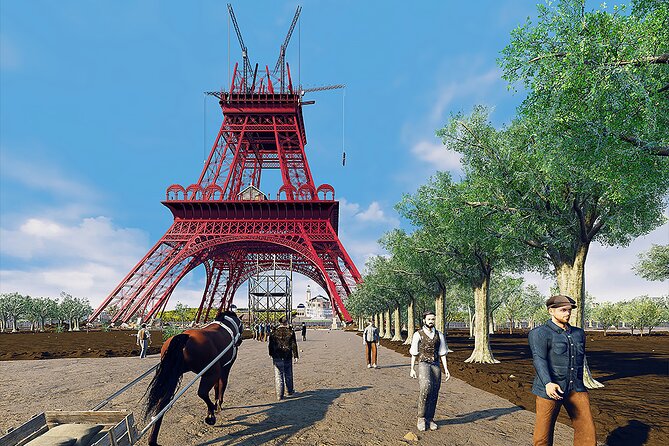
The core promise is VR scenes of the Eiffel Tower’s past, guided live as you explore. The big storyline focuses on the tower’s early life, including:
- The construction of the Eiffel Tower
- Its opening to the public during the Universal Exhibition of 1889
That’s a smart choice for a VR tour because it hits two key needs at once. First, it explains the engineering arc—how a project becomes a built reality. Second, it frames the tower as a public event, not just a monument pose for photos.
And since the guide is talking while you’re seeing the visuals, you’re not left to interpret the visuals alone. A good narration cadence helps you connect the virtual tower forms to what you’re walking toward in the present.
One subtle benefit: you get a clearer mental timeline. Instead of learning the tower’s story in scattered facts, you experience it in sequence—construction to public opening—right where the tower looms today.






Live commentary keeps the tech from feeling cold
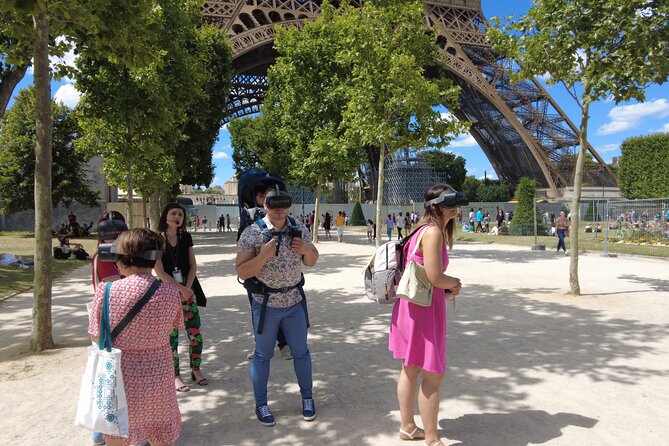
VR can go one of two ways. It’s either fun but forgettable, or it becomes meaningful because someone explains what you’re seeing. This tour leans toward the second option.
You get live guide commentary while you wear the headset. That changes everything about how the experience lands. You’re not just watching history; you’re hearing it interpreted in plain language, with context for what the images represent.
I also appreciate the pacing implied by the format. With an overall duration around one hour (approx.), the story has room to breathe without turning into a marathon. One feedback note mentioned a session around 45–50 minutes, which suggests the experience keeps moving and doesn’t overstay its welcome.
The practical side: timing, transport, and where you’ll end up
This tour is designed to finish in a very useful spot: at the foot of the Eiffel Tower. That’s great because the walk doesn’t just end with a headset click-off. You’re left with a classic photo-and-stroll starting point for the rest of your day.
It also helps that the meeting area is near public transportation. In Paris, that’s a real quality-of-life factor. You’re not spending your energy on long detours just to reach a meeting point.
If you like planning around crowds, this format can be appealing. The experience is described as letting you explore without queues or crowds, which is exactly what many visitors want near the Eiffel Tower area. Just remember: “no lines” doesn’t mean “no people anywhere”—you’re still in a famous neighborhood.
Comfort and safety: VR has limits for good reasons
This is the section I’d check before booking, even if you’re excited.
The tour is described as:
- Not recommended for visitors with epilepsy
- Not recommended if you’re prone to motion sickness
- Not recommended for people with balance disorders
- Not recommended for people prone to migraines
- Travelers should have moderate physical fitness
- Not accessible to children under 8 years old
So if you’re the type who gets queasy in cars or on spinning rides, take that seriously. VR isn’t a passive museum exhibit—it can trigger discomfort for some people.
Also, the guide and headset loan are part of the experience, which suggests you’ll be in the VR portion during the walk. If you’re uncertain, consider sitting out VR options in general and doing a standard Eiffel Tower outing instead.
Weather dependence: plan for a flexible day
This experience requires good weather. If it’s canceled due to poor weather, you’ll be offered another date or a full refund.
That matters because this tour includes walking in the Champ-de-Mars area. You’ll want to think about how you’re structuring your Eiffel Tower day. If you’re traveling in a season known for surprise rain, don’t make this your only Eiffel Tower plan.
Free cancellation is available, so it’s reasonable to lock it in and then adjust as weather clears.
Who this Eiffel Tower VR tour is for
This works well if you:
- Want history that’s explained as you walk, not just read from a placard
- Like tech that improves understanding, not just tech for screenshots
- Prefer a small group experience near a major landmark
- Enjoy a structured “see it, learn it, then end at the tower” format
It’s also a great fit for people who don’t want to spend hours in long queues and still want a meaningful Eiffel Tower moment.
It might not be your best match if:
- You’re sensitive to VR side effects
- You want a hands-on climb or indoor tower access (this is not described that way)
- You’re traveling with kids under 8
Price check: is $34.84 worth it?
For context, you’re paying for three things at once: guided storytelling, VR hardware, and a focused one-hour route at a major landmark.
If you were to do Eiffel Tower sightseeing on your own, you’d still pay for transport time and you’d rely on your own reading. Here, you’re paying for someone to turn the tower’s past into a clear sequence with visuals you can’t easily recreate.
So the value is best if:
- You’ll actually pay attention to the narrative
- You enjoy guided interpretation
- VR doesn’t scare you off due to motion sensitivity
If you’re chasing a cheap Eiffel Tower badge, this isn’t the lowest-cost option. But if you want a smarter way to connect the Eiffel Tower to its 1889 story, the price is easier to justify.
Should you book the Eiffel Tower VR guided tour?
Book it if you want a guided, small-group way to understand the Eiffel Tower through VR time scenes—especially the construction and 1889 public opening storyline—while ending right at the base for real-world photos and a smooth transition to the rest of your day.
Skip or reconsider if VR tends to make you uncomfortable, or if you fall into the categories where the tour is not recommended (epilepsy, motion sickness, balance issues, migraines). In those cases, you’ll get more out of a traditional walking route and audio guide instead.
If you’re on the fence, remember this: the magic here is not the Eiffel Tower itself. The magic is how the tower’s past becomes legible while you’re standing in its present surroundings.
FAQ
How long is the Eiffel Tower VR guided tour?
It lasts about 1 hour (approx.).
Is there a live guide, or is it self-guided?
There is a professional guide providing live commentary throughout the experience.
What language is the tour offered in?
The tour is offered in English.
Where do I meet, and where does the tour end?
You start at Monument to Human Rights, Av. Charles Risler (75007 Paris) and the tour ends at 4 Av. Pierre Loti (75007 Paris) at the foot of the Eiffel Tower.
Does the price include the VR headset?
Yes. The price includes the loan of a virtual reality headset, along with the guided tour.
Are children allowed?
The tour is not accessible to children under 8 years old.
Are dogs allowed?
Dogs are not accepted, even on a leash, except for assistance dogs. Service animals are allowed.
Is the tour safe for people prone to motion sickness or epilepsy?
It is not recommended for visitors with epilepsy, those prone to motion sickness, and those with balance disorders or migraines.
What happens if the weather is bad?
The experience requires good weather. If it’s canceled due to poor weather, you’ll be offered a different date or a full refund.
What is the cancellation policy?
You can cancel for a full refund up to 24 hours before the experience’s start time. If you cancel less than 24 hours before, the amount paid is not refunded.