REVIEW · PARIS
Paris: Montmartre Private Guided Tour & River Cruise Option
Book on GetYourGuide →Operated by Exploring Tours and Services · Bookable on GetYourGuide
Montmartre can feel like a maze. This private tour gives you the art, the views, and the rhythm without getting stuck in the crowd.
I really like the private guide format—your pace, your questions, and clear explanations from guides who are praised for being patient and well-prepared (names that come up often include Jasmine, Joaquín, and Rebecca). I also like the payoff: you get the Sacré-Cœur viewpoints plus the artist-rich stops around Place du Tertre, then (if you choose it) a Bateaux Parisiens Seine cruise with an open ticket you can use any day. The main drawback is simple: you’ll walk up a hill, and this isn’t set up for wheelchair users or people with mobility issues.
In This Review
- Quick hits
- Montmartre with a Private Guide: What Changes
- Getting Started at Anvers: Your First Smart Move
- Sacré-Cœur Up Close: Views Plus Skip-the-Entry Benefit
- Place du Tertre: Artists at Work, Not Just a Landmark
- Vine Streets and Art Clues: From Clos Montmartre to Moulin de la Galette
- Vignes du Clos Montmartre
- Moulin de la Galette
- Le Bateau-Lavoir: Where You Start Seeing Cubism’s Roots
- Wall of Love to Moulin Rouge: A Fun Route with Real Context
- Wall of Love
- Moulin Rouge
- If You Choose the Seine Cruise: How the Open Ticket Works
- Price and Value: Is $85 Worth It?
- Who This Tour Fits Best (And Who Should Rethink It)
- Should You Book This Montmartre + Seine Experience?
- FAQ
- Where is the meeting point?
- How long is the tour?
- Is the Sacred Heart Basilica visit included?
- Are funicular tickets included?
- Is the Seine cruise ticket open and flexible?
- Do I need to reserve the Seine cruise?
- Where does the Seine cruise depart from?
- What languages is the guide available in?
Quick hits
- Private, expert-led Montmartre with time to actually take photos and ask questions
- Sacré-Cœur included, plus skip-the-ticket-line entry
- Place du Tertre break time in a real artist square (not a rushed photo stop)
- Art landmarks on foot: Picasso/ Cubism connections, Le Bateau-Lavoir, and the Wall of Love
- Optional Seine cruise: open ticket from the Eiffel Tower area, departures every ~30 minutes
- Weather-friendly plan: guided walking in most conditions, and boats are heated/covered/AC depending on season
Montmartre with a Private Guide: What Changes
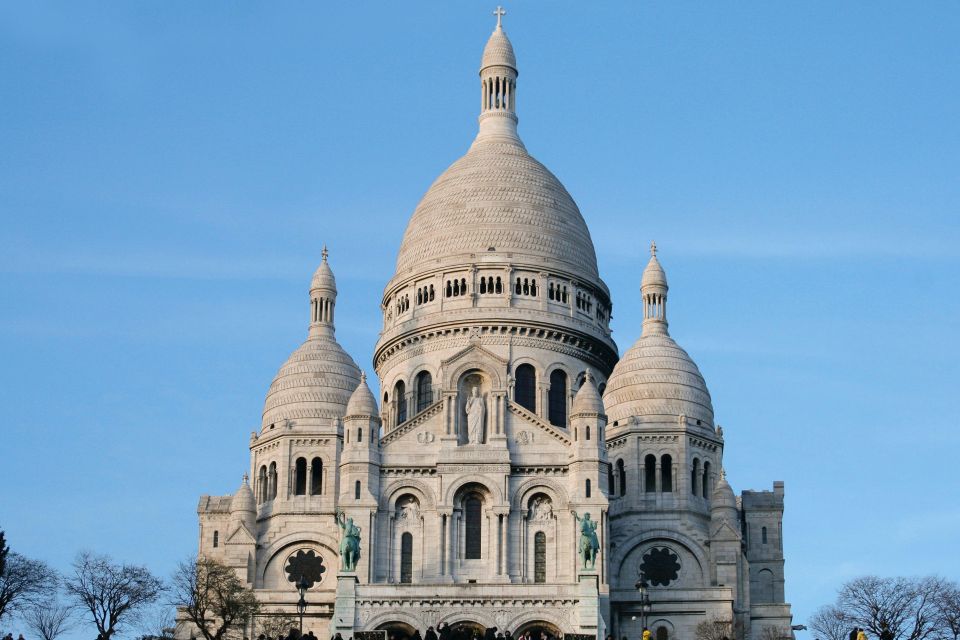
If you’ve ever tried to do Montmartre on your own, you know the feeling: stairs, viewpoints, sudden side streets, and not much context. This tour fixes that fast. A local expert walks you through the neighborhood like a story you can physically follow—artist life, architecture, and how ideas spread here.
The private format matters more than it sounds. You’re not squeezed into a group’s pace or stuck listening to everyone else’s questions. With guides like Jasmine, Joaquín, and Rebecca showing up repeatedly in feedback, the vibe tends to be calm, organized, and genuinely helpful—exactly what you want in a neighborhood that’s part history lesson and part uphill adventure.
There’s also a practical bonus: the tour includes a strong mix of viewpoint stops and “why it matters” stops. You’re not just checking landmarks; you’re learning what you’re looking at as you move. The only real watch-out is the walking. This experience is designed around being able to climb—there’s an option to use the funicular with your guide if you can’t manage the hill, but those funicular tickets are not included.
You can also read our reviews of more boat tours in Paris



Getting Started at Anvers: Your First Smart Move
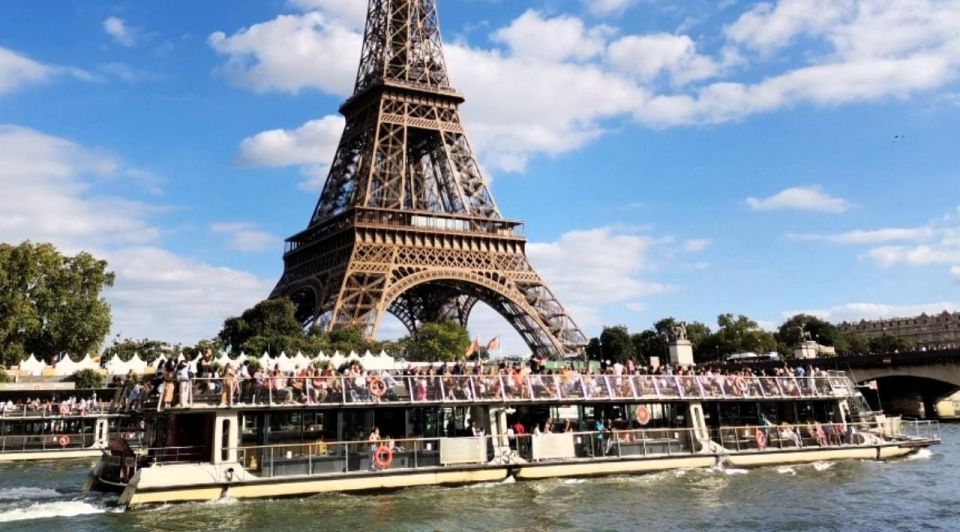
You’ll meet your guide at the exit of Anvers metro station (line 2), where they’ll be holding a GetYourGuide sign. Arrive about 10 minutes early so you don’t lose time or miss the start—latecomers aren’t guaranteed a spot once the tour is underway.
Why this meeting point works: Anvers puts you right in the Montmartre zone, close enough to start the climb without wasting time crossing the city. It also helps you get oriented early, which is key because Montmartre streets loop and slope in ways that can confuse you if you’re navigating solo.
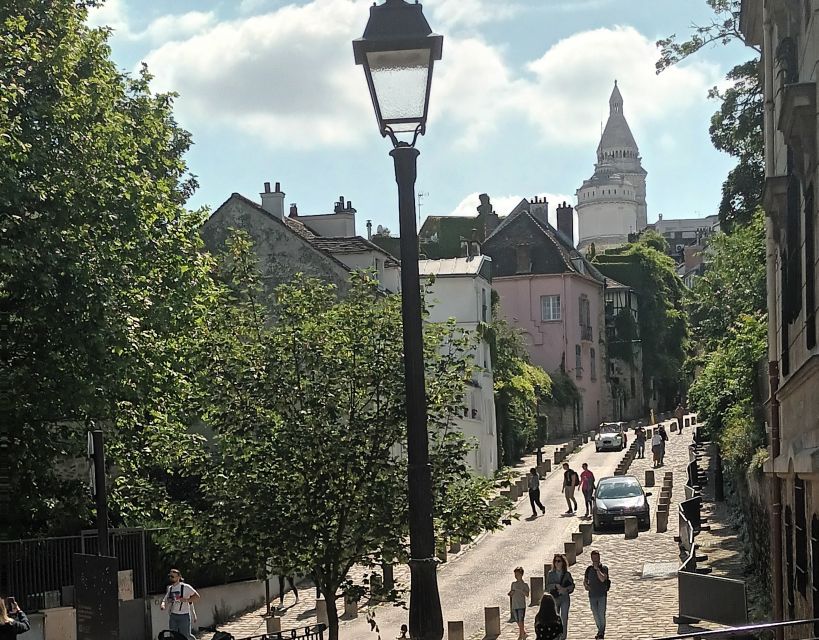
From there, your guide leads you toward Sacré-Cœur, with scenic views along the way. The walking pace is part of the design. You’re building in photo moments while you head uphill, so it doesn’t feel like a constant grind. And if you’re not up for the steep parts, your guide can go with you on the funicular option—again, that funicular ticket cost is on you.
This is also where you’ll want two things ready: comfortable shoes and a charged smartphone. You’ll be pausing often, and you’ll want decent battery for photos and maps.
Sacré-Cœur Up Close: Views Plus Skip-the-Entry Benefit
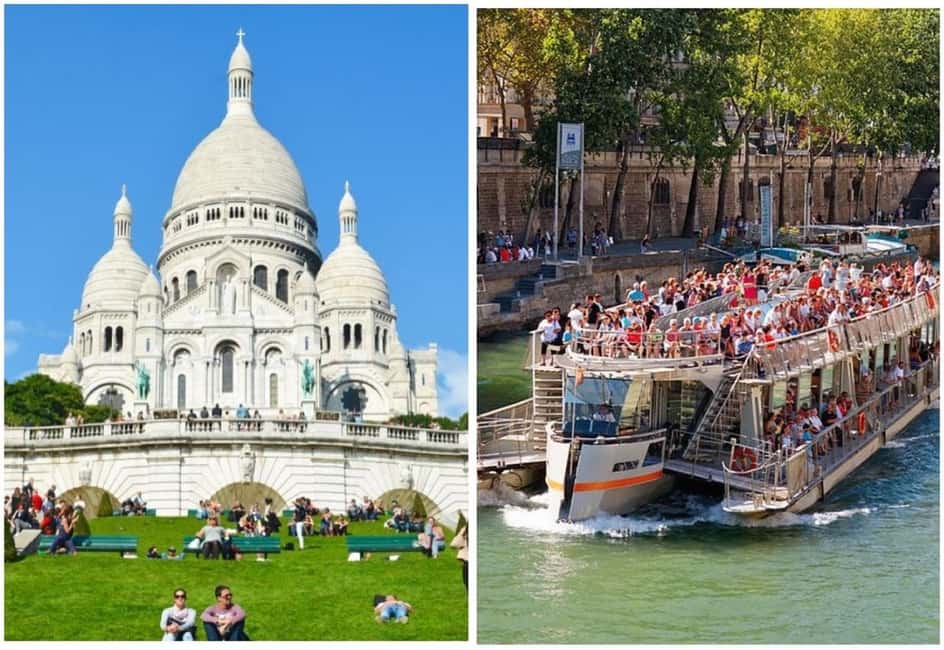
Your first real stop is Basilica of the Sacred Heart (Sacré-Cœur), including a guided visit and sightseeing time (about 30 minutes here).
The big draw is the viewpoint. Standing above the city, you get that classic Paris panorama—rooftops, the curve of streets, and a sense of why Montmartre became such a magnet for artists and dreamers. But the guided part is what makes it worth your time. You’ll learn what you’re looking at and how the area’s character shaped the art scene.
Another detail that helps: the tour is set up to skip the ticket line. Even if you’re not rushing, saving time matters at Sacré-Cœur, because delays there can turn into a domino effect for the rest of your day.
Inside the basilica, expect the kind of experience that works even if you’re not a “religious architecture” superfan. You’re there for the combination—structure, atmosphere, and the height-over-Paris feeling you can’t fake with a photo taken from street level.
If the climb is a challenge, ask your guide early about your comfort level. You can take the funicular together, and the tour plan still keeps moving toward the next stops.
Place du Tertre: Artists at Work, Not Just a Landmark
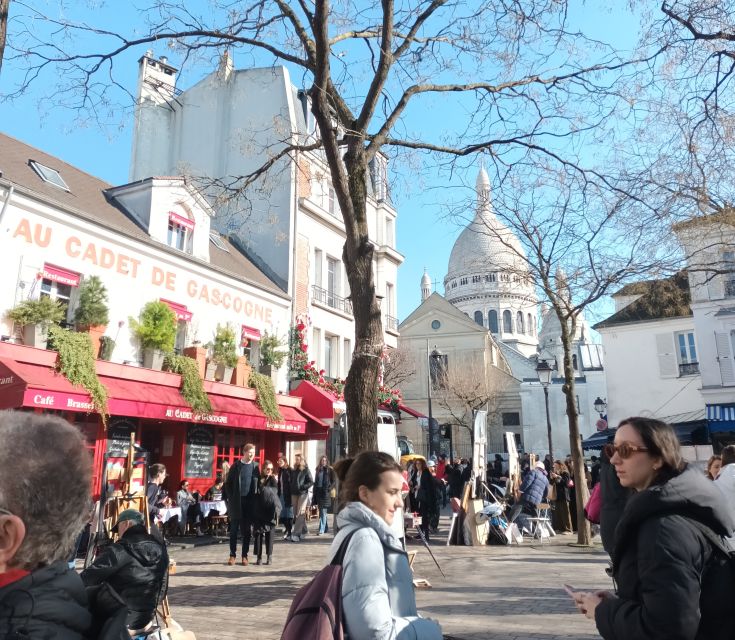
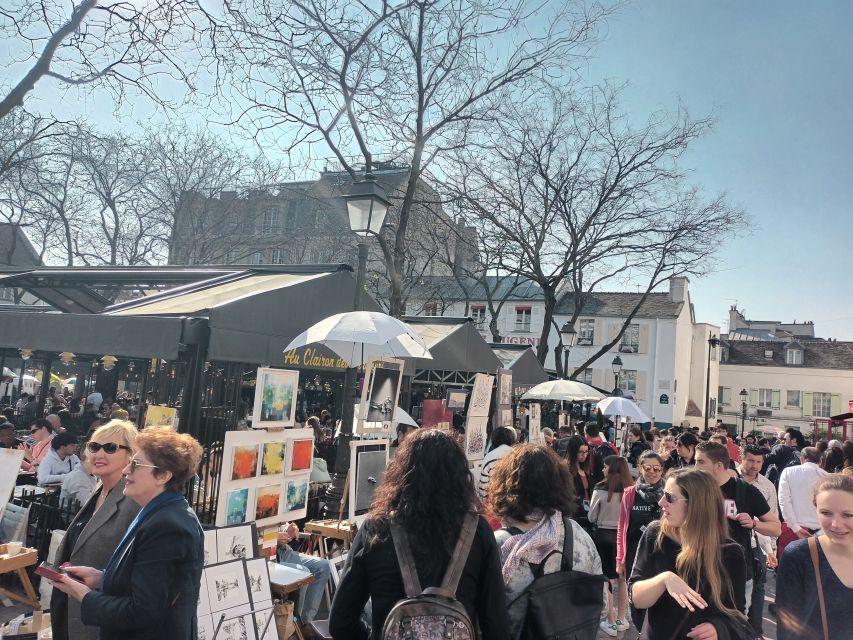
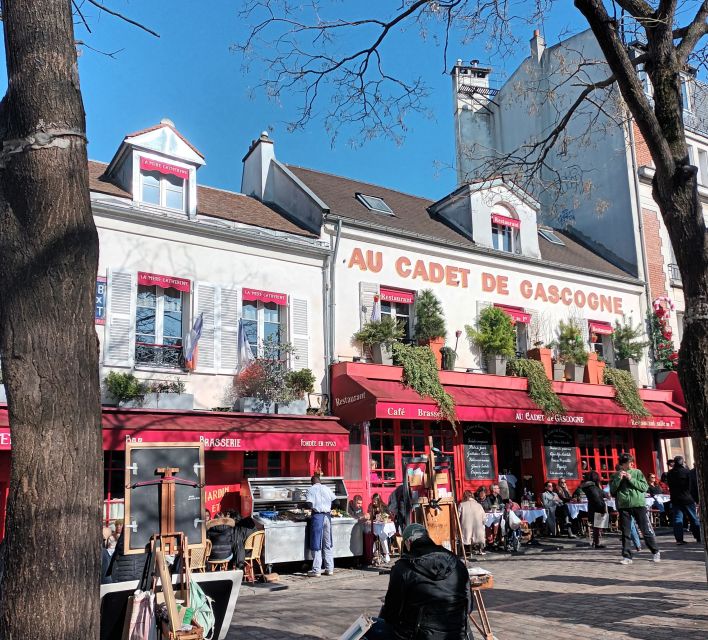
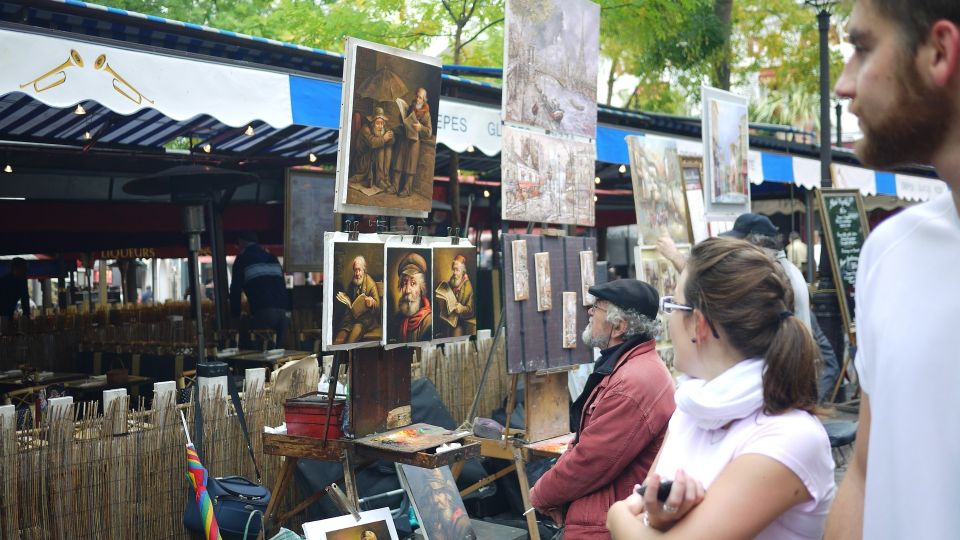
After Sacré-Cœur, you head to Place du Tertre (about 30 minutes), one of Montmartre’s most recognizable squares for art and street portrait culture.
This stop is built for a break, and that’s a big deal. You get free time—time to step back from the walking, grab a snack or a drink, and simply watch the square do what it does. If you want souvenirs, this is where you’ll see paintings being created and sold, not just displayed for show.
The guided element here isn’t only about where things are. You’ll get context about how Montmartre became known for artists living and working in this neighborhood. That changes how you read the square: it’s not just a photo backdrop; it’s part of a long-running creative economy that shaped the neighborhood’s reputation.
Is it always calm? No. Place du Tertre can be lively. But the tour gives you time, not pressure. You can browse, photograph, and regroup without feeling like you’re constantly being pulled forward.
Practical tip: this is a great place to check your legs. If you’re feeling good, keep going with the walking. If you’re not, pace yourself and use the break time you’ve been given.
Vine Streets and Art Clues: From Clos Montmartre to Moulin de la Galette
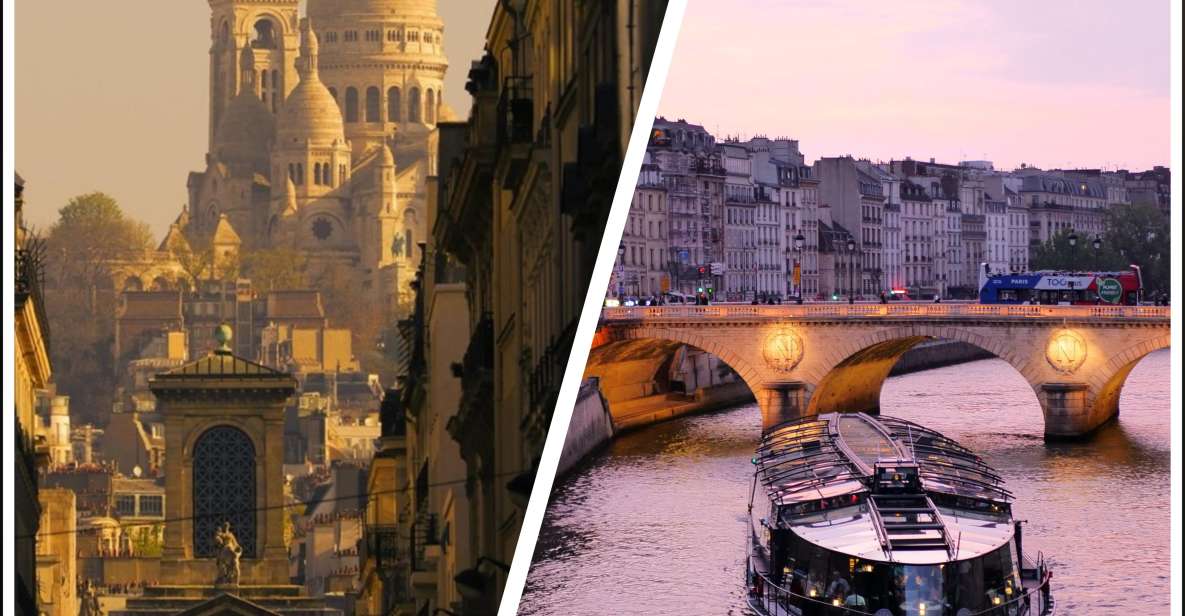
Next come the smaller, more atmospheric stops—quick photo and guided moments that connect Montmartre’s art identity to specific spots.
You can also read our reviews of more guided tours in Paris





Vignes du Clos Montmartre
You’ll stop for photos at Vignes du Clos Montmartre (about 15 minutes). The point isn’t that you’re touring a big vineyard experience—it’s that Montmartre surprises you. You get a sense of why the neighborhood wasn’t only streets and cafés. There’s a working landscape feel here that adds texture to the story.
Moulin de la Galette
Then you’ll reach Moulin de la Galette (about 15 minutes). It’s another “you’re here” moment: a visible landmark tied to the area’s creative and entertainment reputation. Even if you only catch it from the right angle, it’s the kind of stop that helps you picture Montmartre before it became a must-do tourist circuit.
The value of this segment is momentum. By the time you get here, you’ve already learned about Sacré-Cœur and Place du Tertre. These stops turn the neighborhood into a mapped narrative, where each place hints at why artists were drawn here.
Le Bateau-Lavoir: Where You Start Seeing Cubism’s Roots
Your tour then makes a short guided stop at Le Bateau-Lavoir (about 15 minutes) with sightseeing and a walk.
This is where the tour leans into the deeper creative story. You’ll hear about the artistic community that worked in Montmartre—artists who lived and worked here. Picasso’s name comes up as part of the connection between this neighborhood and the birth of Cubism, which helps you see these stops as more than scenery.
Le Bateau-Lavoir is especially useful if you like “meaningful landmarks.” You’re not just collecting famous names. You’re learning why those names cluster in one neighborhood and how the physical setting supported experimentation and close-knit creative life.
One note: these are shorter stops. If you’re the type who wants every detail of a single site, you may feel the pace is brisk. But the trade-off is that you see more variety in the time you have, and the guide’s explanations help you keep up.
Wall of Love to Moulin Rouge: A Fun Route with Real Context
The next segment shifts from history to a more playful walking route.
Wall of Love
You’ll stop at the Wall of Love for about 30 minutes. It’s the classic installation where the word I love you appears in multiple languages. It’s fun, it’s photo-friendly, and it gives your legs a moment to pause.
But again, the guide helps you avoid treating it like just another Instagram stop. You’ll get the neighborhood’s vibe—part romance, part performance, part artistic identity—so the wall fits into the bigger Montmartre story.
Moulin Rouge
Then you’ll end the Montmartre portion by admiring Moulin Rouge at the foot of the hill (about 30 minutes including photos and guided sightseeing).
This is where the experience feels like it’s closing a circle. You’ve climbed from Sacré-Cœur through creative corners and artist squares, and now you’re at the area’s most famous cabaret symbol. You may not step inside here, but the viewpoint and location make it click: this is a neighborhood where entertainment and art have been intertwined for a long time.
The stop also helps you reset before the optional Seine cruise. If you picked the river option, your guide is preparing you for the next phase of the day’s city story.
If You Choose the Seine Cruise: How the Open Ticket Works
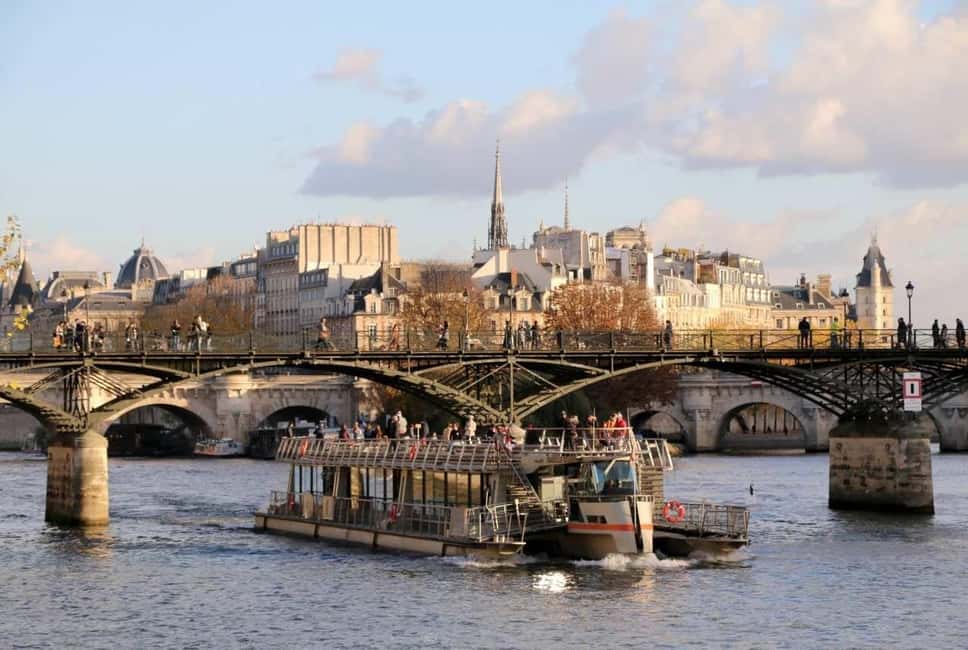
If you select the Seine option, your guide provides tickets for a Bateaux Parisien cruise. The boarding point is at the base of the Eiffel Tower area, and it’s timed so you can enjoy Montmartre first, then switch to the river view later.
Here’s the practical part you’ll care about: the cruise ticket is open, meaning it can be used any day and any time within the stated departure windows. You don’t need to make a reservation. You just show up at the starting point with your ticket and board when the next boat departs.
Departure frequency is helpful: boats run about every 30 minutes.
Season timing matters:
- In spring, summer, and French school holiday zone C, departures are between 10:00 AM and 10:00 PM
- In autumn and winter, departures are between 10:30 AM and 9:00 PM
Comfort also gets coverage. Boats are heated in winter, air-conditioned in summer, and covered if it rains. In other words, you’re not gambling with the weather in the way you might be on an outdoor walking-only day.
This part of the experience pairs nicely with Montmartre because the river gives you a different Paris perspective—bigger monuments, wider angles, and a calmer pace after all the hillside walking.
Price and Value: Is $85 Worth It?
At $85 per person for a 2.5-hour private Montmartre guided experience, the value depends on how you travel.
If you’re comparing it to group walking tours, the big value is that you get a private guide. That means better pacing, fewer crowds, and time for questions. In a place like Montmartre—where streets can feel like a maze—having a guide can save you from wasting energy on wrong turns or vague sightseeing.
Also, the tour includes a guided visit to Sacré-Cœur, plus skip-the-ticket-line benefit. That’s not just convenience. It’s time you can spend actually enjoying the site and keeping the itinerary on track.
If you add the Seine option, the value rises again because your cruise includes a one-hour ride. And unlike fixed-time museum tickets, this cruise uses an open ticket format, so you can match it to your schedule rather than forcing your schedule around it. That’s a big deal if you like flexibility or if you expect the rest of your day to shift.
What’s not included:
- Hotel pickup/drop-off
- Funicular tickets
- Food and drinks
So plan to budget a bit for snacks in Place du Tertre and any transport choices beyond the main tour. But as long as you’re comfortable walking and want a guided art story, this price lands in the “solid value” category.
Who This Tour Fits Best (And Who Should Rethink It)
This is a great match for you if:
- You want Montmartre explained, not just photographed
- You like a guided pace with time to breathe (Place du Tertre break time is real)
- You want a Seine cruise option with flexibility later
- You prefer private touring over crowd choreography
You might want to rethink it if:
- You have mobility challenges or need wheelchair access. The hill walking makes this not suitable for wheelchair users and not accessible to people with mobility issues.
- You hate uneven walking terrain. Even with breaks, the Montmartre “shape” of the neighborhood is climb-and-descend.
It’s also worth considering if you travel with oversize luggage. Oversize bags aren’t allowed, and large bags can complicate meeting points and street navigation.
If you’re choosing this as part of a busy Paris itinerary, it’s smart because it gives you a high-impact mix: Basilica views, artist square atmosphere, art-related landmarks, and then optional river scenery.
Should You Book This Montmartre + Seine Experience?
Book it if you want a guided Montmartre day that feels organized, art-focused, and not overcrowded. The pairing works: hillside views and creative landmarks on foot, then the Seine cruise adds a relaxed, scenic finish (or flexible follow-up).
Skip it if you can’t do steep walking. This tour is built around climbing, and while the funicular is an option, it’s not a fully accessible experience.
One last decision helper: if you pick the Seine option, treat it like a bonus window, not a single rigid plan. The open ticket approach gives you room to adjust, and that’s often what makes a trip feel smooth instead of stressful.
If you’re ready for a private, expert-led art stroll with big-city payoff, this is one of the easier ways to enjoy Montmartre without losing time or context.
FAQ
Where is the meeting point?
You meet the guide at the exit of Anvers metro station (line 2). The guide will be holding a GetYourGuide sign. Arrive about 10 minutes early.
How long is the tour?
The Montmartre private guided portion is listed as 2.5 hours. If you choose the Seine cruise option, there is an included 1-hour river cruise as well.
Is the Sacred Heart Basilica visit included?
Yes. The tour includes a guided visit to the Basilica of the Sacred Heart.
Are funicular tickets included?
No. Funicular tickets are not included if you choose to take it with your guide.
Is the Seine cruise ticket open and flexible?
Yes. If you choose the Seine cruise option, you’ll receive an open ticket you can use any day and any time within the regular departure hours. You just show up at the departure point.
Do I need to reserve the Seine cruise?
No. There is no reservation required for the cruise. You show up with your ticket and board.
Where does the Seine cruise depart from?
The cruise departs from the starting point at the base of the Eiffel Tower.
What languages is the guide available in?
The live guide is offered in English, Spanish, Italian, and French.