REVIEW · PARIS
Semi-Private French Revolution and Conciergerie tour
Book on Viator →Operated by Fat Cat Tours · Bookable on Viator
Revolution Paris, on the street. This semi-private walking route connects major landmarks to the French Revolution in a way that feels personal, not textbook, and I love that the focus stays on storytelling you can see as you move. The one thing to factor in is that it’s still a walk, so bring a moderate fitness mindset and wear shoes you trust.
You’ll get a small group (up to 15) with a professional English-speaking guide, plus mobile tickets for an easier start. And because the tour runs in all weather, you’ll want layers and rain gear so the day stays pleasant, no matter what Paris decides to do.
In This Review
- Key things I’d bet you’ll enjoy
- Price and what makes it good value
- Meeting at Banque de France and finishing at the Conciergerie
- Opera Bastille: where art shows the Revolution’s long shadow
- Le Marais: from filled-in swamp to post-Revolution reinvention
- Hotel de Ville: a government building that keeps showing history
- Tour Saint-Jacques: Gothic survival and the church that disappeared
- Ending near the Conciergerie: why the final location matters
- How small-group walking changes the experience
- What to do before and after the tour
- Who this tour is best for
- Should you book this tour?
- FAQ
- What language is the tour offered in?
- How long is the tour?
- How big is the group?
- Where does the tour start and end?
- Does the tour run in bad weather?
- What’s included in the price?
- Are there tickets you need to buy for the stops?
- Can I cancel for a full refund?
- Is there any guidance on physical fitness or service animals?
Key things I’d bet you’ll enjoy
- Small-group pace: up to 15 people, so questions don’t get swallowed.
- On-foot noticing: you’ll catch details at street level that big viewpoints skip.
- Revolution themes in everyday buildings: opera, city hall, and church ruins all get a historical angle.
- Guides with Paris instincts: past tours highlight guides like Benoit, William, and Adam who mix context with local recommendations.
- Teen-friendly momentum: the tour’s structure is energetic enough to hold attention, even for younger folks.
- Worth it even without museum tickets: several stops are marked as free admission, so you’re paying mainly for the guide and the route.
Price and what makes it good value
At $179.03 per person for about 2 hours 30 minutes, this isn’t a cheap “grab a headset and wander” type of activity. What you’re really buying is the human part: a professional English-speaking guide who ties specific Paris locations to one of the biggest upheavals in European history.
The value angle is simple. Many of the major stops on this route are listed as free admission, meaning your cost goes toward the guided walk and the interpretation, not entrance fees. Add in the fact that it’s semi-private with a maximum of 15 people, and you end up with a more focused experience than the mega-bus version of “French Revolution in Paris.”
If you’re the kind of traveler who likes your history paired with street-level details—where a building’s purpose changes over time—this price usually makes sense. If you’re expecting a long, indoor museum day with lots of included entry tickets, you may feel less satisfied because the tour is built around walking and exterior viewing.
You can also read our reviews of more private tours in Paris



Meeting at Banque de France and finishing at the Conciergerie
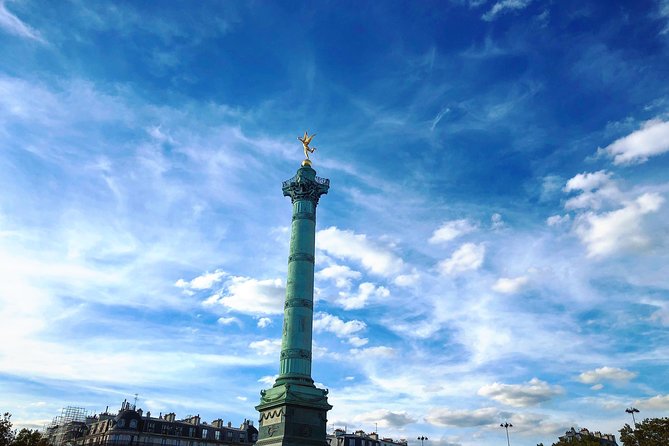
The tour starts at Banque de France near Place de la Bastille: 3 bis Pl. de la Bastille, CS 41834, 75183 Paris. That’s a smart launch point. You’re close to the idea of beginnings—Parisian energy in full swing—and you can orient yourself fast before history starts “taking over” the streets.
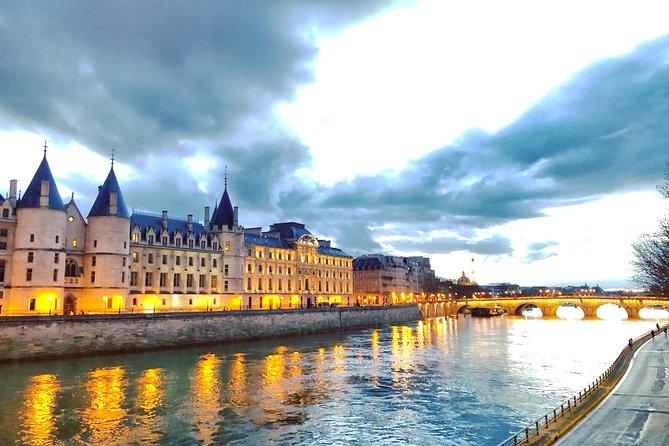
The walk ends at Conciergerie, 2 Bd du Palais, 75001 Paris. Even though the route passes several stops first, the finish location matters because the Conciergerie is tied to the Revolution story in a way that helps the earlier scenes feel connected, not random.
You’re also near public transportation, which makes this easier to plug into a day of sightseeing. And the mobile ticket is one less thing to worry about when you’re scanning crowds and street signs.
Practical tip: since you’ll be outside for much of the experience, I’d plan to dress for weather first. The tour runs in all conditions, so bring a light rain jacket or packable umbrella.
Opera Bastille: where art shows the Revolution’s long shadow
Your first stop is Opéra Bastille, the sleek auditorium that opened in 1989 and hosts ballet and opera performances. It’s modern—very modern—and that’s the point. The French Revolution reshaped politics, society, and public life. Over time, Paris built new cultural institutions that replaced older orders.
Here’s what I like about starting at a place like this: you don’t start with grimness. You start with a reminder that Paris doesn’t just remember events—it reorganizes itself and pours ambition into new forms. As you stand near the building, you can connect the dots between a city that went through upheaval and a city that later turned that energy toward public art.
Possible drawback: because this is a big, contemporary venue, you might expect more direct Revolution artifacts right away. Instead, think of it as a historical warm-up—framing the Revolution’s aftermath in a place that shows Paris moving forward.
Le Marais: from filled-in swamp to post-Revolution reinvention
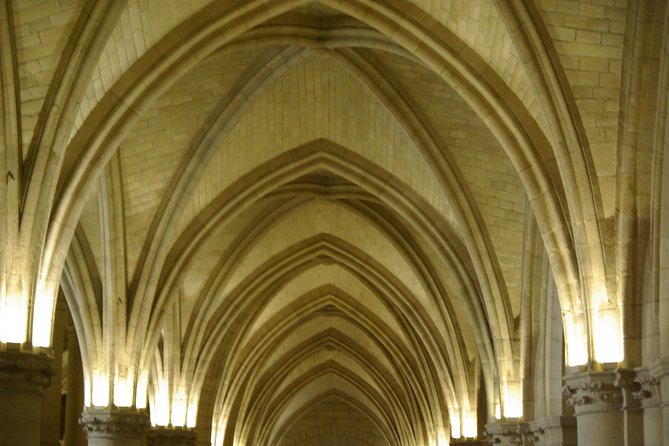
Next up is Le Marais, one of Paris’s most famous neighborhoods, but with a history that’s more layered than the Instagram surface.
You’ll hear how the area was once built on land filled in from a swamp. That detail changes how you picture the neighborhood. It wasn’t always the polished, elegant Paris you see today—it was land shaped by human effort. Then the story pivots again: the Revolution left deep disruption, and the neighborhood fell into disrepair before later regaining prominence.
This is where the “walk and look” approach really pays off. You’re not just learning facts; you’re seeing how urban patterns survive, shift, and return. Le Marais has plenty of places where you can imagine earlier centuries based on street layout and building density.
What to watch for as you walk: side streets and small turns. Even if you don’t study architecture formally, you’ll start noticing how Paris uses narrow passages and changing facades to create new “moments” in the same neighborhood.
Potential consideration: Le Marais can feel like it’s moving fast when you’re in crowds. A small-group tour helps here, because you’re less likely to get separated from the guide’s story thread.
Hotel de Ville: a government building that keeps showing history
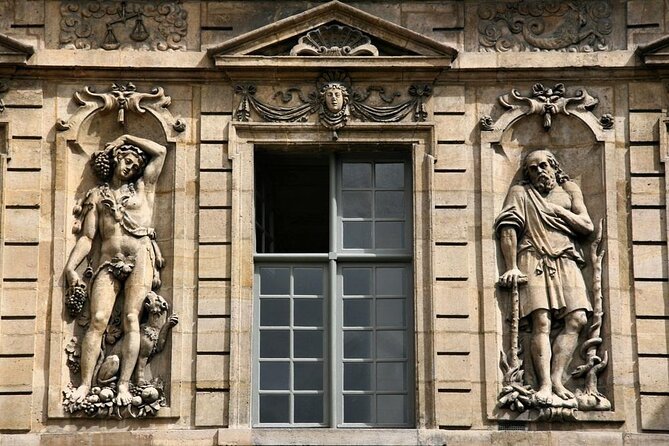
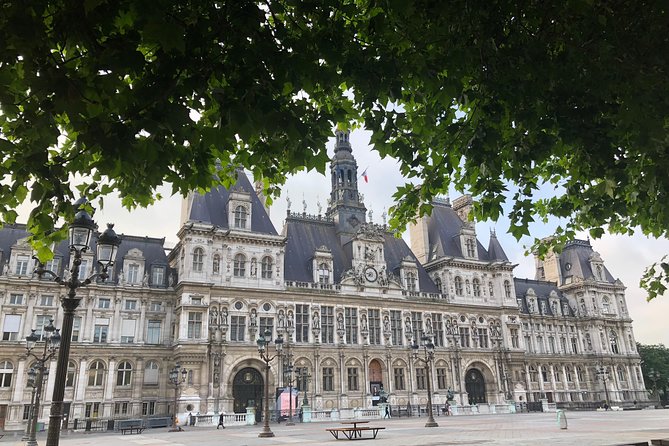
Your third stop is Hôtel de Ville, the beautiful 19th-century building that’s now the seat of the French government. What I like about this stop is that it forces you to confront a key point: government doesn’t stay frozen in one era. It evolves, but it also remembers.
The tour also points you to displays on French history located at or associated with the building. So you get a meaningful mix: exterior viewing plus a chance to connect what you’re seeing to what France chooses to remember in official spaces.
This stop works especially well if you’ve been thinking about the Revolution as political drama. Hôtel de Ville reminds you that politics isn’t just the past. It’s part of what Paris runs on—today.
Possible drawback: depending on crowd levels and what’s on display at the time, your experience here may feel more visual than hands-on. Still, the guide’s role matters: they help you interpret what you’re seeing in the right historical frame.






Tour Saint-Jacques: Gothic survival and the church that disappeared
Then you reach Tour Saint-Jacques, a flamboyant Gothic tower from the 16th century and the only remains of the church of St Jacques de la Boucherie, which was demolished during the French Revolution.
That “only remains” detail hits hard, and for good reason. It’s not abstract. It’s literally the leftover footprint of something that was erased. Standing near the tower, you can feel how Revolution-era choices reshaped the physical city, not just the political one.
This is one of the best stops on the route if you want tangible connection points. The tower becomes a kind of historical bookmark. It tells you: the Revolution didn’t just write new laws—it redrew the streets and left consequences in stone.
What you might enjoy here most is the contrast. Gothic architecture has its own voice—vertical lines, ornate character, a sense of permanence. Meanwhile, you’re being reminded that permanence can vanish in a season when politics turns.
Practical note: the tower stop is exterior-focused. If you’re hoping for a long interior visit, you may want to pair this tour with a second activity later on.
Ending near the Conciergerie: why the final location matters
The tour ends at the Conciergerie in central Paris. Even without going into every detail of what’s inside, the ending helps you tie the route together.
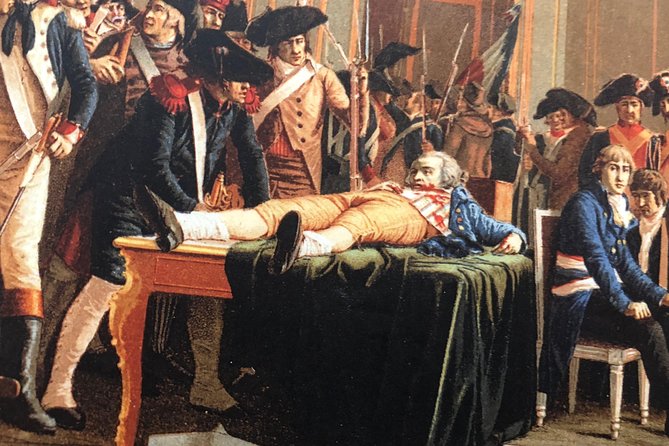
You start at Bastille and move through cultural and civic Paris—opera, neighborhoods, government, religious architecture. Then you finish at a place strongly associated with imprisonment during the Revolution era. That progression makes the Revolution story feel like a full arc: from public life and institutions to confinement and consequence.
This is also where a good guide makes a difference. A strong interpretation helps you connect earlier stops—how Paris kept reinventing itself—with the harsher realities of the Revolution.
How small-group walking changes the experience
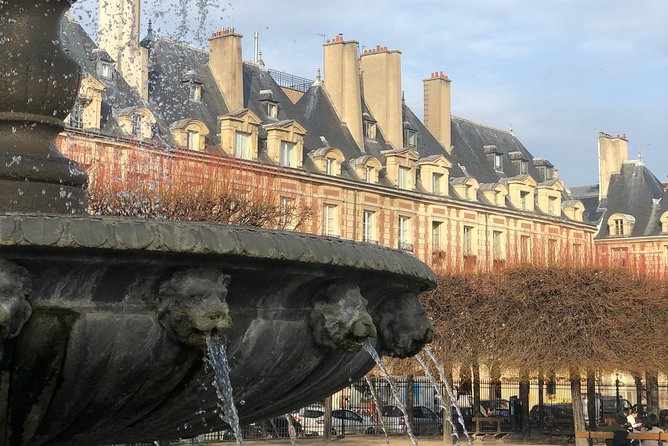
A group capped at 15 might sound like a minor detail, but it changes the whole experience.
You’ll get more chances to ask questions without feeling like you’re competing for a microphone. You’ll also spend less time waiting and more time actually seeing. On a walking tour, those minutes matter, because attention is physical. If you’re constantly stopping for bottlenecks, the story gets broken up.
The best part, based on past feedback tied to this tour, is the guide personality. Guides have been singled out by name—Benoit, William, and Adam—for mixing the big story with what’s going on around you right now, plus helpful extras like restaurant recommendations. In at least one case, the guide helped with timing and stayed patient when the group ran into payment or train-pass issues, which is exactly the kind of calm support you appreciate when your day gets messy.
And if you’re traveling with teens, this format tends to work because it’s paced like a moving storyline instead of a stationary lecture.
What to do before and after the tour
Before you go:
- Wear shoes built for walking. You’ll be on foot for much of the route.
- Bring a layer. Paris temperature shifts can be quick.
- If rain threatens, pack rain gear. The tour runs in all weather.
After you go:
- Consider grabbing dinner in the area with help from your guide’s style of recommendations. Past groups mention they received lists of restaurant ideas that fit the moment.
- If you want to keep the Revolution theme going, plan a follow-up stop later that day so the story doesn’t cool down too quickly.
Also, since food and drinks aren’t included, I’d plan a meal either before you start or after you finish. That keeps you from having to stop mid-route just to find something.
Who this tour is best for
You’ll likely enjoy this tour if you:
- Want French Revolution context tied directly to Paris landmarks
- Prefer walking tours over museum-heavy days
- Like a personal guide who can answer questions
- Travel with others who need a history day that doesn’t feel like homework
You might skip it if you:
- Want a lot of indoor time and ticketed museum stops
- Don’t want to walk for 2.5 hours, even at a moderate pace
- Are looking for a strictly chronological, lecture-style history lesson with minimal street viewing
Should you book this tour?
Yes, if you want a guided walk that turns famous Paris spots into a connected Revolution story. The price feels fair when you factor in a professional English guide, the small group size (up to 15), and the fact that several major stops are listed as free admission. It’s also a smart choice for first-timers who want multiple landmarks in one route without feeling like they’re checking boxes.
Book it especially if you care about the little shifts—how Paris changes purpose over time, how neighborhoods rise and fall, and how a single surviving tower can still carry the weight of demolition. If you’re comfortable walking and you dress for weather, this tour offers a practical, human way to understand how Revolution Paris echoes into the present.
FAQ
What language is the tour offered in?
The tour is offered in English.
How long is the tour?
It runs for about 2 hours 30 minutes.
How big is the group?
The tour has a maximum of 15 travelers.
Where does the tour start and end?
It starts at Banque de France (3 bis Pl. de la Bastille…) and ends at Conciergerie (2 Bd du Palais, 75001 Paris).
Does the tour run in bad weather?
Yes, it operates in all weather conditions, so dress appropriately.
What’s included in the price?
You get a professional English speaking guide. Food and drinks, hotel pickup/drop-off, and transportation to/from attractions are not included.
Are there tickets you need to buy for the stops?
The stops listed on the route are marked as free admission.
Can I cancel for a full refund?
Yes—free cancellation is available if you cancel at least 24 hours in advance. If you cancel less than 24 hours before, you won’t receive a refund.
Is there any guidance on physical fitness or service animals?
You should have a moderate physical fitness level. Service animals are allowed.