REVIEW · PARIS
Private Half Day Historic Tour
Book on Viator →Operated by April in Paris Tours · Bookable on Viator
Paris makes sense with a good walking guide. This private 4-hour stroll starts on Île de la Cité and links Latin Quarter, Sainte-Chapelle, the Marais, and the Jewish quarter in one smooth route.
I love that it’s built as a first-time Paris orientation, not just a list of landmarks. I also like the practical extras: bottled water and a Paris map, plus restaurant help so you can keep the momentum after the tour.
One possible drawback: it’s steady walking with about 30 minutes per stop, and there’s no built-in coffee break. If you want long museum-style time in each site, you may feel a bit rushed.
In This Review
- Key things I think you’ll like
- Why This Private Half-Day Works for First-Time Paris
- Meeting at Le Saint-Regis, Then Getting Oriented Fast
- Île de la Cité: Where Early Paris Began
- Latin Quarter Cobblestones and Place Saint-Michel Clarity
- Sainte-Chapelle and the Medieval Power Zone
- Hôtel de Ville: Seeing the Architecture Shift
- The Marais: From Aristocratic Past to Today’s Streets
- Rue des Rosiers and the Jewish Quarter (Pletzl)
- Place des Vosges: Ending Where Paris Feels Most Civilized
- Price and Value for a Private Group Up to 3
- What’s Included (and What You Should Plan for)
- Who This Tour Suits Best
- Should You Book This Historic Route?
- FAQ
- How long is the Private Half Day Historic Tour?
- What time does the tour start?
- Where is the meeting point?
- Where does the tour end?
- Is this a private tour?
- What group size is it for?
- What language is the tour offered in?
- What is included in the price?
- Are tickets or admission required for the stops?
- What should I plan for regarding breaks or coffee?
Key things I think you’ll like
- Private time for up to 3 people so the guide can adjust to your pace and questions.
- Starts on Île de la Cité, the historic founding island tied to early Paris roots.
- Latin Quarter + Place Saint-Michel gives you classic streets for photos and easy orientation.
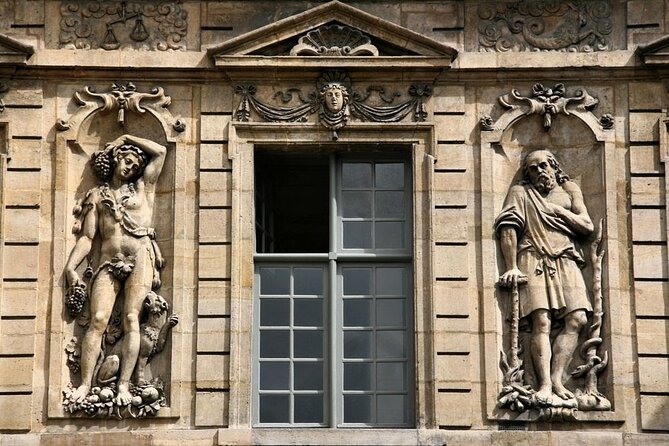
- Sainte-Chapelle + medieval justice area ties big monuments to the people who ran this city.
- Marais + Rue des Rosiers shows Paris as it changes—from old power to everyday life to community culture.
- End at Place des Vosges, one of the nicest places to sit, snack, and plan the rest of your day.
Why This Private Half-Day Works for First-Time Paris
Paris can feel big and slightly chaotic on day one. This tour tackles that by doing the hard work for you: it strings together the key historic zones that shape how the city “moves.” You get a route you can repeat later, because you learn where things are and how they connect.
I also like that it’s private. Up to 3 people means you aren’t doing that awkward thing where you keep up with strangers while trying to hear a guide over the crowd. Your guide can slow down when you want a photo moment or speed up when you just want the story.
Finally, the stopping pattern makes sense for reality. You’re not trapped for hours inside one site. You get a taste of each area—enough to understand what you’re seeing when you return later on your own.
You can also read our reviews of more private tours in Paris



Meeting at Le Saint-Regis, Then Getting Oriented Fast
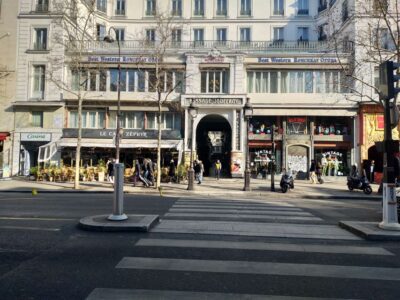
The tour begins at 9:30am at Le Saint-Regis, 6 Rue Jean du Bellay (75004). The location is central and well-placed for starting in the historic core without a long commute.
From there, your guide takes you through a loop that crosses the Seine more than once. That matters because it teaches you a simple map lesson: Paris isn’t one flat grid. It’s two banks, with the city’s history laid out in layers. By the time you finish at Place des Vosges, you’ll feel like you can navigate without holding your phone at street level all afternoon.
Expect the pace to be “walking-friendly, not sprinting.” Comfortable shoes are recommended, and rain or shine is the rule. If you pack accordingly, the route feels like a strong morning plan rather than a chore.
Île de la Cité: Where Early Paris Began
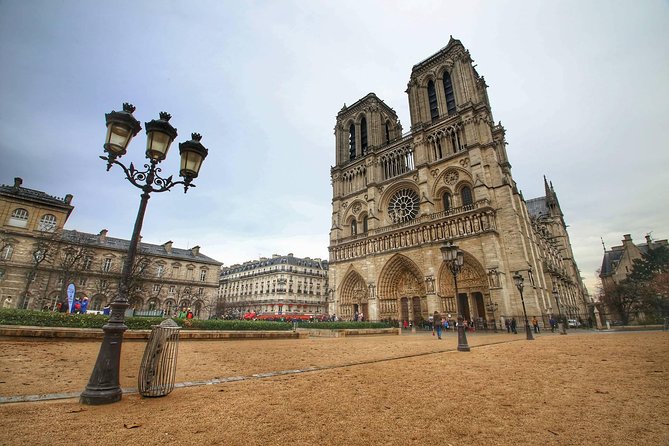
Your first stop is Île de la Cité, the island most people picture when they think of Notre-Dame. But this stop is about more than the big postcard view. Your guide frames the island as the founding point of Paris—linked to the Parisii fishing people who depended on the Seine.
This is a smart place to start because it gives you the origin story before the tour scatters you into neighborhoods. You’ll also pick up a key mental shortcut: if you want to understand Paris history, you keep coming back to the Seine and its islands.
Time here is about 30 minutes, and that’s the trade-off. It’s enough to learn the “why” and connect the dots, but it’s not enough for deep reading or a long sit-down. If you want to linger, you can always plan a return.
Latin Quarter Cobblestones and Place Saint-Michel Clarity
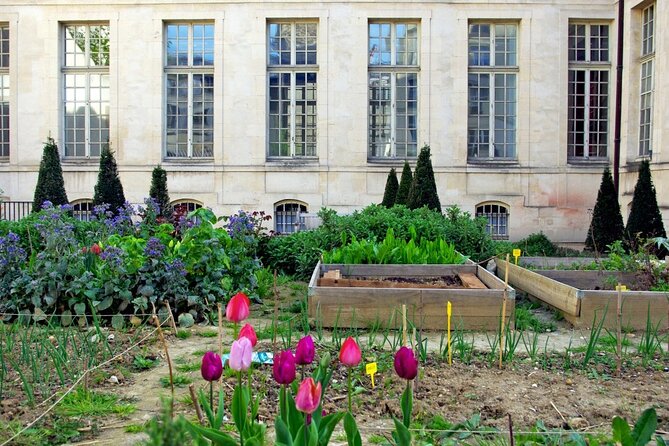
Next you head to the Latin Quarter on the Left Bank. This part of the route focuses on medieval Paris—cobbled lanes and a neighborhood identity built around learning, debate, and bohemian energy from artists, writers, and intellectuals.
I like that this stop balances charm with meaning. Yes, the streets look good in photos. But the real value is understanding why the Latin Quarter became the kind of place where ideas gathered. It makes the neighborhood feel less like a themed district and more like a living chapter of Paris.
You’ll also stop by Fontaine Saint-Michel / Place Saint-Michel, a Haussmann-style square. That detail matters: it’s a reminder that Paris didn’t just “stay medieval.” Over time, the city reworked itself—streets widened, squares organized, and the look of central Paris changed.
Again, expect about 30 minutes here. If you love street-wandering, you’ll probably want extra time afterward. But as an orientation stop, it’s excellent.
Sainte-Chapelle and the Medieval Power Zone
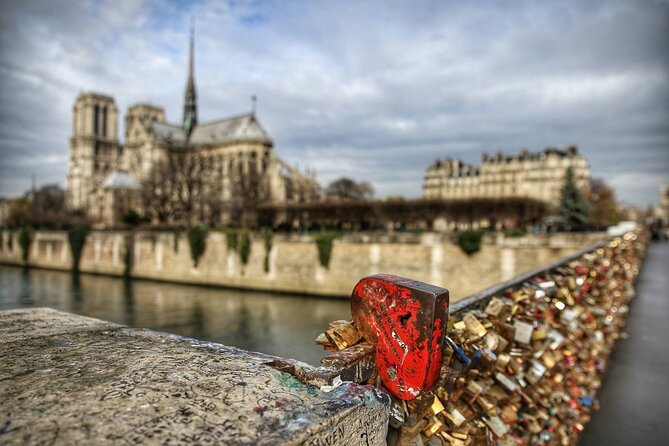
From there, the tour moves to Sainte-Chapelle. This stop ties directly to the city’s medieval power—connecting the church with the nearby Palais de Justice and Conciergerie (as your guide explains the broader historic role of the area).
What I find useful here is the way religious and political history sit next to each other in this part of town. Paris can feel like a museum, but Sainte-Chapelle’s area makes it clear this was once a working power center, not just a pretty backdrop.
You get about 30 minutes at this stop. For many people, that’s the right amount: you see the main story, take in the architecture, and move on before your brain turns into mush from information overload. If you’re planning a return visit, you can use this tour as your “map with context” for what to focus on next time.
You can also read our reviews of more historical tours in Paris






Hôtel de Ville: Seeing the Architecture Shift

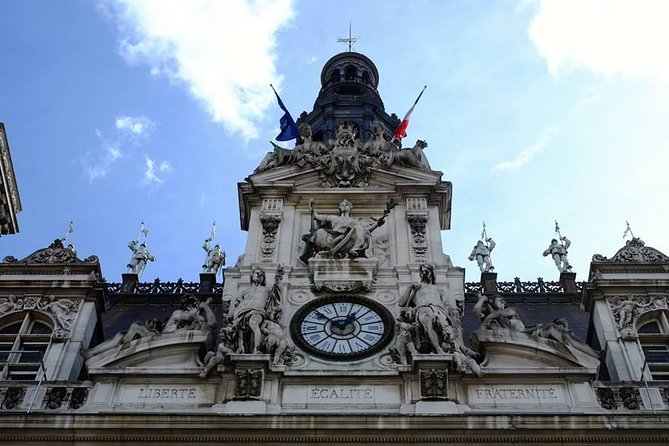
When you cross toward Hôtel de Ville, you’re not only changing neighborhoods—you’re noticing how Paris changes its style and mood. This part of the route is a bridge between the island-center world and the broader historic core.
Your guide points out that you’re moving into the heart of Renaissance Paris. That’s a big claim, but the point is practical: architecture is a timeline you can walk through. Even without getting technical, you start to see how different eras leave different “visual grammar.”
This stop is also where you feel the tour’s pacing settle in. By now, you’ll know what to look for: street layout, river crossings, and the way squares act like anchors.
Time here is about 30 minutes, which works well if you want to keep energy for the afternoon neighborhoods ahead.
The Marais: From Aristocratic Past to Today’s Streets
Then it’s on to Le Marais, a district famous for its shifts over time. Your guide frames it as a place that moved from aristocratic roots to later housing realities—and eventually into the trendy, shopping-friendly Paris that visitors recognize.
I like giving the Marais a “story” during your first visit because it changes how you experience it. You stop seeing it as just stores and start noticing the old bones under everything—street shapes, building rhythms, and the way the district still holds onto its structure.
Your time here is short, about 30 minutes, and the goal is window shopping while learning. If you want to go deeper (museums, specific streets, boutiques), treat this stop as your kickoff. The best part is that by the time you reach Rue des Rosiers, you’re already oriented in the neighborhood.
Rue des Rosiers and the Jewish Quarter (Pletzl)
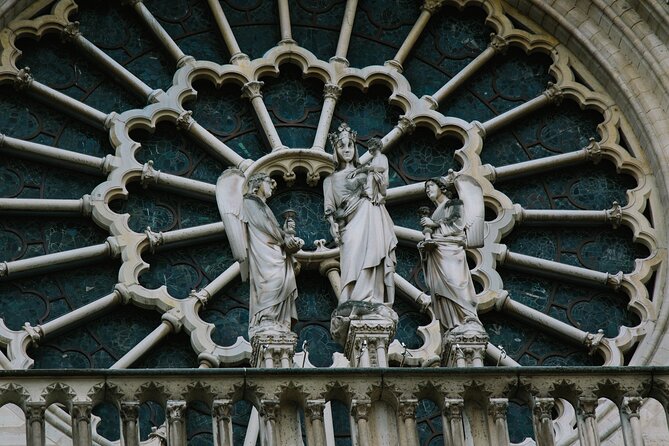
This is one of the most culturally meaningful parts of the route. You walk toward Rue des Rosiers, in the center of Paris’s Jewish Quarter, nicknamed the Pletzl.
This stop isn’t presented as a generic “food and photos” area. Your guide explains the community that lives here and how the neighborhood has shaped—and been shaped by—Paris over time. Even if you don’t stop for a snack, you’ll leave with a clearer understanding of what you’re looking at.
The tour keeps the rhythm: about 30 minutes for the walk and the key points. That means you’ll probably spot things you want to revisit later—specific streets, shop fronts, or viewpoints from the route.
Place des Vosges: Ending Where Paris Feels Most Civilized
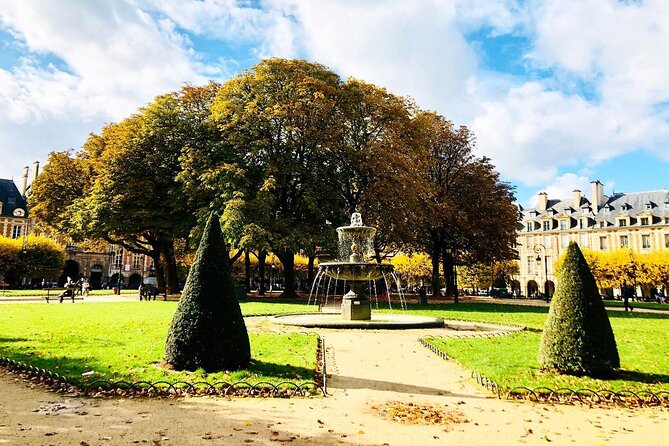
Your tour finishes at Place des Vosges, one of Paris’s oldest public squares. This ending is a good idea because it gives you an easy decompression zone. After hours of streets and history talk, you get a place designed for sitting.
Your guide brings you here with a practical purpose: cafés and bistrots line the square, so you can unwind and keep the rest of your day running smoothly. This is also a strong “location win.” Place des Vosges sits in the same historic core you’ve just explored, so it feels like a natural landing point rather than a random drop-off.
Time here is about 30 minutes, enough to catch your breath and grab a drink or snack if you want—then head off on your own.
Price and Value for a Private Group Up to 3
The price is $422.39 per group (up to 3) for about 4 hours. On a pure per-person basis, that can look high. But private walking tours often cost more for one reason: you’re not paying for mass transit of people. You’re paying for tailored time with a guide, plus the flexibility to keep the pace comfortable.
Here’s why it can be good value:
- You’re getting a route that covers multiple historic zones (island origins, Left Bank classics, medieval power, and the Marais/Jewish Quarter) in one morning.
- You receive practical add-ons: a Paris map, bottled water, and restaurant recommendations and reservations.
- Private format helps reduce friction. You spend less time “figuring out where to go next,” which is the real cost of sightseeing time.
If you have a group of 2 or 3 who want a smooth orientation with minimal stress, this often pencils out better than buying multiple separate tickets and trying to stitch together the same route alone.
What’s Included (and What You Should Plan for)
Included:
- Tour guide
- Map of Paris
- Bottled water
- Restaurant recommendations and reservations
Not included:
- Coffee break
Also note:
- You’ll get a mobile ticket.
- Admission is listed as free at each stop in the itinerary (still, if something changes for a specific day, it’s worth confirming at booking).
- Service animals are allowed.
- It’s designed so most travelers can participate, but you’ll want comfortable walking shoes.
This “what’s included” list is practical. Map + water are small things, but they change how long you can comfortably keep exploring. And restaurant recommendations matter more than people expect. After a tour ends, you’re often hungry and indecisive. Having a plan can save time and reduce the search for somewhere reliable.
Who This Tour Suits Best
This tour fits you if:
- You’re in Paris for the first time and want a quick sense of the city’s historic structure.
- You prefer private guiding over joining a large group.
- You like seeing neighborhoods, not only monuments.
- You want help with where to eat afterward.
It may feel less ideal if:
- You need very slow pacing or long sit-down times.
- You’re hoping for deep, hour-long time inside each major site.
- You don’t like walking for several hours, even if the pace is manageable.
Should You Book This Historic Route?
I’d book it if you want a solid “Paris foundation” morning. Starting on Île de la Cité, working through the Left Bank and medieval core, and then finishing in the Marais at Place des Vosges is a smart way to turn history into a route you can actually use later.
If you’re the type who enjoys learning while walking—and you’d rather pay for a smooth plan than spend your vacation hunting for bearings—this private half day delivers. Just go in with realistic expectations: it’s designed to orient you and connect the story, not to turn every stop into a long deep-dive.
FAQ
How long is the Private Half Day Historic Tour?
It runs for about 4 hours.
What time does the tour start?
The start time is 9:30am.
Where is the meeting point?
The meeting point is Le Saint-Regis, 6 Rue Jean du Bellay, 75004 Paris, France.
Where does the tour end?
The tour ends at Place des Vosges, Pl. des Vosges, 75004 Paris, France.
Is this a private tour?
Yes. It’s a private tour/activity, and only your group participates.
What group size is it for?
It’s priced per group for up to 3 people.
What language is the tour offered in?
It’s offered in English.
What is included in the price?
A tour guide, a Paris map, bottled water, and restaurant recommendations and reservations are included.
Are tickets or admission required for the stops?
The itinerary lists admission as free at each stop, and you’ll have a mobile ticket.
What should I plan for regarding breaks or coffee?
A coffee break is not included, so plan to grab one on your own if you want it.