REVIEW · PARIS
Paris: Secret City Bike Tour Off the Tourist Path
Book on GetYourGuide →Operated by Holland Bikes · Bookable on GetYourGuide
Paris has secrets, and you pedal to them. This 3-hour bike tour trades the usual Eiffel-to-Louvre shuffle for off-the-tourist-path neighborhoods, guided by stories that connect the city’s big turning points to the corners you actually ride past. I love how the tour is built around bike-lane-friendly cruising with an option for an electric bike when you want the experience without the workout.
My favorite part is the way the guide strings together ideas and people you’ve heard about, like Jean-Paul Sartre, Simone de Beauvoir, and Albert Camus, alongside royal influence tied to the Medici family. You’ll also get short, focused stops that keep you moving, with guided time at places like Palais-Royal, Luxembourg Gardens, the Pantheon, and the Marais.
One thing to consider: the ride timing depends on street conditions and group pace, so you may feel a bit rushed if traffic is heavy or your group is slower than the guide’s schedule.
In This Review
- Key things to know before you go
- Why this Paris bike route feels different from the landmark checklist
- Getting started near Opéra: Meyerbeer parking and what to bring
- Galerie Vivienne to Palais-Royal: passages, power, and the art of short stops
- Saint-Germain-des-Prés and Saint-Sulpice: thinkers, churches, and pause-worthy corners
- Luxembourg Gardens and the Pantheon: local calm, famous ideas, and a break from pressure
- Latin Quarter to Arènes de Lutèce: students, old stones, and a timeline you can ride
- Notre Dame Cathedral and Le Marais: medieval mood to modern style
- Place des Vosges to Bourse de Commerce: from royal symmetry to modern glass
- Guides, pace, and the refreshment stop you should plan around
- Price and value: $51 for 3 hours of guided city context
- Who should book this Paris secret-city bike tour
- Should you book? My practical take
- FAQ
- How long is the Paris Secret City Bike Tour?
- How much does the tour cost?
- Where is the meeting point?
- How do I find the guide inside the garage?
- What time should I arrive?
- What languages are the live guides available in?
- Are electric bikes available?
- Does the tour include food or drinks?
- Where does the tour end?
- Is there free cancellation?
Key things to know before you go
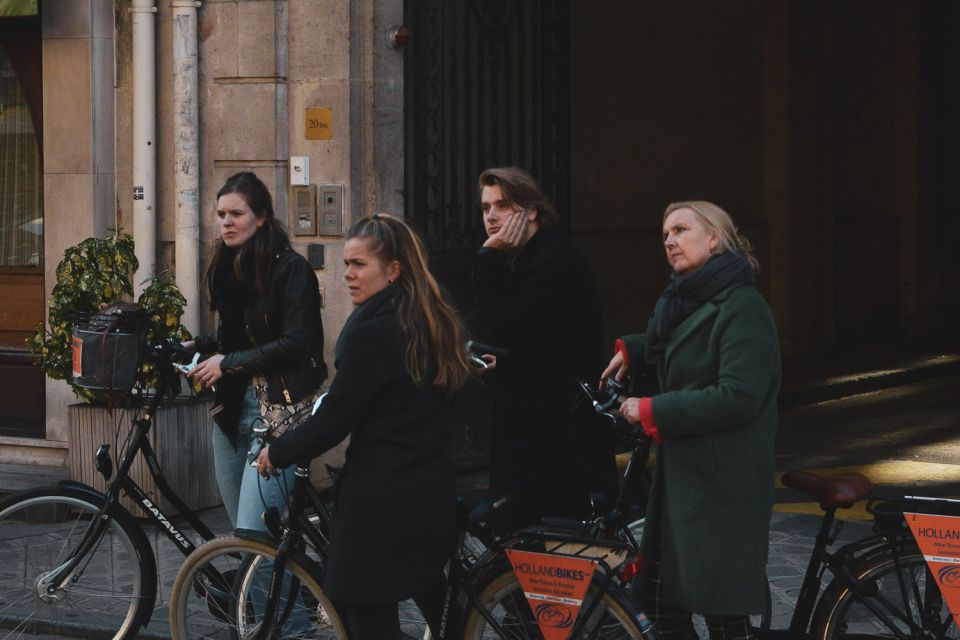
- E-bike option: choose electric if you want an easier ride while still seeing a lot
- Short guided stops: quick tours like 10 to 20 minutes help you stay on track
- Opéra-area start inside a garage: meet at Meyerbeer Parking at -1 level and walk down the car ramp
- St-Germain-des-Prés to the Marais: two of the most story-rich zones in the city, linked by bike routes
- Refreshment stop included as a concept: there’s a pause at an iconic landmark, but food and drinks aren’t included
Why this Paris bike route feels different from the landmark checklist
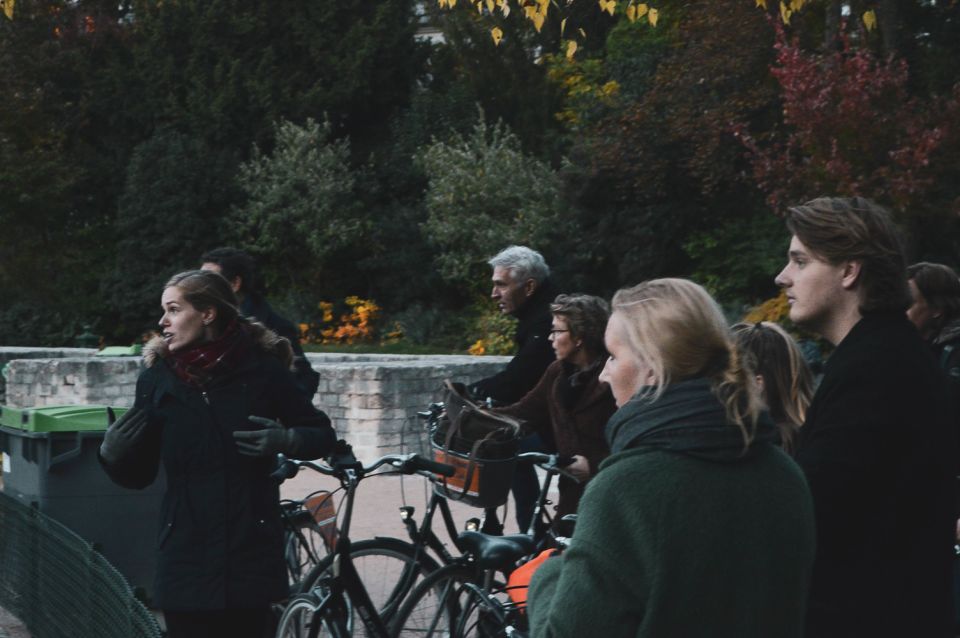
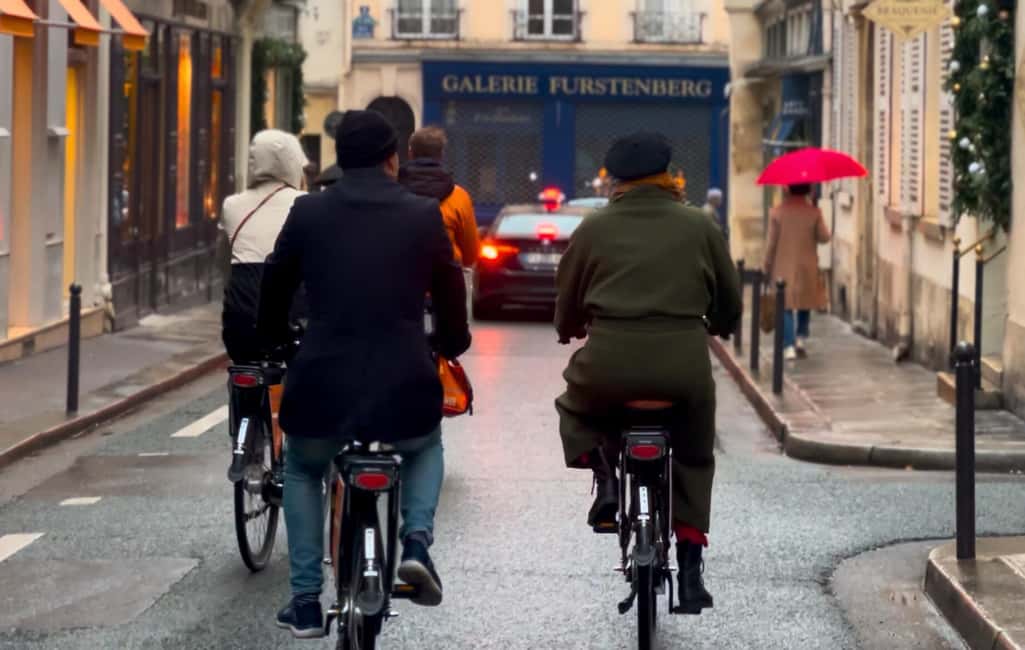
The pitch here is simple: see Paris as a set of neighborhoods with personalities, not as a list of postcard stops. You start near Opéra and then work your way through areas that feel more like real daily life—streets where the history you learn has fingerprints all over the architecture, cafés, and walking routes.
I like that the tour doesn’t just say you’ll avoid crowds. It’s structured around specific areas that match the kind of stories you came for: political shocks tied to the French Revolution, shopping and class shifts in the 18th and 19th centuries, and the city’s long timeline reaching back roughly 2,000 years. Instead of one big museum block, you get many small story moments that add up.
And yes, iconic sites are still there—Notre Dame Cathedral and places near it show up in the route—but they’re treated as part of the broader city fabric, not the whole point.
You can also read our reviews of more cycling tours in Paris

Getting started near Opéra: Meyerbeer parking and what to bring
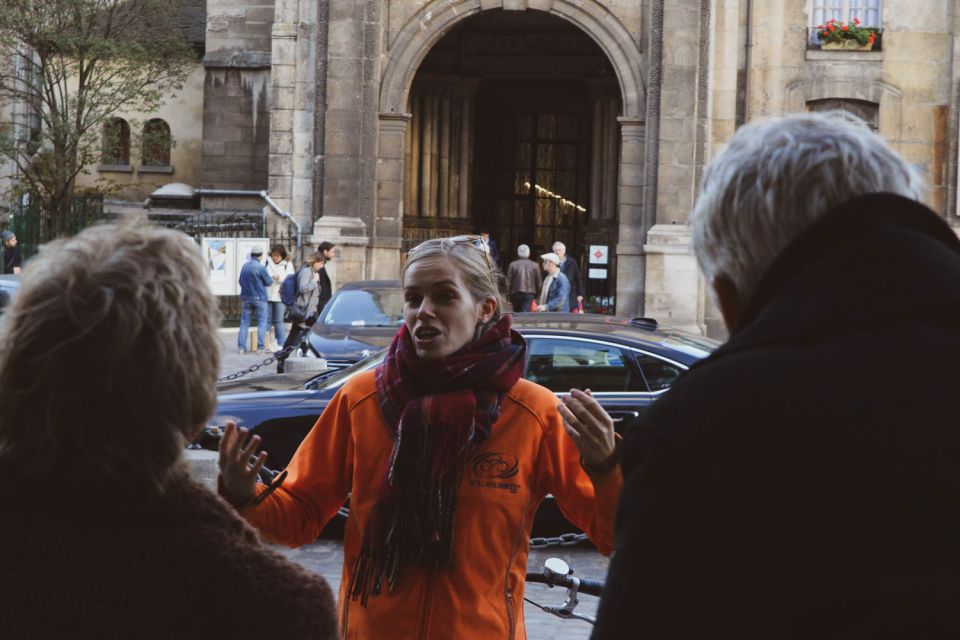
Your biggest early-moment task is finding the meeting point. It’s inside the Parking Garage Meyerbeer at -1 level. You’ll need to walk down the car ramp to reach your guide. If you’re arriving with luggage, this is the kind of detail that can make you want to rush, so give yourself extra time.
The tour asks you to arrive 15 minutes before departure. That’s not just for formality. A bike tour runs on momentum. If you’re late to the start, you can feel it right away in the pacing.
What to bring is mostly common sense: dress for cycling and check the weather forecast before you go. This is a 3-hour ride, and the “off the usual paths” promise means you’ll be focused on smooth movement through different streets, not just stopping for photos.
Also, if you’re choosing between standard and electric bikes, this is one of the clearest places to decide. The tour explicitly offers electric, and it can make the full route feel more doable, especially if you’re short on time or not used to Paris cycling.
Galerie Vivienne to Palais-Royal: passages, power, and the art of short stops
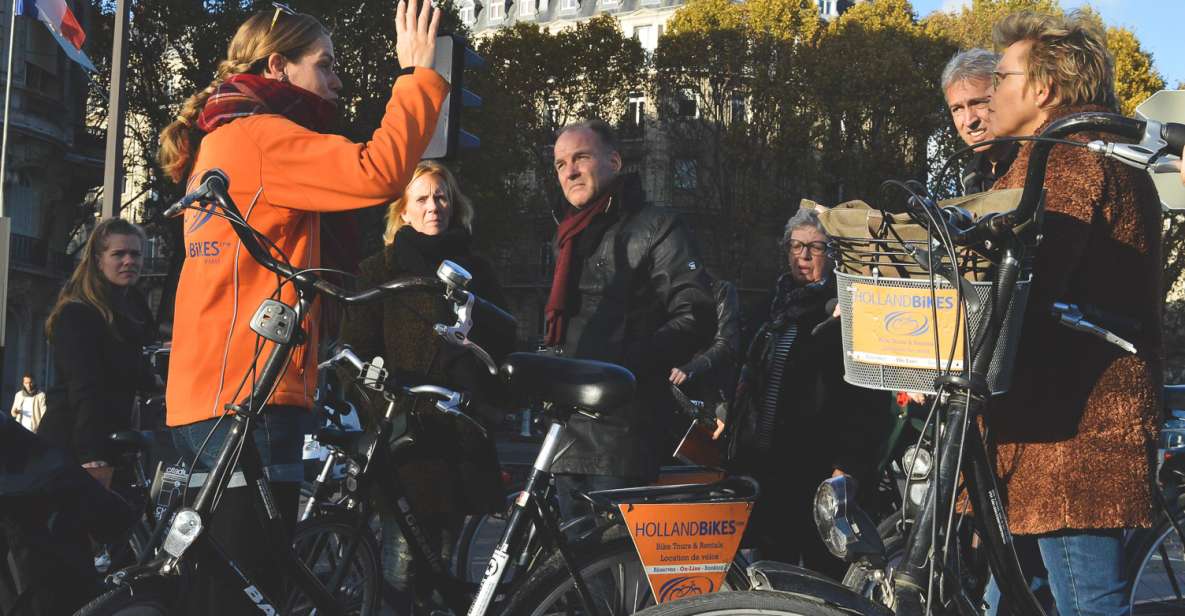
The day begins with a first guided pause at Galerie Vivienne, with about a 10-minute guided stop. It’s the kind of location where the story likely hangs on how people moved and spent time, and the structure is designed so you don’t lose the rhythm of the bike ride.
Next is Palais-Royal, with a longer guided stop around 15 minutes. This is a strong pairing after the initial warm-up. The tour is trying to show you how cultural life and politics mix in Paris, and Palais-Royal is the sort of stop that fits that mix—short enough to stay active, long enough for the guide to make connections.
One of the quiet pleasures of this section is the way these stops break up your attention. You get a guided “reset,” then you’re back on the bike soon enough to feel like you’re still doing something, not just standing around.
Saint-Germain-des-Prés and Saint-Sulpice: thinkers, churches, and pause-worthy corners
From Palais-Royal you move into Saint-Germain-des-Prés with about a 10-minute guided stop. This is one of the tour’s core zones. The guide’s stories focus on bohemian intellectual life tied to names like Jean-Paul Sartre, Simone de Beauvoir, and Albert Camus, and that matters because the area is often talked about in cultural terms but not always understood as a place where ideas had geography.
Right after that, the tour heads to the Church of Saint-Sulpice for another guided stop around 10 minutes. The guide’s job here is to take a recognizable landmark and place it inside the broader Paris narrative you’re hearing all day. Even if you’ve walked past big churches before, the bike-tour format forces you to see how the city’s cultural map works—church, cafés, bookish streets, and crossing points all together.
This part of the ride also tends to feel smoother because the pacing is still manageable. The guided stops don’t balloon. You keep getting little story hits, then you ride on.
Luxembourg Gardens and the Pantheon: local calm, famous ideas, and a break from pressure
Next is Luxembourg Gardens with about a 20-minute guided stop. This is where the tour slows a touch and gives you breathing room. Luxembourg Gardens is named as a place visited by locals, and that’s a key difference from seeing a park only as a backdrop. You get a real pause in a real place, not just a quick photo stop.
After that comes the Pantheon, with about a 15-minute guided stop. Here the guide ties the stories to France’s big intellectual and political themes, including the long arc of Paris history referenced throughout the tour. The Pantheon stop works well after Luxembourg Gardens because it gives you both a calm setting and then a shift back to landmark-scale meaning.
If you’re someone who likes to connect the city’s names to the streets around them, this two-stop block is a highlight. You’ll be able to compare how Paris “feels” in a garden pause versus a monumental viewpoint moment.
You can also read our reviews of more city tours in Paris



Latin Quarter to Arènes de Lutèce: students, old stones, and a timeline you can ride
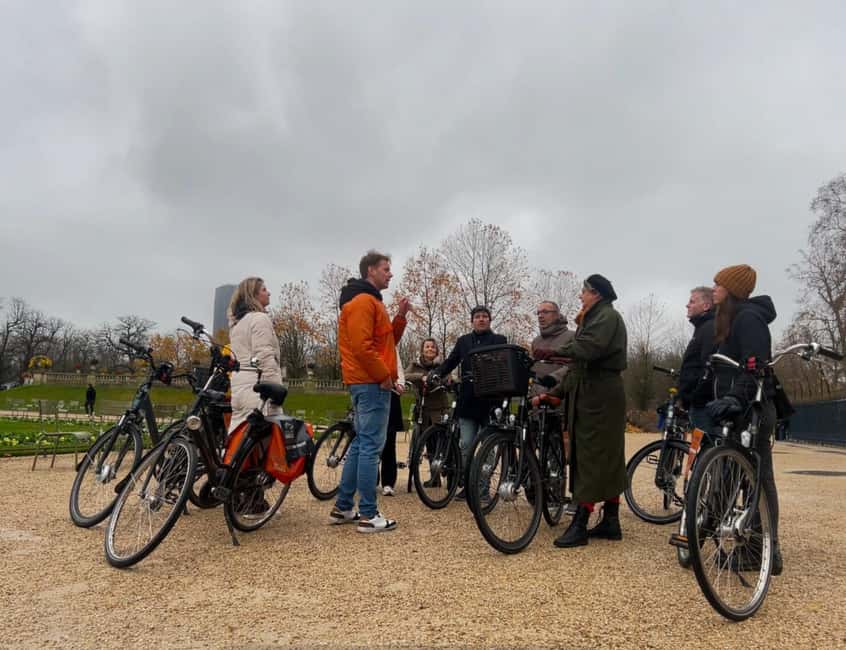
The Latin Quarter is a guided stop around 15 minutes. In the tour’s framing, this area gets attention for its intellectual and cultural life, not just its student reputation. The bike route also makes this feel less like a walking-only district and more like a neighborhood you can actually move through.
Then comes Arènes de Lutèce with about a 10-minute guided stop. The tour doesn’t just treat it as scenery. It links it to the theme of Paris across roughly 2,000 years, and that theme is one of the main reasons this tour feels different from casual sightseeing. You’re not only hearing the story of Paris in the abstract; you’re hearing it while moving through the spaces where layers of time show up.
This section is also practical. It’s laid out so you can keep your energy. If you show up with the right expectations—short stops, active biking—you’ll likely find the flow comfortable.
Notre Dame Cathedral and Le Marais: medieval mood to modern style
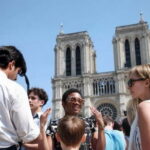
Notre Dame Cathedral is next, with about a 10-minute guided stop. The tour’s approach here is consistent: even big icons get handled as part of a neighborhood story, not as a single destination to squeeze into a busy day.
After that, you head into Le Marais with about a 15-minute guided stop, followed by Place des Vosges around 10 minutes. This block is a good reason to choose this tour even if you think you’ve seen “enough Paris.” The Marais and surrounding streets tend to feel like a place where old streets and new life share space.
The guide’s storytelling is what makes this work. You’re hearing about how past power and wealth shaped Paris buildings and shopping patterns across centuries, and that frames what you see around you in a useful way.
In particular, Place des Vosges offers that short, guided pause feeling that works perfectly for a bike tour. You get enough time to absorb the atmosphere and enough movement afterward to keep the day feeling active.
Place des Vosges to Bourse de Commerce: from royal symmetry to modern glass
The tour finishes the main story loop by moving from the Place des Vosges area to the Bourse de Commerce for about a 10-minute guided stop. This is a nice contrast late in the ride. After spending time in areas tied to older royal influence and earlier centuries, you end the route with a more modern-feeling landmark stop.
That contrast is more valuable than it sounds. It helps you see Paris as a city that keeps adding layers instead of freezing in place. The tour’s overall theme—Paris as history plus daily life—comes through best when the last guided stop doesn’t just repeat what you already know.
After Bourse de Commerce, you head back toward your drop-off locations, returning the tour to the Opéra-area meeting point.
Guides, pace, and the refreshment stop you should plan around
Bike tours are only as fun as their pacing. When things go well, you’ll feel like the guide keeps the group moving while still giving you enough time to listen and look. When things don’t go perfectly, the tour can feel like it’s running closer to a schedule than you’d like.
One small but real drawback to keep in mind: timing can shift based on traffic and how quickly your group keeps up. The structure is built around a 3-hour window, so if a segment runs slower, the later parts may feel tighter. If you’re the kind of person who hates being hurried, plan for that possibility.
Guide quality is clearly a highlight. Names that come up include Reuben, Jasmine, Daniel, and Renee, and the common thread is that they deliver stories in an approachable way and help you navigate the streets confidently. The tour is offered in English, Dutch, and German, which is a big deal if you want the history part to land naturally rather than through guessing.
Finally, there’s a refreshments pause at an iconic city landmark. Food and drinks aren’t included, so think of it as a chance to stretch, grab water, and maybe a snack. If you want to keep your energy steady, bring a little buffer in your budget for that stop.
Price and value: $51 for 3 hours of guided city context
At about $51 per person for a 3-hour bike tour, the value comes from two things: you’re paying for guided time plus the bike logistics that let you cover neighborhoods efficiently without doing the planning yourself.
You’re not just renting a bike and hoping for the best route. The guide is part of the package, and the stop structure shows up in multiple neighborhoods rather than a single sweep of monuments. That’s why this tour can work well for a short stay. You get a story-driven map of Paris through Saint-Germain-des-Prés, the Latin Quarter, the Marais, and beyond.
The one cost to keep in mind is what’s not included. Food and drinks aren’t part of the price, and you may also want to budget for any purchase you make at the refreshments stop.
Also, your choice of bike matters. Electric bikes are an option here, and for some people that’s the difference between doing a 3-hour cycling tour with confidence versus choosing a different style of day.
Who should book this Paris secret-city bike tour
This tour is a good match if you want:
- A neighborhood-based way to understand Paris history, not just a photo checklist
- Short guided stops tied to big names and big turning points, including Jean-Paul Sartre, Simone de Beauvoir, and Albert Camus
- A route that links areas like Saint-Germain-des-Prés, the Latin Quarter, and the Marais into one ride
- Confidence on the bike with a guide leading the way and helping with street navigation
I’d think twice if:
- You hate any chance of schedule tightening due to traffic
- You prefer unhurried wandering with long independent breaks
If you’re traveling with someone who wants history but also wants to stay active, this format tends to keep both sides happy.
Should you book? My practical take
I’d book this Paris Secret City Bike Tour if you want a guided day that makes Paris feel readable. The mix of story-focused stops and neighborhood riding is exactly what helps the city make sense fast. You also have the option of an electric bike, which keeps the experience accessible even if you’re not training for a cycling event.
If you’re sensitive to pacing and prefer full control over your timing, go in with realistic expectations. Arrive early to the Opéra-area garage meeting point, dress for the weather, and plan your energy around a few guided stops and one refreshments pause where you’ll pay for what you eat or drink.
If those trade-offs sound fine, this is one of those rare tours that gives you both motion and meaning.
FAQ
How long is the Paris Secret City Bike Tour?
It lasts 3 hours.
How much does the tour cost?
The price is $51 per person.
Where is the meeting point?
Your guide meets you inside the Parking Garage Meyerbeer at -1 level.
How do I find the guide inside the garage?
Walk down the car ramp to find your guide.
What time should I arrive?
Arrive 15 minutes before the scheduled departure.
What languages are the live guides available in?
The live tour guide is available in English, Dutch, and German.
Are electric bikes available?
Yes, you can choose an electric bike for the tour.
Does the tour include food or drinks?
Food and drinks are not included, but the tour includes a refreshments stop at an iconic city landmark.
Where does the tour end?
The activity ends back at the meeting point.
Is there free cancellation?
Yes, free cancellation is available up to 24 hours in advance for a full refund.