REVIEW · PARIS
Paris – Latin Quarter Free Tour in English (Tip-Based)
Book on Viator →Operated by StellarTours · Bookable on Viator
Old Paris, on foot, in two hours.
This tip-based Latin Quarter tour is a smart way to get oriented fast, then zoom through some of the oldest corners of Paris, from medieval churches to Roman ruins and literary landmarks. I especially like that it is pay-what-you-want in spirit, so you control the value, and that it is packed without feeling like a museum shuffle.
Two hours can work if the route is tight and the stops are meaningful. Here, you get a guided walk that connects places you’d otherwise pass by (Fontaine Saint-Michel, the narrow Rue de la Huchette, Shakespeare and Company) to the bigger story of how Paris evolved from medieval roots to a modern cultural capital. One consideration: it is timed, so several stops are brief (often 5–15 minutes), meaning you’ll want comfy shoes and a calm mindset for quick look-and-learn.
What also makes this tour appealing is the human side of it. Named guides such as Bruce and Sanna show up in the experience, and the common thread is clear, friendly storytelling with good pacing. If you prefer wandering slowly on your own, you might find the momentum a touch fast—especially around the big photo moments like Notre-Dame and the Pantheon area.
In This Review
- Key highlights you will feel on this tour
- Entering the Latin Quarter on foot: the point of this route
- Fontaine Saint-Michel to Rue de la Huchette: start where stories begin
- Shakespeare and Company: literary Paris without a detour
- Notre-Dame area views: short stop, big payoff
- The oldest tree wish tradition and the Roman-to-medieval swing
- Flamboyant Gothic at Église Saint-Severin
- Les Thermes de Lutece: Roman baths in the heart of today
- Musée de Cluny: medieval Paris in a single glance
- La Sorbonne and the Pantheon: education to mausoleum
- Saint-Étienne-du-Mont: relics and a turning point in Paris
- Hemingway’s first office: why the Latin Quarter stuck
- Ending at Place de la Contrescarpe: keep exploring the easy way
- Price and value: what $3.62 means on a pay-what-you-want tour
- Morning vs. afternoon start: when to book for the easiest day
- Who this Paris Latin Quarter tour suits best
- Should you book this StellarTours Latin Quarter free tour in English?
- FAQ
- How long is the Paris Latin Quarter Free Tour in English?
- Is this tour really pay-what-you-want?
- Where do I meet and where does the tour end?
- What language is the tour offered in?
- How much is it and how big are the groups?
- How do I pay tips or contributions?
Key highlights you will feel on this tour

- Tip-based value with a low commitment: pay what you think it’s worth, while still booking a structured 2-hour walk
- Ancient streets that actually make sense: Rue de la Huchette and the Latin Quarter feel connected, not random
- Literature and art in the route: Shakespeare and Company and a Salvador Dalí sundial keep it fun
- Churches plus Roman remains: you get medieval Gothic architecture and Roman baths on the same loop
- Education and big ideas: the Sorbonne and Pantheon explain why this district shaped French culture
- A great finish for food and drinks: the walk ends in Place de la Contrescarpe, right where you can keep going
Entering the Latin Quarter on foot: the point of this route
The Latin Quarter is the kind of neighborhood that looks charming from a distance and then rewards you once you start connecting names to streets. This tour is designed for that moment. You begin at Fontaine Saint-Michel and end at Place de la Contrescarpe, threading through layers of Paris history that are often only obvious when someone points them out.
The value here is not just that you visit famous sites. It is that the guide turns a collection of landmarks into a timeline: medieval city life, education and religion, the Roman past, and then the modern reputation of the district as a writer and thinker magnet. In short, you leave with a mental map, not just photos.
Also, this is offered in English, and the group size cap is 50 travelers. For a city walk, that’s big enough to run smoothly, but small enough that you’re not stuck behind a wall of people the whole time.
You can also read our reviews of more tours and experiences in Paris.



Fontaine Saint-Michel to Rue de la Huchette: start where stories begin
Your walk kicks off at Fontaine Saint-Michel in the 5th arrondissement. The fountain sits near one of the old gateways into the Latin Quarter, and the tour uses it as a way to explain Paris’ transformation. You’ll get the idea that Paris didn’t become “Paris” in a single jump—it shifted, rebuilt, and modernized over time.
From there, you move to Rue de la Huchette, one of the oldest streets in the area. The key detail is the narrowness. When a street is that tight, you feel how medieval-era urban design worked—people lived close, traveled on foot, and the city’s street web shaped daily life. You also get stories about what “Old Paris” used to be like, which helps the Latin Quarter feel lived-in instead of postcard-y.
If you love little street geometry, this segment is for you. It is also a good early stop because it sets expectations: yes, you’re in central Paris, but the scale and feel here are much older.
Shakespeare and Company: literary Paris without a detour
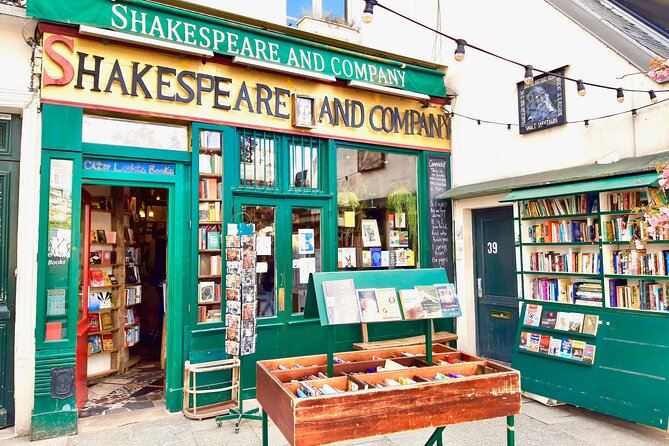
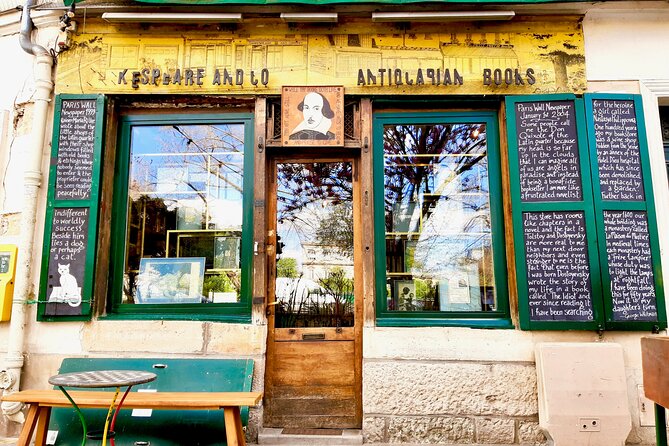
Next comes Shakespeare and Company, the iconic English-language bookstore that draws writers and readers from around the world. The tour frames it in the context of the 1920s and the lost-generation literary scene, linking the store’s vibe to the broader Latin Quarter identity.
Even if you only spend a few minutes, this stop works because it changes the tone of the walk. You go from architecture and streets to words and ideas. It also gives you a natural pause: take a quick look around, scan a few shelves, and breathe for a minute before the bigger religious monuments.
Tip for you: if books are your thing, don’t try to buy everything. Use the time to find one title or author name that matches what you like, then keep moving.
Notre-Dame area views: short stop, big payoff
You then reach Cathedrale Notre-Dame de Paris for a brief moment with standout views. The tour description focuses on the “wow” factor—this is one of those places where even a quick stop can reset your sense of where you are in Paris.
Because the stop is short, this isn’t about a long sit-down visit inside. It is about getting the sightline and understanding why Notre-Dame matters beyond its fame. You’ll also likely feel the neighborhood pressure here: this is a major draw. So go for the look, listen, and then continue rather than trying to turn it into an all-day cathedral plan.
The oldest tree wish tradition and the Roman-to-medieval swing
One stop you shouldn’t skip is the tradition around the oldest tree in Paris dating back to 1601. The tour includes the custom of touching its leaves and making a wish. It’s a small ritual, but it’s exactly the kind of detail that makes a neighborhood feel like a place with living traditions, not just landmarks.
After that, the route swings back to architecture with Église Saint Julien Le Pauvre, described as one of the oldest buildings in Paris. Here, you get a sense of the Latin Quarter as a former education center alongside Notre-Dame. This is one of the quieter stops on the walk, and that’s a good thing. You can actually hear the explanation and absorb the simplicity of the church compared to the bigger monuments.
Then it goes art-leaning with the Salvador Dalí sundial. Dalí loved the Latin Quarter so much that he gave Paris a sundial, and the tour connects it to the Camino de Santiago de Compostela. It is a fun pivot: you go from serious church history to surreal, symbolic Paris-thinkers and art embedded in everyday streets.






Flamboyant Gothic at Église Saint-Severin
At Église Saint-Severin, you get one of the Latin Quarter’s architectural showpieces: a 13th-century church with Flamboyant Gothic style. What makes it memorable on a walk tour is that you’re told where to look—beautiful vaulted ceilings and palm tree columns are the named features.
There is also a bit of chance involved: if conditions line up, you might hear the pipe organ. Even if you do not, the point stands. This is the kind of church where the design is specific enough that a guide’s cues help you notice what you’d otherwise miss.
Les Thermes de Lutece: Roman baths in the heart of today
Then comes a major contrast: Les Thermes de Lutece. The Roman Empire built baths after invading Paris in 52 B.C., and this site preserves remnants of a larger complex that once served citizens. It is one thing to know Paris has a Roman past. It is another to stand near surviving structures while a guide explains how everyday Roman life included public bathing.
This stop is valuable because it changes your mental timeline again. You’re not just moving forward from medieval to modern—you’re reminded that Paris’ layers stack. Roman life didn’t erase what came after; it left bones in the city that later eras repurposed.
Musée de Cluny: medieval Paris in a single glance
Musée de Cluny, now the Medieval Museum of Paris, gets a quick visit. The tour frames it as an ornate building dating back to the 15th century, and as a place that tells stories about Paris of old.
Even with a short stop, museums can work on walking tours because they anchor the theme. You are not trying to see everything. You’re seeing the idea: the Latin Quarter is where medieval Paris still shows up in architecture and attention to the past.
La Sorbonne and the Pantheon: education to mausoleum
The walk then points to education with La Sorbonne, called the 3rd oldest university in the world. The Latin Quarter has long been a center of learning and culture, and the tour explains how Sorbonne sits at the nucleus of that story.
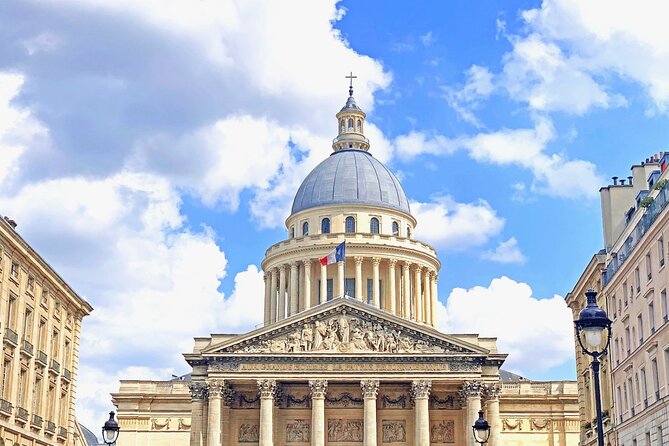
Next is the “main event”: the Pantheon. You’ll hear the meaning of the word Pantheon (all the gods), then the bigger historical twist—how the building began as a major religious structure and later became the most important mausoleum in France. And yes, the tour highlights the famous names buried inside, including Victor Hugo and Marie Curie.
This is where the tour earns its “don’t just point” reputation. If you have ever walked past the Pantheon area without understanding its role in French history, this stop gives you the why. It’s also a moment where your brain naturally links politics, culture, and memory—why a nation chooses to honor certain figures the way it does.
Saint-Étienne-du-Mont: relics and a turning point in Paris
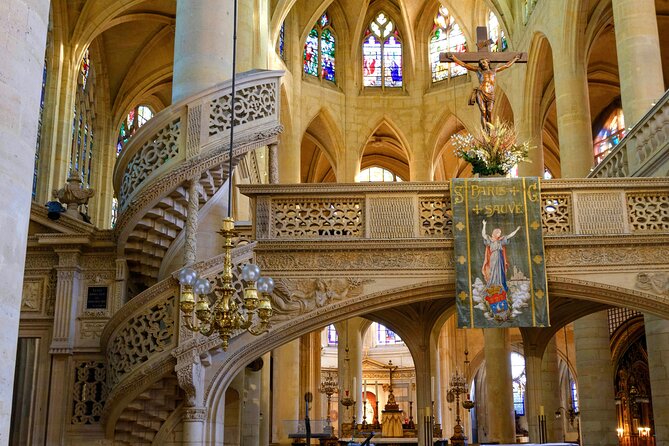
At St. Etienne du Mont, the tour centers on the tomb and knuckle of Saint Genevieve, patron saint of Paris. You’ll also hear the story of how Genevieve played a key role as the Roman Empire fell and Paris faced major change.
Relic-focused stops can feel odd if you aren’t into religious history. But here, it works because it connects faith to survival and civic identity. You’re learning how people understood risk and responsibility in a time when the future felt fragile.
Hemingway’s first office: why the Latin Quarter stuck
The tour finishes this arc with Ernest Hemingway’s first home office in the Latin Quarter. The guide references Hemingway’s famous line about Paris staying with you if you were lucky enough to live there young. Then you connect it to the neighborhood itself as an inspiration machine for writers.
This segment is more than trivia. It helps you understand why the Latin Quarter developed its reputation for artists, thinkers, and authors: it wasn’t only the beauty. It was the concentration of minds and the feeling that ideas mattered.
Ending at Place de la Contrescarpe: keep exploring the easy way
The walk ends in Place de la Contrescarpe, a square with restaurants, bars, and cafes—exactly the kind of place where you can continue on your own without needing a plan. This is practical: after two hours of walking, you want a nearby landing zone where you can eat, sip something, and decide what to do next.
If you’re pairing this with other sights, this ending location is convenient. It also means you can transition from “guided facts” to “personal wandering” while the neighborhood still feels fresh.
Price and value: what $3.62 means on a pay-what-you-want tour
This tour lists a low price per group (shown as $3.62 per group, up to 9), and it is tip-based in style. The big idea is that you’re not paying for the tour in the usual fixed-ticket way—you’re paying for access to a guide and then deciding your contribution.
How to think about value:
- If you like guided storytelling and you want a structured intro to the Latin Quarter, this is a good deal because you’re getting a lot of stops connected by theme.
- If you hate spending on tours and prefer purely independent sightseeing, then the value depends entirely on the guide. A short, well-paced walk can still be worth it, but you’ll want to judge the quality fast.
One important detail: tips are accepted only via credit/debit cards and electronic payments, and VAT is added to contributions. So have a card ready, not just cash.
Morning vs. afternoon start: when to book for the easiest day
The experience is designed with flexible start times (morning or afternoon). The route is mostly outdoors and includes several churches and monuments, so timing affects crowd level and how much you’ll enjoy the big photo moments.
If you want calmer walking and easier headspace, choose a start time that matches when you personally feel energetic. If you’re the type who hates late-day exhaustion, pick the earlier window and treat the rest of the day as your free-fall exploring time.
Who this Paris Latin Quarter tour suits best
This is a great fit if you:
- Want a guided introduction to the Latin Quarter without spending all day
- Like history that connects ideas (education, religion, Roman life, literature)
- Prefer walking tours with quick stops that still feel purposeful
- Are okay with short visits at major sites in exchange for broader coverage
It might be less ideal if you:
- Want long indoor visits or deep museum time
- Plan to move super slowly and linger at every stop
- Don’t want to pay tips via card/electronic methods
Should you book this StellarTours Latin Quarter free tour in English?
If your goal is to understand the Latin Quarter fast, this booking makes sense. You get a tight route across the district’s most recognizable threads: ancient streets, Notre-Dame views, Roman baths, medieval churches, education at La Sorbonne, and the Pantheon’s national story—then you finish in a neighborhood pocket where you can immediately eat and keep exploring.
Book it if you value a guide who can make the places click. Pass if you want a long, unhurried day built around museum time. In most cases, this tour is a strong first move for Paris.
FAQ
How long is the Paris Latin Quarter Free Tour in English?
It lasts about 2 hours (approx.).
Is this tour really pay-what-you-want?
Yes. It is a tip-based experience where you make a contribution.
Where do I meet and where does the tour end?
You start at Fontaine Saint-Michel, Pl. Saint-Michel, 75005 Paris, and the tour ends at Place de la Contrescarpe, 75005 Paris.
What language is the tour offered in?
The tour is offered in English.
How much is it and how big are the groups?
The price is listed as $3.62 per group (up to 9), and the experience has a maximum of 50 travelers.
How do I pay tips or contributions?
Tips are accepted only via credit/debit cards and electronic payments, and VAT is added to contributions.